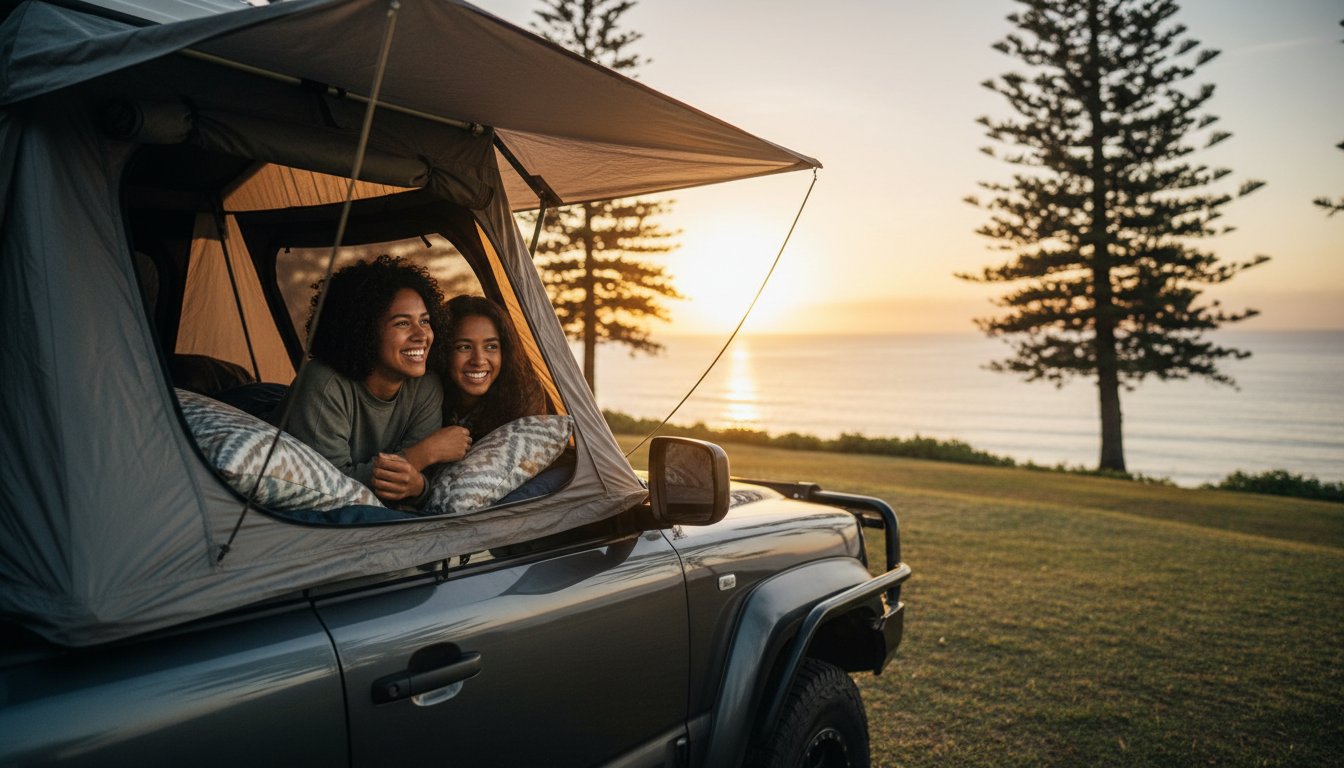
Imagine you’re camped out under the vast sky of the Northern Territory when a sudden crack of thunder rattles your bull bar. As the rain starts lashing your canvas, you might find yourself asking: are roof top tents safe in lightning? It’s a question that keeps many Adventurerz awake during intense summer storms. We’ve all heard the old myths about rubber tyres providing insulation, but when you’re the highest point in a remote clearing, you need facts rather than folklore to stay protected.
We agree that the thrill of off-the-grid exploration shouldn’t come with genuine fear for your life. That’s why we’re digging into the science of electrical conductivity and the Faraday Cage effect to give you total clarity. You’ll discover the exact moment you need to bail from your rooftop perch to the safety of your vehicle cabin, specifically when a storm is within 10 kilometres of your position. This guide provides a clear safety protocol and explains the physics of lightning strikes, ensuring you have the knowledge to handle the 1,000 to 5,000 lightning ground flashes that occur across Australia every single day.
Key Takeaways
- Learn the critical science behind whether are roof top tents safe in lightning and how being 2.5 metres up changes your risk profile on the tracks.
- Discover why we call the 4WD cabin “King” and how its metal structure creates a life-saving Faraday cage when a storm hits your camp.
- Compare how aluminium and fibreglass hardshells react to electrical surges to ensure your gear is as resilient as your spirit of adventure.
- Master the “Bail to the Cabin” protocol and the 30/30 rule to keep your fellow Adventurerz safe during unpredictable Australian weather.
- Gain professional site-selection strategies for the bush to ensure you never accidentally park on a lightning-prone ridge or under an isolated tree.
The Science of Lightning Strikes and Roof Top Tents
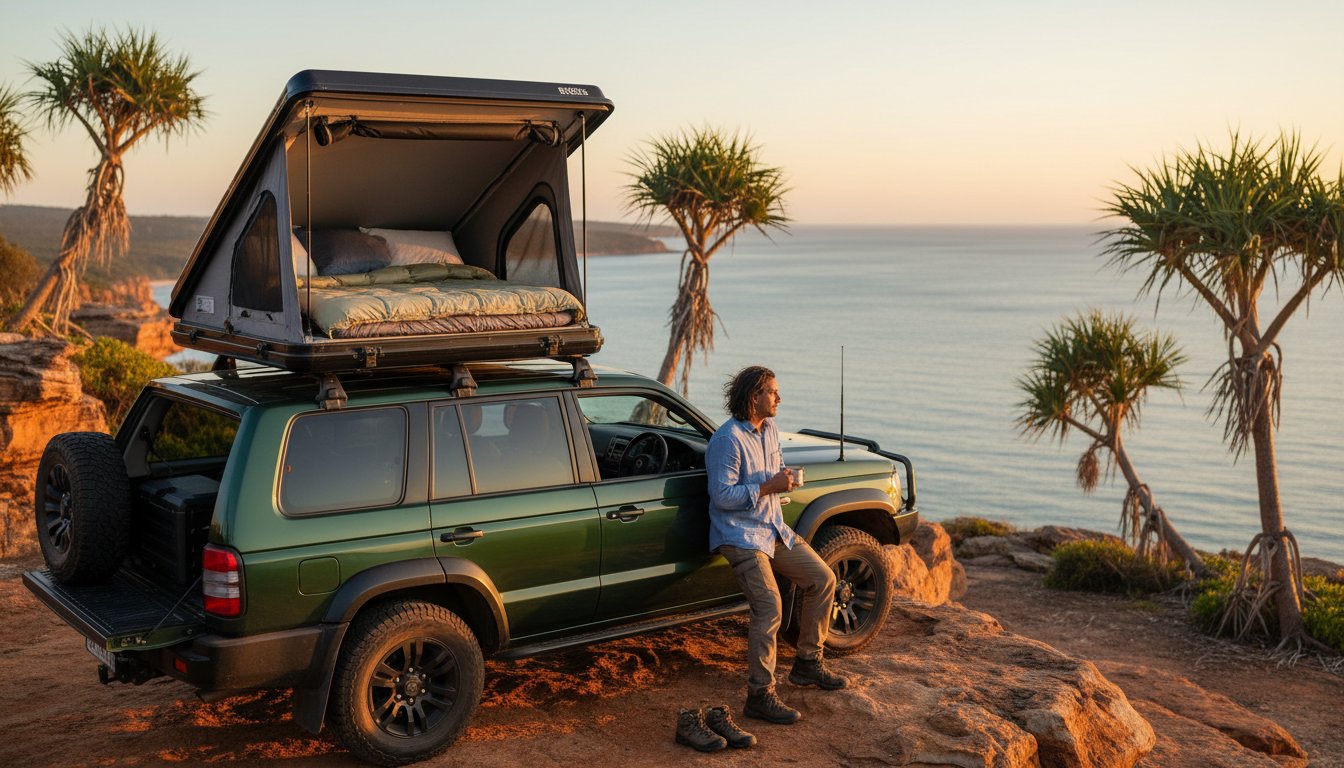
Lightning is a massive electrical discharge looking for the quickest path to the ground. When we’re out exploring the Aussie bush, our gear changes that path. Many people ask, are roof top tents safe in lightning? The reality is that your setup influences your risk level. Standing roughly 2.5 metres high on top of a 4WD makes your vehicle a much more likely target than a swag tucked low on the dirt. Metal roof racks and roof top tents with aluminium frames can act like accidental lightning rods when you’re parked in open terrain like the Nullarbor or the Hay Plains.
We need to think about how electricity behaves in the wild. It doesn’t just hit the tallest thing; it hits the thing that offers the least resistance. Because metal is a fantastic conductor, your rig becomes an attractive bridge for that energy to reach the earth. Being elevated doesn’t just give you a better view; it puts you closer to the action during a localized electrical storm. We always encourage Adventurerz to stay aware of their surroundings, especially when the clouds turn that bruised purple colour.
Does Height Actually Make You a Target?
As a storm builds, “upward streamers” of positive charge reach up from tall objects on the ground. Because your tent sits high above the earth, it’s more likely to connect with a downward leader from the clouds. Camping under a single tall gum tree is even more dangerous than being in the open. The tree will attract the strike and then “side flash” the energy into your vehicle. In remote areas, your 4WD is often the highest point for kilometres, which increases the statistical risk of a direct hit during a severe weather event.
Myth-Busting the Rubber Tyre Theory
We’ve all heard the old wives’ tale that rubber tyres keep you safe. This is a dangerous myth that needs to be put to rest. Lightning has just punched through several kilometres of air, which is a massive insulator. A mere 15cm of rubber on your All-Terrains won’t stop a bolt from reaching the ground. Your vehicle provides protection because the electricity moves around the outside of the conductive metal skin. A Faraday cage is a conductive enclosure that protects its interior by distributing electrical charges around the outside surface, making it the primary reason for vehicle safety during a storm. It’s the metal shell of your LandCruiser or Patrol that saves you, not the tyres!
When you’re inside a metal-bodied vehicle, you’re relatively safe. However, many modern roof top tents use canvas, fibreglass, or plastics. These materials don’t offer the same “cage” protection as the car’s cabin. If a strike hits the tent frame, the energy still needs to find a way to the ground, often passing through the vehicle’s pillars. Understanding this science is the first step in staying safe while you’re off-the-grid.
Understanding the Faraday Cage: Why the Cabin is King
When we’re out exploring the rugged Australian bush, we rely on our rigs to keep us safe from more than just bogged tracks. One of the most misunderstood concepts in camping safety is the Faraday cage. In simple terms, a Faraday cage is a hollow conductor that protects its interior by distributing electrical charges around the outside surface. Your 4WD cabin, provided it has a metal roof and solid pillars, acts as this protective shell during a storm.
The critical distinction every Adventurerz member needs to grasp is that roof top tents sit on top of this safety zone, not inside it. While your vehicle’s body might be ready to channel a strike, the tent is an exposed extension. So, are roof top tents safe in lightning? When you’re perched high above the ground on a metal rack, the answer is a firm no. You’ve essentially placed yourself in the most vulnerable position possible during an electrical event.
How a Metal Vehicle Protects Occupants
A metal-bodied vehicle protects you through a phenomenon called the skin effect. When lightning hits the car, the electrical current stays on the exterior surface of the metal body and travels down to the ground. This only works if you stay completely inside the shell. We always recommend keeping windows rolled up tight and avoiding contact with any metal components like the steering wheel, gear stick, or internal door handles. If you’re driving a soft-top convertible or a vehicle with a heavy plastic canopy, you don’t have this protective cage. These materials don’t conduct the current around you, making you much more vulnerable to a direct strike.
Why the Tent Sits Outside the Safety Zone
Canvas and fiberglass provide zero protection against an electrical current that can exceed 200,000 amperes. A bolt of lightning can reach temperatures of 30,000 degrees Celsius, which is five times hotter than the surface of the sun. Following the National Weather Service lightning safety guidelines, a tent is never a safe place to be during a storm. The metal poles supporting your sleeping area can actually conduct a strike directly into your bedding. There is also the massive risk of side flash. This happens when the bolt hits the roof rack and then jumps to the nearest conductor; which, in this case, is the person sleeping inside. If the clouds start to turn that ominous shade of grey, it’s time to pack up and move into the cabin. Before your next trip, take a look at our range of roof top tents to ensure your setup is easy to stow quickly when the weather turns.
Material Matters: Aluminium vs. Fibreglass Shells
We often get asked, are roof top tents safe in lightning? The short answer is that your choice of shell material changes how your setup handles a strike. Aluminium hardshells are highly conductive, yet this isn’t always a disadvantage. Because aluminium conducts electricity so well, it can help direct the massive current toward your roof rack. In this scenario, the rack becomes the primary grounding point, potentially steering the energy away from the tent’s interior and toward the vehicle’s frame.
Fibreglass and plastic shells act as insulators. They don’t conduct electricity, but that doesn’t mean they’re safer. When lightning hits an insulator, the energy often causes the material to shatter or explode due to the rapid expansion of air and moisture. These materials are also much more likely to catch fire than metal counterparts. According to the National Weather Service lightning safety guidelines, no tent provides protection from a strike, so we must focus on minimizing secondary risks like fire and structural collapse.
The Conductivity of Your Tent Frame
Soft-shell tents rely on internal aluminium hoops to maintain their structure. These hoops sit just centimetres from your head, acting as potential conductors if the fabric is breached. When we look at hardware, stainless steel is the heavy hitter. It handles extreme heat better than aluminium, which melts at approximately 660 degrees Celsius. In a lightning event, temperatures can reach 30,000 Kelvin, so every bit of heat resistance counts. It’s vital to remember that no material makes a tent “safe,” only “less likely to incinerate.”
Soft Shell vs. Hard Shell Safety Factors
Hard shells offer a massive advantage during the chaotic winds that accompany Aussie storms. They’re rigid and protect you from flying branches or debris. In contrast, soft shells are prone to “pooling.” When water collects on the canvas, it creates a path for water-based conduction, which increases your risk during a downpour.
If you’re caught in a storm, your setup routine needs to change fast. We always recommend that your best 4wd awnings be retracted immediately. These extensions act as giant sails in high winds and increase the overall footprint that could potentially receive a strike. Keeping your setup compact is the smartest move for every Adventurerz member when the clouds turn dark.
The Storm Protocol: Safety Steps for Adventurerz
We love the rhythm of rain on canvas, but lightning changes the game instantly. While many of us wonder are roof top tents safe in lightning, the truth is that the tent itself offers no protection from a strike. We follow the 30/30 rule to keep the community safe. If the time between a lightning flash and the following thunder is 30 seconds or less, the storm is within 10 kilometres. That’s the signal for all Adventurerz to seek better shelter immediately.
The “Bail to the Cabin” procedure is our standard response. Your vehicle acts as a Faraday cage, directing electrical current around the exterior and into the ground. Once you’re inside the 4WD, sit in the middle of the seats. Keep your hands in your lap and avoid touching the steering wheel, gear stick, or door handles. If the storm hits so fast that you’re trapped in the tent, crouch low on your mattress and stay away from the metal internal frame until there’s a break in the activity.
When to Move from the Tent to the Cabin
We always prioritize life over gear. Don’t try to pack up the tent or zip up the travel cover when lightning is active. It’s better to let the interior get a bit damp than to stand outside holding metal poles. The ladder is the most dangerous part of your setup during a storm because it’s a direct conductor. Get down early. We recommend waiting at least 30 minutes after the very last clap of thunder before you even think about climbing back up to your sleeping quarters.
Managing Gear and Awnings
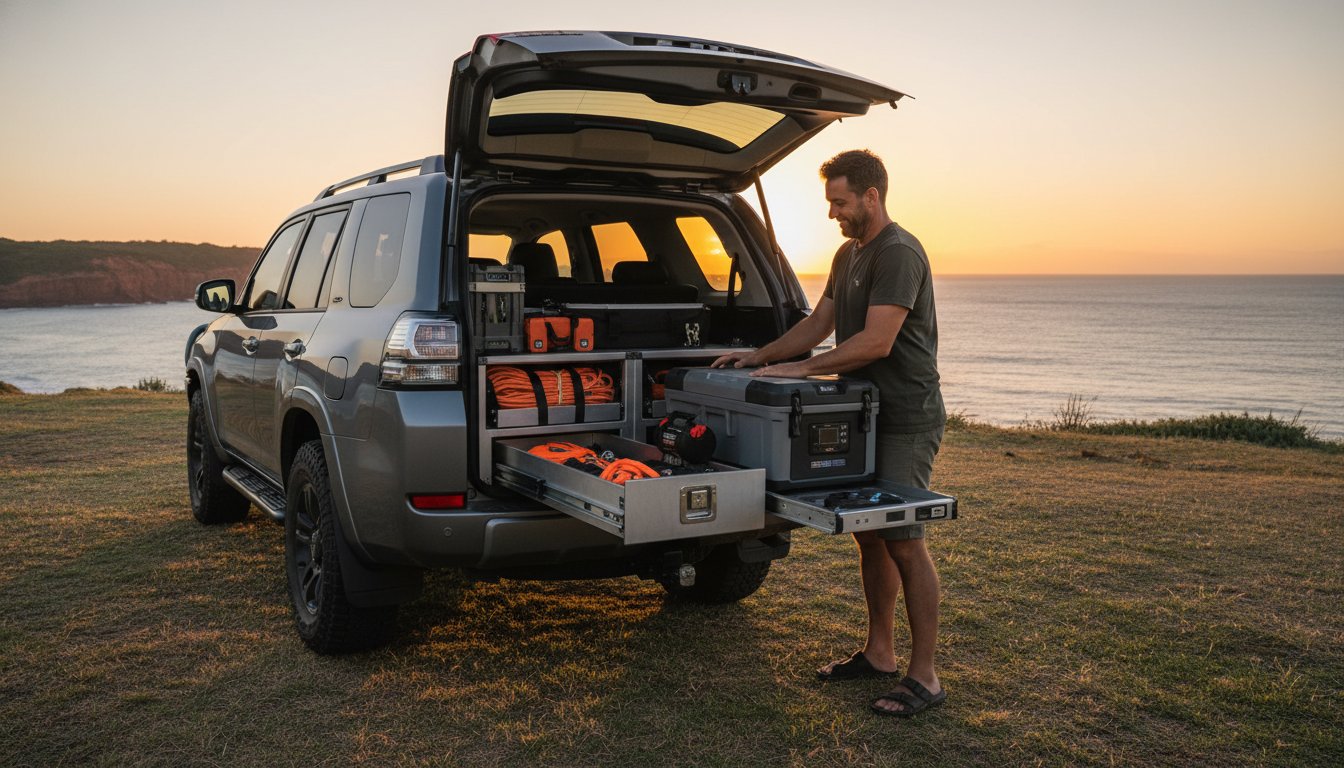
Before the weather turns sour, take a moment to lower any tall UHF antennas or sand flags. These effectively act as lightning rods on your roof. We also suggest disconnecting your fridge and lithium power banks from the 12V sockets. A nearby strike can send a massive surge through your wiring, frying expensive gear in milliseconds. Proper planning helps us stay resilient in the bush. You can find more tips in the ultimate adventure travel planner for your 2026 remote escapes.
Preparing for Remote Australian Storms
Out in the bush, we know that weather changes in a heartbeat. When those dark clouds roll over the horizon in the High Country or across the Nullarbor, the question of are roof top tents safe in lightning becomes a matter of practical preparation. Your best defence isn’t just the gear you carry; it’s where you decide to park your rig for the night. Lightning seeks the path of least resistance, which usually means the tallest object in a given area. If you’re parked on a ridge line or a plateau, your vehicle becomes a literal lightning rod.
We always recommend following the “tallest thing” rule: never be it. Avoid isolated trees that stand alone in a paddock or clearing. Instead, look for topographic protection. Valleys and depressions offer natural shielding from direct strikes. If you’re in a forested area, look for a uniform stand of trees. This “clumping” effect ensures that your vehicle isn’t the highest point in the immediate vicinity, significantly reducing the risk of a direct hit. According to safety data from the Australian Bureau of Meteorology, lightning can heat the air to 30,000 degrees Kelvin, so maintaining a safe distance from potential strike points is vital for every Adventurerz member.
Reliable communication is your lifeline in remote Australia. We don’t rely on mobile reception when we’re deep in the outback. A dedicated weather radio or a satellite communicator like a Garmin inReach is essential. These devices provide real-time updates on storm cells, allowing you to move to lower ground before the first bolt drops. Being proactive is the hallmark of a prepared explorer.
Choosing the Right Campsite
Identifying safe terrain versus exposed terrain is a skill every 4WD enthusiast needs. Avoid camping near large bodies of water or boggy ground. Water is a fantastic conductor; a strike hundreds of metres away can travel through the wet earth as a ground current and reach your setup. When we set up our roof top tents, we look for firm, dry ground within a forest of similar-height trees. This provides a “cone of protection” without the risk of a single tall tree falling on the vehicle if a strike occurs.
Weather-Resistant Gear for Adventurerz
Your gear must handle more than just rain. High-quality mounting systems are crucial; they ensure your tent won’t shear off the roof racks during the 90 km/h gusts that often precede a storm. Many Adventurerz prefer hardshell tents because they offer rapid deployment and retraction. When a storm turns nasty, being able to pack up and move to the safety of the vehicle cabin in under 60 seconds is a massive advantage. We encourage everyone in our community to share their storm stories and safety tips on the Adventurerz platform. Your experiences help us all stay safer and more resilient on the road!
Stay Storm-Ready on Your Next Australian Expedition
Understanding the science behind the Faraday Cage effect and the conductivity of different shell materials is essential for every off-the-grid trip. While we love the view from the roof, the vehicle cabin remains the safest spot when a storm hits. Many folks ask, are roof top tents safe in lightning; the truth is that no tent is a match for a strike that can reach 30,000 degrees Celsius, according to Bureau of Meteorology data. That’s why we emphasize moving to the car and following a strict safety protocol to protect yourself and your fellow Adventurerz.
We’ve built a community that values both rugged performance and sustainable outdoor practices. Our Australia-wide gear recommendations come from expert reviews by real Australian campers who know exactly what it’s like to be caught in a remote downpour. We’re here to ensure you have the right equipment and the right knowledge to stay safe. Explore our community-vetted range of Roof Top Tents today. Pack your gear with confidence and we’ll see you out on the tracks!
Frequently Asked Questions
Is a hardshell rooftop tent safer than a softshell in a storm?
No, a hardshell rooftop tent is not safer than a softshell during a lightning storm. While hardshells feel more robust, they lack the metal frame enclosure required to create a Faraday cage effect. We recommend moving to the hard-top cabin of your 4WD immediately. According to the Bureau of Meteorology, lightning can reach 30,000 degrees Celsius, making any fabric or fiberglass structure a high-risk area.
Should I stay in my rooftop tent if I hear thunder?
You should never stay in your rooftop tent if you hear thunder. If you can hear thunder, you’re already within striking distance of the storm. We always advise Adventurerz to descend the ladder safely and seek shelter inside a hard-topped vehicle. Lightning often strikes the highest point in an area. Since rooftop tents sit 2 meters or more above the ground, they become primary targets for strikes.
Can lightning strike my 4WD while I am driving?
Yes, lightning can strike your 4WD while you are driving. If this happens, the metal body of the vehicle acts as a Faraday cage, directing the current around the exterior and into the ground. A study by the National Lightning Safety Council found that occupants are generally safe if they don’t touch metal components. Pull over safely, turn off the engine, and keep your hands in your lap until the storm passes.
Do I need to ground my rooftop tent with a wire?
You do not need to ground your rooftop tent with a wire, and attempting to do so can actually increase your risk. A simple wire cannot handle the 300 million volts of a typical lightning bolt. Instead of trying to ground the tent, focus on relocating. Are roof top tents safe in lightning? The short answer is no, so your best bet is moving to a safer location before the storm hits.
What is the 30/30 rule for lightning safety?
The 30/30 rule states that you should seek shelter if the time between a lightning flash and thunder is 30 seconds or less. This indicates the strike is within 10 kilometres of your camp. After the storm, wait 30 minutes after the last roar of thunder before leaving your vehicle. This rule is a standard safety protocol recommended by the Australian Resuscitation Council to prevent secondary strike injuries during outdoor activities.
Are carbon fibre tent poles safer than aluminium ones?
Carbon fibre poles are not significantly safer than aluminium ones because both materials can conduct electricity during a strike. Aluminium is a highly conductive metal, while carbon fibre can also carry current. In a lightning event, the material of your poles matters less than your physical location. We suggest Adventurerz focus on getting inside the vehicle cabin rather than relying on pole materials for safety during a severe weather event.
What should I do if my vehicle is struck by lightning while I am inside?
If your vehicle is struck while you’re inside, stay put and avoid touching any metal surfaces or electronic components. The current will travel through the outer metal shell. Wait for the charge to dissipate before exiting. While modern tyres are made of rubber, they don’t insulate the car from lightning. Most Australian emergency services recommend staying inside for at least 30 minutes after the last thunder clap to ensure the storm has moved.
Can I use my mobile phone in a rooftop tent during a storm?
You can use a mobile phone in a rooftop tent during a storm, provided it’s not plugged into a charger. Cordless devices don’t attract lightning. However, being in the tent itself remains the main danger. We want all Adventurerz to know that the answer to are roof top tents safe in lightning is a firm no. Use your phone to check the BOM radar, then move to your vehicle cabin immediately.