Hey Adventurerz! Are you tired of wrestling with a complex setup in howling coastal winds, or waking up to a damp, condensation-soaked sleeping bag in the tropical north? We get it. Choosing the right rooftop sanctuary can feel like navigating a maze of heavy-duty fabrics, gas struts, and eye-watering price tags, especially when you’re trying to keep your vehicle’s handling in check. That’s exactly why we’ve hit the tracks, tested the gear, and put together the definitive guide to the best roof top tent Australia 2026 has to offer!
In this ultimate guide, we’re diving deep into the models that truly conquer our unique Australian conditions-from their durability against red dust to their breathability in humid climates. But we’re not just ranking gear; we’re championing smarter, more considerate exploration. We’ll break down the trade-offs between shell types, tackle the big questions on budget, and share our best tips for sustainable camping. Let’s find the perfect mobile basecamp for your next epic journey!
Key Takeaways
- Quickly determine if a lightning-fast hard shell or a spacious soft shell RTT is the right choice for your touring style and crew.
- Master the critical math of vehicle payload and GVM *before* you buy to ensure your 4WD setup is both safe and legal on Aussie tracks.
- Discover our top-rated picks for the best roof top tent Australia 2026, rigorously tested for durability and comfort in local conditions.
- Learn the proven techniques to eliminate condensation-the number one complaint of RTT owners-for a dry and comfortable night’s sleep.
Why Roof Top Tents (RTTs) are the Gold Standard for Australian Touring in 2026
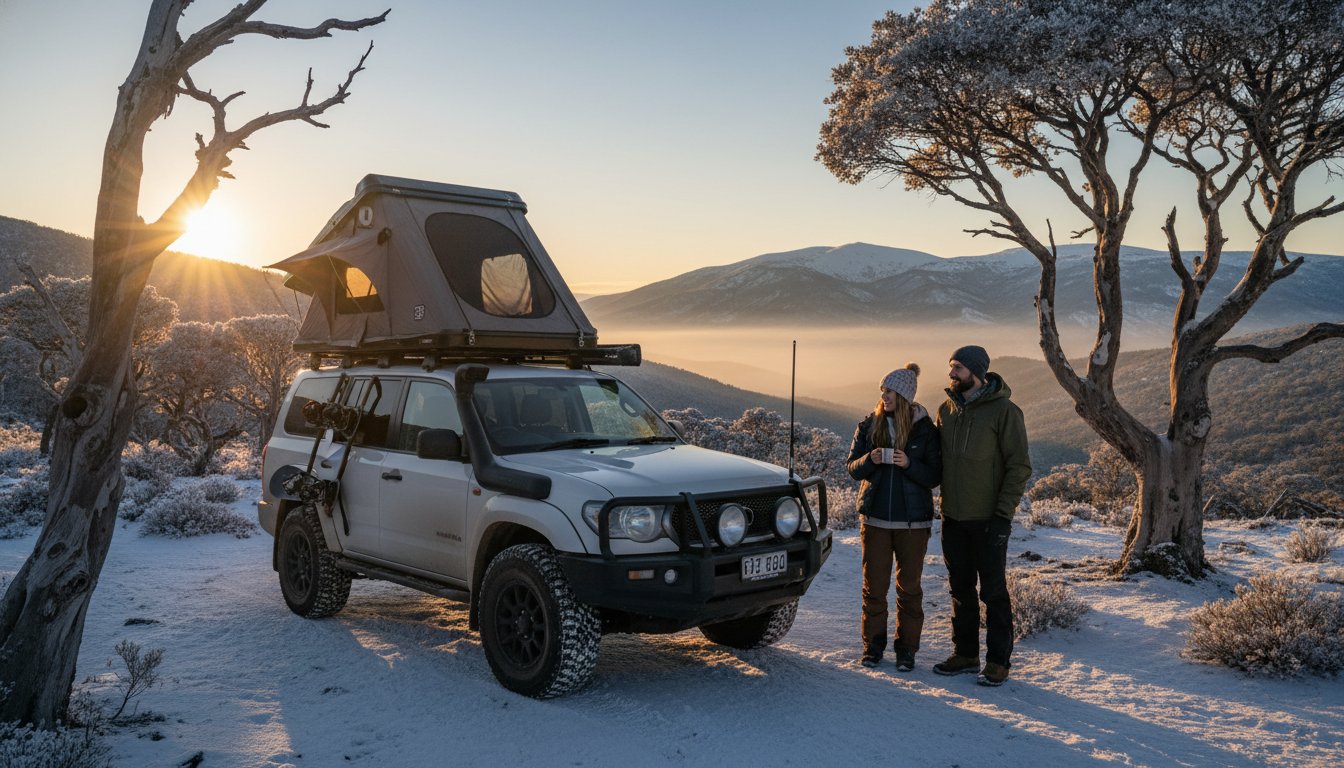
Let’s be honest, fellow Adventurerz: the days of wrestling with poles and pegs in the dark are over! Roof Top Tents (RTTs) have evolved from cumbersome, heavy canvas boxes into streamlined, high-tech adventure hubs. Here at Adventurerz, we’ve watched-and tested-this incredible transformation. What was once a niche item for hardcore overlanders is now the undisputed gold standard for anyone serious about exploring our magnificent backyard. They represent freedom, speed, and a whole new perspective on the Aussie landscape.
The core magic of an RTT lies in its simplicity and security. Imagine pulling up to a remote billabong after a long day on the tracks and being set up with a comfortable, elevated bed in under two minutes. That’s more time for soaking in the sunset, not fumbling with a mallet! This efficiency is about more than just convenience; we believe it fosters a deeper, more immediate connection to the wild places we love. You’re not just camping in the landscape; you’re perched above it, safe from ground-dwelling critters and ready for anything.
This freedom to explore extends beyond just the land. For many adventurers, an RTT is the perfect basecamp for other activities, turning a coastal campsite into a launchpad for a day on the water. If adding a boating adventure to your overland trip sounds appealing, you can learn more about Boat4Hire to see the kind of experiences available.
The ‘High Ground’ Advantage in the Outback
Taking your camp setup to the next level-literally-comes with some massive, Australia-specific perks. Sleeping on your roof rack isn’t just cool; it’s a seriously smart move in the bush.
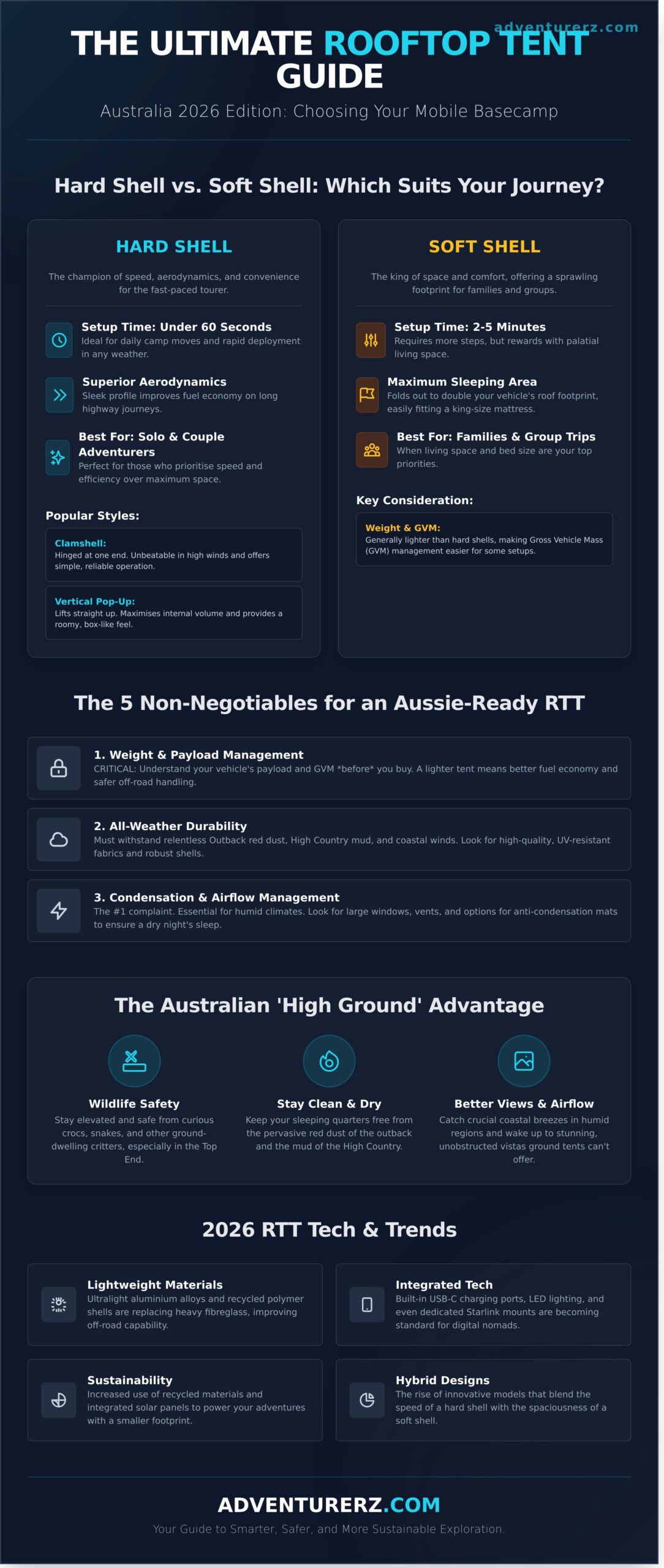
- Wildlife Safety: In the Top End or Cape York, being off the ground provides crucial peace of mind from curious crocs and snakes.
- Better Airflow & Views: Catch that life-saving coastal breeze in humid regions and wake up to stunning, unobstructed vistas that ground-level tents just can’t offer.
- Stay Clean: Keep your sleeping quarters free from the relentless red dust of the Outback and the mud of the High Country. Your bedding will thank you!
2026 Trends: The Rise of the ‘Lightweight’ Adventurer
The features we’re seeing in the best roof top tent Australia 2026 models are a complete game-changer, driven by incredible advances in material science. Clunky fibreglass is being replaced by ultralight aluminium alloys and durable shells made from recycled polymers. This ‘lighter is better’ philosophy means improved fuel economy on those epic cross-country hauls and better off-road capability for your 4WD on challenging tracks. The hard shell, in particular, has become a platform for innovation; you can learn more about the fundamental Roof tent designs and styles to see how they’ve evolved. Today, integrated solar panels are becoming standard, powering your adventures sustainably. For the growing tribe of digital nomads, built-in USB-C charging ports and dedicated Starlink mounts are making it easier than ever to work from anywhere. This isn’t just camping; it’s the future of self-sufficient, connected exploration.
Hard Shell vs. Soft Shell: Which Architecture Suits Your Journey?
Alright, fellow Adventurerz, this is the big one! The choice between a hard shell and a soft shell roof top tent is the first major crossroad on your overlanding journey. It defines how you set up, pack down, and live on the road. While one isn’t definitively ‘better’ than the other, they serve different missions. Let’s break down which one will become your ultimate home away from home.
For 2026, we’re also seeing incredible innovation in hybrid models that aim to give you the best of both worlds. But first, we need to master the fundamentals!
The Hard Shell Revolution: Vertical vs. Clamshell
Hard shells are the champions of convenience. Known for their lightning-fast ’30-second setup’, they are perfect for fast-paced touring where you’re moving camp every day. They come in two main flavours:
- Clamshell Designs: Hinged at one end, these are the kings of wind resistance. By pointing the hinge into the wind, you create an incredibly stable and quiet shelter. They’re simple, reliable, and often allow for some gear storage inside when closed.
- Vertical Pop-Ups: These lift straight up, creating a box-like space with maximum internal volume and near-vertical walls. This design feels incredibly roomy and is fantastic for sitting up or getting changed.
A key consideration for any Aussie tourer is aerodynamics. The sleek, low-profile design of most hard shells can make a real difference to your fuel bill on those long highway stretches across the Nullarbor. Every litre counts!
Soft Shell Reliability: Traditional Comfort
Don’t count out the classic soft shell! These tents still win hands-down for families or those wanting maximum sleeping space. They fold out to create a huge footprint, often double the size of your vehicle’s roof, easily accommodating a king-size mattress. Their lighter construction is also a major plus, as managing your Gross Vehicle Mass (GVM) is critical in the booming Australian off-road market, and a lighter tent can save your vehicle’s suspension. The main trade-off is pack-up time. Pro tip for the tropics: always carry a large microfibre towel to wipe down excess moisture from the canvas before packing away to prevent mould.
Side-by-Side Snapshot:
- Durability: Hard shells generally offer better protection from branches, hail, and general wear and tear.
- Wind Resistance: A well-positioned clamshell hard shell is unbeatable in a gale.
- Price: Soft shells remain the most budget-friendly option, often starting under A$2,000, while premium hard shells can push past A$5,000.
Ultimately, deciding between these styles is the most important step in finding the best roof top tent Australia 2026 has to offer for your unique adventure style. Consider your travel pace, your crew size, and your budget, and you’ll make the right call!
The 5 Non-Negotiable Criteria for an Australian-Ready RTT
Before you get swept up in brands and models, let’s talk fundamentals. Choosing the best roof top tent Australia 2026 has to offer demands more than a quick feature comparison; it’s about matching your gear to the rugged, unpredictable, and utterly magnificent reality of our continent. These are the five criteria every Adventurerz member must master before making a purchase.
1. Vehicle Payload and GVM: The Critical Math
Get this wrong, and you risk more than just your gear. An RTT adds significant weight high up on your vehicle, so understanding your load limits is paramount for safety and legal compliance. Your roof has two ratings: a dynamic load (the maximum weight while driving) and a static load (the weight it can support when parked). An RTT also raises your vehicle’s centre of gravity, which you’ll feel on off-camber tracks. Crucially, your Gross Vehicle Mass (GVM) is the total legal weight of your rig fully loaded, and exceeding it can void your insurance and violate Australian vehicle safety standards.
2. Breathability and Condensation Management
Waking up in a damp tent is the #1 complaint of RTT owners, and it’s a real trip-ruiner! From the humidity of the Top End to the frosty air of the Victorian High Country, your tent must be able to breathe. Look for large, meshed windows that encourage cross-flow ventilation, integrated air vents, and high-quality canvas. Why canvas? Heavy-duty 380gsm poly-cotton canvas remains the gold standard for the bush because it’s naturally breathable, insulating, and incredibly tough against the elements.
3. Serious Dust Sealing
If you’ve ever driven the Oodnadatta Track, you know that bulldust gets everywhere. A top-tier RTT must feature robust, automotive-grade rubber seals on hard-shell models or fully enclosed, overlapping storm flaps on soft-shell zips. This isn’t a luxury; it’s an essential feature to ensure your sleeping space remains a clean sanctuary, not a gritty sandbox after a long day on the road.
4. Versatile Mounting Systems
Your RTT is useless if it won’t fit your rig. With modern platform racks from brands like Rhino-Rack and ARB now the standard for serious tourers, you need to ensure compatibility. The best tents come with versatile mounting hardware-adjustable clamps, multiple bolt tracks, and strong brackets-that can adapt to a wide range of crossbar profiles and platform channels, making for a secure and straightforward installation.
5. A Commitment to Sustainability
As Adventurerz, we have a collective responsibility to tread lightly. This means choosing brands that build gear to last. Look for companies that prioritize repairability over replacement by offering readily available spare parts like poles, brackets, and patch kits. A great RTT is an investment that should last a decade, not just a few seasons-a core principle when searching for the best roof top tent Australia 2026 can offer.
Top Picks: The Best Roof Top Tents in Australia for 2026
Alright, fellow Adventurerz, this is the moment we’ve all been waiting for! After countless dusty tracks and starry nights, we’ve put the latest and greatest through their paces. From the Red Centre to the Daintree, we’ve compiled our definitive list of the best roof top tent Australia 2026 has to offer. Let’s dive into the models that truly stand up to Aussie conditions.
Here’s a quick look at our champions for the year:
- Best Overall Hard Shell: The 2026 ‘Outback Elite’ for its rugged build and lightning-fast setup.
- Best Family Soft Shell: The ‘Great Southern’ Expandable, offering massive living space.
- Best Lightweight/Compact: The ‘Scarborough Stealth’, perfect for mid-sized SUVs and weekend warriors.
- Best Eco-Conscious Choice: Models using 100% recycled canopy fabrics, making your footprint lighter.
- The Budget King: Fantastic high-value options delivering adventure under A$2,500.
Premium Tier: When Only the Best Will Do
The ‘Outback Elite’ clamshell is, without a doubt, the king of the premium space. Its gas-strut assisted, 30-second setup is a game-changer at the end of a long day. Inside, you’re treated to integrated LED lighting, pre-installed ducts for your diesel heater, and a plush 75mm memory foam mattress. But what truly sets it apart is the peace of mind from its 5-year warranty and dedicated Australian-based support team-absolutely essential when you’re properly off-grid.
The Mid-Range Sweet Spot
For most of us, the perfect balance lives in the A$3,000 – A$4,000 bracket. The big news for 2026 is the rise of hybrid models, blending a tough aluminium hard top with expandable soft-shell sides. This gives you the quick setup of a hard shell with the spacious living area of a soft shell-perfectly versatile for a weekend at the beach or a month-long Cape York expedition. It’s the ultimate do-it-all solution.
Finding the best roof top tent in Australia for your rig means matching your adventure style with the right gear. We’re thrilled to see more brands offering eco-conscious options with recycled fabrics, proving you don’t have to compromise your values. Ready to find your perfect setup? Explore our full range of tested and approved RTTs and get out there!
Installation, Safety, and the Adventurerz Community Ethos
You’ve done the research and picked your ultimate adventure rig-congratulations! But owning the best roof top tent Australia 2026 has to offer is about more than just awesome campsites. It’s about embracing a lifestyle of safe, responsible exploration. This is where we, the Adventurerz community, truly shine: by preparing properly, driving smart, and leaving our incredible Aussie landscapes better than we found them.
While most RTTs are designed for DIY installation, we always recommend a professional check, especially for your first one. They can confirm your roof rack’s dynamic weight capacity is up to the task and ensure a rock-solid fitment. Once on the road, remember your vehicle’s centre of gravity is now higher. Adjust your driving style by taking corners slower and being mindful of crosswinds. Before every trip, run through a quick safety check:
- Mounting Hardware: Are all bolts and nuts tight and secure?
- Tent Latches: Is the tent properly closed and latched for transit?
- Vehicle Handling: Does everything feel right on the road?
This ethos of preparation extends to your personal health as well. A sudden toothache in a remote area is a trip-ending disaster, so a pre-trip check-up is just as crucial as checking your rig. For adventurers on the NSW coast, for example, getting sorted at a trusted practice like Star Dental Care offers peace of mind before heading into the wild.
Setting Up for Success
A great night’s sleep starts with a level foundation. Finding a flat spot isn’t always possible, but a set of leveling blocks or chocks under your tyres will make all the difference for comfort and stability. Always ensure your ladder is on solid, even ground and set at the correct angle-never over-extended. Respect its weight limit to guarantee safe entry and exit. Critically, always remember to re-torque your mounting bolts after the first 100km of hitting those classic Aussie corrugated roads.
Responsible Exploration
One of the greatest advantages of an RTT is its minimal impact on the environment. By sleeping on your vehicle, you’re protecting fragile ground cover and delicate local flora from being trampled. We extend this “Leave No Trace” ethos to everything we do. Always pack out everything you pack in, and opt for biodegradable soaps and eco-friendly cleaning products for your tent and gear. Let’s keep our wild places wild for generations of Adventurerz to come. Join the Adventurerz community to find your next remote destination!
Your journey is our journey! As you explore with the best roof top tent Australia 2026 can provide, we want to see it. Share your epic trip photos from the High Country, your clever gear hacks from Cape York, and your hard-won wisdom with the tribe. Your experience helps us all travel smarter and more sustainably. Welcome to the adventure!
Your 2026 Adventure Starts Now!
And there you have it, fellow Adventurerz! Choosing your mobile basecamp is one of the most exciting parts of planning an expedition. We’ve navigated the key differences between hard and soft shell architectures and drilled down on the non-negotiable features every rig needs to tackle our rugged Aussie terrain. Ultimately, finding the best roof top tent Australia 2026 for your journey is about matching world-class engineering with your personal spirit of adventure.
As a team based in Scarborough, QLD, we’ve been putting 4WD gear to the test in the real world since 2018. We’re not just reviewers; we’re a community dedicated to sustainable and responsible exploration. If you’re ready to transform that pin on the map into an unforgettable, eco-conscious itinerary, we’re here to help. Explore our 2026 Remote Travel Planning Services and let’s build your next epic trip together!
The tracks are calling. Get geared up, get out there, and travel with purpose. We’ll see you by the campfire!
Frequently Asked Questions About Roof Top Tents
Is a roof top tent worth it for a standard SUV in Australia?
Absolutely! A roof top tent transforms your standard SUV into a proper adventure-ready rig. It’s a fantastic way to get up off the ground, away from Aussie critters and uneven terrain. Most modern SUVs have the roof load capacity for a lightweight hard-shell or soft-shell tent. For Adventurerz who value a quick setup, epic views, and the freedom to camp almost anywhere, it’s an investment that pays off with every trip.
How much does a good roof top tent cost in 2026?
The price for a quality roof top tent in Australia varies, but you can expect a solid range. Entry-level soft-shell tents typically start around A$1,500 to A$2,500. For a durable, quicker-to-set-up hard-shell model, you’re looking at A$3,000 to A$5,000. Premium, feature-packed options can go above A$5,000. Finding the best roof top tent Australia 2026 for you means balancing your budget with the features that matter most for your adventures!
Can I leave my bedding inside the roof top tent when it’s closed?
Yes, and it’s a total game-changer for a fast getaway! Most modern hard-shell tents and even some clamshell soft-shell models are designed with enough space to leave your pillows, sleeping bags, or a doona inside when packed down. This means your bed is ready the moment you pop the tent open. We always recommend checking the manufacturer’s specifications, as overly bulky bedding might prevent a perfect seal for travel.
Do roof top tents cause mold or condensation issues?
Condensation is a natural part of camping, but it’s easily managed with a good tent. Quality models use breathable poly-cotton canvas and feature multiple vents to promote crucial airflow. The key is to always air out your tent thoroughly after a trip, especially if it was damp. We also highly recommend an anti-condensation mat under the mattress-it’s a simple addition that makes a huge difference in keeping things dry and fresh.
What is the weight limit for most Australian vehicle roofs?
This is a critical safety check! You need to know your vehicle’s dynamic and static weight ratings. The dynamic rating (for when you’re driving) is often between 75kg and 100kg for most 4WDs and SUVs. The static rating (for when you’re parked and camping) is much higher and will easily support the tent, you, and your gear. Always consult your vehicle’s manual and your roof rack’s specifications before you buy.
How do I secure my roof top tent against theft while traveling?
Protecting your gear is smart thinking! Most tents attach to your roof rack with standard nuts and bolts, which are a good starting point. For an excellent and affordable security upgrade, we suggest swapping these out for a set of tamper-proof or locking nuts. These require a unique key to remove, providing great peace of mind and deterring any would-be thieves while you’re off exploring on foot or grabbing a bite.
Can one person set up a hard-shell roof top tent alone?
You bet! This is one of the biggest advantages of a hard-shell tent. Thanks to powerful internal gas struts, setting one up is a breeze for a solo adventurer. You simply undo a few latches, give the shell a light push, and it practically opens itself in under a minute. Packing down is just as quick and effortless. This makes them perfect for quick overnight stays or setting up camp in challenging weather.
Are roof top tents noisy in high winds?
They can be, but design and materials make all the difference. Aerodynamic hard-shell tents generally handle windy Aussie conditions with less noise than square soft-shell models. Tents made from heavy-duty, taut canvas will flap less than those with thinner materials. The key is to ensure all your windows, straps, and the rainfly are secured tightly before you turn in for the night. A well-made tent will help you sleep soundly!