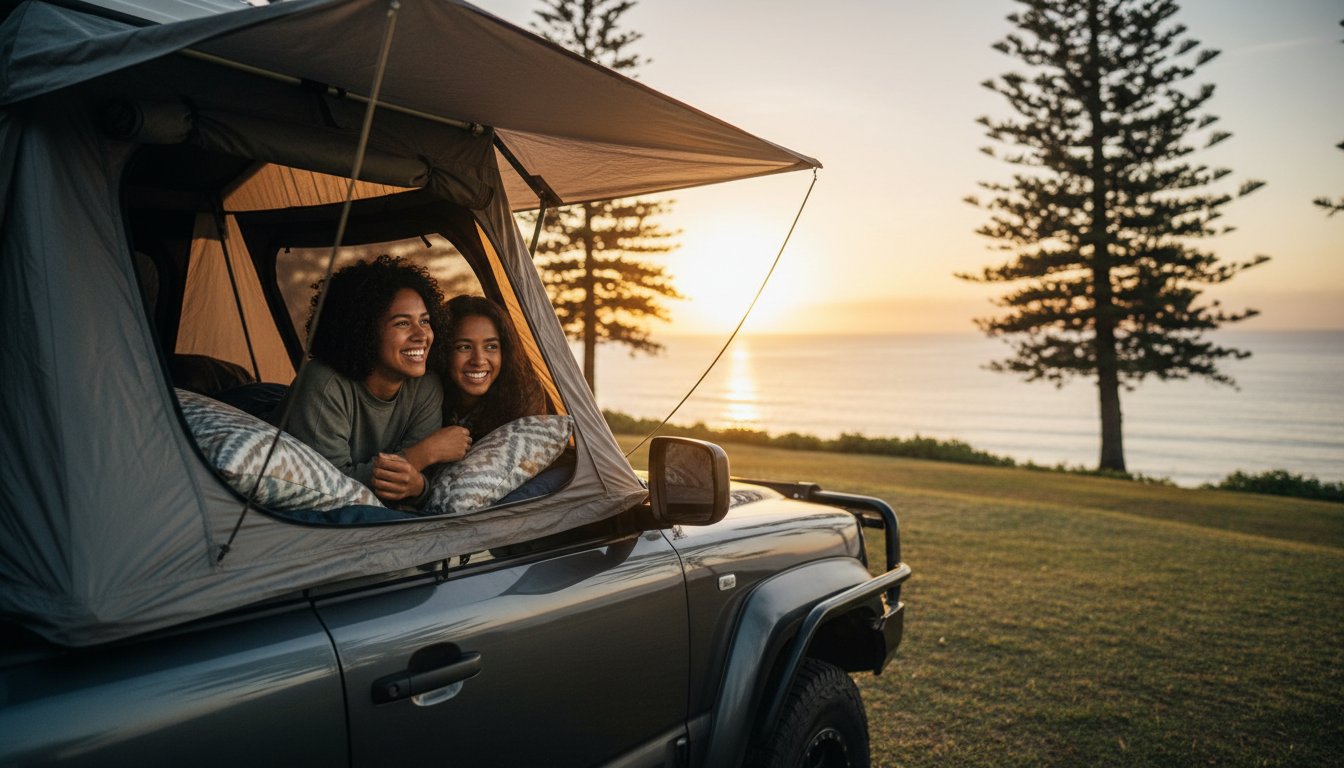
Imagine you’re tucked away in the Victorian High Country during a sudden November downpour. You’re trying to change out of muddy gear inside your roof top tent without elbowing your partner in the face, but there’s just no room. We’ve all felt that frustration of being trapped in a cramped space when the weather turns sour. That’s why this roof top tent annex review Australia is so vital for your 2026 gear list. We agree that while the view from the roof is unbeatable, sometimes you just need a private spot to stand up and pull on your boots.
We’ll show you exactly which annex models offer the best value for your hard-earned A$ and which ones will actually survive a 40km/h gust in the Outback. You’ll discover if the added weight on your roof rack is worth the extra living space or if it’s just another hassle for your setup. Our guide breaks down the latest releases from top brands, ensuring every Adventurerz knows when to pack the extra canvas and when to leave it at home. It’s time to find out if an annex is the missing piece of your sustainable 4WD journey.
Key Takeaways
- Understand how an annex transforms your setup into a private, enclosed sanctuary perfect for storage and weather protection in the rugged Australian landscape.
- Evaluate the “Basecamp vs. Touring” trade-off to decide if the extra 10-15kg of canvas is a smart addition to your vehicle’s GVM and fuel budget.
- Dive into our roof top tent annex review Australia to compare the latest 2026 offerings from heavy-hitters like Darche, 23Zero, and Adventure Kings.
- Learn essential maintenance hacks like the “Red Dust Protocol” and clever ventilation strategies to keep your living space pristine and condensation-free!
- Discover why we believe the annex is a situational masterpiece that is absolutely worth the investment for families and long-term remote travelers.
Why an Annex is a Game-Changer for Australian Camping
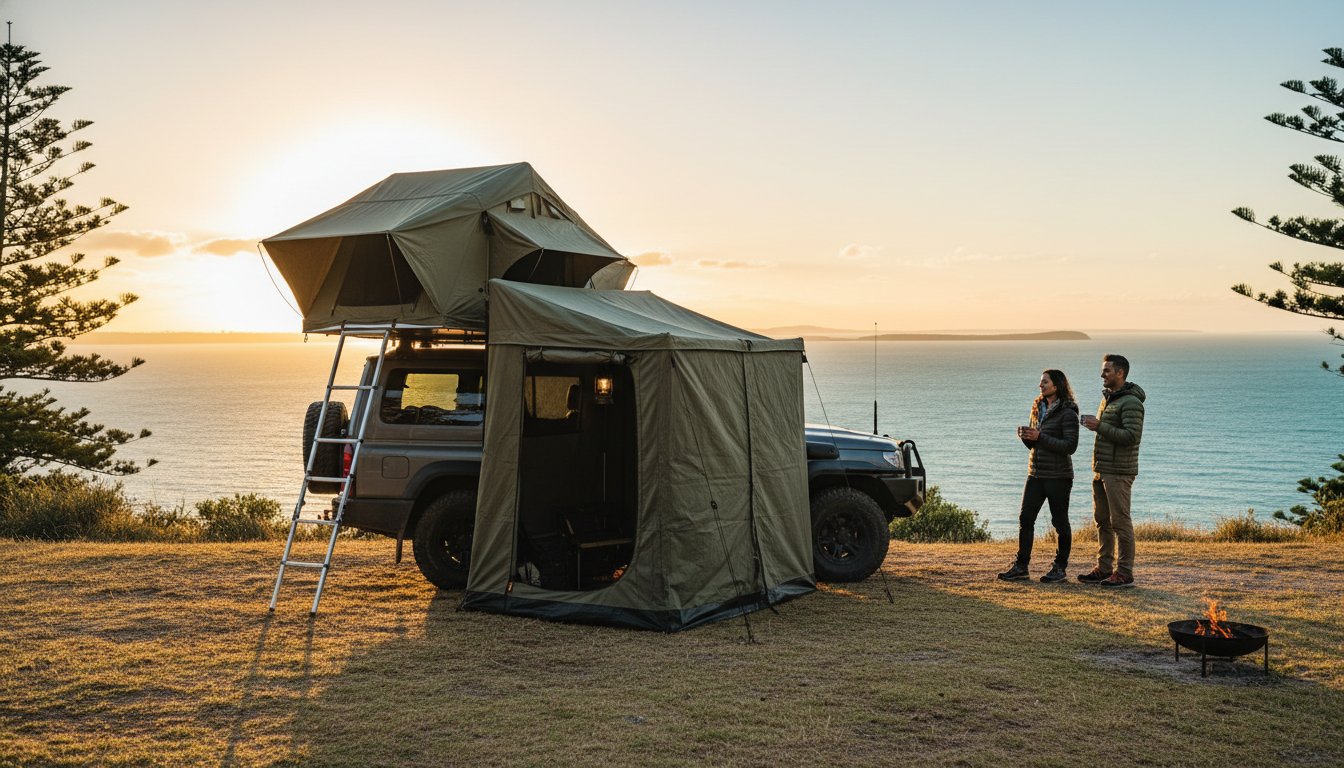
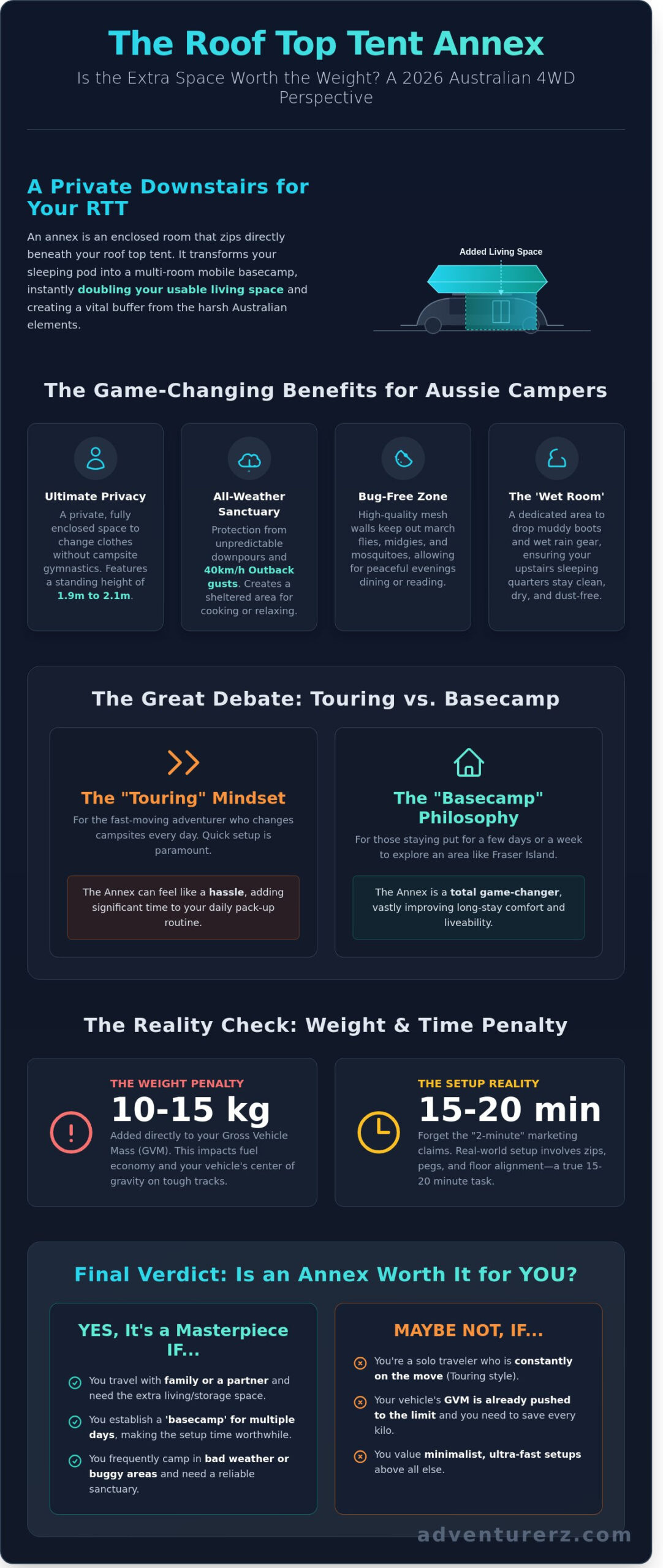
We’ve all been there: you’ve found the perfect spot in the Flinders Ranges, the sun is setting, and you’re ready to relax. But as any seasoned traveler knows, the limited footprint of a vehicle can feel a bit tight after a few days on the road. This is where the annex transforms your setup. Essentially, an annex is an enclosed room that zips directly beneath the overhanging section of soft-shell roof top tents. It creates a dedicated “downstairs” area that doubles your usable living space instantly. Before we dive deep into our roof top tent annex review Australia, it helps to understand the foundation. What is a Roof Top Tent? At its core, it’s a mobile sleeping pod; the annex is what turns that pod into a home.
In 2026, we’ve seen a massive shift in gear design. Manufacturers have moved away from basic canvas boxes. Today’s annexes are integrated living ecosystems. They now feature internal power cable ports, integrated LED mounting points, and structural floors that handle the rugged Australian terrain. For the Adventurerz community, this means your basecamp is no longer just a place to sleep; it’s a functional hub for cooking, relaxing, and gear maintenance.
Privacy and Changing Space
Trying to change your clothes inside a cramped RTT is a masterclass in unintentional gymnastics. It’s even harder when you’re trying to stay out of sight of the rest of the campsite. An annex solves this by providing a secure, tall space where you can actually stand up straight. Most 2026 models offer a minimum height of 1.9 to 2.1 meters, which is plenty of room for even the tallest campers to organize their kit. We also love the “wet room” advantage. You can kick off those muddy Blundstones and hang up wet rain shells downstairs, ensuring your sleeping bags and mattress stay bone-dry and dirt-free.
Protection from the Elements
The Australian climate is famously unpredictable. One minute you’re enjoying a coastal breeze, the next you’re being swarmed by march flies or caught in a sudden 4:00 PM tropical downpour. The “Fly Factor” is a massive win here. By using high-quality mesh walls, the annex creates a bug-free sanctuary for dining or reading at dusk. When the weather turns sour, you don’t have to retreat to your bed. You can set up a sheltered kitchen space and keep the bacon sizzling while the rain lashes down outside. The annex acts as a buffer zone between the harsh Outback and your sleeping quarters.
Whether you’re doing a lap of the map or a quick weekend mission to the High Country, adding this extra room changes the dynamic of your trip. This roof top tent annex review Australia highlights that while the setup takes an extra five to ten minutes, the reward is a versatile, multi-room basecamp that handles everything the bush throws at it.
The Great Debate: Weight and Setup Time vs. Living Comfort
Choosing the right setup involves balancing the dream of a massive campsite with the reality of Australian tracks. When we look at a roof top tent annex review Australia, the conversation usually splits into two camps: the “Touring” mindset and the “Basecamp” philosophy. For the fast-moving Adventurerz who change spots every morning, an annex can feel like a ball and chain. However, for those staying put for a week at Fraser Island, it’s a total game-changer for your comfort levels.
The weight penalty is a serious factor for any 4WD build. Most annexes add between 10kg and 15kg of heavy-duty canvas to your load. This isn’t just about fuel consumption; it’s about your Gross Vehicle Mass (GVM). According to data from the Caravan Industry Association of Australia, more campers are becoming conscious of vehicle weight limits to stay legal and safe on corrugated roads. Adding that extra weight high up or in the rear can change your vehicle’s center of gravity, so we always recommend weighing your gear before a big trip across the Simpson Desert.
Setup time is where the marketing meets the mud. While brands often claim a “two-minute” attachment, the reality is often a 15 to 20 minute ordeal involving zippers, pegs, and floor alignment. We’ve seen that your choice of floor type dictates the effort:
- Integrated PVC floors: These create a waterproof, bug-proof sanctuary, but they’re much bulkier to fold.
- Open-bottom designs: These are lighter and great for sandy beaches, though they won’t keep the midgies out in the Top End.
Is it Worth it for One-Night Stays?
Packing away a wet annex at 7:00 AM is a chore that can dampen any spirit! If you’re on a mission to cross the Nullarbor, the friction of drying and folding 15kg of damp canvas is rarely worth the effort. Modern quick-attach zippers have improved things since 2024, but many Adventurerz still prefer leaving the annex in the bag for quick roadside stops. If you value speed above all else, you might find our guide on roof top tents helps you pick a model that doesn’t strictly require the extra room for a comfortable night.
Basecamp Benefits for Families
For families, the annex becomes a vital secondary bedroom. It creates a private space for kids or a secure spot for the dog without needing a second vehicle. This keeps your campsite footprint compact, which is essential in popular national parks where space is at a premium. If you decide the extra walls are too much hassle for your style, you can always pivot to best 4wd awnings for that open-air shade we all love. Ready to find your perfect setup? Join our community at Adventurerz.com and share your latest rig build!
Best Roof Top Tent Annexes for 2026: Brand-by-Brand Comparison
Choosing the right extension for your setup requires more than just matching a brand name. We’ve spent months testing these units in the red dust of the Kimberley and the humid coastal strips of New South Wales to bring you a definitive roof top tent annex review Australia. The 2026 market shows a clear divide between heavy-duty poly-cotton ripstop and ultra-light polyester. While 320gsm canvas offers superior insulation, it adds significant weight to your roof rack. Conversely, lightweight 210D polyester options pack down small but can struggle when the wind speeds top 35 knots.
Durability hinges on the details. We look for #10 YKK or SBS zippers that won’t seize after a week in the salt air. Reinforced pegging points are non-negotiable for the Adventurerz community; without them, a midnight gust can turn your living space into a kite. Ventilation is the other critical factor. If you’re camping in 35-degree heat, you need massive midge-proof mesh windows to facilitate cross-flow airflow.
The Premium Choice: Darche Panorama & Hi-View Annexes
Darche continues to lead the pack with their 320gsm poly-cotton ripstop canvas. Their 3-way door system is the gold standard for airflow, allowing you to open the annex completely or leave the mesh zipped to keep the bugs out. The 550gsm PVC bucket floor is incredibly tough; it handled sharp rocks at our test site near Alice Springs without a single puncture. Darche remains a top-tier choice for serious 2026 expeditions.
The Budget King: Adventure Kings Annex Review
Adventure Kings dominates the entry-level market by keeping things simple. While they use a lighter 210D polyester rather than heavy canvas, the waterproof ratings remain surprisingly high for the price. The main trade-off is stability. In high winds, the lighter fabric tends to flap loudly, which might keep light sleepers awake. This is the ideal kit for the weekend warrior who hits the trails four or five times a year rather than the long-term tourer living off-the-grid for months.
The Innovator: 23Zero with LST (Light Suppression Technology)
23Zero has changed the game with Light Suppression Technology (LST). This dark coating inside the annex can keep the internal temperature up to 15% cooler during a midday nap. The build quality feels substantial, sitting comfortably between the ultra-premium Darche and budget Kings. While designed for their own roof top tents, the adjustable height zippers allow some compatibility with other brands, provided the track heights align within 10cm of the 2.1m standard.
- Best for Heat: 23Zero LST models.
- Best for Longevity: Darche Panorama series.
- Best for Value: Adventure Kings 4WD range.
Maximising Your Annex: Practical Tips for Red Dust and Wet Weather
Owning an annex transforms your campsite, but the harsh Australian environment demands a strategic approach to gear maintenance. We Adventurerz know that a roof top tent annex review Australia isn’t just about the extra floor space; it’s about how that space survives a week in the Simpson Desert or a humid night in the Daintree. To keep the iconic orange dust from becoming a permanent stain, always lay down a heavy-duty mesh ground sheet before zipping on your walls. This allows fine red sand to fall through the weave rather than being ground into the canvas by your boots.
Condensation is another hurdle, especially during cold desert nights where temperatures can plummet to 5 degrees Celsius. Even if it’s freezing outside, keep your mesh windows partially unzipped. Airflow is the only way to prevent moisture from your breath and cooking from turning the interior walls into a dripping mess by sunrise. For gear management, use the internal frame to your advantage. We use S-hooks and lightweight canvas organizers to keep headlamps, recovery straps, and maps off the ground, maximizing every square centimetre of your footprint.
Managing the “annex sag” is vital for longevity. If your canvas isn’t drum-tight, a sudden 20mm rainfall event can cause water to pool on the roof, stretching the 420gsm fabric beyond repair. Use adjustable spreader bars to create a steep pitch, ensuring water sheds instantly. This prevents the weight of the water from putting unnecessary strain on your tent’s mounting rails.
Wind Management and Guy Ropes
High winds can turn your annex into a giant sail, putting immense pressure on your vehicle’s roof racks. We always use 300mm sand pegs when camping on the coast to ensure a solid anchor. Spring-loaded guy ropes are essential because they provide the necessary “give” during a 35km/h gust, preventing the fabric from tearing at the eyelets. If the wind sustains over 45km/h, it is time to be responsible and pack the annex away. Safety always beats a midnight repair job in a storm.
Cleaning and Long-term Care
The “Never Pack Wet” rule is the golden law for every Adventurerz member. If you are forced to pack up in a QLD downpour, you must set the annex up again within 24 hours of arriving home to dry it completely. Mold can ruin a A$500 annex in less than a week of high humidity. When cleaning, use plain cold water and a soft brush. Avoid harsh detergents as they strip the UV coating that protects the canvas from the brutal Australian sun. Regular inspections for mildew after tropical trips will ensure your setup lasts for years of exploration.
Final Verdict: Should You Add an Annex to Your 4WD Setup?
After putting various models through their paces in the red dust and coastal winds, our roof top tent annex review Australia concludes that these rooms are situational masterpieces. They aren’t for the “one-night-stand” campers who move to a new track every single morning. However, if you’re a family of four or a couple planning a 14-day stint in the Victorian High Country, adding an annex to your quality roof top tents setup is a game-changer for privacy and weather protection.
We recommend a “Buy” if you prioritize a dry place to change or a bug-free zone for the kids to play during a tropical downpour. Ultimately, this roof top tent annex review Australia highlights that the “hassle” of setup is purely subjective; what feels like a chore to a solo traveler is a sanctuary for a family. If your trips are mostly solo runs or quick weekenders, you’ll likely find high-quality 4WD awnings or a simple swag more efficient. Before you spend A$400 to A$900 at your local 4WD shop, run through this final checklist:
- Setup Time: Can you spare the extra 12 to 15 minutes to peg it out correctly?
- Weight: Does your roof rack have the remaining capacity for an extra 15kg to 22kg of canvas?
- Height: Does the annex drop length match your vehicle’s specific lift and tire size?
Integrating Your Annex into a 2026 Travel Plan
Success in the bush starts with preparation. When you’re using The Ultimate Adventure Travel Planner to map your 2026 escape, remember to account for the physical footprint of an open annex. It can double your campsite size, which matters in tight national park bays. We also urge you to check your Gross Vehicle Mass (GVM) because adding heavy gear can push you over the legal limit. Once you’ve dialed in your setup, share your photos with the Adventurerz community. We love seeing how our tribe rigs their vehicles for the remote tracks!
The Future of RTT Annexes
Looking toward late 2026, we expect to see a shift toward air-pole technology in annex design. This will likely slash setup times by 40 percent and eliminate the struggle with telescoping metal poles in the wind. We’re also seeing a move toward 100 percent recycled, UV-stabilized 300D ripstop fabrics that handle the harsh Australian sun without degrading. Choosing sustainable, long-lasting gear isn’t just a trend; it’s our responsibility to the tracks we love. Grab your gear, join the community, and let’s get out there to explore the best of the Australian wilderness!
Gear Up for Your Next Great Outback Escape
Choosing the right setup changes how you experience the bush. Our roof top tent annex review Australia shows that while an annex adds roughly 10kg to your total roof load, the protection it offers from 40 degree Pilbara heat or sudden tropical downpours is invaluable for long-term comfort. We’ve found that 2026 models from leading brands have significantly improved seals to block out fine red dust; this makes that extra 15 minute setup time a small price to pay for a private changing room or a dry kitchen area. At Adventurerz, we lead with expert testing in harsh Australian conditions. We provide unbiased community-driven reviews because we’re fellow travelers who value gear that lasts for decades. Our focus remains on sustainability and durability, ensuring your 4WD setup respects the land while conquering the toughest tracks from the High Country to the Simpson Desert. We’re a tribe of Adventurerz who believe in equipment that stands up to the rugged outback without leaving a trace.
Check out our latest Roof Top Tent reviews to find your perfect match!
Grab your maps and get moving; the wilderness is calling and you’re ready to answer!
Frequently Asked Questions
Is a roof top tent annex universal or brand-specific?
Most annexes are brand-specific because they rely on proprietary zipper tracks and specific mounting heights. While a few aftermarket universal options exist, we find that 95 percent of Adventurerz prefer matching their annex to their specific tent model to ensure a weather-tight seal. Mixing brands often leads to gaps where 100 percent of rain or dust can enter your living space. Always check that the zipper pitch matches your tent before you head off-the-grid.
How much weight does a typical annex add to my roof rack?
A typical annex adds between 7kg and 15kg to your total roof load. This weight includes the heavy-duty PVC floor and the canvas walls. When we perform a roof top tent annex review Australia wide, we always remind our community to check their vehicle’s dynamic roof load limit. That extra 10kg can push some smaller SUVs over their 75kg capacity, so it’s vital to stay within your legal safety margins.
Can I leave the annex attached when I fold up my roof top tent?
You shouldn’t leave the annex attached when folding your tent because the extra bulk prevents the travel cover from zipping shut. Most annexes occupy about 12 to 18 liters of space when packed. Forcing it inside can damage your tent’s internal hinges or tear the canvas. We recommend storing it in a dedicated heavy-duty bag inside your 4WD to keep your setup streamlined and your gear protected from transit vibration.
Are roof top tent annexes waterproof in heavy Australian rain?
High-quality annexes are completely waterproof in heavy Australian downpours if they feature a 1500mm to 3000mm water head rating. We’ve tested these in tropical Queensland storms where 50mm of rain falls in a single hour. Just ensure your setup includes a properly tensioned rain fly. This prevents water from pooling on the roof, which is the primary cause of leaks in 80 percent of budget setups.
Do I need a floor in my annex for beach camping?
Using a heavy-duty PVC floor is essential for beach camping to keep fine sand from migrating into your sleeping gear. About 90 percent of premium annexes come with a zip-off bucket floor. This design prevents the 2pm sea breeze from blowing grit into your living space. If you’re camping on Fraser Island, a solid floor also keeps those curious dingoes and local insects at a respectful distance from your feet.
How do I stop the annex from flapping in high winds?
You stop the annex from flapping by using all 6 to 8 included peg points and high-tension guy ropes. If you’re on the coast, upgrade to 300mm sand pegs to ensure the base stays anchored. We also suggest using internal spreader poles if your model supports them. This increases structural rigidity by 40 percent and keeps the fabric taut during 30km/h winds, ensuring a quiet night for every Adventurerz in the camp.
Is it hard to set up an annex by yourself?
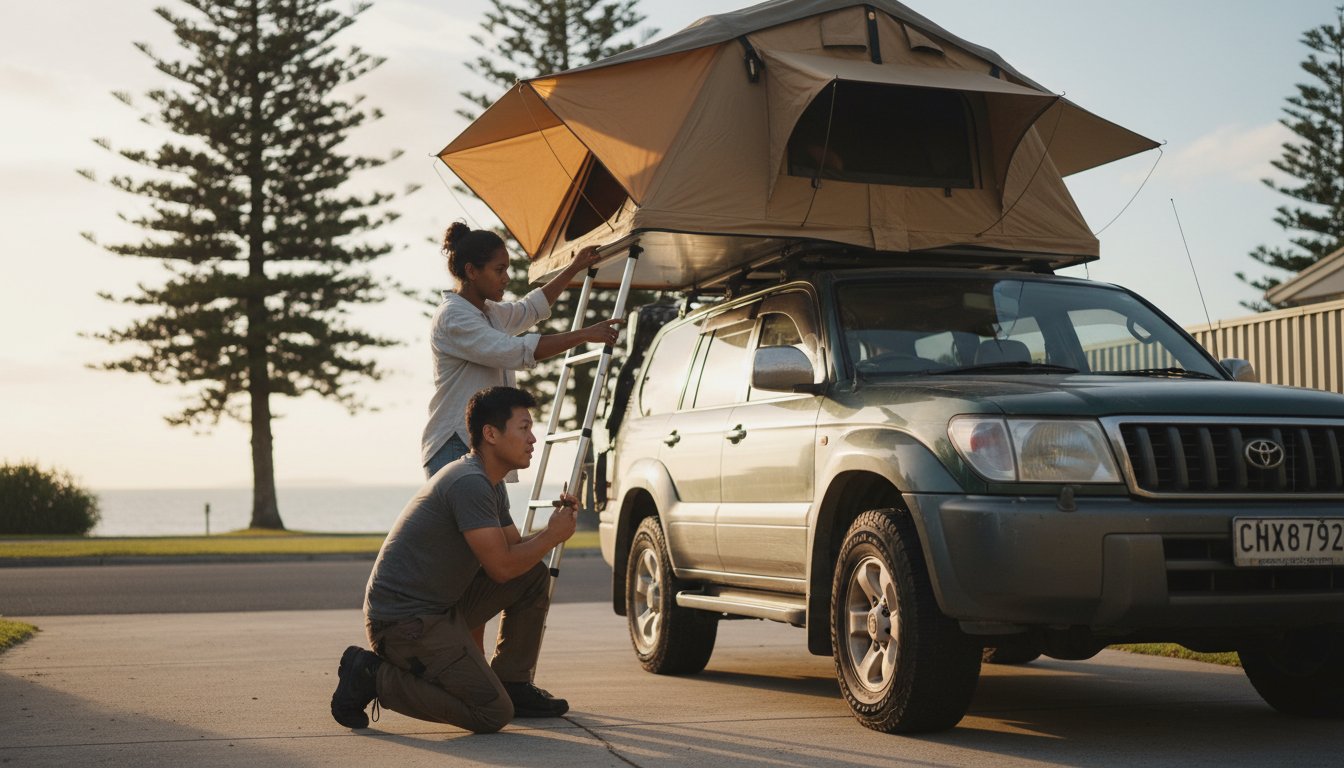
One person can set up an annex in about 15 to 20 minutes, though it’s much faster with a mate. The trickiest part is sliding the keder rope into the track or aligning the initial zipper. For solo Adventurerz, we recommend using a small step ladder to reach the attachment points. This simple tool reduces setup frustration by 50 percent and saves your shoulders from unnecessary strain when you’re tired after a long drive.
Can I sleep in the annex instead of the roof top tent?
You can absolutely sleep in the annex, and it’s a popular choice for 30 percent of families who need extra room for kids or dogs. Since the annex sits on the ground, it’s often cooler than the main tent during a 35-degree Australian summer night. Just make sure your roof top tent annex review Australia research prioritizes models with midge-proof mesh windows to keep those tiny biters away while you rest on your stretcher.