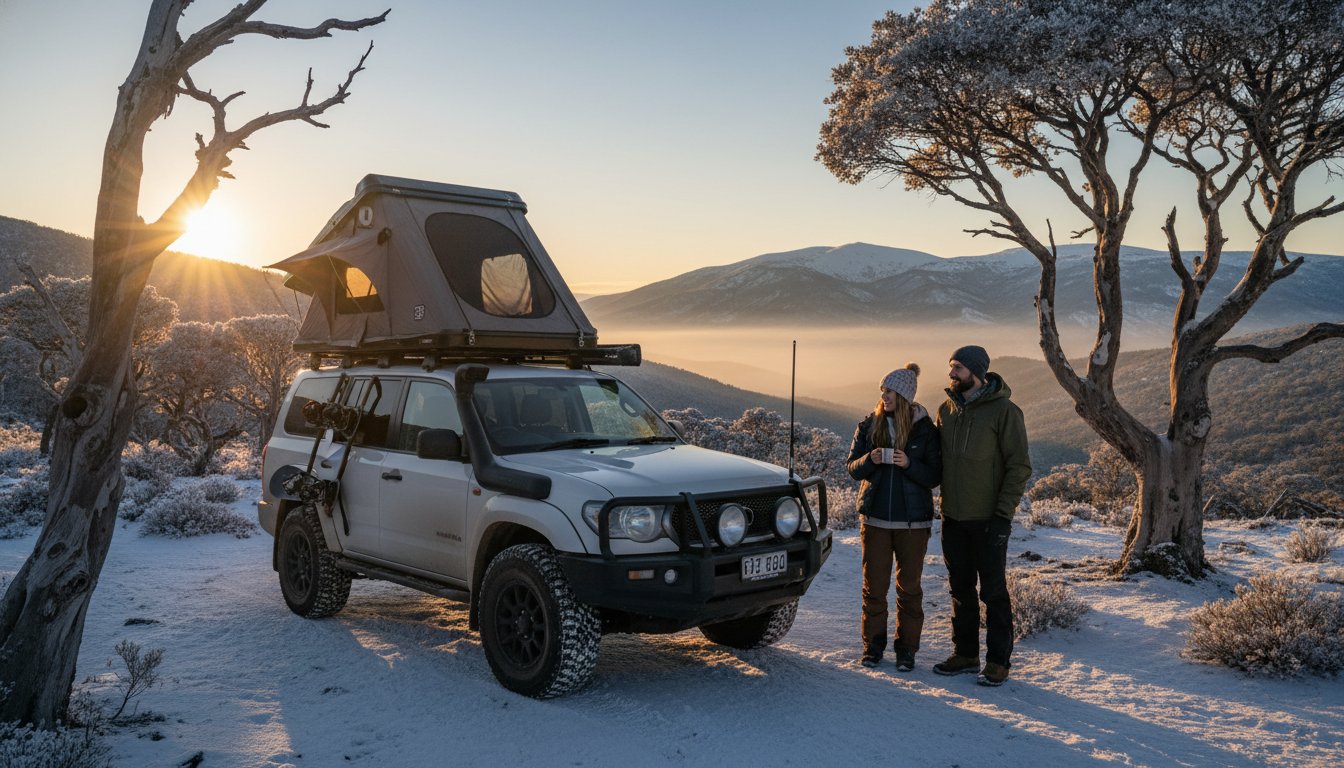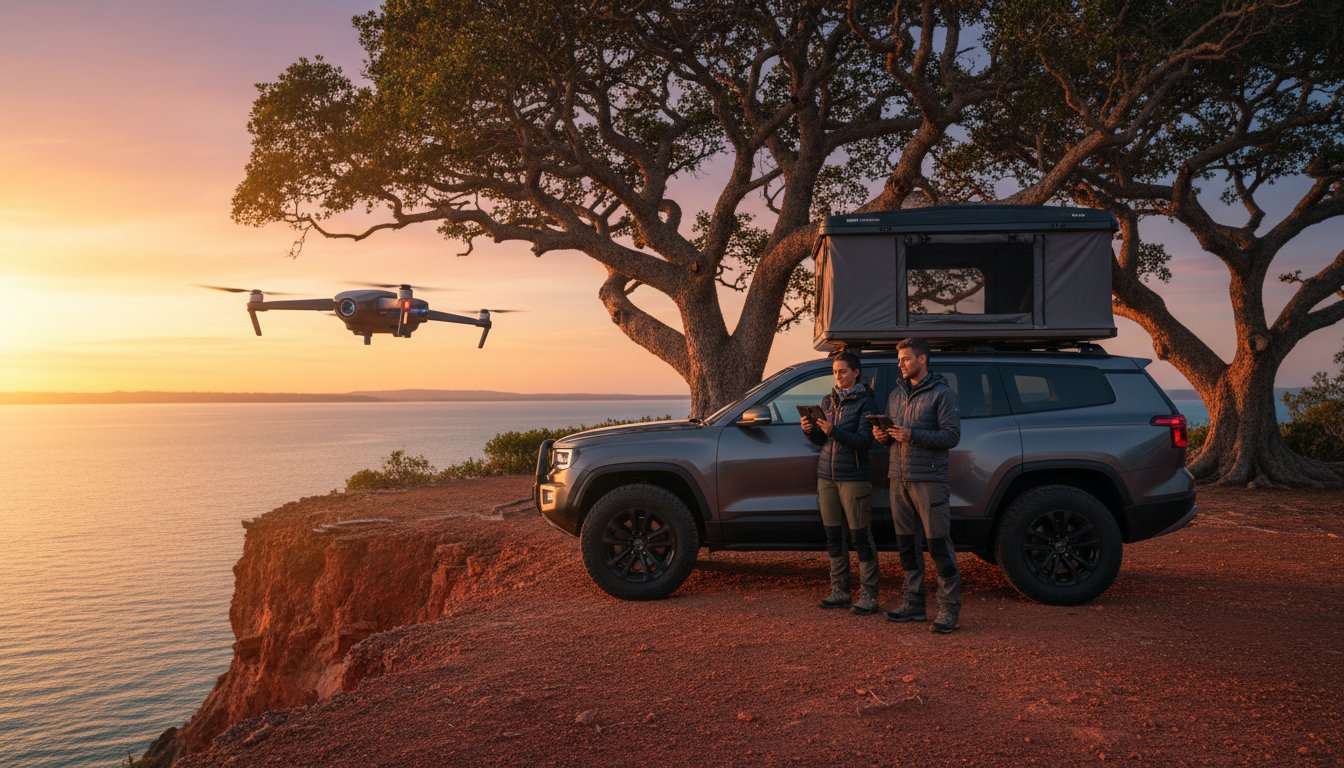
Picture this: you’ve just conquered a gnarly track, the sun is dipping below the horizon, and the rain is starting to spit. The last thing you want is a 20-minute battle with stubborn zippers, a dusty cover, and metres of canvas that refuse to be tucked away. We hear you, fellow Adventurerz! What if you could go from parked to peacefully asleep in under 60 seconds? That’s not a dream; it’s the reality with the fastest setup roof top tent on the market, and we’re here to show you how.
In this ultimate 2026 guide, we’re not just listing tents. We’re revealing the absolute best hard-shell and hybrid models built tough for Australian corrugations, and we’ll even share our pro secrets to a mind-blowing 30-second setup. You’ll discover the gear that makes solo pack-downs a breeze and finally makes arriving at camp late a joy, not a chore. Ready to revolutionise your off-the-grid escapes? Let’s dive in!
Key Takeaways
- Understand the “set and forget” mindset and how a rapid deployment RTT gives you more time on the tracks and less time on camp chores.
- Uncover the key engineering differences between hard and soft shells, and identify the one design feature that’s secretly slowing you down.
- Get our expert verdict on the 2026 models to find the fastest setup roof top tent on the Aussie market, measured by our “Click-to-Sleep” test.
- Master the pro-level “Bedding-In” trick to slash your morning pack-down time and learn exactly how much gear you can leave inside.
Why Setup Speed is the Ultimate Luxury for Modern Adventurerz
We’ve all been there. You’ve conquered the last corrugated track for the day, the sun is painting the escarpment a fiery orange, and all you want is a cold one and a view. But first, the chores. This is where the magic of a rapid deployment system truly shines. For us Adventurerz, speed isn’t about rushing; it’s about reclaiming our time. The psychology is simple: a “set and forget” camp eliminates the final hurdle between a long drive and pure relaxation. It’s the difference between fumbling with poles in the dark and having your shelter ready before the kettle has even boiled. In 2026, the fastest setup roof top tent isn’t just a gadget-it’s the key to a better travel rhythm.
The Evolution of the 60-Second Camp
The journey to a sub-60-second camp has been remarkable. We’ve moved from rolling out heavy, dusty canvas swags to the satisfying hiss of gas struts on a hard-shell RTT. This leap in convenience is a direct result of incredible innovation. While you can learn about the different types of roof top tents and their history, the 2026 landscape is dominated by advanced materials. New composite shells have slashed weight without sacrificing durability, and the clunky manual latches of yesterday are being replaced by sleek magnetic and even single-point electronic locking systems. It’s a total game-changer!
Time is Traction: Maximizing Your Daylight
Every minute spent wrestling with your camp is a minute you’re not spending on the tracks, by the fire, or with your family. Think of it as a “Setup Tax.” Over a week-long trip, saving 20 minutes on setup and pack-down each day adds up to nearly two and a half hours of reclaimed adventure time! This efficiency has profound benefits:
- Spontaneous Weekenders: A lightning-fast setup makes those last-minute Friday escapes far more appealing. Less friction, more freedom!
- More Exploration: Arrive at a spot, pop the top in 30 seconds, and you’re instantly free to go for a hike or scout the next day’s route.
- Eco-Considerate Camping: The less time you spend setting up, the less time your 4WD is idling while you search for the perfect level spot. Every little bit helps protect the wild places we love.
For 2026, the Adventurerz speed standard is clear: a truly fastest setup roof top tent should take you from parked to sleep-ready in under 60 seconds, no questions asked. This is the new benchmark for modern exploration.
Hard Shell vs. Soft Shell: The Engineering of the Fast Setup
Alright Adventurerz, let’s get into the nuts and bolts! The battle for the fastest setup roof top tent is won and lost in the engineering. It’s the difference between popping open your camp in 60 seconds flat or wrestling with zippers and covers as the sun dips below the horizon. This relentless innovation is no surprise when you see the data behind the booming growing outdoor recreation economy, which pushes manufacturers to meet our demands for smarter, faster gear. So, what really separates the quick from the cumbersome?
Hard Shell Dominance: The King of Speed
When it comes to sheer, unadulterated speed, hard shell tents are the undisputed champions. The magic lies in their mechanical advantage. Forget manual poles; we’re talking about high-pressure gas struts that do all the heavy lifting. Unclip two or four latches, give it a gentle nudge, and whoosh-your shelter is deployed.
- Side-Opening vs. Vertical Lift: While both are lightning-fast, the clamshell (side-opening) design often edges out the pop-up by a few precious seconds. With a single, robust hinge, it’s a masterclass in simplicity.
- The 2026 Standard: Look for aluminium honeycomb shells. They offer an incredible strength-to-weight ratio and won’t warp or crack under the relentless Aussie sun like some older ABS plastics.
- The “Zero-Tuck” Promise: The best models feature internal bungee cords that automatically pull the canvas walls inward as you close the shell. This completely eliminates the tedious task of tucking in fabric, a huge win for a quick pack-down!
The Soft Shell Survival: Can They Compete?
For years, the Achilles’ heel of the soft shell has been its cumbersome PVC travel cover. Wrestling a dusty or rain-soaked cover is the enemy of speed. But the game is changing! Forward-thinking brands are now rolling out innovative “Flip-and-Go” designs for 2026 that feature an integrated hard-top lid, eliminating the traditional cover entirely.
So, why would you still choose a soft shell? Two words: Gross Vehicle Mass (GVM). Soft shells are typically lighter, sometimes by as much as 20-30kg. For those of us running close to our GVM limit, that weight saving is far more valuable than a 30-second faster setup. It’s a strategic choice for a well-balanced rig. The trade-off often comes down to aerodynamics; their bulkier profile can create more wind noise on the highway compared to the sleek, silent profile of a hard shell.
When you’re crossing the Simpson Desert, durability is paramount. While the sealed gas struts of a hard shell are less prone to fine dust ingress, the real enemy is a dust-clogged zipper on a traditional soft shell cover. This is where the new coverless soft shell designs truly start to level the playing field.

Top Contenders for the Fastest Setup RTT in 2026
Alright team, let’s get into the nitty-gritty. When we’re on the hunt for the fastest setup roof top tent, we’re not just looking at marketing slogans. We use our own “Click-to-Sleep” metric: the total time from switching off the ignition to having your pillows fluffed and ready. This real-world approach is crucial as more Aussies head off-grid. In fact, the latest Outdoor Participation Trends Report shows a massive surge in vehicle-based adventures, fuelling demand for gear that gets you relaxing faster. For 2026, the Hard-Shell Elite Series is setting the pace, with integrated LED lighting and USB power ports that are ready the moment the tent opens-no fumbling for head torches! This is a game-changer for any Adventurer, but especially for solo travellers and those with compact 4WDs where every bit of space and time counts.
The 30-Second Champions: Premium Hard Shells
For those who want the absolute pinnacle of speed, the premium hard shell market is where it’s at. These RTTs are engineered for sub-30-second deployment. We’ve seen three models consistently dominate the Aussie market in 2026:
- The Ironbark Apex: Its dual-action gas struts are so powerful, you just unlatch and it practically opens itself.
- The Daintree Drifter Pro: Unbeatable weather sealing and an almost silent hydraulic lift make it a favourite for serious tourers.
- The Nullarbor Nomad: The lightest in its class, its genius is the one-touch central latch system.
The key to their speed is the one-touch hydraulic assist mechanism, but the real innovation is the ‘Zero-Tuck’ feature. The 2026 industry standard, ‘Zero-Tuck’ uses internal bungees and a precision-moulded shell to automatically pull all canvas inward during closing, completely eliminating any manual fabric stuffing.
Best Value for Speed: Mid-Range Fast Setups
You don’t need to spend over A$5,000 to get a lightning-fast setup. The mid-range is all about balancing cost versus precious seconds saved. Interestingly, our field tests show that some oversized, heavy-duty manual latches are actually faster and more reliable than complex electronic locks, especially when they’re caked in mud from the High Country or fine red dust from the Pilbara.
Models like the Kimberley Kwik-Pop prove this point. We clocked its setup at just 45 seconds in windy coastal conditions and under a minute during a classic Queensland downpour. It proves that a well-designed manual system can offer incredible speed without the premium price tag or potential electrical failure points. It’s about smart engineering, not just more tech!
Beyond the Latches: Pro Tips for a 30-Second Pack-Down
We’ve all been there. The sun is up, the coffee is brewing, and the open road is calling. A lightning-fast setup is brilliant, but the true test of the fastest setup roof top tent is the morning pack-down. Fumbling with canvas and fighting stubborn latches is the last thing any Adventurerz wants. Mastering your pack-down is an absolute game-changer, turning a campsite chore into a seamless, sub-30-second victory lap!
First, let’s talk about the “Bedding-In” trick. Most modern hard-shell RTTs are designed for you to leave your bedding inside-a massive time-saver. We find a standard doona and two low-profile pillows fit comfortably. This is where investing in quality bedding really pays off for recovery after a long day on the tracks; it’s a principle that sleep specialists like Bennetts Bedrooms build their business on, even if they focus on the home. The key is not to overstuff it! If you have to force the shell closed, you risk damaging the seal or the struts. Next, manage that internal air pressure. As you close the lid, you’re trapping a huge bubble of air. The pro move? Leave a window or door on the opposite side cracked open. This lets the air escape effortlessly, allowing the gas struts to do their job without you having to wrestle the lid down.
Finally, a little maintenance goes a long way. Australia’s red dust and coastal salt spray are brutal on moving parts. A quick spray of silicone lubricant on your gas struts and hinge points every few trips keeps everything moving smoothly and quickly, ensuring your pack-down never slows you down.
The Perfect Pack-Down Sequence
Nail this three-step process and you’ll be on the road in record time. It’s all about working smart, not hard.
- Step 1: The Strategic Window Crack. Before you touch anything else, unzip a window on the far side of the tent to create an air escape route.
- Step 2: Engage the Bungees. Use the internal elastic cords to pull the canvas walls inward as the tent closes. This prevents the fabric from getting pinched in the rubber seal.
- Step 3: The “One-Walk” Perimeter Check. As you pull the lid down, do one quick walk around the vehicle, tucking in any stray fabric before latching. This simple habit saves you from re-opening a fully latched tent.
Dealing with Condensation and Wet Pack-Downs
Waking up to a damp tent is inevitable, but it doesn’t have to ruin your morning. If you absolutely must pack down wet, lay a waterproof tarp over your mattress before closing the tent. This protects your bedding, but remember to open it up and air it out completely at your next stop or as soon as you get home to prevent mould.
The latest 2026 anti-mould fabric coatings are a fantastic line of defence, but they aren’t magic. They inhibit growth but can’t stop it if a tent is left sealed and damp for days. For a speed-dry, use a microfibre towel to wipe down the inner walls and, if the sun is out, open every window. It’s amazing how fast a tent can dry with a bit of airflow. For more gear-care tips, check out the full range of guides on adventurerz.com.
Choosing Your Speed: How to Match a Rapid RTT to Your Rig
You’ve seen the 30-second setups and you’re sold on the dream of instant camp. We get it! But before you splash the cash, let’s make sure your rig is ready for the upgrade. The absolute best RTT is one that works seamlessly with your 4WD, your travel style, and your existing gear. It’s about finding that perfect harmony between speed and stability.
First, let’s talk weight. Every 4WD has a specified roof load limit, which is often split into dynamic (while driving) and static (while parked) ratings. A hard-shell RTT might be 75kg, which your vehicle can handle dynamically, but add two adults and gear, and your static load can push 250kg+. It’s crucial to ensure both your vehicle’s roof and your roof rack system are rated to handle these loads safely. Just as you protect your rig, it’s wise to protect your family, especially with an adventurous lifestyle—for those with high-risk avocations, a specialist like Special Risk Term can be a crucial part of that planning.
Next, consider your tent’s profile. A sleek, low-profile hard-shell will create less drag-saving you precious fuel on those long hauls up the coast. But more importantly, a lower height means better clearance on tight, overgrown tracks in the Vic High Country. Every centimetre counts when you’re navigating the bush!
Finally, think about your whole setup. Do you run a 270-degree awning? Many of the fastest setup roof top tent models are side-opening, which can clash with a wraparound awning. Check for compatibility or look for specialised mounting brackets that allow both to deploy without getting in each other’s way. A perfect camp is one where all your gear works together!
Compatibility Check: Roof Racks and GVM
Your roof rack is the critical link. Ensure it’s rated well above your tent’s dynamic weight to withstand corrugated roads. Some clamshell tents require specific mounting footprints, so double-check compatibility before buying. Don’t forget, adding a heavy RTT eats into your vehicle’s Gross Vehicle Mass (GVM), so factor it into your total load. For real-world examples, dive into the Adventurerz community gear database to see what fits your specific rig.
Final Verdict: Is the fastest setup right for your specific travel style?
So, is the fastest setup roof top tent right for you? If you’re a weekend warrior who values every minute at camp or someone who moves sites daily, the convenience is unbeatable. However, if you’re a long-term tourer, you might prioritise internal space or insulation over sheer speed. It all comes down to how you explore. Be honest about your needs, and you’ll find the perfect match for your adventures.
Joining the Adventurerz Community
Ready to show off your new rig? We want to see it! Share your RTT setup videos with us for a chance to win monthly gear prizes and access member-only discounts on the latest 2026 models. Our forums are packed with Aussie adventurers sharing tips, track notes, and honest reviews. Join the Adventurerz community and find your perfect setup today!
Your Adventure, Unlatched in Seconds!
We’ve seen how modern engineering has turned setup from a chore into a genuine thrill, proving that speed is the ultimate luxury on the tracks. Whether it’s the pop-up ease of a hard shell or the clever design of a next-gen soft shell, choosing the fastest setup roof top tent for your rig means more time exploring and less time wrestling with poles. It’s all about matching the right gear to your adventure style, so you can go from parked to paradise in under a minute.
Ready to make your choice? Dive into our comprehensive gear guides and find the perfect RTT for your 4WD. Explore the Latest Roof Top Tent Reviews on Adventurerz, where you’ll find expert analysis from 100+ remote Australian expeditions, our community-vetted “Real-World Setup Times” database, and our top sustainability-focused recommendations. We’re here to help you gear up responsibly!
So get out there, Adventurerz! The open road is calling, and your camp is ready the moment you are. Happy travels!
Frequently Asked Questions
How long does the fastest roof top tent actually take to set up?
The fastest setup roof top tent models are incredibly quick! We’re talking under 60 seconds from unlatching the clips to being fully open and ready for your mattress. Some premium wedge or clamshell designs can even be done in as little as 30 seconds. This setup time usually just involves releasing a couple of latches and letting the internal gas struts do all the heavy lifting for you. It’s a massive time-saver compared to wrestling with poles on the ground!
Can I leave my sleeping bag and pillows inside a fast-setup hard shell?
Absolutely! This is one of the biggest perks of a hard-shell RTT. Most designs, especially clamshell and pop-top models, have enough internal space to store your pillows, doonas, or sleeping bags inside when closed. This makes your camp setup and pack-down even quicker. Just be mindful not to overstuff it, as this can put strain on the latches and seals. We always recommend checking the manufacturer’s guidelines for your specific model to be sure.
Are hard-shell tents significantly faster than soft-shell tents?
Yes, there’s a definite speed advantage with hard shells. Their setup is typically powered by gas struts, meaning you just unlatch it and it pops up. In contrast, soft-shell tents require you to manually unfold the base, extend a ladder, and often install window poles and a rainfly. While modern soft-shells have improved, a hard shell will almost always get you set up and relaxing faster, which is a huge win after a long day on the tracks.
What happens if the gas struts fail on my fast-setup tent?
It’s a valid concern for any Adventurer, but thankfully, strut failure is quite rare with quality brands. If a strut does lose pressure, you can usually still manually lift the roof into position. You might need to prop it open with a pole or a sturdy piece of timber as a temporary fix. We recommend carrying a spare strut on extended remote trips; they are relatively inexpensive (around A$50-A$100) and easy to replace, ensuring you’re never caught out.
Do fast-setup tents hold up well in high Australian winds?
They sure do, but the design matters. Wedge or clamshell-style hard-shell tents are exceptionally good in high winds because of their aerodynamic profile. You can position your vehicle so the hinged, low-profile end faces the wind, creating minimal resistance. Vertical pop-up or box-style tents can catch more wind due to their larger side profiles. Either way, a quality hard shell is generally more rigid and stable in gusty Aussie conditions than a traditional soft-shell RTT.
Is it possible for one person to pack down a large roof top tent alone?
You bet! Solo pack-down is a key feature of the best fast-setup models. The process usually involves pulling down a strap to close the shell while the gas struts provide resistance, making it a controlled action. The only tricky part can be tucking in all the canvas as it closes. We find walking from one side to the other to tuck it in before latching it down completely makes it a simple, one-person job, even on larger tents.
How does a fast-setup RTT affect my vehicle’s fuel consumption?
Let’s be straight up: adding anything to your roof will impact fuel economy due to increased weight and wind resistance. You can typically expect a 5-15% increase in fuel consumption, depending on the tent’s profile and your driving style. Sleek, low-profile hard-shell tents generally have less aerodynamic drag than a bulky soft-shell with its travel cover, often placing them at the lower end of that range. Planning for this slight increase is just part of responsible trip prep.
Are there electronic roof top tents that set up with a remote?
They’re out there, and they are the absolute peak of convenience! A few premium brands offer fully automated RTTs that open and close with the push of a button on a remote. It’s an incredible bit of kit, but it comes with a hefty price tag (often over A$8,000) and adds electrical components that could potentially fail in the bush. While the cool factor is undeniable, most Adventurerz find the speed of a gas-strut assisted manual tent is more than enough.