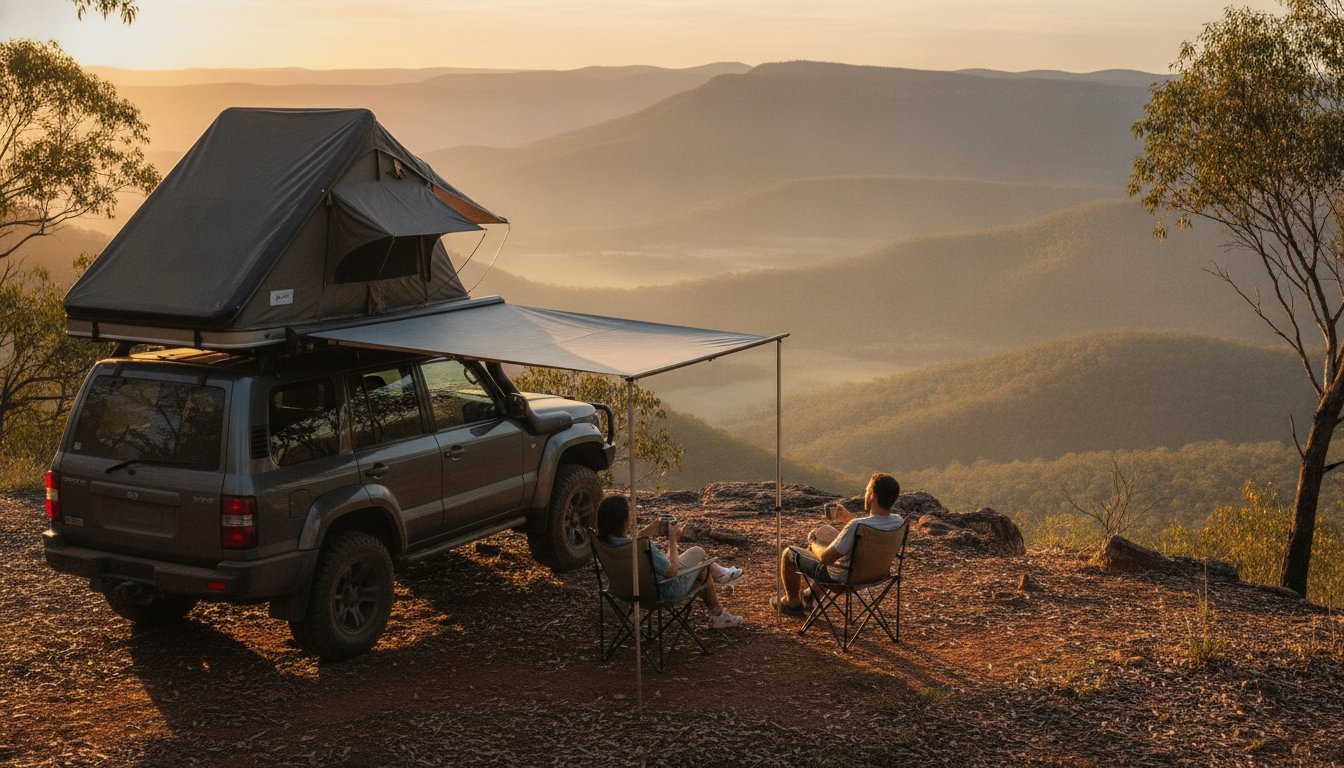
Your dream 4WD setup might be one weigh-bridge away from an insurance nightmare if you haven’t ticked every regulatory box. With over 17.3 million camping trips taken across our sun-drenched continent in 2025, transport authorities are increasingly using AI-powered cameras and stricter roadside checks to ensure every rig is safe. We know that mastering the legal requirements for roof top tents Australia feels like wading through a sea of technical jargon, but getting it right is the only way to protect your investment and our pristine environment.
We understand the anxiety of wondering if a heavy RTT choice might void your insurance or exceed your vehicle’s GVM. It’s a common worry among our community of explorers who value both high-quality gear and responsible travel. In this 2026 essential guide, we promise to clear the confusion so you can head into the bush with total confidence. We’ll provide a clear checklist of legal limits, show you exactly how to calculate manufacturer-specific static versus dynamic roof loads, and walk through the latest 2026 camping permit rules for NSW and Queensland national parks. Let’s ensure your rig is as hardy and methodical as your spirit of adventure.
Key Takeaways
- Understand how Australian Design Rules (ADR) and state transport bodies govern our modifications to keep our Adventurerz rigs roadworthy and safe.
- Master the legal requirements for roof top tents Australia by calculating the critical difference between your vehicle’s static and dynamic roof load ratings.
- Ensure your setup stays within the 4.3-metre national height limit and doesn’t exceed vehicle width to protect your insurance and your gear.
- Navigate the 2026 national park permit systems by learning the legal distinction between rest areas and designated campgrounds across different states.
- Discover how to choose a tent that respects your vehicle’s GVM, ensuring a hardy and environmentally responsible setup for the long haul.
Table of Contents
Understanding the Legal Framework for Roof Top Tents in Australia
We’re all chasing that perfect sunrise from a high-country ridge, but getting there safely means more than just having the right recovery gear. In 2026, the legal requirements for roof top tents Australia are more strictly enforced than ever before. We need to understand that our rigs are subject to a complex web of national and state regulations. The Australian Design Rules (ADR) act as the master blueprint for vehicle safety. These rules ensure that any modification, including adding a roof tent, doesn’t compromise the structural integrity or safety of the vehicle.
While the National Heavy Vehicle Regulator (NHVR) manages the big rigs, most of us answer to state authorities like Transport for NSW (TfNSW) or Queensland’s Department of Transport and Main Roads (TMR). These bodies use the ADR as a foundation to set specific rules for light vehicles. A “legal” setup in 2026 isn’t just about whether the tent stays attached; it’s about whether the entire vehicle remains within its engineered limits while moving and stationary. When we evaluate the latest roof top tents, we aren’t just looking at comfort; we’re checking how they fit into this legal framework.
Compliance isn’t just about avoiding a fine from a transport officer. It’s about preserving our access to remote tracks. When overloaded vehicles cause accidents or damage fragile environments, authorities often respond by closing off those very areas we love to explore. By sticking to the rules, we show that our community is responsible and methodical in our approach to outdoor adventure.
Why Legal Compliance is Your Best Trail Mate
Think of compliance as a silent partner on your journey. If you’re involved in a collision, your insurer will look for any reason to deny a claim. An illegal setup that exceeds manufacturer specifications is the fastest way to void your comprehensive 4WD insurance. It’s about physics. An overloaded roof raises your center of gravity, making your vehicle unpredictable during emergency braking or high-speed swerving. ADR compliance is the baseline for all Australian vehicle gear.
Beyond the paperwork, there’s the cold reality of safety for our families and fellow travellers. A roof load that’s too heavy can cause roof rack failure or even structural damage to the vehicle’s pillars over time. We’ve seen how rugged Australian conditions test even the best equipment, so staying legal is simply staying safe.
The Three Pillars of RTT Legality
To keep our community safe and our tracks open, we break down compliance into three distinct pillars. This structure helps us stay organized during the preparation phase.
- Pillar 1: Vehicle Weight and Load Limits. This is the physics of your rig. You must stay within the manufacturer’s Dynamic Roof Load Limit while driving and the Gross Vehicle Mass (GVM) at all times.
- Pillar 2: Dimensions and Overhangs. This covers the physicality of the tent. Your setup cannot exceed the 4.3-metre national height limit or protrude past the sides of your vehicle.
- Pillar 3: Land Use and Permits. This is about location. Even a legal rig is “illegal” if it’s parked in a restricted zone or a national park without a valid permit.
Weight Matters: Calculating Your Legal Roof Load and GVM
We’ve all been there, staring at a massive hard-shell tent and wondering if our roof can actually handle the strain. To stay within the legal requirements for roof top tents Australia, we have to look past the marketing and dive into the numbers. The most common mistake we see is adventurers trusting the weight rating of their roof racks rather than the vehicle itself. Your racks might be rated for 150kg, but if your vehicle manufacturer specifies a limit of 80kg, that lower number is the only one that matters to transport authorities and insurers. You’ll find this crucial figure tucked away in your owner’s manual under “Roof Load Rating.”
Calculating your total load is a methodical process. It isn’t just the weight of the tent. We have to include the weight of the roof racks, mounting hardware, and any accessories like Maxtrax, shovels, or Hi-Lift jacks. These standards are underpinned by the Australian Design Rules (ADRs), which ensure that vehicles remain stable and predictable under load. If you’re still deciding on a setup, checking our latest roof top tents reviews can help you find a lightweight option that keeps your rig legal.
Dynamic vs. Static Load Limits Explained
Understanding the difference between these two ratings is vital for our safety. Dynamic Load is the maximum weight your roof can safely carry while the vehicle is in motion. Most modern 4WDs have dynamic ratings between 50kg and 100kg. Exceeding this is a major legal risk because it dramatically increases the chance of a rollover during a sudden swerve. Static Load is the weight the roof can support when the vehicle is parked. This is naturally much higher to account for the weight of the tent plus the people inside it. If you’re over your dynamic limit while driving, you’re unroadworthy, plain and simple.
The Payload Trap: Don’t Overload Your Rig
Every kilogram we put on the roof eats directly into our Gross Vehicle Mass (GVM). This is the maximum legal weight of the entire vehicle, including fuel, water, passengers, and every bit of camping gear. A heavy 80kg tent might seem fine on its own, but once you add a full tank of diesel and the family, you might be teetering on the edge of legality. Exceeding GVM can lead to heavy fines during roadside inspections and will almost certainly void your insurance in an accident. A public weighbridge is the only place where truth meets the tarmac; we always recommend a full weigh-in before any major expedition.
Vehicle Dimensions, Overhangs, and ADR Compliance
While weight is the invisible factor that affects our vehicle’s dynamics, the physical footprint of our rig is what transport authorities notice first. Mastering the legal requirements for roof top tents Australia means ensuring our setup doesn’t turn into a hazard for other road users. Dimensions aren’t just about fitting into your garage; they’re about maintaining the safety standards established by the Australian Design Rules. If our tent protrudes too far or sits too high, we risk more than just a fine; we compromise the safety of everyone on the track.
The national vehicle height limit in Australia is 4.3 metres. While most 4WDs won’t reach this limit even with a bulky tent, the “Width Rule” is where many of us face scrutiny. Your tent must not exceed the width of your vehicle’s body, excluding the mirrors. If your RTT is wider than the roofline and starts hanging over the doors, you’re likely in breach of ADR standards. Similarly, overhangs must be carefully managed. Most states allow a rear overhang of up to 60% of the wheelbase, but this is rarely an issue for roof-mounted gear unless you’re mounting a massive tent on a short-wheelbase canopy. The critical factor is visibility; your tent or its mounting hardware must never obscure your tail lights, indicators, or number plate from any reasonable angle.
Measuring Your Total Height
We need to be methodical when calculating our final clearance. It isn’t enough to just add the tent’s height to the manufacturer’s vehicle specs. We have to account for suspension lifts, larger all-terrain tyres, and the height of the roof racks themselves. This “clearance height” is your most important number when entering multi-storey car parks or navigating low-hanging branches on tight bush tracks. If your load overhangs the front or rear of the roof significantly, some states require specific marking, such as a brightly coloured flag, to alert other drivers. Always keep a sticker on your dashboard with your total height in metres; it’s a simple habit that prevents expensive “can opener” moments in tunnels.
ADR Rules for Roof Rack Attachments
How we secure our gear is just as important as what we carry. ADR compliance extends to the mounting systems and hardware we use to bolt our tents down. Transport authorities look for rated fasteners and professional mounting brackets that can withstand the vibrations of corrugated outback roads. We strongly advise against “homemade” brackets or hardware store bolts that aren’t high-tensile; these often fail under the stress of off-road travel and won’t pass a legal inspection after an accident. For gear that is engineered to meet these rigorous Australian standards, we recommend checking out the latest Adventurerz roof top tent reviews. Choosing tested, compliant equipment ensures our community stays safe and our rigs remain hardy enough for the most isolated locations.
Where Can You Legally Camp? Permits and Public Land Rules
We’ve spent hours ensuring our rig meets the physical legal requirements for roof top tents Australia, but our responsibility doesn’t end when we hit the dirt. Finding a legal spot to pop the tent is just as critical as your GVM calculation. In Australia, the line between a quick nap and an illegal camp is often defined by the sign at the entrance. While we all love the freedom of the bush, “wild camping”, which means simply pulling over wherever looks good, is generally not permitted. Most states require us to stay in designated campgrounds, especially in high-traffic coastal areas where the impact on the environment is greatest.
Managing the National Parks and Wildlife Service (NPWS) booking systems is now a standard part of our prep. In NSW, for instance, a tiered fee system is in place for 2026, with sites ranging from basic free spots to $89 per night for premium locations with the best amenities. If you’re heading north, remember that a Queensland National Park camping permit must be secured before you even arrive. For those seeking a more rugged, less structured experience, State Forests often provide a legal alternative where rules are slightly more relaxed. Even there, we must still respect fire bans and seasonal closures to protect the land we love.
The Legality of Roadside Camping
We often hear about the fatigue management loophole. It’s true that transport authorities prioritize safety; if you’re too tired to drive, stopping is the right call. However, this isn’t a license to set up a full camp with awnings and chairs in a highway rest area. To stay legal, keep your footprint small, stay inside your vehicle or tent, and move on as soon as you’re fit to drive. Ignoring “No Camping” signs can lead to hefty on-the-spot fines that quickly ruin a budget-friendly trip. Authorities are increasingly using patrols in popular zones to ensure rest areas aren’t being used as free caravan parks.
Responsible Exploration and Permits
We rely on our community to keep these tracks open for future generations. Making your own track or clearing vegetation to create a “private” spot is both illegal and destructive to the local ecosystem. We use apps like Wikicamps or CamperMate to find verified, legal locations that align with “Leave No Trace” principles. Proper planning is the hallmark of a methodical adventurer. If you’re mapping out a complex journey, check out The Ultimate Adventure Travel Planner to help coordinate your permits and remote escapes. Ready to kit out your rig for the next legal escape? Explore our roof top tents recommendations to find the perfect balance of weight and comfort for your vehicle.
Building Your Legal Adventurerz Rig: Next Steps
Now that we’ve navigated the technical maze of GVM, ADRs, and park permits, it’s time for the exciting part: kitting out your rig. Building a setup that respects the legal requirements for roof top tents Australia isn’t just about following rules; it’s about engineering a vehicle that handles as well on the tarmac as it does on a corrugated track. We always start with the vehicle’s manual. If your roof is rated for 75kg dynamic load, your search for the perfect tent is already narrowed down. This methodical approach prevents us from buying gear that we legally can’t carry.
When we compare lightweight hard-shell tents to traditional soft-shell models, legal compliance is a major factor. Modern hard-shell tents often offer superior aerodynamics, which helps with stability at highway speeds, but they can be significantly heavier. Conversely, a soft-shell might be lighter on the scales but adds more height and wind resistance. We also need to consider how we integrate other essential gear. Adding 4WD awnings to your roof rack is a fantastic way to expand your living space, but remember that every bracket and bolt counts toward your dynamic roof limit. We’ve seen many Adventurerz community members find the perfect balance by choosing low-profile, high-strength components that stay well within the legal lines.
Consulting the Experts
We believe that no one should have to guess when it comes to safety. If you’re planning a complex build with heavy batteries, water tanks, and a large RTT, reach out to the Adventurerz community for rig-specific advice. Hearing from peers who drive the same model can provide invaluable insights into how a vehicle actually behaves under load. For heavy or custom mounting solutions, professional installation is often the smartest path to ensure your hardware meets ADR standards. Before you head out, run through our final compliance checklist:
- Weight: Is your total roof load (tent, racks, accessories) under the manufacturer’s dynamic limit?
- Dimensions: Does your rig stay under 4.3 metres and within the vehicle’s body width?
- Permits: Have you secured your 2026 NPWS or Queensland national park bookings?
Join the Adventurerz Journey
Our commitment is to help you explore this incredible continent responsibly and legally. As we look toward the rest of 2026, we expect even more focus on vehicle safety and environmental protection on our public lands. Staying informed is the best way to ensure our tracks remain open for everyone. Ready to find a setup that fits your rig perfectly? Explore our latest roof top tents reviews and recommendations to see which models lead the pack in weight efficiency and durability. Once you’re set up, we invite you to share your legal rig on our community hub; your setup might be the inspiration another explorer needs for their next remote escape!
Ready Your Rig for the Great Australian Outback
We’ve mapped out the technical terrain, from the physics of dynamic roof loads to the specifics of ADR height and width limits. Mastering the legal requirements for roof top tents Australia is the ultimate sign of a prepared adventurer. By prioritizing vehicle weight limits and securing the right permits for our 2026 escapes, we protect our rigs, our insurance, and the fragile ecosystems we love to explore. It’s about being hardy enough to reach the most isolated locations while remaining methodical in our preparation. We know that a truly successful trip starts long before the tyres hit the dirt.
Our sustainability-focused community thrives when we share knowledge and expert 4WD gear recommendations that meet the latest 2026 updated Australian safety standards. Whether you’re navigating the new tiered fee systems in NSW or checking your GVM before a desert crossing, you don’t have to do it alone. We’re here to guide you toward gear that is both durable and compliant. Find your perfect, ADR-compliant roof top tent here and join our fellowship of responsible explorers. Let’s keep our community strong and our adventures legal!
Frequently Asked Questions
Can I legally install a roof top tent on a small car in Australia?
Yes, you can legally install a tent on a small car as long as the combined weight of the tent and racks stays under your vehicle’s specific dynamic roof load rating. We must be methodical here; many small hatchbacks have limits as low as 50kg. if your tent is heavier than your car’s rating, your rig is considered unroadworthy. Always check your owner’s manual before mounting any gear.
Do I need to notify my insurance company if I add a roof top tent?
You must notify your insurance provider because a roof top tent is a vehicle modification that changes your car’s value and center of gravity. Failing to disclose this can lead to a rejected claim if you’re involved in an accident. It’s a simple step that protects our community’s investments and ensures we’re covered for both the gear and the vehicle itself.
What is the maximum legal height for a vehicle with a roof top tent?
The maximum legal height for any light vehicle in Australia is 4.3 metres. This measurement includes your suspension lift, larger tyres, roof racks, and the tent itself. While most 4WDs won’t reach this limit, it’s vital to know your exact clearance for tunnels and low-clearance car parks. We recommend keeping a height sticker on your dash for quick reference during your travels.
Are there specific fines for exceeding roof load limits in Australia?
Yes, transport authorities can issue heavy fines and demerit points if your vehicle is found to be overloaded or unsafe during a roadside inspection. Penalties vary by state, but exceeding the legal requirements for roof top tents Australia can result in your vehicle being grounded until the load is reduced. AI-powered cameras are increasingly being used to detect these safety breaches on major highways.
Can I legally camp in a roof top tent on a residential street?
Camping in a roof top tent on a residential street is generally illegal under local council bylaws across most Australian states. These rules prevent “stealth camping” in urban areas and protect the privacy of local residents. To stay legal and respectful, we always suggest using verified campgrounds or rest areas where overnight stays are explicitly permitted for vehicle-based travellers.
How much overhang is allowed for a roof top tent at the rear of the car?
A roof top tent can legally overhang the rear of your car, but the total rear overhang must not exceed 60% of your vehicle’s wheelbase. The most critical legal constraint is that the tent must not obscure your tail lights, indicators, or number plate from any angle. If your tent protrudes significantly, you may need to display a brightly coloured flag to alert other drivers.
Does a roof top tent count towards my Gross Vehicle Mass (GVM)?
Every gram of your roof top tent, mounting hardware, and roof racks counts directly toward your Gross Vehicle Mass (GVM). This is the total legal weight your vehicle can carry, including fuel, water, and passengers. Staying under your GVM is a core part of the legal requirements for roof top tents Australia and is essential for maintaining your vehicle’s safety and braking performance.
Is it legal to use a roof top tent in a National Park without a booking?
It is illegal to use a roof top tent in an Australian National Park without a valid booking or permit. In 2026, both NSW and Queensland require all campers to secure their spots through online systems before arriving at the site. These permits help manage the environmental impact on our wilderness and ensure our community has a safe, designated place to rest.