The difference between a life-changing expedition and a dangerous breakdown in the Red Centre is rarely just luck; it is meticulous preparation. We all know that magnetic pull of the distant horizon, yet we also share those nagging worries about mechanical failures on isolated tracks or choosing the wrong kit for a trek across the Simpson. This 2026 remote Australia travel planner is designed to replace that anxiety with absolute confidence, ensuring you have the right tech and ethical framework to explore our rugged backyard safely.
We understand that the logistics can feel overwhelming when fuel prices on the Nullarbor hit $3.16 per litre and permit systems vary by state. You want a plan that respects the natural landscape while keeping your crew secure. We will show you exactly how to bridge the gap between a standard road trip and a professional-grade expedition. This guide previews the latest satellite gear like the Garmin inReach Messenger Plus, breaks down the current 2026 national park fees, and provides a structured checklist for total remote readiness. Let’s get you ready for the off-grid journey of a lifetime.
Key Takeaways
- Master the “Remote” planning DNA to shift from a standard tourist to a self-reliant explorer capable of handling the interior’s toughest challenges.
- Use our 5-step framework as your essential remote Australia travel planner to accurately calculate resource mapping and “Points of No Return” for fuel and water.
- Understand the “Buy Once, Cry Once” philosophy to select 4WD accessories that balance durability with critical vehicle weight management.
- Commit to the Adventurerz Code by implementing “Pack it in, Pack it out” waste management strategies that protect our fragile ecosystems.
- Tap into shared community wisdom and peer reviews to avoid expensive marketing hype and choose gear that is truly outback-proven.
Table of Contents
Beyond the Map: What Defines a Remote Australia Travel Planner?
Crossing the “black stump” requires a total rewrite of your travel DNA. Standard tourism relies on infrastructure; remote exploration relies on you. To understand What is the Outback? is to recognize a landscape where “help” is often hours or days away. This is where a remote Australia travel planner becomes more than just an itinerary. It’s a blueprint for survival and stewardship that we build together as a community of explorers. We’ve moved past the era of “set and forget” planning. Today, we embrace a mindset of extreme self-reliance and durability.
In 2026, we’re seeing more volatile weather patterns impacting the red centre. One day a track is a dust bowl; the next, it’s an impassable river. A modern explorer doesn’t just look at the route; they look at moisture levels and local track closures. This year, planning must be dynamic. We rely on community wisdom to validate digital maps because a GPS won’t tell you if a cattle station gate has been locked or if a washout has claimed a section of the Canning Stock Route. We share this knowledge because, in the desert, our collective experience is our greatest asset.
The Three Pillars of Remote Readiness
True preparation rests on three non-negotiable foundations. Logistics covers your fuel, water, and communication redundancy. You need to calculate your “points of no return” with zero room for error. Equipment focuses on durability; we believe your gear is your primary safety net. Whether it’s selecting the right roof top tents to stay clear of nocturnal wildlife or ensuring your recovery kit is battle-tested, every choice matters. Finally, ethics involves respecting Traditional Owners and the fragile desert ecology. We aren’t just visitors; we’re temporary custodians of these ancient lands.
Digital Tools vs. Real-World Experience
Don’t trust standard Google Maps once you leave the bitumen. It often suggests “shortcuts” that are actually private station tracks or non-existent trails. We integrate offline topographic maps with community-vetted track reports to get the full picture. Remote readiness is the intersection of meticulous prep and reliable gear. Use these tools to stay safe:
- Offline Topo Maps: Essential for when satellite signals dip in deep breakaways.
- Community Vetted Reports: Real-time updates on track conditions from fellow Adventurerz.
- Satellite Redundancy: Using 2026 standards like the Starlink Mini or Garmin inReach Messenger Plus for constant contact.
Planning for the interior isn’t about avoiding risks; it’s about managing them with professional precision. When we align our gear with the reality of the terrain, we unlock the true freedom of the off-grid lifestyle.
The 5-Step Framework for Planning Your Remote Itinerary
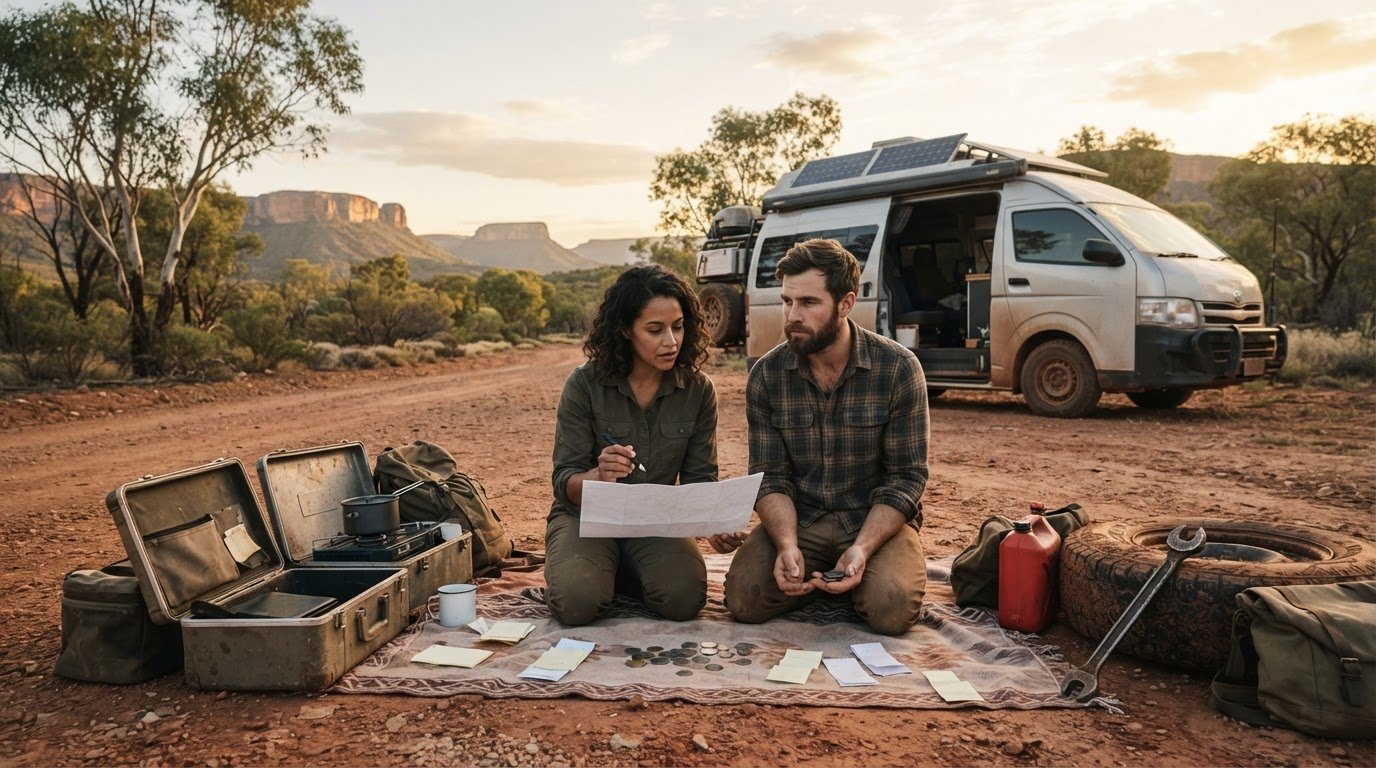
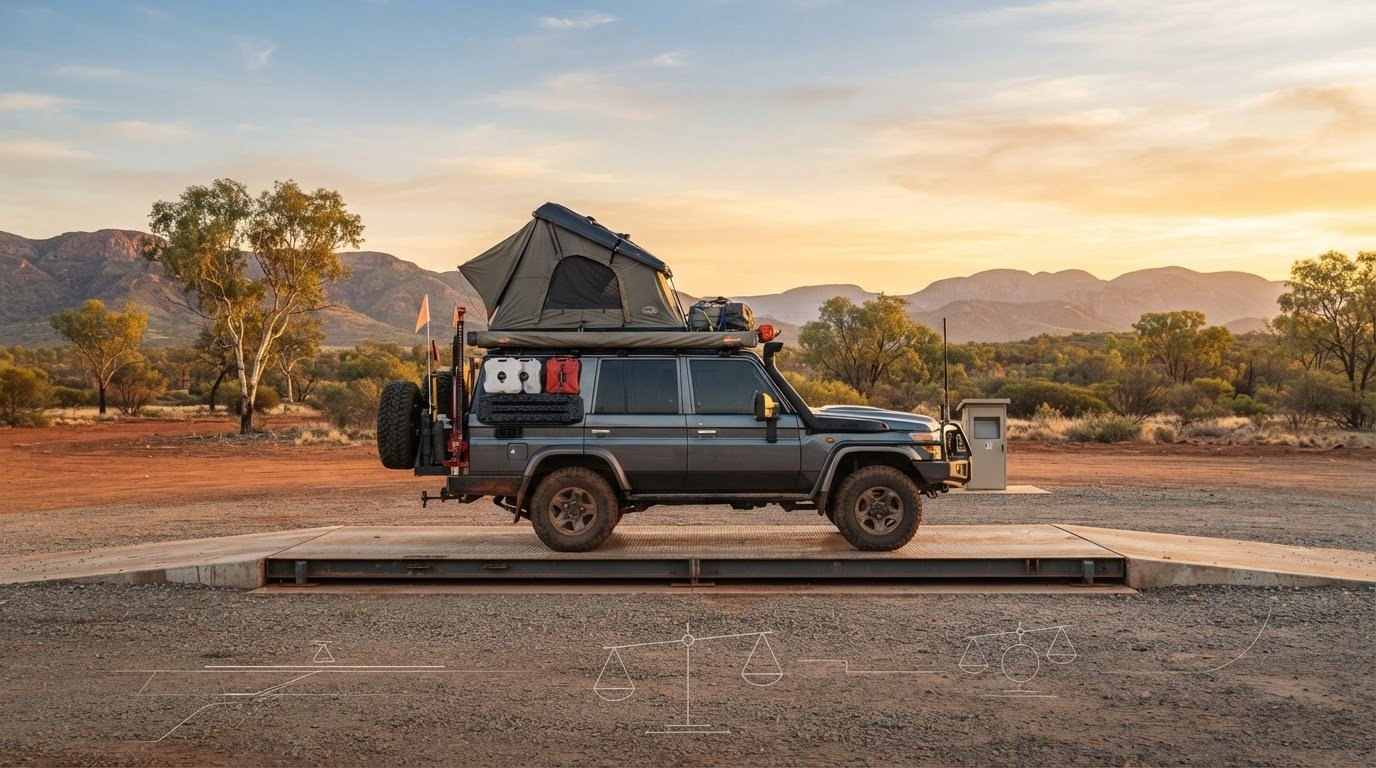
Building a successful off-grid journey isn’t about guessing. It’s about a structured remote Australia travel planner that accounts for the harsh realities of the interior. We use a five-step framework to ensure every mile is managed with precision. First, we match our route to the vehicle’s Gross Vehicle Mass (GVM) and clearance. Overloading is the fastest way to a snapped axle on a corrugated track. Second, we map resources. This means identifying “Points of No Return” where fuel and water replenishment becomes impossible. With fuel prices on the Nullarbor reaching up to $3.16 per litre in 2026, knowing your exact range is a financial and safety necessity.
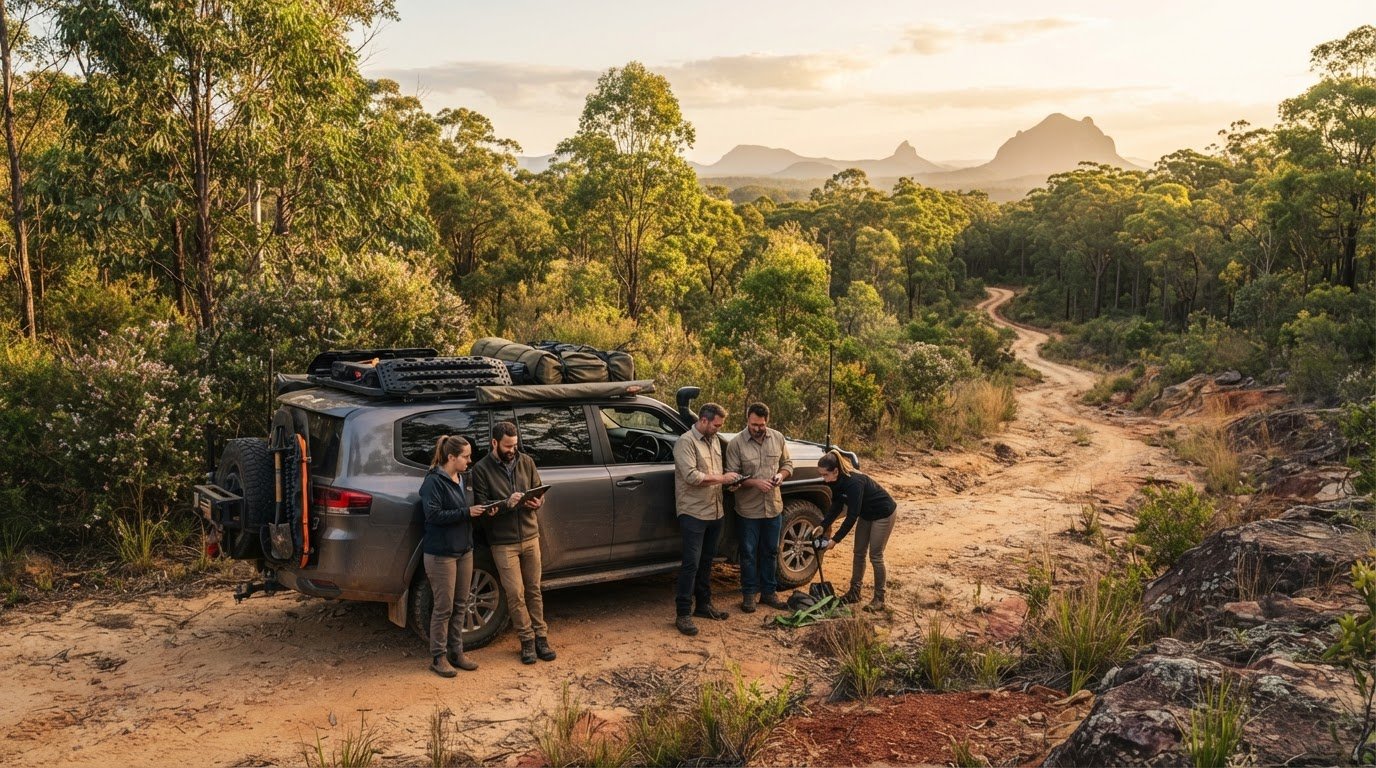
Third, we finalize a communication strategy. In 2026, we don’t rely on a single device. We use a mix of satellite messengers like the Garmin inReach Messenger Plus, PLBs, and strict UHF protocols for convoy safety. Fourth, we secure permits. Navigating Aboriginal Land Permits and National Park bookings early prevents legal headaches at the gate. Finally, we never skip the “Shakedown” trip. We test every piece of kit, from our 4wd awnings to our tire compressors, on a local weekend run before the real expedition starts. This ensures we aren’t troubleshooting gear in the middle of a desert.
Calculating Your Survival Margins
We live by the 20% Rule. Always carry 20% more fuel and water than your most conservative estimate. Remote tracks are unpredictable. A sudden headwind or deep sand can double your fuel consumption. We also calculate targets based on “track speed” rather than highway speed. Averaging 40km/h is realistic for many inland tracks; expecting 100km/h is a recipe for disaster. Always include a flexible “buffer day” in your schedule. If you get bogged or find a stunning campsite, you won’t be forced to rush through dangerous conditions to stay on track.
Navigating Permits and Legal Requirements
Permit procurement is essential for respecting the sovereignty of Traditional Owners. Western Australia offers free transit permits for major routes through Aboriginal lands, but you must apply well in advance. Other areas require specific documentation and fees that support local communities. We also monitor seasonal closures closely. For example, Kakadu National Park entry fees drop to $25 for adults during the 2026 wet season (July to October), reflecting the limited access to certain areas. We encourage you to check our community hub for real-time track conditions and permit updates from fellow explorers who’ve just returned from the field.
Technical Gear: Aligning Equipment with Remote Terrain
“Buy Once, Cry Once” is the unofficial mantra of the outback. We’ve seen it play out countless times: a budget roof rack snaps on the Tanami or a cheap compressor dies when you’re airing up after a soft sand crossing. In these isolated regions, your equipment is your primary safety net. A professional remote Australia travel planner focuses on technical gear that balances extreme durability with weight management, and you can discover Kapture Travel for high-quality supplies that bring extra comfort and style to your journey. Every kilogram counts toward your GVM; we prioritize accessories made from high-strength alloys and composites that offer functionality without the heavy penalty of traditional steel kit.
Choosing specialized equipment also supports our commitment to environmental stewardship. Gear that fails in the middle of a desert often stays there, creating waste that harms fragile ecosystems. By investing in kit designed for the specific rigours of the Australian interior, we ensure we aren’t contributing to the “discarded gear” problem. Explore our detailed reviews of rooftop tents for off-grid comfort that stands up to the harshest conditions.
Shelter Systems: Rooftop Tents vs. Ground Camping
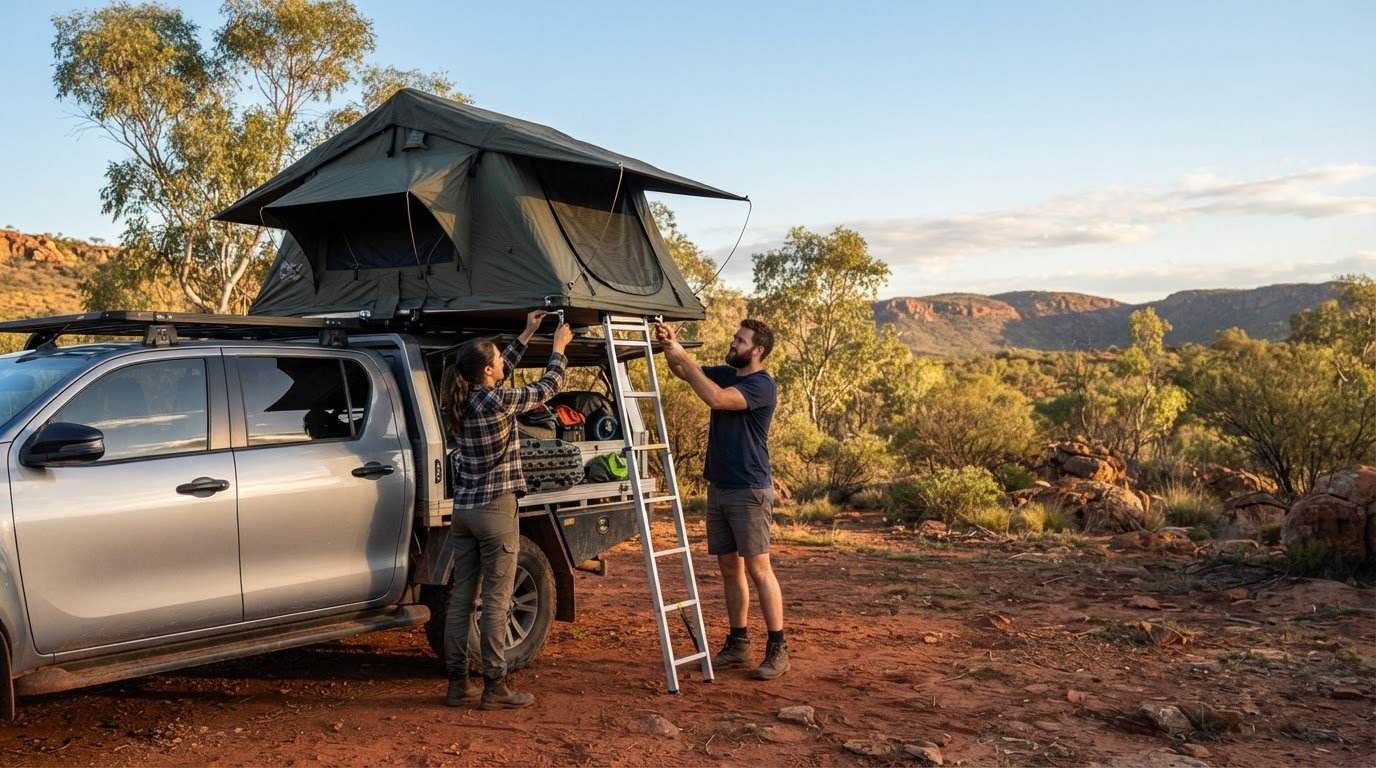
We generally prefer rooftop systems for remote expeditions. Hard-shell rooftop tents are the gold standard for dusty, high-wind environments like the Nullarbor or the Simpson Desert. They offer superior dust sealing compared to soft-shell versions and can be stowed in seconds. Beyond comfort, being elevated provides a critical safety buffer in crocodile or dingo country. After a 10-hour drive over punishing corrugations, a 60-second camp pitch is a game-changer. It allows you to focus on vehicle checks and dinner rather than wrestling with tent poles in the dark.
Maximising External Living Space
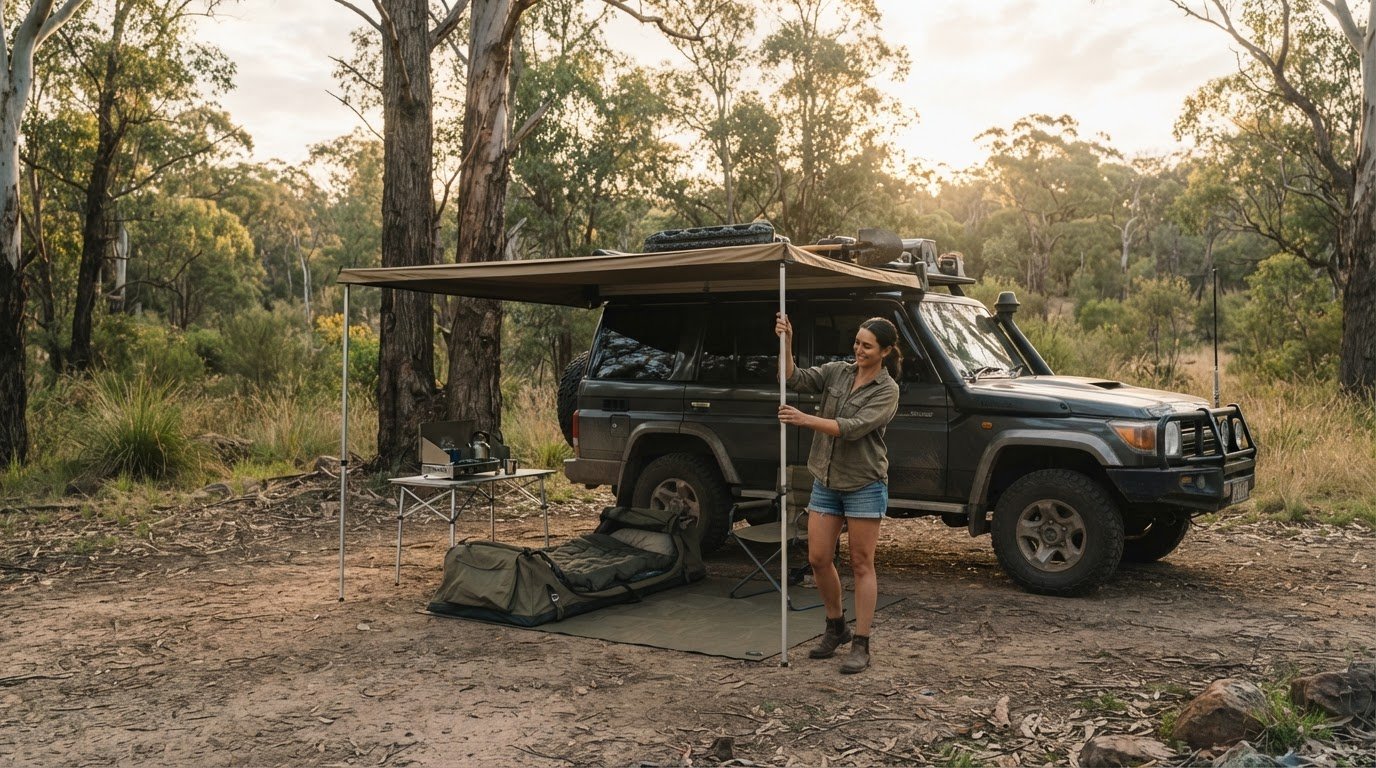
Your vehicle is your basecamp, and choosing the best 4wd awning is critical for desert sun protection. We often compare 270-degree awnings against standard side-pull models. While a side-pull is lightweight and simple, a 270-degree awning provides massive shade coverage over both the side and rear of the vehicle. This is essential for cooking and gear access during long stays. Look for models with wind-rated support poles and integrated lighting systems. These features turn a simple shelter into a functional living space that keeps the community comfortable when the mercury rises.
Safety and Stewardship: The Ethical Explorer’s Blueprint
Safety in the desert isn’t just about having a beefy winch; it’s about the ethical framework we carry with us into the wild. As we refine our remote Australia travel planner, we must adopt the Adventurerz Code: leaving every track better than we found it. This means more than just taking our own rubbish. It means picking up the discarded gear or plastic others might have left behind. The reality of “Pack it in, Pack it out” is absolute in the outback. There are no bins at a remote claypan or along the Canning Stock Route. We carry everything back to civilization, including our used tissues and food scraps.
Fire safety is another critical pillar for any responsible explorer. We strictly observe total fire bans, which are increasingly common in 2026 due to shifting climate patterns across the interior. Instead of traditional wood fires that deplete local scrub and vital habitat, we use sustainable fuel sources like portable gas stoves for all our cooking needs. If a fire is permitted, we use established pits and never leave a coal glowing. When recovery gear isn’t enough, you need a clear emergency protocol. This starts with staying with your vehicle. It’s your biggest signal and your best shelter. We never leave the car to look for help on foot; that is how tragedies happen in the desert.
Responsible Exploration in 2026
Soil erosion is a massive threat to our tracks and the surrounding environment. We stay on designated paths to avoid crushing fragile desert crusts and native vegetation. Respecting cultural sites is equally vital. We’re guests on lands that have been managed by Traditional Owners for tens of thousands of years. Always seek permission before entering restricted areas and never touch rock art or artifacts. Improper greywater disposal in arid zones can introduce harmful chemicals and non-native seeds into fragile ecosystems, permanently altering the local flora and attracting feral pests to camping areas.
The Remote Safety Kit
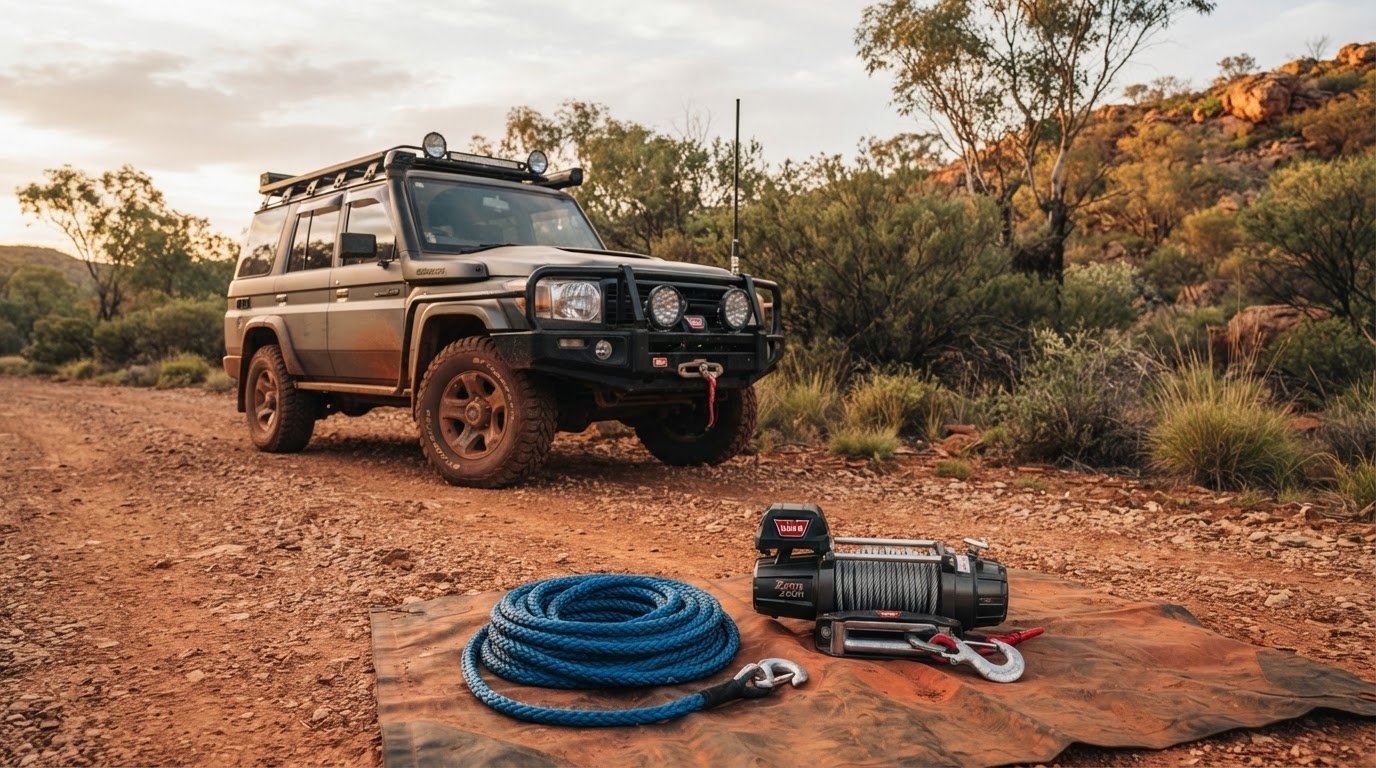
Your safety kit must go beyond a standard home first-aid box. We carry specialized snake bite kits and trauma supplies capable of managing significant injuries until help arrives. Secondary recovery options are also non-negotiable. We pack MaxTrax, winches, and heavy-duty snatch straps to ensure we can self-recover from deep sand or mud. Finally, we use a “Check-In” protocol. Someone at home must have our exact coordinates and a scheduled time to hear from us via our satellite messengers. A comprehensive remote Australia travel planner always includes this redundancy. Join the Adventurerz community to access our full checklist of ethical exploration protocols and safety standards.
Finalising Your Adventure: Joining the Community
Your preparation is nearly complete, but the most rewarding phase is just starting. Think of Adventurerz as your living, breathing remote Australia travel planner that evolves with every track you cross. We believe the best insights don’t come from glossy brochures or paid influencers. They come from us, the people who’ve actually felt the punishing corrugations of the Oodnadatta Track and watched the sun set over the Bungle Bungles. By leveraging peer reviews, we help you cut through the marketing hype on expensive gear, ensuring your hard-earned money goes toward equipment that actually survives the 2026 outback conditions.
Sharing your journey is how we build our collective strength. When you return, your observations on track washouts or new permit requirements become the data that keeps the next explorer safe. Check out The Ultimate Adventure Travel Planner for more mapping tips that complement your itinerary. We’re all in this together; your voice is a vital part of our shared path toward responsible exploration and self-reliance.
From Planning to Departure
Before you turn the key, run through the final checklist. This includes a comprehensive vehicle service, a full gear inventory, and one last confirmation of your permits. We always set strict “Go/No-Go” parameters based on the latest 2026 weather forecasts. If a cyclonic event is brewing in the north or a heatwave is spiking in the centre, we have the courage to delay. Once you’re back, pay it forward. Contributing your own gear reviews helps fellow community members make informed decisions about their own setups, ensuring everyone stays safe in the red centre.
Next Steps for Your 2026 Escape
The outback is calling, and you’re now equipped with the knowledge to answer it safely and ethically. Stay connected with us for the most current track reports and community updates. We encourage you to start your wishlist of essential 4WD accessories today, focusing on the durability and environmental stewardship we’ve discussed throughout this guide. Using this remote Australia travel planner is the first step toward a lifetime of off-grid discovery. Join the Adventurerz community today and let’s start mapping your next great escape together!
Master Your 2026 Outback Expedition
The red dust is calling and you now have the blueprint to answer it with total confidence. We’ve moved beyond simple map-reading to a deeper understanding of terrain assessment, resource mapping, and the specialized gear required for the interior’s most punishing tracks. By using this remote Australia travel planner, you’re not just preparing for a trip; you’re joining a community dedicated to self-reliance and the protection of our ancient landscapes. We know that the right preparation turns a daunting trek into a life-changing journey.
We’ve explored how technical kit and a commitment to the Adventurerz Code can transform your travel experience. Now it’s time to turn these strategies into dirt under your tyres. Leverage our specialized focus on Australian remote terrain to ensure your setup is truly outback-proven. Start planning your remote adventure with our expert gear reviews and access our community-vetted 4WD gear recommendations and expert-led sustainable travel guides. The horizon is wide, the tracks are waiting, and we’ll be right there with you on the shared path toward responsible exploration. See you out there!
Frequently Asked Questions
What is the best digital tool for a remote Australia travel planner?
The most effective digital tool for a remote Australia travel planner is a combination of offline topographic mapping software and community-vetted track reports. We don’t rely on standard Google Maps because it lacks the detail required for station tracks and recent washouts. Integrating high-resolution topo data with real-time updates from fellow explorers ensures you stay on the right path when the bitumen ends.
Do I really need a satellite phone for remote outback travel?
You absolutely need a reliable form of satellite communication, although it doesn’t have to be a traditional handset. In 2026, many of us prefer satellite communicators like the Garmin inReach Messenger Plus or the Starlink Mini for messaging and SOS functions. These devices are more affordable and offer better battery life than old-school satellite phones. Having one is a non-negotiable safety redundancy for any off-grid expedition.
How much water should I carry per person for a remote desert trip?
Carry a minimum of 5 to 7 litres of water per person per day, plus a 20% reserve for emergencies. This amount covers drinking, basic hygiene, and cooking in the arid interior. If you’re travelling during the peak of summer or performing strenuous activities, increase this to 10 litres. We always store our water in multiple separate containers so a single leak doesn’t compromise our entire supply.
Are rooftop tents better than traditional tents for the Australian outback?
Rooftop tents are generally superior for the outback because of their excellent dust-sealing and rapid setup times. Being elevated also keeps you away from ground-dwelling wildlife and insects in crocodile or dingo country. While ground tents are lighter, the convenience of a 60-second pitch after a long day on corrugated tracks makes hard-shell rooftop models the top choice for our community.
How do I get permits for driving through Aboriginal land?
You must apply through the relevant Land Councils or state government portals well before your departure. For example, Western Australia offers free transit permits for major routes through Aboriginal lands, while other regions require specific fees that support local communities. Always check the specific requirements for your route within your remote Australia travel planner to respect the sovereignty of Traditional Owners.
What are the essential 4WD recovery items for solo remote travel?
Essential recovery gear includes a set of MaxTrax, a high-quality winch, a snatch strap, and a sturdy long-handled shovel. Solo travellers must be entirely self-reliant, so we also recommend a tyre pressure gauge and a reliable 12V air compressor. Don’t forget rated recovery points on your vehicle; without them, these tools can be dangerous or impossible to use safely.
How can I travel sustainably in remote Australia?
Sustainable travel starts with staying on designated tracks to prevent soil erosion and respecting “Pack it in, Pack it out” waste protocols. We use portable gas stoves instead of wood fires to preserve local habitats and ensure all greywater is disposed of responsibly. Minimising your footprint protects these fragile ecosystems for the generations of explorers who’ll follow in our tracks.
Is a 4WD awning necessary for a trip to the red centre?
A high-quality 4WD awning is essential for providing critical UV protection in the harsh desert sun. It transforms your vehicle into a functional basecamp, offering a shaded area for cooking, vehicle maintenance, and rest. We prefer 270-degree models for their massive coverage, but even a standard side-pull awning significantly improves your comfort and safety during mid-day stops.