Wash your 4WD on the day you drive on the beach or, at the latest, within 24 hours. Knowing how to wash a 4WD underbody after beach driving starts with cooling hot components, then flushing sand and salt from underneath before they linger around the chassis, suspension and fittings.
A garden hose is a practical start, but a quick rinse from the side may not reach every part of the underbody. We’ll walk through a careful routine for clearing heavy sand, using overlapping passes to cover hard-to-reach areas, and rinsing without letting cleaning products dry on the vehicle.
Whether you’re heading home from a coastal track or exploring Australia’s beaches, a consistent wash routine helps you care for your vehicle while treading lightly. Follow these steps to choose your tools, work systematically and check that grit has washed away.
Key Takeaways
- Clear heavy sand from wheel arches and exposed accessories before it gets pushed into seals or tucked into cavities.
- Wash after beach exposure on the same day or, at the latest, within 24 hours.
- A garden hose can rinse surface salt and sand, but water aimed from the side may miss parts of the chassis rails.
- Work methodically along the underbody with overlapping passes, paying attention to suspension parts, brake lines and fittings.
- Use pressure carefully around electrical connectors, seals, bearings and damaged coatings.
Table of Contents
Removing heavy sand from wheel arches and accessories
Begin by clearing loose, heavy sand, then rinse finer residue from the wheels and underbody. Work around each wheel and check exposed fittings and accessories for packed grit.
-
Remove Heavy Sand from Wheel Arches
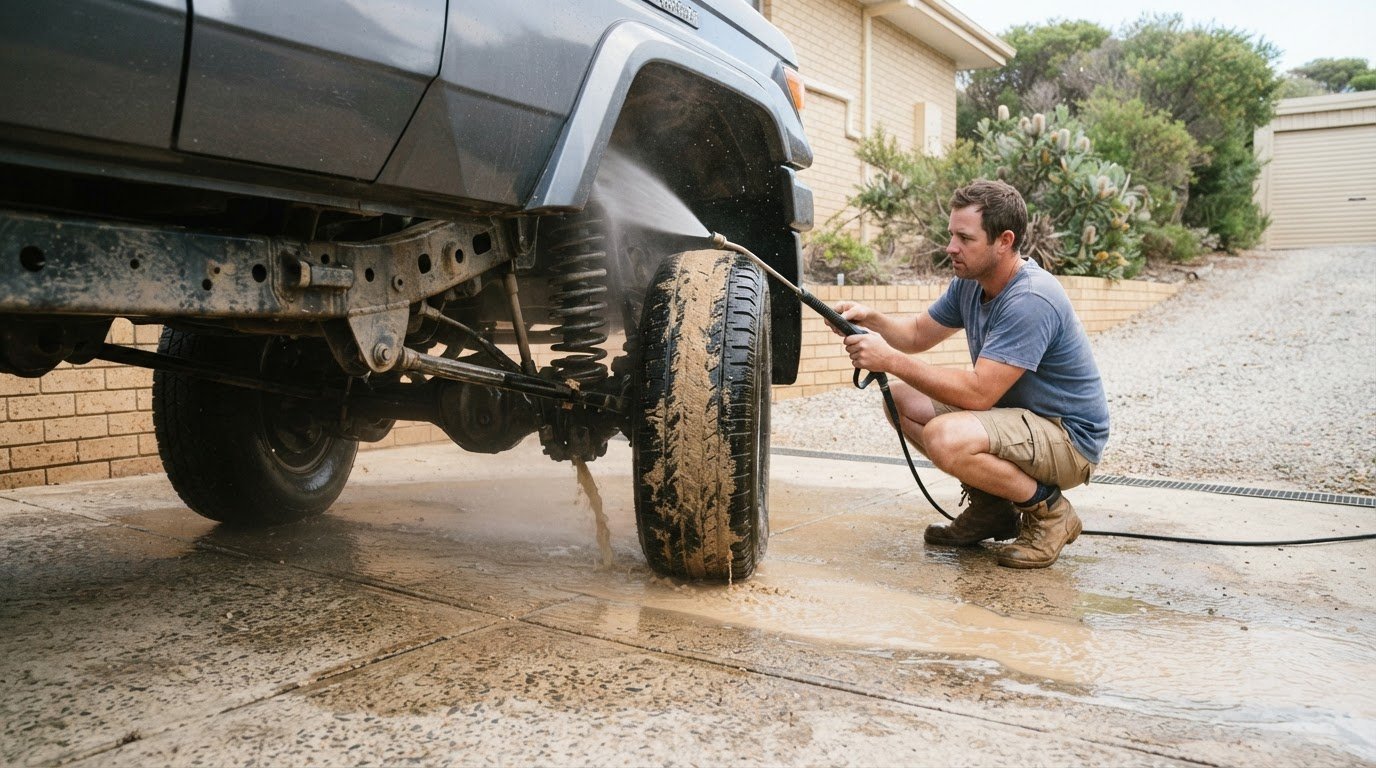
Flush each wheel arch with a garden hose, directing water into the corners and along the inner surfaces. Move around the tyre to reach behind it, not just the outer edge. Sand can collect in wheel arches and underbody cavities, and fine grains may scratch paintwork or enter seals. Keep the stream moving and rinse away loosened clumps as you go.
-
Wash Wheels, Tyres and Wheel Arches
Rinse the tyre sidewalls, wheel faces and wheel arches, then check around the wheel nuts and suspension mounting points. These exposed areas can collect sand and salt spray during beach driving. Use a controlled stream to carry grit away rather than pushing it deeper into gaps. Change your position around each wheel to rinse the back of the arch too.
- Check the brakes without directing a forceful jet at close range. Rinse away visible sand around the brake area, then allow runoff to carry debris down and out. Avoid aiming concentrated pressure at seals, rubber boots or other vulnerable edges. If sand remains packed in a narrow gap, change the water angle and use a gentler, steady rinse instead of forcing grit further inside.
- Rinse rock sliders and other fitted accessories across their top surfaces, outer edges and undersides. Sand can collect where a slider meets its brackets or beneath a step. Work from one end to the other, then change the angle to reach sheltered joins. If runoff still carries sand, rinse that section again before moving on.
- Finish this pass with a visual check around all four wheels. Look for clumps at the inner arch lips, tyre shoulders, wheel nuts, exposed suspension points and accessory mounts. A torch can help reveal shaded pockets behind a tyre. Clear visible deposits before rinsing the rest of the underbody, so loosened sand doesn’t get lost in later runoff.
Wheels and tyres are exposed to sand and salt spray, as are wheel nuts and suspension mounting points.
How Soon Should You Wash Your Car After the Beach?
Wash your 4WD on the day you drive on the beach or, at the latest, within 24 hours. A careful rinse and inspection help make each post-trip clean more thorough.
-
Rinse Salt and Sand from the Underbody
Start with water directed beneath the vehicle, then work along the chassis from one end to the other. A side-on rinse can miss salt inside chassis rails, so change your position and water angle. Keep flushing areas while runoff carries sand or mud. This methodical approach is central to how to wash a 4WD underbody after beach driving.
-
Use a Garden Hose or Pressure Washer
Use a garden hose for a steady rinse, moving around the vehicle to reach more than its outer edges. A pressure washer can help with a suitable attachment and sensible distance. Keep the nozzle moving, and avoid concentrated spray on electrical connectors, seals, bearings or damaged coatings. Choose a tool that lets you rinse steadily without targeting vulnerable components.
-
Use High-Pressure Jets and Hot Water
Fit a suitable underbody attachment, such as a 90-degree nozzle, to direct water towards difficult-to-reach areas. Sweep the jet across components rather than holding it in one place. Before washing, let the exhaust and brakes cool. Take particular care around electrical connections and exposed intakes, especially if rinsing near the engine bay.
-
Dry and Inspect the Underbody
Let water drain after rinsing, then inspect accessible underbody areas for grit, residue, damp pockets or damaged coatings around fittings and suspension components. A torch helps illuminate shaded spaces without requiring you to reach beneath an unsupported vehicle. Apply rust protection only after the surface is properly cleaned and completely dry.
- Watch the runoff as you rinse each section. If it carries visible grains or mud, change the water angle and rinse again. Once the runoff is clear, move to the next accessible part of the chassis. This is a practical way to judge coverage, rather than relying only on what you can see from beside the vehicle.
- Keep the washing sequence consistent after each coastal outing. For example, rinse the chassis rails, cross-members and suspension areas in order, then inspect the route you’ve covered. Learning how to wash a 4WD underbody after beach driving means building a repeatable routine, not just spraying the most visible parts and calling the job done.
Can I clean my 4WD after beach driving with a garden hose?
Yes, a garden hose can rinse surface sand and salt, but a side-on stream may miss residue inside chassis rails. Knowing how to wash a 4WD underbody after beach driving means directing water underneath and checking where grit can collect.
-
Find Chassis Salt Traps and Drain Holes
Inspect accessible chassis rails, seams, brackets and underbody cavities for openings or sheltered pockets where sand and residue may collect. Don’t assume every hole drains a rail. Use a torch to see into shaded areas, and keep visible drain openings clear of packed debris. Don’t push tools into a chassis opening.
-
Use Salt Dissolver and Anti-Salt Products
Choose a salt dissolver or anti-salt product labelled as suitable for the surfaces you’ll treat. Check the directions for compatibility with each material, including paint, rubber and aluminium. Follow the product’s instructions for application and rinsing, and don’t let it dry in seams. Use a garden hose to wash away loosened residue and remaining cleaner.
-
Assess Salt Corrosion on Underbody Metal
Inspect exposed metal around chassis rails, suspension parts and fittings for salt residue or visible surface changes. Salt, sand and moisture can collect around underbody components and contribute to rust and corrosion. A hose aimed from the side may rinse the outside of a rail while missing salt inside it. Change the angle and keep flushing wherever runoff carries grit.
- Remember that salt exposure doesn’t require driving through seawater. A parked 4WD can encounter salt carried in coastal air or sea mist. After a coastal stop, include the underside in your rinse, even if the tyres stayed on sealed roads. This distinction matters when deciding how to wash a 4WD underbody after beach driving or coastal travel with only a garden hose.
- Rinse one accessible area at a time and watch the water leaving it. If runoff carries sand or mud, keep flushing and change the hose position to reach another angle. A steady stream can clear accessible surfaces, but clean outer panels don’t mean chassis cavities are clean. Pay attention to the rail openings and sheltered joins you inspected earlier.
- Finish by checking accessible drain points and nearby metal for visible debris. Let the underbody dry completely before applying rust protection, and apply it only to a properly cleaned surface. If the hose can’t direct water through a cavity, don’t force tools or a concentrated jet inside. Use a suitable underbody attachment for areas a standard rinse can’t reach effectively.
Cleaning underbody components with overlapping passes
Rinse the chassis in a consistent pattern, overlapping each pass to avoid leaving untreated strips of sand or salt. Follow the runoff as you clean each section.
- Start at one end of the chassis and divide the underside into visible sections, such as rails, cross-members and suspension areas. Rinse one section at a time, shifting the spray path slightly on each pass. Overlap helps cover the edges between passes instead of leaving narrow bands untouched. Keep your position steady and change the water angle to reach sheltered surfaces.
- Work methodically along each chassis rail, following its length rather than spraying only across the vehicle. Direct water through accessible openings and cavities, then check what drains out. If runoff still carries sand or mud, continue flushing that section. Don’t move on just because the outer face looks clean: residue can remain where a rail meets brackets or other underbody structures.
- Use an appropriate underbody attachment to guide water around cross-members and suspension components. A 90-degree nozzle can help direct the rinse towards hard-to-reach areas. Keep the nozzle moving, and adjust your angle as the component shape changes. Avoid holding concentrated pressure on electrical connectors, seals, bearings or damaged coatings, where forceful spray may cause harm.
- Rinse around brake lines, fittings and mounting points with controlled passes. Approach from different angles to reach behind exposed components without concentrating the jet on one connection. Watch the runoff beneath each area. If it carries visible grit, repeat the pass; once it runs clear, continue to the next accessible section.
- Overlap each pass with the edge of the last one, including beneath brackets and along the lower edge of each rail. This helps avoid gaps when rinsing a broad underbody. Keep checking the runoff, as sand can emerge after you change direction. Return to any section where the water still looks dirty.
- Finish with a slow sweep over the areas you’ve rinsed, revisiting shaded sections and component joins. Compare the final runoff with earlier water. If it still carries sand or mud, flush that spot again. Leave clean sections alone instead of repeatedly directing high pressure at sensitive parts, seals or coated surfaces.
Underbody-wash routines for regular beach users
After exposure to saltwater or salty air, make an underbody rinse part of your beach-trip routine. A repeatable sequence helps you cover the chassis without rushing past hidden areas.
- Before a trip, remove clumps of mud from the underbody so they don’t travel to the beach or obstruct cleaning later. After returning, let the exhaust and brakes cool before washing. Set up a hose or suitable underbody attachment, then work from one end of the chassis to the other. A consistent direction makes missed sections easier to spot.
- Start with the wheel arches, then move to the chassis rails, cross-members and suspension areas. Use a chassis flusher or suitable hose attachment to reach beneath the vehicle. Work through each section instead of spraying from one position. Change the nozzle angle around brackets and fittings, where sand and salt may collect out of view.
- Keep rinsing a section while the runoff carries sand or mud. Check the water leaving each chassis rail, suspension area or cross-member before moving on. If it still carries grit, repeat the pass and adjust the angle. The runoff gives you a practical cue to continue, rather than relying only on the appearance of exposed metal.
- If using underbody foam, apply it evenly and let it soak for about a minute before rinsing. Don’t let the product dry on the surface. Move through manageable areas so you can rinse each one in time. Use a 90-degree nozzle to direct water towards hard-to-reach sections, keeping the spray moving over components.
- For regular washes, a pressure washer can help with a suitable attachment and sensible distance. Keep concentrated pressure away from electrical connectors, seals, bearings and damaged coatings. A garden hose is useful for rinsing accessible areas and following dirty runoff. Change tools or angles wherever the chassis shape blocks water from reaching a section.
- Finish by checking both rails, the areas beneath cross-members and visible fittings. Return to any area where runoff still carries debris. Let the underbody dry completely before applying rust protection, and apply it only to a properly cleaned surface. Repeat the same sequence after beach outings, including trips where salty coastal air reaches the vehicle.
Adventurerz
Adventurerz helps Australian outdoor enthusiasts plan better trips with practical information on camping, adventure ideas and gear. After building a reliable beach-wash routine, you can use its reviews and recommendations to explore options for camping equipment, hiking equipment, rooftop tents and 4WD awnings. These resources support decisions around your wider setup, while the underbody-cleaning steps above help you care for your vehicle after coastal travel.
Turn to Adventurerz when you’re planning your next outing and want useful guidance for preparing your gear and approach. We’re part of a community that values capable equipment and responsible exploration across Australia. Contact Adventurerz to discuss the outdoor information you’re looking for.
Make Every Coastal Trip Count
Turn underbody care into a deliberate part of preparing for your next coastal drive. A steady routine for how to wash a 4WD underbody after beach driving helps make responsible vehicle care a habit, not an afterthought. Keep your approach consistent, and adapt it to the sand, salt and access conditions you encounter on each trip.
As you plan future adventures, think beyond the wash itself: the right preparation supports more confident travel and helps you make thoughtful choices about your setup. Adventurerz brings together outdoor advice and gear recommendations for Australian explorers, including rooftop tents, 4WD awnings and camping equipment. Use those resources as you shape your next outing and build a setup that suits how you travel.
Ready to plan your next step? Contact Adventurerz for 4WD advice, and keep exploring with care. Here’s to many more rewarding tracks and beach trips!
Frequently Asked Questions
Can I apply rust protection straight after washing?
Apply rust protection only after the underbody is properly cleaned and completely dry. Water or sand beneath a protective layer can leave residue trapped against the surface. After rinsing, let water drain from accessible seams and chassis openings, then check for damp areas before applying protection. Follow the product directions, and don’t cover visible dirt or wet metal.
Do I need an underbody wash even if I didn’t drive on the sand?
Yes, if your 4WD was exposed to salty coastal air or sea mist. Salt can reach an underbody while the vehicle is parked near the shoreline, even without a beach track or seawater crossing. For example, after a coastal stop, consider whether the vehicle sat in salty air, then include the underside in your wash rather than rinsing only the body panels.
Do I need to wash the 4WD if it did not touch seawater?
Yes, a seawater crossing isn’t necessary for salt exposure. Coastal air and sea mist can carry salt onto a parked vehicle, including its underside. If your 4WD has been near the shoreline or travelling through a coastal area, rinse the underbody as well as exposed exterior surfaces. Pay attention to places where spray or damp residue may have collected during the outing.
Is rinsing my car at home enough after going to the beach?
A home rinse can remove surface sand and salt from paintwork, but rinsing only from the side may leave residue underneath. Water may miss salt inside chassis rails or sheltered spaces. Rinse along the chassis as well as across it, changing the angle to reach accessible areas underneath. Check the runoff for grit.
Should I use a pressure washer under my 4WD?
You can use a pressure washer with an appropriate underbody attachment and sensible distance. Work steadily across accessible sections, keeping the spray moving instead of concentrating it on one spot. A 90-degree nozzle can help direct water towards hard-to-reach areas. Use a gentler approach around components that could be affected by concentrated pressure, and let hot brakes and exhaust parts cool before washing.
How soon should you wash a 4WD underbody after beach driving?
Wash it on the same day as beach driving or, at the latest, within 24 hours. That timing gives you a clear routine after each coastal trip, whether you return home or stop elsewhere first. If the vehicle has also been exposed to salty air, include the underside in the wash. Don’t wait for visible corrosion before rinsing away beach residue.
Can a pressure washer damage 4WD underbody components or seals?
Yes. Concentrated pressure can damage vulnerable areas if the jet is held close or aimed directly at them. Take care around electrical connectors, seals, bearings and damaged coatings. Sweep the nozzle past a suspension joint rather than targeting its seal. Use a suitable attachment and sensible distance, and switch to a gentler rinse around exposed or fragile components.
Which underbody wash products are safe for paint, rubber and aluminium?
Choose a salt dissolver or anti-salt product labelled as suitable for paint, rubber and aluminium. Follow its directions, and don’t let it dry before rinsing.