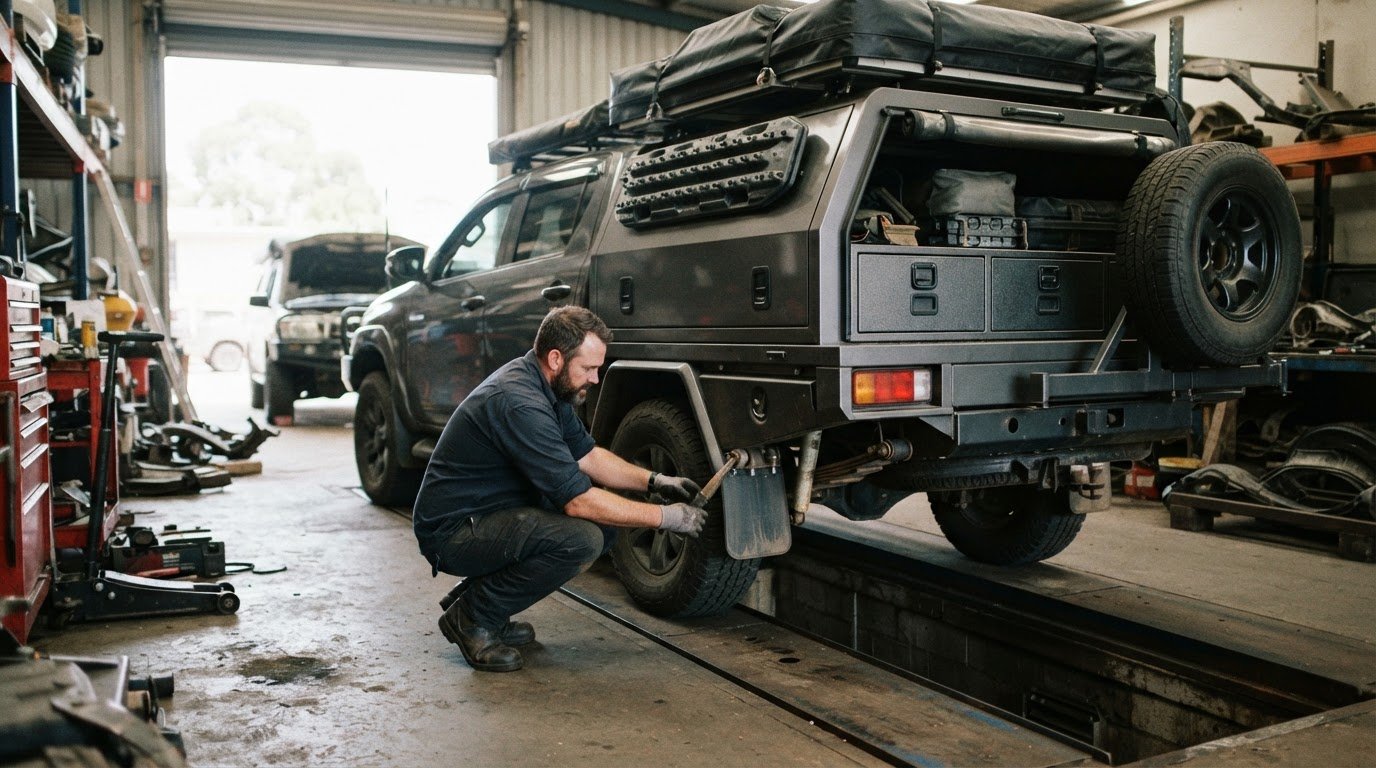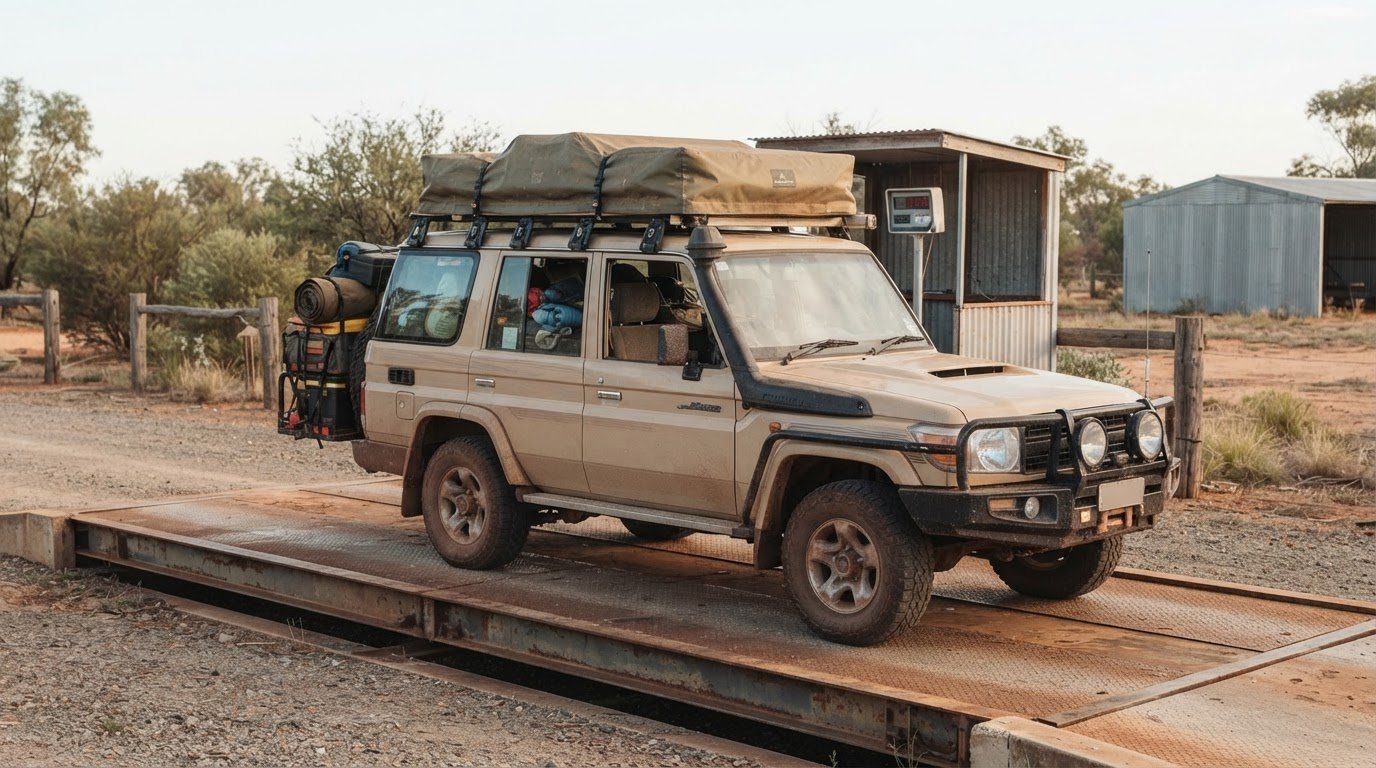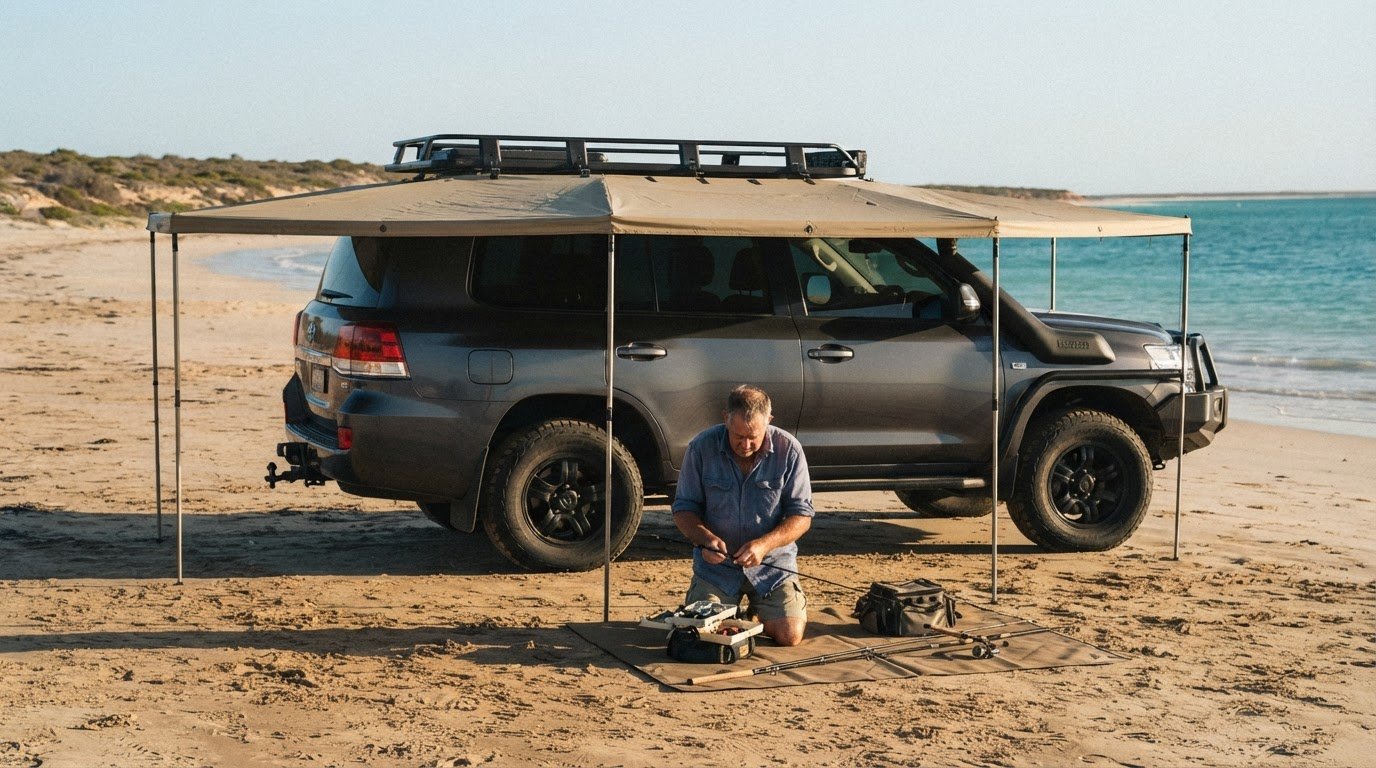
The pre-rego vs post-rego GVM upgrade decision is about more than timing: it can change the approval pathway. A pre-rego upgrade is recorded before registration and recognised nationwide in Australia, without separate state engineering approval. A post-rego upgrade must follow the engineering and approval process for the state where the vehicle is registered.
It’s easy to focus on the upgraded GVM and overlook the payload you actually need for your touring setup. The right option depends on when the vehicle is modified, its current and planned load, and how the upgrade affects your travel plans. This guide compares the two pathways, explains the costs and the factors that shape them, and shows when each may suit a 4WD build. We’ll also look at the difference between payload and towing capacity, so you can plan for your vehicle, passengers and gear with a clearer picture of the trade-offs.
Key Takeaways
- Timing shapes the approval pathway: pre-registration upgrades are recognised nationwide, while post-registration upgrades follow the rules of the state or territory where the vehicle is registered.
- Post-rego upgrades need state-specific engineering sign-off, so moving a vehicle interstate can affect how its modification is recognised.
- Compare fitted costs for your vehicle and upgrade pathway, not just the price of parts; post-registration work can involve additional certification costs.
- A higher GVM increases the vehicle’s load allowance, but doesn’t automatically increase its GCM or towing capacity.
- Weigh your touring setup, including passengers, accessories and supplies, to judge whether an upgrade will meaningfully improve your available payload.
Table of Contents
Pre-Rego vs Post-Rego GVM Upgrades: What’s the Difference?
Choosing between a pre-rego and post-rego GVM upgrade changes the certification pathway, not just the timing. The vehicle’s registration state matters, especially if you later move or sell interstate.
Pre-registration GVM upgrades
A pre-registration GVM upgrade is certified before the vehicle is first registered, through federal Second Stage Manufacturer (SSM) approval. The upgrade details are recorded before registration, and this pathway is recognised nationwide in Australia. That can simplify interstate use compared with a post-rego modification, which follows the rules of the state where the vehicle is registered.
For a new 4WD, the key practical difference is when the suspension and GVM changes are incorporated into the vehicle’s approval. The SSM approval applies to the specified modification; it does not itself re-rate the vehicle’s GCM. Keep the approval and modification records with the vehicle, so its registered configuration is clear when you travel or sell.
Post-registration GVM upgrades
A post-registration GVM upgrade is completed after the vehicle has been registered and requires the engineering and approval process for its registration state. Queensland, NSW, Victoria, Tasmania, South Australia and the ACT require certification by an authorised state-engineering signatory. In NSW, an engineer’s certificate under the Vehicle Safety Compliance Certification Scheme (VSCCS) is required, and re-registration is mandatory.
In Western Australia, post-rego upgrades need to follow the applicable approval process. The steps can include signatory certification, inspection and a Vehicle Modification Permit. A Queensland post-rego approval doesn’t automatically transfer if the vehicle moves or is sold interstate. The receiving state may require an inspection and re-approval by one of its qualified engineers, so a modification valid in one state may need further approval elsewhere.
Effects on ownership and resale
A GVM upgrade can affect how warranty claims, insurance terms and resale are assessed. The outcome depends on the vehicle’s warranty terms, insurance policy and the buyer’s assessment of the modification and its documentation. For example, a buyer may need to understand whether the fitted suspension matches the approved GVM rating and whether the approval relates to the vehicle’s current registration state.
The main risk when buying an aftermarket upgrade is a mismatch between the vehicle, fitted components and certification records. Missing or unclear paperwork can make the approval pathway difficult to establish, particularly after an interstate move. Ask for the modification and engineering records as part of the purchase, and check that the recorded configuration matches the vehicle being sold.
Approval and recording steps
Start by identifying whether the upgrade is pre-rego or post-rego and which state or territory will register the vehicle. Federal SSM approval applies to pre-registration work. For post-registration work, the relevant state pathway determines the required engineer sign-off and approval. These are distinct routes, so the timing and registration location guide the next steps.
For a post-rego upgrade, the process generally involves having the modification assessed, obtaining certification from the relevant authorised signatory, completing any required inspection, then securing the applicable approval and recording the change. In WA, this can include a Vehicle Modification Permit; in NSW, certification and re-registration are required. Keep the resulting documents with the vehicle, especially before an interstate transfer.
Post-rego upgrades and Light Vehicle Engineering Signatory certification
A post-rego GVM upgrade changes a registered vehicle’s gross vehicle mass rating through an approved engineering pathway. The state or territory determines the required certification and paperwork.
Engineering signatory certification
A Light Vehicle Engineering Signatory assesses a registered vehicle’s proposed modification and certifies it against applicable state requirements. This sign-off matters because a GVM rating change needs approval, not simply replacement suspension or other hardware. In South Australia, a vehicle with a GVM up to and including 4,500 kg needs approval for a registered-light-vehicle modification, and an SA Light Vehicle Engineering Signatory must assess and certify a GVM increase.
In Western Australia, post-registration GVM upgrades require certification by a Department of Transport-approved engineer or signatory, an inspection and a Vehicle Modification Permit. The upgrade work should be completed by an appropriately qualified professional. DIY upgrades are not legal there. These requirements connect the physical modification with the rating recorded through the approval process.
Modification standards and guidance
Vehicle Standards Bulletin 14 (VSB 14) sets technical requirements for modifying light vehicles in Australia. It provides the framework used to assess whether a modification meets relevant vehicle standards, rather than treating a suspension change as an isolated parts installation. For a registered 4WD, the proposed GVM rating and supporting engineering assessment must align with the applicable modification requirements.
Western Australia uses Vehicle Technical Bulletin VTB-180A for light-vehicle GVM re-rating requirements. DTMI published VTB-180A and VTB-181A in May 2024, setting standards for light-vehicle GVM and GCM re-rating. A GVM increase alone doesn’t raise GCM; a GCM re-rating must also meet both VTB-180A and VTB-181A requirements. That distinction matters when a touring build carries extra load and tows.
Upgrades for vehicles and fleets
Post-registration certification applies to existing vehicles, including those already fitted with touring accessories or carrying work equipment. The engineering assessment concerns the vehicle’s proposed modified configuration and maximum gross vehicle mass rating. For fleet operators, each vehicle’s specifications and modification history matter: a shared model name doesn’t establish that every vehicle has the same equipment, condition or suitable approval pathway.
In South Australia, the approval requirement applies to registered light vehicles with a GVM up to and including 4,500 kg. This gives fleet planning a clear threshold to consider, while the signatory assessment remains specific to each modification. Keeping vehicle records organised helps distinguish approved configurations across a fleet.
Compliance plates and paperwork
Vehicle paperwork links the approved rating to the modified vehicle. In South Australia, a modification plate for a post-registration GVM upgrade should state the revised rating, VIN and details identifying the modifier. Those identifiers connect the recorded gross vehicle mass to the specific vehicle and work performed.
Keep the engineering certificate, approval documents, inspection records and modification details together with the vehicle’s existing paperwork. In WA, the Vehicle Modification Permit forms part of the post-rego approval pathway. Clear records matter when the vehicle is inspected, transferred between owners or moved interstate, because another state may require its own inspection and re-approval.
Pre-rego GVM upgrades under Second Stage of Manufacture approval
Timing determines whether a GVM upgrade follows federal pre-registration certification or state-based post-registration approval. For a new 4WD in Australia, that choice affects when the vehicle’s revised weight rating is approved and what inspection steps apply.
Federal approval before registration
A pre-rego GVM upgrade is completed and certified before the vehicle’s first registration under a federal Second Stage of Manufacture (SSM) approval. The manufacturer or approved modifier certifies the vehicle’s revised GVM through this pathway, establishing its rating before it enters normal registration.
This timing can suit a build that needs different springs or suspension from the outset. The SSM approval applies to the specified GVM modification, not every change made to the vehicle. Its terms and certification identify the approved configuration, so adding other modifications doesn’t automatically include them under the same approval.
In Western Australia, pre-registration GVM upgrades are certified under federal SSM approval. This is distinct from a post-rego upgrade, where the state or territory of registration determines the engineering and approval process. The key practical difference is whether certification happens before registration or after the vehicle is already on the road.
South Australian registration and inspection
South Australia has a specific route for vehicles modified under pre-registration SSM approval. A vehicle re-rated under that approval can be registered without Department for Infrastructure and Transport (DIT) approval. South Australia also doesn’t require a roadworthiness inspection for vehicles modified under pre-registration SSM approval.
For a vehicle under 12 months old, a roadworthiness inspection isn’t required when the modification follows its SSM approval and an LVES certifies it. The approval and signatory certification are central to this pathway. A workshop fitting springs or other approved components must keep the work consistent with the applicable SSM certification.
Where post-rego approval differs
A post-rego GVM upgrade happens after initial registration, so the existing vehicle must follow the engineering pathway for its registration state. In South Australia, a registered light vehicle with a GVM up to and including 4,500 kg requires approval for modifications, and an SA Light Vehicle Engineering Signatory must assess and certify a GVM increase.
That state-based process is separate from federal SSM certification. The vehicle’s registration timing determines which route applies; an already registered vehicle cannot be treated as though it were receiving pre-registration approval.
GVM approval doesn’t re-rate GCM
Federal SSM approval for a GVM upgrade doesn’t cover GCM re-rating. This has applied since the Federal Administrator’s Circular 0-4-6 was published in October 2019. GVM describes the vehicle’s maximum loaded mass, while GCM concerns the combined vehicle and trailer mass. A higher approved GVM therefore doesn’t, by itself, change the combined rating available for towing.
Pre-rego and post-rego upgrade costs
In Australia, fitted pre-rego upgrades generally cost less than post-rego upgrades, though the vehicle and approval pathway affect the final bill. Compare the complete fitted cost, not just the suspension parts.
Comparing upgrade costs
The difference is about more than the hardware: post-rego work can involve state engineering assessment, inspection and approval, depending on the registration pathway.
These ranges are useful for setting a budget, not for assuming every vehicle will land at the midpoint. The vehicle model, upgrade kit, installation scope and required certification all affect cost. Regional Australian prices may add 5-10% to upgrade costs, so location can also change the fitted total.
Keep parts-only figures separate from fitted estimates. A parts price doesn’t include installation, so comparing it directly with a drive-in-drive-out figure understates the cost of completing the modification. Before treating estimates as like-for-like, ask what the fitted amount covers, including installation and any engineering or approval charges.
Cost and convenience considerations
Pre-rego work can be more convenient when the vehicle is new and the upgrade can be incorporated before its first registration. Federal Second Stage of Manufacture approval applies to this pathway. Planning the modification at this stage may avoid arranging a separate post-registration engineering process later.
For an already registered 4WD, the post-rego pathway adds state-based certification requirements. Budget for the work as a complete process, including the engineering assessment and any required inspection or permit. The exact components and approval steps depend on the vehicle and the state or territory where it’s registered.
That is a separate modification, not an automatic result of increasing GVM. A higher GVM rating also doesn’t increase braked towing capacity. Consider the loaded vehicle and towing requirements before paying for additional capacity.
Use the fitted range that matches your timing, then account for the vehicle-specific kit and certification scope. A lower parts figure may not mean the lowest completed cost if installation or approval is excluded. Conversely, paying for a GCM re-rating only makes sense when the vehicle’s intended loaded use requires that separate rating and the upgrade is available for that model.
Payload and upgrade suitability
A GVM upgrade suits a 4WD whose planned loaded mass exceeds its current rating. The useful question is whether your actual touring payload needs more capacity, not whether the largest available rating looks attractive.
Start with the vehicle’s kerb weight and payload. A vehicle with a kerb weight of 2,500 kg and payload of 650 kg has a GVM of 3,150 kg. Passengers, accessories, water, fuel and camping equipment all use payload. A roof rack, awning or touring fit-out can consume capacity before food and luggage go aboard.
Compare your loaded setup with the current GVM and the proposed upgrade rating. If you retain 250+ kg of headroom, a GVM upgrade can be hard to justify. If the vehicle is within 5% of its GVM, an upgrade may be the right next step. Those thresholds help frame the decision; they don’t replace weighing the complete vehicle in its intended travel configuration.
Axle and wheel limits still matter. For a rear-axle load limit of 3,000 kg, each rear wheel needs a load rating of at least 1,500 kg. A higher gross vehicle mass rating doesn’t remove component limits, so the tyres, wheels and axle must suit the intended load. Certification and inspection also relate to the approved modification, not simply the number printed on a new rating plate.
Consider timing alongside suitability. For some new 4WD builds, a pre-rego upgrade may be needed to achieve tyres larger than 35 inches or a lift greater than 2 inches. That makes pre-registration planning relevant when the build depends on those specifications. For an already registered vehicle, the post-rego approval pathway follows the requirements of its registration state.
Towing needs a separate calculation. A GVM upgrade doesn’t increase braked towing capacity or automatically raise GCM. If GCM remains unchanged, each extra kilo carried in the vehicle reduces available towing weight by one kilo. A GCM upgrade is separate and model-specific.
Licence limits shape the practical ceiling too. The maximum four-wheeled setup that remains driveable under a standard vehicle licence is 4,495 kg. In Australia, vehicles remaining under 4,500 kg GVM after an upgrade stay on a standard car licence. For a build near that range, include the loaded vehicle, towing plans and transport requirements in the decision, rather than focusing on payload alone.
Adventurerz
Adventurerz helps Australian adventurers plan the rest of their touring setup with reviews, recommendations and practical outdoor information. Once you’ve considered your vehicle’s payload and upgrade pathway, use our camping equipment reviews to think through what you’ll carry, then explore 4WD awning and rooftop tent recommendations for your travel needs. These resources support gear planning; engineering certification and GVM approval remain part of the vehicle’s modification process.
For your next trip, bring the same careful approach to equipment choice that you bring to vehicle loading. Consider what each item adds to your setup and how it supports responsible travel. If you’d like to get in touch, contact Adventurerz.
Plan your next build with purpose
Your choice between a pre-rego and post-rego GVM upgrade should support the way you’ll actually travel, not just the specifications on paper. Before committing to a build, map out the people, equipment and supplies you expect to carry, then consider how they fit your vehicle’s role. A considered setup can help you travel with greater confidence and avoid adding capacity you won’t use.
Think beyond the vehicle, too. The gear you take shapes how you pack, where you can camp and how comfortably you explore. Make each addition earn its place, especially on remote trips where thoughtful preparation and responsible travel go hand in hand.
Ready to plan the rest of your Australian adventure? Explore Adventurerz for outdoor inspiration and gear recommendations as you shape a setup that suits your journey. Take the next step with care, build around your real needs, and enjoy the road ahead.
Frequently Asked Questions
What Is a GVM Upgrade?
A GVM upgrade changes the approved maximum loaded mass of a vehicle. That rating sets the total weight allowance for the vehicle itself, including occupants, accessories and cargo. For example, a canopy and touring equipment use part of the allowance, even before you pack luggage. An upgrade changes the vehicle’s approved rating; it doesn’t remove axle, tyre or wheel load limits.
Cost vs Convenience: Which Works Out Better?
For a new vehicle, arranging the modification before first registration can streamline planning because the upgraded configuration is certified through the pre-registration pathway. For an already registered 4WD, the post-registration route involves the relevant state approval process. Compare the complete fitted scope, including certification and any required inspection, rather than judging convenience by parts alone. Your vehicle’s status and intended build are the key considerations.
Can I get a pre-registration GVM upgrade through my dealer?
Yes, a pre-registration upgrade can be arranged through the vehicle purchase process if the modification is completed before first registration and covered by the applicable federal Second Stage of Manufacture approval. The dealer may coordinate the modified vehicle as part of the transaction, but the approval applies to the certified configuration. At handover, the vehicle’s rating and supporting certification records should correspond to that configuration.
Do pre-rego upgrades in WA apply nationwide?
Yes. A pre-registration GVM upgrade certified under federal Second Stage Manufacturer approval in Western Australia is recognised nationwide in Australia. That differs from a post-registration modification, where the approval pathway is tied to the state or territory where the vehicle is registered. If you later move interstate, retain the federal approval and vehicle records so the pre-registration certification can be identified alongside the vehicle’s details.
Does a GVM upgrade increase towing capacity?
No. A higher GVM rating doesn’t increase the vehicle’s braked towing capacity. Towing must still fit within the vehicle’s existing towing limits and available combined mass allowance. For a touring setup, account for passengers, accessories and cargo before assessing how much trailer weight the vehicle can manage. Adding payload can reduce practical towing capacity, even when the GVM rating has changed.
Does increasing my GVM automatically increase my GCM?
No. GVM and GCM are separate ratings, so changing the vehicle’s GVM doesn’t automatically re-rate its GCM. A GCM increase requires a separate, model-specific upgrade where available. This distinction matters if you plan to tow while carrying a heavier load: the vehicle and trailer’s combined mass remains constrained by the applicable GCM rating unless that rating is separately upgraded.
Has there been a recent change to the law regulating GVM and GCM upgrades in WA?
DTMI published Vehicle Technical Bulletins 180A and 181A in May 2024, setting out requirements for light-vehicle GVM and GCM re-rating in Western Australia. VTB-180A covers GVM re-rating, while GCM re-rating must meet both bulletins’ requirements. This is the specific documented update relevant to these ratings; it shouldn’t be described as an amendment to an Act.
Is a GVM upgrade legal in South Australia?
Yes, a GVM upgrade is legal in South Australia when it follows the applicable approval and certification requirements. For a registered light vehicle with a GVM up to and including 4,500 kg, a GVM increase must be assessed and certified by an SA Light Vehicle Engineering Signatory. A pre-registration modification under federal SSM approval follows a different pathway, including distinct inspection and registration requirements.