A rooftop tent can exceed a vehicle’s dynamic roof-load rating while parked, but that doesn’t make the setup safe by itself: the static capacity of the roof, rack and mounts still matters. The impact of roof top tent weight on GVM also matters, because the tent, rack and accessories add to the vehicle’s load. In Australia, a typical dynamic roof-load rating is 50-100 kg, while a typical static rating is 150-300 kg.
It’s easy to focus on a tent’s listed weight and overlook the rack, mounting hardware and other gear on the roof. When parked, occupants add load too; when driving, the dynamic limit applies. GVM is the maximum a vehicle can weigh when fully loaded, according to the National Heavy Vehicle Regulator.
Here’s how roof loads affect both limits, why the lowest-rated component sets the ceiling, and what to consider before sleeping in a tent that exceeds the dynamic rating. You’ll also learn how to include roof-mounted equipment in your payload calculation and plan a setup without overlooking safety or balance.
Key Takeaways
- Build your roof-load total from the tent, rack, mounts and every accessory carried up top, not just the tent’s listed weight.
- Use the lowest applicable rating across the vehicle roof and rack system to understand the setup’s load limit.
- Separate the parked setup from the driving setup: occupants add load while camped, while road forces make the dynamic rating critical when travelling.
- Include roof-mounted equipment in your overall payload calculations, alongside passengers, supplies and other vehicle loads.
- Compare tent and rack options with your vehicle’s limits in mind before settling on a touring setup.
Table of Contents
Static vs Dynamic Roof Load: What’s the Difference?
A dynamic roof-load rating applies while your vehicle is moving; a static rating applies while it’s parked. Typical Australian vehicle ratings are 50-100 kg dynamically and 150-300 kg statically. These figures describe different conditions, so a higher parked rating doesn’t permit a heavier driving load.
Dynamic ratings account for forces from braking, cornering, acceleration and wind. Exceeding the vehicle’s published limit can compromise handling, increase braking distance and stress mounting points. Static ratings cover a stationary vehicle, including the load on the roof while camped. They do not replace the dynamic limit when driving.
Roof-load limits vary by vehicle and roof system. Approximate dynamic ratings include 100 kg for Toyota LandCruiser 200 and 300 factory rails, 70-80 kg for a Toyota HiLux, and 75 kg for an Isuzu D-MAX standard cab roof. A Ford Ranger with a sports bar or canopy is listed at about 80 kg. Treat these as examples, not universal specifications for every model or configuration.
How does rooftop tent weight affect a vehicle’s GVM? It adds to the vehicle’s payload, bringing the fully loaded vehicle closer to its GVM, according to the National Heavy Vehicle Regulator (NHVR). Roof load and GVM are separate limits: staying within one does not mean you have met the other.
What are the roof-load limits for popular Australian 4WDs and utes? The examples above range from about 70 kg to 100 kg dynamically, but model, roof equipment and configuration matter. The applicable limit is the lowest rating for the vehicle roof and fitted rack system.
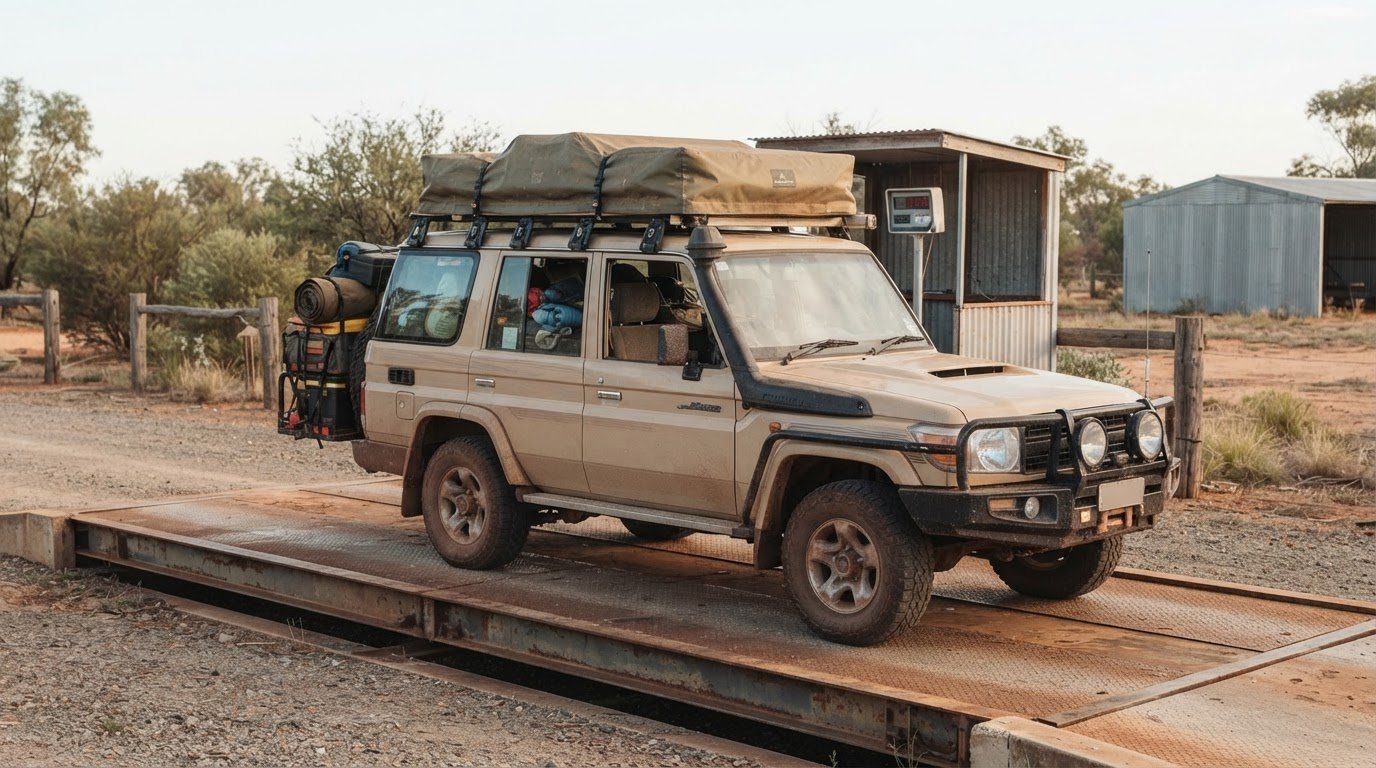
How can you weigh your vehicle to check GVM and axle loads? Load it as you would for a trip, including occupants, fuel, water, luggage and roof equipment. Then use a public weighbridge that can measure the vehicle and each axle. Compare the readings with the vehicle’s GVM and axle ratings; the total alone can hide an overloaded axle.
Roof weight also changes how a 4WD behaves. A tent and accessories sit high, raising the centre of gravity; extra height can increase body roll and instability on side slopes. Keep heavy equipment balanced across the roof, because an uneven load can affect handling on uneven tracks. Roof-mounted gear also increases aerodynamic drag, which can reduce fuel efficiency, especially at highway speeds.
Height deserves a place in your Australia trip planning. The standard height limit is 4.3 m, so include the vehicle, rack, tent and any roof cargo when considering clearance. A setup that changes the vehicle’s total height can affect access beneath bridges, car parks and other overhead structures.
Dynamic roof load limits while driving
While driving, the dynamic roof rating applies to the tent, rack and mounted accessories together. Off-road conditions can reduce the usable limit, so a setup suitable for sealed-road travel may not suit rough tracks.
Driving and Parked Load Ratings
Dynamic ratings cover roof loads while a vehicle is moving; static ratings apply while it’s stationary. The distinction matters because braking, cornering, acceleration and wind add forces during travel, while a parked vehicle does not face the same driving forces. A higher static rating does not increase the permitted load while driving.
Does a rooftop tent’s weight affect dynamic and static roof load limits? Yes. The tent and attached equipment count towards the roof load in both situations, while occupants add weight to the parked setup. Treat each rating as a separate limit for its stated condition.
Tent Installation and Load Distribution
Safe installation means matching the tent and mounting system to the applicable vehicle and rack ratings. The rack’s limit can be lower than the vehicle’s roof rating, making the lower figure the controlling limit. For example, a vehicle rated to 100 kg with a rack rated to 75 kg has a 75 kg maximum roof load.
Distribute the tent and equipment evenly across the rated mounting points, and secure the hardware properly. Uneven loading concentrates force on particular mounts; corrugated tracks subject those points to repeated movement. Evenly distributed weight must still stay within the applicable rating.
Exceeding Roof Load Limits
Exceeding a dynamic roof rating can compromise handling, increase braking distance and stress mounting points. Extra weight high on the vehicle can also raise its centre of gravity, increasing body roll and instability on side slopes. These effects matter on uneven tracks, where balance and traction are already important.
Off-road ratings may be lower than on-road ratings. Some manufacturers reduce load ratings by 30-50% for off-road use; a 75 kg on-road rating, for example, may become 37.5 kg. Follow the applicable vehicle and rack instructions for the conditions you’ll drive in.
Do GVM upgrades increase roof load or axle limits? No. A GVM upgrade does not automatically increase either limit. GVM, axle ratings and roof-load ratings are separate constraints, so increasing one does not remove the others.
For a rooftop tent setup, include the tent, rack, brackets and accessories in the driving load. Recalculate if you add gear, change racks or switch between on-road and off-road travel. Explore rooftop tent options and considerations as you match a tent to your vehicle’s limits.
Can I sleep in a rooftop tent while exceeding the dynamic load rating?
When parked, the dynamic rating no longer describes the load condition, but the static roof and rack limits still apply. Sleeping in the tent is appropriate only within those parked-load capacities; a stationary tent does not make an overloaded roof safe.
Combined Tent and Rack Weight
Combined roof load includes the tent, rack, mounting brackets and accessories attached to the rack. Add the weight of each item before comparing the total with the applicable dynamic rating for travel.
A Toyota Prado 150 example shows how quickly the rating can be used: an 80 kg dynamic limit is reached by a 20 kg aluminium rack and a 60 kg hardshell tent. Mounting hardware or an awning would add to that total. A rooftop tent’s advertised weight alone won’t show the complete load.
Does rooftop tent weight count towards payload and axle limits? Yes. The tent and rack add to vehicle payload, and their weight contributes to the load carried by the axles. Their position affects how that weight is distributed between the axles.
Roof Rack and Rail Capacity
Roof rail and roof rack ratings set the maximum load those components can carry, while the rack’s own weight uses part of the roof-load allowance. The lowest applicable capacity controls the setup, even if the vehicle roof has a higher rating.
For example, a vehicle roof rated to 100 kg paired with a rack rated to 75 kg has a 75 kg limit. A full-length aluminium rack can weigh 15-25 kg, while a steel rack can weigh 25-40 kg. Include that mass before adding a tent, awning or other adventure gear.
Include mounting brackets and hardware in your calculation. A roof rack’s capacity does not mean its full stated capacity remains available for the tent: the rack and attached equipment are part of the load carried while driving.
Payload and Axle Limits
Payload is the weight a vehicle carries beyond its unladen mass; GVM is its maximum fully loaded mass. A rooftop tent can contribute to exceeding GVM when its weight is added to passengers, supplies and other equipment.
Can a rooftop tent cause a vehicle to exceed its GVM or axle ratings? Yes. A heavy roof setup can push the vehicle’s total mass beyond GVM, while its position and the rest of the load affect axle distribution. Meeting the roof rating does not guarantee that the vehicle is within either limit.
For a practical calculation, list the tent, rack, mounting hardware and each roof accessory separately, then add their weights. Compare the total with the lowest roof-system rating for driving. Next, include the roof setup in your payload calculation alongside passengers and trip supplies. This gives you three separate checks: roof capacity, GVM and axle limits.
Sleeping occupants add load to the parked setup, so include them when considering static roof capacity. The driving total changes if accessories are removed before departure, but the vehicle must meet its dynamic rating with everything still mounted. Keep the parked and travel configurations distinct, especially if the tent, rack and awning stay fitted between camp and road.
Rooftop tent weight and included accessories
A tent’s listed weight is only one part of the load carried above your vehicle. Soft-shell rooftop tents commonly weigh 35-55 kg, while hard-shell models commonly weigh 55-85 kg. The exact figure depends on design and included equipment, so compare the complete setup with your roof load rating and vehicle manual.
Style and size also change the starting weight. Compact tents commonly weigh 30-50 kg, standard double tents 45-65 kg, and family or XL tents 60-90 kg. These ranges overlap because construction and features vary. A larger tent generally adds more mass, leaving less capacity for a rack and other roof gear.
Before calculating the driving load, identify what the tent’s stated weight includes. A mattress or ladder may be included, while bedding and fitted accessories may be additional. Racks can add another 10-15 kg, and a doona, pillows and sheets can add another 10-15 kg. Check each item rather than assuming the advertised tent figure represents everything.
- Tent: use the complete model weight, including supplied components.
- Rack and mounts: add the rack, brackets and fastening hardware.
- Accessories: include bedding, awnings and stored equipment carried on the roof.
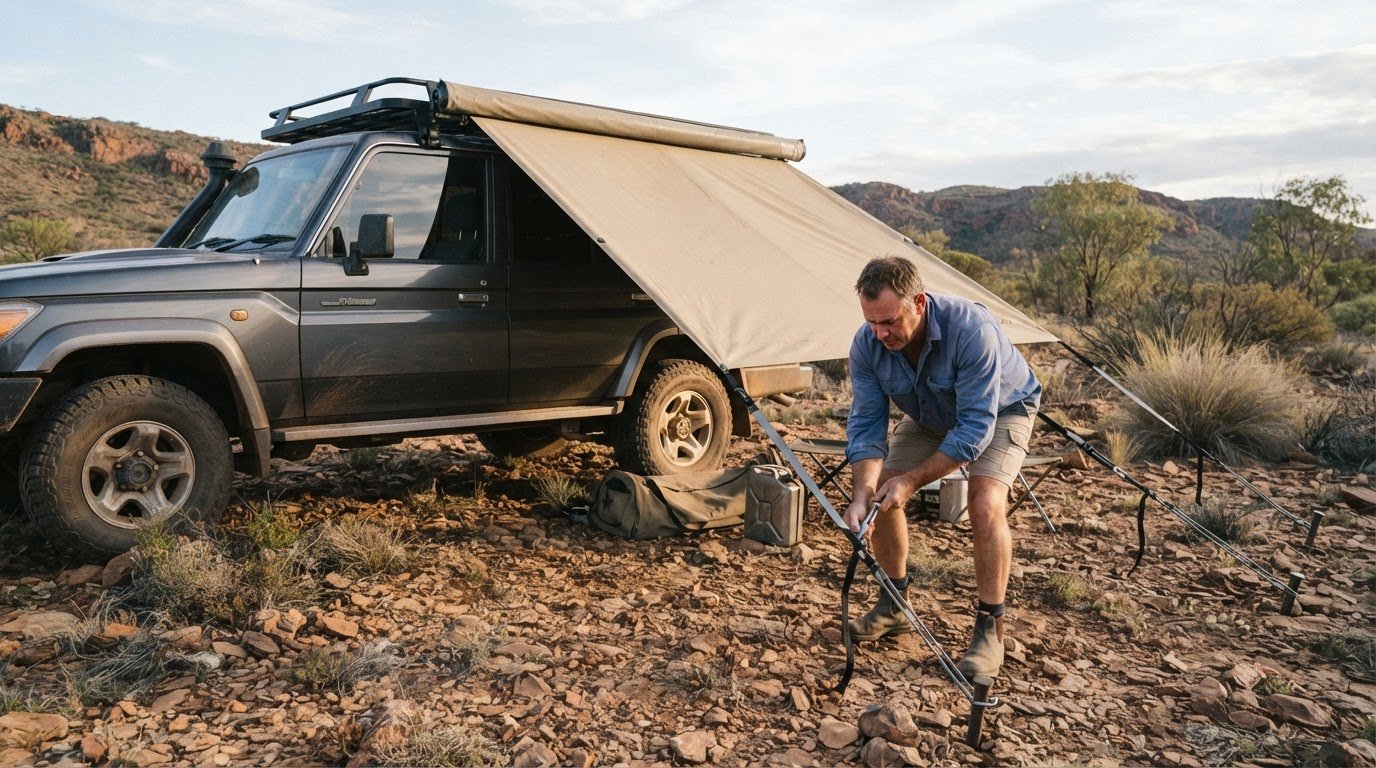
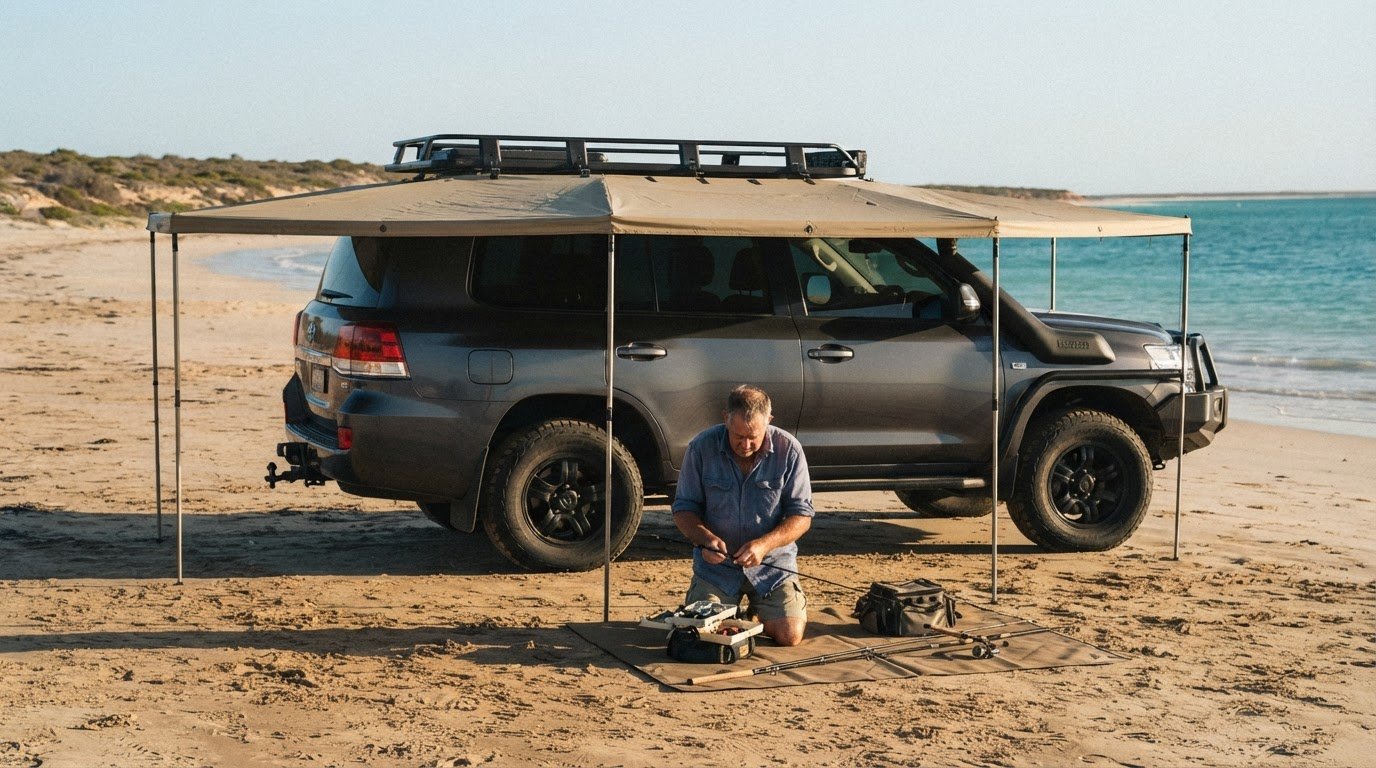
Built-in mattresses, ladders, awnings and storage pockets all contribute to total weight. A fitted awning may be useful at camp, but it uses some of the roof’s available capacity during travel. Bedding also counts in the vehicle’s load calculation if it stays inside the tent. Removing unnecessary gear before driving reduces the roof load.
Installation costs are separate from equipment weight. The fitting cost depends on the vehicle, whether suitable racks are already fitted, and the mounting hardware and work required. Fitting a tent to an existing compatible rack involves different work from installing a different rack or additional mounting components.
Consider the forces on the setup, not just its parked weight. While driving, braking, cornering, acceleration and wind act on the tent and its mounts. That’s why the dynamic rating applies to the full roof assembly, not just the tent. A setup within the parked capacity can still exceed the permitted driving load.
Use the vehicle manual and rack instructions to identify the applicable limits, then total the weight of the tent, rack, mounts and accessories. If the result approaches the dynamic rating, a lighter tent or simpler roof configuration can leave capacity for essential gear. For Australian touring, a careful weight list helps balance comfort at camp with a manageable load on the road.
Roof racks and accessory weight
A roof rack uses part of the roof’s weight allowance before you add a tent or touring gear. Add every fitted item to the same calculation: rack, mounting hardware, awning, recovery boards and containers. For example, a 25 kg platform on a vehicle with a 75 kg roof-load limit leaves 50 kg for the tent and other roof cargo. The weight limit applies to the complete moving load, not just one accessory.
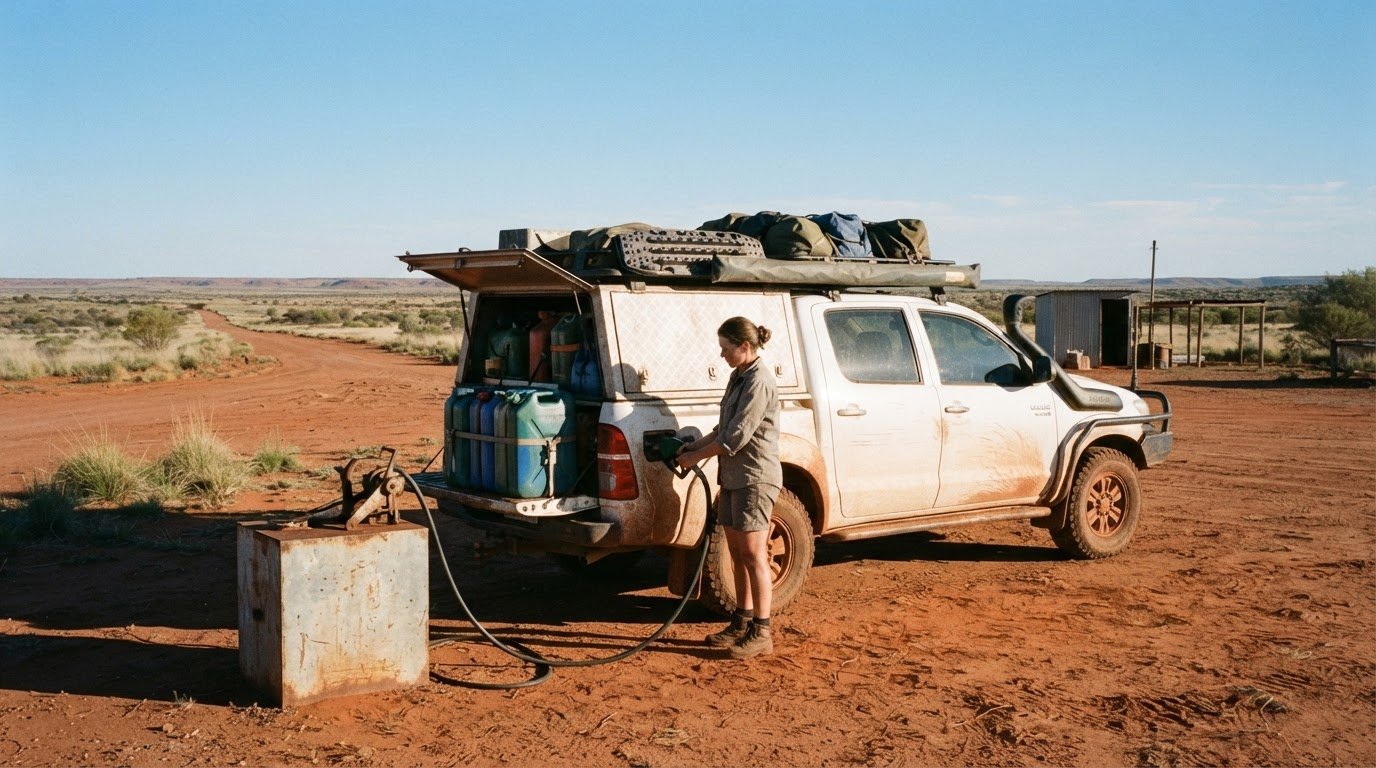
Accessories can use that remaining capacity quickly. A 270-degree awning weighs about 20-30 kg, while recovery boards and mounts add about 8-12 kg. Two full jerry cans in a holder weigh around 45 kg. Carrying all three alongside a platform and rooftop tent can exceed the roof allowance, even before smaller items join the setup.
- Rack platform: subtract its weight from the vehicle’s roof-load allowance.
- Awning and boards: count their mounts as part of the fitted load.
- Jerry cans: include the holder and the loaded containers.
The vehicle and rack manufacturers’ load ratings both apply. Use the lower applicable limit, then subtract the weight of the rack and every accessory that stays fitted while driving. A component’s carrying capacity does not create extra capacity in the vehicle roof. Unused capacity on one item cannot compensate for a lower rating on another.
Configuration matters on utes, too. A ute with a separate canopy has distinct roof-load limits for its cab and canopy, so gear on each surface must be considered against the relevant limit. A 200 Series LandCruiser has a stated 200 kg roof-load rating when used with a specific rack system. That example belongs to that rack configuration, not every rack fitted to every 200 Series.
Hard-shell tents need stronger racks and mounts, so compatibility across the whole system is especially important. A heavy-duty rack can still be the limiting component if its rating is lower than the vehicle’s roof rating. Check the load information for the rack, mounting hardware and accessories, then total the weight that stays on the vehicle while driving.
Build a simple load list before adding gear: record each item’s weight, include brackets and holders, and compare the sum with the applicable roof-load limit. If an awning is part of your touring setup, use these 4WD awning recommendations to consider the gear alongside its roof-load contribution. The best configuration is the one that fits the trip without treating unused capacity as a reason to carry unnecessary weight.
Adventurerz: Roof top tents reviews and recommendations
Adventurerz’s rooftop tent reviews and recommendations help you compare options in light of your vehicle’s roof-load and payload constraints. Use them to weigh tent style, rack compatibility and the gear you plan to carry, so comfort at camp does not come at the expense of a suitable touring setup.
For a broader kit assessment, Adventurerz also shares reviews and recommendations on 4WD awnings, camping equipment and hiking equipment. These can help you think through how each item fits your Australian adventure, from roof-mounted accessories to equipment carried inside the vehicle.
Have a question about planning your setup or choosing what to take? Contact Adventurerz to continue the conversation.
Plan your next setup with confidence
Treat vehicle capacity as part of your trip plan, not an afterthought. Before choosing equipment, picture the full setup you’ll travel with, including the people, supplies and accessories that share the load. This broader view makes the roof top tent weight GVM impact easier to assess alongside comfort, terrain and the kind of Australian adventure ahead.
Adventurerz offers rooftop tent reviews and recommendations, plus reviews and recommendations for 4WD awnings and camping equipment. Use these resources as you weigh up your options and shape a practical setup for the journeys you want to take.
Bring your setup questions to the next stage: Contact Adventurerz. Keep planning carefully, choose gear with your vehicle in mind, and enjoy the road ahead.
Frequently Asked Questions
Do I need to upgrade my roof rack for a rooftop tent?
Upgrade the rack if its rating or mounting arrangement cannot support the tent and the rest of your roof load. A hard-shell tent needs stronger racks and mounts, but a rack upgrade does not increase the vehicle roof’s own rating. Compare the tent’s mounting requirements with the rack and vehicle limits, then use the lowest applicable limit. A heavier rack also uses more of the available roof capacity.
How Much Weight Can a Car Roof Hold?
A typical Australian vehicle roof-load rating is 50-100 kg while driving and 150-300 kg when parked. These are broad ranges, not a specification for every car. The allowed load depends on the particular vehicle and fitted rack, and the lower applicable rating governs. For example, a roof rating above the rack rating doesn’t let you load the rack beyond its own capacity.
What Happens If You Exceed Roof Load Limits?
Exceeding the driving limit can compromise handling, increase braking distance and stress mounting points. A high, heavy load can also make a vehicle feel less stable, particularly on side slopes or through corners. If the setup exceeds its limit, remove gear or change the configuration before travelling. Slower driving does not make an overloaded roof safe; the rating still applies to the mounted load.
What is Rooftop Tent Weight Limit?
There isn’t one universal rooftop tent weight limit; it depends on the vehicle, rack and whether the vehicle is parked or moving. The ceiling is the lowest relevant rating for the complete setup. Also distinguish the tent’s supported load while camped from its own weight during travel. Add the tent, rack, mounting components and accessories before assessing driving capacity.
Are Rooftop Tents safe and how should I go about buying one?
A rooftop tent can be used safely when the vehicle, rack, mounts and tent are suitable for the loads they’ll carry. Start by identifying the vehicle’s roof and payload constraints, then compare the tent’s weight and mounting requirements. Consider how you’ll use the setup, including off-road travel and parked occupancy. Adventurerz’s rooftop tent reviews and recommendations help you compare options with these practical factors in mind.
How does off-road use affect load ratings?
Off-road driving can lower the roof load a manufacturer allows, because rough surfaces add movement and forces to the rack and mounts. Some brands reduce ratings by 30-50% for off-road use. The applicable figure depends on the vehicle or equipment instructions and the conditions of travel. A setup that fits an on-road rating may therefore need a lighter configuration on rough tracks.
How much does a rooftop tent weigh in Australia?
Rooftop tents commonly weigh about 45-90 kg before occupants climb in. The exact weight depends on the tent’s size, construction and included components. Treat that figure as only the tent’s contribution: the rack, brackets, bedding and roof accessories add more. For a useful comparison, look at the complete travel setup rather than choosing by tent weight alone.
How do I calculate remaining payload after fitting a rooftop tent and accessories?
Start with the vehicle’s GVM and subtract its actual loaded mass, including the fitted tent and rack, passengers, fuel, luggage and other equipment. The remainder is the payload available before reaching GVM. Weighing the trip-ready vehicle gives a more useful result than relying on estimates, and separate axle readings can reveal uneven loading. Keep axle limits in view as well as total vehicle mass.