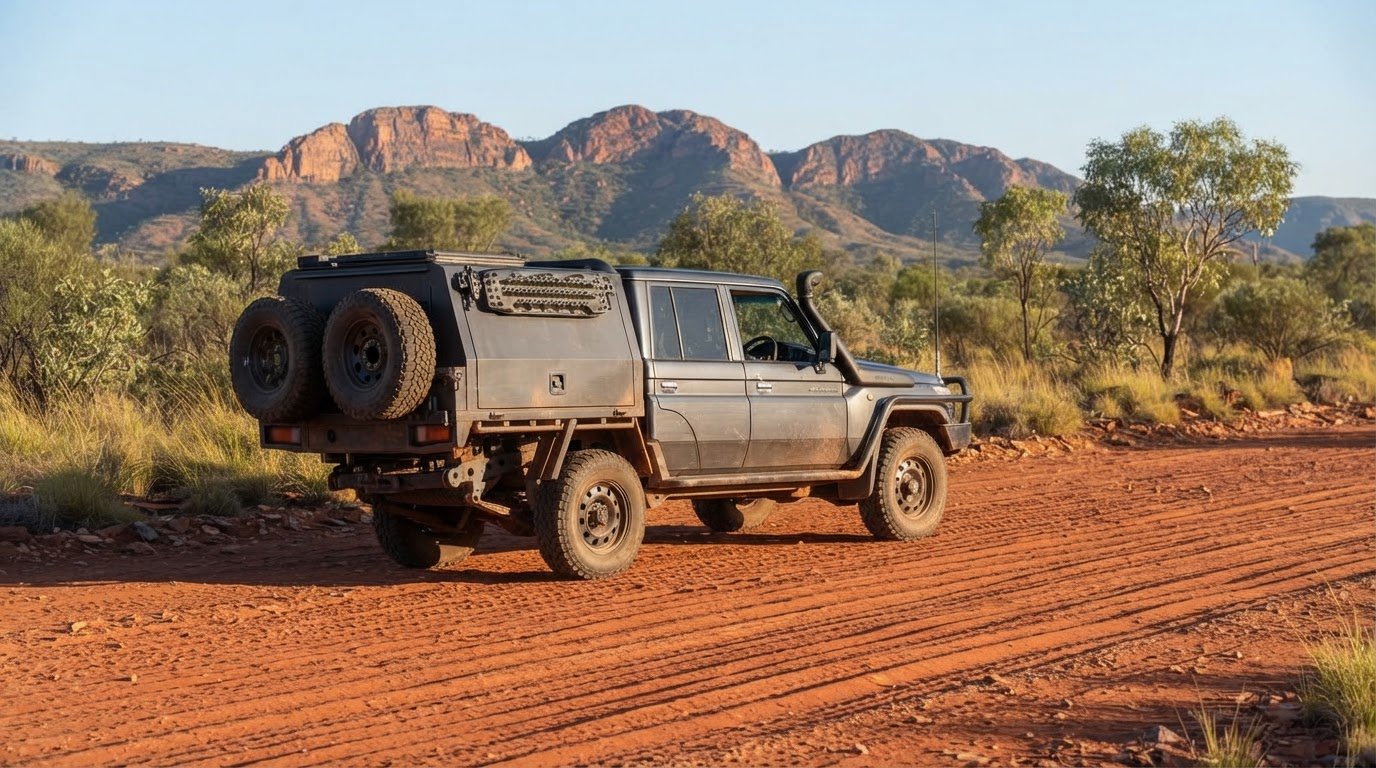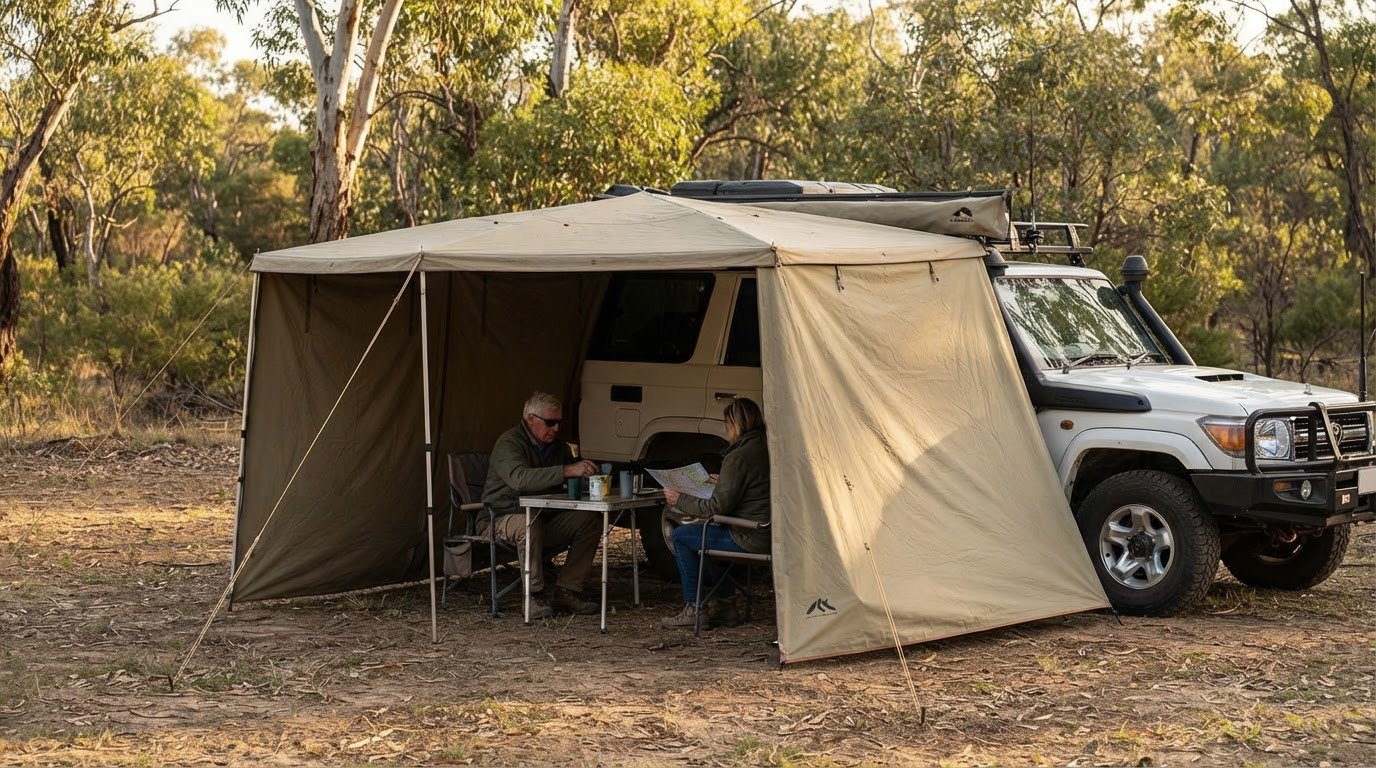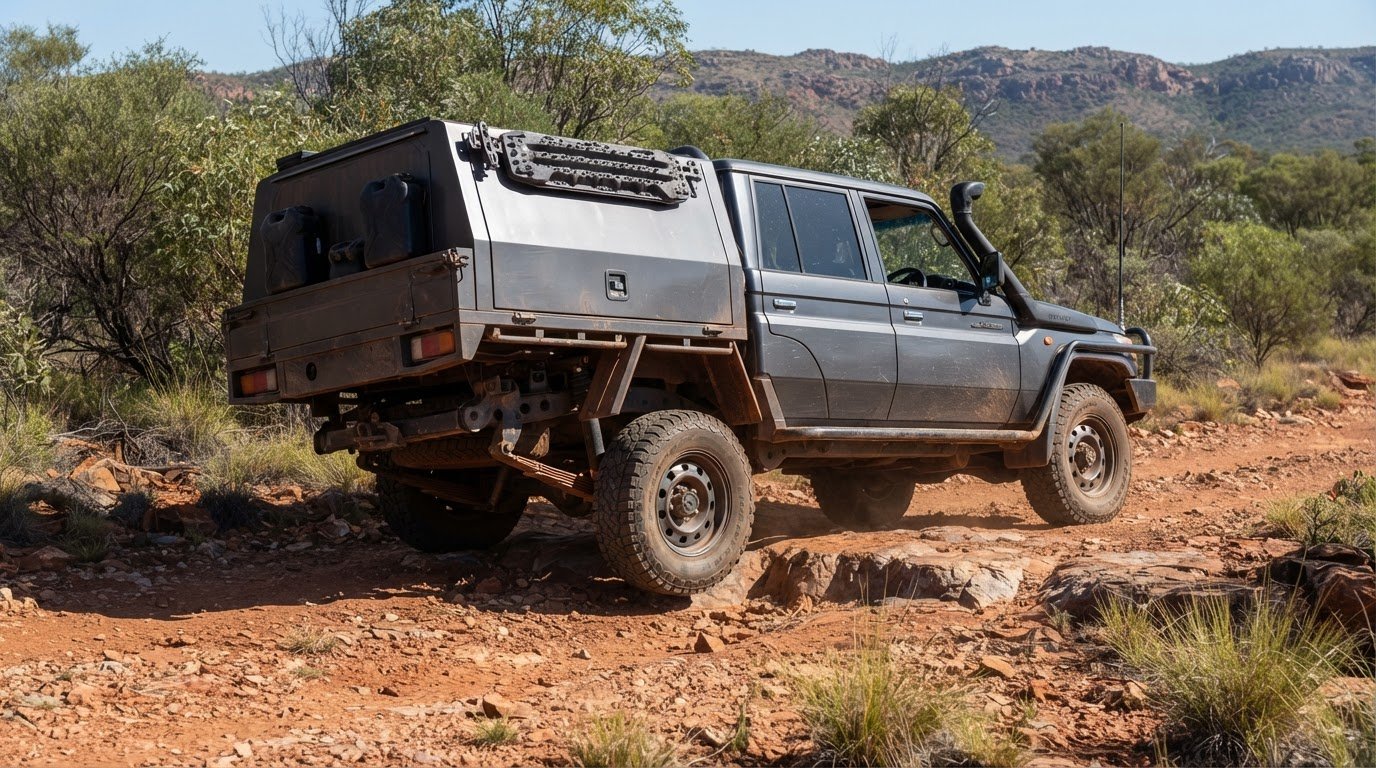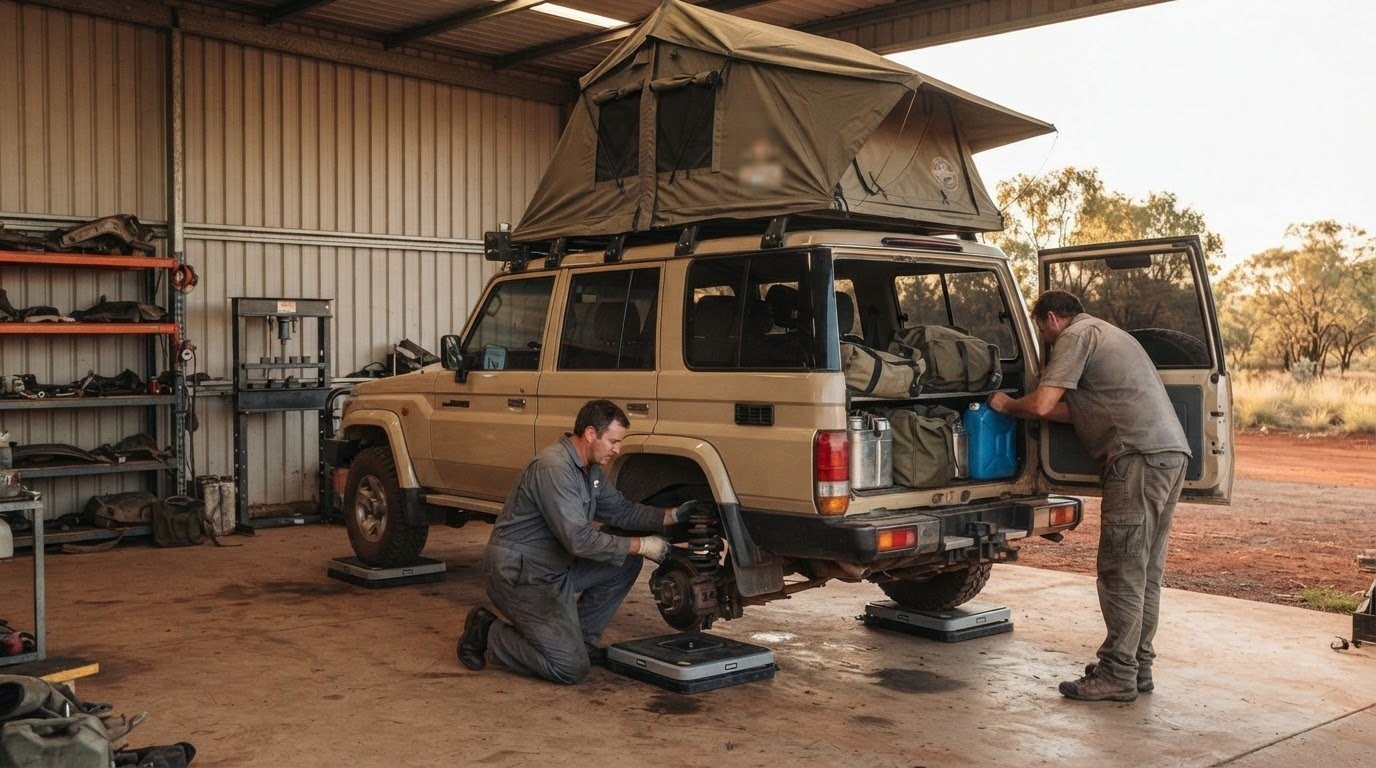
A capable 4WD still needs careful preparation for the Gibb River Road. A practical Gibb River Road vehicle preparation checklist covers a pre-trip service, spare tyres, a compressor, fuel, water and recovery gear, plus slower driving and tyre-pressure adjustments for corrugations. If space allows, carrying two spare tyres is suggested.
It’s easy to focus on the route and gorges ahead, but remote travel also calls for a vehicle and supplies prepared for rough, changing conditions. This Gibb River Road vehicle preparation checklist covers the key checks and equipment to consider before departure, including what to secure, what to carry and how to adapt your driving.
Key Takeaways
- Prepare for remote stretches with spare tyres, recovery gear, and enough water and supplies to be self-sufficient.
- Adjust tyre pressures to suit your loaded vehicle and reduce speed on corrugations for more controlled driving.
- Plan fuel stops around the route’s limited supply points and refuel whenever fuel is available.
- Choose a capable, high-clearance 4WD, and consider how rough unsealed roads may affect any trailer you’re towing.
- Pack practical spare parts and tools, then check for loose fittings or damage after rough driving.
Table of Contents
1. Spare tyres, fuel, water and recovery equipment
Use the Gibb River Road vehicle preparation checklist to organise the gear your 4WD needs before departure. Pack a portable air compressor, recovery equipment and a tool kit, then check you can access each item with the vehicle loaded. If space allows, carry two spare tyres for this rough, remote stretch. Secure gas bottles and full jerry cans firmly, so corrugations don’t shift them around.
Plan fuel around your vehicle’s range, not just the distance between named stops. A working range of at least 600 km is recommended for the route. Carry fuel suited to your vehicle and secure jerry cans properly. Refuel whenever fuel is available rather than relying on reaching the next stop with little reserve. The route’s fuel points are covered in more detail in the next section.
Water needs its own careful plan. Carry at least 4 litres per person per day for the Gibb River Road, then allow extra for hot, humid dry-season conditions, cooking and washing. Free camps require self-sufficiency with water, power and supplies. Plan water capacity for at least 5 days before leaving Kununurra, accounting for everyone travelling with you. One example from a travelling guide was 55 litres in a ute bladder alongside filled water tanks.
Use clean, sealed containers or tanks, and keep drinking water separate from fuel and other supplies. Pack a water-treatment method suited to your planned sources and follow its instructions. Track your remaining water each day so you can adjust washing and cooking before supplies run low. Keep drinking water accessible during the drive, not buried under camping gear.
Food planning matters just as much as water. Include enough food for a couple of weeks, as recommended for the route. Choose food that suits your cooking setup and remote-camping routine, and store it securely. Keep sunscreen within easy reach. Dry-season heat and humidity make sun protection and regular access to drinking water essential throughout the day, including during stops at waterfalls or crossings.
Recovery gear and tools should suit your 4WD and the conditions you expect. Carry a recovery kit, compressor and tools, and know where each item is stored. Check that spare tyres match the vehicle and remain accessible when loaded. Secure equipment against movement on corrugations. A careful load plan protects your gear and keeps essentials ready for a slow stretch near Pentecost River or elsewhere on this adventure.
Tyre damage can make spare capacity important: the authors picked up a traveller who had shredded two tyres within 40 kilometres and had only one spare. This supports the suggestion to carry two spare tyres if there is room, alongside essential vehicle equipment such as a portable air compressor.
For remote camping, the page recommends carrying at least 5-7 litres of water per person per day. The authors carry 60 litres and say it can last roughly five days if they are careful with consumption. Dry-season temperatures on the Gibb River Road can be hot and humid, so travellers are advised to pack sunscreen and plenty of water.
2. Tyre pressure and speed on corrugations
Corrugations send repeated impacts through tyres, suspension and vehicle fittings. Adjusting tyre pressure and speed to suit the surface can make the drive smoother. The right pressure depends on your vehicle, tyres and load, so don’t copy another driver’s settings without considering your setup. Note your cold tyre pressures and when you adjust them as part of your Gibb River Road vehicle preparation checklist.
Cold pressures of 28-30 psi are commonly reported for Gibb River Road travel. Other recommendations give 30-32 psi for a tow vehicle’s front tyres, 28-32 psi for its rear tyres, and 32-45 psi for caravan tyres. These ranges differ because vehicles, tyres and loads differ. Treat them as reference points, not as one universal setting for every 4WD.
Take a pressure reading before driving, while tyres are cold. Record it, then reassess as the road surface changes. Lower pressure cautiously for corrugations, considering the vehicle’s load and how it handles. Avoid making a large adjustment solely because another vehicle is running a particular pressure. A loaded 4WD and an unladen one can behave differently on the same section.
A 12-volt compressor with a minimum flow rate of 150 L/min is recommended for the Gibb River Road. Keep it somewhere accessible and make sure its hose and power leads reach every tyre. A pressure gauge helps you measure adjustments. Reinflate when moving from rough sections onto firmer roads, and before returning to sealed surfaces.
On corrugations, the recommended maximum speed is 60-80 km/h. That isn’t a target: slow down further when the surface, visibility or vehicle control calls for it. Reduce speed for loose gravel, bends, dust, washouts and oncoming traffic. Keep headlights on low beam. Conditions can change between sections, so adjust your driving rather than assuming the next stretch will feel like the last.
Inspect tyre tread and sidewalls before departure and throughout the journey. Look for cuts, bulges, embedded stones and uneven wear. Carry a reliable spare and make sure you can reach it with the vehicle packed. Two spares are suggested if space allows. After rough driving, check tyre pressures, wheel nuts and nearby components.
Add these checks to your Gibb River Road vehicle preparation checklist, along with a clear plan for changing surfaces. If a road is closed, stop and choose another route rather than driving around the closure. Sensible pressure adjustments, controlled speed and regular inspections support safer travel on remote corrugated roads in Western Australia.
3. Fuel availability along the Gibb River Road
Plan the fuel leg around a working range of at least 600 km. That’s the recommended minimum for the Gibb River Road, but your actual range depends on vehicle load, terrain, driving conditions and fuel use. Towing, rough surfaces and detours can change consumption, so leave a reserve rather than planning to arrive with an almost empty tank.
Fuel is available at Imintji, Mt Barnett and Drysdale River Station. These stops are spread along a remote journey, so refuel when you have the opportunity rather than relying on the next stop being convenient. Before leaving the main road, check your tank level and route plan. A short diversion to a fuel stop may be easier than stretching your remaining range.
Remote fuel can cost more than fuel in larger towns. Treat that as a dated indication, not a fixed price for every stop or future visit. Include fuel in your trip budget and allow for changes in route, load and consumption.
Fuel stops aren’t a substitute for a mechanical repair plan. The route’s named fuel points are Imintji, Mt Barnett and Drysdale River Station; repair costs depend on the fault, parts needed, labour and how accessible the vehicle is. Carry essential tools and spare parts suited to your 4WD, and avoid assuming a fuel stop can resolve a mechanical problem.
The Gibb River Road usually opens between May and October, depending on how wet-season conditions affect the track. A calendar date alone doesn’t show whether every section is passable. Conditions can change, and wet weather may lead to closures. Build flexibility into your itinerary, and never drive on a closed road or around a closure point.
River crossings need a separate decision at each crossing. Don’t enter if the water, current, depth or surface makes the crossing unsafe for your vehicle. Assess conditions from a safe position, consider whether your 4WD can manage the crossing, and turn back if you’re uncertain. A crossing may change after rain, so don’t assume conditions are the same as earlier in the journey.
Stops at gorges and other places can add distance beyond your planned route. Before leaving a fuel stop, compare your remaining range with the next leg, including detours. Track fuel use as conditions change, and make conservative decisions if your remaining range is getting tight. This leaves more room for a slower journey through Western Australia’s remote country.
4. Vehicle suitability and high-clearance 4WDs
The Gibb River Road is a 660-kilometre dirt road connecting Derby and Wyndham in Western Australia. A capable, high-clearance 4WD is essential for this rugged route. Clearance matters because uneven surfaces, corrugations and changing track conditions can challenge vehicles with limited space beneath the chassis. Choose a vehicle suited to the whole journey, including access roads to a station or destination, not just the main track.
Vehicle preparation starts with a thorough service before departure. Rough road driving can put repeated stress on tyres, suspension, brakes, mounts and underbody components. Check that the vehicle is in sound working order, and address existing faults before travelling remotely. The Gibb’s condition changes over the season, so a 4WD that handles sealed roads comfortably may still be unsuitable for rough or damaged sections.
Caravans, motorhomes and some camper trailers aren’t recommended on the Gibb River Road’s unsealed roads. Their size, clearance and handling can make rough sections more demanding. A single-axle caravan under 2 tonnes ATM is described as suitable. For a caravan, a ball weight of 8-10% of ATM is recommended unless stability has been extensively tested. Match the towing setup to the vehicle and the road, rather than relying on the trailer’s suitability alone.
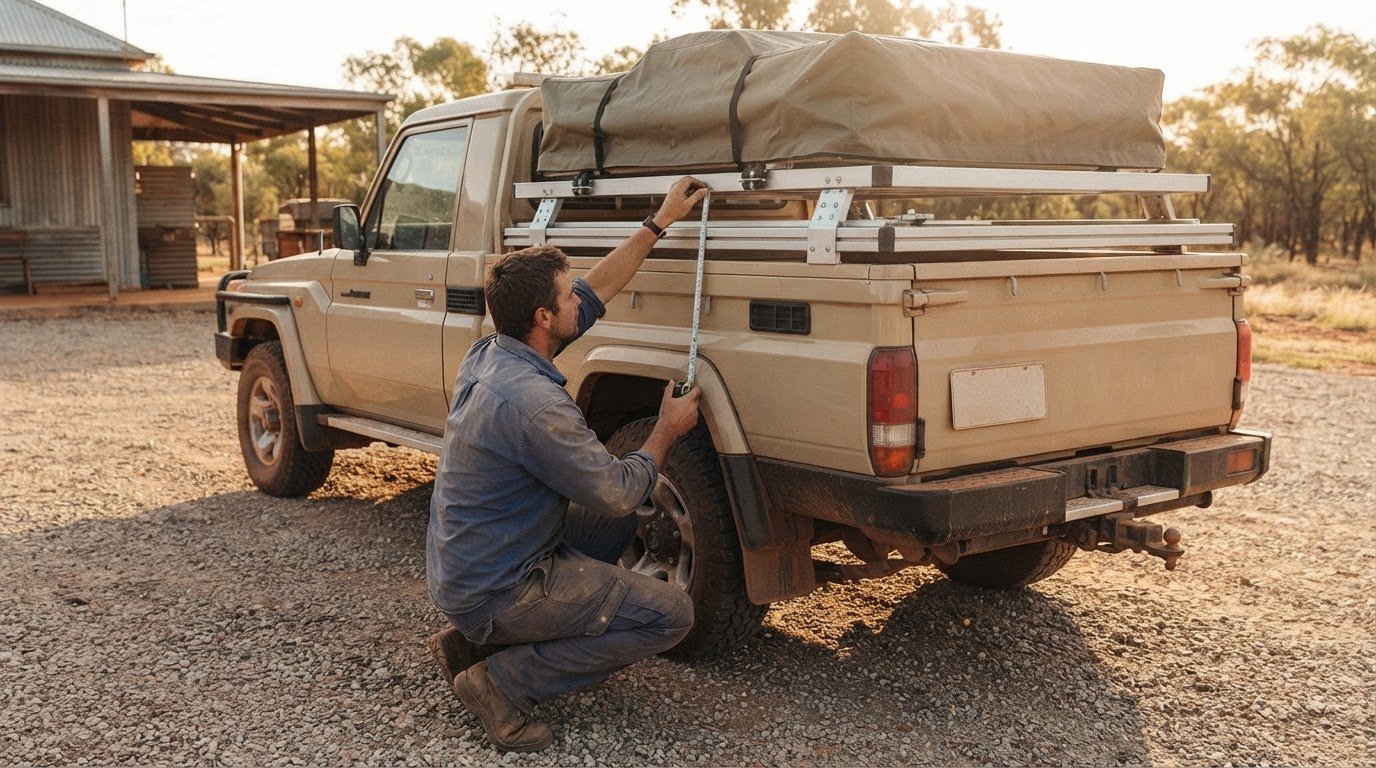
Allow for the load you’ll actually carry. Passengers, water, fuel, camping supplies and recovery gear all contribute to the weight the vehicle must manage. A heavily loaded 4WD may have less clearance and handle differently than it does on an empty test drive. Secure equipment so it cannot shift, and consider how the load affects braking, steering and suspension on a rugged surface.
Vehicle risks include tyre damage and parts shaken loose by long stretches of corrugations. Check bolts, mounts and equipment after rough driving, and pay attention to unusual noises or changes in handling. Before departure, a service and brake inspection can help identify issues early. At least 50% brake-pad life remaining is recommended before driving the Gibb River Road.
Access to the Mitchell Falls area requires a Uunguu Visitor Pass. Some national park campgrounds along the route require online bookings and a valid WA National Parks pass. Review your vehicle insurance policy for cover relevant to remote-road travel, towing and recovery, and include destination access costs in your trip budget.
Choose your vehicle and trailer around the trip’s roughest planned section, not its easiest kilometres. A high-clearance 4WD, suitable load and well-matched towing setup give us a stronger starting point for visiting gorges, station stays and remote destinations across the Kimberley.
5. Spare parts and mechanical supplies
Remote travel through the Kimberley calls for a tool kit matched to your 4WD, not a random collection of gear. Start with the vehicle’s wheel-changing equipment, jack and wheel brace, then add tools that fit its common fasteners. Practise accessing and using them at home, especially if the spare sits beneath a loaded vehicle. A tool you can’t reach or operate won’t help beside a rough track.
Pack vehicle-specific spares that could help with minor problems, such as replacement fuses, suitable hose clamps and belts compatible with your vehicle. The right selection depends on its make, model and modifications. Check part numbers against the handbook or existing components, then label and store small items together. Avoid carrying parts you can’t identify or use.
A second spare tyre is a useful addition if your vehicle has room. One family preparing for the Gibb River Road upgraded its suspension and carried a second spare tyre, recovery gear, a tool kit and extra spare parts. Their example shows why supplies should match your setup. Confirm that spare wheels fit your vehicle, and keep the jack, wheel brace and lifting points accessible.
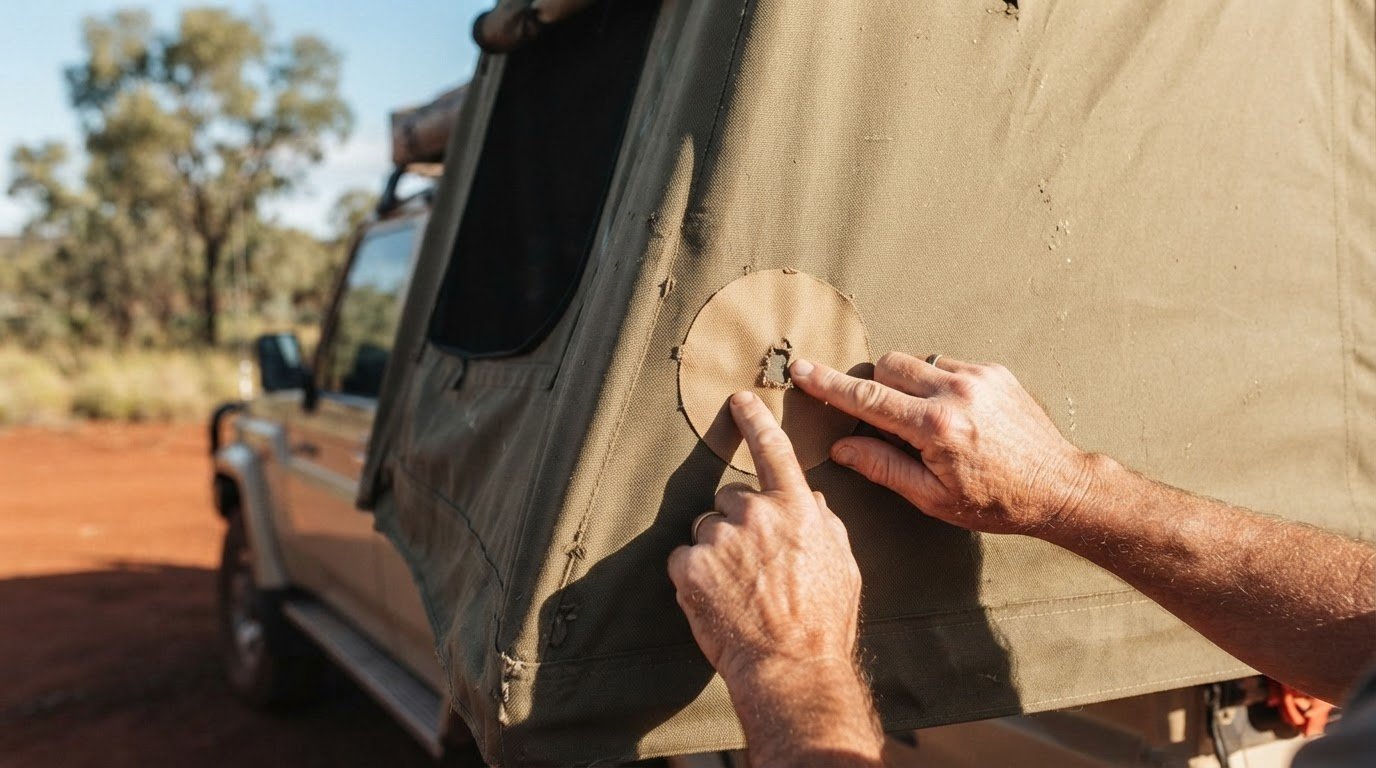
Long corrugated stretches can shake equipment loose. After a demanding day, inspect bolts, mounts and stored gear, especially anything attached to the vehicle or carried outside. Look for movement, new rattles, loose fasteners or damage around mounted accessories. Secure tools and spares for the next stretch while keeping essential equipment easy to reach.
Before heading into remote country, service the vehicle and deal with existing mechanical issues. Ask the mechanic to assess wear and check key systems, including suspension, brakes, cooling and charging. Explain the planned route, load and any towing, so the inspection reflects how the 4WD will actually travel. Keep service records and note any maintenance advice that affects the journey.
Organise supplies around likely roadside tasks. Store gloves, a torch, basic hand tools and repair items together, and keep recovery equipment separate from delicate spares. Make sure everyone travelling knows where the kit is packed. A clear storage plan saves time when you need a tool, especially after sunset or in poor weather.
Mechanical preparation is only part of packing for an iconic Kimberley adventure. For camp supplies beyond the vehicle tool kit, explore camping equipment reviews and recommendations to help plan what belongs in your load. Keep the 4WD’s essential spares accessible, inspect attachments after rough driving, and leave room for safe, secure storage.
Adventurerz
Adventurerz helps turn your Gibb River Road preparation into a broader, well-considered camping plan. Its reviews and recommendations cover camping and hiking equipment, roof top tents and 4WD awnings, helping you weigh up gear for remote travel without losing sight of your vehicle’s load and available space.
Explore these resources as you plan what to carry, where it fits and how your setup supports a responsible Kimberley adventure. For guidance on planning your trip and equipment, contact Adventurerz.
Make your preparation part of the adventure
Shape your plans around your travel group, vehicle setup and intended stops. A Gibb River Road vehicle preparation checklist is most useful when it reflects your trip, rather than an idealised loadout. Set aside time before departure to organise equipment, agree on travel decisions and make sure everyone knows where essential items are stored.
Build flexibility into your travel plans. Remote journeys may call for a slower pace, a change of plans or leaving a stop for another trip. Respecting changing conditions and caring for the places you explore helps make the adventure responsible as well as rewarding.
For ideas and advice as you refine your Australian adventure plans, contact Adventurerz for trip advice. Take your time with the final preparation, travel thoughtfully and enjoy the journey ahead.
Frequently Asked Questions
What vehicle types are suitable for the Gibb River Road?
A capable, high-clearance 4WD is the suitable choice for the Gibb River Road. Before committing to the route, consider how the vehicle performs when fully loaded, not just on a short test drive. A passenger car or low-clearance vehicle isn’t a suitable substitute for a 4WD on rugged unsealed sections. If towing, assess the combined vehicle and trailer setup, including how it handles rough surfaces and changing conditions.
What 4WD features and ground clearance are recommended for the Gibb River Road?
Choose a 4WD with high clearance and sound underbody protection for the route’s uneven surfaces. There isn’t one clearance figure that suits every vehicle: load, tyres, suspension and underbody shape all affect the space available beneath it. Inspect the vehicle with its travel load aboard, including water and recovery gear. Check that low-hanging components or accessories won’t be vulnerable when the track becomes rough.
What tyres, spare tyres and puncture repair kit should I carry?
Carry tyres suited to your 4WD and its load, a reliable spare, and a repair kit compatible with your tyre type. If space allows, two spare tyres are suggested for the Gibb River Road. Before leaving, make sure the spare can be lowered or removed with the vehicle packed, and that your jack and wheel brace fit. Learn how your repair kit works before travelling, and keep it accessible.
How should I prepare a vehicle for corrugations, dust and river crossings?
Secure loose items, close dust-prone gaps where practical, and check that the air filter and wipers work properly before departure. On corrugations, adapt speed and tyre pressure to the surface and vehicle. At river crossings, stop and assess conditions from a safe position. Don’t enter if the depth, current or track makes the crossing unsafe. Turn back rather than attempt a crossing your vehicle can’t manage.
What vehicle servicing should be done before driving the Gibb River Road?
Arrange a thorough service before the trip, and tell the mechanic you’ll be travelling on remote, unsealed roads. Ask them to check the condition and operation of the brakes, tyres, suspension, steering, cooling system, battery and visible hoses or belts. Address existing faults before departure and take your service records with you. A mechanic can also explain vehicle-specific warning signs to watch for during the journey.