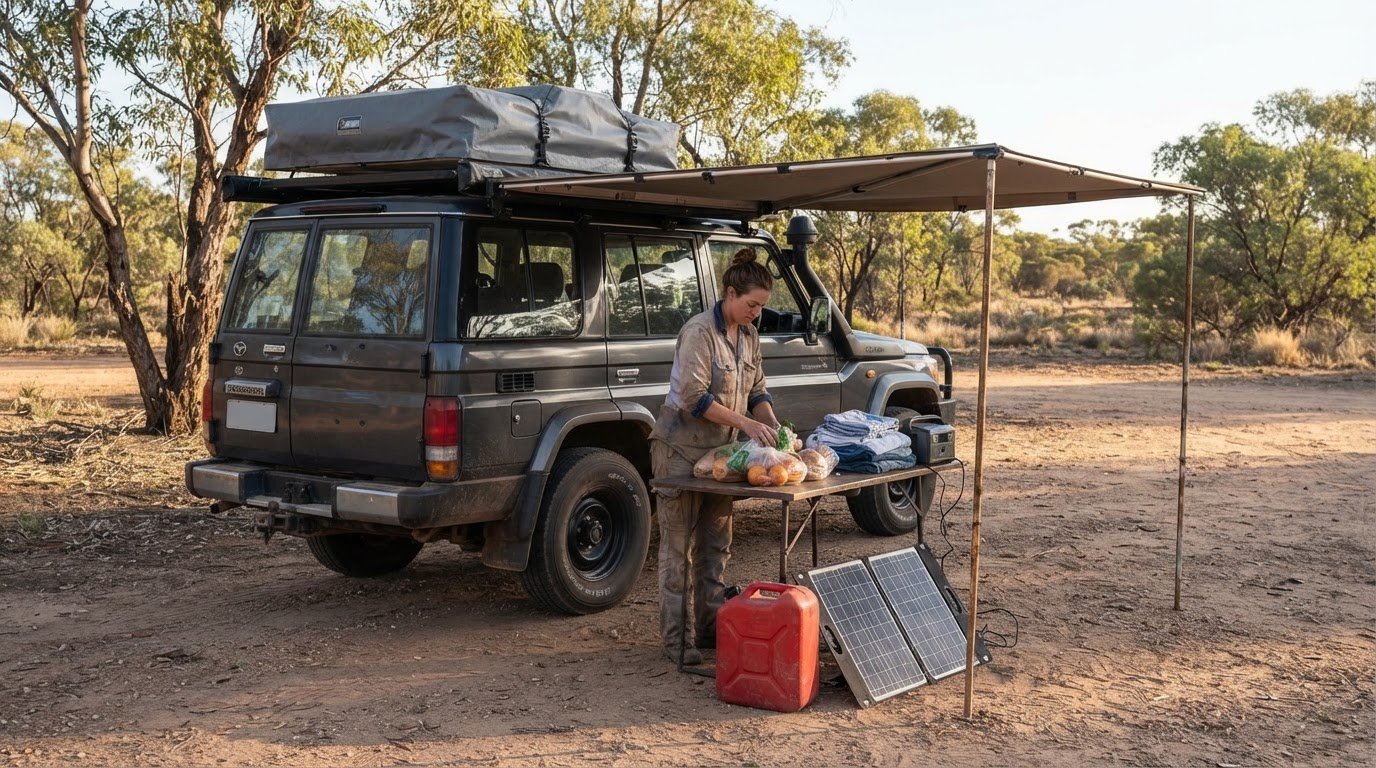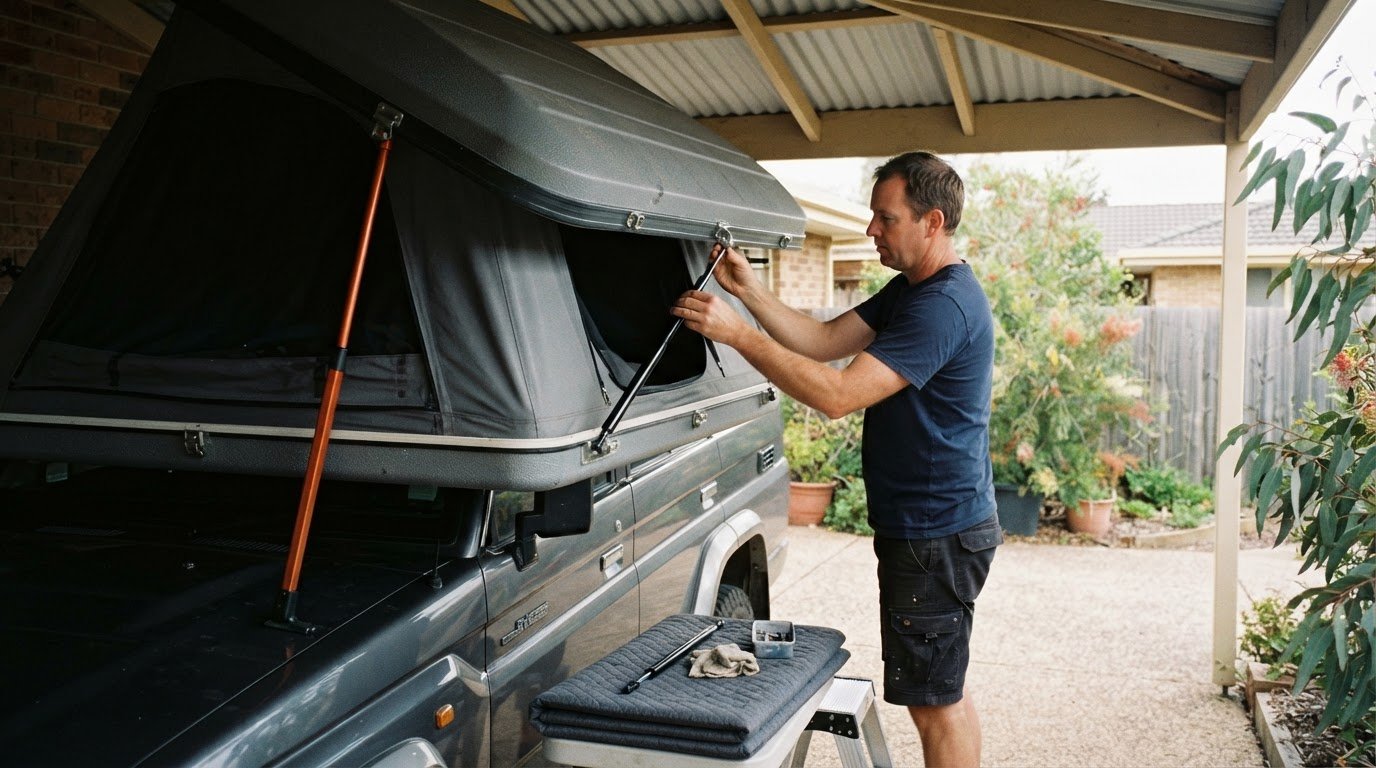
A 2-inch lift can add clearance and room for larger tyres for Western Australian off-roading, but it isn’t the whole suspension decision. To learn how to select the right 4WD suspension, start with the load you usually carry, then match the springs and shock valving to your driving and tyre plans.
It makes sense to want extra clearance for rocky tracks and uneven ground. But a setup that suits a fully loaded touring 4WD may feel harsh when the vehicle is empty, while springs that are too soft can leave it sagging under a regular load.
We’ll explain how to assess your usual touring load, match springs and shocks, and decide whether a lift suits your routes and planned tyres. You’ll have a practical way to balance comfort, control and clearance, so you can explore responsibly and prepare your vehicle for the tracks ahead.
Key Takeaways
- Base spring rate on the load your 4WD carries most of the time, not occasional extra gear; weigh it in touring condition to understand axle loads.
- Match shocks to the springs and driving conditions so damping suits both the vehicle’s usual load and the roughness of your routes.
- Plan lift height around tyre size and underbody clearance needs. A 2-inch lift can help with WA off-roading, but the right setup depends on the vehicle and intended use.
- Consider how suspension type affects ride and handling: solid axles and independent front suspension behave differently on corrugated roads and uneven terrain.
- Before settling on a setup, account for accessories, tow-ball weight and touring gear, then balance capability with comfort and responsible track travel.
Table of Contents
Matching spring rate and shock valving to vehicle load
Compare spring load suitability, shock valving, ride height and specifications before choosing components. Springs support the vehicle’s weight; shocks control suspension movement. The components need to work as a matched setup.
When comparing 4WD suspension shocks, springs and components, check whether their specifications suit your usual load, intended terrain and required suspension travel. An overly heavy-duty setup can compromise comfort when the vehicle runs empty.
-
Match Spring Rate to Vehicle Load
Start by matching spring rate to the weight your 4WD carries regularly. A vehicle carrying a constant 300 kg in the rear needs springs suited to that load, helping maintain ride height rather than sagging under weight.
If touring gear stays onboard for 80 per cent of your driving, choose around that regular load, not an occasional empty setup. Constant-load springs suit permanent touring equipment, while a 300 kg constant-load spring can feel harsh and bouncy on an empty ute. Airbags or auxiliary load-assist systems don’t replace a suitable primary spring.
Check spring specifications against how you use your vehicle. Spring rates need to support the load while maintaining suitable ride height and usable suspension travel. Compare the complete spring-and-shock package instead of choosing a spring based on vehicle make alone.
-
Compare Shock Valving for Load and Terrain
Match shock valving to the springs, carried load and terrain you drive most. Springs support the vehicle; shocks manage compression and rebound. Suitable damping helps control movement on uneven tracks, especially when the vehicle carries touring gear rather than an everyday load.
Read each shock’s specifications and consider how its valving suits your regular conditions. Remote-reservoir shocks provide extra oil volume and heat-management capability. High-performance suspension kits are designed to maintain damping performance when temperatures reach 40 degrees, while suitable shock bodies and valving can maintain performance over hundreds of kilometres of continuous rough driving.
Consider bypass shocks for high-speed off-road driving, where they offer specialised damping control. Adjustable shocks can also let drivers customise handling. Don’t assume shocks that look similar have equivalent valving; compare their specifications and assess the whole setup for load, comfort and terrain.
Keep the whole vehicle in mind. Heavy touring equipment carried high can make steering inputs, cornering and uneven terrain feel more pronounced. Choose spring rate and damping for the way the 4WD is actually loaded and driven, rather than an isolated component or occasional trip.
Choosing springs for typical rather than occasional loads
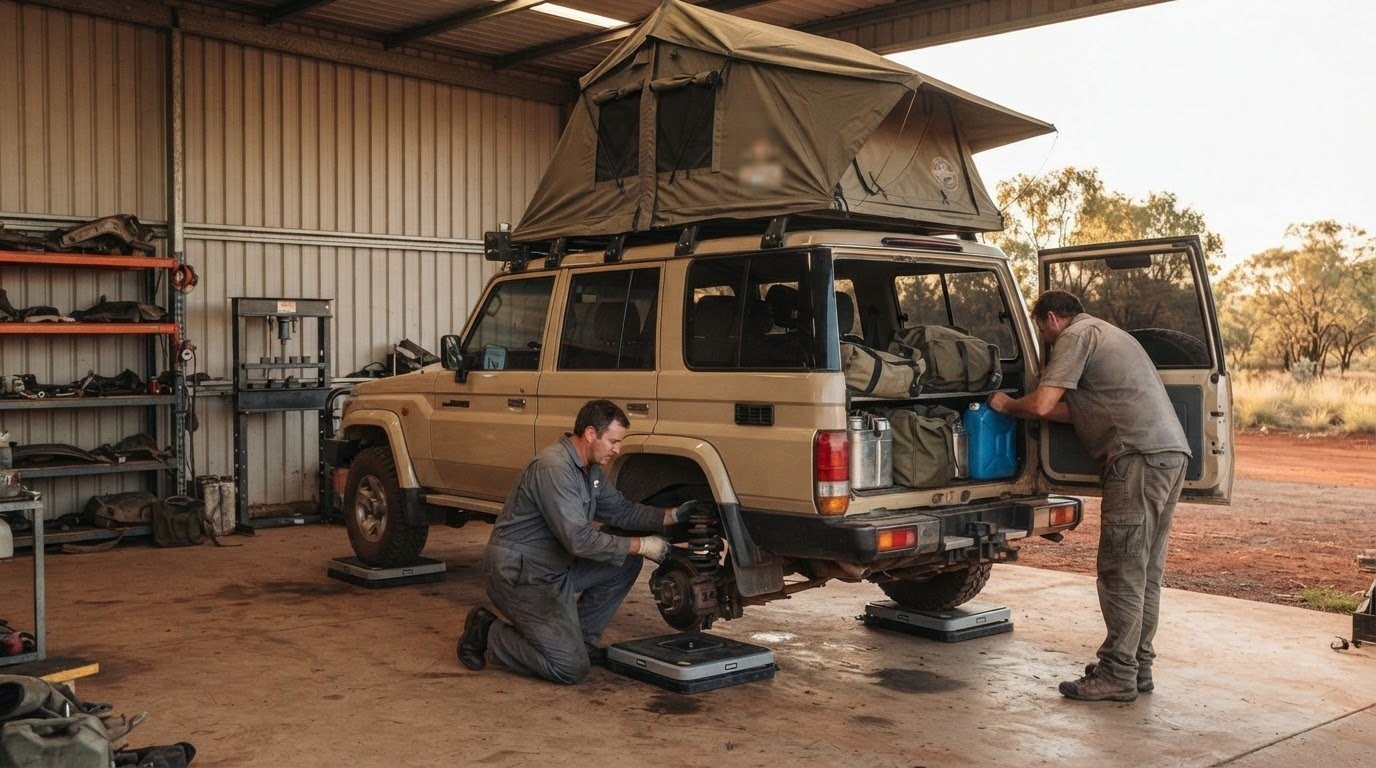
Choose springs around your 4WD’s usual touring weight, then account for the loads each axle carries. Learning how to select the right 4wd suspension starts with weighing the vehicle in its expected touring condition and recording front and rear axle weights.
-
Compare Leaf, Parabolic Leaf, and Coil Springs
Compare spring type with your regular load and driving needs. Leaf springs are simple and suit heavy-duty work, although they can bring a rougher ride and limited suspension travel. Parabolic leaf springs work best when loaded, so consider how your vehicle performs in its usual touring configuration.
Coil springs can struggle with heavy loads or towing. Check specifications for your vehicle and intended use, and don’t choose a spring based only on type or brand. Suitable support helps maintain ride height and suspension movement over uneven ground.
-
Choose Front and Rear Spring Rates
Match front and rear spring rates to the weight carried at each axle. A steel bull bar and winch can add over 80 kg to the front end. Rear drawers, a fridge and a dual-battery setup can add more than 150 kg behind the cabin.
Include a camper’s tow-ball weight when assessing the rear axle, because it transfers load to the tow vehicle. Compare axle weights in touring condition with spring specifications. This gives you a more useful basis for choosing than total vehicle weight alone.
- Compare each axle’s baseline weight with its weight in touring condition to see where the added load sits. Select spring rates for the front and rear separately. Don’t divide the vehicle’s total load evenly across all four wheels.
For example, front accessories affect the front axle, while a loaded canopy affects the rear. Towing adds another consideration through tow-ball weight. These load positions influence which springs are appropriate, even when two 4WDs have similar overall equipment.
Compare each brand’s spring-rate and load specifications for your vehicle. When deciding how to select the right 4wd suspension, prioritise the setup you use most, rather than an occasional maximum load. A heavy-duty choice intended for rare towing can compromise comfort during everyday driving. Aim for suitable support and ride height while retaining useful suspension movement.
Clearance for larger tyres and underbody protection
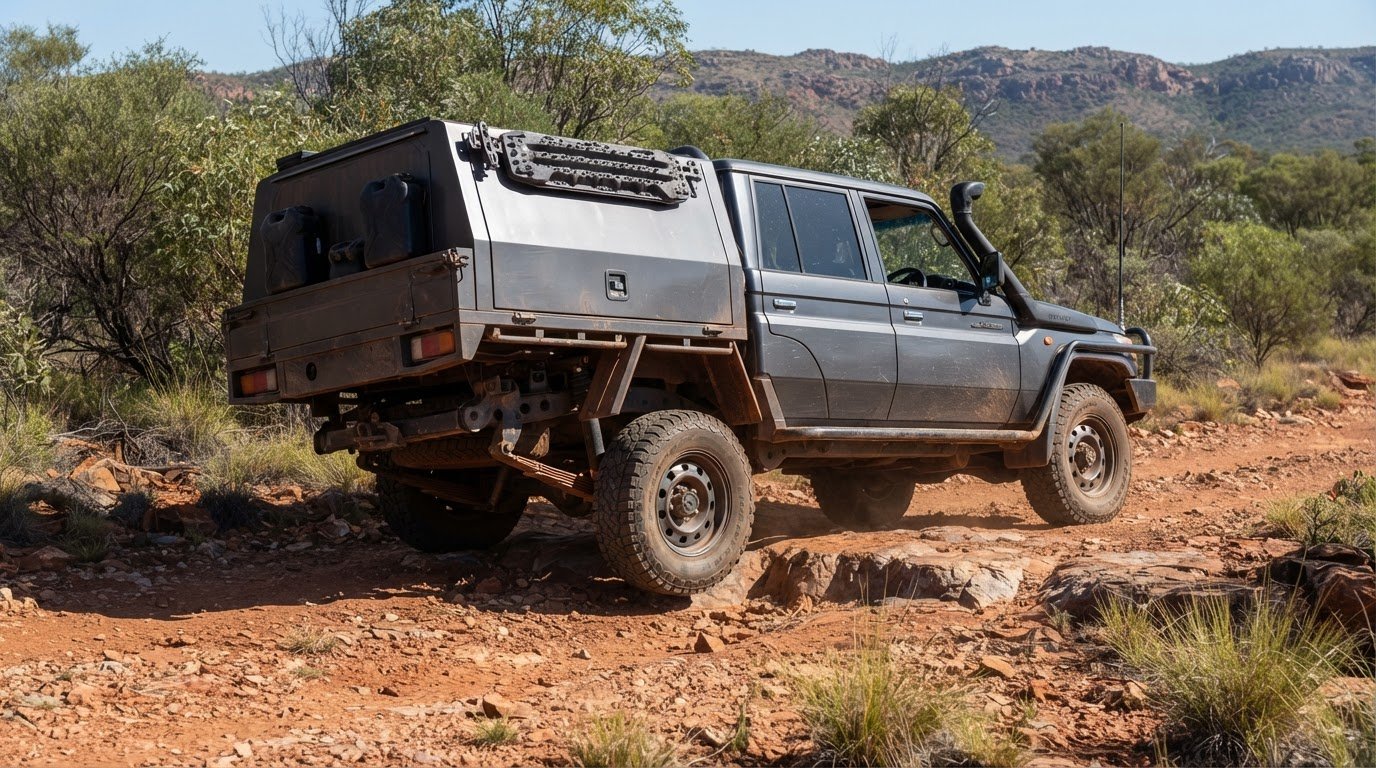
Plan lift height around the tyres you intend to fit and the obstacles on your usual tracks. For Western Australian off-roading, a 2-inch lift is recommended to increase clearance and help accommodate larger tyres, but it isn’t automatically the right choice for every 4WD.
- Identify the clearance you need before choosing a lift kit. A suspension lift uses taller springs and shocks to raise the vehicle, helping it clear rocky or uneven terrain. Larger tyres can increase clearance beneath the axles, while a suspension lift mainly adds space between the body and the ground.
Check the vehicle’s lowest points, including the differentials and underbody components. If an obstacle threatens a differential, raising the body alone may not solve the clearance problem. Match the upgrade to the terrain and planned tyre size, rather than choosing lift height for appearance.
- Set a practical lift target around your vehicle and route. A 40-50 mm lift is described as the sweet spot for most 4WDs, while a 2-inch lift is recommended for WA off-roading. These are useful starting points, not a reason to overlook vehicle-specific fitment, tyre clearance or suspension travel.
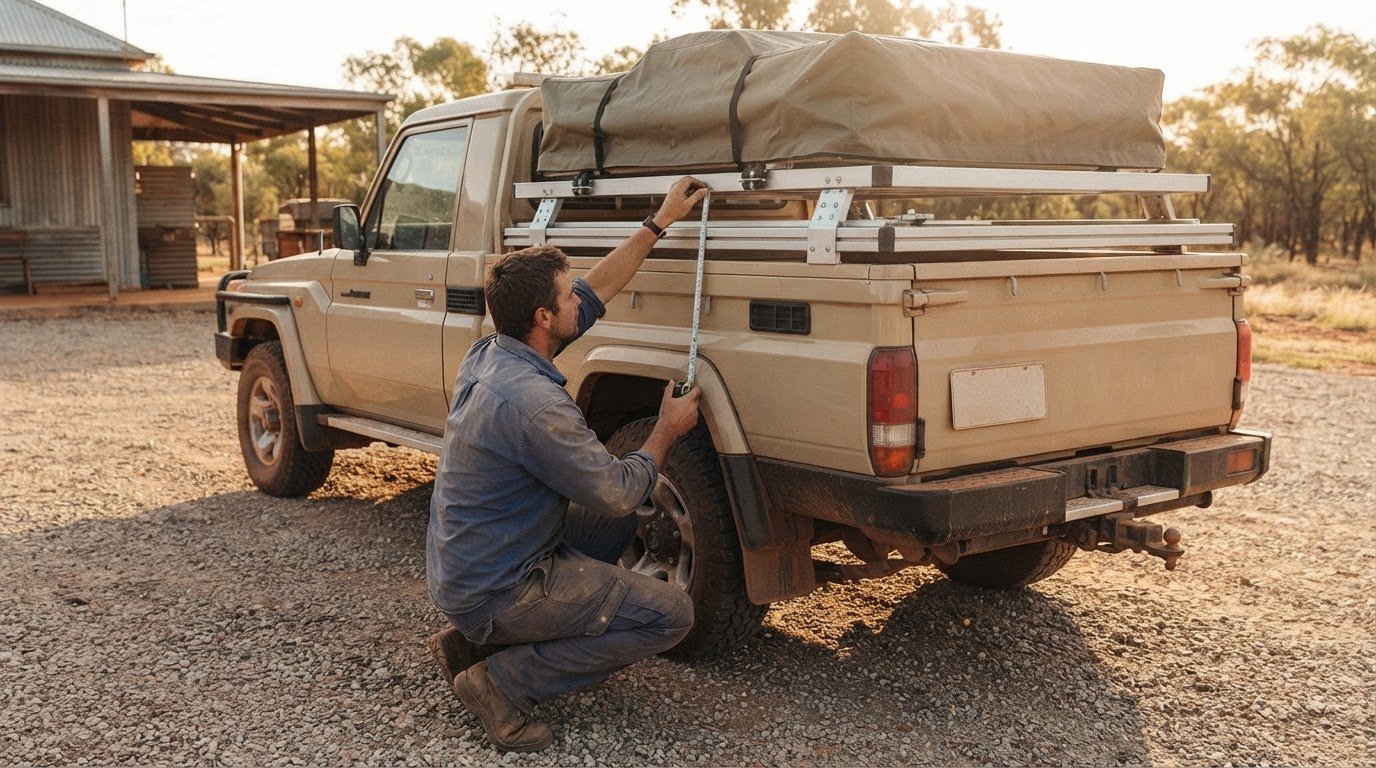
Check tyre clearance through the wheel arches as the suspension compresses and articulates. A tyre that clears at normal ride height may contact the body when the suspension flexes. Assess clearance at both ends, and account for steering movement at the front.
- Choose a complete lift kit, not just taller springs. A comprehensive four-wheel-drive lift kit includes springs, shocks and supporting components, such as extended brake lines and measures to correct suspension geometry. These parts help the system work together as the vehicle travels over uneven ground.
Keep lift height in proportion to the required clearance. Lifts of 75 mm or higher can create complications with brake-line length, driveline angles and steering geometry. A poor-quality or unsuitable kit can be dangerous, and incorrect installation can become costly, so treat fitment as part of the upgrade decision.
- Balance underbody clearance with suspension flex and responsible track use. More height can help a 4WD travel over rocky terrain, but a setup also needs enough movement to follow uneven surfaces. Check whether the chosen springs, shocks and ancillary components maintain usable travel instead of focusing only on the parked vehicle’s height.
Before choosing a kit, compare its stated lift, intended tyre clearance and included components with the terrain you plan to drive. A vehicle used on corrugated tracks and rocky sections needs a considered balance of clearance and control. Choose the smallest upgrade that suits those needs, then drive to the track conditions.
Australian suspension brands and conditions
The price depends on the vehicle, components, accessories and fitting requirements, and is provided after a quote request. Compare suspension specifications with Australian terrain, your vehicle and the tracks you plan to drive.
- Assess your usual routes before comparing brands. A setup for corrugated tracks may need different damping priorities from one used mainly on sealed roads and occasional rocky trails. Consider sustained rough driving, vehicle load and comfort together instead of choosing by brand reputation alone.
Read the manufacturer’s specifications for your exact vehicle and intended use. Compare spring rates, shock valving, lift height and included components. A well-matched kit should suit your vehicle’s accessories and driving conditions, not simply offer the greatest lift or the longest parts list.
- Check how a proposed lift affects the whole vehicle, not just ground clearance. The suspension, steering and driveline geometry work together, and changing ride height can affect their relationship. For lifts of 75 mm or higher, potential complications include brake-line length, driveline angles and steering geometry.
Most Australian states allow a 50 mm suspension lift without complex engineering certificates or lane-change testing. Requirements differ across jurisdictions and vehicle configurations, so don’t treat that figure as a universal approval for every modification. Keep the intended height and the relevant state or territory context in view while comparing kits.
- Treat suspension lift and legal payload changes as separate considerations. A suspension upgrade does not automatically increase the vehicle’s legal carrying capacity. A GVM upgrade is engineered and approved to increase legal payload, and recognition requirements vary between Australian states and territories.
If touring accessories and intended loads could exceed the original GVM, assess that separately from lift height. A GVM upgrade doesn’t override axle ratings or other applicable limits. Fitting stronger springs to carry accessories, for example, does not by itself permit you to exceed the vehicle’s rated limits.
- Compare the kit’s components against the tracks you actually travel. A comprehensive lift kit can include springs, shocks, extended brake lines and geometry-correcting measures. Check whether the package addresses the vehicle’s specific setup, rather than assuming every Australian-market kit includes the same supporting parts.
Use a practical buying sequence: confirm vehicle fitment, define your terrain and accessories, compare specifications, then consider lift height and compliance. This keeps the decision focused on suitable travel across Australian conditions instead of a brand name or lift figure in isolation. Match the upgrade to your routes and travel responsibly.
The cost, including fitting, depends on the vehicle, components, accessories and fitting requirements. Request a quote for your setup.
What types of 4WD suspension systems are available in Australia?
Compare suspension by axle design and the terrain you drive, not by lift height alone. Solid axles and independent front suspension have different trade-offs on Australian roads and tracks.
- Identify whether your 4WD has a solid axle or independent front suspension (IFS). Solid-axle vehicles can ride more roughly on corrugated roads and usually have less ground clearance beneath the differential. That differential position matters on rocky tracks, where lifting the body doesn’t necessarily raise the lowest point beneath the axle.
Independent front suspension generally provides better handling and a smoother ride than a solid-axle setup. Consider that advantage if you combine sealed roads with unsealed touring routes. Match components to your vehicle’s design, as fitment differs between suspension layouts.
- Check how the front and rear suspension work together. Some four-wheel drives have independent front suspension and a solid rear axle, giving each end different handling characteristics. Assess steering response, comfort and articulation across both axles instead of judging the front suspension alone.
For example, an independent front end may feel composed on-road, while the rear responds differently when carrying touring equipment over corrugations. Choose components designed for that layout and load. Vehicle-specific fitment matters: a kit intended for another suspension design won’t deliver the same result.
- Consider torsion bars where your 4WD uses them. Torsion bars can help drivers control suspension travel and improve braking and cornering on off-road terrain. Include their role in the complete suspension assessment instead of treating them as an isolated adjustment.
Consider how the torsion bars work with the vehicle’s other springs and shocks. Aim for suitable movement and control on the terrain you use while preserving the driving characteristics your vehicle needs. Changing one component can affect the whole setup.
- Assess supporting components if your suspension needs more articulation. Disconnectable sway bars may be suitable for off-road touring where extra articulation is needed. Upper control arms can help maintain wheel travel and improve movement over uneven terrain.
Also consider the panhard bar, which stabilises the axle and helps keep its wheels aligned. With larger lifts, radius arms may need replacement, and their wheel travel depends largely on bush design. Bushes that are too hard can increase vibration and restrict suspension flex.
- Choose a system that suits your routes and vehicle design. On corrugated roads, account for the firmer ride associated with solid axles; for mixed road use, consider the handling and comfort advantages of independent front suspension. Assess torsion bars, sway bars, control arms and bushes as part of the whole setup.
Don’t assume one suspension type suits every 4WD. Start with the factory layout, identify the terrain and travel demands, then prioritise the relevant trade-offs: differential clearance, handling, ride comfort and wheel movement. That comparison gives you a more useful basis for choosing components than a generic system label.
Adventurerz
Adventurerz helps Australian adventurers plan beyond suspension choices with practical outdoor information and gear recommendations. Once you’ve matched your setup to your usual load and tracks, explore our camping equipment reviews and recommendations to plan the rest of your touring kit.
Our roof top tent, 4WD awning and hiking equipment reviews can also help you think through comfort, shelter and gear for trips across Australia. Bring your suspension priorities into that wider preparation: the terrain you expect, the equipment you’ll carry and the way you want to travel. Thoughtful planning helps us enjoy remote places while treating tracks and campsites responsibly.
Have a question about Adventurerz’s outdoor information or recommendations? Contact Adventurerz.
Build your next trip around the setup
The best way to decide how to select the right 4WD suspension is to keep your real travel plans at the centre of the decision. Let your usual load, the tracks ahead and your vehicle’s design guide the setup, then revisit those priorities as your touring plans change.
Suspension is one part of a capable touring vehicle. Adventurerz also offers roof top tent reviews and recommendations, 4WD awning reviews and recommendations, and camping equipment reviews and recommendations to support broader trip preparation. Use those resources to consider how shelter and equipment fit alongside the gear you carry, while planning to travel responsibly and care for the places we explore.
Ready to discuss your trip plans and the outdoor information that could help? Contact Adventurerz about your 4WD setup, and take the next step towards well-prepared Australian adventures.
Frequently Asked Questions
Do I really need a 2-inch lift for off-roading in WA?
No, a 2-inch lift isn’t essential for every Western Australian off-road trip. It’s a recommended option for increasing clearance and making room for larger tyres, but the tracks you drive and your vehicle’s existing clearance matter. For example, a vehicle used on maintained gravel roads may have different needs from one tackling rocky sections. Choose for the terrain and tyre plan, not the lift figure alone.
How Much Lift is Enough?
For many 4WDs, 40-50 mm is a useful lift range to consider, while Western Australian off-roading recommendations include a 2-inch lift. The right height depends on your vehicle, tyre dimensions and the obstacles on your regular routes. A lift of 75 mm or higher can complicate brake-line length, driveline angles and steering geometry, so assess the complete setup rather than chasing extra height.
What is the difference between monotube and twin-tube shocks?
A monotube shock has one main pressure tube, while a twin-tube shock has an inner working tube inside an outer reservoir. This construction affects how the shock manages oil, pressure and heat during repeated movement. Compare specifications and valving with your vehicle and driving conditions instead of choosing by design label alone. Remote-reservoir and bypass designs are separate options, each with its own uses.
What suspension does your touring 4WD need?
Your touring 4WD needs suspension suited to its loaded travel configuration and the roads it will cover. Think through a representative trip: passengers, stored recovery gear, water, food and any accessories fitted permanently. Then consider whether the route involves long corrugated stretches, rocky tracks or mostly sealed roads. Those details help establish the balance between ride comfort, vehicle control and suspension movement your touring setup needs.
Will a heavy-duty suspension kit make my 4WD ride too rough?
It can, especially if the kit is designed for a load your 4WD rarely carries. A heavily rated setup may feel harsh when the vehicle is lightly loaded, while softer springs may not support regular towing or touring weight. Think about how the vehicle is configured on an ordinary week, not just its heaviest planned trip. The spring and shock combination should suit that typical use.
How do I choose 4WD suspension based on touring, towing, off-road and daily driving use?
Start with the use that occupies most of your driving, then account for other regular demands. A daily-driven 4WD that tours loaded needs a different balance from a vehicle mainly used for occasional towing or rough tracks. Consider the load, road comfort, terrain and desired tyre clearance together. If trips vary, prioritise the configuration you drive most often instead of building around a rare, maximum-load scenario.
What suspension lift height is suitable for a 4WD in Australia?
There isn’t one suitable lift height for every Australian 4WD. A 40-50 mm lift is commonly presented as a practical range, and a 2-inch lift is recommended for Western Australian off-roading. Vehicle design, tyres, clearance needs and intended routes all affect the choice. Also consider that lifts of 75 mm or higher can bring brake-line, driveline-angle and steering-geometry complications.
What are the best 4WD suspension brands and kits available in Australia?
The best choice is a kit specified for your exact vehicle, regular load and driving conditions, rather than a brand name alone. Compare spring and shock specifications, included components, fitment and the way the setup suits your routes. A touring 4WD carrying accessories needs different support from an empty vehicle used mainly on sealed roads. Look for a complete, compatible system that balances control, comfort and clearance.