What if your coastal setup was built to actually withstand the elements rather than just survive them? We’ve all been there; the salt spray is sticking to everything, the sun is relentless, and you’re constantly checking if your pegs are still holding in that shifting sand. Finding the best 4×4 awning for beach camping isn’t just about grabbing the biggest piece of canvas you can find. It’s about balancing wind-deflecting geometry with hardware that won’t seize up after one weekend in the spray.
We know you value reliability and environmental accountability as much as we do. You want a setup that lasts for years, not just one season before the UV light degrades the fabric. In this 2026 guide, we explore expert-vetted gear like 270-degree awnings that survive coastal gusts and intense sun exposure. We’ll also highlight critical 2026 beach regulations, like the canopy bans in Laguna Beach and Myrtle Beach, to ensure your next trip is stress-free. Let’s get your rig ready for a week of coastal exploration with gear that matches our community’s adventurous spirit.
Key Takeaways
- Understand why standard gear fails in coastal environments and how to select materials that resist salt corrosion and relentless UV degradation.
- Compare 180° and 270° architectures to find the best 4×4 awning for beach camping based on your vehicle type and shade requirements.
- Master sand-anchoring protocols and high-wind safety to ensure your freestanding setup stays secure during unpredictable coastal gusts.
- Identify non-negotiable hardware specs, like high-GSM fabrics and anodized aluminum, that prioritize gear longevity and environmental accountability.
- Access our expert-vetted 2026 gear recommendations specifically curated for the rugged conditions of the Australian coastline.
Why Beach Camping Demands a Specialized 4×4 Awning Strategy
We’ve all felt that magic moment when the tide goes out and a perfect stretch of sand opens up for a weekend of solitude. But the Australian coastline is a beautiful beast that demands respect. If you’re hunting for the best 4×4 awning for beach camping, you’ve likely realized that gear built for sheltered bush valleys often struggles when faced with constant salt aerosols and relentless UV exposure. We don’t just need shade; we need a coastal fortress that stands its ground when the conditions turn.
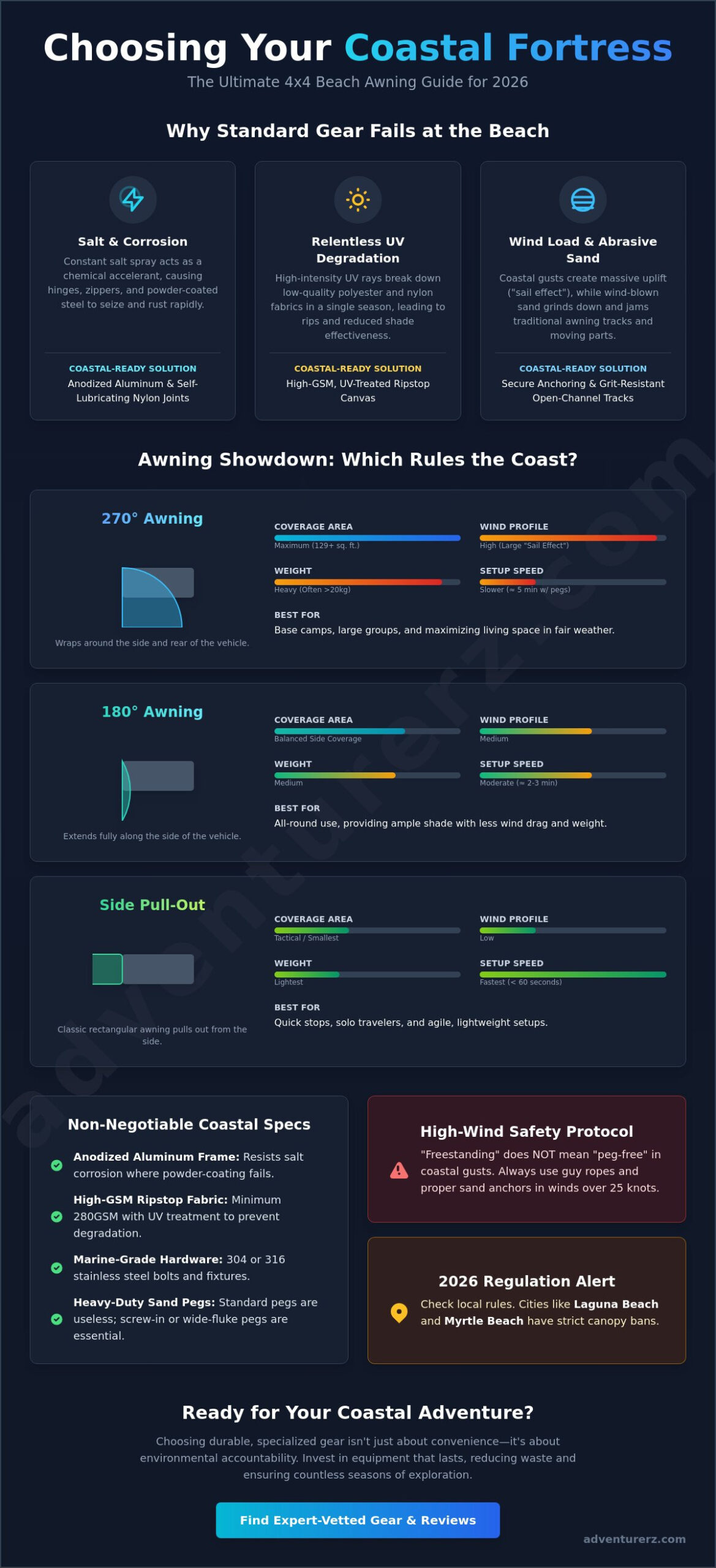
Standard awnings are often built with light-duty materials that can’t handle the physics of a coastal environment. High-intensity UV rays can degrade cheap polyester in a single summer, while salt air finds every tiny crack in a powder-coated hinge to begin the oxidation process. We believe in gear that survives the journey and respects the environment. Choosing high-quality, durable equipment means less waste in landfills and more time enjoying our pristine dunes. As you plan your 2026 remote escape, your choice of shelter becomes the foundation of your entire setup.
The Salt and Sand Factor
Salt spray isn’t just a nuisance; it’s a chemical attack on your rig. Inferior awning hinges and zippers often seize up after just a few days of coastal exposure. Modern Vehicle and camping awnings designed for 2026 often utilize self-lubricating nylon joints and anodized aluminum to combat this rapid corrosion. Sand is the other silent killer. It acts like sandpaper in traditional tracks, grinding down moving parts. We look for designs with open-channel tracks or grit-resistant pivots that won’t jam when the wind starts whipping the beach around your ears. This attention to technical detail ensures our Adventurerz community stays mobile and self-reliant.
Wind Loading on the Coast
That refreshing afternoon blow can turn a poorly designed awning into a kite in seconds. Coastal wind doesn’t just push sideways; it creates massive uplift on flat surfaces. While the best 4×4 awning for beach camping might be advertised as freestanding, don’t be fooled. “Freestanding” doesn’t mean “peg-free” in a 25-knot gust. The geometry of a 270-degree awning provides incredible coverage, but it also creates more surface area for the wind to grab. You need a strategy that includes heavy-duty sand pegs and guy ropes to keep your investment on the ground. We always recommend a methodical setup that prioritizes safety over speed, ensuring your shelter remains a sanctuary rather than a liability.
180° vs. 270° vs. Side Awnings: Which Rules the Coast?
Choosing the right architecture for your rig is the first step toward a successful coastal setup. While we often see massive wrap-around designs on social media, the best 4×4 awning for beach camping isn’t always the biggest one. We need to consider how each design interacts with the wind, your vehicle’s weight limit, and your specific camping style. Whether you’re a solo surfer or a family of five, your shade needs to be as adaptable as the tides. We prioritize gear that serves our needs without becoming a burden on the vehicle or the environment.
270-Degree Awnings: The Ultimate Beach Wrap
If you’re setting up a base camp for a week, a 270-degree awning is hard to beat for sheer coverage. These models, like the OVS Nomadic 270 which provides 129 sq. ft. of freestanding shade, wrap from the side of your vehicle all the way around the rear. This creates a massive, contiguous living space. It’s perfect for staying in the shade during the peak of a coastal summer. However, we have to be honest about the trade-offs. These awnings are heavy, often exceeding 20kg, and they create a significant “sail effect.” In high coastal winds, that massive surface area can become a liability if not properly anchored. They are best for large groups who need a central hub for cooking and relaxing.
180-Degree and Side Awnings: The Tactical Choice
For those of us who prefer a lighter, more agile setup, 180-degree or traditional side pull-out awnings offer a tactical advantage. A 180-degree model provides plenty of side coverage but lacks the rear wrap, which significantly reduces wind drag and total weight. If you’re doing quick surf checks or stopping for a lunch break on a narrow track, a side pull-out can be deployed in under 60 seconds. This is a massive win compared to the 5-minute setup and pegging routine required for a large 270-degree wing. If you’re already running roof top tents, you’ll need to check your mounting clearances; some larger awnings can interfere with tent ladders or window awnings.
We’ve found that the best choice usually aligns with your “stay time.” If you’re moving camp every morning, simplicity wins. If you’re staying put, the extra coverage is worth the effort. Before you commit to a specific style, it’s a great idea to explore our community’s top-rated awning reviews to see how these different architectures perform in real-world Australian conditions. Balancing shade and stability is the secret to a stress-free beach trip.
Essential Features for Coastal Survival: Salt, UV, and Wind Resistance
We’ve explored the different shapes your shelter can take, but the true test of the best 4×4 awning for beach camping happens at the molecular level. The Australian coast is a high-energy environment where gear is constantly bombarded by corrosive elements and intense radiation. To ensure our setups last more than a single season, we have to look past the marketing and into the technical specs of the materials. We prioritize equipment that balances rugged durability with environmental accountability, choosing gear that can be maintained rather than replaced.
Material science is our first line of defense. Poly-cotton ripstop fabric with a high GSM (Grams per Square Metre) is non-negotiable for beach work. We recommend looking for a minimum of 280 to 320 GSM. This density provides the structural integrity needed to resist tearing when a sudden gust hits. A UV50+ rating is equally critical; it doesn’t just protect us from the sun, it prevents the fabric fibers from becoming brittle and failing prematurely. When setting up your camp, always cross-reference your location with BLM dispersed camping regulations or local coastal authority guidelines to ensure you’re placing your rig in a way that protects both your gear and the fragile dune systems.
Corrosion-Proofing Your Rig
Salt air is a silent killer for inferior hardware. While powder-coated steel might look tough, a single scratch from a grain of sand allows oxidation to take hold. We look for anodized aluminum arms and 316 marine-grade stainless steel fasteners that can live in the spray without seizing. Boxed extrusions are another key feature to hunt for. Unlike simple C-channels, boxed designs offer 360-degree rigidity, which significantly reduces the “flap factor” and structural vibration during coastal nights. Choosing gear with replaceable parts is a core part of our mission to reduce waste; if a hinge fails, we want to fix it, not send the whole unit to a landfill.
Fabric Tech: Beyond Just Shade
Modern 2026 designs have moved far beyond basic canvas. Heat reduction technology, such as silver-coated or specialized block-out fabrics, can lower the temperature under your awning by several degrees compared to standard materials. This is a game-changer when you’re parked on reflective white sand. We also look for a Hydrostatic Head (HH) rating of at least 1500mm. This ensures that when a coastal squall rolls in, the water beads and rolls off rather than soaking through. Finally, ensure your fabric is treated for mold and mildew resistance. Humid coastal mornings are the perfect breeding ground for fungi, and a treated fabric ensures your sanctuary stays clean and healthy for years of exploration.
Securing Your Shade: Sand Anchoring and High-Wind Protocols
We’ve discussed technical specs and architectures, but even the best 4×4 awning for beach camping is only as reliable as its connection to the earth. On a gusty Australian beach, the word “freestanding” can be dangerously misleading. While modern 2026 designs can support their own weight, they aren’t immune to the laws of physics. We treat every setup as a wind-prone environment, regardless of how calm the morning feels. Our community prioritizes safety and self-reliance, which means mastering the art of the sand anchor before the afternoon blow arrives.
The Sand Anchor Kit
Standard plastic or thin metal pegs are a liability in soft sand; they simply don’t have the surface area to resist uplift. We recommend investing in 300mm+ polypropylene sand pegs when deploying the best 4×4 awning for beach camping in shifting dunes. These larger, fluted spikes create significantly more friction. For those moments when the ground is too soft for any spike, heavy-duty sandbags are essential. Trace springs act as shock absorbers. They take the snap out of sudden gusts and protect your awning’s frame from structural fatigue. It’s about working with the wind, not just fighting it. If you’re looking for gear that stands up to these tests, check out our expert-vetted 4WD awning recommendations.
Advanced Guy-Line Techniques
The “45-degree rule” is our baseline for stability. Always angle your guy-lines at 45 degrees from the awning arm and 45 degrees into the ground. This creates the most efficient tension to keep the fabric taut and the frame secure. We also utilize our vehicles as secondary anchor points; looping a guy-line through a rated recovery point or a wheel spoke can provide a rock-solid tether that won’t budge. A deadman anchor involves burying a heavy object, such as a large log or a sandbag, deep in a trench and tying your guy-line to its center to create a secure, high-tension hold in the softest dunes. This technique is non-negotiable for multi-day stays in exposed locations.
Our emergency pack-down protocol is simple: if the wind is consistently hitting 25 knots or the gusting makes the frame shudder, it’s time to stow it. We don’t wait for a hinge to snap. Packing down takes two minutes; replacing a bent arm takes weeks and costs hundreds. By staying methodical and respecting the conditions, we ensure our coastal adventures remain a source of joy rather than a recovery mission. We’re all in this together, and sharing these technical skills helps keep our community safe and our footprints light.
Top 4×4 Beach Awnings for 2026: The Adventurerz Expert Picks
We’ve broken down the physics and the fabric. Now, let’s get to the fun part. We’ve spent years testing gear along the most rugged tracks in the country, and to help you choose the best 4×4 awning for beach camping, we’ve gathered the top performers from our shared experiences. These aren’t just random products; they are the tools that have earned a permanent spot on our rigs. We prioritize brands that offer local support and demonstrate a commitment to environmental accountability through repairable designs. By choosing vetted gear from the Adventurerz community, you’re investing in equipment that respects the land as much as you do.
Best Freestanding 270° for Families
The 23Zero Peregrine PRO 270 is a community favorite for a reason. It provides 127 sq ft of freestanding shade, which is perfect for keeping the whole crew out of the sun during a long day on the dunes. While it’s built for convenience, we’ve seen it hold firm in 30-knot coastal gusts when properly guyed out. We love that 23Zero focuses on longevity. Their use of high-quality materials and the availability of spare parts means this awning won’t end up as coastal litter after a tough season. It even features integrated LED lighting to keep the camp vibe going after the sun dips below the horizon.
Best Lightweight Option for Solo Explorers
If you’re a solo explorer watching your GVM, the OVS Nomadic 270 LTE is a brilliant tactical choice. At approximately $350, it offers a massive 129 sq. ft. of coverage without the heavy price tag or weight of full-size models. It’s lightweight enough for quick deployments during a solo surf mission where you just need a few hours of relief from the UV. Simplicity is often the ultimate sophistication when you’re managing a rig on your own in harsh environments. We find that this model strikes the perfect balance for those who move camp frequently.
The “Bulletproof” Choice for Remote Coastal Expeditions
For those heading to the most isolated stretches of the Bight or the Kimberley, the Darche Eclipse 270 remains the “bulletproof” standard. It offers 11.5 sqm of coverage that can be extended to 20.5 sqm with optional walls, providing a true sanctuary in remote areas. Its heavy-duty construction and salt-resistant hardware are built for the long haul. Marine-grade zippers are essential for remote travel because they resist salt-crystallization and sand-grit jams that would otherwise leave your shelter useless in the middle of nowhere. This is the best 4×4 awning for beach camping when failure is not an option.
Before you hit the dunes, run through our final 2026 coastal checklist:
- Verify 2026 local beach regulations; remember that places like Myrtle Beach and Laguna Beach have implemented strict shade bans that can result in $500 fines.
- Ensure your sand anchor kit includes 300mm+ polypropylene pegs or deadman anchors.
- Check that your mounting brackets are compatible with your roof top tents or existing rack system.
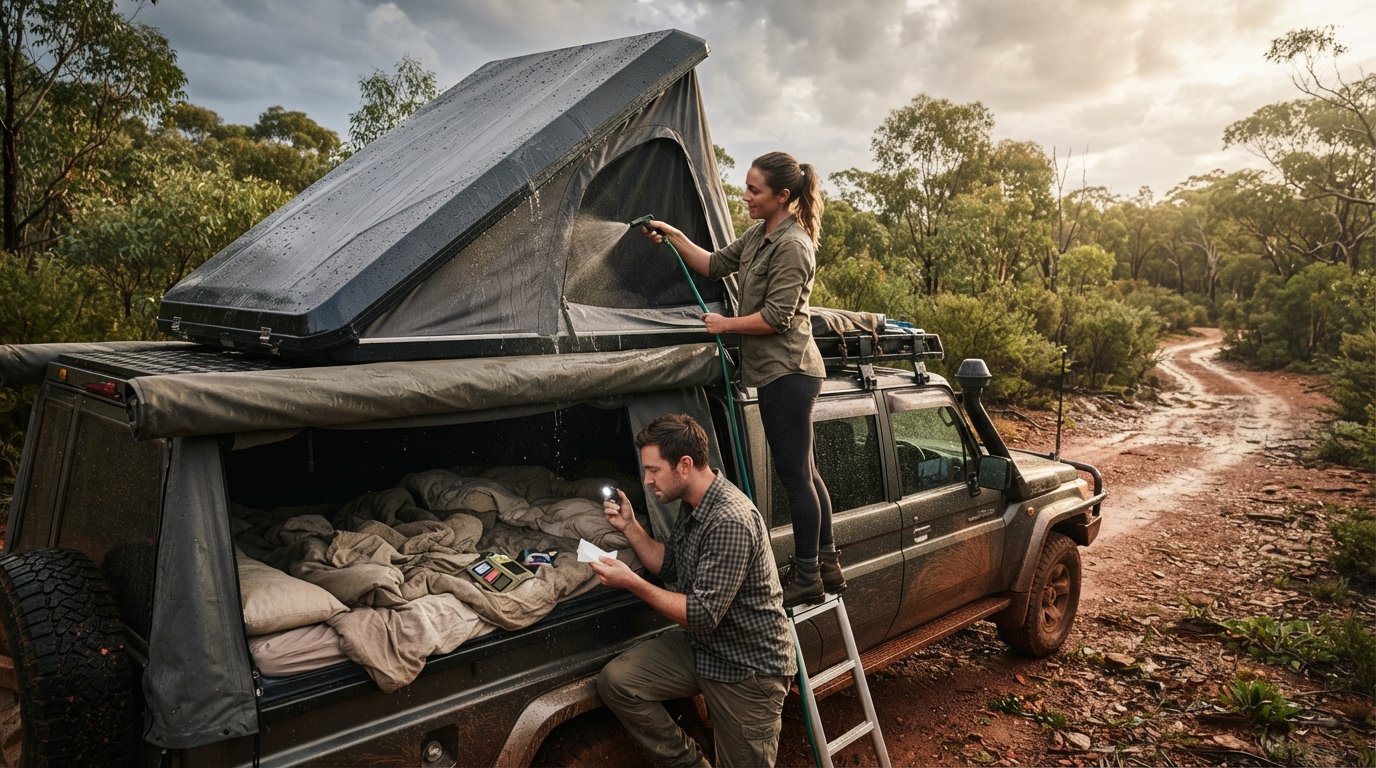
- Commit to rinsing your awning hardware with fresh water after every coastal trip to ensure gear longevity and prevent salt seizure.
Ready Your Rig for the Next Coastal Run
We’ve explored the technical science of salt resistance and the critical physics of sand anchoring. Finding the best 4×4 awning for beach camping isn’t just about shade; it’s about investing in a shelter that respects our fragile coastlines while standing firm against 30-knot gusts. Whether you choose a massive 270-degree wing for the family or a tactical 180-degree model for solo surf checks, your gear should be as hardy as the Australian environments we explore. We prioritize self-reliance and durability to ensure our footprints remain light and our memories last a lifetime.
Our community has tested these setups in the harshest conditions to ensure they meet our high standards for environmental accountability and performance. Don’t let a snapped hinge or sun-bleached fabric cut your next trip short. It’s time to gear up with confidence and hit the dunes with a setup you can trust. Check out our full 2026 4WD Awning Comparison Guide for expert reviews from the Adventurerz community. We’ll see you out there on the sand!
Frequently Asked Questions
Is a freestanding 4×4 awning safe to use on a windy beach?
Freestanding awnings are only safe in low wind conditions and should never be left unsupported on an exposed beach. We always recommend using poles and guy-lines on the coast because sudden gusts can create massive uplift. Even the best 4×4 awning for beach camping can sustain frame damage if left unsupported during a 25 knot afternoon blow. Safety and gear longevity are our priorities; don’t risk a snapped hinge for the sake of a two minute setup.
How do I stop my 4×4 awning from flapping in the wind?
Tension is your best defense against the flap factor. We use guy-lines pulled at 45 degree angles and ensure the fabric is drum tight across the frame. Some models allow for anti-flap kits or additional tensioning rafters to keep the material still. Keeping the fabric taut doesn’t just make for a quieter night; it prevents the stitching from stretching and failing prematurely over time.
What are the best pegs for securing an awning in soft sand?
We rely on 300mm+ polypropylene sand pegs with a fluted or screw-in design for maximum grip. Standard metal spikes are useless in shifting dunes because they lack the surface area to resist tension. If the sand is exceptionally soft, we use the deadman anchor technique by burying a heavy object deep in the sand. This level of preparation ensures our community stays secure while protecting the surrounding dune environment.
Do 270-degree awnings fit on all types of roof racks?
Most 270-degree models require heavy-duty roof racks with specific dynamic weight ratings and may not fit standard factory rails. You need to check for mounting bracket compatibility and ensure the awning won’t interfere with your rear hatch or roof top tent setup. We always measure our rack’s length and clearance before committing to a purchase. Choosing the right fit prevents structural stress on your vehicle’s roof during corrugated beach drives.
How do I clean salt spray off my 4×4 awning without damaging the fabric?
A simple fresh water rinse is the most effective way to remove salt aerosols without degrading the material. We avoid harsh detergents because they can strip the waterproof coating and UV inhibitors from the fabric fibers. Always make sure your awning is 100 percent dry before you zip it away for the trip home. Stowing a damp awning leads to mold and mildew, which can ruin high-quality gear in just a few weeks.
Can I attach awning walls to a 270-degree freestanding model?
You can certainly attach walls to most 270-degree models, but you must use the included support poles once they are installed. The added weight of the walls and the increased surface area for wind drag mean the frame is no longer safely freestanding. Adding walls is a great way to create a sheltered kitchen area or extra sleeping space while maintaining a responsible, low-impact campsite.
Is it worth upgrading to a hardshell awning case for beach travel?
Upgrading to a hardshell case is a smart move for dedicated coastal explorers who deal with constant spray. While soft PVC bags are common, hardshells provide a superior seal against salt aerosols and abrasive sand. This extra layer of protection keeps your hinges and fabric in top condition for years. We believe in buying gear that lasts, and a hardshell case is an investment in your setup’s long-term sustainability.
What is the best 4×4 awning material for high UV protection?
For maximum UV protection, we look for high-GSM poly-cotton ripstop fabrics between 280 and 320 GSM. The best 4×4 awning for beach camping often features a silver-coated or block-out layer to reflect radiation and lower the temperature underneath. This material science keeps us safe from the sun and ensures the fabric fibers don’t become brittle and fail after a single Australian summer.