What if the rugged gear that grants us ultimate freedom is actually painting a target on our vehicles for increasingly brazen thieves? With premium setups like the James Baroud Odyssey now pushing $4,895, it is no surprise that authorities have reported a sharp rise in equipment theft across popular touring regions. We all know that sinking feeling of leaving our rig unattended at a trailhead, wondering if our home on wheels will still be there when we return. That is why mastering these roof top tent security tips is the most important preparation you can do before your next mission into the Australian scrub.
We believe that every Outback-Explorer deserves total peace of mind while exploring our incredible backyard. You are about to master a multi-layered security strategy that protects your investment from opportunistic thieves, curious wildlife, and the harshest elements. We will walk you through the best locking hardware for 2026, including specialized mounts and GPS integration, alongside the practical campsite habits that keep your gear exactly where it belongs. Let’s dive into the tactics that keep your setup safe so you can focus on the horizon instead of your rearview mirror.
Key Takeaways
- Identify the most effective physical deterrents like security nuts and locking mounts to shield your gear from evolving 2026 theft tactics.
- Apply our expert roof top tent security tips to choose campsites that balance visibility and stealth for maximum protection in remote Australian environments.
- Learn the secrets of “scent security” to safeguard your tent walls from inquisitive wildlife and prevent unnecessary environmental wear.
- Adopt the Adventurerz 5-minute security protocol to build a foolproof habit of checking your setup every time you head off on a hike.
- Discover why a multi-layered strategy is the only way to achieve true peace of mind when leaving your rig unattended at a trailhead.
Table of Contents
Understanding the Security Risks of Roof Top Tents
When we talk about security for our rigs, we aren’t just talking about a padlock on a zipper. True security for a Roof tent is a comprehensive shield against theft, unauthorized tampering, and even the preventable environmental damage that can occur in the harsh Australian bush. As we head into 2026, these setups have become high-value targets because they hold their resale value incredibly well and, unfortunately, many are surprisingly easy to remove with basic tools. Understanding these risks is the first step in applying effective roof top tent security tips that actually work when you’re far from home.
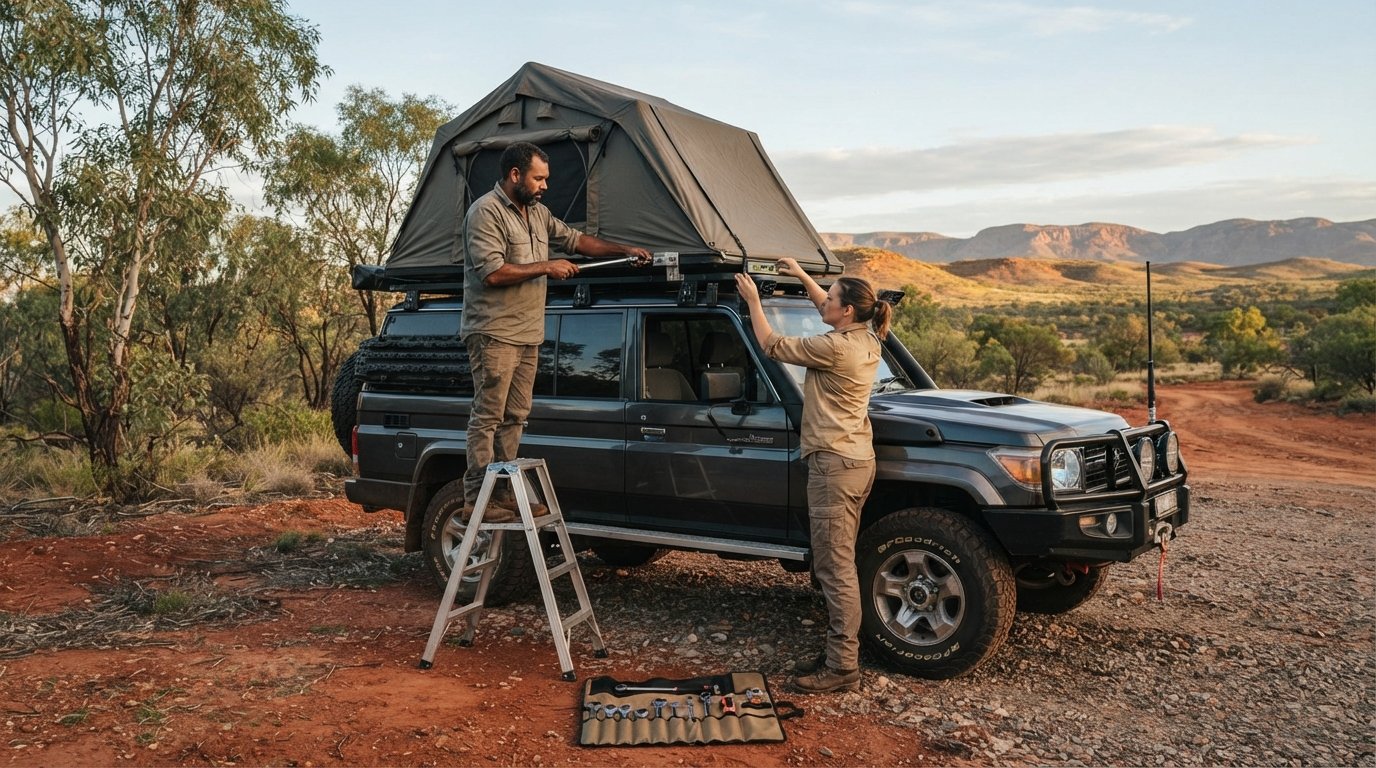
We generally see two types of threats in the wild. First is the opportunist. This is someone who sees an easy win at a crowded trailhead and realizes your expensive hardshell is only held on by four standard nuts. They’re looking for a quick “snatch and grab” using common spanners. Then there’s the professional. These thieves specifically scout for premium brands and come prepared with battery-powered grinders or specialized tools. Most factory-standard M6 and M8 mounting hardware is the primary weak link here. If a thief can reach the underside of your roof rack, they can often have your tent off the vehicle in under five minutes.
The High Cost of Insecurity
Losing your tent isn’t just a financial blow; it’s a logistical nightmare that can end a trip instantly. We’ve seen expeditions cut short because adventurers were left without their primary shelter in remote areas, forcing them to sleep in the driver’s seat or abandon their itinerary entirely. Many insurance policies have frustrating gaps for camping gear that isn’t “permanently fixed” to the vehicle. This means if your tent is bolted on with standard hardware, your provider might view it as portable luggage rather than a vehicle accessory, leaving you out of pocket for thousands of dollars.
Common Vulnerability Points
To protect our setups, we have to think like someone trying to take them. We’ve identified several critical areas that require your attention:
- The Mounting Rails: Standard nyloc nuts are the weakest point on almost every setup. Without security fasteners, your tent is essentially on loan to anyone with a 13mm wrench.
- Zipper Accessibility: While we often recommend hardshell models in our roof top tents reviews for their durability, soft shell owners need to be extra vigilant. A simple utility knife can bypass a zipper lock in seconds.
- Trailhead Complacency: We often fall into the “out of sight, out of mind” trap. Just because a car park is busy doesn’t mean your gear is safe. In fact, the noise of a busy area often masks the sound of tools.
By recognizing these roof top tent security tips and vulnerabilities early, we can build a defense that stops thieves before they even reach for their toolkit. It’s about making your rig the most difficult target in the camp.
Essential Hardware: Locking Down Your Investment
Building a fortress around your rig starts with a solid hierarchy of physical deterrents. While a simple padlock on your ladder might stop a curious passerby, we need to think bigger to protect a high-value investment like a James Baroud Odyssey or a Roofnest Falcon 3 EVO. The goal is to make the “work” required to steal your tent outweigh the potential reward. By layering your roof top tent security tips with specialized hardware, you transform your vehicle from an easy target into a formidable challenge for any thief.
Security Nuts and Fastener Upgrades
Security nuts are the single most important investment for any RTT owner. These aren’t your standard hardware store fasteners; they require a unique, keyed socket that only you possess. In the 2026 market, brands like Bryce Fastener and Tuffy Security Products remain the gold standard for tamper-proof hardware. For those running Roofnest setups, the VanUltra locking mounts are a fantastic specialized option, with a set of two mounts currently retailing for $305. If you are looking for a more budget-friendly deterrent, the Roof Space Anti-Theft Tool is a solid addition at $24.99, though it frequently sells out due to high demand among the touring community. Regardless of the brand you choose, ensuring your fasteners are made from stainless steel 316 grade is essential for resisting Australian coastal corrosion and preventing the hardware from seizing over time.
Smart Tracking and Electronic Deterrents
Integrating digital security is the 2026 standard for the modern explorer. Since many thieves now carry tools to bypass physical locks, a hidden GPS tracker acts as your final line of defense. We recommend hiding an Apple AirTag or a dedicated long-range GPS tracker inside the mattress foam or within the internal lining of the tent. This creates a “digital leash” that alerts your phone the moment your tent moves outside a designated geofence. Many modern roof top tents now feature integrated internal storage pockets that make hiding these small devices incredibly easy. While some adventurers use motion-activated alarms on their roof racks, be mindful that these can be triggered by heavy winds or curious possums in the scrub. A silent GPS tracker is often more effective as it allows you to track the gear without alerting the thief that they are being watched. If you’re still deciding on the right setup for your vehicle, exploring our curated list of tents can help you find models with the best internal configurations for hiding security tech.
Don’t forget the power of a secondary physical backup like a heavy-duty cable lock. By threading a vinyl-coated steel cable through the internal frame of the tent and around your vehicle’s roof rails, you create a visual and physical barrier that requires loud, time-consuming power tools to defeat. It’s all about stacking the deck in your favor before you ever leave the pavement.
Strategic Campsite Selection for Maximum Security
After we have secured our nuts and bolts, the next layer of defense is purely environmental. Where we choose to drop the jacks for the night dictates how much of a target our rig becomes. In the Australian bush, we often face the “Stealth vs. Visibility” debate. While some guides suggest staying in well-lit, crowded areas, we’ve found that the constant noise and movement of a busy caravan park can actually mask the sound of a thief’s tools. Mastering roof top tent security tips means learning to use the landscape to our advantage, creating a setup that is either too difficult to access or too visible to tamper with quietly.
The psychology of “Natural Surveillance” is our best friend in shared camping areas. We want to park where our rig is visible to fellow community members without being on a stage for passersby. One of our favorite tactics involves using our gear as a physical barrier. Deploying a high-quality 4WD awning does more than just provide shade; it creates a visual wall that shields your tent’s entry point. By blocking the line of sight to your ladder and zippers, you force any potential intruder to step well into your personal living space to reach the tent, which is a massive psychological deterrent.
The Stealth Camping Protocol
When we find ourselves overnighting near urban fringes or high-traffic trailheads, we switch to a low-profile mindset. The goal here is to reduce our “target profile” as much as possible. We recommend keeping the tent stowed until the very last moment before you need to sleep. If you are running a premium hardshell, consider using a plain black-out cover. These covers hide the brand name and the high-value nature of your setup, making it look like a standard cargo box to the untrained eye. It’s about being unremarkable until you’re safely tucked away inside.
Choosing Secure Remote Sites
In truly remote locations, security is about situational awareness. We always look for signs of “party spots”—think fresh tire tracks, discarded bottles, or fire rings in inappropriate places—and move on if the vibe feels off. High-ground camping is another pro move; it gives us 360-degree awareness of anyone approaching the camp. Vehicle orientation is equally critical for peace of mind. Positioning your vehicle so the ladder opens directly against a cliff face or dense, prickly scrub makes unauthorized entry physically awkward and noisy for anyone trying to sneak up. These simple roof top tent security tips regarding placement ensure that if someone does approach your rig, you will hear them long before they reach your zippers.
Securing Your Tent Against Wildlife and Harsh Environments
Nature doesn’t care about your padlocks. While we often focus on human intruders, true security in the Australian scrub involves shielding our gear from curious wildlife and the relentless Southern sun. We’ve seen plenty of adventurers return to their rigs only to find claw marks on their canvas or structural damage from a sudden change in weather. Expanding your roof top tent security tips to include environmental protection ensures your home on wheels stays functional for years, not just a few seasons.
Long-term material security starts with UV protection. The Australian sun is brutal on synthetic fabrics, leading to “sun rot” that can make your tent walls brittle and prone to tearing. We recommend applying a specialized UV-inhibitor spray every six months to maintain the integrity of the canvas. This prevents the fabric from becoming a security risk itself; a brittle tent is much easier for an animal or a thief to rip open. It is a simple step that preserves the resale value and safety of your setup.
Wildlife Proofing Your Elevated Setup
Don’t fall for the myth that being off the ground makes you immune to wildlife. Inquisitive possums, goannas, and even rodents are expert climbers that can easily scale a roof rack or ladder. We practice strict “Scent Security” by never allowing food, wrappers, or even scented toiletries inside the sleeping area. Even the smallest crumb can invite a hungry animal to claw through your expensive flyscreen. To deter these climbers, we’ve found that applying a small amount of natural peppermint oil around the base of the roof rack and ladder act as a powerful deterrent. Additionally, always retract or lock your ladder when you head out for a hike; it removes the easiest “staircase” for both animals and opportunistic people.
Weather Security: Storm-Proofing Techniques
Wind is perhaps the greatest threat to your tent’s structural security. We always position our vehicle so the narrowest part of the hardshell or the hinge side of the softshell faces the prevailing wind. This uses the vehicle as a windbreak and prevents the tent from acting like a giant sail. If you are heading into corrugated territory, remember that vibrations can loosen even the most secure mounts. We make it a habit to check the torque on every mounting bolt after a day on the tracks to prevent “vibration loosening.” For those who frequently camp in heavy downpours, the 2026 trend toward hardshell dominance, like the iKamper Skycamp 3.0, offers superior security against water ingress compared to traditional softshell designs. If you are looking for a setup built to withstand these conditions, check out our latest roof top tent reviews before your next trek.
The Adventurerz Protocol: Building a Security Habit
We believe that the most advanced hardware in the world is only as effective as the person using it. Real security is a mindset, not just a product you bolt onto your roof rack. While specialized fasteners and GPS trackers provide the muscle, your daily habits provide the shield. We call this the Adventurerz Protocol. It is a commitment to consistency that ensures our community members can wander deep into the Australian wilderness without the constant weight of worry. By turning these roof top tent security tips into a subconscious routine, we protect our freedom as much as our gear.
Part of this routine involves maintaining a clear inventory of your equipment. Using a system like QrSortable to label your storage bins ensures that you know exactly where every piece of gear is, making it easy to spot if something has been tampered with or is missing during your daily checks.
Pre-Trip Security Checklist
Our preparation begins long before we hit the corrugations. Before leaving mobile reception, we always test our digital defenses to ensure batteries are fresh and signals are strong. We also verify that our travel planner includes stopovers known for their safety and community presence rather than isolated, high-risk zones. One of our most important rules is key management. We never keep the spare keyed socket for our security fasteners with the vehicle keys. Instead, we hide it in a secure, magnetic “hide-a-key” box elsewhere on the chassis or keep it in a separate recovery kit. If a thief gets your car keys, they shouldn’t get the keys to your home on wheels too.
Engaging with the Community
We are all in this together. We encourage every Adventurerz member to use camping apps and social media groups to share local security updates responsibly. If you notice suspicious activity or a sudden “hot spot” for gear tampering, let the community know! However, we must balance this with environmental ethics. When sharing “stealth” spots that offer great security, we do so without compromising the location’s natural integrity or over-crowding the area. True roof top tent security tips are passed from one mentor to another over a campfire, building a network of awareness that spans the continent. Ready to level up your touring game? Join the Adventurerz community today for more expert gear reviews and the ultimate guides to remote Australian travel.
Secure Your Freedom for the Long Haul
Protecting your rig is about more than just preventing a theft; it is about preserving the spirit of exploration that drives us into the wild. We’ve covered the essential hardware upgrades like keyed security nuts and the integration of silent GPS trackers to outsmart modern thieves. By combining these physical deterrents with the Adventurerz Protocol and smart campsite selection, you create a multi-layered defense that stands up to both human opportunists and the inquisitive wildlife of the Australian scrub. These roof top tent security tips are designed to give you the confidence to leave your vehicle at any trailhead, knowing your home on wheels is safe.
Our community-backed gear recommendations are expert tested in the most demanding remote Australian conditions to ensure your setup remains sustainable and responsible. We are here to guide you toward high-quality equipment that respects the environment while offering maximum durability. Ready to upgrade your touring kit? Explore our top-rated Roof Top Tents and Accessories to find the perfect, secure match for your next mission. The horizon is calling, and with a secure setup, you’re ready to answer it with total peace of mind. See you out on the tracks!
Frequently Asked Questions
Are roof top tents easy to steal?
Yes, roof top tents can be stolen in minutes if they are only secured with standard factory hardware. Most setups use basic M6 or M8 nuts that any opportunist can remove with a common spanner. Because these items have high resale value, we recommend using a multi-layered approach to ensure your rig is not an easy target for a quick snatch and grab.
What are the best locks for a roof top tent?
The best physical deterrents are keyed security nuts from brands like Bryce Fastener or Tuffy Security Products. These replace your standard mounting hardware and require a unique socket for removal. We also suggest adding a vinyl-coated steel cable lock as a secondary visual barrier to discourage thieves from even attempting to tamper with your setup while you are away from the vehicle.
Do I need a special roof rack for a secured tent?
You don’t need a specific “security” rack, but a heavy-duty platform or crossbar system is essential for accommodating specialized fasteners. Ensure your rack has accessible mounting channels that allow you to fit locking mounts properly. We always verify that the rack load rating exceeds the tent weight before heading onto corrugated tracks to prevent structural failure or hardware loosening.
How do I hide a GPS tracker in my roof top tent?
Tucking a tracker into a small slit in the mattress foam or behind a sewn-in internal storage pocket is the most effective method. This keeps the device completely out of sight while still allowing for a clear signal. Using these roof top tent security tips ensures that even if a thief manages to remove the tent, you can track its location in real time via your smartphone.
Will adding security nuts void my tent warranty?
Replacing factory nuts with high-quality security fasteners typically does not void your warranty, but you should always check your manufacturer’s specific terms. Most reputable brands encourage owners to secure their gear properly. As long as the fasteners are the correct grade and size for your mounting rails, they will not interfere with the structural integrity or the performance of the tent.
Can I use a standard bike lock to secure my tent?
A standard bike lock can serve as a visible deterrent, but it should never be your only line of defense. Cable locks are easily cut with bolt croppers, so we view them as a secondary layer rather than a primary solution. Use them to secure the tent body to the rack while relying on specialized security nuts for the actual mounting points.
What should I do if my roof top tent is tampered with?
Contact local authorities immediately and document the scene with clear photos before touching any hardware. Check your GPS tracking app for movement history and notify your insurance provider to start the claims process. We also recommend sharing the incident with our community to alert other explorers about potential theft activity in that specific region or trailhead.
Is a hard shell tent more secure than a soft shell?
Hard shell tents are generally more secure because their rigid exterior is much harder to cut through than canvas walls. They also lack the external zippers and heavy-duty straps that are often vulnerable to tampering on soft shell models. Applying these roof top tent security tips to a hardshell setup creates a formidable barrier that most opportunistic thieves will simply avoid in favor of easier targets.