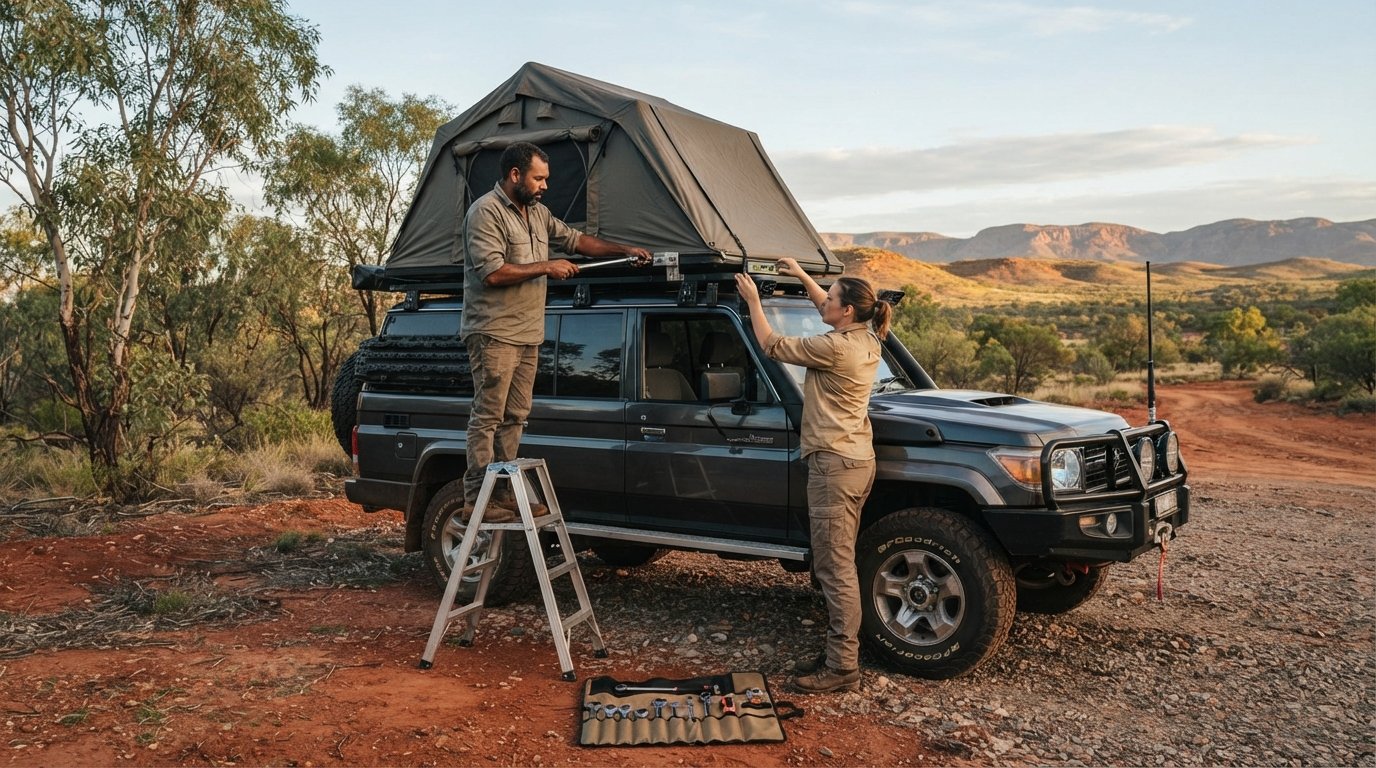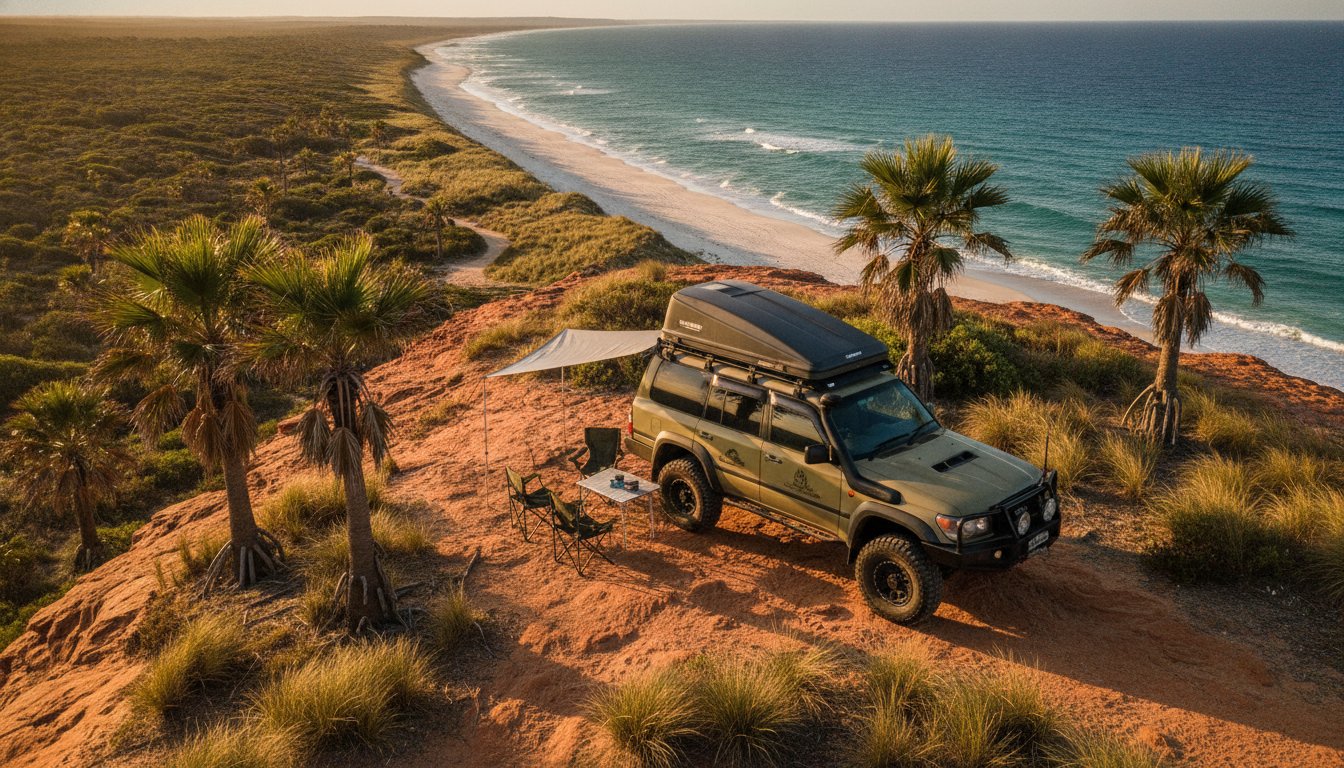
The flashiest ultra-light shelter will always fail when a sudden inland storm barrels across the track. True bush reliability prioritises heavy-gauge, breathable canvas over lightweight gimmicks every single time. When hunting down the best camping swags australia has to offer, you quickly realize how much bad gear can ruin a trip. We know the sheer frustration of waking up soaked in condensation, nursing a sore back on flat foam, and wrestling an oversized canvas roll into an already packed boot.
You shouldn’t have to lay awake at night wondering if leaky seams or bent poles will leave you stranded in the elements. We’re here to help you choose, season, and configure the ultimate touring swag built for genuine outback comfort and rugged weather protection. From decoding canvas GSM ratings to pairing stretchers with vehicle awnings, here is your definitive field guide to sleeping soundly wherever you pull up.
Key Takeaways
- Learn how heavy-duty polycotton canvas and modern dome designs outlast flimsy synthetic tents when searching for the best camping swags australia has for rugged touring.
- Discover the critical canvas weights, floor materials, and high-density foam specs that prevent ground chill and stop morning back pain.
- Size your setup smartly across single, king single, and double options to balance internal sleeping room with your vehicle’s actual storage limits.
- Master the four-step canvas seasoning method to swell stitching threads and ensure total waterproof protection before you hit remote tracks.
- Integrate your swag with stretchers and 4WD awnings to create a rapid, low-impact camp that keeps you elevated and leaves no trace.
Table of Contents
- Understanding the Modern Australian Swag: Evolution and Core Designs
- Critical Selection Criteria: Canvas Weights, Floors, and Mattresses
- Sizing Your Setup: Single, King Single, and Double Swag Configurations
- Step-by-Step Guide: Seasoning Canvas, Pitching, and Managing Condensation
- Integrating Swags into Your Broader 4WD Touring Setup
Understanding the Modern Australian Swag: Evolution and Core Designs
At its core, a swag is an all-in-one shelter and sleep system built from heavy-duty canvas and integrated bedding. While fragile nylon tents often tear on sharp spinifex or flap noisily in buffeting winds, a quality swag stays rock solid. Exploring the history of the Australian swag shows how a simple bushman roll evolved into the rugged gear we rely on today. Simply put: “A true bush swag is a self-contained shelter engineered to deflect violent wind shear and resist ground punctures while keeping your bedding dry and dust-free.” With high-density foam mattresses pre-installed inside, you eliminate the daily headache of inflating airbeds or packing loose sheets.
Understanding which core design matches your travel style is essential when researching the best camping swags australia has available. To see how classic and modern styles handle field conditions, check out this comprehensive side-by-side test:
Traditional Envelope Swags vs. Modern Freestanding Dome Swags
Traditional flat envelope swags remain legendary for their bulletproof simplicity. They feature zero poles to break, roll down remarkably tight, and present an ultra-low profile that wind simply glides over. However, the canvas rests directly against your sleeping bag, which can trigger claustrophobia during humid nights. Freestanding dome swags solve this by using curved alloy hoops and a central ridgepole to suspend the canvas high above your face. You get vast headroom, massive mesh ventilation panels, and easy side entry, though they trade away a bit of packing space in your vehicle.
Air-Pole and Hybrid Touring Shelter Designs
Hybrid air-pole systems replace rigid metal arches with puncture-resistant thermoplastic polyurethane (TPU) air bladders. You connect a hand pump, give it a few strokes, and the swag pitches effortlessly. Their greatest strength shines in wild weather: when severe desert gusts strike, air beams simply flex inward and spring instantly back into shape where alloy poles might buckle. The trade-off lies in weight and bulk. Air bladders add extra kilograms, require you to pack a pump into your kit, and introduce an extra valve to check before venturing out into isolated country.
Critical Selection Criteria: Canvas Weights, Floors, and Mattresses
Balancing heavy tear resistance against pack bulk and all-weather breathability is the core challenge when picking a shelter. Subpar canvas cuts corners with loose weave densities, causing water to pool and seep straight through needle holes during heavy downpours. Before committing to any setup, always check for taped internal seams, reinforced corner stitching, and heavy-duty brass eyelets that will not deform under tension.
| Fabric Weight | Material Profile | Trail Durability | Pack Bulk & Breathability |
|---|---|---|---|
| 320 GSM | Lightweight polycotton | Moderate puncture resistance | Low pack size, excellent warm-weather airflow |
| 400 GSM | Mid-weight touring standard | High tear resistance | Balanced bulk, reliable four-season storm shelter |
| 500 GSM | Heavy-duty industrial canvas | Maximum puncture protection | Heavier roll, best for stationary outback camps |
Selecting the ideal balance among the best camping swags australia provides depends on how frequently you travel and your vehicle’s payload limits.
Canvas Quality: Polycotton Blends, Ripstop Weaves, and GSM Metrics
Grams per square metre (GSM) measures raw fabric density. Pure cotton offers unmatched natural airflow, yet blending it with synthetic polyester adds immense tensile strength and minimises shrinking. Look for canvas reinforced with an interwoven ripstop grid. This distinct cross-hatch structure isolates accidental snags from branches, stopping small punctures from spreading into catastrophic tears.
Base Protection: Heavy-Duty PVC Bucket Floors vs. Canvas Undersides
A welded PVC bucket floor with raised bathtub edges forms an impenetrable barrier against standing ground water during flash storms. While traditional canvas undersides breathe, sharp outback burrs and jagged gravel tracks can easily pierce them. Clean your PVC base after every trip using fresh water and a soft rag. Avoid detergents, as harsh chemicals break down the waterproof coating.
Sleeping Comfort: High-Density Foam, Egg Crate, and Self-Inflating Mattresses
Rest is critical on long trips. A 50mm to 70mm high-density open-cell foam mattress cushions pressure points against rocky dirt, keeping morning back pain at bay. Egg-crate profiling enhances air circulation under your sleeping bag, whereas hybrid self-inflating cores allow you to purge air for a noticeably tighter roll. Removable, machine-washable mattress covers keep dust out of your sleep sanctuary. For more touring advice, check out our independent gear reviews at Adventurerz before outfitting your vehicle.
Sizing Your Setup: Single, King Single, and Double Swag Configurations
Choosing the correct footprint comes down to your vehicle’s cargo bay and your tolerance for tight spaces. Nothing triggers buyer remorse faster than investing in a shelter only to realise you can barely turn your shoulders at night. At the same time, an overly wide setup will consume half your 4WD’s rear boot before you’ve even packed recovery gear. The difference in rolling diameter between standard open-cell foam and compressible hybrid mattresses is massive; high-density open foam maintains its fixed girth, while compressible cores roll significantly tighter. You need a clear cargo plan that balances inside wagon space against external roof carriage when evaluating the best camping swags australia offers for serious overland treks.
Solo Bush Touring: Standard Single vs. Extra-Wide King Single
Standard singles (750mm to 800mm wide) fit neatly inside tight 4WD drawers or behind front seats. The downside is restricted elbow room, making it nearly impossible to sit up or turn over freely. King singles (900mm to 1100mm wide) provide the sweet spot for solo exploration. That extra width gives you genuine breathing room and enough floor space to stash your hiking boots, power banks, and warm fleece layers out of the dirt.
Double Swags for Couples: Space Freedom and Transport Considerations
Double swags span 1400mm to 1500mm, creating a comfortable shared shelter for touring couples. Sturdy centre ridgepoles prevent the heavy roof canvas from sagging between sleepers, while dual side-entry doors let you slip out for midnight calls of nature without crawling over your partner. However, rolled doubles measure nearly 1.5 metres long. You’ll almost certainly need a dedicated roof platform, ute tub, or crossbars to carry them.
Transport Logistics: Roof Platform Tie-Downs, Dust Bags, and Weight Balance
Transporting canvas outside the cabin requires methodical preparation:
- Protect with heavy-duty PVC: A 500D transit bag seals your shelter against fine red outback dust and road grime during long highway stretches.
- Use wide cam straps: Secure the bag across the crossbars with wide cam-buckle straps rather than aggressive ratchet straps, which can crush internal alloy poles.
- Watch dynamic roof limits: A wet double swag weighs substantially more than its dry spec. Keep heavy gear low to maintain your vehicle’s centre of gravity and protect off-road handling.
Step-by-Step Guide: Seasoning Canvas, Pitching, and Managing Condensation
Even the toughest polycotton weave requires proper preparation before facing an outback storm. Raw canvas features microscopic stitching holes where industrial needles pierce fabric panels during manufacturing. Seasoning expands these fibres so they swell, interlock, and form an impenetrable, watertight barrier. Skipping this critical initial maintenance virtually guarantees leaks on your first wet night, regardless of how much you invest in the best camping swags australia has on the market.
The Canvas Seasoning Protocol: Ensuring Long-Term Waterproofing
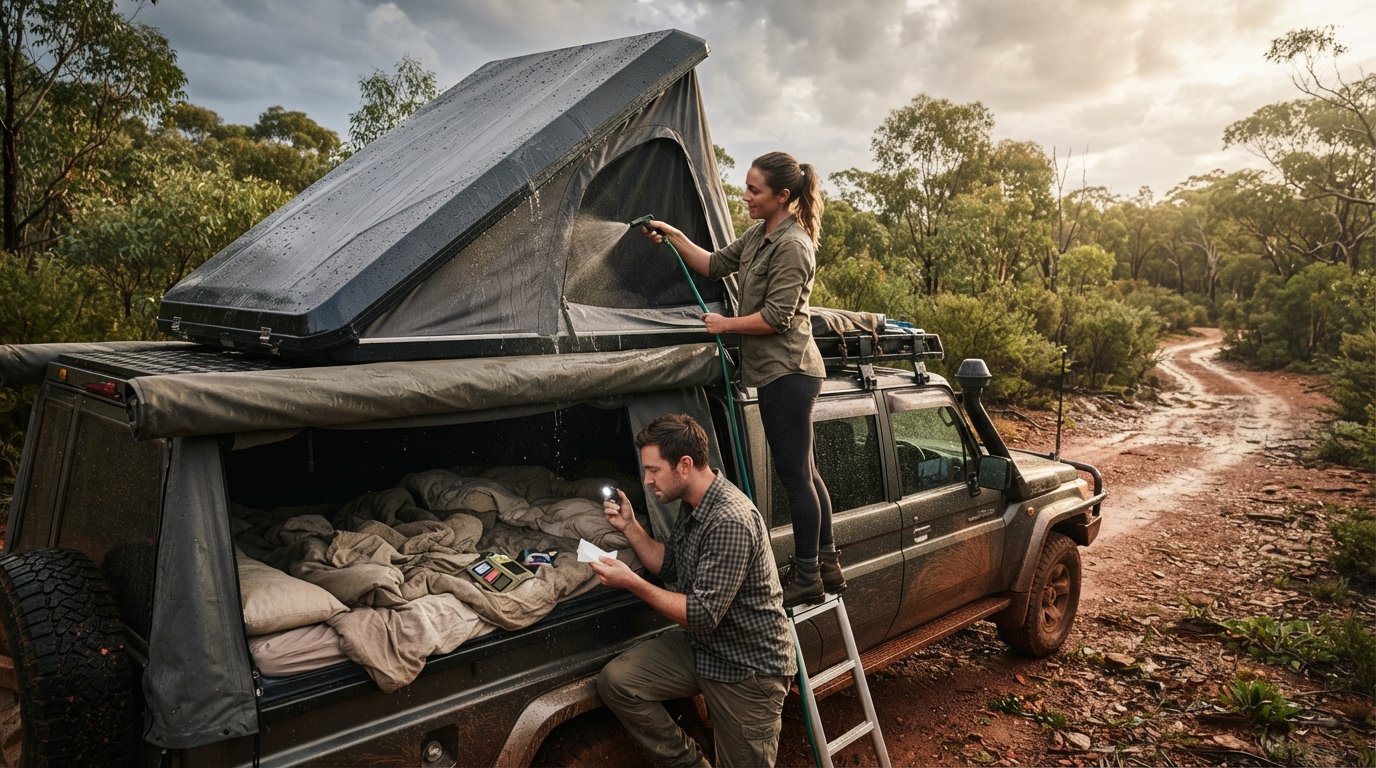
- Full pitch setup: Erect your swag completely on a level, clean grassy area with all ridgepoles fully tensioned.
- Saturate exterior seams: Using a garden hose with a fine-mist nozzle, drench every exterior panel. Focus direct water pressure onto double-stitched seams and zipper tracks until saturated.
- Bake in direct sun: Allow the canvas to dry completely under warm sunlight. As the cotton fibres shrink back down, they knit tightly into needle perforations.
- Repeat the cycle: Repeat this drench-and-dry sequence two more times. Never roll or store canvas while damp, or trapped moisture will invite destructive mould and rot.
Eliminating Internal Condensation: Airflow and Mesh Ventilation Tactics
Waking up damp does not necessarily mean your canvas has failed. An adult sleeper breathes out nearly a litre of water vapour every night. When warm exhaled breath meets freezing canvas in desert or alpine air, it instantly condenses into moisture droplets. Always peg out the end ventilation flaps beneath the protective mini-awnings to draw a continuous chimney draft. Keep the ultra-fine insect mesh zipped shut to maintain strong cross-ventilation while barring microscopic midges and sandflies from entering your sleeping quarters.
Mastering the Pitch: Guy Rope Anchoring and Tension Dynamics
Proper tension prevents water pooling in canvas dips. Drive heavy-duty steel pegs at a firm 45-degree angle pointing directly away from the pull direction of your guy ropes. Extend your centre ridgepole until the canopy drum-tightens without stressing corner eyelets. When facing unsettled squalls, orient the foot hoop directly into the prevailing wind so air streams over the aerodynamic curve rather than buffeting broadside against the main doors. For comprehensive field guides and gear comparisons, read our field-tested camping guides at Adventurerz to dial in your camp setup.
Integrating Swags into Your Broader 4WD Touring Setup
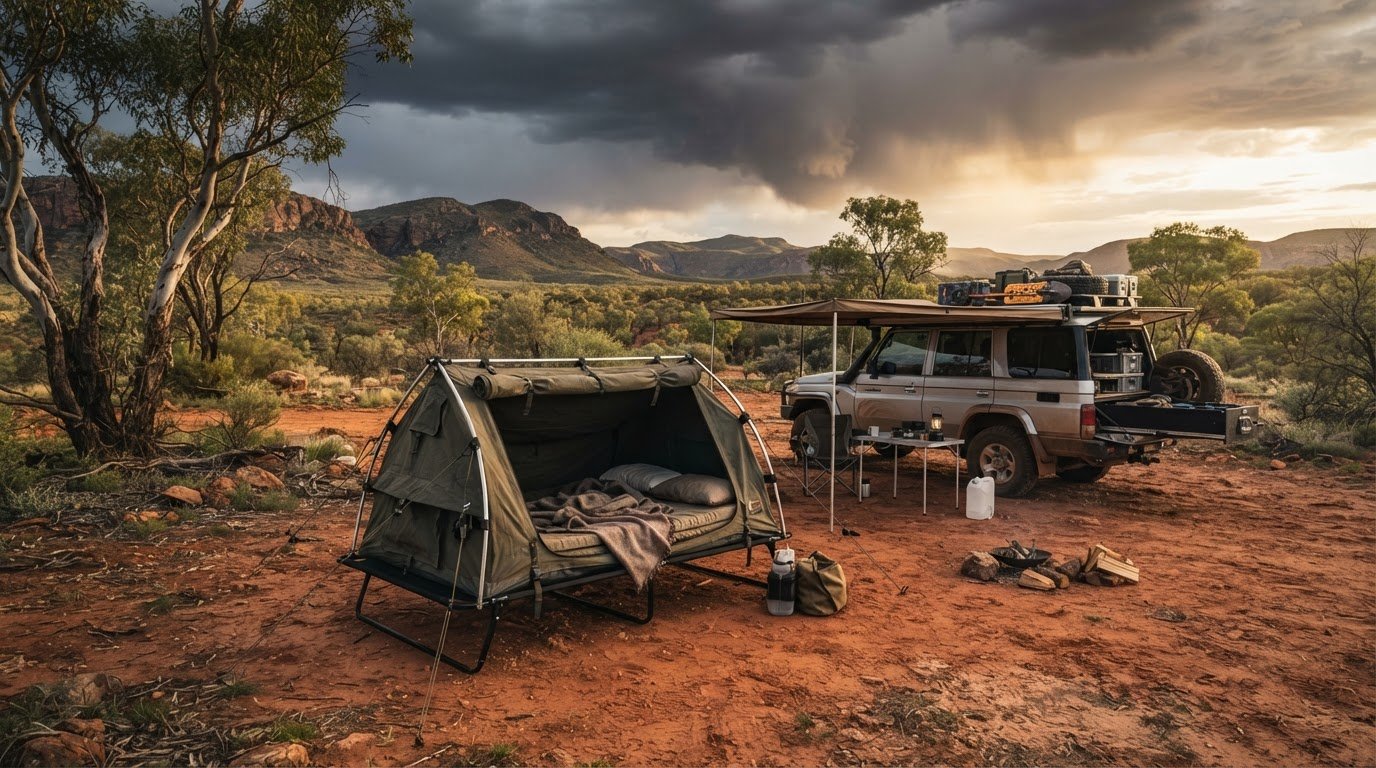
A quality swag works best as an integrated piece of a complete overland rig. Instead of confining your camp to one footprint, combining portable canvas with vehicle-mounted 4wd awnings unlocks massive weather protection across unpredictable terrain. You can shelter cooking zones beneath the awning while positioning your swag tucked along the vehicle flank. Ground setups also protect fragile environments. Sticking to established tracks and pitching on durable gravel beds upholds Leave No Trace principles, preserving pristine bush camps for future expeditions.
Swags vs. Vehicle-Mounted Shelters: Choosing Your Touring Platform
Ground swags hold several practical advantages over bulky roof top tents. Roof-mounted shelters raise your vehicle’s centre of gravity, increase aerodynamic drag, and limit access to underground garages. Most importantly, a ground swag allows true basecamp flexibility. You can unroll your bed, leave it pitched at camp, and head straight out onto technical tracks without dismantling your entire sleeping quarters. That agility makes hunting for the best camping swags australia offers a compelling path for active 4WDers who prioritize vehicle handling.
The Stretcher-Swag Combo: Off-Ground Comfort and Wildlife Protection
Lifting your swag onto a dedicated folding camp stretcher is a game changer for remote touring. It isolates your mattress from sub-zero thermal ground transfer and keeps mud out of your gear during unexpected deluges. Elevating your sleep zone also deters crawling insects, scorpions, and nocturnal critters from investigating your canvas walls. As an added benefit, the clear void beneath the stretcher provides dry, out-of-the-way storage for dirty hiking boots and recovery kits. Just make sure the stretcher frame’s cross-bars match your swag base dimensions to avoid pinching the fabric.
Caring for Canvas: Cleaning, Mold Prevention, and Storage Protocol
Maintaining high-grade canvas requires simple, methodical habits:
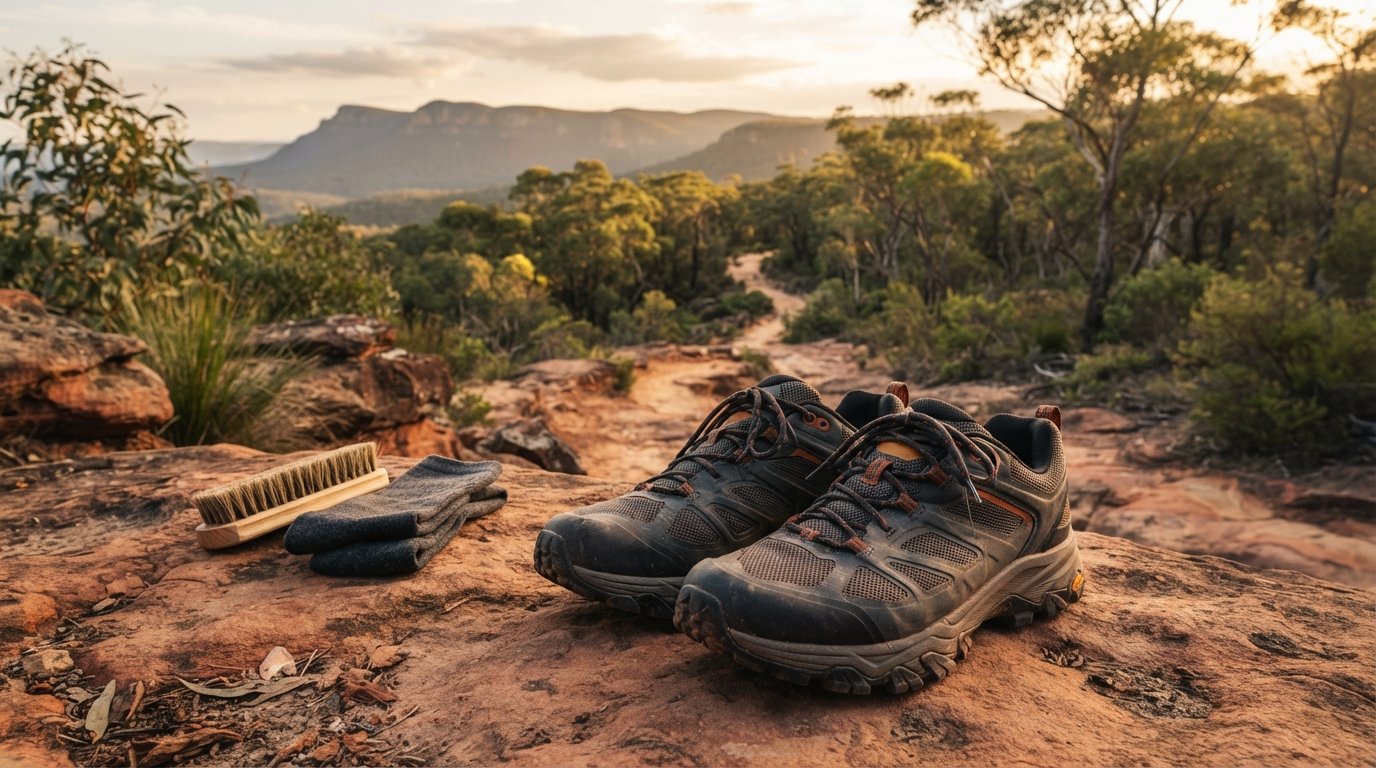
- Dry brush only: Sweep away baked-on dust using a soft-bristle brush. Detergents strip factory wax coatings and destroy water repellency.
- Air out quickly: If you must roll up wet canvas on the track, unroll and pitch it in the sun within 48 hours to prevent mold spores from rooting into cotton threads.
- Store loose and dry: Keep your clean swag in a breathable bag inside a well-ventilated space rather than sealing it airtight in damp sheds.
Hit the Tracks with Confidence
Finding the right balance between rugged storm protection, rapid setup speed, and restful sleep transforms how we explore remote tracks. Whether you opt for an agile king single or a spacious double shelter, choosing high-density mattress foam and mastering your canvas seasoning guarantees you stay warm and dry through severe weather. When paired with folding stretchers and protective vehicle shade, the best camping swags australia has to offer keep your overland camp comfortable, self-reliant, and low-impact.
We deliver independent, field-tested insights crafted specifically for self-sufficient bush exploration. Our unbiased assessments focus purely on durability, trail safety, and long-term performance, empowering our community to embrace Leave No Trace ethics across wild country. Ready to dial in your camp platform? Explore our in-depth adventure gear reviews and 4WD touring guides at Adventurerz and start planning your next remote escape today.
Frequently Asked Questions
Do I really need to season a new canvas swag before using it?
Yes, seasoning is mandatory before taking any new canvas shelter into the bush. Stitching needles punch thousands of tiny holes through the fabric during manufacturing. Soaking the canvas causes the cotton fibers to swell, expand, and lock together across seam lines. If you skip this critical step, water will seep through the needle perforations during your first rainfall, ruining your bedding and trail comfort.
Why is my swag wet inside even though it did not rain overnight?
Internal moisture is almost always condensation rather than fabric failure. A sleeping adult exhales considerable moisture through the night. When warm, humid breath hits cold canvas walls chilled by night air, it instantly condenses into water droplets. You can prevent this buildup by keeping end vents open and guyed out, allowing natural cross-flow ventilation to pull moist air out of the shelter.
Can I use a domestic washing detergent to clean dirty canvas swags?
No, you should never use household detergents or dish soaps on canvas. Detergents strip away water-repellent wax coatings and damage natural oils within the cotton yarn. They also leave behind chemical residues that attract moisture, permanently compromising weather resistance. Always let mud dry completely before scrubbing it off with a stiff nylon brush, then rinse the fabric down using only cold, clean water.
Is a 50mm foam mattress thick enough for side sleepers?
Most side sleepers find a standard 50mm foam mattress too firm, as their hips and shoulders press straight through to hard dirt. For proper spinal alignment and deep rest, upgrade to a 70mm high-density foam core or pair a 50mm pad with a self-inflating mat. The best camping swags australia field testers recommend feature thick 70mm foam that cushions pressure points across rough, uneven terrain.
What is the best way to transport a double swag without vehicle roof racks?
Without roof bars, your best option is laying the swag flat across an open ute tub or securing it atop folded second-row wagon seats. Because rolled doubles measure around 1400mm to 1500mm wide, angle the roll diagonally across cargo bays if your cabin allows. Always pack the swag inside a heavy-duty PVC transit bag to protect it from loose gear edges and red track dust.
How do heavy ripstop canvas swags perform in hot, humid tropical climates?
Heavy canvas provides superior shade and thermal insulation against baking sun, but high humidity demands aggressive airflow. Polycotton canvas naturally breathes better than coated synthetic nylon, which prevents that sticky greenhouse effect. When touring the humid north, ensure your swag features full-length mesh inner doors and end awnings so you can leave external storm flaps rolled wide open through warm tropical nights.
Should I buy a traditional flat swag or a modern curved dome swag?
Modern curved dome swags are the superior choice for most tourers because hoops lift canvas away from your face and supply excellent insect protection. Traditional flat swags suit minimalists and stockmen who prioritize ultra-fast setup, bulletproof wind resistance, and zero mechanical parts. If you value personal headspace and ventilation, a dome setup easily justifies the minor bulk penalty.