Packing every heavy piece of steel gear into your drawers doesn’t make your rig safer; it usually just leaves you dangerously overloaded. When you’re rolling off the grid, carrying the right gear matters far more than carrying everything on the shelf. That’s why we built this field-tested guide to the essential 4×4 recovery kit checklist 2026, helping you pack with purpose before exploring our vast remote tracks.
We all know that lingering worry when tackling soft sand or deep mud: will that unrated bow shackle hold up under dynamic strain, or are you pushing your Gross Vehicle Mass beyond legal limits? You shouldn’t have to risk your rig or your safety just to be prepared. We promise this streamlined guide will give you the knowledge to build a dependable, lightweight kit matched perfectly to your vehicle’s touring weight. We’ll unpack essential kinetic ropes, explain why modern synthetic soft shackles outshine old steel hardware, and show you how to safely identify rated chassis points for any remote extraction.
Key Takeaways
- Distinguish between factory vehicle transport tie-downs and genuine chassis-rated recovery points to eliminate catastrophic hardware failure during dynamic extractions.
- Assemble an essential 4×4 recovery kit checklist 2026 focused on compact, weight-efficient items to safeguard your Gross Vehicle Mass across demanding tracks.
- Switch to synthetic UHMWPE soft shackles to shed substantial payload weight and remove dangerous metal projectile hazards from your recovery line.
- Enforce strict remote safety protocols, including setting an exclusion zone of at least 1.5 times the recovery strap length before applying kinetic tension.
- Implement rapid-access packing strategies and post-recovery cleaning routines that wash away abrasive silica crystals to prolong your gear’s lifespan.
Table of Contents
- Understanding 4×4 Recovery Foundations: Rated Gear Versus Transport Loops
- The Essential 4×4 Recovery Kit Checklist for 2026 Expeditions
- Soft Shackles vs Metal Bow Shackles: Comparing Modern Rigging Options
- Safety Protocols and Tread Lightly Practices During Field Deployments
- Packing, Storage, and Maintenance: Keeping Recovery Equipment Ready
Understanding 4×4 Recovery Foundations: Rated Gear Versus Transport Loops
Every safe extraction begins with engineering logic, not sheer horsepower. Before packing an essential 4×4 recovery kit checklist 2026, we need to understand how dynamic forces travel through our vehicles. In off-road vehicle recovery, the most dangerous assumption you can make is treating factory transport eyelets as recovery hardware. Transport loops are thin steel tabs stamped onto vehicle subframes solely to anchor your 4WD to a flatbed truck or shipping vessel during transit. They feature zero dynamic rating, weak welds, and will sheer off violently under kinetic tension.
Genuine recovery gear relies on rigorous testing metrics:
- Working Load Limit (WLL): The certified maximum operational force hardware can sustain repeatedly during controlled pulls without structural deformation.
- Minimum Breaking Strength (MBS): The absolute threshold where mechanical failure occurs under laboratory tension testing.
Recovery systems operate as dynamic mechanical fuses. If you hook a certified 11,000 kg kinetic strap to an unrated transport loop, that stamped loop becomes a deadly projectile. Your rigging is only as tough as its weakest connection point.
The Fatal Difference Between Tow Balls and Rated Recovery Points
Never, under any circumstances, slip a recovery strap or rope over a standard 50mm tow ball. Tow balls are engineered strictly for downward tongue weight and linear towing, not sudden kinetic shock loads. The dynamic snap of a kinetic recovery can instantly shear the neck of a tow ball, turning a two-kilogram chunk of steel into a lethal missile aimed directly at the following vehicle. Genuine front recovery points use thick steel plates bolted directly through structural chassis rails with high-tensile Grade 8.8 bolts. For rear recoveries, a dedicated hitch receiver recovery block slides directly into your 50mm towbar, securing via a high-tensile pin to create an exceptionally reliable recovery anchor point.
Calculating Minimum Breaking Strength Based on Vehicle GVM
Choosing rated gear requires matching numbers directly to your rig. The gold standard calculation dictates that your kinetic recovery rope or snatch strap should carry a Minimum Breaking Strength equal to roughly two to three times your vehicle’s Gross Vehicle Mass (GVM). When your rig is packed with bull bars, dual spare tyres, touring storage, and quality roof top tents, dynamic loads escalate quickly. If your touring rig weighs 3,000 kg fully loaded, your kinetic line must offer an MBS between 6,000 kg and 9,000 kg. Sucking mud creates massive surface suction on your chassis, easily multiplying physical resistance well beyond base vehicle curb weight. Matching your gear ratings to real-world touring mass remains the cornerstone of any reliable essential 4×4 recovery kit checklist 2026 setup.
The Essential 4×4 Recovery Kit Checklist for 2026 Expeditions
Heading into unmapped valleys demands deliberate preparation. Packing your drawers full of redundant hardware only compromises your vehicle payload. In fact, comprehensive roadside weight studies frequently record roughly 23% of checked touring setups exceeding legal weight thresholds. Striking that delicate balance between field resilience and weight management requires packing an intentional, essential 4×4 recovery kit checklist 2026 based on functional extraction tiers.
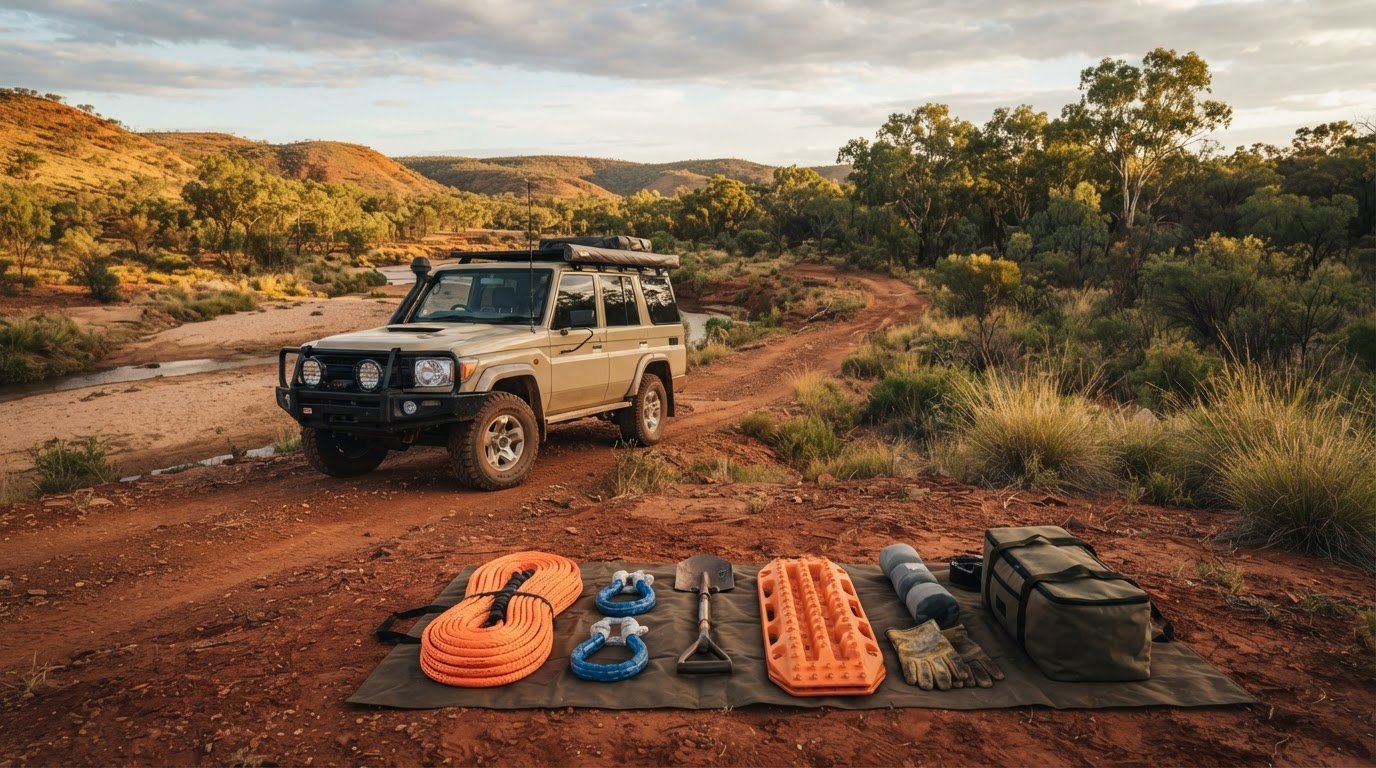
Before touching dynamic lines or mechanical pulleys, personal safety remains non-negotiable. Always pack heavy-duty cowhide or split-grain leather recovery gloves to protect against wire splinters, abrasive synthetics, and pinch zones. Technical recoveries in remote regions can quickly become lengthy marathons under harsh conditions. Deploying shade from one of the best 4wd awnings keeps your recovery team sheltered from heat exhaustion while running complicated winch lines.
Passive and Self-Recovery Essentials: Traction and Tire Management
Most field hold-ups don’t require high-tension pulls. You can often drive away simply by extending your tyre contact patch and clearing path obstructions using low-impact tools:
- Brass Tire Deflators: Quality screw-on deflators to swiftly drop tyre pressures to 12-16 PSI, widening your tyre footprint across sand or soft dirt.
- High-Impact Recovery Boards: Two to four UV-stabilised nylon traction tracks (such as MAXTRAX MKII or TRED Pro) to bridge cross-axle holes or drive out of soft ruts.
- Long-Handled Shovel: A durable round-point spade to clear high-centred differentials, chassis rails, and underbody sand humps efficiently.
- 12V High-Output Air Compressor: A reliable twin or single-piston compressor to rapidly re-inflate tyres back to highway pressures before rejoining sealed roads.
Kinetic Extraction and Rigging Hardware Essentials
When passive driving traction fails, dynamic towing comes into play. According to recovery doctrine taught by the Off-Road Safety Academy, controlled kinetic energy provides smooth vehicle extraction when rigged correctly:
- Kinetic Snatch Rope: An 8-metre or 9-metre synthetic kinetic rope capable of stretching 20% to 30%, delivering progressive momentum without violent shock loading.
- Synthetic Soft Shackles: Two to four rated UHMWPE soft shackles matched to vehicle mass to connect kinetic ropes to chassis recovery points.
- Rated Alloy Bow Shackles: Two certified metal bow shackles kept strictly for linking gear to fixed steel points where sharp edges might compromise synthetic ropes.
Electric Winch Support Gear for Solo Vehicle Expeditions
Solo touring calls for dependable mechanical pulling advantage when there is no partner rig to snatch you out:
- Tree Trunk Protector: A minimum 3-metre wide-webbing strap (75mm-100mm) that prevents cutting into native tree bark during winching operations.
- Heavy-Duty Recovery Damper: A weighted blanket placed over the middle third of your winch line to absorb snap-back energy should line failure occur.
- Synthetic Snatch Ring: An ultra-compact aluminium friction ring that doubles winch pulling power without the immense weight of old cast-iron snatch blocks.
- Winch Extension Strap: A 10-metre to 20-metre low-stretch polyester strap to reach distant natural anchor points when your main cable comes up short.
Looking to refine your touring setup? Take a minute to check our field-tested recommendations at adventurerz.com to keep your remote travels capable, compliant, and light.
Soft Shackles vs Metal Bow Shackles: Comparing Modern Rigging Options
Rigging technology has transformed over recent seasons. Traditional forged steel fittings are no longer the automatic choice for seasoned tourers. Across the country, modern off-roaders are replacing heavy steel connectors with Ultra-High-Molecular-Weight Polyethylene (UHMWPE) synthetic alternatives. This shift sits right at the heart of our essential 4×4 recovery kit checklist 2026, driven primarily by a vital pursuit: shedding unnecessary weight while improving trackside safety.
The starkest difference between these two connectors comes down to mass and kinetic consequence. A heavy steel shackle carries substantial mass. If a strap tears under high kinetic tension, that steel shackle instantly becomes an unguided projectile capable of smashing through windscreens and causing fatal injuries. Synthetic soft shackles can be up to 80% lighter than their steel counterparts. If a synthetic link fails, its low mass drops harmlessly to the ground rather than retaining catastrophic momentum.
Advantages and Limitations of Synthetic Soft Shackles
Synthetic soft shackles offer an extraordinary strength-to-weight ratio. They pack down into door pockets, don’t rattle in storage boxes, and naturally float on mud and water instead of sinking out of reach. Despite their strength, UHMWPE fibres remain sensitive to external damage. Sharp edges, unradiused steel plates, and coarse sand can shear synthetic fibres under high loads. Always use an integrated protective chafe sleeve. Inspect your shackles before every track session; if you spot internal core fraying, melted fibres, or severed outer strands, retire that shackle immediately.
When Traditional Steel Bow Shackles Remain Necessary
Steel hardware isn’t completely obsolete. You should always carry a couple of metal shackles for specific mechanical connections:
- Sharp Recovery Eyes: Older aftermarket bull bars and rear bumpers often feature flame-cut plate eyelets with burred, sharp corners that slice soft synthetic fibres instantly.
- Winch Drum Connections: Anchoring directly to steel winch line thimbles or rigid earth anchors requires the chafe resistance of hardened alloy.
When selecting metal fittings, ensure they carry Australian Standard AS 2741 markings with a visible ‘Grade S’ or ‘Bow’ designation alongside a clear Working Load Limit. Deploying them safely requires proper technique: screw the threaded pin in completely until it seats, then back it out a quarter turn. This slight gap prevents mechanical tension from binding the threads under extreme load, allowing you to unscrew the pin easily once the recovery finishes. Balancing both options creates a versatile, fail-safe essential 4×4 recovery kit checklist 2026 setup.
Safety Protocols and Tread Lightly Practices During Field Deployments
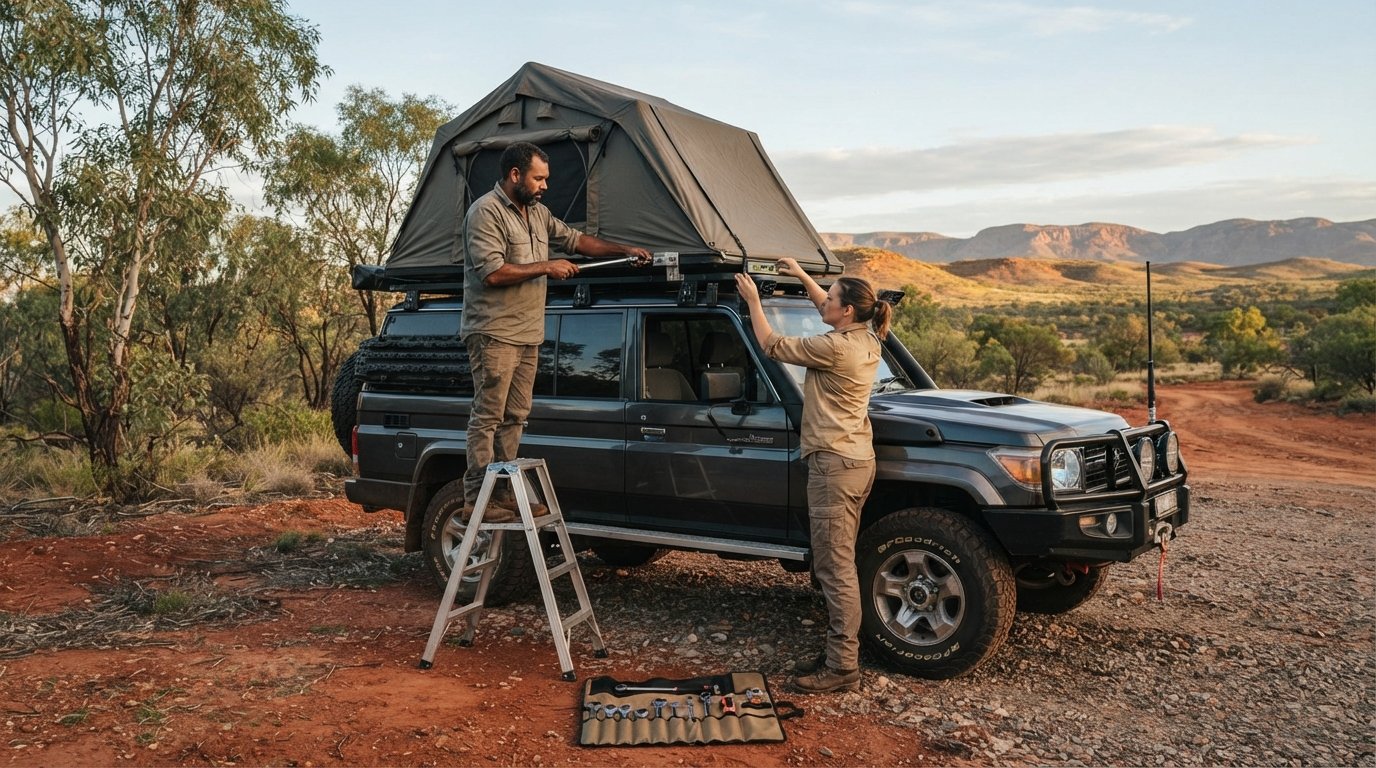
Rigging high-tensile gear in remote terrain carries real risk if adrenaline replaces clear thinking. Packing the right hardware is only half the battle; mastering disciplined safety protocols is just as vital as carrying the essential 4×4 recovery kit checklist 2026. Before any line is pulled tight, establish an exclusion zone around both vehicles. Bystanders must stand at a distance of at least 1.5 times the length of the fully stretched line, positioned well clear of the potential snap-back path. Remember that heavily laden expedition rigs equipped with gear like roof top tents feature a significantly higher centre of gravity, making them far more prone to dangerous rollovers during off-camber or angled recoveries.
The Four-Step Dynamic Recovery Assessment Protocol
Rushing dynamic pulls invites disaster. Working through this four-step sequence keeps every extraction controlled:
- Stop and inspect: Kill the wheel spin immediately. Climb out, check underbody clearances, and locate the exact hang-up point on your differentials, crossmembers, or chassis rails.
- Clear the path: Shovel away built-up sand, mud wedges, and rocks in front of all four tyres. Applying the “minimum force” rule saves both equipment and track surfaces.
- Establish communication: Appoint a single safety spotter. Lock in clear UHF radio channels and standard hand signals between the lead and stuck drivers before tensioning the line.
- Execute a smooth pull: Start with gentle momentum. Let the kinetic rope stretch smoothly to slingshot the stuck vehicle forward, avoiding aggressive full-throttle launches that shock the chassis.
Environmental Ethics: Protecting Bush Tracks and Native Anchor Points
True adventure touring means leaving tracks in better condition than we found them. Winching off native timber without a wide tree trunk protector can strip delicate outer bark in seconds. This ring-barking cuts off vital sap flow, inevitably killing slow-growing native hardwoods. Always wrap wide canvas or synthetic tree protectors as low as possible around the thick base of mature, deep-rooted trunks rather than saplings.
Once your vehicle rolls back onto solid ground, grab your shovel. Fill in the trenches your spinning wheels excavated, and level out displaced dirt or sand so the next travelling crew doesn’t find a ruined, unnavigable track. Tread lightly and plan your next responsible expedition with adventurerz.com, making thoughtful track rehabilitation an integral part of your essential 4×4 recovery kit checklist 2026 routine.
Packing, Storage, and Maintenance: Keeping Recovery Equipment Ready
Rigging gear won’t help you if it’s buried beneath camping swags when your vehicle slides off a greasy track. Safe vehicle setups require thoughtful organization, ensuring every element of your essential 4×4 recovery kit checklist 2026 is accessible within seconds of an incident. Proper storage also protects the vehicle cab. In the event of a sudden rollover or emergency stop, loose recovery equipment acts like loose artillery inside the passenger compartment.
Smart Vehicle Storage: Weight Distribution and Rapid Accessibility
Always pack heavy recovery gear as low and as close to the centre of the vehicle as possible. Storing heavy items like winch extensions, alloy blocks, and steel shackles down in bolted cargo drawers keeps your vehicle’s centre of gravity stable. Place your primary kinetic rope, soft shackles, and gloves in a dedicated canvas bag right at the rear door. You should be able to open the tailgate and grab your first-line recovery items instantly without digging under fridge slides, water jerrycans, or heavy storage boxes. Mount recovery boards externally using lockable brackets on your roof rack, rear tyre carrier, or canopy walls. This keeps muddy, sandy boards completely outside your clean sleeping and storage zones after a messy extraction.
Washing, De-Silting, and Retiring Worn Recovery Equipment
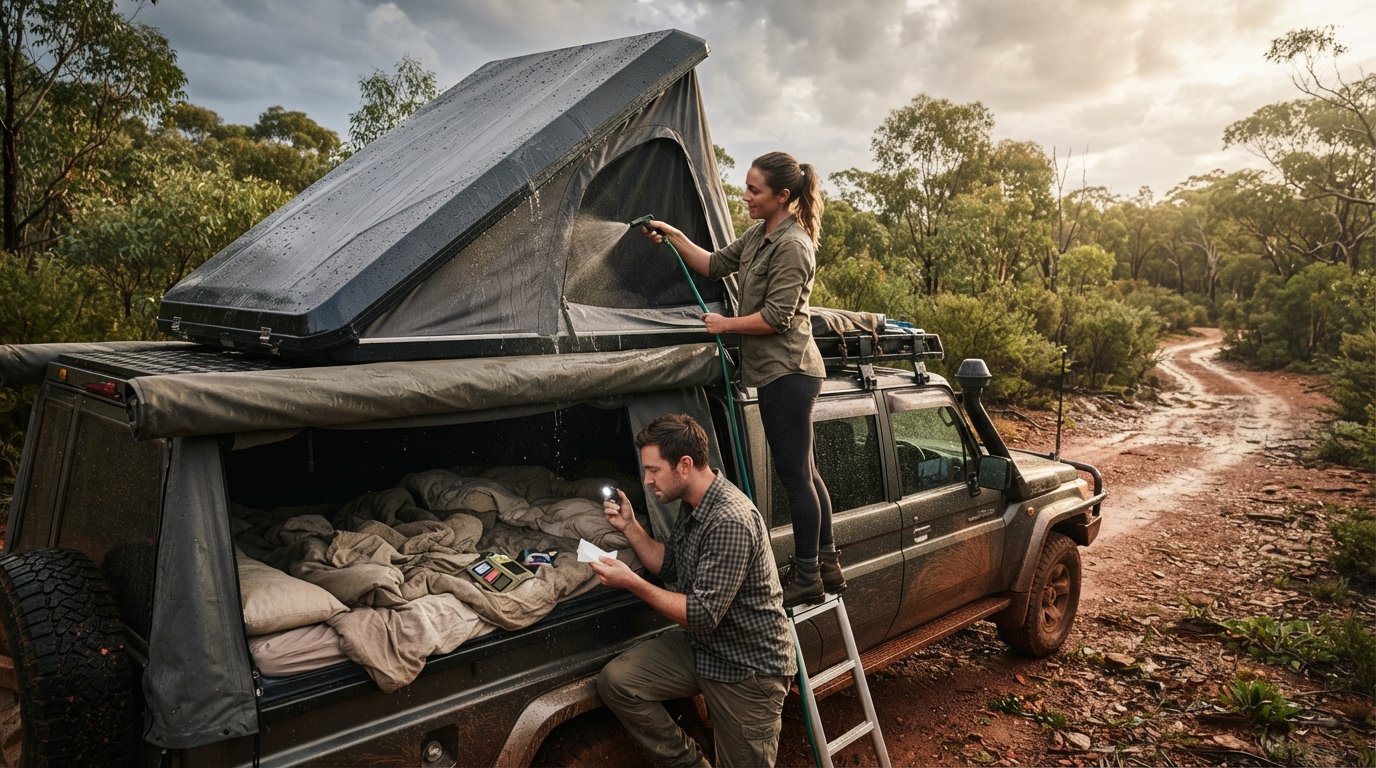
Grit is the ultimate silent killer of synthetic fibres. When fine silica sand and dried river mud dry inside kinetic ropes and soft shackles, the microscopic crystals act like thousands of tiny saw blades grinding away the load-bearing internal filaments. Regular post-trip maintenance guarantees your gear stays field-ready:
- Flush with fresh water: Soak synthetic lines in a tub of clean, lukewarm water. Gently agitate the ropes to float out trapped grit. Never use high-pressure washers, which force sharp silt deeper into the core fibres, and avoid harsh detergents that degrade protective polymer coatings.
- Air dry in the shade: Lay straps and ropes flat across a drying rack in a well-ventilated, shaded space. Direct baking sunlight breaks down nylon and polyester via UV degradation, while packing damp lines into sealed bags breeds mildew and rots load stitching.
- Audit and retire: Inspect every centimetre of webbing before and after extended expeditions. Mandatory Australian safety standards require recovery straps to retain permanently affixed warning tags showing verified breaking strengths and batch numbers. If a strap displays severed stitching, chemical contamination, severe fraying, or burns from dynamic heat, retire it immediately.
Keeping an updated, meticulously inspected essential 4×4 recovery kit checklist 2026 gives your touring crew complete self-reliance, ensuring that remote challenges remain safe and rewarding off-road milestones.
Ready Your Rig for Confident Remote Touring
True touring self-reliance doesn’t come from packing every heavy gadget on the shelf. It comes from carrying certified, weight-efficient gear and relying on calm, disciplined extraction techniques. When you respect your vehicle’s Gross Vehicle Mass, replace hazardous transport loops with genuine rated chassis points, and make synthetic soft shackles your front-line choice, you protect both your travelling crew and your vehicle.
Heading off the beaten track with an essential 4×4 recovery kit checklist 2026 gives you the capability to handle deep sand, thick mud, and rocky passes without damaging delicate bush tracks. Since 2018, Adventurerz has delivered field-tested remote equipment recommendations and unbiased technical advice to champion safe travel and environmental conservation nationwide. Ready to dial in your touring setup? Explore in-depth 4WD gear reviews on Adventurerz and set off on your next remote expedition with complete confidence.
Frequently Asked Questions
Can I use standard tow balls to perform a snatch strap recovery?
No, you should never use a standard 50mm tow ball for dynamic snatch recoveries. Tow balls are engineered strictly for downward trailer weight and smooth linear towing, not dynamic shock loads. A kinetic pull can easily snap the ball off at the neck, sending a dangerous chunk of steel through the air. Always replace your tow ball hitch with a certified hitch receiver recovery block.
What size kinetic recovery strap do I need for my loaded 4WD?
Your kinetic strap should feature a Minimum Breaking Strength (MBS) approximately two to three times your vehicle’s loaded Gross Vehicle Mass. If your fully laden touring wagon weighs 3,000 kg, choose a strap or kinetic rope rated between 6,000 kg and 9,000 kg. Sizing gear correctly ensures proper stretch and forms a cornerstone of any essential 4×4 recovery kit checklist 2026.
Are synthetic soft shackles really as strong as traditional steel D-shackles?
Yes, quality synthetic soft shackles made from UHMWPE fibres match or exceed the breaking strength of comparable steel bow shackles. They deliver impressive load limits while weighing up to 80% less than metal hardware. Crucially, they eliminate the danger of a heavy steel missile tearing through your cabin if a kinetic line snaps. Just keep them protected from sharp chassis edges.
Do I really need an electric winch if I carry traction boards?
Yes, an electric winch remains essential if you plan to travel solo across steep, rocky, or heavily rutted terrain. Traction boards work wonders in soft sand or shallow mud holes, but they can’t haul a high-centred rig up a slick mountain incline or out of a deep washout. Carrying both systems ensures you have reliable extraction options across every remote touring challenge.
Why is a tree trunk protector mandatory when winching off timber?
A tree trunk protector is mandatory because winching directly with narrow synthetic line or steel cable crushes the tree’s outer bark. This cutting action ring-barks the tree and destroys its nutrient layers, ultimately killing mature native timber. A wide polyester strap spreads the immense load safely across the trunk, anchoring your recovery without causing lasting damage to pristine natural habitats.
How do I safely maintain and clean kinetic recovery ropes after mud driving?
Wash your kinetic rope by soaking it in a tub of clean, lukewarm water and gently working out grit by hand. Avoid high-pressure sprayers and harsh chemical cleaners, as they force abrasive sand deeper into the internal braids and break down protective coatings. Hang the rope to air dry in the shade, keeping your essential 4×4 recovery kit checklist 2026 track-ready.