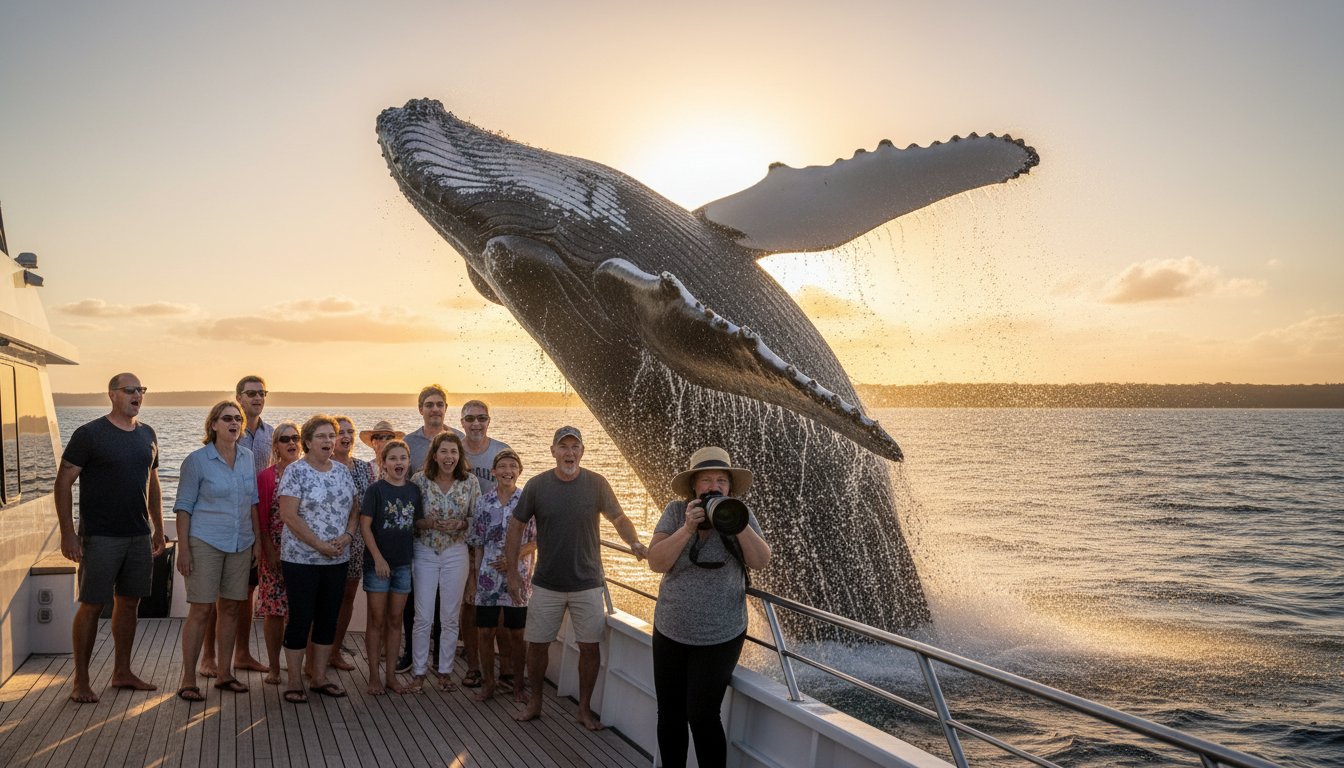
What if you could stand on the edge of the Pacific and witness a 40 tonne giant launch itself into the sky just 100 metres from your boat? For many of us, the dream of a perfect Brisbane Whale Watching trip often clashes with the reality of missing the peak migration window or feeling uneasy about an operator’s environmental impact. We understand that frustration. There’s nothing more disappointing than being stuck on a crowded deck, shivering in the wrong gear, while the action happens miles away. As fellow Adventurerz, we believe every encounter with these majestic creatures should be as ethical as it is exhilarating.
We have built this guide to ensure your 2026 season is a total success and that you witness every breach with a clear conscience. You’re going to learn exactly how to time your trip during the 40,000-strong migration along the Humpback Highway. We are also breaking down the essential A$150 eco-kit for the deck and the specific photography secrets needed to capture that perfect tail slap. From understanding the science of whale communication to choosing an eco-certified tour, we’re giving you the roadmap for a responsible, high-impact adventure on the water.
Key Takeaways
- Pinpoint the 2026 season window from June through November so we can time our trek to the Humpback Highway perfectly for peak activity.
- Elevate your Brisbane Whale Watching experience by learning to decode spectacular behaviors like the iconic 40-tonne breach and communicative tail slaps.
- Pack the right kit for the swell, including why 8×42 binoculars and 70-300mm lenses are the essential gear for capturing high-impact action from a moving vessel.
- Commit to an eco-conscious journey by mastering legal approach distances and the ethical ‘Leave No Trace’ principles that keep our marine giants safe.
- Weigh up the pros of morning calm versus afternoon activity to choose the best time of day for your coastal land-based or boat-based expedition.
The Humpback Highway: An Introduction to Brisbane Whale Watching
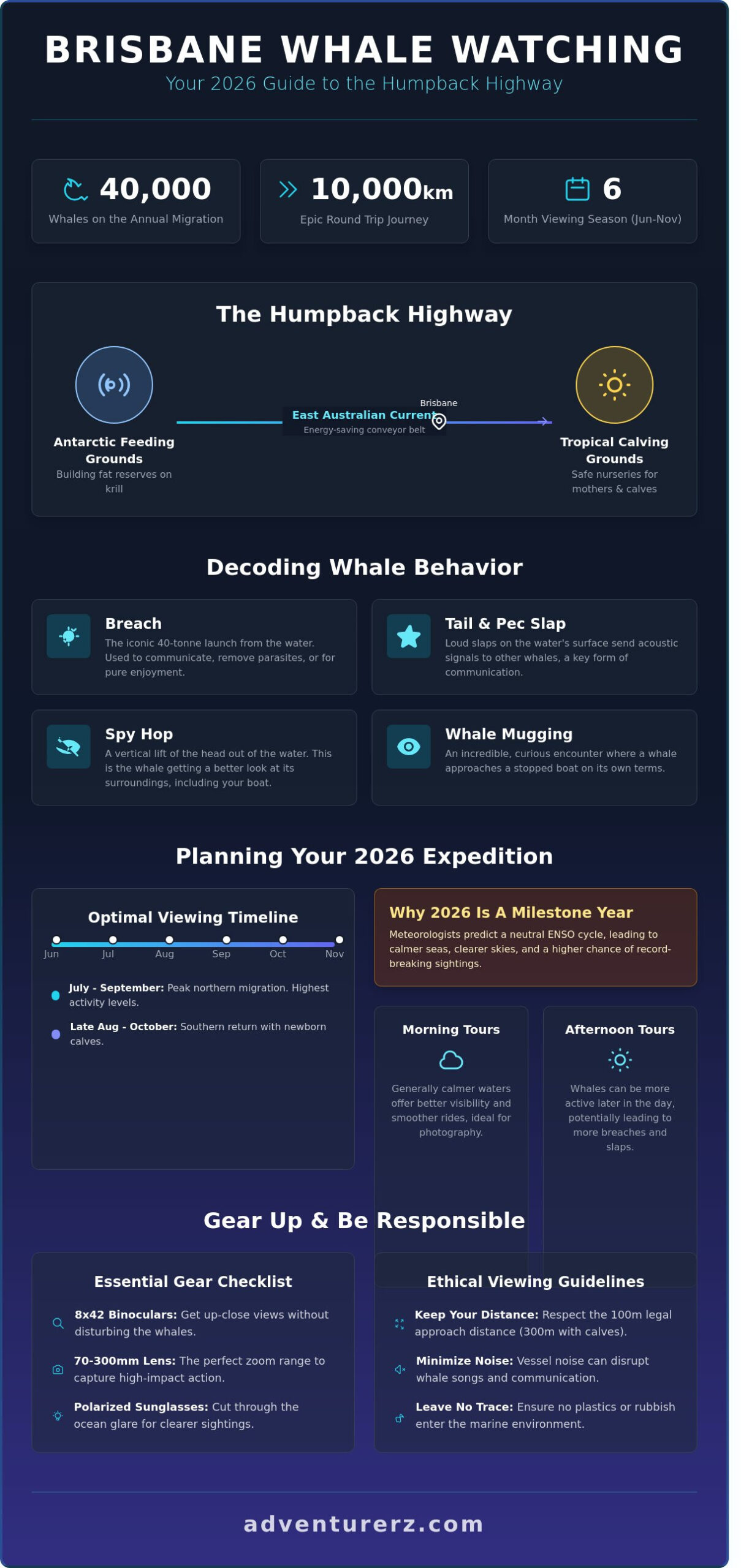
Every year, an incredible spectacle unfolds just off our coast, and we’re ready to guide you through it. We call it the Humpback Highway. It’s a massive migratory movement where thousands of whales leave the freezing Antarctic feeding grounds for the tropical nurseries of the Great Barrier Reef. For those of us chasing the best Brisbane Whale Watching experiences, the 2026 season officially kicks off in June and runs through until November. This window offers the best chance to see these 40-tonne giants breaching and tail-slapping. The East Australian Current acts like a high-speed conveyor belt; it helps the whales conserve energy as they navigate north. We see these waters as more than just a path; they’re a vital part of the Australian wilderness we’re committed to protecting.
Why 2026 is a Milestone Year for Whale Sightings
We’re seeing a massive comeback in whale numbers. Current estimates from marine biologists suggest the east coast population has recovered to over 35,000 individuals; this is a huge jump from the near-extinction levels recorded in the 1960s. The Humpback Highway is a 10,000km round trip that tests the endurance of every whale. In 2026, meteorologists predict a neutral ENSO cycle. This weather pattern typically brings clearer skies and calmer seas to South East Queensland throughout July and August. These conditions mean better visibility for Adventurerz watching from the deck or the shore, making it a record-breaking year for sightings. As we gear up for Brisbane Whale Watching in 2026, the excitement in our community is at an all-time high.
The Science of the Migration
The Humpback whale follows a strict biological calendar. They spend the Antarctic summer gorging on krill to build up thick blubber stores. They don’t eat during the migration, relying entirely on those fat reserves while they travel. The sheltered waters of Moreton Bay provide a critical sanctuary. It’s a safe haven where mothers can nurse calves away from the reach of Orcas and other open-ocean predators. This shallow, protected environment is vital for the survival of the next generation. It allows calves to build the strength they need before they tackle the long swim back to the southern ice fields. Understanding these patterns helps us appreciate the resilience of these marine giants.
- Migration Distance: Approximately 10,000km round trip.
- Peak Sightings: July through September for northern migration; October for southern return.
- Population Growth: Increasing by roughly 10% annually since the end of commercial whaling.
- Calving Grounds: Warm, shallow waters of the Great Barrier Reef and Hervey Bay.
Decoding Whale Behavior: What You’ll Witness on the Water
Watching these 40-tonne giants on their annual migration is a highlight for every Adventurerz member. When we head out for Brisbane Whale Watching, we aren’t just looking for a splash; we’re witnessing a complex social event. The most iconic move is the breach. These massive humpbacks launch their entire bodies out of the Pacific, crashing back down with a thunderous roar. Researchers suggest they do this to shake off barnacles, communicate with distant pods, or simply because it feels good. It’s raw power in motion.
You’ll also see pec slaps and tail slaps. These behaviors aren’t just for show. Sound travels four times faster in water than in air, and these slaps send acoustic signals across the bay to other whales. Sometimes, a whale gets curious and performs a spy hop. They lift their heads vertically out of the water to check us out. If a humpback decides to approach your boat while the engines are off, you’ve been “mugged.” It’s an incredible experience where the whale dictates the encounter. We always follow ethical whale watching guidelines to ensure these interactions remain safe for the animals.
Communication and Song
The Humpback Highway is alive with sound. Only male humpbacks are known to sing, and their complex songs can last for 20 minutes, repeating for hours. These melodies are vital for mating and establishing social hierarchies. However, vessel noise can disrupt these patterns. Underwater, a whale’s song can reach 150 decibels, but heavy boat traffic can drown out these crucial calls. As Adventurerz, we respect the silence of the ocean to let their voices carry.
Maternal Bonds: Watching Mothers and Calves
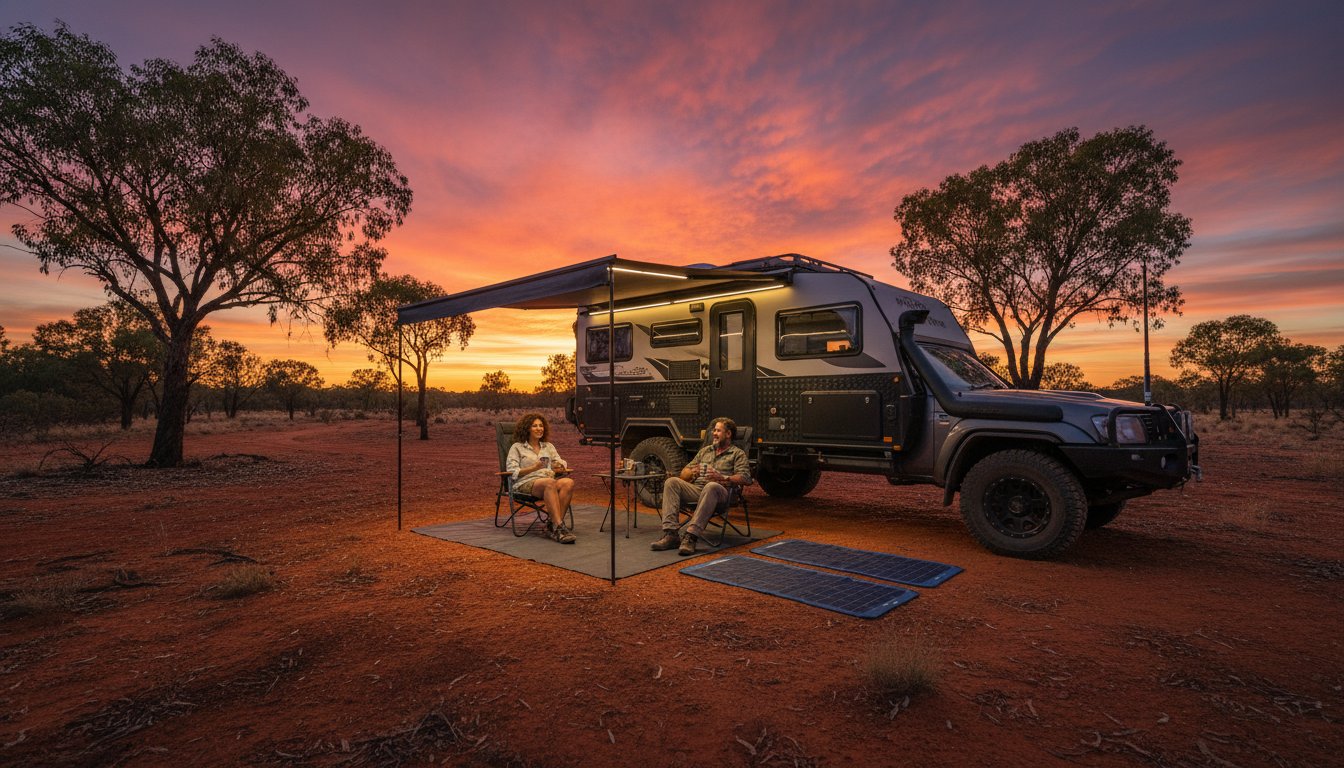
By late August and September, the Brisbane Whale Watching season shifts focus to the new arrivals. Mothers lead their calves through the calm waters of Moreton Bay, teaching them how to survive the long trek back to Antarctica. You’ll see calves practicing “mini-breaches,” popping up like corks next to their protective mothers. Often, an “escort” male travels with them for protection. It’s a reminder of why we protect these waters. After a day of spotting calves from the deck, there’s nothing better than heading back to shore and relaxing under one of the best 4wd awnings while we swap stories of the day’s sightings.
Essential Gear for the Ultimate Whale Watching Adventure
Preparation is the secret to a successful day on the Humpback Highway. We’ve seen plenty of folks arrive underprepared for the elements, only to spend their trip shivering or squinting. For the best Brisbane Whale Watching experience, we recommend 8×42 binoculars. This specific magnification provides the ideal balance between a wide field of view and enough power to see the texture of a whale’s skin. Higher magnifications like 10x or 12x are often too difficult to keep steady on a moving vessel, leading to eye strain and missed sightings.
Photography enthusiasts should pack a lens with a focal range of 70-300mm. While a massive 600mm prime lens sounds great, it’s often too heavy and restrictive when a whale suddenly surfaces 100 metres from the hull. A zoom lens allows you to frame the action quickly. Remember that UV reflection off the Coral Sea can be 25% more intense than on land. Even in the cooler months of the 2026 season, the wind chill on a boat moving at 15 knots can make A$20 hoodies feel like tissue paper. Pack a dedicated windproof shell and high-SPF zinc to protect your skin from the glare.
Don’t let sea sickness ruin your journey. We suggest taking pharmaceutical options like Kwells or Dramamine at least 30 minutes before departure. If you prefer a natural route, ginger tablets or pressurized wristbands are popular among our community. It’s much easier to prevent motion sickness than it is to stop it once the swell picks up outside the bay.
The Adventurer’s Coastal Kit
Once you’re back on solid ground, the adventure doesn’t have to end. We love heading to the nearest beach to review our photos. A high-quality 4WD awning is essential for this, providing instant shade and a base camp for your post-cruise lunch. Always pack your electronics in a 20L dry bag to guard against salt spray. For footwear, ditch the thongs. Choose closed-toe, non-slip shoes to maintain your balance on wet decks and rocky shorelines. While observing these giants, we always stay mindful of Queensland’s whale watching regulations to ensure the safety of the pods.
Pre-Trip Preparation and Logistics
Success starts with a solid plan. Use a travel planner to coordinate your trip with local tide charts, as low tides can sometimes affect departure times from smaller jetties. Battery life is another critical factor. Cold sea air can drain phone batteries 15% faster than usual, so bring a 20,000mAh power bank. If you’re planning an overnight stay near Point Lookout, setting up roof top tents is the ultimate way to stay mobile and catch the sunrise over the Pacific. Being an Adventurerz means being ready for anything the coast throws your way!
Ethical Encounters: Protecting Australia’s Marine Giants
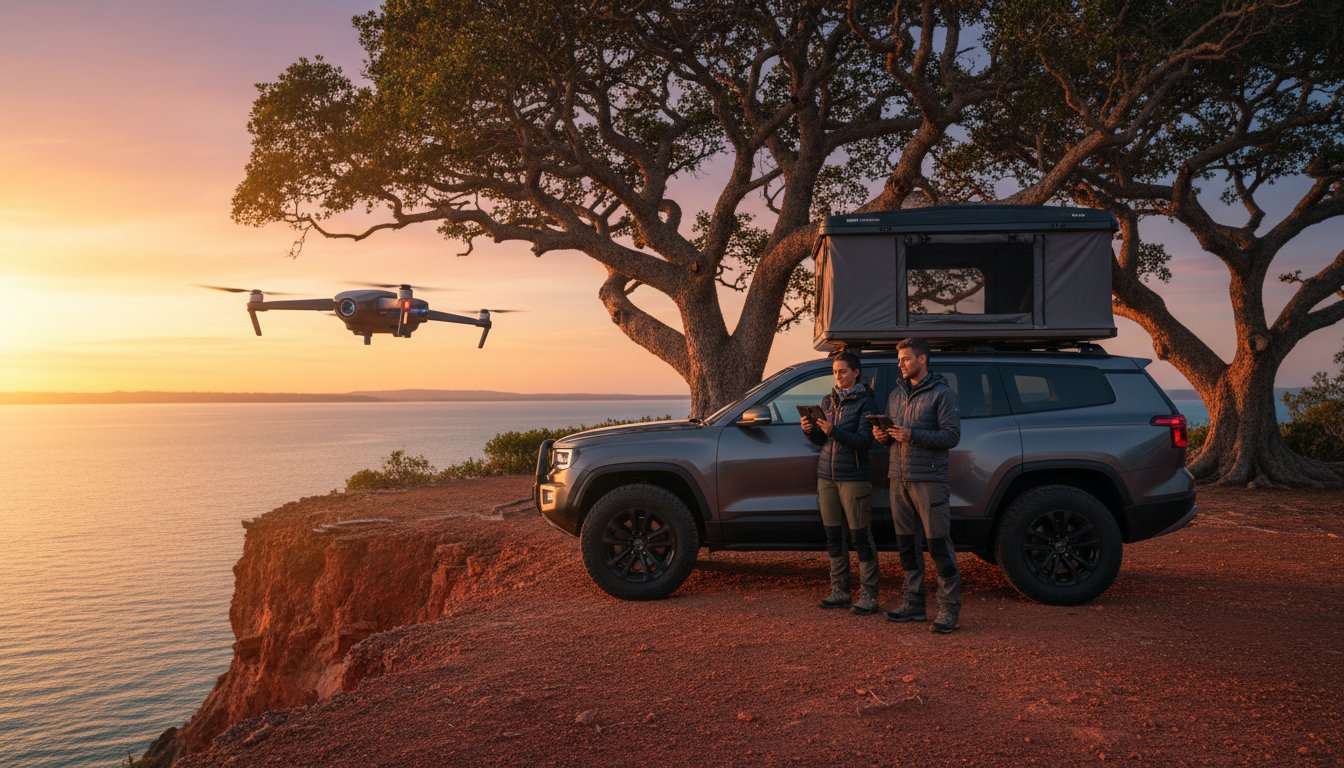
We believe the “Leave No Trace” philosophy shouldn’t stop at the high-tide mark. When you head out for Brisbane Whale Watching, you’re entering a wild nursery and a massive migratory corridor. Respecting these giants means following strict legal boundaries. In Queensland, vessels must stay at least 100 metres away from a whale, while “special interest” whales like the white humpback Migaloo require a 500-metre buffer. If you’re flying a drone for that perfect aerial shot, the law requires a 300-metre vertical distance to avoid stressing the pod.
Sustainable Tourism Practices
Choosing the right operator is the first step toward responsible exploration. Since the 2023 season, over 85% of Moreton Bay operators have achieved “Advanced Ecotourism” certification from Ecotourism Australia; this ensures the crew prioritizes whale welfare over close-up selfies. These operators use low-vibration, quiet engines to minimize acoustic interference. This is vital because humpbacks rely on sound to communicate across the 10,000-kilometre Humpback Highway. We also advocate for a strict plastic-free deck. With 8 million tonnes of plastic entering our oceans annually, even a single stray cap can be lethal if ingested by marine life. Always bring a reusable flask and secure all gear before the boat picks up speed.
Citizen Science: How You Can Help
You don’t need a marine biology degree to help protect our coast. Adventurerz are active participants in conservation. Use apps like Happywhale to upload photos of tail flukes you capture during your trip. These flukes are as unique as human fingerprints; they allow researchers to track individual whales as they pass through Moreton Bay. Our community also plays a critical role in reporting ghost nets and marine debris to the Department of Environment and Science. Many top-tier Brisbane Whale Watching operators now donate a portion of ticket sales to whale song acoustic studies or population counts, meaning your booking directly funds the future of the species.
If you’re planning a shore-based expedition to spot whales from the North Stradbroke Island cliffs, ensure your vehicle is ready for the coast with the best 4WD awnings for a comfortable day on the dunes.
Planning Your 2026 Whale Watching Expedition
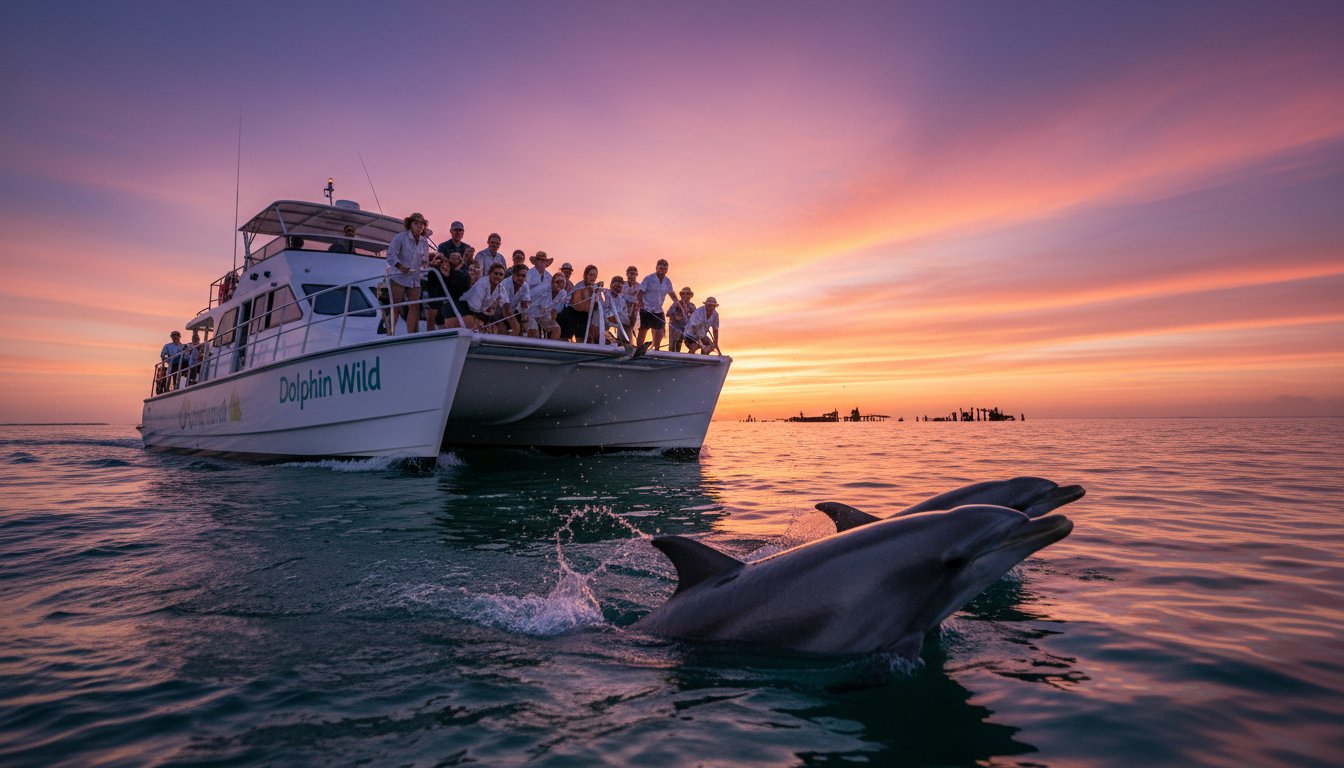
We know that a successful trip to the Humpback Highway requires more than just showing up at the pier. For the 2026 season, you need to decide between the salt spray of the ocean or the steady ground of a coastal headland. Boat-based Brisbane Whale Watching tours put you right in the impact zone, often within 100 metres of these 40 tonne giants. If you prefer a self-reliant approach, land-based spotting is a fantastic, budget-friendly alternative that lets you move at your own pace.
Timing is everything when you’re out on the water. Morning sessions typically enjoy calmer seas and lower wind speeds, which makes spotting a distant “blow” much easier against a glassy horizon. Afternoon trips often face choppier conditions as the sea breeze picks up. However, these conditions often trigger more spectacular surface behaviour. Whales frequently engage in pectoral slapping or breaching when the water gets a bit rougher. For the ultimate 2026 experience, we recommend booking a mid-week tour to avoid the weekend crowds.
Budgeting for your expedition depends on your gear and goals. A premium vessel tour in 2026 will likely cost between A$135 and A$165 per adult. If you’re looking for a rugged, off-the-grid experience, we suggest integrating your whale spotting into a broader 4WD itinerary. Areas like Moreton Island (Mulgumpin) offer the perfect backdrop. You can park up, deploy one of the best 4wd awnings for some shade, and watch the migration from your own private beach camp. This DIY route only costs you the price of a ferry ticket and your standard camping fees.
Land-Based Vantage Points
Point Lookout on North Stradbroke Island (Minjerribah) remains the gold standard for land-based spotting, sitting roughly 35 metres above sea level. You’ll need a sturdy tripod and a spotting scope with at least 10x magnification to see the pods clearly. While staying on shore is free and avoids seasickness, you miss out on the close-up perspective and expert commentary found on a dedicated Brisbane Whale Watching cruise.
Booking Your Tour: What to Ask
Don’t book without doing your homework. Ask the operator if they provide a 100% sighting guarantee or a free return trip if the whales don’t show up. Check if a qualified marine biologist is on board to provide educational insights into whale song and migration patterns. Before you head to the wharf, run through our essential checklist: high-SPF sunscreen, a broad-brimmed hat, polarising sunglasses to cut through water glare, and a waterproof jacket for the sea spray. Ready to witness the migration? The whales are waiting for us.
Gear Up for the 2026 Humpback Migration
The 2026 season is set to be a record-breaker, with over 40,000 humpbacks expected to journey along the East Coast. You now have the tools to decode complex surface behaviors and the essential checklist for the specialized gear required to handle the salt spray. Success on the water depends on your preparation and your respect for the 100-metre exclusion zones that protect these incredible mammals. Your upcoming Brisbane Whale Watching trip is a chance to witness one of nature’s greatest spectacles while practicing sustainable exploration. Since 2018, we’ve delivered expert gear reviews to ensure every Australian adventurer is ready for the elements. We’re proud to support a growing community of 10,000+ members who prioritize ethical encounters with our marine giants. Don’t miss out on the collective knowledge of fellow travelers who know the Humpback Highway inside and out. It’s time to pack your polarized lenses, check your weather-seals, and head for the coast. Join the Adventurerz community to share your 2026 whale sightings and gear tips! We can’t wait to see your photos from the water!
Frequently Asked Questions
When is the best month for whale watching in Brisbane?
August is the absolute peak month for Brisbane whale watching. While the season runs from June to November, August sees the highest density of the 40,000 whales migrating past our coast. We often see the most spectacular breaching during this mid-season window. It’s the perfect time to witness the raw power of these giants in Moreton Bay.
Can you see whales from the shore in Brisbane?
You can definitely see whales from the shore at North Stradbroke Island and Moreton Island. Point Lookout on North Stradbroke sits 35 metres above sea level, providing a perfect natural grandstand. We recommend bringing 10×42 binoculars to catch the action from the headlands. It’s a great way to experience the migration without leaving dry land.
What should I wear for a whale watching tour?
You should wear warm, windproof layers and enclosed, non-slip shoes for your trip. Even on sunny days, the wind chill on the water can make it feel 5 degrees cooler than on land. We suggest a thermal base layer and a quality waterproof jacket. Don’t forget polarized sunglasses to cut the glare and help you spot shadows under the surface.
Is whale watching safe for children?
Whale watching is very safe for children, and most tours welcome kids as young as 4 years old. Modern vessels use active stabilization systems to reduce boat roll by 50 percent, making the ride much smoother. We love seeing young Adventurerz get excited about marine conservation. Operators provide life jackets and have high railings to keep everyone secure while we explore.
How long do whale watching tours usually last?
Most Brisbane whale watching tours last between 4 and 5 hours. This duration includes the travel time from the wharf out to the Humpback Highway in Moreton Bay. You’ll usually spend at least 2 hours in the direct presence of the whales. It’s a solid half-day adventure that leaves plenty of time for a post-trip debrief at a local cafe.
What happens if we don’t see any whales on our trip?
If you don’t see a whale, most operators provide a 100 percent sighting guarantee which includes a free return cruise. Sighting success rates in Brisbane stay above 98 percent throughout the main season. While nature can be unpredictable, we find that operators are very fair. They want you to experience the magic of the migration as much as you do.
Are drones allowed for whale photography in Australia?
Drones are allowed but you must follow strict CASA regulations and stay 300 metres away from any marine mammal. Using a drone requires a high level of responsibility to ensure we don’t disturb the animals. Illegal flying can result in on-the-spot fines of A$1,500 or court-imposed penalties over A$10,000. Always check local Moreton Bay Marine Park zones before launching your gear.
Is there a difference between the northern and southern migration sightings?
The northern migration features active, competitive males while the southern migration is dominated by mothers with newborn calves. From June to August, we see lots of breaching and tail slapping. By September and October, the pace slows down as 2-tonne calves rest in the bay. Both phases offer unique insights into the lives of these incredible humpbacks.