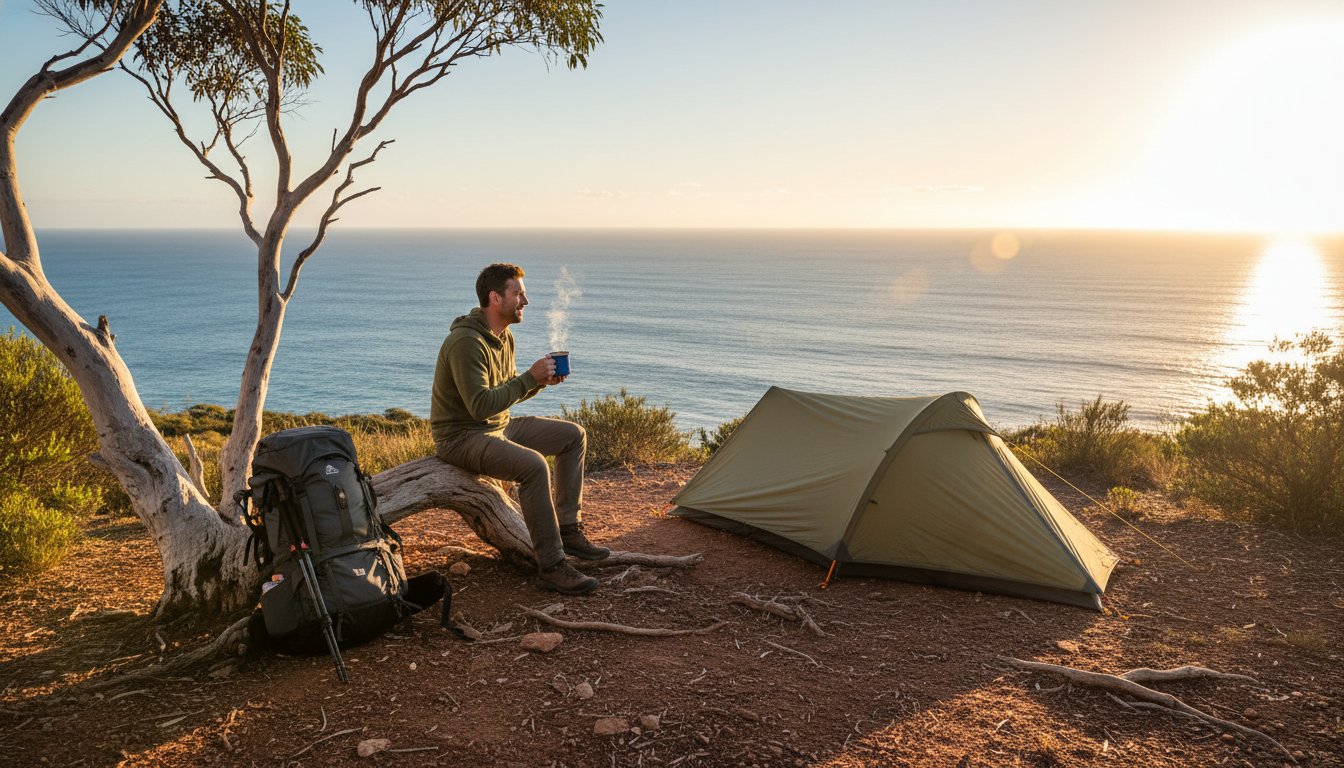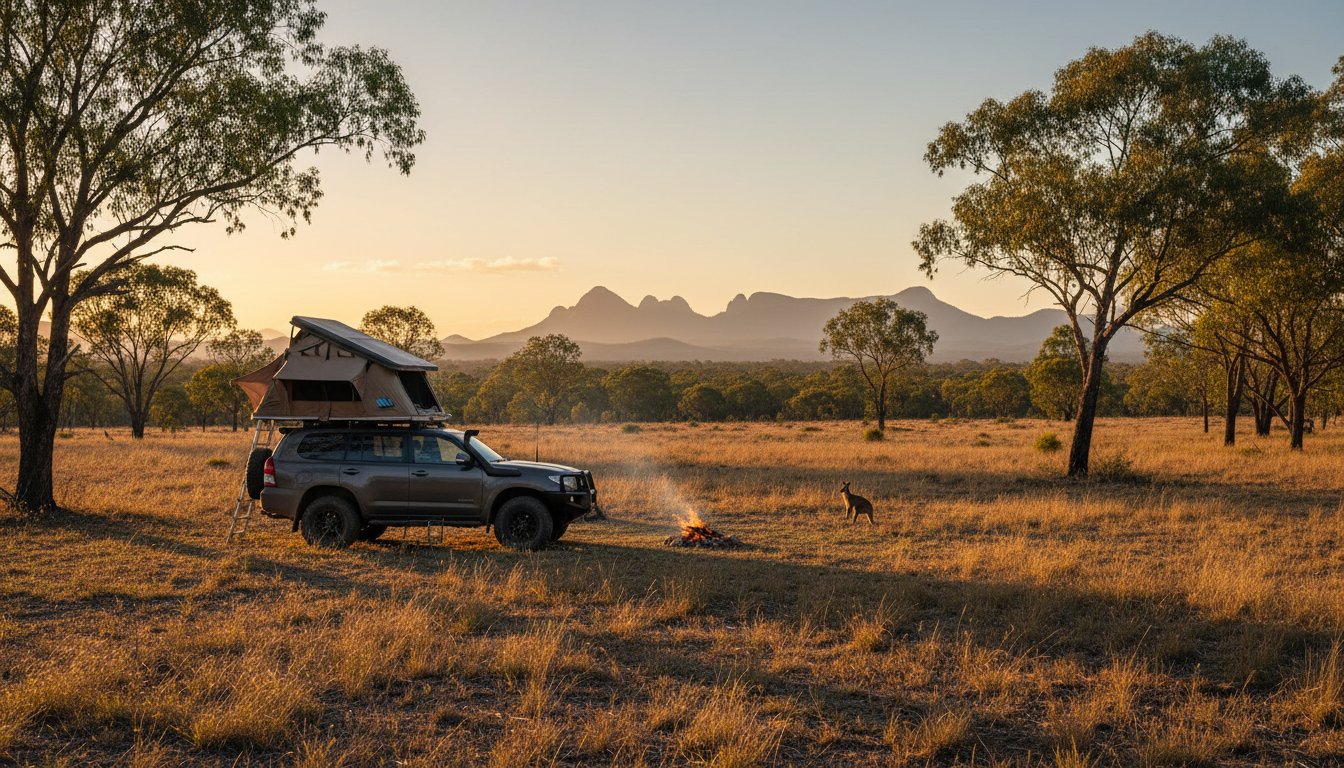
What if the most crowded part of your next trip to QLD was the grocery run before you left? We’ve all felt that sinking feeling when you pull into a ‘remote’ campsite only to find 40 other rigs already set up. It’s frustrating when gear fails in the 90% tropical humidity or when you’re stuck staring at a 15-page permit application. We know you’re craving a genuine connection with the Australian wilderness that doesn’t involve queueing for a shower.
This guide is your roadmap to reclaiming the wild in 2026. We’ll show you how to find secret remote spots that remain untouched by the masses and explain exactly which gear survives the 45-degree desert heat. You’ll discover how to manage the new digital permit systems and travel responsibly so we leave these tracks better than we found them. We’re diving into the latest 4WD awnings, off-the-grid power setups, and the five essential tracks every Adventurerz should tackle in 2026.
Key Takeaways
- Discover why 2026 is the perfect year to head off-the-grid and how we adapt our vehicle setups for three distinct adventure zones.
- Learn how to safeguard your equipment against the intense UV, salt, and dust that define the rugged QLD landscape.
- Navigate the 2026 digital permit system with ease and master the fuel and water logistics required for remote, trans-continental expeditions.
- Join the Adventurerz community to access exclusive gear discounts and learn how to contribute your own sustainable trip reports.
- Identify the critical role of shade and climate-specific gear to ensure your comfort and safety in the unforgiving Sunshine State wilderness.
The Scale of QLD: Why It’s the Ultimate Testing Ground for Adventurerz
Welcome to the big league of Australian exploration. Queensland is a massive playground, covering roughly 1,727,000 square kilometres of the most diverse terrain on the planet. For us at Adventurerz, this isn’t just a map; it’s our backyard and our greatest challenge. We call Scarborough on the Redcliffe Peninsula home, and this coastal gateway serves as the perfect launching point for our missions into the deep north and the dusty west. We don’t just sell gear; we live the lifestyle, testing every 4WD awning and swag tent against the brutal reality of the Australian elements.
Why is 2026 the year to push further into the unknown? Data from the Queensland Parks and Wildlife Service shows a 14% increase in coastal camping permit applications since 2024. The popular spots around the Gold Coast and Sunshine Coast are reaching capacity faster than ever. To find true solitude, we have to look toward the horizon. Being an Adventurerz member means rejecting the crowded tourist hubs and seeking the “real” Australia. If you want to understand the sheer geographic diversity we are dealing with, this Queensland overview provides the context for the massive distances we tackle on every trip.
From the Tropics to the Outback
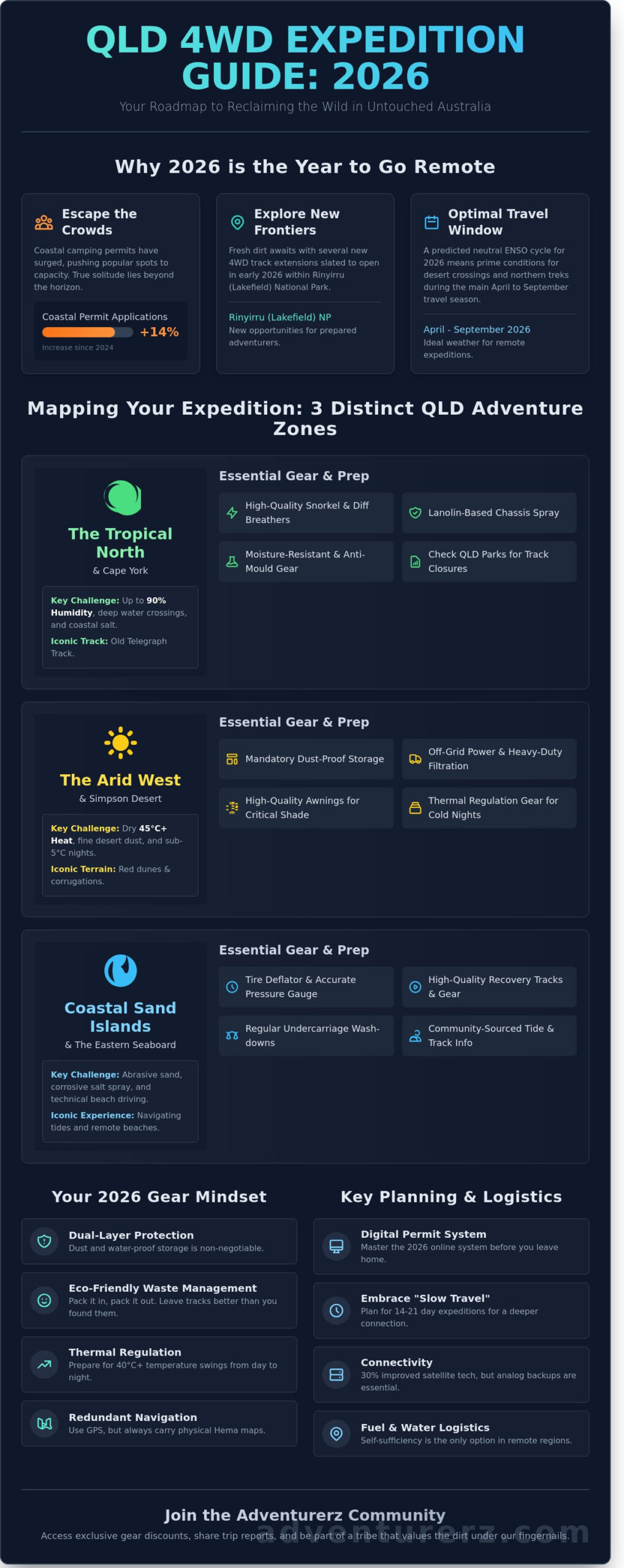
The contrast in this state is staggering. In the north, the humidity of Cape York can hit 90% during the early months of 2026, demanding gear that breathes and resists mould. Move southwest toward the Simpson Desert, and you’ll face dry, 40-degree heat where moisture is your most precious resource. The Bureau of Meteorology predicts a neutral ENSO cycle for 2026, which means our primary travel window between April and September will be prime for crossing the red dunes. Self-sufficiency is the only way to survive these shifts. We rely on off-the-grid power systems and heavy-duty filtration because, in the middle of the Channel Country, there’s no one to call for a spare part or a litre of water.
The 2026 Adventure Landscape
The landscape is changing in more ways than one. Several new 4WD track extensions are slated for opening in early 2026 within the Rinyirru (Lakefield) National Park, providing fresh dirt for those willing to do the prep work. While digital connectivity through satellite tech has improved by 30% in remote QLD over the last two years, we always preach the importance of analog backups. A dead battery shouldn’t mean a lost Adventurerz member. Preparation for 2026 requires a specific gear mindset:
- Dual-Layer Protection: Dust-proof storage is mandatory for the fine silt of the outback.
- Eco-Friendly Waste Management: We carry everything out to protect these fragile ecosystems.
- Thermal Regulation: 2026 nights in the desert are projected to drop below 5 degrees Celsius.
- Redundant Navigation: Use GPS, but keep a physical Hema map in the glovebox.
We are a tribe of explorers who value the dirt under our fingernails and the stars over our heads. We respect the land, we support our mates, and we never stop moving. Let’s get your rig ready for the toughest testing ground in the country.
Mapping the Regions: Where to Point Your 4WD in 2026
We don’t just “go for a drive” in QLD; we embark on expeditions. Since the state spans over 1.7 million square kilometers, your vehicle needs to be a shapeshifter. A setup optimized for the tight, humid tracks of the Daintree will struggle against the relentless corrugations of the Simpson Desert. We divide the state into three distinct adventure zones: the humid North, the arid West, and the coastal Sand Islands. For those launching from Brisbane, the Gateway Arterial provides the ultimate springboard toward either the Bruce Highway for northern runs or the Warrego for western treks. We’re seeing a massive shift toward “slow travel” in 2026. Adventurerz now spend 14 to 21 days exploring the North rather than rushing to the Tip in a week. This allows for deeper connection with the land and less strain on your rig.
The Tropical North & Cape York
Navigating the Old Telegraph Track remains the ultimate test for any Adventurerz member. In 2026, increased seasonal rainfall has deepened crossings like Gunshot and Logan’s Creek. This makes a high-quality snorkel and diff breathers mandatory. The 90% humidity levels require moisture-resistant gear that won’t succumb to mold. We recommend treating your chassis with lanolin-based sprays to fight high-salt environments near the coast. Check the latest track closures and permit requirements via Queensland National Parks before you depart Cairns.
- Old Telegraph Track: Expect deeper water entries at Palm Creek in 2026.
- Humidity Management: Use silica gel packs in your electrical boxes.
- Slow Travel: Allocate at least 4 days for the Rinyirru (Lakefield) section alone.
The Red Sand Outback & Simpson Desert
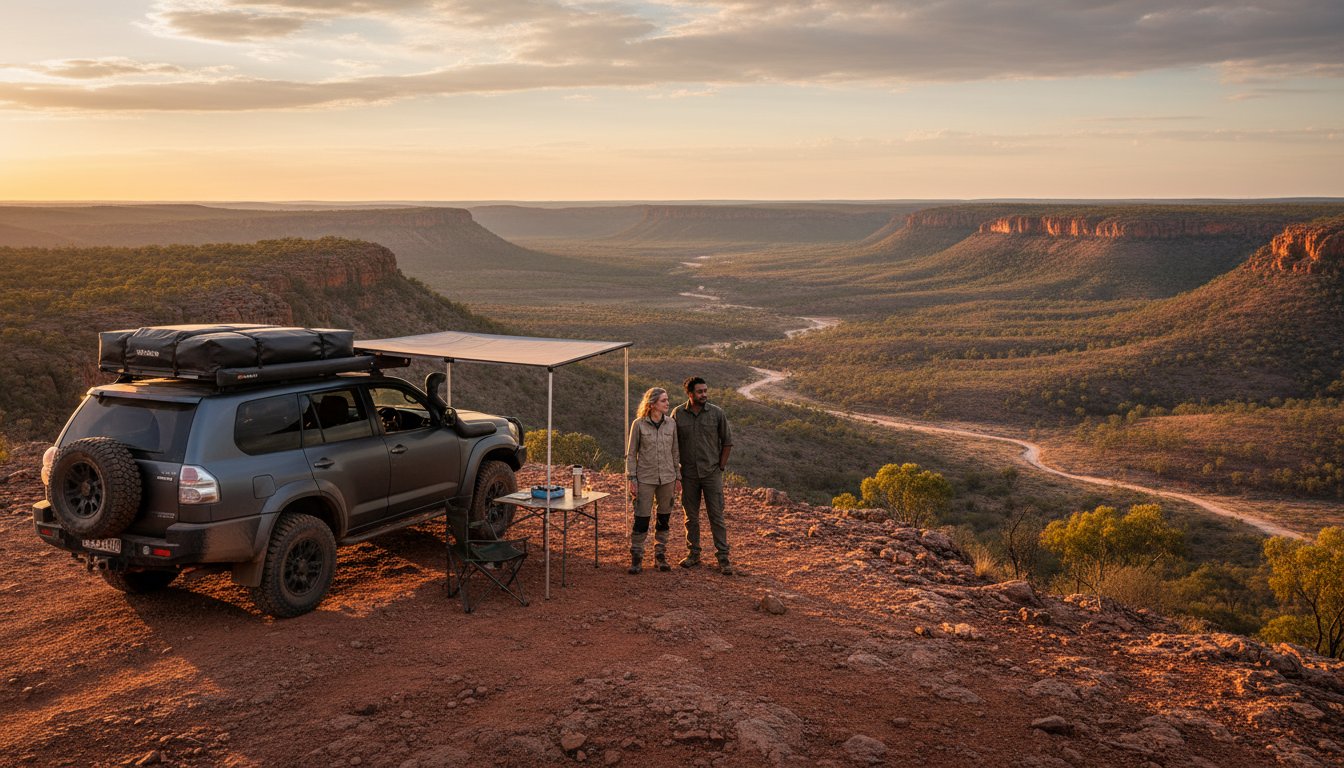
Conquering Big Red, the 40-metre high dune at the edge of the Simpson Desert, is a bucket-list moment. In 2026, the Birdsville Track remains a corrugated challenge that vibrates every bolt loose. Dust proofing is your priority. You must install a positive pressure system or high-quality rubber seals to keep the red bull-dust out of your kitchen and sleeping quarters. Preparation means carrying 7 litres of water per person daily to survive the 42°C peaks and sub-zero nights. We’ve seen temperatures drop to -3°C in July 2026, so high-GSM sleeping bags are essential for survival.
The Sand Islands: K’gari (Fraser) and Moreton
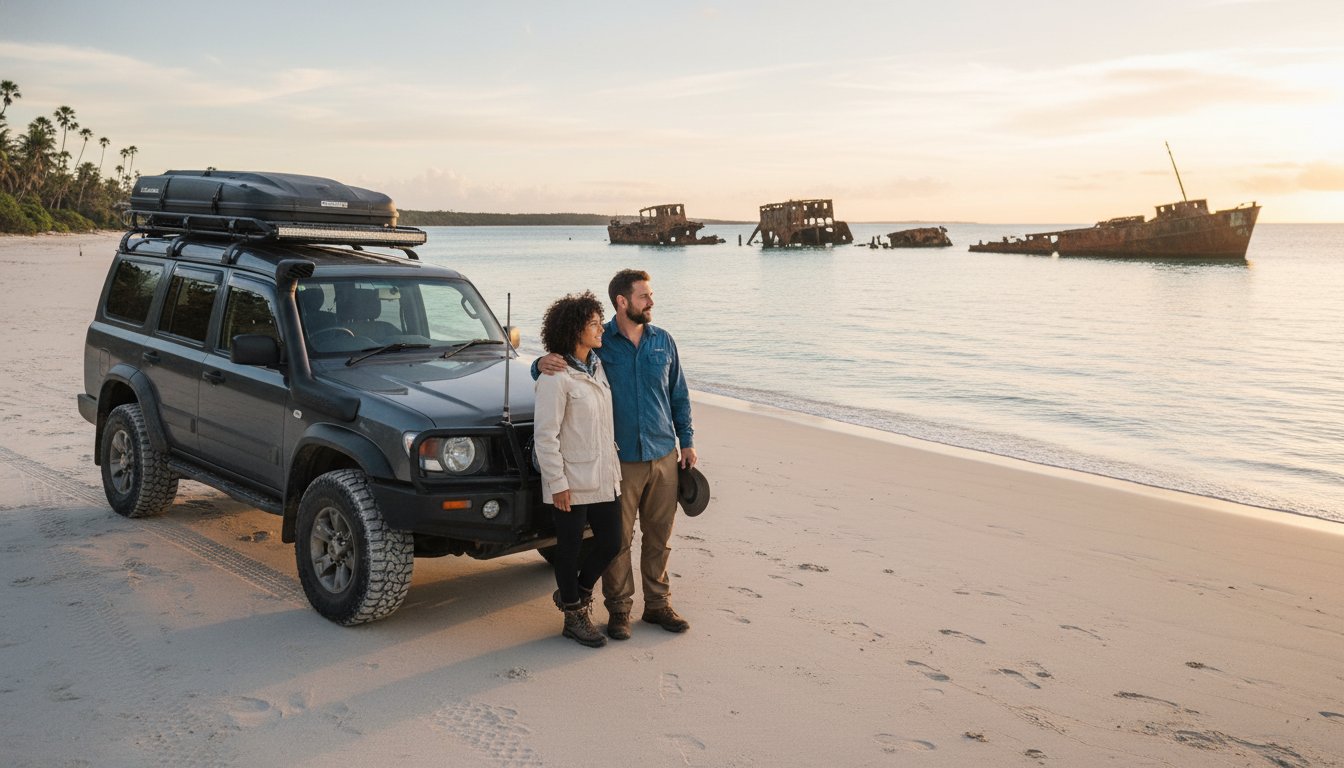
Sand driving is where most QLD journeys begin. It’s a rite of passage. 2026 erosion patterns have narrowed sections of 75 Mile Beach on K’gari, making tide timing more critical than ever. Always aim to drive two hours either side of low tide to avoid getting swamped. To escape the crowds on Moreton Island, head toward the northern campsites near North Point rather than the popular Comboyuro Point. Ensure your tire pressures are down to 16-18 psi before hitting the soft stuff at the barge landing. This protects the tracks and your transmission from overheating.
If you’re unsure about your current recovery points or tire setup for these varied terrains, check out our latest 4WD recovery gear guides to ensure you’re prepared for the 2026 season. We want every member of our community to return home with nothing but great memories and a bit of dirt on the tires.
Gear Strategy: Surviving the QLD Climate and Terrain
QLD isn’t just a destination; it’s a relentless gauntlet for your equipment. Between the corrosive salt spray on K’gari and the fine bull-dust of the Channel Country, we call it the gear killer state for a reason. High UV indexes in the north will perish rubber seals and fade cheap canvas in a single season. Before you lock the hubs and head into the red dirt, checking the latest Queensland weather forecasts is your first line of defense against 40-degree heatwaves or sudden monsoon troughs that can turn a dry track into a river in minutes.
Weight management is the silent savior of a successful trip. We often see rigs loaded to the absolute limit, but extra kilograms are a liability on soft sand and steep, technical climbs. A heavy vehicle sinks faster in the dunes of Moreton Island and puts immense strain on your cooling system during slow-speed crawling. For the 2026 season, smart Adventurerz are moving toward lightweight lithium battery systems and aluminum storage solutions to maintain a 10% buffer under their GVM. This approach keeps your vehicle nimble, reduces fuel consumption, and ensures you aren’t the one holding up the convoy on a soft beach crossing.
Shelter Solutions: Rooftop Tents vs. Swags
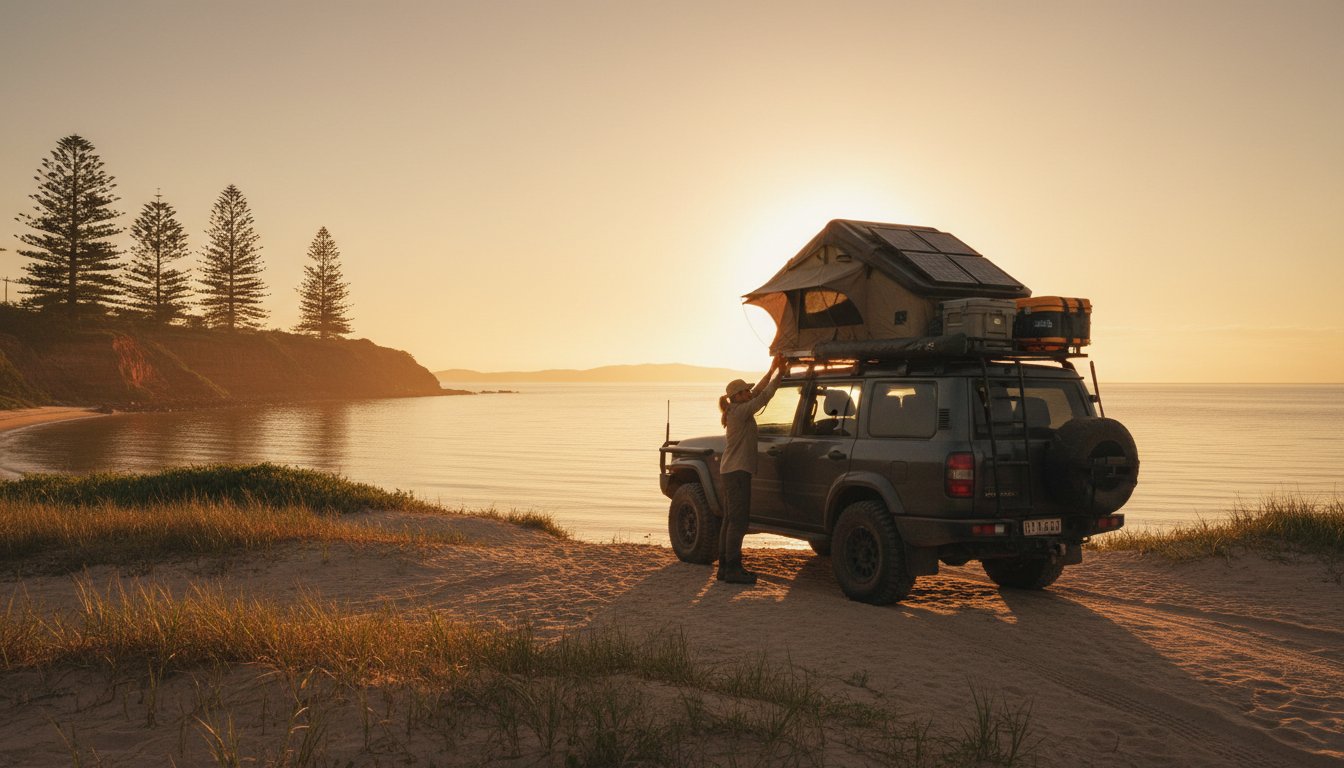
Choosing between a hard shell and a soft shell rooftop tent often comes down to how much you value your time during a tropical downpour. Hard shell designs are the gold standard for 2026 because they deploy in under 60 seconds, which is vital when a sudden afternoon storm rolls in. While swags offer a low profile and less wind resistance, they can feel like an oven without proper elevation. Superior airflow is the primary requirement for any tropical shelter because it prevents stifling condensation and keeps internal temperatures bearable during humid coastal nights. If you want to stay off the ground and away from the crocs, see our full breakdown of roof top tents for high-clearance rigs.
The Essential 4WD Awning
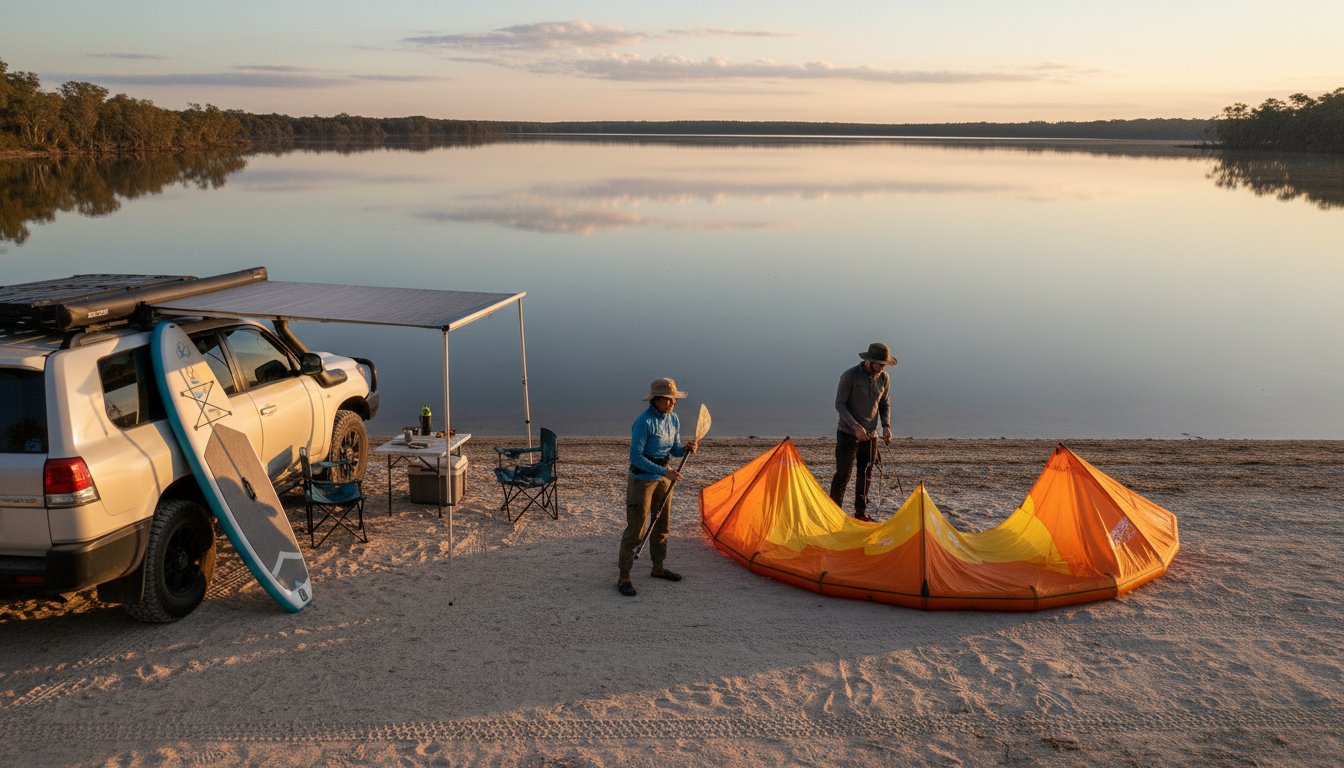
In the Sunshine State, shade isn’t a luxury; it’s a survival tool. A 270-degree awning is the best investment you can make for beach camping because it provides wrap-around protection that follows the sun’s movement from morning to dusk. You need to look for materials with a verified UPF 50+ rating to block the intense Australian radiation that penetrates cheaper fabrics. We recommend choosing models with integrated pole systems that can withstand 30-knot coastal breezes without buckling. Don’t forget to pack sand pegs, as standard stakes are useless in the soft dunes of the Great Sandy National Park. Explore our reviews of the best 4wd awnings for 2026 to find a setup that balances weight with heavy-duty durability.
Evaluating your setup for the current QLD environment means prioritizing resilience over gadgets. If your gear can’t handle a week of salt, dust, and 90% humidity, it won’t last the journey. We build our kits to be self-sufficient and rugged because the best memories are made when you trust your equipment. Stay light, stay cool, and keep your gear maintained to ensure every expedition is a safe one.
Planning Your QLD Expedition: A Step-by-Step Guide
Preparing for a trek across QLD requires more than just a packed fridge and a sense of wonder. We’ve seen too many rigs stall because they underestimated the sheer vastness of our backyard. Logistics are the backbone of every successful journey; without them, you’re just a breakdown waiting to happen. In 2024, the Queensland Department of Environment, Science and Innovation reported a record 1.5 million visitors to our national parks, making preparation more critical than ever.
Securing permits is your first hurdle. By 2026, the state will fully transition to a streamlined digital permit system designed to handle the 450,000 camping bookings made annually. This means you’ll need to be tech-ready and proactive. For iconic spots like K’gari or Boodjamulla, we recommend booking exactly 180 days in advance. If you miss that window, you’re likely looking at a “Sold Out” sign for the peak winter months.
Fuel and water logistics require a mathematical approach. On trans-continental treks through the Simpson Desert or the Gulf, we carry a minimum of 7 to 10 liters of water per person per day. Fuel stops can be 600km apart; so ensure your long-range tank is inspected and your jerry cans are secured. Communication has also evolved. Starlink is changing the game for us, with over 250,000 active kits now used across Australia. Having high-speed satellite internet means you can check live BOM weather radar or download emergency mechanical diagrams from a remote riverbank in the Cape.
The 5-Step Planning Phase
We follow a disciplined ritual to ensure every trip is a win. First, define your zone. Are you tackling the humid, tight tracks of the Daintree or the wide, dusty expanses of the Diamantina? Second, perform a heavy-duty gear audit. We never head off-road without Maxtrax, a 9,500lb winch, and rated snatch straps. Third, lock in those permits 6 months out. Fourth, book a full mechanical check-up in Scarborough or Brisbane to inspect CV joints and cooling systems. Finally, download Hema or Gaia offline maps to your tablet before you lose the last bar of 5G.
Sustainable Exploration in QLD
The “Leave No Trace” mandate is our sacred code. As Adventurerz, we lead by example by packing out every piece of rubbish, including micro-plastics and food scraps that disrupt local dingo populations. We also urge you to resist the “social media effect” of geotagging hidden tracks. Data from 2023 shows that geotagging has contributed to a 40% increase in track erosion in sensitive coastal areas. By keeping secret spots off the grid, we protect the 1,000 plus native plant species that only exist in our northern tropics. We treat the land with the respect it deserves so the next generation of explorers can find it just as wild as we did.
Ready to gear up for your next big trek? Join the Adventurerz community today to access our exclusive equipment checklists and ethical camping guides.
Join the Adventurerz Community: Your QLD Journey Starts Here
You’ve survived the dust, conquered the corrugations, and seen the sun dip below the horizon from the most remote campsites in the country. Now, it’s your turn to lead the way for others. We believe the best advice doesn’t come from a boardroom; it comes from the person who just spent three nights under the stars in the Simpson Desert. By contributing your own trip reports, you help us maintain a database that stays ahead of the curve. Tracks change, creeks rise, and your updates ensure that every Adventurerz member stays safe and prepared for their next QLD expedition.
We’ve designed this platform to be a living, breathing map of the Australian outback. It’s fueled by real-world experiences from people who actually get their tyres dirty. Whether you’ve found a hidden swimming hole or a bypass for a washed-out track, your knowledge is the currency of our community. Joining us means stepping into a role as an eco-conscious mentor for the next generation of explorers.
Share Your Story
Sharing your journey is simple and high-impact. You can upload GPX track logs directly to our platform, providing real-time data on track conditions that satellite maps often miss. This is vital in QLD where a single summer storm can turn a Grade 3 track into a winch-only recovery mission overnight. Our community has already logged over 4,200 unique routes across the state, creating a safety net for solo travelers and families alike.
Don’t forget to submit your best high-resolution shots for our 2026 ‘Best of QLD’ photo competition. Entries officially open on January 1, 2026, and we’re looking for images that capture the raw essence of off-road life. The grand prize includes a premium off-grid power kit valued at A$3,200. We aren’t just looking for pretty sunsets; we want to see the grit, the recovery sessions, and the spirit of self-sufficiency that defines our tribe. Every photo and log you contribute helps us build the ultimate database of remote Australian knowledge, ensuring no one goes into the wild under-prepared.
The Next Step
Preparation is the difference between a legendary trip and a costly recovery bill. Before you pack the swag, visit our gear guides to see what’s actually surviving the Australian elements. We don’t just list manufacturer specs; we analyze peer-reviewed data from members who’ve put this gear through its paces in the salt spray of K’gari and the heat of the Channel Country. Our affiliate partners offer Adventurerz members exclusive access to discounts, often saving you 10% to 15% on essential items like 12V lithium batteries or heavy-duty 4WD awnings. On a full canopy build, these savings can easily exceed A$500.
We prioritize gear that meets our strict sustainability standards. If a product isn’t built to last, it’s just future landfill, and that doesn’t fly with us. Check out our latest reviews and join the conversation in the community forums to ask specific questions about your vehicle setup. We want you to head out with confidence, knowing your equipment won’t let you down when you’re 200 kilometers from the nearest sealed road. Grab your gear, check your tyre pressures, and let’s keep the tracks open for everyone to enjoy.
Adventurerz is the heartbeat of QLD exploration because it unites expert knowledge with a shared responsibility to protect the Australian wilderness.
Ignite Your 2026 Expedition
Queensland’s 1.7 million square kilometres don’t conquer themselves. They require intense preparation and a solid strategy. We’ve detailed the essential 2026 4WD regions and the rugged gear strategies, including 4WD awnings and swag tents, you’ll need to thrive in the heat. Our Adventurerz thrive on expert gear reviews from real Australian travelers who’ve tested every piece of kit in the red dirt. You’re backed by the local knowledge of our Scarborough and Redcliffe experts; they live and breathe these coastal and bush tracks. We’re committed to sustainable and ethical outdoor exploration because protecting the wilderness is just as important as exploring it. It’s time to turn those maps into memories. Prep your rig for the ultimate off-the-grid expedition! Our tribe is ready to help you navigate every creek crossing and ridge line with confidence. Don’t let 2026 pass you by while your 4WD sits in the driveway.
Join the Adventurerz community and plan your 2026 QLD trek today!
We’ll see you out on the tracks; the wild is calling!
Frequently Asked Questions
What is the best time of year to visit remote Queensland in 2026?
The best time to visit remote Queensland in 2026 is between May and September. These months offer daytime temperatures averaging 24 to 28 degrees Celsius, which helps you avoid the intense humidity and flooding of the tropical wet season. We suggest booking your permits through the Queensland National Parks portal at least 6 months in advance for peak periods like the June school holidays.
Do I need a 4WD to explore the Queensland Outback?
You definitely need a high-clearance 4WD to explore the majority of the Queensland Outback safely. While 2WD vehicles can manage some sealed main roads, 85% of the iconic tracks like the trek to Big Red or the Diamantina Development Road require 4WD capabilities to handle deep sand and corrugated gravel. We don’t want you getting stuck in a remote wash-out without low-range gearing!
How much do National Park camping permits cost in QLD?
National Park camping permits in QLD currently cost A$7.25 per person per night or A$29.00 per night for a family of up to 8 people. These fees are collected by the Department of Environment and Science to maintain the 1,000 plus campsites across the state. It’s a small price to pay for protecting our pristine wilderness, so make sure you display your permit tag clearly on your swag or trailer.
Can I take a rooftop tent on the barge to Moreton Island?
Yes, you can take a rooftop tent on the Micat barge to Moreton Island without any issues. You’ll just need to specify your vehicle height when booking, as vehicles over 2.4 metres often incur a different fare bracket. We love seeing Adventurerz hitting the sand with rooftop setups because they keep you off the ground and away from the local wildlife while offering 360-degree ocean views!
What are the most essential recovery items for QLD sand driving?
The most essential recovery items for sand driving include a set of Maxtrax recovery boards, a reliable tyre pressure gauge, and a long-handle shovel. Lowering your tyres to 16-18 PSI is the first step to success on soft tracks like those at K’gari. We also suggest carrying a rated snatch strap and two 4.75-tonne bow shackles just in case a mate needs a pull out of a bog.
Are there still ‘free’ campsites left in Queensland for 2026?
There are still over 550 free or low-cost campsites available across Queensland for 2026, primarily located in regional council areas and local showgrounds. While popular coastal spots often require a fee, inland towns like Julia Creek and Maryborough offer 48-hour free stays to encourage tourism. We encourage every Adventurerz member to leave these sites cleaner than they found them to ensure they stay open for everyone.
How do I manage crocodile safety when camping in North QLD?
Manage crocodile safety by staying at least 5 metres back from the water’s edge and never camping within 50 metres of a riverbank in North QLD. Crocodiles are apex predators that inhabit both salt and fresh water across the northern region. Never clean fish or leave food scraps near your site, as this attracts unwanted visitors. Always follow the ‘Crocwise’ signs posted by local authorities to keep your crew safe.
What is the best 4WD awning for high-wind beach conditions?
The best 4WD awning for high-wind beach conditions is a 270-degree freestanding model with reinforced aluminium arms. These heavy-duty units, like those from The Bush Company or 30-Second Awnings, are designed to withstand gusts up to 30 knots without buckling. We always recommend using sand pegs and guy ropes when the wind picks up on the coast. It’s the best way to ensure your gear stays attached to your rig!