Why would you mount a heavy, fixed panel to your roof when the best campsites are tucked deep under the shade of a gum tree? We’ve all felt that sinking feeling when the fridge alarm chirps on day three because the battery is flat. Between worrying about excessive weight on your roof rack and the confusing mess of Anderson plugs and wiring, setting up your rig can feel like a chore. Finding the perfect solar power setup for roof top tent camping Australia is about more than just juice; it’s about freedom and reliability in the bush.
We’re here to help you build a system that’s light enough for the corrugations and simple enough for a true plug-and-play experience. You’ll discover how to stay stationary for 3+ days while keeping your lithium batteries charged and compliant with the AS/NZS 3001.2:2022 standards. This 2026 guide reviews the 10 best 100W solar blankets on the market, including the $269 iTechworld Raptor Skin, so you can park in the shade while your power sits in the sun! Let’s get your off-grid setup sorted so you can focus on the horizon!
Key Takeaways
- Learn how to calculate a precise daily power budget for your fridge and devices to ensure you stay powered for 3+ days of stationary camping.
- Discover why a solar power setup for roof top tent camping Australia is most effective when using portable blankets that allow you to park in the shade.
- Master essential wiring requirements, like using 50A Anderson plugs and high-quality 8B&S cabling to eliminate efficiency-killing voltage drops.
- Explore our top 10 solar blanket recommendations, evaluated for their lightweight design and high-efficiency A-grade monocrystalline cells.
- Increase your energy yield by up to 30% through simple maintenance habits that protect your gear from abrasive Australian dust.
Table of Contents
- Planning Your Solar Power Setup for Roof Top Tent Camping in Australia
- Solar Blankets vs. Fixed Panels: Choosing the Right Gear for Your RTT
- The Top 10 100W Solar Blanket Prospects for Australian Adventurers
- How to Integrate Portable Solar into Your 4WD and RTT Battery System
- Maximising Efficiency: Sustainable Power Habits for Remote Exploration
Planning Your Solar Power Setup for Roof Top Tent Camping in Australia
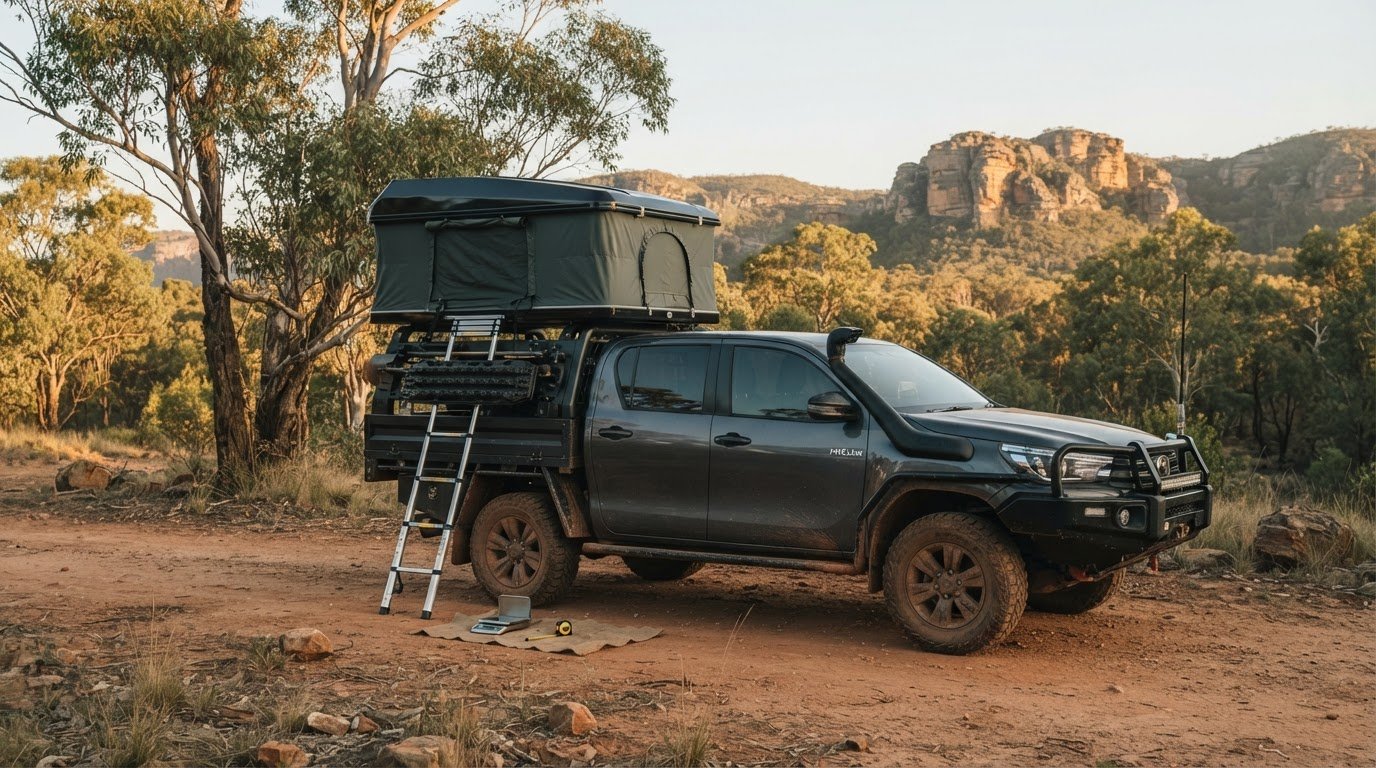
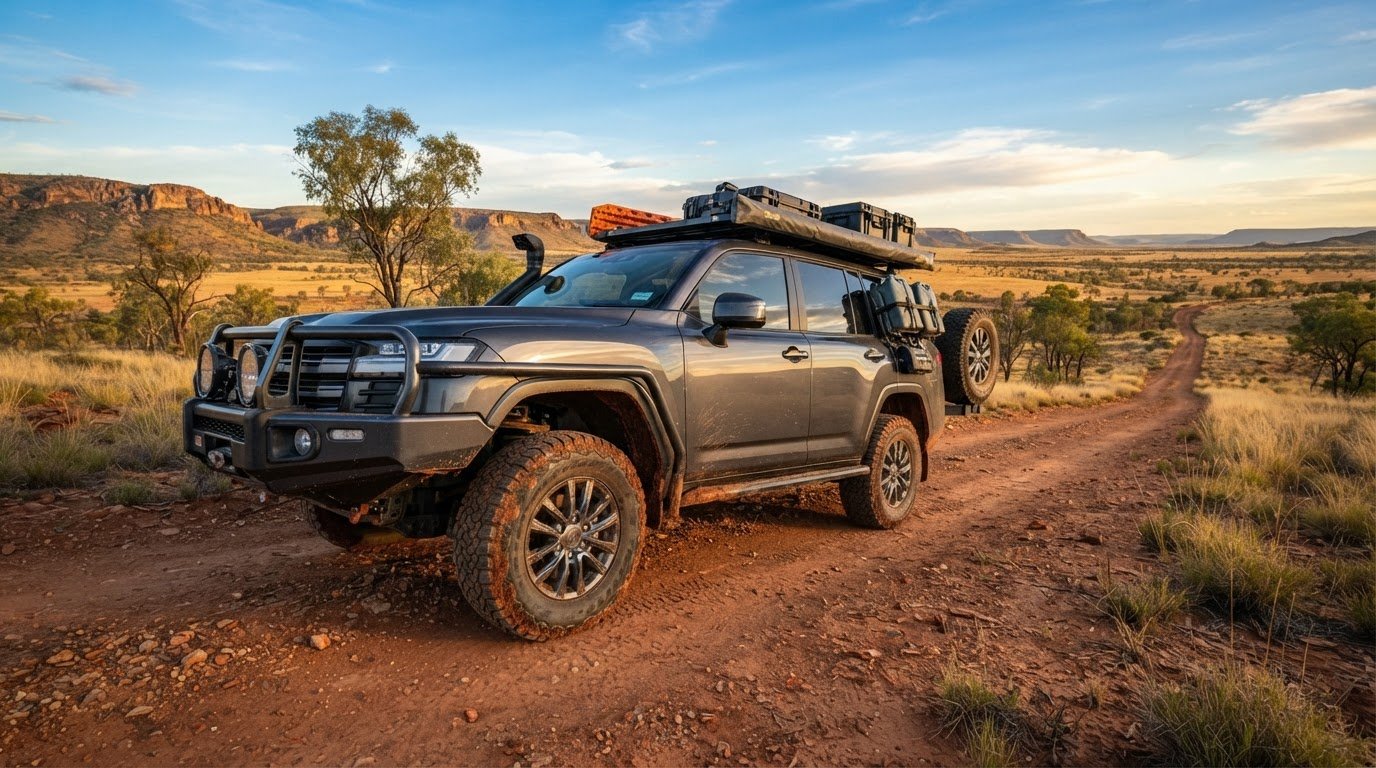
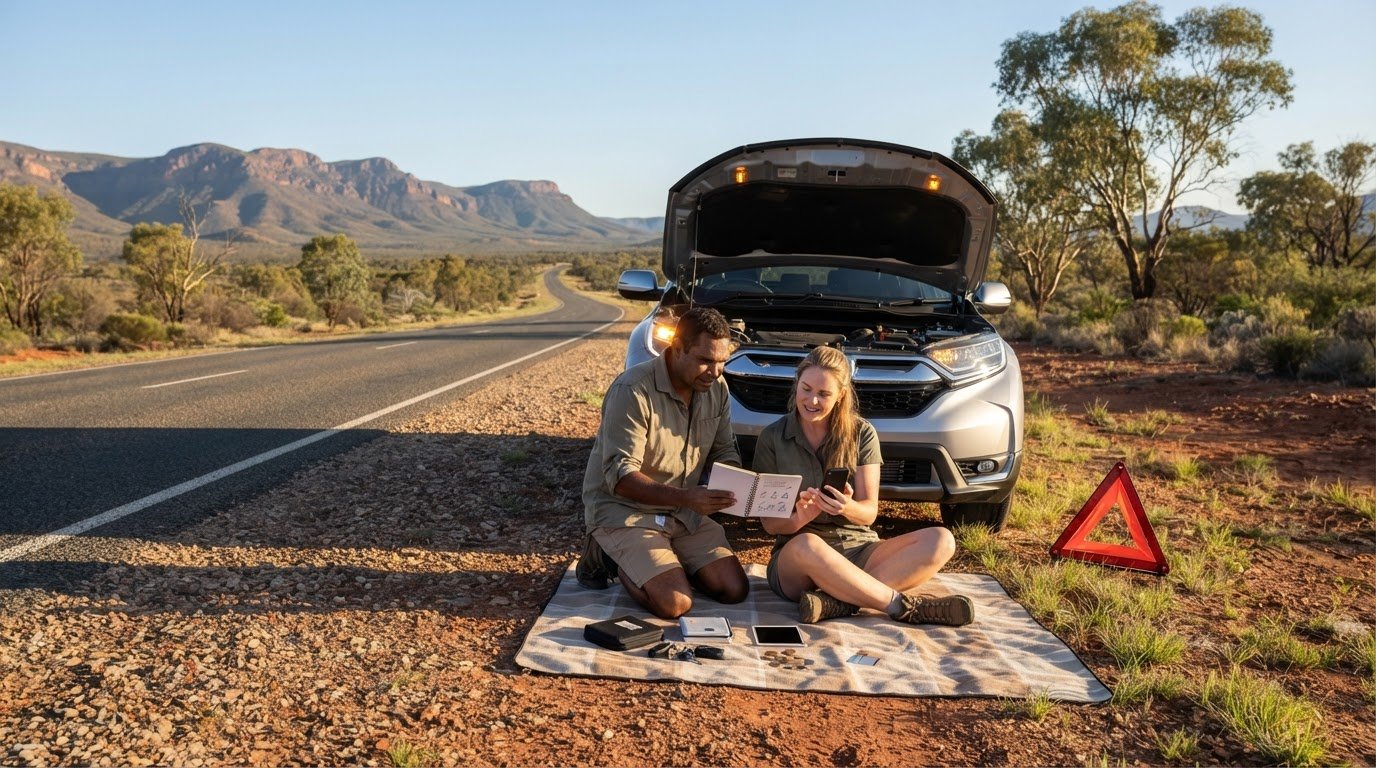
Planning a solar power setup for roof top tent camping Australia requires a different mindset than building a system for a caravan or a camper trailer. While a caravan is essentially a mobile house, an RTT rig is a precision instrument where every kilo counts. We often see fellow Adventurerz struggle with flat batteries because they underestimated their consumption or overestimated how much sun a roof-mounted panel actually receives while parked in a shady creek bed. Getting your power budget right is the difference between a cold beer on day four and a lukewarm fridge by Saturday morning.
Calculating your daily power budget is your first mission. A standard 40L portable fridge usually draws between 15Ah and 30Ah over a 24-hour period, depending on the outside temperature. Add in LED camp lights (2Ah), charging two smartphones (4Ah), and perhaps a tablet or drone (5Ah), and you’re looking at a 40Ah daily requirement. In Australia, we generally work on an average of 4 to 5 “peak sun hours” per day. A 100W panel theoretically produces about 5.5 amps per hour, meaning a perfect day yields around 25 to 27Ah. This is why a 100W setup is the absolute minimum for reliable touring; it barely covers a fridge, let alone extra gadgets.
The Core Components of an Off-Grid RTT Setup
Effective photovoltaic systems for 4WDs rely on three pillars: capture, storage, and management. For capture, we advocate for solar blankets because they provide the flexibility to park in the shade while the panel sits in the sun. For storage, LiFePO4 (Lithium) batteries are the 2026 standard for any serious 4WD setup. They’re roughly half the weight of old AGM batteries and can be discharged deeply without damage. Just remember that under the AS/NZS 3001.2:2022 regulations, these must be in a sealed, externally vented enclosure if they’re in a habitable area. Finally, an MPPT controller is essential. It squeezes up to 30% more energy out of your panels compared to older regulators.
Weight and Roof Load Considerations
Weight is the enemy of a safe and capable 4WD. Many roof top tents already weigh between 60kg and 90kg. Adding rigid solar panels and heavy mounting brackets can easily push you over your vehicle’s dynamic roof load limit, which is often capped at 75kg or 100kg for many popular wagons. High-mounted weight raises your center of gravity, making the vehicle feel unstable on off-camber tracks or during sudden highway maneuvers. Heavy panels also put unnecessary strain on your tent’s gas struts, making it a struggle to open and close. By choosing a lightweight solar blanket, you protect your GVM and keep your rig nimble for the tracks ahead.
Solar Blankets vs. Fixed Panels: Choosing the Right Gear for Your RTT
Choosing between a portable blanket and a fixed panel is the most debated topic among Adventurerz. While fixed panels offer a “set and forget” appeal, they often fail the heat and shade test in the Australian outback. Thermal efficiency is where the blanket wins every time. Photovoltaic cells lose efficiency as they get hotter; a rigid panel bolted to a roof rack can reach surface temperatures exceeding 70 degrees Celsius. This causes a significant drop in power output. In contrast, a solar blanket spread over a windshield or on the ground benefits from better airflow. It stays cooler and works harder for your battery.
Shade management is the real game-changer for a solar power setup for roof top tent camping Australia. We’ve all been there: you find the perfect shaded spot by the river, but your fixed roof panels are now useless. The “Park in the Shade, Charge in the Sun” philosophy allows you to keep your tent cool while your blanket sits 10 meters away in the direct sun. High-quality blankets now use ETFE (Ethylene Tetrafluoroethylene) coatings instead of cheap PET. ETFE is more durable and handles the extreme Australian UV index without yellowing or cracking over time. It’s the 2026 standard for gear that actually survives the corrugations.
Reliability is paramount when you’re hundreds of kilometers from the nearest town. As the industry grows, the Australian Energy Market Commission has focused on off-grid consumer protections to ensure that portable power systems meet safety and performance expectations. By using heavy-duty Anderson plugs instead of flimsy DC barrel connectors, you ensure a secure, high-current connection that won’t vibrate loose on the tracks. If you’re still deciding on your rig, check out our latest roof top tent recommendations to see which models best support these portable systems.
The Case for the 100W Solar Blanket
A 100W blanket is the sweet spot for portability. When folded, it’s roughly the size of a laptop bag, making it easy to slide under a seat or inside the tent during transit. You can set it up in under 60 seconds; just unfold it and plug it in. It’s also versatile. If your starter battery struggles after a few days of running accessories, you can quickly move the blanket to the front of the vehicle to give your crank battery a boost.
When Fixed Panels Still Make Sense
Fixed panels aren’t without merit, especially on hardshell roof top tents with dedicated mounting channels. If you prioritize “stealth” camping or want zero setup time upon arrival, a fixed panel provides constant trickle charging while you drive. However, you must account for the “roof tax” of added weight on your gas struts. Many Adventurerz find that heavy glass panels make their tents difficult to open, which is why lightweight semi-flexible fixed panels are the preferred choice for roof mounting in 2026.
The Top 10 100W Solar Blanket Prospects for Australian Adventurers
Choosing the right gear for your solar power setup for roof top tent camping Australia isn’t just about picking the highest wattage. We look for three critical factors: cell efficiency, weight, and the quality of the included accessories. High-efficiency SunPower cells, for instance, offer conversion rates up to 24%, which is vital when you’ve only got limited hours of peak outback sun. We also ensure every recommendation aligns with Australian vehicle electrical standards to keep your rig safe and legal on the tracks.
Prospect 1: The ‘Premium Choice’. The iTechworld 100W Raptor Skin solar blanket is our top pick for 2026. Priced at $269 on sale, it features A-grade monocrystalline cells and ETFE lamination. It’s built to withstand the harshest UV conditions without the delamination issues common in cheaper PET blankets. Prospect 2: The ‘Compact Specialist’. This model offers the smallest folded footprint on the market, roughly 30cm by 30cm, making it perfect for those who store their gear inside their roof top tents during transit. Prospect 3: The ‘Value King’. For Adventurerz on a budget, this prospect delivers 18% efficiency at a significantly lower price point, though it uses standard monocrystalline cells. Prospect 4: The ‘Rugged Voyager’. Featuring reinforced double-stitching and military-grade Cordura fabric, this blanket is designed for those who spend months on end in the Kimberley or the Red Centre.
High-Performance Blankets (Prospects 5-7)
- Prospect 5: Integrated MPPT model. This is the best choice for vehicles without an existing dual battery system, as it includes a built-in controller for direct battery connection.
- Prospect 6: The ‘All-Weather’ prospect. Boasting an IP68 waterproof rating, this blanket is essential for tropical QLD trips where sudden downpours are a daily occurrence.
- Prospect 7: The ‘Ultra-Light’ prospect. By using a carbon-fiber backing instead of heavy fabric, this blanket weighs in at just 2.1kg, perfect for weight-conscious GVM builds.
Specialized and Budget Options (Prospects 8-10)
Prospect 8: The ‘Hybrid’ blanket includes built-in adjustable kickstands. This allows you to track the sun angle throughout the day, increasing your yield by up to 25% compared to lying flat on the ground. Prospect 9: The ‘Community Favorite’ is a brand known for its 5-year Australian warranty and exceptional local customer support. Finally, Prospect 10: The ‘Stealth’ prospect features matte-black cells and a dark camouflage fabric. It reduces glare at camp and keeps your setup low-profile in crowded national park campgrounds. Each of these options ensures your solar power setup for roof top tent camping Australia remains reliable, regardless of your travel style.
How to Integrate Portable Solar into Your 4WD and RTT Battery System
Integrating your solar power setup for roof top tent camping Australia into a modern 12V system requires more than just a few clips on a battery terminal. Most Adventurerz now run sophisticated LiFePO4 (Lithium) setups managed by DC-DC chargers. While some competitors suggest permanent roof wiring is the only way to avoid efficiency loss, we know that a well-engineered portable connection is just as effective and far more versatile. The 50A Anderson plug has become the gold standard for Australian off-grid setups. It provides a secure, vibration-proof connection that handles high current without the melting risks associated with old-school cigarette lighter sockets.
The biggest silent killer of solar performance is voltage drop. When you use a solar blanket, you often need a 5-meter or 10-meter lead to reach the sun while your rig stays in the shade. If that lead is too thin, the power simply vanishes before it reaches your battery. We recommend using high-quality 8B&S or even 6B&S cabling for any lead longer than 3 meters. This ensures the voltage remains high enough for your charger to trigger its bulk charging stage. If your blanket comes with a cheap, built-in PWM regulator, we suggest bypassing it. Instead, plug the raw solar output directly into the “Solar Input” of a high-end MPPT controller like a REDARC BCDC or a Victron SmartSolar. These units are far more efficient at converting every available photon into usable amps.
Step-by-Step Connection Guide
Maximizing your yield starts with the 90-degree rule. Position your blanket so it’s directly perpendicular to the sun’s rays. Even a 20-degree misalignment can drop your output by 15%. Most modern Adventurerz use an external solar port mounted on their rear bumper or side panel. This port should wire directly to your DC-DC charger. Once connected, use a Bluetooth-enabled monitoring app on your phone to track real-time wattage. This allows you to fine-tune the blanket’s position as the sun moves throughout the afternoon.
Pairing Solar with Other RTT Accessories
Your solar setup doesn’t just charge the fridge; it powers your entire lifestyle. We often run a dedicated 12V line from the auxiliary battery up into the roof top tent to power internal LED strips and USB charging hubs. You can also integrate your blanket with 4WD awnings by hanging the blanket from the awning arms using carabiners. This creates a shaded charging hub where you can run a portable power station as a standalone RTT power center. This modular approach means you can move your power source to the beach or a picnic table without being tethered to the vehicle. Ready to level up your camp comfort? Check out our top-rated 4WD awnings to find the perfect partner for your solar setup!
Maximising Efficiency: Sustainable Power Habits for Remote Exploration
Being part of the Adventurerz community means more than just owning the best gear. It’s about a commitment to leaving no trace while enjoying the absolute maximum comfort the bush has to offer. A high-performance solar power setup for roof top tent camping Australia is only as good as the habits you practice in the field. One of the most overlooked factors is simple cleanliness. In the red dirt of the Pilbara or the dusty tracks of the Victorian High Country, a thin layer of grime can kill your solar yield by 30% in just a single afternoon. We make it a habit to wipe down our blankets with a damp microfibre cloth every morning to ensure we’re catching every possible ray.
Managing the “Big Three” power draws is your next priority. Your fridge is the primary consumer; we recommend setting it to a slightly higher temperature at night, perhaps 3 or 4 degrees Celsius, to reduce compressor cycles when the ambient air is cooler. If you’re using an inverter to charge a laptop or run a coffee machine, turn it off the second you’re done. Even in standby mode, an inverter can pull 0.5 to 1 amp per hour. This adds up to a significant chunk of your battery capacity over a 24-hour period. For lighting, stick to high-efficiency LED strips and dim them when full brightness isn’t needed. Every amp saved is an extra hour of freedom at camp!
Strategic preparation is the final piece of the puzzle. Every Adventurerz member should use a travel planner to map out campsites that offer a balance of shade for the tent and clear sky for the blankets. Planning your route around the sun’s path ensures you aren’t fighting a losing battle against deep valley shadows by 3:00 PM. It keeps your system charging for longer and your batteries topped up for the night ahead.
Long-Term Solar Blanket Care
To get the most out of your investment, treat your blanket with respect. Never “scrunch” the blanket into a bag. Always follow the original fold lines to avoid creating micro-cracks in the monocrystalline cells. These cracks lead to permanent “dead zones” in the panel and a lower total output. If you’ve been camping near the coast, salt air can corrode your connections quickly. Spray your Anderson plugs with a specialized contact cleaner once a month to prevent high-resistance build-up. If you lose power suddenly, check the pins inside your Anderson plug. They can sometimes vibrate loose on heavy corrugations and just need a quick click back into place.
The Future of Off-Grid Camping
We’re already looking toward 2027 and beyond. Emerging tech like Perovskite cells promises even lighter, more flexible blankets with higher low-light efficiency. As a community, we’re also seeing more people share their solar surplus. If your lithium battery is full by noon, why not offer a charge to a fellow traveler? It’s the Adventurerz way. Before you head out, do one final check of your gear. Is your solar power setup for roof top tent camping Australia secure? Are your fuses intact? If you’re ready for the Simpson Desert, we’ll see you out there on the tracks!
Ready to Power Your Next Remote Escape?
Mastering your off-grid energy is about more than just keeping the fridge running; it’s about having the confidence to push further into the wild. We’ve explored how choosing a high-quality 100W solar blanket over heavy fixed panels protects your vehicle’s GVM and ensures your gear survives the most brutal corrugations. By prioritizing shade management and using secure 50A Anderson plugs, you create a system that’s both reliable and efficient for 3+ days of stationary camping. Building a robust solar power setup for roof top tent camping Australia is the ultimate step toward true self-sufficiency in the bush.
Our expert-tested gear recommendations and community-vetted insights are designed to help you explore responsibly while maintaining maximum comfort. We believe in sustainable exploration that respects the Australian wilderness we all love. Don’t let a flat battery cut your journey short when the horizon is calling! Every amp saved and every watt harvested brings us closer to the land we explore.
Join the Adventurerz community for more expert gear reviews and travel tips! We’re dedicated to helping you find the best path forward with gear that actually works in our unique conditions. Let’s get out there and make some memories!
Frequently Asked Questions
Can I leave my 100W solar blanket out in the rain?
Yes, you can leave it out provided the blanket has a verified IP67 or IP68 waterproof rating. While the ETFE-coated cells handle moisture easily, you must keep the solar controller and Anderson plug connections dry to prevent short circuits. We always recommend wiping the surface with a clean cloth after a downpour to remove any mineral residue that might block the sun once the clouds clear.
How many amps will a 100W solar blanket actually produce in Australia?
In the Australian outback, a high-quality 100W blanket typically produces between 5 and 5.5 amps per hour during peak sun periods. Over a standard 5-hour peak window, you can expect a total daily yield of 25Ah to 30Ah. This is a critical calculation for your solar power setup for roof top tent camping Australia to ensure your fridge stays cold through the night.
Do I need a regulator for my solar blanket if I have a DC-DC charger?
You don’t need a separate regulator if your DC-DC charger includes a dedicated solar input. Bypassing the basic PWM regulator that comes with many blankets and plugging directly into a high-end MPPT charger can increase your efficiency by up to 30%. This allows the vehicle’s advanced electronics to manage the precise charging profile required for your lithium batteries safely and effectively.
Is it better to mount solar on top of my hardshell roof top tent?
Mounting panels on a hardshell tent offers zero setup time but adds roughly 8kg to 12kg of weight to your gas struts. This often makes the tent difficult to open and close. Portable blankets are usually the better choice for a solar power setup for roof top tent camping Australia because they provide the flexibility to park your rig in the shade while your power generation stays in the sun.
How do I stop my solar blanket from being stolen while I’m away from camp?
Securing your gear is a top priority for the Adventurerz community. Most blankets feature reinforced eyelets that allow you to run a 10mm steel security cable through the panel and around your vehicle’s wheel or chassis. For extra peace of mind, some travelers choose to secure their blanket inside the windshield or on top of a locked 4WD awning when they leave camp for a hike.
Will a 100W blanket be enough to run a 50L fridge indefinitely?
A 100W blanket is the absolute minimum for a 50L fridge and offers very little buffer. A modern 50L fridge draws approximately 20Ah to 30Ah daily in 30-degree temperatures. While a 100W blanket can match this on a perfectly clear day, it won’t cover extra gadgets or cloudy weather. We recommend a 120W or 160W setup if you plan to stay stationary for over 48 hours.
What is the difference between monocrystalline and polycrystalline solar blankets?
Monocrystalline cells are the 2026 industry standard because they offer up to 24% efficiency in a much smaller footprint. They are made from a single crystal structure and appear black. Polycrystalline cells are blue, less efficient at roughly 17%, and require a much larger surface area to produce the same 100W of power. For space-conscious RTT campers, monocrystalline is the only logical choice for the tracks.
Can I link two 100W solar blankets together for more power?
You can definitely link two blankets using a parallel Y-adapter fitted with 50A Anderson plugs. This doubles your current output to roughly 11 amps while keeping the voltage at a safe level for your 12V system. Just make sure your cabling is rated at 8B&S or higher to handle the increased load without suffering from significant voltage drop or overheating your leads in the midday sun.