Last winter, we watched a family in a brand new 4WD turn back from the Oodnadatta Track, not because their gear failed, but because their plan did. We’ve all felt it, right? That pre-trip paralysis when you’re staring at a map of the outback, a mountain of conflicting gear reviews, and a 2026 calendar that’s filling up way too fast. The logistics of a truly remote Aussie escape can feel more daunting than the journey itself, and the fear of getting it wrong hundreds of kilometres from help is absolutely real.
But that’s where we, the Adventurerz community, come in! Forget the stress. This is your ultimate adventure travel planner, an expert-led framework designed to transform that chaos into pure, unbridled confidence. We’re going to master the art of planning together, mapping out an unforgettable, self-sufficient, and sustainable escape so you can hit the track with total peace of mind.
Key Takeaways
- Discover our 5-step framework to define your trip’s purpose and map out critical terrain and supply points for a successful remote escape.
- Master the art of the “hardware audit” to ensure your 4WD setup and gear can handle the pace and demands of your planned route.
- Transform your approach by using a holistic travel planner that goes beyond simple navigation to integrate your gear, ethics, and overall mission.
- Learn how to plan sustainable routes that protect the Aussie bush by minimizing soil erosion and wildlife disturbance for generations to come.
What is an Adventure Travel Planner (and Why 2026 Demands One)?
Let’s be honest, fellow Adventurerz. The pull of the open road feels stronger than ever from our home base on the Redcliffe Peninsula. We see the Glass House Mountains on the horizon and dream of red dust and remote coastlines. But getting there has fundamentally changed. The old way of travel, a simple A-to-B commute, is gone. Today, it’s all about the experience, the journey, the self-sufficient exploration. This is where a true adventure travel planner transforms from a simple checklist into a holistic framework for discovery.
It’s not just an app on your phone; it’s a complete system for planning, executing, and safely returning from trips that take you far from the bitumen. We’re talking about a dynamic approach that blends gear prep, route mapping, and real-time community intel into one powerful strategy.
And 2026 is shaping up to be the year this approach becomes essential. With domestic travel roaring back, data from Tourism Research Australia shows overnight trips were already up 8% in early 2024 compared to pre-pandemic levels. By 2026, we predict Australia’s iconic remote tracks will see unprecedented traffic. This means more pressure on campsites, tougher track conditions, and a greater need for smart, considerate, and self-reliant travel. Your success will depend on more than just a full tank of diesel; it will depend on a smarter plan.
The Evolution of the Modern Adventurer
We’re moving beyond the “tourist” mindset and embracing our identity as modern “explorers.” A tourist is a passenger; an explorer is a participant. It’s about leaving a place better than you found it and engaging with the journey on a deeper level. Adventure planning is the art of balancing calculated risk management with the unbridled spirit of discovery. The secret weapon in this new era? Community-driven data. Knowing that a fellow Adventurerz member reported a washed-out crossing on the Gibb River Road just 48 hours ago is infinitely more valuable than a static map printed last year.
Why Digital Tools Aren’t Enough for the Bush
Your standard GPS and offline maps are fantastic tools, but they have critical blind spots out in the bush. They can’t tell you about the recent unseasonal rain that turned the Oodnadatta Track to sludge or that a station owner has rerouted a popular access route. While the technical definition of what is adventure travel often involves a degree of risk, our goal as a community is to eliminate the *unnecessary* dangers through shared human expertise. An algorithm can’t give you the nuanced advice that a seasoned overlander can. It can’t tell you which campsite has the best protection from the wind or where to find reliable, clean water.
This is where an expert-led adventure framework truly shines. It integrates that priceless local knowledge, connecting the dots from our local tracks around Scarborough all the way to the remote Kimberley coast near Broome. It’s about leveraging the collective wisdom of the entire Adventurerz tribe to ensure every trip is safer, more responsible, and absolutely unforgettable!
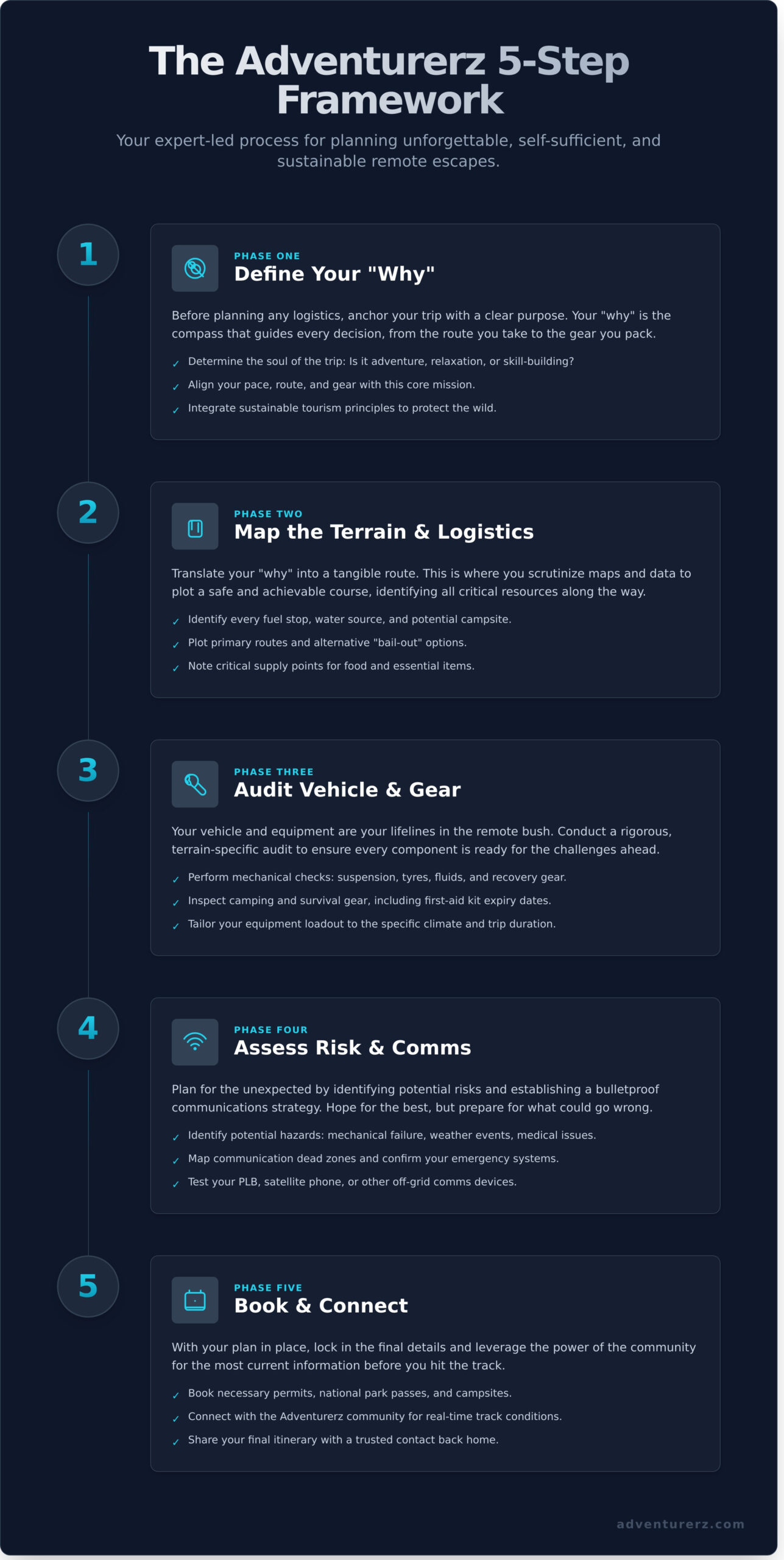
The Adventurerz 5-Step Framework for Trip Success
Forget endless checklists and confusing spreadsheets. Here at Adventurerz, we believe the best trips start with a rock-solid plan. That’s why we developed our 5-Step Framework. It’s more than just a to-do list; it’s a mindset, a proven process that turns a good idea into an unforgettable, responsible adventure. Think of it as the ultimate travel planner toolkit for exploring the wild heart of Australia.
We live by this framework for every expedition we plan, from a weekend escape from Redcliffe to a month-long Kimberley trek. Ready to build your next epic journey? Let’s dive in!
- Phase 1: Define Your “Why”. Before you look at a single map, ask yourself: what is the soul of this trip? Is it about chasing barramundi in the Top End, or tracing ancient rock art sites? Your “why” dictates your route, your gear, and your pace. It also shapes your environmental commitment. A truly successful trip aligns with sustainable tourism principles, ensuring we protect the very places we’re so passionate about exploring.
- Phase 2: Map the Terrain. Now the fun begins! We’re talking about identifying every fuel stop, water source, and potential campsite. This is where you plot your course, noting critical supply points and potential bail-out routes if things go sideways.
- Phase 3: Audit Vehicle & Gear. Your 4WD and equipment are your lifelines. This phase involves a rigorous check of everything from tyre pressure and suspension to the expiry dates on your first-aid kit, all tailored to the specific climate and duration of your trip.
- Phase 4: Assess Risk & Comms. What’s your plan for a vehicle breakdown 300km from the nearest town? This is where we plan for the unexpected. We map out communication dead zones and confirm our emergency systems, like a PLB or satellite phone, are ready to go.
- Phase 5: Book & Connect. With the core plan locked in, it’s time for the final details. This means securing national park passes, booking campsites or station stays, and connecting with local communities or guides to enrich your experience.
Mapping the Remote Australian Landscape
Plotting a course through the outback requires more than just Google Maps. We rely on specialised tools like Hema Maps and WikiCamps to identify 4WD-only tracks, remote bush camps, and permit requirements. Understanding seasonal changes is critical; a dusty track in Western Australia’s Pilbara during July becomes an impassable river crossing in January. Likewise, many Cape York tracks in Queensland are completely closed during the wet season (December-April). If the complexity feels overwhelming, our remote Australia travel planning services can help you bridge the gap with expert-designed itineraries.
The Logistics of Self-Sufficiency
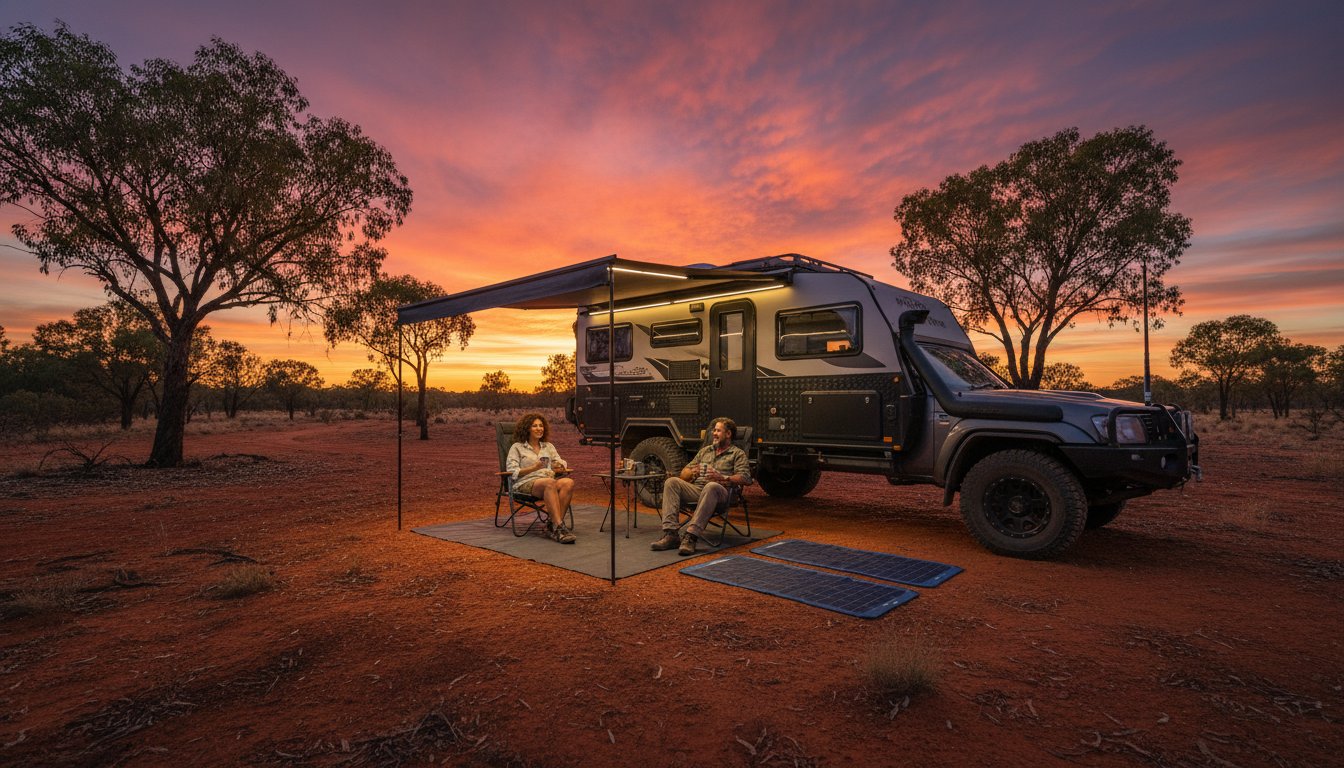
True freedom is found off-grid, but it demands meticulous planning. For a 7-day remote trip, we calculate a minimum of 5 litres of water per person, per day, for drinking and washing. Fuel is calculated based on vehicle consumption (e.g., 16L/100km for a loaded Prado on soft sand) plus a non-negotiable 25% safety buffer. Power for fridges and electronics is managed with solar setups, typically a 120W panel or larger, paired with a reliable dual-battery system. And remember, what you take in, you must take out. We plan for “zero-trace” waste by carrying dedicated heavy-duty bags to bring every last scrap back with us.
Integrating Gear: Why Your Planner Needs a Hardware Audit
Let’s be honest, fellow Adventurerz. Your meticulously crafted trip itinerary is only as good as the gear that supports it. A plan to conquer the Cape York corrugations from your Redcliffe driveway falls apart fast if your suspension isn’t up to the task. That’s why every great adventure begins not with a map, but with a hardware audit. It’s about matching your schedule’s ambition to your setup’s capabilities, ensuring your gear doesn’t just survive the trip, but makes it better. Before you lock in those 2026 dates, it’s time to take a hard look at your rig.
Rooftop Tents: The Game Changer for Itinerary Flexibility
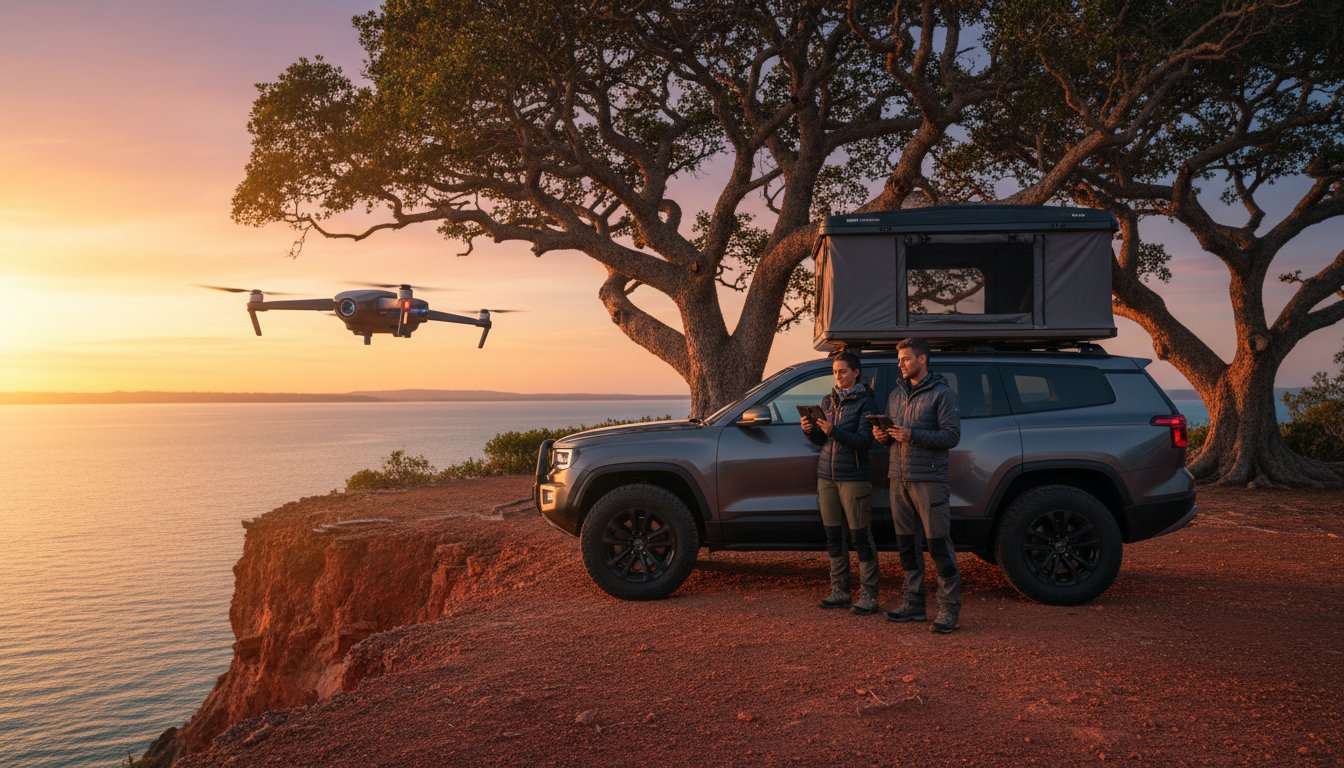
A rooftop tent (RTT) completely rewrites the rules of trip pacing. Forget spending 30 minutes wrestling with poles and pegs in the dark. Modern hardshell RTTs, like many we feature, can be set up in under two minutes. This speed transforms your travel planner from a rigid document into a flexible guide. Found a perfect, unexpected campsite by a river? You can stop. No stress, no drama. This freedom allows for genuine spontaneity. But remember the physics. An RTT adds 60-80kg to your roof, impacting your vehicle’s centre of gravity and potentially increasing fuel consumption by 5-10%. Always check your vehicle’s dynamic and static roof load limits before you buy. Need some setup inspiration? Our buying guide for rooftop tents has everything you need to get started!
Essential 4WD Accessories for Remote Success
Your rig’s accessories are your support crew on the road. A quality 4WD awning, for instance, isn’t a luxury; it’s a critical fatigue management tool. On a scorching 35°C day along the Bruce Highway, a 270-degree awning can create a patch of shade up to 15°C cooler, turning a frantic roadside stop into a genuine, restorative break. It’s your instant sanctuary from the Queensland sun.
Beyond comfort, there’s the non-negotiable gear that every trip planner must account for. We’re talking about recovery essentials. Having these items isn’t just for you; it’s a responsibility to every other adventurer on the track.
- Recovery Tracks: At least two, but four is the gold standard for tricky situations.
- Snatch Strap & Shackles: Ensure your strap has a minimum breaking strength of 8,000kg and is paired with correctly rated bow shackles.
- Tyre Deflator & Compressor: For adjusting pressures between bitumen and beach driving.
- Long-Handled Shovel: The most underrated recovery tool you’ll ever own!
Finally, we choose gear that protects the very tracks we love to explore. Opting for a 200W portable solar blanket instead of a generator keeps the bush quiet. Using biodegradable soaps ensures our waterways stay pristine. This is our code: explore responsibly, and leave every campsite better than we found it. Your gear choices are a direct reflection of that commitment.
Sustainable Planning: Protecting the Wild for 2026 and Beyond
For us Adventurerz, the call of the wild is everything! It’s the red dust of the Outback, the salty air of a remote coastline, and the crackle of a campfire under a billion stars. But that freedom comes with a massive responsibility. To keep these incredible places pristine for our kids and their kids, our adventures must be built on a foundation of respect. This is the Adventurerz code: we explore with purpose, and we protect what we love.
That protection starts before your 4WD even leaves your Redcliffe driveway. Your route plan is your first tool for conservation. Instead of blazing new trails, we stick to established tracks to prevent soil erosion, which can scar the landscape for decades. Modern digital mapping from Hema Maps or Gaia GPS makes this easier than ever. We plan around sensitive areas, like avoiding coastal dunes during turtle nesting season (November to March in Queensland) or giving wetlands a wide berth during bird breeding periods. A simple adjustment in your travel planner can make a world of difference to a local ecosystem.
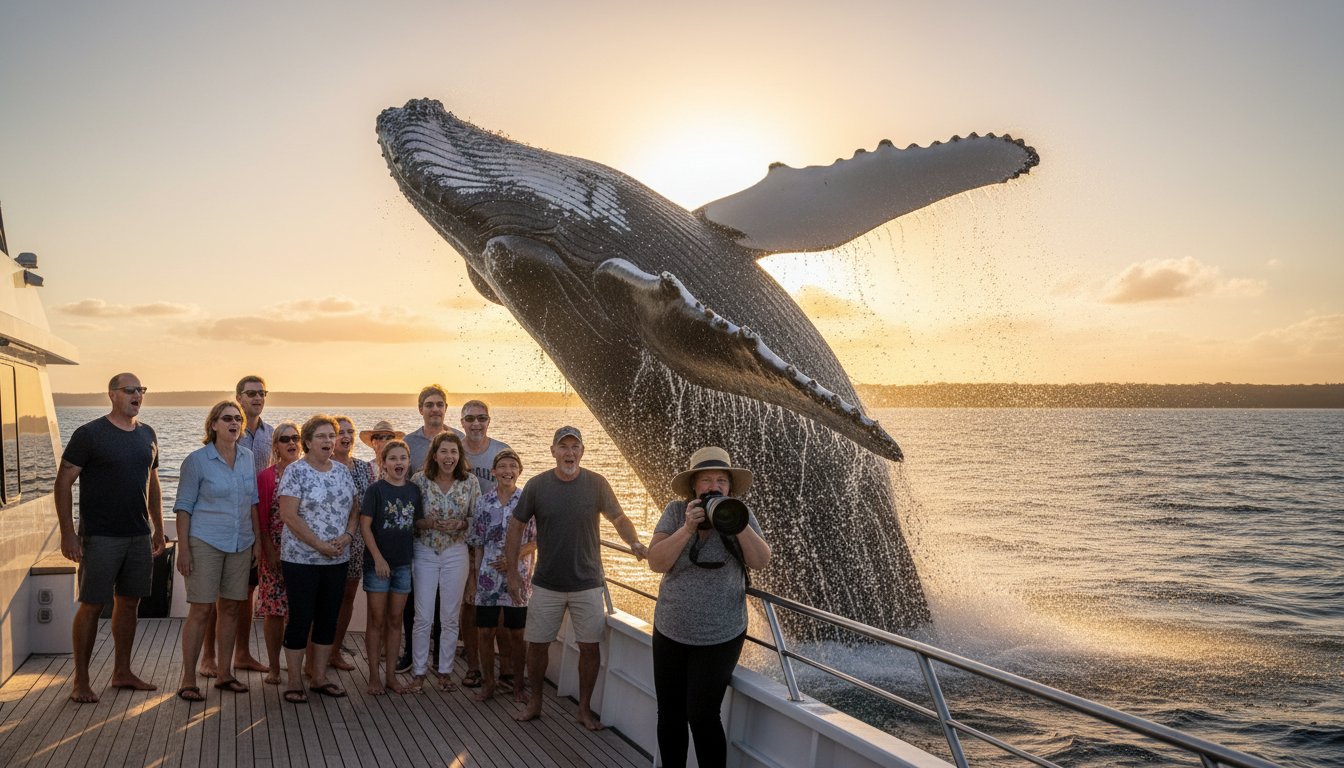
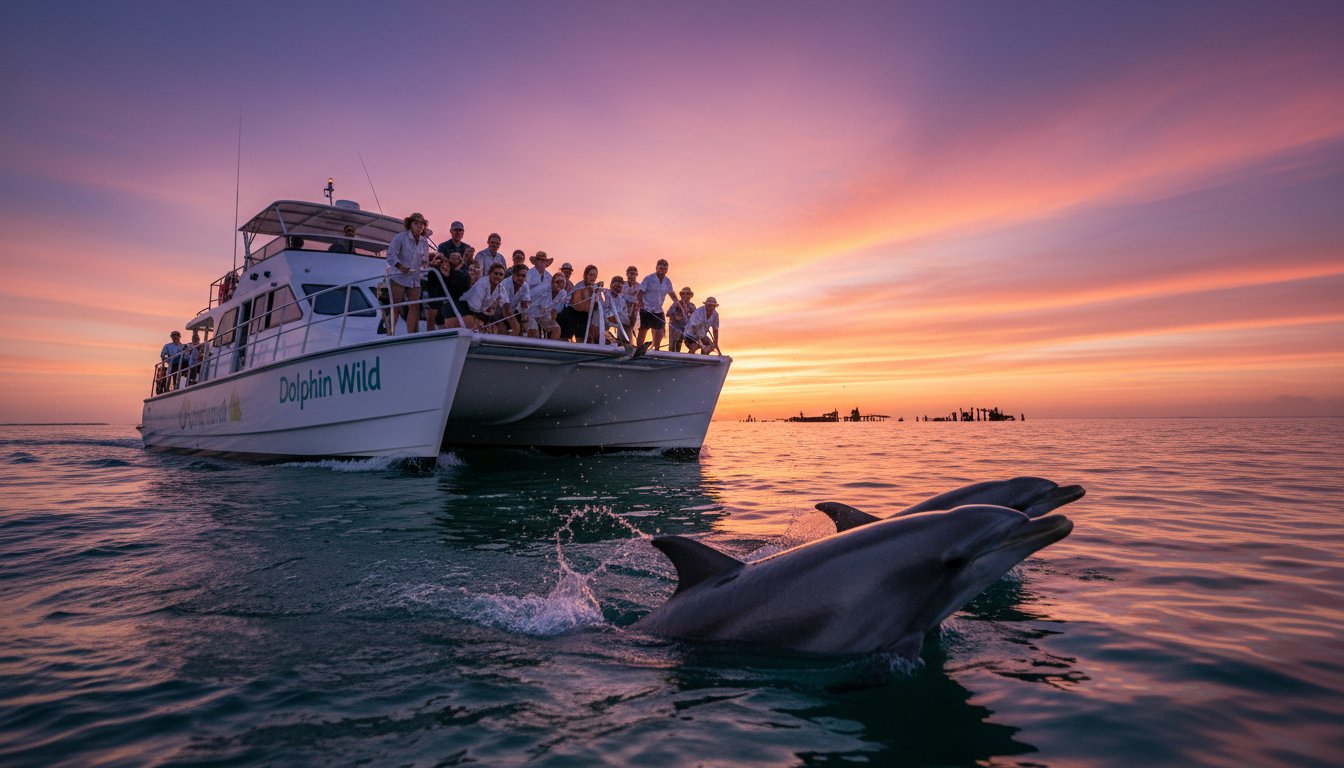
Our impact also extends to the people and businesses we support. When booking a guided tour or a cruise, we look for operators with official Eco-Tourism Australia certification. This ensures they meet the national standard for sustainable practices, verified as of 2024. By choosing a locally-owned charter in the Whitsundays or stocking up on supplies in a small town like Charleville, we directly fuel regional economies. This isn’t just about spending money; it’s about investing in the communities that act as custodians for the wild places we cherish.
Leave No Trace: The Planner’s Checklist
Being a true Adventurerz means leaving a place better than you found it. It’s a simple mindset with a huge impact. Before you head out, run through this checklist:
- Fire Safety First: Always check the Queensland Fire and Emergency Services (QFES) website for local fire bans. A Total Fire Ban (TOBAN) means no open flames, period. Use designated fire pits where available and ensure your fire is completely out with water, not just soil, before you leave.
- Pack It In, Pack It Out: This is non-negotiable. All rubbish, including food scraps, comes home with you. We recommend a dedicated heavy-duty bin bag, like the OZtrail Wheelie Bin, that straps to your spare tyre.
- Respect a 60,000-Year Legacy: We travel as guests on lands cared for by Traditional Owners for millennia. Acknowledge this by staying on marked paths, never touching Indigenous rock art or cultural artefacts, and seeking permits where required. These sites are protected under the Aboriginal and Torres Strait Islander Heritage Protection Act 1984.
Ethical travel isn’t just a choice; it’s our promise to the future, ensuring these wild places remain open and pristine for the next generation of Adventurerz.
Eco-Friendly Equipment Choices
The gear we choose is a powerful statement about our values. A well-prepared camp is a low-impact one. For your energy plan, a quiet 200W solar panel setup will easily keep your camp fridge and lights running silently. It respects the tranquility of the bush and your fellow campers, unlike a noisy generator, which is now restricted after 9 pm in most Queensland national parks. When it comes to hygiene, using phosphate-free, biodegradable soaps like Sea to Summit’s Wilderness Wash ensures you aren’t polluting the very waterways you came to enjoy. Finally, investing in high-quality gear is a massive sustainability win. A durable canvas swag from a brand like Darche might cost A$800, but its 15-year lifespan prevents three or four cheaper alternatives from ending up in landfill. It’s about buying once and buying right.
Ready to build your ultimate sustainable kit? Explore our curated collection of eco-friendly gear and start planning your next responsible adventure!
How Adventurerz Simplifies Your Planning Journey
Let’s be honest. Piecing together a major Aussie adventure can feel like a full-time job. You’re juggling gear reviews on one site, booking campsites on another, and trying to find reliable track conditions on a forum from 2019. It’s a fragmented, frustrating process. That’s where we come in. We’ve built an all-in-one ecosystem designed for Redcliffe Peninsula locals who crave genuine, off-the-grid experiences. Think of us as your ultimate travel planner, powered by real-world expertise and a passionate community.
It all starts with our gear reviews. We don’t just test a swag tent; we take it across the Simpson Desert and tell you how it holds up. From there, our entire platform is connected. You can read our review of the best 4WD awnings, then connect directly with our Scarborough-based travel agents who can map out a two-week itinerary for Fraser Island where that exact awning will be your best friend. We bridge the gap between inspiration and execution. We get you out there, faster and better prepared.
Our strength lies in our deep industry connections. Because we book adventures for hundreds of Adventurerz every year, we secure specialized rates you won’t find anywhere else. We’re talking exclusive deals on iconic trips, like a 10-night Kimberley expedition cruise with Coral Expeditions or all-inclusive 4WD tours through the Flinders Ranges. These partnerships allow us to pass on savings, often up to 15%, directly to our community members.
Boutique Consultancy Meets Outdoor Media
Our advice is always free because our model is built on trust, not subscription fees. We earn a commission from the tour operators or accommodation providers after you book. This keeps our recommendations fiercely independent; we only suggest the gear and trips that are genuinely the best fit for your adventure. Our Scarborough-based specialists aren’t just agents; they’re seasoned campers and 4WD enthusiasts who can build you a completely customized itinerary for remote Australia, right down to the last recovery point.
Join the Tribe: The Community Planner
The real magic of the Adventurerz travel planner is the tribe itself. Our community hub is a living, breathing source of real-time information. It’s where you get the most valuable intel for any trip.
- Share your journey: Post incredible photos from the Cape and get immediate tips from others who were there last week.
- Get live updates: Found a washed-out track on the way to Birdsville? Post an update and help fellow Adventurerz reroute safely.
- Access exclusive discussions: Dive into member-only forums debating the best off-grid power solutions or the most eco-friendly recovery gear on the market in 2024.
Stop planning alone. It’s time to tap into a network of passionate experts and fellow explorers who want to see you succeed. Your next great adventure is waiting.
Your 2026 Adventure Is On The Map!
The path to your 2026 remote escape is clearer than ever! We’ve seen that a successful trip hinges on smart preparation, from following our 5-Step Framework to integrating a full hardware audit and committing to sustainable practices that protect the wild places we love. A powerful travel planner isn’t just a document; it’s your most crucial piece of gear for turning that dream dot on the map into a detailed, day-by-day reality.
And you don’t have to map it all out alone. When you plan with us, you’re joining a community of thousands of sustainable explorers who share your passion. Our expert adventure agents, based right here in Scarborough, QLD, bring specialized, hands-on knowledge in the nitty-gritty of 4WD accessories and rooftop tents to every single plan we help build. We live and breathe this stuff, ensuring you’re perfectly equipped for the Aussie wild. It’s time to stop dreaming and start doing!
Plan your next remote escape with the Adventurerz experts!
Your greatest adventure is waiting. Let’s get you out there!
Frequently Asked Questions About Your Next Adventure
How do I start a travel planner for a remote 4WD trip?
Start your 4WD travel planner by plotting non-negotiable waypoints like fuel stops, water sources, and emergency exit routes. We always begin with a physical map, like a Hema map for the specific region, before cross-referencing with digital tools. Calculate your vehicle’s maximum range-say, 800km on a full tank-and ensure no leg of your journey exceeds 75% of that. This builds a crucial safety buffer for getting properly off-the-grid. What an adventure!
What are the best travel planner apps for offline use in Australia?
For offline use across Australia, we recommend two absolute champions: Hema 4×4 Explorer and WikiCamps Australia. Hema is the gold standard for detailed topographic maps and 4WD tracks, essential for remote navigation. WikiCamps, which costs a one-time fee of A$7.99, is a crowd-sourced powerhouse with over 100,000 campsites, water points, and points of interest reviewed by fellow Adventurerz. Download the maps for your state before you lose reception!
Is a professional travel planner worth it for a camping trip?
For most trips, we believe the joy is in the journey of planning it yourself! However, for a massive undertaking like a 20-day Canning Stock Route expedition, a professional planner can be worth it. These specialists handle complex permits, satellite phone rentals, and remote food drops. Expect to pay upwards of A$500 for these specialised services, but the peace of mind on a once-in-a-lifetime trip can be priceless for some Adventurerz.
How much time should I spend planning a trip to remote Australia?
We recommend dedicating a solid three to six months for planning a major remote trip, like a Kimberley adventure. Use the first month for major vehicle servicing and modifications. The next two months should focus on finalising your route and booking national park campsites, which can fill up 12 months in advance! The final month is all about a detailed gear shakedown and meal prep. Good planning prevents poor performance out on the track!
Can I use a travel planner to find sustainable campsites?
Absolutely! Modern travel planner tools are fantastic for finding sustainable spots. In WikiCamps, use the filters to search for campsites with recycling facilities or “Leave No Trace” mentions in user reviews. Platforms like Hipcamp Australia now have over 500 listings tagged as ‘eco-friendly’, often on private land committed to conservation. It’s our collective responsibility as Adventurerz to travel considerately and leave these beautiful places better than we found them.
What happens if my travel planner route is blocked by weather?
This is where a great travel planner proves its worth! Always map at least two alternative routes (Plan B and C) for every remote leg of your journey. Sudden river flooding in the Cape York wet season or a bushfire closing a track down south is a real possibility. Your plan must include decision points: “If this causeway is over 0.5 metres, we divert to Plan B.” A satellite messenger, like a Garmin inReach, is non-negotiable for communicating your new plan.
How do I integrate gear reviews into my travel planning?
We make gear a core part of our planning process! Create a detailed checklist in your travel planner, whether it’s a spreadsheet or a section in an app. For big-ticket items like a 12V fridge or a new swag, link directly to 2-3 trusted, independent reviews. This helps you compare specs like power draw or pack-down size right where you need the info. Check our Adventurerz gear reviews; we test everything in real-world Aussie conditions so you can choose with confidence.