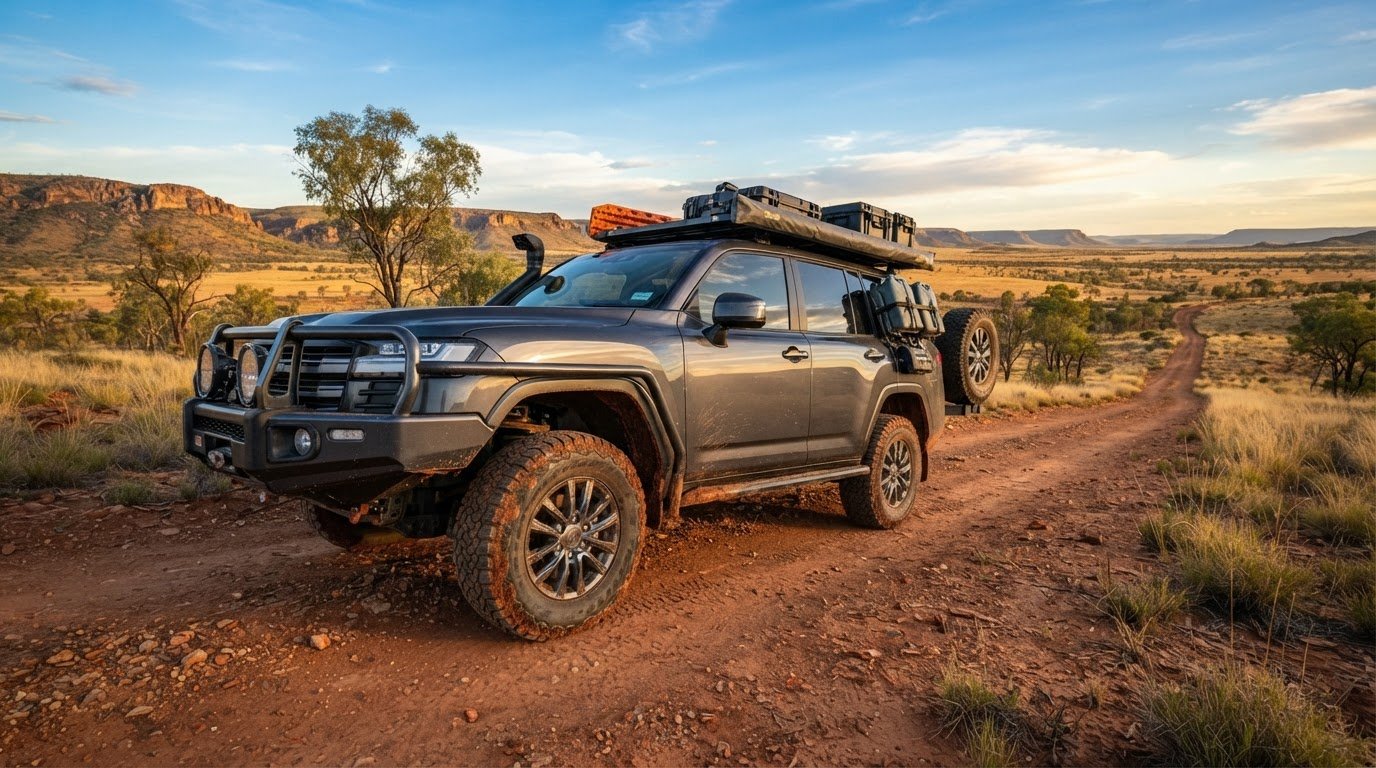
There it is. The rooftop tent is mounted, the awning is bolted on, and the recovery tracks are strapped down tight. Your rig looks ready for anything, but a nagging thought creeps in as you stare up at the fully-loaded rack: “Is this too much?” It’s the single biggest question that can cause sleepless nights before a big trip, and we hear it from fellow Adventurerz all the time: how much weight can my roof rack hold? Overlook this crucial detail, and you’re not just risking a dented roof; you could be looking at a voided insurance claim and a disastrous end to an otherwise epic Aussie adventure.
Forget the guesswork and anxiety! We’re here to help you master the maths and load up with total confidence. In this guide, we’ll break down the vital difference between static and dynamic load ratings, give you a clear formula for your specific 4WD setup, and explain how rugged, corrugated tracks change all the rules. Let’s get you geared up safely and responsibly, so the only thing you have to worry about is where the road takes you next!
Key Takeaways
- Learn the crucial difference between a dynamic load rating (for when you’re driving) and a static load rating (the key to safely using a rooftop tent).
- Discover the ‘Off-Road Reduction’ rule and why your load capacity drops significantly the moment your 4WD hits a corrugated Aussie track.
- Master our step-by-step formula to calculate your true net payload, finally answering how much weight can my roof rack hold after accounting for the rack itself.
- Find out why your vehicle’s roof rating is often the weakest link in your setup, a critical detail for avoiding costly damage and staying insured.
Understanding Roof Rack Load Ratings: Why One Number Isn’t Enough
Every adventurer has asked it: “So, how much weight can my roof rack hold?” It’s the million-dollar question before any big trip, but the answer is never just one simple number. A “Load Rating” is the maximum weight a system can safely support, but that system involves more than just the rack itself. The classic Aussie “she’ll be right” attitude might seem adventurous, but when it comes to overloading your roof, it’s a fast track to voiding your insurance, damaging your vehicle’s roof, and creating a serious safety hazard on the road.
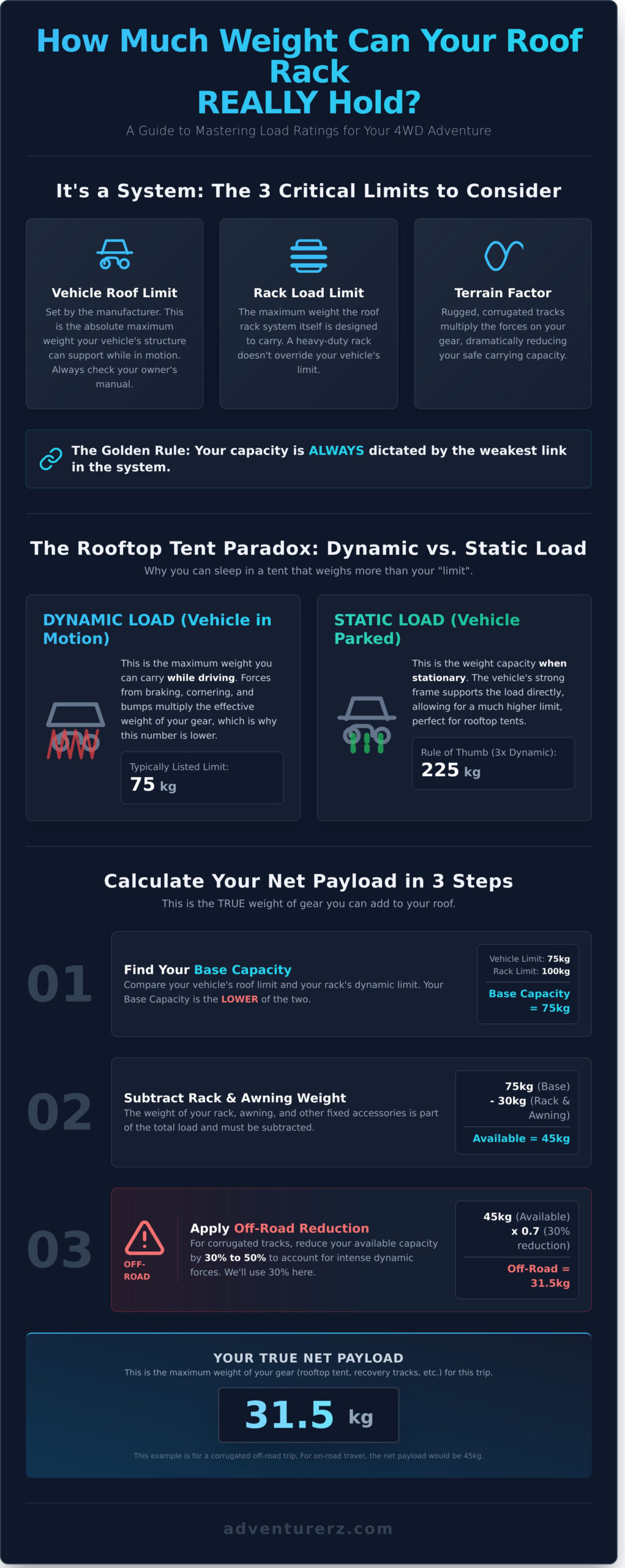
To get it right, we Adventurerz need to think about three critical pillars of weight: The Vehicle, The Rack, and The Terrain. Getting this balance right is the first step to a successful and responsible trip. The most important rule? The lowest rated component in your entire setup always dictates your total carrying capacity. No exceptions!
The Vehicle Roof Limit vs. The Rack Limit
Before you even think about strapping down that new rooftop tent, you need to find your vehicle’s maximum roof load limit. Grab your owner’s manual and look under sections like “Luggage,” “Loading,” or “Technical Specifications.” This number is set by the manufacturer and is non-negotiable. For a deeper dive into the basics, Understanding Roof Rack Load Ratings and their components is a great starting point. Just because you’ve installed a heavy-duty rack rated for 100kg doesn’t mean you can carry 100kg if your car’s roof is only rated for 75kg. Your limit is 75kg, period. Your total roof load capacity is always determined by the weakest link in the chain, which is often the vehicle itself.
Why Weight Distribution Matters on the Redcliffe Peninsula and Beyond
Whether you’re cruising the highway up to the Redcliffe Peninsula or tackling a corrugated track inland, where you place the weight is just as crucial as how much you’re carrying. Loading gear high on your roof raises your vehicle’s center of gravity, which significantly increases the risk of a rollover on uneven terrain or during a sudden swerve. At highway speeds, wind resistance pushes against your load, adding “effective weight” and strain. For maximum stability, always pack your heaviest items low and centred on the rack, ideally positioned directly above the internal support pillars of your vehicle’s frame (think between the front and back doors).
Dynamic vs. Static Load Ratings: The Rooftop Tent Paradox
This is the number one question we get from fellow Adventurerz, and it’s a brilliant one! You look at the sticker on your roof rack system, see a limit like 75kg or 100kg, and then you look at your 60kg rooftop tent and think, “How on earth can my partner and I sleep up there without the whole thing collapsing?” It’s a classic paradox, but the answer is wonderfully simple: there are two different weight limits we need to talk about.
Understanding the difference between dynamic and static load is the key to unlocking safe rooftop adventures. The number on the sticker is only half the story when you’re figuring out how much weight can my roof rack hold.
The Science of Motion: Why Dynamic Weight is Lower
Your Dynamic Load Rating is the maximum weight your roof rack and vehicle roof can safely handle while you’re driving. Think of it as ‘weight in motion’. When you’re tackling a corrugated track or braking suddenly to avoid a roo, the forces acting on your gear multiply dramatically. A 50kg load doesn’t feel like 50kg when it’s jolted by a pothole at 80km/h; it exerts a massive downward and sideways force. This is why manufacturers set conservative dynamic limits-it’s all about maintaining your vehicle’s stability and a safe centre of gravity. For a deep dive into the legal requirements, the National Transport Commission’s official Load Restraint Guide is an excellent resource for all Aussie tourers.
Static Safety: Sleeping in Your Rooftop Tent
Now for the good news! Your Static Load Rating is the weight your setup can support when the vehicle is parked. This number is always significantly higher. Why? Because when you’re stationary, the weight is transferred directly down through the vehicle’s pillars and frame-the same super-strong structure designed to protect you in a rollover. The forces of motion are gone!
While most manufacturers don’t advertise this number, the industry rule of thumb is that the static capacity is 3x to 5x higher than the dynamic rating. Let’s calculate it:
- Your Dynamic Load Rating: 75kg
- Conservative Static Calculation: 75kg x 3 = 225kg
That 225kg is the real-world figure for how much weight can my roof rack hold when parked for the night. Now, let’s do a quick safety check:
- Weight of your rooftop tent: 60kg
- Weight of two Adventurerz: 150kg
- Weight of bedding, ladder, and gear inside: 10kg
- Total Static Weight: 220kg
As you can see, you’re safely within that 225kg static limit. Now you can sleep soundly under the stars, knowing your gear is secure and your calculations are spot on! Ready for the next step?
The Australian Off-Road Factor: How Terrain Changes Your Capacity
The dream of every Aussie 4WD owner: red dust, endless horizons, and a rig packed for adventure. But the moment your tyres leave the bitumen and hit those iconic corrugated tracks, the rules of the game change. The forces acting on your vehicle and its rooftop load multiply, and this is where the question of how much weight can my roof rack hold gets a serious reality check. It’s not just about the number on the box; it’s about physics, safety, and a deep respect for our wild places.
This isn’t just a friendly tip; it’s a critical safety protocol followed by major brands like Rhino-Rack and Prorack. They call it the “Off-Road Reduction,” a rule designed to account for the brutal, relentless vibrations and sudden jolts from washouts, deep ruts, and rocky trails. Over thousands of outback kilometres, these forces can cause dangerous metal fatigue in your roof rack mounts and even damage your vehicle’s roof pillars. This is especially true for long, remote trips across the country.
The 1.5x Safety Factor for Unsealed Roads
Here’s the simple, non-negotiable math every Adventurer needs to burn into their memory: take your on-road dynamic load limit and divide it by 1.5. This is your new maximum capacity for any unsealed road. This crucial calculation accounts for the intense vertical and lateral forces that off-road driving exerts on your setup. For a deeper dive into the science, J.D. Power has an excellent guide explaining Dynamic vs. Static Load Ratings that we highly recommend.
- Example: A common 75kg on-road dynamic limit instantly becomes a 50kg off-road limit. That’s a 25kg difference – the weight of a full jerry can and then some!
“Treating your on-road limit as a suggestion on corrugated tracks isn’t just risky; it’s a direct invitation for gear failure miles from anywhere.”
Sustainable Exploration: Protecting the Track and Your Rig
As Adventurerz, our responsibility extends beyond our own vehicle. Overloading doesn’t just risk your rig; it chews up the very tracks we love, increasing erosion and making them tougher for the next crew. It also hammers your fuel consumption, costing you money and increasing your environmental footprint. We believe in packing smart and light. Thinking carefully about how much weight can my roof rack hold is the first step in a more sustainable adventure.
This isn’t about leaving essentials behind; it’s about choosing gear wisely:
- Consider a modern, lightweight 4WD awning over a heavier, older model.
- Opt for a nimble soft-shell rooftop tent, which can be significantly lighter than many hard-shell alternatives.
- Pack dehydrated food for longer trips to save critical weight and space.
How to Calculate Your Net Payload: A Step-by-Step Formula
Alright Adventurerz, let’s get down to the nitty-gritty. Answering “how much weight can my roof rack hold” isn’t just about one number; it’s about a simple calculation that keeps you safe on the tracks. Forget the guesswork! We’ve broken it down into a foolproof formula to ensure your rig is balanced, legal, and ready for the Aussie bush.
Step 1: Find Your Limiting Factor. Check the dynamic load rating for both your vehicle’s roof and your roof rack system. Your maximum capacity is always the lower of these two numbers. Don’t assume your heavy-duty rack overrides your car’s factory limit!
Step 2: Subtract the Rack System’s Weight. Your roof rack platform, crossbars, and feet all have weight. This is the first thing you must subtract from your maximum capacity. A typical platform rack can weigh between 25-40kg before you’ve even added gear.
Step 3: Subtract Fixed Accessories. Now, subtract the weight of anything that lives on your rack full-time. This includes your rooftop tent, awning, recovery track mounts, and any other brackets. This gives you the true baseline before packing for a trip.
Step 4: Calculate Your Net Payload. The number you have left is your Net Payload. This is the maximum weight of all your variable gear-think swags, jerry cans, solar panels, and storage boxes-that you can safely add for your next adventure.
Common Gear Weights for Your Calculation
To help you out, we’ve gathered some average weights for popular gear. Remember to always check the specific weight of your own equipment!
- Rooftop Tents: A soft-shell RTT typically weighs 60-75kg, while a hard-shell can easily push 75-95kg.
- 4WD Awnings: A standard 2.5m x 2.5m awning usually weighs between 12kg and 25kg, depending on the brand and materials.
- The Small Stuff: Don’t forget the extras! A set of four MaxTrax is about 14kg, and shovel or high-lift jack mounts add a few more kilos to the total.
Real-World Example: The “Weekend Warrior” Setup
Let’s walk through a common setup: a 2026 Toyota HiLux with a manufacturer-stated roof dynamic load limit of 100kg. The owner has a quality rack system installed that also has a 100kg+ rating.
Here’s the gear on top: A lightweight platform rack (25kg), a rooftop tent (70kg), and a 270-degree awning (22kg). Let’s do the maths: 25kg + 70kg + 22kg = 117kg.
The Verdict: This setup is already 17kg over the vehicle’s dynamic limit. While it might feel fine driving on sealed roads, it’s a recipe for disaster on corrugated tracks. The bouncing and side-to-side forces of off-road driving can multiply that load, putting immense stress on your roof pillars and potentially leading to catastrophic failure. This is precisely why knowing how much weight can my roof rack hold is non-negotiable for safe exploration.
Maximizing Your Adventure: Choosing the Right Gear with Adventurerz
You’ve done the hard yards-you understand your vehicle’s dynamic and static weight limits, and you know the difference between GVM and payload. Now for the exciting part: loading up for an unforgettable trip! Knowing your weight limits isn’t about restriction; it’s about freedom. It empowers you to make smarter, safer choices so you can focus on the incredible Australian landscapes ahead. At Adventurerz, we believe the right gear makes all the difference.
Lightweight Gear Recommendations
Every kilo counts when you’re pushing the limits on a remote track. Choosing accessories that balance rugged durability with weight savings is key. We’re massive fans of high-strength, low-weight aluminium racks over traditional steel. They offer incredible strength without eating into your precious payload. Look for modern integrated systems, too-these platforms often reduce the need for heavy, complex mounting brackets, shaving off even more weight. The goal is to build a capable rig, not a heavy one. Even your choice of shelter matters; explore our latest reviews on lightweight 4WD awnings to see how you can get awesome coverage without the kilograms.
Sourcing high-quality, durable gear is a global pursuit for serious adventurers. For inspiration on what premium equipment looks like, it can be useful to explore what specialists in other demanding environments offer. For example, to see a range of top-tier action sports equipment, you can visit Avalanche Pro Shop.
Join the Adventurerz Community
The ultimate gear test happens out on the tracks, and the best knowledge comes from fellow Adventurerz! We encourage you to jump into our forums and share your rig setups, weight-saving tips, and trip reports. See what’s working for others and get inspired.
If you’re planning a major expedition and still wrestling with the question of how much weight can my roof rack hold for a Simpson Desert crossing, our remote Australia travel planning services are here to help. We factor in your specific vehicle, your destination, and your gear to ensure your setup is both capable and safe. Remember, safety isn’t just about following the law; it’s about ensuring you and your family make it home with amazing stories to tell.
Final Safety Checklist Before You Go
Whether you’re heading out from Scarborough for a weekend or tackling the Kimberley, run through this quick pre-trip check. It only takes five minutes and could save you a world of trouble.
- Check All Fixings: Are all bolts and nuts securing your rack to the vehicle tight? Give them a once-over with a spanner.
- Inspect Straps and Tie-Downs: Look for any fraying, sun damage, or wear and tear on your ratchet straps or ropes. Replace anything that looks dodgy!
- Confirm Load Distribution: Is your gear spread evenly? Keep the heaviest items low and centred to maintain your vehicle’s stability.
- The “Shove” Test: Firmly try to push and pull your loaded gear. Nothing should shift, wobble, or slide. If it does, re-secure it.
With a well-planned load and the right gear, you’re ready for anything. Now get out there and explore!
Master Your Load, Master Your Adventure!
We’ve covered some serious ground, from the crucial difference between dynamic and static loads to how rugged Australian tracks can slash your capacity. Remember, the answer to how much weight can my roof rack hold is never just one number on a box. It’s a dynamic calculation that accounts for your vehicle, your rack, and the terrain ahead. By mastering this formula, you’re not just loading gear; you’re setting the foundation for a safer expedition. This principle of using precise tools to navigate complex environments is key in many fields; for instance, traders use advanced AI platforms like Quantum Navigator to manage risk in volatile futures markets.
That’s what being an Adventurerz is all about! Our advice comes from real-world testing by Australian 4WD enthusiasts who push their gear to the limits in places like remote Queensland. We are deeply committed to sustainable travel and sharing expert knowledge for responsible exploration. Ready to join a tribe that gets it?
Join the Adventurerz community for more expert gear guides and remote travel tips!
Now get out there, pack smart, and explore with confidence. The tracks are calling!
Frequently Asked Questions About Roof Rack Weight Limits
Does the weight of the roof rack itself count towards the load limit?
Yes, absolutely! Your vehicle’s dynamic roof load limit is the total weight it can safely carry while you’re driving. This number must include the weight of the rack system itself-the crossbars, platform, and all mounting hardware. So, if your 4WD has a 100kg limit and your rack weighs 25kg, you only have 75kg remaining for your rooftop tent, awning, and other gear. It’s a crucial first step in any safe load plan!
Can I increase my vehicle’s roof load limit with a stronger rack?
That’s a common question, but the answer is a firm no. A heavy-duty rack might have a higher rating, but you are always restricted by the lowest number, which is almost always your vehicle’s roof capacity. The manufacturer sets this limit based on the structural integrity of the roof and pillars. Overloading it, even with the toughest rack money can buy, risks serious damage to your rig and compromises handling and safety on the road. Always respect the vehicle’s limit.
What happens if I exceed my roof rack weight limit?
Exceeding your roof rack weight limit is a massive risk, both on the bitumen and out on the tracks. It creates a dangerously high centre of gravity, making your vehicle unstable and much more prone to rollovers. You also risk permanently damaging your vehicle’s roof panels and support pillars. In a worst-case scenario, the entire load could shift or detach while driving, causing a catastrophic accident. It’s just not worth the risk, fellow Adventurerz!
Is the weight of the people inside a rooftop tent included in the dynamic limit?
Great question! The dynamic load limit only applies when your vehicle is in motion. The weight of people inside your rooftop tent is part of the static load limit, which is the weight the roof can support when parked. This static limit is significantly higher than the dynamic one because the forces of cornering, braking, and bumps aren’t a factor. So, you can sleep easy knowing your rig is designed to support you, your partner, and the tent itself once you’re set up at camp.
How do I find my vehicle’s specific roof load rating for 2026 models?
For any new vehicle, including upcoming 2026 models, your owner’s manual is the ultimate source of truth. Manufacturers list the official roof load rating there. If you don’t have the manual handy, the next best place is the manufacturer’s official Australian website under the vehicle’s technical specifications. As a final option, you can call a local dealership. Avoid relying on forums or third-party sites, as this safety-critical information can sometimes be inaccurate.
Are roof rack weight limits different for glass panoramic roofs?
Yes, they are almost always different, and this is a critical detail to get right. Vehicles with panoramic sunroofs usually have a much lower roof load rating, and some are not rated to carry a load at all. The glass panel and its surrounding structure are not designed to bear the same stress as a solid steel roof. Always consult your owner’s manual to find out exactly how much weight can my roof rack hold if you have a glass roof.
Do I need to change my driving style when carrying a maximum load?
You bet! Driving with a fully loaded roof rack significantly raises your vehicle’s centre of gravity, which affects its handling. You need to drive more cautiously-that means slowing down for corners, braking earlier, and avoiding any sudden manoeuvres. Be extra mindful of crosswinds on the highway and take it easy on corrugated or off-camber tracks. A smoother, more deliberate driving style is key to keeping your adventure safe and your gear secure.
Will a rooftop tent void my new car warranty?
Generally, no-as long as you install and use it correctly. Simply adding a rooftop tent won’t void your entire new car warranty. However, if the tent or an improper installation causes damage-for example, by exceeding the roof’s weight limit and denting the panels-then the repairs for that specific damage will likely not be covered by the warranty. Always use a quality rack system and stay well within all specified weight limits to protect your rig and your warranty.