What if the difference between an empty bucket and a 10-litre haul of premium seafood came down to a single moon phase? We’ve all felt that sting of showing up to the Shorncliffe Pier or the Logan River only to realize we missed the peak window by 24 hours. It’s frustrating to watch others haul in massive Banana prawns while you’re struggling with a net that’s too light for the current. The prawn season Moreton Bay is the highlight of the year for us Adventurerz, but it demands more than just luck; it requires precision and respect for the local ecosystem.
Don’t forget to snap a photo of your golden-brown prawns against the Moreton Bay sunset. Share your wins with the Adventurerz tribe on our socials. We love seeing how our community tackles the prawn season Moreton Bay with respect for the land and a genuine passion for the catch. For those looking to swap the tinnie for a high-end voyage, Luxe Adventures designs bespoke Expedition Cruises to the world’s most remote corners. Let’s make 2026 a year of sustainable hauls and unforgettable campfire stories.
You probably agree that there’s nothing quite like the taste of a Tiger prawn tossed straight onto a 4WD awning stove after a long night on the water. We’re here to make sure your 2026 season is a total success by mastering the gear, timing, and sustainable habits that protect our waters. This guide breaks down the essential 2026 regulations and the specific cast net techniques you’ll need to fill your bucket while keeping your camping setup seamless and eco-friendly.
Key Takeaways
- Identify the 2026 “Golden Period” between late January and June to ensure your timing aligns perfectly with the massive seasonal recruitment of crustaceans.
- Select the ideal cast net and master mesh size requirements to stay fully compliant with Australian legal standards while maximizing your catch.
- Discover how to target transition zones and deep channels using the “River Mouth” strategy during the peak prawn season Moreton Bay offers.
- Stay up-to-date with the latest 2026 bag limits and learn why immediate grading is essential for a sustainable and ethical catch-and-cook adventure.
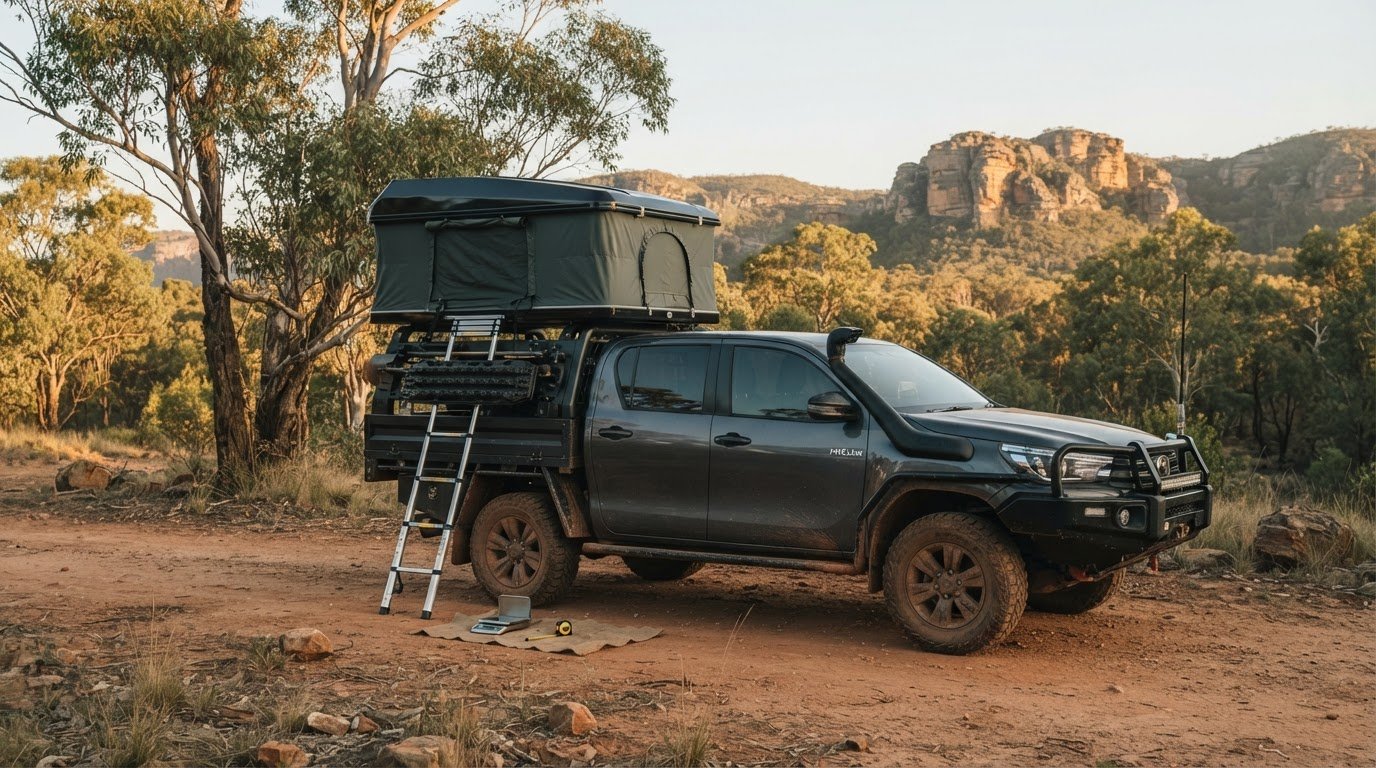
- Plan a seamless expedition by integrating rooftop tents and portable kitchen setups for a rugged, self-sufficient coastal road trip.
Understanding the 2026 Prawn Season in Moreton Bay
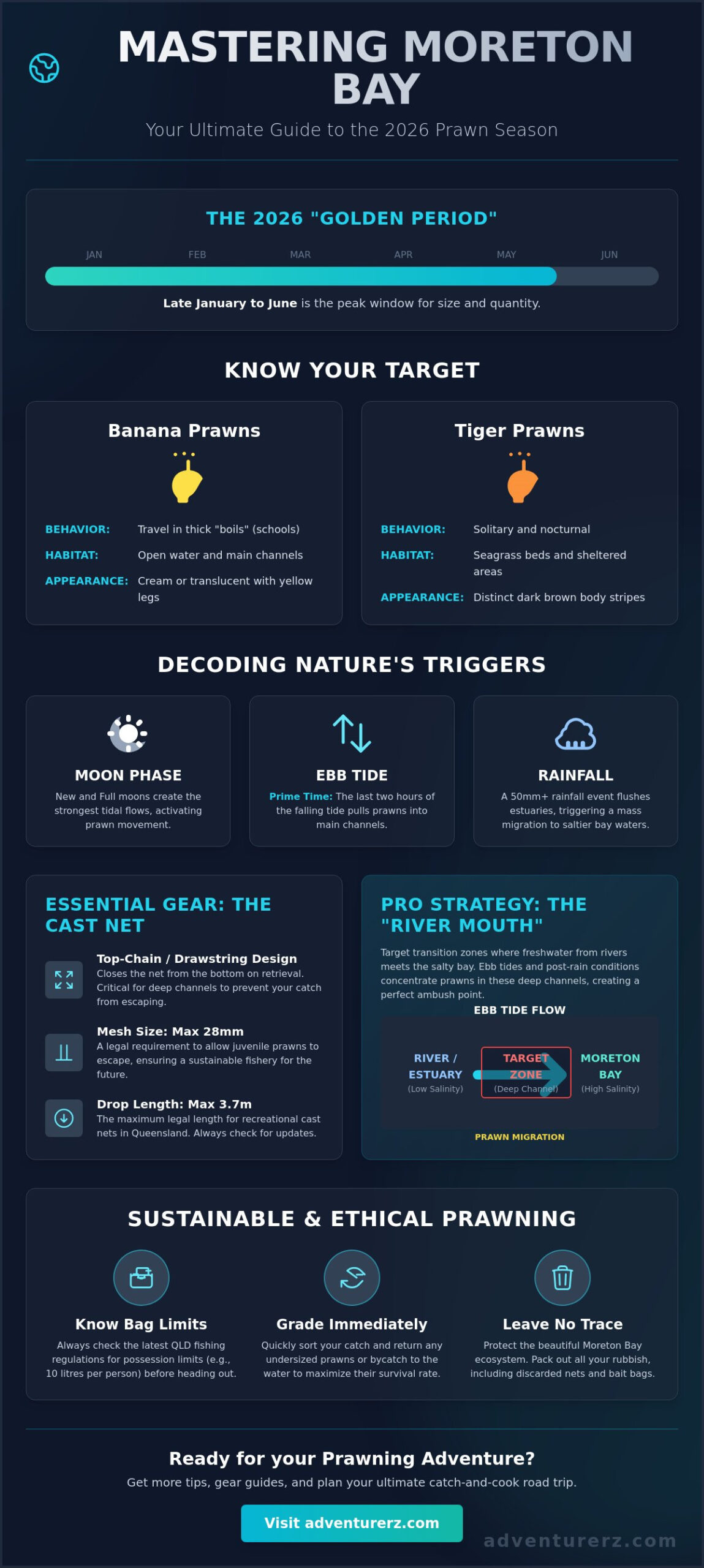
We’re gearing up for an incredible year on the water as the 2026 prawn season Moreton Bay approaches. This event is more than just a fishing trip; it’s a massive seasonal recruitment of crustaceans that transforms our local waterways into a hive of activity. For the 2026 calendar, the “Golden Period” officially kicks off in late January and stretches through to June. This five-month window represents the peak biomass in the bay, where the size and quantity of the prawns are at their absolute best for Adventurerz looking to fill a bucket.
Rainfall is the primary driver of a successful season. Heavy summer storms act as a natural flushing mechanism, lowering salinity in the estuaries and pushing juvenile prawns out into the deeper, saltier waters of the bay. By understanding prawns and their migratory habits, we can see why 2026 is shaping up to be unique. Current climate projections for South East Queensland suggest a transition into a neutral ENSO phase by early 2026. This typically results in more localized, intense storm activity compared to the broad rain bands of La Niña years, meaning specific catchments like the Pine River and Logan River will likely see concentrated “runs” after big afternoon bursts.
Banana Prawns vs. Tiger Prawns: Know Your Target
Banana Prawns are the schooling stars of the Moreton Bay run. They travel in thick “boils” that can turn the water a muddy brown or milky white, making them the primary target for cast netters. Tiger Prawns are much harder to find because they’re solitary and nocturnal. While Bananas are found in open water, Tigers prefer the safety of seagrass beds. You can identify your catch on the sorting tray by looking at the markings; Bananas are generally cream or translucent with yellow-tinted legs, whereas Tigers have distinct, dark brown stripes across their bodies.
The Biological Trigger: Tides and Moon Phases
The moon dictates the movement of every creature in the bay, and prawns are no exception. We find that the periods around the full moon and new moon create the strongest tidal flows, which prawns use as a conveyor belt to move toward the ocean. A prawn run is a biological event triggered by salinity changes where massive numbers of crustaceans migrate toward higher salinity levels in the open ocean.
- The Full Moon: Increased light and tidal movement often lead to more active schooling.
- The Ebb Tide: The “last of the ebb” (the final two hours of the falling tide) is the most productive time.
- Salinity: After a 50mm rainfall event, prawns move quickly to escape the freshwater.
Timing is everything when you’re out there. We always recommend hitting the water as the tide starts to drop, as this pulls the prawns out of the mangroves and into the main channels where they’re easier to net. It’s a fast-paced environment, but that’s part of the thrill for every dedicated member of our community.
Essential Gear for a Successful Prawning Expedition
Gearing up for the 2026 prawn season Moreton Bay requires more than just a bucket and a bit of luck. We know that the right kit makes the difference between a bucket of mud and a haul of “green gold.” Your most critical tool is the cast net. For the deeper channels of the Bay, we recommend a top-chain or drawstring design. These nets close at the bottom as you retrieve them, which prevents your catch from escaping when you’re pulling from depths of 10 metres or more. Bottom-pocket nets are fantastic for the shallows, but they can be prone to snagging on debris in high-current areas.
Staying legal is part of being a responsible Adventurerz member. Queensland law is strict regarding gear specifications to ensure the fishery remains healthy for future generations. Before you head out, check the latest Moreton Bay prawning regulations to ensure your gear meets current standards. Using the wrong mesh size doesn’t just risk a heavy fine; it impacts the sustainability of the local ecosystem we love. Here are the key specs to remember:
- Mesh size: Must be no greater than 28mm to allow juvenile prawns to escape.
- Drop length: Must not exceed 3.7 metres for recreational fishers.
- Net Condition: Ensure there are no large holes that allow your target catch to slip through.
Cast Netting Mastery for Adventurerz
Throwing a perfect “pancake” is a rite of passage. If your net doesn’t open fully, you’re leaving prawns on the table. Practice your rotation to ensure a wide spread, especially when targeting school prawns that congregate in 4 to 11 metre holes. Once you’re back at the ramp, don’t let salt ruin your investment. Rinse your net in fresh water and hang it in the shade to dry. This simple habit prevents salt corrosion and keeps the mono-filament supple for your next trip.
On-Board Electronics and Tech
Tracking the prawn season Moreton Bay becomes much easier when you use GPS data from previous years. A high-quality sounder is your eyes underwater. You aren’t looking for big arches; you’re looking for “prawn clouds,” which appear as thick, grainy fuzz hugging the bottom. When you find a hot spot, hit the “mark” button on your GPS immediately. Successful holes often produce year after year. To keep your catch fresh in the Queensland heat, a reliable solar power setup is vital to run your 12V fridge-freezer without draining your crank battery.
When you’re back on the beach or at the boat ramp, sorting your catch under the midday sun is brutal. This is where your vehicle setup pays off. We often deploy the best 4wd awnings to create a mobile processing station. Having that 2.5 metres of shade makes peeling and icing your prawns a breeze rather than a chore. If you’re planning a multi-day trip, check out our guide on roof top tents to stay close to the action and beat the early morning boat ramp queues.
Top Strategies for Locating Prawn Schools
Finding a thick school during the prawn season Moreton Bay feels like striking gold. We focus our efforts on transition zones where fresh river water meets the salty push of the tide. These areas, particularly around the mouth of the Brisbane River and the Logan River, act as natural highways for prawns moving toward the open sea. As Adventurerz, we know that success depends on understanding these underwater corridors.
Most successful hauls happen in the 5 to 9 metre depth range. Prawns congregate in these deeper channels to escape the heat and heavy surface currents. If you see a cluster of boats, remember our community etiquette. We never drive through another person’s casting circle. Keep your distance, watch their drift, and slot in respectfully. A little courtesy goes a long way in keeping the local prawning culture positive and sustainable.
Expert fishers also watch the surface for subtle clues. Look for “mud boils,” which are plumes of sediment kicked up by active schools on the bottom. If you spot terns or gulls diving in shallow water, they aren’t just after baitfish. They often pick off prawns pushed to the surface by predators. Use your sounder to confirm the biomass before you throw your net to ensure you aren’t just chasing shadows.
- Target the 5-9m depth: This is the sweet spot for Banana prawns in the main channels.
- Watch for birds: Diving birds are a primary indicator of surface activity.
- Identify mud boils: Look for discoloured water bubbling up from the bottom.
The Power of the Deep Hole
During the bright daylight hours of the 2026 season, prawns seek shelter in deep depressions on the river bed. These holes provide a refuge from the sun and fast-moving predators. We approach these spots with stealth. Cutting the outboard 50 metres out and drifting in prevents spooking the school. We swear by the “one shot” rule. You often only get one chance to drop the net before the school scatters. Make that first cast count to keep your deck efficient and avoid over-working a single hole.
Seasonal Migration Routes
Understanding the 2026 migration pattern is the key to a full bucket. Early in the prawn season Moreton Bay, we focus on the southern bay and river systems. As the weeks progress, the prawns move toward the bay proper, heading north toward deeper water. We track this movement by following the rain. Significant rainfall events in March or April usually flush the larger prawns out of the estuaries. Planning your trips around these pulses ensures you are in the right spot as the biomass shifts toward the northern reaches.
Prawning Regulations and Sustainable Practices for 2026
Every one of us in the Adventurerz tribe knows that a successful prawn season Moreton Bay depends on how we treat the water today. Respecting the 2026 regulations ensures that these salty gold mines remain productive for years to come. It’s not just about avoiding a fine; it’s about being a responsible explorer who leaves the bay better than they found it. We’ve seen how quickly a fishery can decline when people ignore the rules, so we lead by example.
The 2026 bag limits are strictly enforced to protect the resource. You’re allowed 10 litres of prawns per person, with a boat limit of 20 litres if you’ve got two or more people on board. In 2026, the recreational bag limit for prawns in Queensland is 10 litres per person in possession, with a maximum of 20 litres per boat. We always encourage taking only what you need for a fresh meal. A 5-litre bucket of prawns is a massive feast for a family, so there’s often no need to hit the maximum limit every time you’re out.
Grading your catch is a vital skill for sustainability. Don’t let your prawns sit in a bucket of stagnant water while you keep casting. Sort them immediately. Small prawns and non-target species should go back into the bay within 60 seconds to ensure they survive. If you wait until the end of the night to sort through your haul, the mortality rate for those smaller prawns skyrockets. We want those little guys to grow into the monsters we’ll be chasing next year.
Responsible waste management is part of the Adventurerz code. Never dump prawn shells at the boat ramp or in shallow swimming areas. The smell is a nightmare for other users, and it can attract unwanted predators to public beaches. Either freeze your shells for garden fertiliser or dispose of them in deep, moving water well away from the shore. This keeps our ramps clean and our community happy.
Ethical Harvesting and By-Catch
Using a wet sorting tray is a game changer. It keeps your catch moist, allowing you to flick juvenile fish and crabs back into the water instantly. Be extremely careful with your gear. Losing a cast net creates a ghost net that can kill marine life for decades. If you snag on a coffee rock, do everything possible to recover the mesh. For the best 2026 season, practice a catch-and-cook philosophy where freshness always beats volume.
Legal Compliance in Moreton Bay
Navigating the prawn season Moreton Bay requires staying clear of restricted marine park zones. Green zones are strictly no-take, and heavy fines apply. Safety is just as important as the catch. If you’re venturing into open waters, ensure you have a registered 406MHz EPIRB and up-to-date flares. Being prepared is the hallmark of a true adventurer. Always check the latest weather alerts before launching from any Moreton Bay ramp.
Planning Your Catch-and-Cook Adventure Road Trip
We know the feeling of a successful day on the water. The sun is dipping below the horizon, your bucket is full of fresh Greasybacks, and the salt air has worked up a massive appetite. For the 2026 prawn season Moreton Bay, we want you to spend less time faffing with gear and more time enjoying the serenity. That starts with a streamlined camp setup. Our tribe relies on rooftop tents because they get you off the ground in under 90 seconds. This is a lifesaver when the tide is coming in and you’re ready to start the stove.
Mapping out your route is half the fun of any expedition. We recommend using the Ultimate Adventure Travel Planner to pinpoint those hidden boat ramps and quiet campsites along the coast. It is the best way to ensure your 2026 escape stays on track while leaving room for spontaneous discoveries. Once you’ve found your spot, it’s all about the catch-and-cook lifestyle.
The Ultimate Shore-Side Setup
Organizing your 4WD is about zones. Keep your wet gear, like cast nets and buckets, in a dedicated rear drawer or a heavy-duty tub to stop the “prawn juice” smell from taking over your rig. Ice management is your top priority. For a 72-hour trip, use block ice rather than crushed; it lasts 40% longer in the Queensland heat. A solid base camp isn’t just about sleeping; it’s about creating a social hub where we can swap stories about the day’s haul around a sturdy prep table.
Cooking Your Catch: The Adventurerz Way
Keep it simple. You don’t need a five-star kitchen to make a world-class meal. A portable single-burner butane stove and a folding prep table are all you need for a feast. Toss your prawns in a hot pan with local garlic, bird’s eye chili, and a pinch of Australian sea salt. Peel them by twisting the head off first, then pulling the legs to release the shell in one go. It’s a minimalist technique that keeps the mess down. Pair your feast with a squeeze of lime from a local Sunshine Coast orchard to keep your footprint small and your flavors fresh.
Don’t forget to snap a photo of your golden-brown prawns against the Moreton Bay sunset. Share your wins with the Adventurerz tribe on our socials. We love seeing how our community tackles the prawn season Moreton Bay with respect for the land and a genuine passion for the catch. Let’s make 2026 a year of sustainable hauls and unforgettable campfire stories.
Ready to Master the 2026 Moreton Bay Haul?
The upcoming prawn season Moreton Bay is set to be a cracker, but coming home with a full bucket requires more than just luck. You’ve got to master the tide charts and secure the right gear before you hit the water. We’ve seen too many fishos struggle with sub-par equipment. That’s why we rely on expert-tested gear reviews to pick the best cast nets and 12V lighting setups. Remember that the Queensland Department of Agriculture and Fisheries (DAF) enforces a strict 10-litre possession limit for prawns. Staying compliant ensures we protect these local ecosystems for future generations of Adventurerz.
Whether you’re planning a weekend road trip or a quick night session, preparation is your best mate. Our comprehensive guides for remote Australian travel take the guesswork out of your logistics. We’re a passionate community of sustainable explorers who believe in leaving every campsite better than we found it. It’s time to pack the swag, check the weather, and get amongst it. Join the Adventurerz community and gear up for your next trip!
We’ll see you out on the water under the stars!
Frequently Asked Questions
When exactly does the prawn season in Moreton Bay start and end?
The prawn season Moreton Bay typically kicks off in February and winds down by late June. We see the highest activity levels during the “Easter run” in March and April when the tides are strongest. Keep an eye on the moon phases; the three days leading up to the full moon are legendary for massive hauls in the bay. It’s the perfect time to get your gear ready.
Do I need a fishing license to go prawning in Moreton Bay?
You don’t need a recreational fishing license to catch prawns in Queensland tidal waters like Moreton Bay. This makes it an accessible adventure for everyone in our community. Just remember that while the license isn’t required, you must strictly follow the Department of Agriculture and Fisheries (DAF) rules regarding net sizes and bag limits. We always stay informed to protect our local waterways.
What is the current bag limit for prawns in 2026?
The personal possession limit for 2026 is 10 litres of prawns per person. If you’re out on a boat with your mates, the total vessel limit is capped at 30 litres regardless of how many Adventurerz are on board. It’s our responsibility to stick to these numbers so the ecosystem stays resilient for future generations. Taking only what you need ensures there’s plenty for everyone next year.
Can I catch prawns from the shore or do I need a boat?
You can definitely catch prawns from the shore at popular spots like Shorncliffe Pier or the Redcliffe Peninsula. While a boat lets you reach the 5 metre deep holes in the middle of the bay, many Adventurerz successfully fill their buckets from jetties and rock walls. During the peak prawn season Moreton Bay, schools often move close to the banks on an outgoing tide, making shore based prawning very productive.
What is the best type of cast net for Moreton Bay prawns?
A top-pocket cast net with a mesh size between 12mm and 28mm is the standard for Moreton Bay. Top-pocket designs are essential because prawns naturally flick upwards when they feel the net hit the bottom. Ensure your net has a drop length no longer than 3.7 metres to stay within QLD legal limits. Heavier chain leads help the net sink faster before the school can scatter.
What is the difference between Banana prawns and Tiger prawns?
Banana prawns are generally smaller and paler with yellow legs, while Tiger prawns have distinct dark stripes across their shells. Banana prawns usually school in massive numbers in estuaries after a 20mm rainfall event. Tiger prawns are often larger, sometimes reaching 25cm in length, and they prefer the deeper, saltier waters of the bay. Both taste incredible when thrown straight onto a hot 4WD camp stove.
How do I find the best spots for prawning if I am a beginner?
Beginners should head to the mouth of the Caboolture River or the Cabbage Tree Creek jetty during an outgoing tide. Look for “prawn flick” on the water surface or watch for seagulls diving, which indicates a school is moving. Joining local community forums or using the QLD Fishing 2.0 app can provide real-time data on where the schools are thickest. It’s all about observing the environment around you.
Is it safe to eat prawns caught in all areas of the bay?
Most areas of the bay offer pristine seafood, but we suggest avoiding urban drains immediately after a 50mm downpour. Stick to the open waters or well-flushed estuaries like those near Bribie Island for the cleanest catch. If you’re ever unsure, the SafeFood Queensland website provides updated maps and health advisories. We recommend purging your catch in clean saltwater for 30 minutes before cooking to ensure the best flavor.