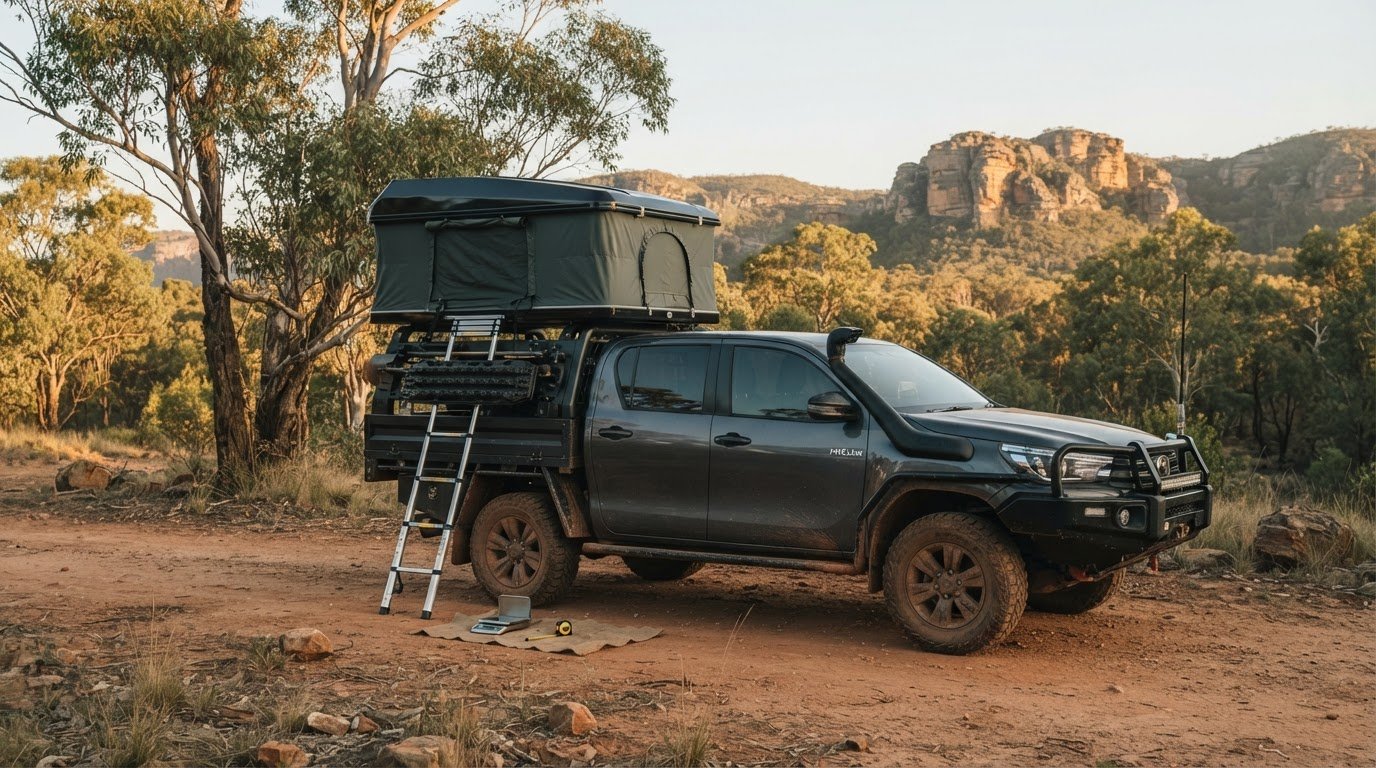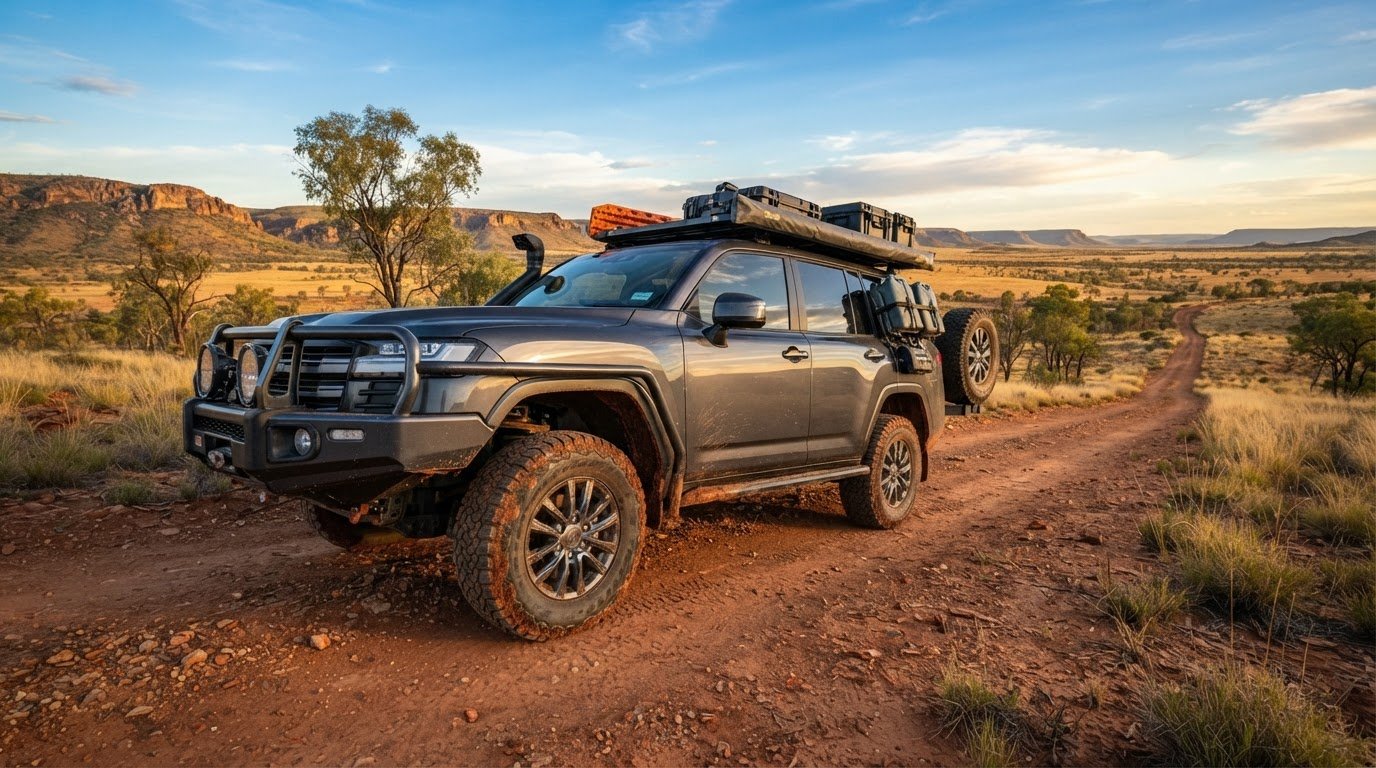
What if the heavier, more expensive hardshell tent could actually save you hundreds of dollars in fuel on your next big lap around Australia? It sounds wild, but stick with us! We get it, fellow Adventurerz. You’re deep in the research rabbit hole, wrestling with GVM calculations for your rig, and wondering if a softshell can truly survive a tropical QLD wet season without becoming a science experiment. The anxiety is real; it’s a massive investment, and the wrong choice can put a serious damper on your off-grid plans.
That’s exactly why we’re settling the great hardshell vs softshell roof top tent debate once and for all! This is your definitive 2026 breakdown, built specifically for our unique Aussie conditions. We promise you’ll walk away with total confidence in your choice, knowing your roof racks can handle the load and your investment is protected from the harsh outback sun. We’re diving deep into setup times, aerodynamic fuel savings, and a full cost-benefit analysis to find the perfect rooftop home for your rig.
Key Takeaways
- Understand how your 4WD’s GVM and your travel style directly influence the best tent choice for your rig.
- Go beyond setup speed and discover how the hardshell vs softshell roof top tent debate impacts everything from fuel efficiency to your vehicle’s off-road stability.
- See which tent type stands up to the unique challenges of our Aussie landscapes, from Tropical North Queensland’s humidity to the Red Centre’s relentless dust.
- Make a sustainable choice by learning about the real-world longevity and repairability of each tent, ensuring your gear is an investment, not a disposable cost.
Beyond the Price Tag: Why the Shell Type Defines Your Adventure
Welcome to 2026, fellow Adventurerz! The rooftop tent revolution across Australia is in full swing, and it’s about so much more than just sleeping on your car. It’s about freedom. It’s about pulling up to a remote coastal spot after work on a Friday and being set up before the sun dips below the horizon. But before you get there, you face the single most important gear decision of your off-grid life: the hardshell vs softshell roof top tent debate. This choice goes far beyond the initial hit to your wallet.
We’ve all seen the forum posts and Reddit threads asking if a hardshell is truly worth the A$2,000+ premium over a comparable softshell. The answer isn’t a simple yes or no. It’s an investment in a specific style of travel. Your choice directly impacts your vehicle’s safety with a higher centre of gravity, your fuel economy on the long haul up the Hume Highway, and, most critically, how often you’ll actually use it. A tent that takes 15 minutes to pack away in the rain is a tent that might just stay in the garage. This decision defines your adventure before you even turn the key.
The Evolution of Rooftop Camping in 2026
The game has changed completely. We’re seeing a massive shift away from traditional ground camping, with over 40% of new campers opting for vehicle-based solutions. Why? Speed and convenience. Today’s best tents, both hard and soft, leverage lightweight recycled composite materials and often feature integrated 120W solar panels as a standard offering. This tech supports the growing trend of “fast-camping”-spontaneous, low-fuss weekend trips that are all about maximising time in the wild, not wrestling with poles and pegs.
Defining Your Camping Persona
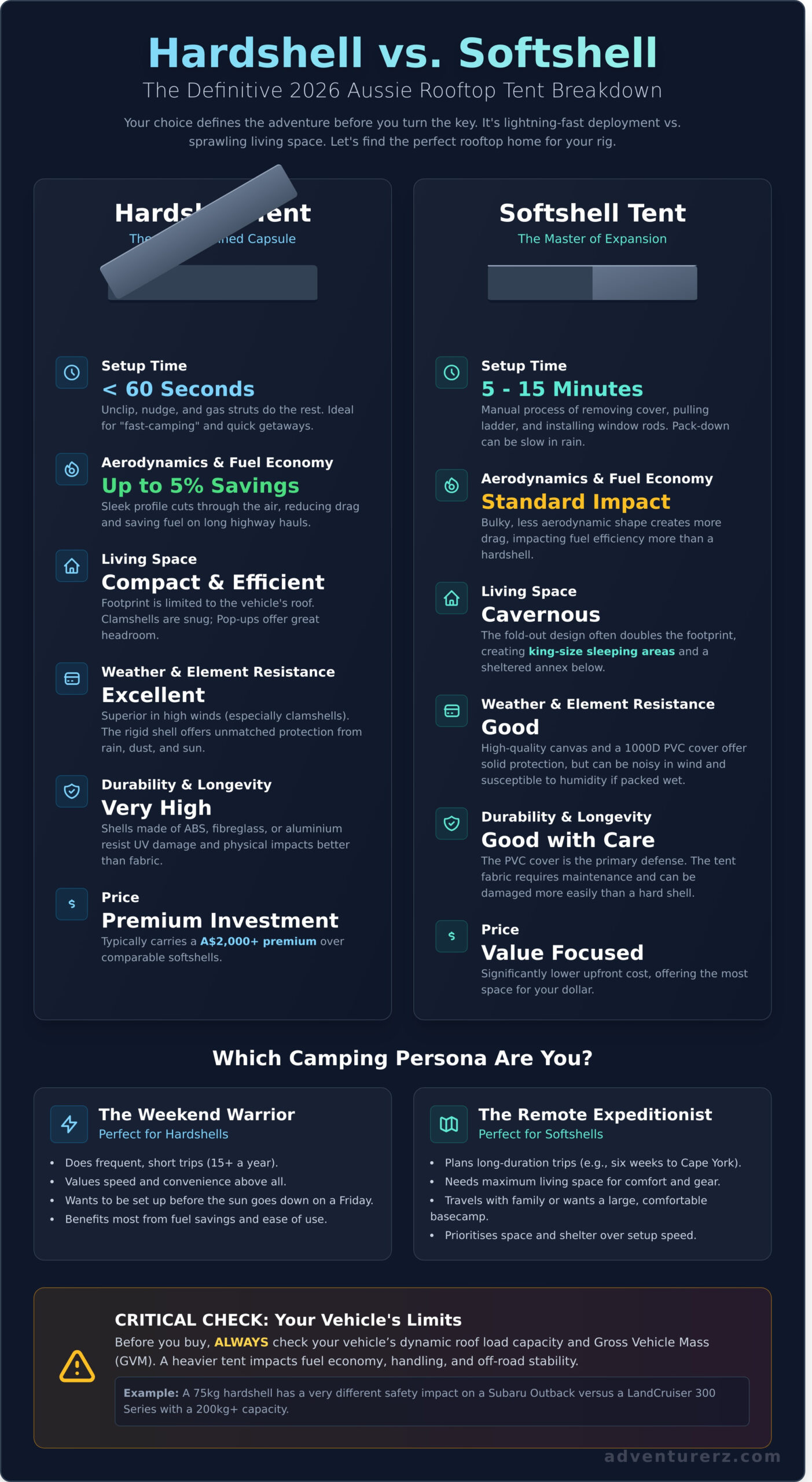
So, who are you? Are you a “Weekend Warrior” hitting the trails 15 times a year, where a 60-second setup is non-negotiable? Or are you a “Remote Expeditionist” planning a six-week Cape York odyssey, where living space and durability are paramount? If you’re out every other weekend, the time saved and reduced fuel consumption (up to 5% better with an aerodynamic hardshell) provides a clear return on investment. The fundamental choice boils down to two main designs of Roof tent, and matching the right one to your mission is everything. Always check your vehicle’s dynamic roof load capacity; a 75kg hardshell on a Subaru Outback has a very different impact than on a LandCruiser 300 Series with a 200kg capacity. Your rig, your rules, your perfect tent!
Mechanical Deep-Dive: How Hardshell and Softshell Tents Actually Work
Alright Adventurerz, let’s get under the hood! Beyond the fabric and the price tag lies some brilliant engineering that defines your entire camping experience. It’s not just about looks; it’s about physics, leverage, and clever design. The whole hardshell vs softshell roof top tent decision boils down to a fundamental trade-off: do you prioritise lightning-fast deployment or sprawling living space? Let’s break down exactly how these two titans of the tracks operate.
A hardshell is essentially a rugged, self-contained capsule. Its rigid outer casing, typically crafted from durable ABS plastic, sleek fibreglass, or tough-as-nails aluminium, forms both the travel cover and the roof. A softshell, on the other hand, is a master of expansion. It’s a traditional fold-out tent packed neatly into a heavy-duty PVC travel cover, ready to unfurl and double its footprint at a moment’s notice.
The Anatomy of a Softshell Tent
Think of a softshell as a clever folding puzzle. Its magic lies in a hinged base plate and an internal U-shaped frame. When you pull the ladder, it acts as a lever, pivoting the entire structure open and extending the floor out beyond your vehicle’s roofline. This “overhang” is the secret to their massive internal space, often creating a king-size sleeping area perfect for the whole family. This design also provides a handy sheltered annex area underneath, keeping your camp chairs and boots dry. That rugged travel cover, usually a 1000D PVC beast, isn’t just for show. It’s your first line of defence against the relentless red dust of the Simpson and the sudden downpours of the Top End.
The Engineering of Hardshell Tents
Hardshells are all about pure, unadulterated speed, thanks to integrated gas struts. Unclip two to four latches, give it a gentle nudge, and the struts take over, raising the roof in under 30 seconds. It’s that simple! They typically come in two flavours:
- Clamshell: Hinged at one end, these are incredibly aerodynamic and offer unmatched stability in howling coastal winds. They’re a solo explorer’s dream.
- Pop-up (Vertical): The roof lifts straight up on all four corners, creating a boxy, spacious interior with fantastic headroom for getting changed.
But their genius doesn’t stop at setup. The rigid top shell doubles as a gear platform. You can mount a 180W solar panel or a set of MAXTRAX right on top! Before you start bolting on gear, it’s absolutely critical to understand your vehicle’s roof load capacity. We always tell fellow Adventurerz to check the official Australian guidelines for loading a roof rack to stay safe and legal on the tracks. Ultimately, the choice in the hardshell vs softshell roof top tent debate comes down to how you adventure. Do you need a family basecamp or a rapid-deployment shelter? If you’re still weighing the options, exploring our full range of RTTs can help you visualise exactly how each system works on a rig like yours.
Performance Metrics: Weight, Aerodynamics, and the Real Cost of Camping
Alright Adventurerz, let’s get into the numbers that really matter on a long trip. Beyond the initial price tag, the choice in the hardshell vs softshell roof top tent debate directly impacts your fuel bill, your 4WD’s handling, and its long-term health. We’re talking about the physics of adventure, where every kilogram and every square centimetre of wind resistance adds up over thousands of kays.
Think about your Gross Vehicle Mass (GVM). Bolting a 75kg+ tent to the highest point of your rig significantly raises its centre of gravity. On a tight, off-camber track outside Coffs Harbour, you’ll feel that extra body roll. Then there’s the relentless Aussie sun. The materials facing that UV onslaught, whether it’s ABS plastic or poly-cotton canvas, have different breaking points. And we haven’t even mentioned the constant “whistle” of a bulky softshell battling a headwind at 110km/h on the M1. These are the real-world performance metrics that can make or break a trip.
Aerodynamics and Fuel Efficiency
The “fuel drag” factor is where hardshells pull ahead, and it’s not just a feeling; it’s measurable. A sleek, low-profile hardshell, often just 20-30cm high when closed, slices through the air. A folded softshell, with its bulky PVC cover, can be over 40cm high and acts like a parachute. Based on a typical 4WD using 12L/100km, adding a boxy softshell can increase fuel consumption by up to 18-20%. A streamlined hardshell might only add 8-10%. Over a 10,000km lap of the map, that 10% difference could save you over 120 litres of fuel. At A$2.00 per litre, that’s A$240 back in your pocket for camp fees or a better steak! The science is clear, with extensive research on vehicle aerodynamics confirming that shape and profile are critical. A softshell’s height also poses a real risk for low-clearance bridges and underground car parks, a costly mistake you only make once.
For Adventurerz in 2026, aerodynamic drag is the invisible hand that dictates not just your fuel budget, but your vehicle’s stability and environmental footprint on every kilometre travelled.
The Weight Penalty and Roof Load Limits
Here’s one of the most misunderstood aspects of rooftop camping: load limits. Your vehicle has two crucial ratings:
- Dynamic Load Limit: The maximum weight your roof can safely handle while driving. This is usually between 75-100kg for most 4WDs. This limit accounts for braking, cornering, and bouncing over corrugations.
- Static Load Limit: The weight your roof can support when parked. This is much higher, often 250-300kg+, designed to hold the tent, you, and your gear.
A 90kg hardshell pushes the dynamic limit of many vehicles before you’ve even added roof racks. This is why we’re seeing a huge trend toward lightweight aluminium hardshells for 2026, some weighing as little as 60kg. They offer the best of both worlds. Remember, that 75kg tent is part of your total payload. Add two adults (150kg), a bull bar (70kg), fuel (120kg), and camping gear (100kg), and you’re quickly approaching your GVM. Managing this weight is not just about performance; it’s a critical safety responsibility.
Managing this weight effectively often means upgrading other parts of your rig, like suspension or brakes. For those looking for specialist components, it can be useful to browse international suppliers; for example, you can visit Truckparts Corner to see a comprehensive range of truck and trailer parts available in Europe.
The Australian Territory Test: Matching Tents to Our Unique Landscapes
Australia doesn’t just have weather; it has character. From the dripping humidity of the Daintree to the bone-dry chill of an Outback night, our landscapes will test your gear to its absolute limit. So, when we talk about the hardshell vs softshell roof top tent debate, we aren’t just talking about features. We’re talking about survival and comfort in some of the world’s most demanding environments. Let’s break down which tent style thrives where, so you can make the right choice for your adventure.
Picture this: You’re deep in Kakadu during the build-up. The air is thick enough to drink, and a storm can unleash a 50mm downpour in under an hour. This is where the shell-type really matters. A softshell’s poly-cotton canvas is fantastically breathable, but it holds moisture. Packing it away damp is a one-way ticket to mildew city, meaning you need to budget precious travel time for it to air out completely. A hardshell, with its fibreglass or ABS shell, sheds that torrential rain instantly. A quick wipe-down and you can close it in 60 seconds, bone-dry and ready to roll as the storm passes. What a game-changer!
Humidity and Mold Management
In the tropics, managing moisture is your number one job. Softshell canvas needs “breathing time” after rain or heavy dew before you pack up. Hardshells don’t. That said, condensation from your own breath is a factor in both. That’s why we consider a quality anti-condensation mat, which allows air to circulate under your mattress, a non-negotiable accessory for any trip north of Brisbane.
Now, let’s trade the mud for red dust. If you’ve ever driven the Oodnadatta Track, you know that fine, red bull-dust gets into everything. It’s the ultimate test of a tent’s seals. This is an area where the difference between shell types becomes crystal clear. Most softshells rely on a heavy-duty PVC travel cover with a zipper. That fine, abrasive dust works its way into the zipper teeth, grinding them down and leading to frustrating, trip-ending failures. It’s a weak point we’ve seen fail time and time again.
Dust-Proofing for the Outback
A quality hardshell closes like a car door, using automotive-grade rubber gaskets to create a positive pressure seal. This design is vastly superior at keeping the infamous outback dust out of your sleeping quarters. After a long day on corrugated roads, opening your tent to a clean, dust-free bed is pure bliss. A pro-tip for all Adventurerz: after a desert trip, use compressed air to gently clean zippers and a damp microfibre cloth to wipe down rubber seals to prolong their life.
Finally, let’s consider the pace of your travel. Are you planning a “Big Lap” with frequent one-night stops? This is the “Quick-Move” factor.
- Hardshell Setup/Pack-down: Typically 30-90 seconds. Unlatch, push up, and you’re done.
- Softshell Setup/Pack-down: Typically 5-10 minutes. Unzip the cover, unfold the tent, deploy the ladder, and adjust window poles.
That time difference adds up massively over a multi-week tour. For Adventurerz who are constantly on the move, the sheer convenience of a hardshell is often the deciding factor in the hardshell vs softshell roof top tent choice. It means more time around the campfire and less time wrestling with straps in the dark. Ready to see which tent can handle your next adventure? Explore our full range of Aussie-tested roof top tents and find your perfect match.
Making the Sustainable Choice: Longevity and Community Wisdom
The final choice in the hardshell vs softshell roof top tent debate goes beyond just setup times and annex sizes. It’s about investing in your future adventures and making a choice that’s kind to both your wallet and the wild places we love to explore. As Adventurerz, we believe in buying gear that lasts. The environmental cost of “disposable” equipment that ends up in landfill after just a few seasons is something we all need to consider.
Think about it. A cheap, A$900 softshell might seem like a bargain, but if its zippers fail and its cover perishes under the harsh Aussie sun after two years, you’re back to square one. A premium A$5,000 hardshell, on the other hand, is built with materials designed to endure a decade of corrugated roads and coastal storms. Buying once isn’t just smart; it’s sustainable.
Repairability is another massive factor. Out in the bush, things break. Here’s how they stack up:
- Softshells: A rip in the canvas is often a quick fix. A simple patch from a Tear-Aid Type A kit (around A$20 at most camping stores) can have you sealed up and waterproof in minutes. It’s a true field-ready repair.
- Hardshells: While incredibly tough, a significant crack in a fibreglass or ABS shell is a more serious problem. A professional repair in a city like Sydney or Melbourne can cost anywhere from A$300 to A$800, and it’s not something you can fix beside the campfire.
However, what you spend upfront on a hardshell, you often get back in resale value. A quick look at Facebook Marketplace in Australia shows that a 3-year-old premium hardshell often retains 60-70% of its initial value. That A$5,000 tent might still sell for A$3,500! A softshell of the same age might only fetch 30-40% of its original price. This incredible value retention makes a hardshell a genuine long-term asset for your rig.
Sustainability and the Eco-Conscious Camper
Choosing gear responsibly means looking at its entire lifecycle. Many top-tier brands are now using recycled poly-cotton fabrics and ethically sourced, recyclable aluminum in their construction. But the biggest win for the planet is longevity. An RTT that lasts 10 years has a far smaller footprint than three cheaper tents that last three years each. When it is finally time to retire your gear, look for local textile recycling programs to responsibly dispose of old canvas.
Final Verdict: Which Shell Wins for You?
So, what’s the final call? We have a simple guideline we call the “Rule of 10.” If you’re hitting the tracks and camping more than 10 times a year, the sheer convenience, durability, and weather protection of a hardshell will be an absolute game-changer. For the serious tourer, it’s the clear winner. But if you’re a family who needs that huge annex space for the kids on 3 or 4 big trips a year, the softshell is still the king of comfort and capacity. The best advice always comes from those already out there, so join the Adventurerz community to see real-world member setups!
Gear Up: Making the Right Call for Your 2026 Adventures
So, what’s the final call? We’ve seen that hardshells are the undisputed champions of speed, with many models setting up in under 60 seconds, and their aerodynamic profile can cut your fuel bill by up to 5% on those long hauls up the coast. Softshells, however, deliver unbeatable annex space for the family and often leave an extra A$1,000 or more in your pocket for other critical gear. The hardshell vs softshell roof top tent decision isn’t about which is best, but which is best for your trip.
That’s where we come in. Our Scarborough-based 4WD experts have dragged these tents across 10,000+ kilometres of punishing terrain, from Cape York to the Kimberley. We focus on durable, eco-friendly gear that’s been community-tested in the Australian Outback. Ready to find your perfect match? Explore our expert-vetted Roof Top Tent reviews and get the right advice before you buy.
Your next great Aussie adventure is waiting. Let’s get you prepared for it!
Frequently Asked Questions
Is a hardshell roof top tent warmer than a softshell in winter?
Yes, a hardshell roof top tent is generally warmer in winter. The solid fibreglass or aluminium shell provides superior insulation compared to the canvas walls of a softshell. This rigid structure also blocks wind more effectively, reducing heat loss. For trips to chilly spots like the Victorian High Country, many Adventurerz find a hardshell, sometimes paired with an optional insulation liner, offers a significant advantage in comfort against the cold.
Can I leave my bedding inside a softshell roof top tent when it is closed?
Yes, you can typically leave some bedding inside a softshell, but space is limited. Most designs allow for a couple of sleeping bags and low-profile pillows to remain inside when you pack it down. However, bulky doonas or multiple thick blankets often need to be removed to allow the PVC travel cover to close securely. This is a key point of difference in the hardshell vs softshell roof top tent comparison, as hardshells usually offer more internal storage space.
Do hardshell roof top tents fit on any vehicle or roof rack?
No, hardshell tents don’t fit on every vehicle. It’s critical to check your vehicle’s dynamic roof load capacity, which is typically between 75-100 kg for most 4WDs and SUVs. Since hardshells weigh from 60 kg to over 90 kg, they often push the limits of smaller vehicles. You also need a robust roof rack system rated to handle that weight. We always recommend checking both your car’s manual and your roof rack’s specifications before buying.
How much does a hardshell roof top tent affect fuel consumption compared to a softshell?
A hardshell roof top tent generally has a smaller impact on fuel consumption. Thanks to their lower profile and more aerodynamic shape, you can expect a fuel economy decrease of around 5-10%. A bulkier softshell, with its less streamlined PVC cover, can increase fuel consumption by 10-15% or more, especially when driving at 110 km/h on the highway. For long-haul Aussie road trips, those savings with a hardshell can really add up!
Are hardshell tents better for high-wind conditions on the coast?
Absolutely! Hardshell tents are significantly better in high-wind conditions. Their rigid, aerodynamic design is inherently more stable and many are tested to withstand winds of up to 60 km/h while open. The canvas on a softshell is more likely to flap noisily in strong gusts, which can be disruptive when you’re trying to sleep. If you’re planning to camp along the windy coast of Western Australia, a hardshell is the superior choice for a peaceful night.
What is the average lifespan of a high-quality softshell tent in Australia?
A high-quality softshell tent can last between 5 and 10 years in Australia with proper care. The biggest challenge is our harsh sun. The high UV index can degrade the canvas and PVC cover over time. To maximise its lifespan, we recommend applying a UV protectant spray twice a year. Always ensure the canvas is bone dry before packing it away to prevent mould and mildew, especially in humid climates like coastal Queensland.
Is it harder to mount a hardshell tent by yourself?
Yes, it is much harder to mount a hardshell tent by yourself. Most hardshells weigh between 60 kg and 90 kg, making a solo lift unsafe for you and your vehicle. It’s a job for at least two people, and a third person makes it even easier and safer. Many of us in the Adventurerz community use a simple garage hoist system to lift the tent on and off, turning a difficult chore into a quick, one-person task.
Can I put solar panels on top of a softshell roof top tent?
It’s not possible to mount a traditional rigid solar panel directly onto the canvas of a softshell tent. However, you have excellent off-grid options! Flexible, lightweight solar blankets are perfect for this setup. You can simply lay them over the tent fabric once you’re at camp to charge your battery box. Alternatively, they can be placed on your vehicle’s bonnet or windscreen during the day, giving you great versatility without adding permanent weight.