Your 4WD’s factory roof rails probably can’t handle the roof top tent you’ve been dreaming of. We get it. The dream is a quick getaway, pulling up to a remote Aussie coastline and having your camp set up in under five minutes. But the nightmare is a cracked roof or a tent that just won’t fit, turning that dream trip into a disaster before it even begins. The confusion over hardshell durability and the anxiety of a solo setup in the dark are real concerns we hear from our community every single week.
That’s why we’ve built this ultimate 2026 guide! We’re here to demystify the entire process of how to choose a roof top tent, so you can make the right call with total confidence. By the end of this article, you’ll master the technical specs, understand your vehicle’s true dynamic load rating, and know exactly how to pick a model that will survive years of brutal Aussie sun and dust, including those ‘hidden’ costs like a proper A$2,000+ roof rack system. Let’s dive in and get you kitted out with the perfect home-on-the-roof for your next adventure, Adventurerz!
Key Takeaways
- We’ll show you how to calculate your vehicle’s true roof load capacity, ensuring you avoid the most common (and costly!) mistake many 4WD owners make.
- Discover whether a quick-setup hardshell or a spacious softshell is the right choice for your style of Aussie touring, from weekend warrior trips to long-haul expeditions.
- Uncover the essential features for the Australian climate, from mattress density for ultimate comfort to ventilation systems that beat the humidity on a balmy Queensland night.
- Master how to choose a roof top tent with our exclusive 5-step framework, designed to match the perfect setup to your vehicle and travel frequency.
Why Go Up? The Benefits of Roof Top Tent Camping in 2026
Let’s be honest, the ground is for driving on, not sleeping on! If you’re a 4WD enthusiast in 2026, you’ve seen them everywhere from the Cape to the Kimberley: the mighty roof top tent (RTT). What was once a niche piece of kit for hardcore overlanders has become the ultimate basecamp for Aussie adventurers. The evolution of modern Roof Top Tent Designs has been incredible, moving from clunky, heavy boxes to streamlined, aerodynamic pods that set up in a flash. They represent a fundamental shift in how we camp, prioritizing speed, comfort, and a better connection with the wild places we love.
The number one reason we see Adventurerz make the switch? Pure, simple peace of mind. Being elevated several feet off the ground puts a welcome buffer between you and Australia’s more curious critters. You can sleep soundly knowing you won’t have a brown snake seeking warmth in your sleeping bag or a curious dingo sniffing around your swag at 2 AM. For our members camping up in the Top End, it’s a non-negotiable for keeping clear of crocs and spiders. It’s safety you can feel.
Then there’s the ‘Basecamp’ factor. An RTT transforms your vehicle into a command centre for adventure. You get unbeatable views, waking up to a sunrise over the ocean instead of a view of your tyres. Your sleeping quarters stay significantly cleaner, free from the dirt, sand, and mud that inevitably gets tramped into a ground tent. But the real game-changer is speed. We’ve timed it. A traditional 4-person ground tent, with its poles, pegs, and rain fly, takes an average of 18 minutes to set up properly. A modern hardshell RTT? We’re talking under 90 seconds from parked to ready for bed. That’s more time for a sunset beer and less time wrestling with gear in the dark!
RTT vs. Ground Tents: Making the Switch
Comfort is king, and an RTT delivers. Most come with a built-in 60-80mm high-density foam mattress that beats a leaky, lumpy air pad any day of the week. When that classic Queensland downpour hits, being high and dry is a massive advantage; no more waking up in a puddle. Of course, there are trade-offs. You can expect a 5-10% increase in fuel consumption, and with a height of 30-40cm when closed, you’ll need to measure your garage clearance; many RTT-equipped rigs won’t fit in a standard 2.1m high opening.
The ‘Adventurerz’ Lifestyle: Why We Prefer the Roof
This is more than just gear; it’s a mindset. We’ve seen over 60% of our Scarborough-based Adventurerz crew move to the roof since 2023 because it aligns with a smarter way to explore. An RTT has a minimal ground footprint, which is crucial for camping in sensitive ecological areas. You’re not disturbing the ground cover, which is a huge win for responsible camping. Ultimately, knowing how to choose a roof top tent is about investing in gear that lasts. A quality RTT is built for the Aussie bush and will see you through countless seasons, unlike flimsy alternatives. It’s about buying once and buying right. Ready to elevate your adventures? We are here to help you find the perfect one.
Hardshell vs. Softshell: Which Design Fits Your Adventure?
Alright Adventurerz, let’s get down to the single biggest decision you’ll make when choosing a roof top tent: the great hardshell versus softshell debate. This isn’t just about looks; it’s about how you travel, where you camp, and how much time you want to spend setting up versus cracking a cold one by the fire. Getting this right is the most critical step in figuring out how to choose a roof top tent that will serve you for years of epic trips.
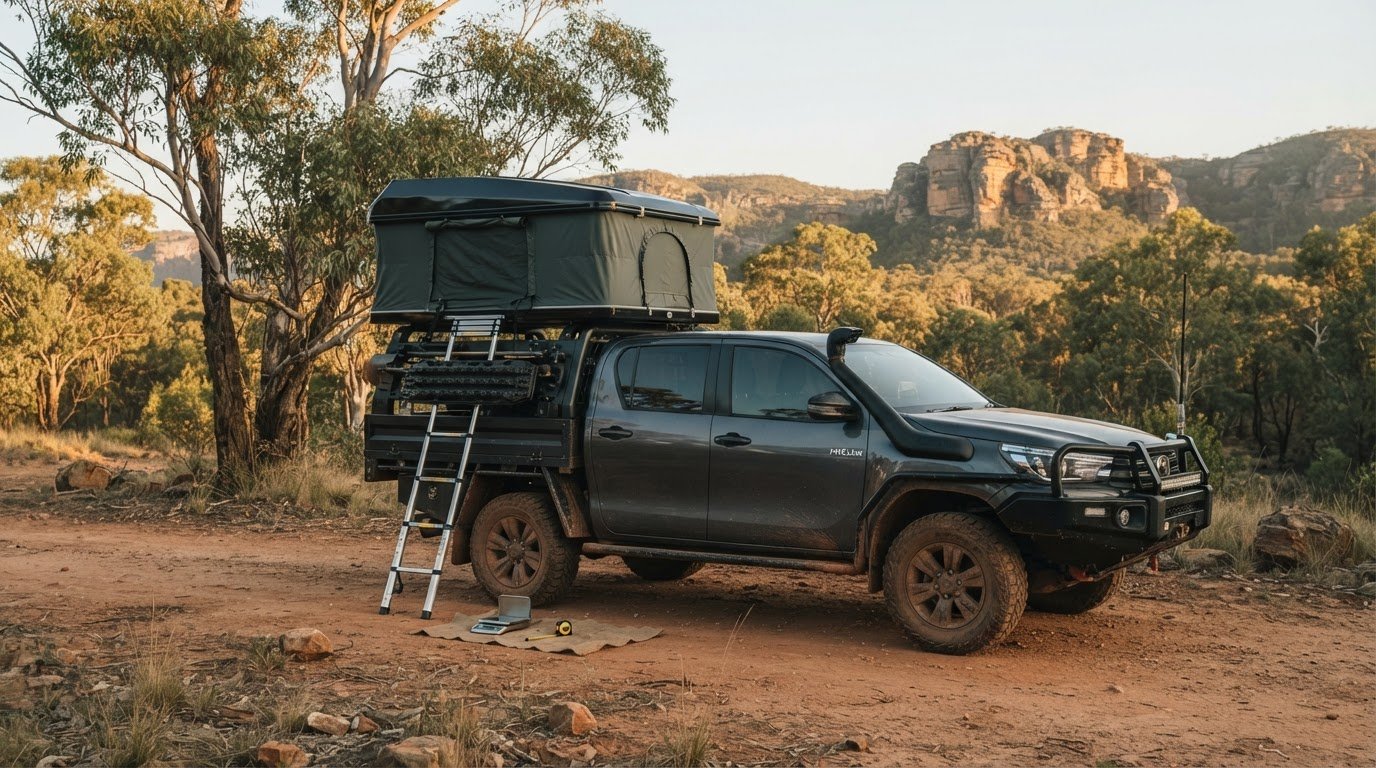
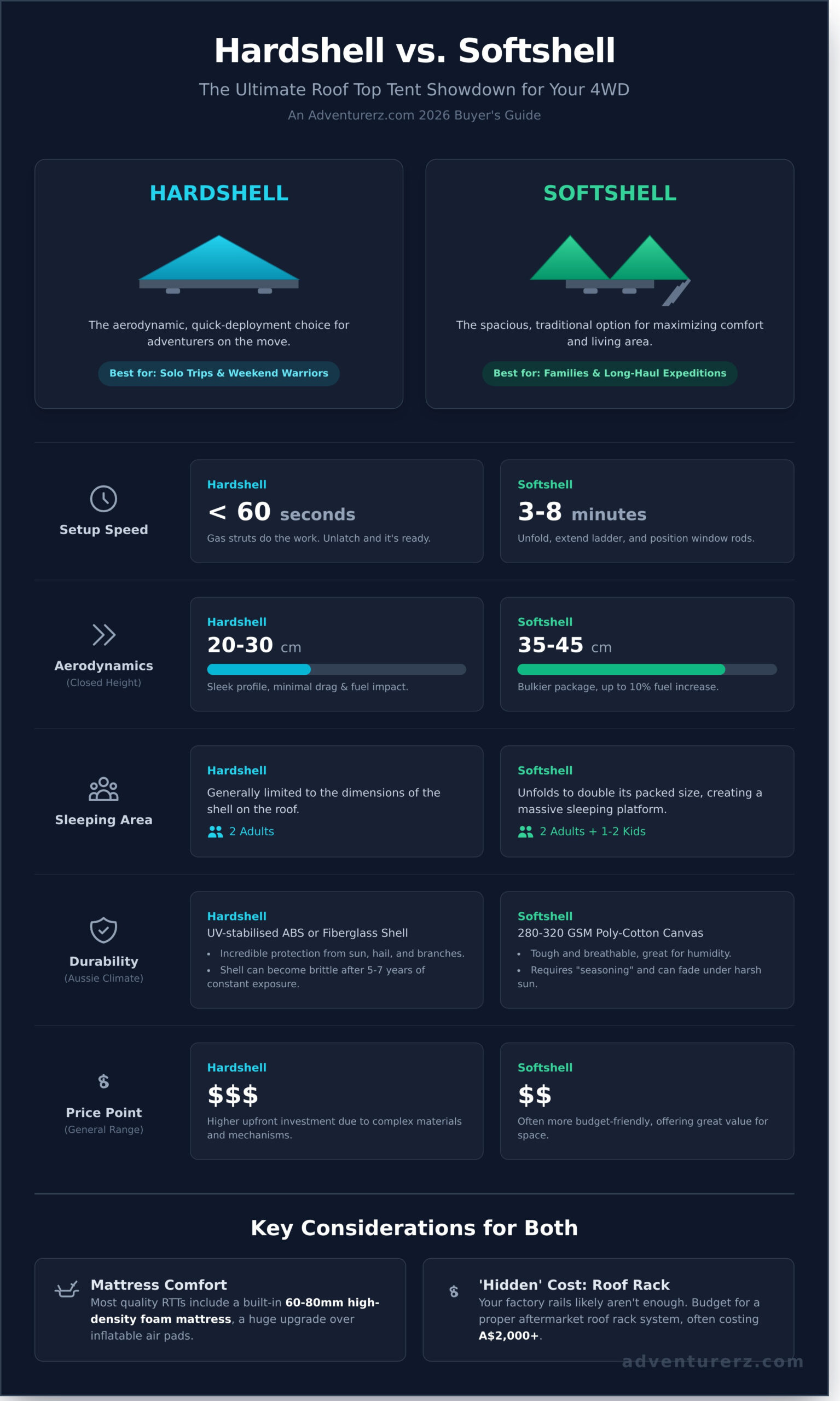
Mechanically, they are worlds apart. A softshell tent is a classic fold-out design. Think of it like a book opening up. It unfolds to double its packed size, supported by a ladder, giving you a massive sleeping area. A hardshell, on the other hand, is a self-contained unit. It typically uses gas struts to pop straight up or open in a clamshell or wedge shape in less than 60 seconds. One is spacious and traditional; the other is fast and futuristic.
Here in Australia, durability against the sun is non-negotiable. A quality softshell will use a heavy-duty, UV-treated 280-320 GSM poly-cotton canvas. It’s breathable and tough, but it requires seasoning and will eventually fade after years under our harsh sun. Hardshells counter with UV-stabilised ABS or reinforced fiberglass shells. They offer incredible protection from sun and hail, but can become brittle after 5-7 years of constant exposure. There’s no wrong answer, just a choice between fabric care and shell maintenance.
On the open road, aerodynamics have a real impact on your 4WD’s fuel range. A sleek hardshell sits just 20-30cm high when closed, slicing through the air with minimal drag. A softshell, even with its PVC cover, is a bulkier package at 35-45cm high, which can increase your fuel consumption by up to 10% on long highway stints. For a big lap of Oz, those savings at the bowser add up to a few extra pub meals!
Finally, think about pack-down convenience. Most hardshell tents are designed to let you keep your doona and pillows inside when closed. That’s a game-changer! With many softshells, you’ll need to strip the bedding to get it folded and zipped up correctly, adding another 5 minutes to your morning routine.
Softshell Tents: The Traditional Choice
These are the iconic, safari-style tents that started it all. They offer an unbeatable sense of space, often folding out to a queen or even king-sized mattress. Their biggest draw? Affordability. You can get a fantastic softshell setup starting from around A$1,500. They’re perfect for families who need the extra room or budget-conscious Adventurerz heading out for weekend trips where a 10-minute setup time is part of the fun.
Hardshell Tents: The Modern Speedster
For those who live for the tour, the hardshell is king. Its lightning-fast setup and pack-down make one-night stops an absolute breeze. The solid roof offers superior protection from torrential rain and flapping less in high winds. While the initial investment is higher, often starting at A$3,500, the fuel savings and sheer convenience are worth it for serious tourers. A streamlined hardshell is a key part of an efficient setup, just as crucial as the other Essential Overlanding Gear you’ll need for remote travel. They are the ultimate choice for solo travellers and couples on the move.
So, what’s the verdict? It truly depends on your mission. Are you setting up a base camp for a week with the family, or are you chasing the sunset every single night on a cross-country epic? Answering that question is the key to knowing how to choose a roof top tent that feels like it was built just for you. Still weighing it up? Check out our side-by-side comparison of the top 2024 models to see these differences in action!
The Critical Math: Understanding Vehicle Roof Loads and Weight Ratings
Alright, fellow Adventurerz, let’s get serious for a moment. Before we even think about comfy mattresses and quick setups, we need to talk numbers. Getting the weight calculation wrong is the number one mistake we see people make, and it’s a costly one. Overloading your roof can lead to catastrophic failure on a remote track, damage your vehicle’s chassis, and seriously compromise your safety. But don’t stress! We’re here to break it down so you can build your touring rig with total confidence.
The most crucial step in how to choose a roof top tent is understanding what your vehicle can actually handle. It all starts with one key distinction: dynamic versus static load.
Dynamic vs. Static Load Explained
Think of Dynamic Load as the weight your roof can safely carry while you’re bouncing along a corrugated road or navigating city traffic. It accounts for forces like braking, cornering, and vibrations. Your Static Load is the weight the roof can support when the vehicle is parked and stationary. As a solid rule of thumb, your vehicle’s static load capacity is typically 3 to 4 times its dynamic load rating, because the forces are transferred down through the vehicle’s entire frame to the ground.
So, where do you find this magic number? Your vehicle’s owner’s manual. It’s the ultimate source of truth. Don’t rely on a forum post from 2015! A 2023 Ford Ranger, for example, has a dynamic roof load limit of 85kg. Your job is to make sure everything you mount up there stays under that limit while you’re driving. Let’s calculate it.
Your ‘Total System Weight’ is your dynamic load, and it must be less than your vehicle’s rating. Here’s how we add it up:
- Roof Top Tent Weight: A hardshell tent might weigh 75kg.
- Roof Rack System Weight: A robust platform rack can be 25-35kg.
- Accessory Weight: Add in your 12kg awning and a 10kg solar panel.
In this example, your total dynamic weight is 122kg (75+35+12), which is well over the Ranger’s 85kg limit. This is a no-go! You’d need a lighter tent or a different vehicle. The weight of you and your partner inside the tent (e.g., 150kg) only matters for the static load, which would be well within the vehicle’s capacity once parked.
Beyond the raw numbers, remember the center of gravity trap. Piling 100kg of gear on your roof dramatically raises your vehicle’s center of gravity. This increases body roll and makes your 4WD feel much less stable on off-camber tracks, significantly increasing the risk of a rollover. A lighter tent isn’t just about compliance; it’s about safer handling where it matters most.
Choosing the Right Roof Rack System
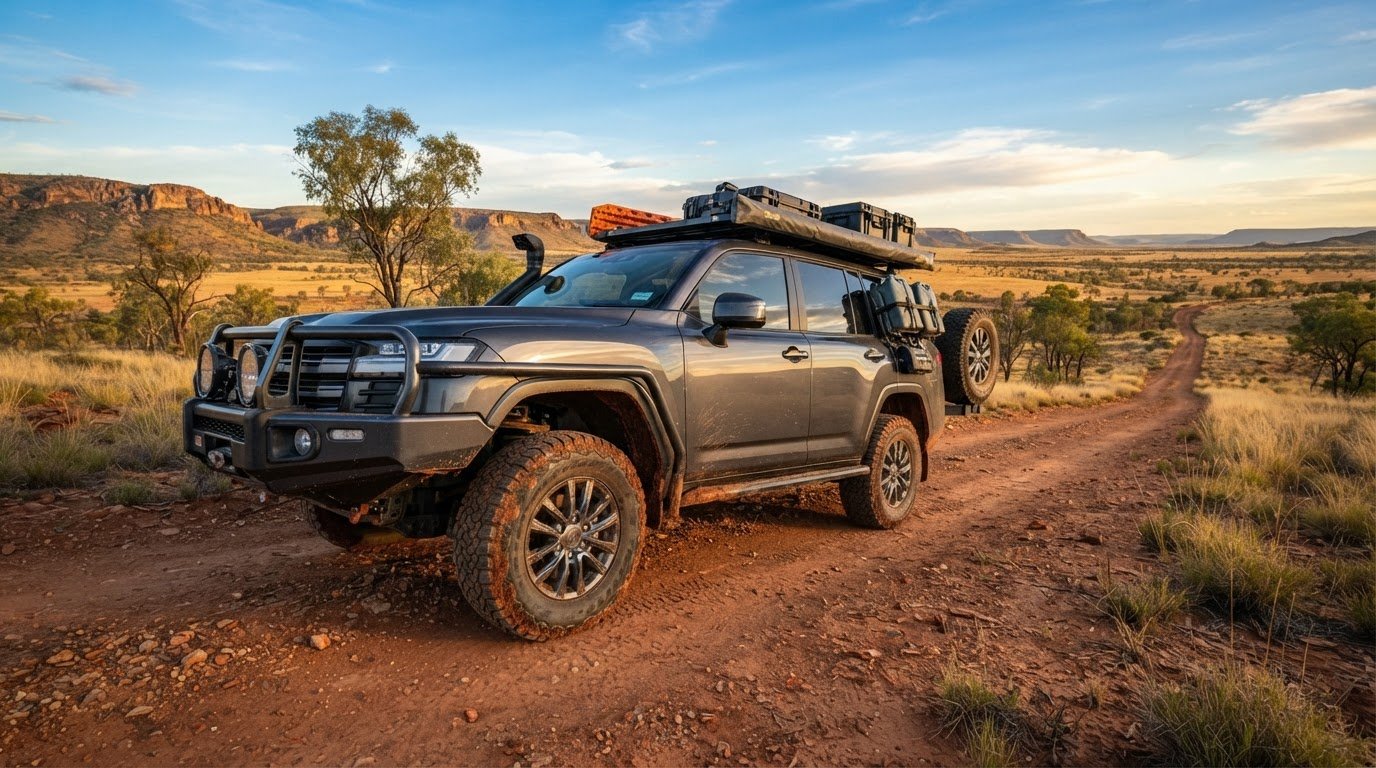
Please, do not mount a 60kg RTT on the standard factory crossbars that came with your SUV. They are designed for skis or a kayak, not for the sustained punishment of off-road touring. You need a dedicated system. A full platform rack offers the most mounting options and distributes weight most evenly. Heavy-duty crossbars from brands like Rhino-Rack or Yakima are also excellent choices. Expect to budget anywhere from A$900 to over A$2,500 for a quality system that won’t fail you. It’s a critical investment in the safety and integrity of your entire setup.
Key Features That Actually Matter in the Australian Outback
Alright Adventurerz, let’s get real. The gear that works in a gentle European forest won’t survive a single season in our backyard. The Australian Outback, from the humid tropics of the Top End to the dusty plains of the Red Centre, demands equipment that’s built tougher, smarter, and with our unique conditions in mind. This is where knowing how to choose a roof top tent goes from a simple purchase to a critical part of your trip planning.
Forget the flashy gimmicks. We’re breaking down the features that truly make a difference when you’re a thousand kilometres from the nearest town.
- Ventilation and Condensation: Waking up in a sweat-soaked tent on a humid Queensland night is the fastest way to ruin a trip. This ‘sauna effect’ is a real problem. Look for tents with massive, midge-proof mesh windows on all sides and a fly design that promotes airflow even during a downpour. Some premium models even include anti-condensation mats under the mattress, a feature worth its weight in gold for winter trips in the high country.
- Mattress Density: Sleep is your fuel for the next day’s adventure. A flimsy foam pad is a recipe for a sore back and a foul mood. We consider a 50mm high-density foam mattress the absolute bare minimum for comfort. For side sleepers or those on longer expeditions, look for 65mm or more. It’s the difference between merely surviving and actually thriving.
- Dust-Proofing: After a long, corrugated trek to Cape York, the last thing you want is a fine layer of red dust coating your sleeping bag. The quality of a tent’s seals is paramount. Open it up in the showroom. Are the seals thick, automotive-grade rubber? Do they compress tightly when closed? A poorly sealed tent is just a dust-catcher on wheels.
- Mounting Hardware: This is a detail that separates the serious contenders from the pretenders. Galvanized steel bolts might be fine for inland trips, but the moment you hit the coast, that salty air will start its corrosive work. For any trips near the ocean, from Fraser Island to the Great Ocean Road, 304-grade stainless steel hardware is non-negotiable to prevent rust and ensure longevity.
Material Science: Canvas and Zippers
The core materials of your RTT are its first line of defence. A high-quality, 280gsm (or heavier) poly-cotton ripstop canvas is the gold standard. It offers the perfect blend of durability, water resistance, and breathability that synthetic materials just can’t match. Check the fly’s UV rating, too; a UPF 50+ rating ensures it won’t turn brittle and crack after one harsh Aussie summer. And zippers? If they aren’t genuine YKK, walk away. A failed zipper in a remote storm is a trip-ending disaster.
The Extras: Annexes, Lights, and Storage
Do you really need an annex? It’s a classic trade-off. For a family setting up base camp for a week, the extra private space for changing or sheltering from the rain is incredible. But if you’re a fast-moving tourer, that extra 15 minutes of setup and pack-down time each day can be a drag. Internal features like pre-wired LED light strips and USB ports have quickly moved from luxury to necessity, saving you from fumbling with a head torch. Lastly, simple things like external shoe bags are genius, keeping the ever-present red dirt out of your bed and where it belongs: on the outside.
Getting these details right is the key to investing in gear that won’t let you down. We’ve seen it all, and we only stock tents that meet these rigorous outback-ready standards. Explore our curated collection of expedition-grade roof top tents and find the perfect shelter for your next journey.
Final Decision: The Adventurerz 5-Step Selection Framework
Alright, you’ve absorbed the specs, compared the materials, and pictured your rig parked up at a remote lookout. Now it’s time to bring it all together and make the final call. We’ve distilled the entire process into a foolproof, 5-step framework to ensure you invest in the perfect rooftop home. Nailing how to choose a roof top tent is about balancing your rig, your travel style, and your budget. Let’s get it done!
- Step 1: Confirm Your Vehicle’s Dynamic Roof Load. Before you fall in love with a tent, go back to the basics we covered earlier. Check your vehicle’s manual or the manufacturer’s website for its dynamic roof load capacity. This non-negotiable number dictates the maximum weight you can safely carry while driving and is the absolute foundation of your entire setup.
- Step 2: Define Your ‘Travel Frequency’. Are you a weekend warrior hitting the tracks for 48 hours at a time, or are you planning a six-month lap of the map? Weekend trips might favour a lighter soft-shell for a quick setup. For long-term touring, the durability, weather protection, and near-instant setup of a premium hard-shell tent is often worth the extra investment.
- Step 3: Measure Your Garage or Carport Clearance. Don’t laugh, this is the step that catches out so many people! Grab a tape measure. A standard Aussie double garage door has a clearance of about 2.2 metres. A 4WD with a 2-inch lift, a platform rack, and a 30cm-high tent can easily exceed this. Measure twice, buy once!
- Step 4: Set a Realistic Budget. The sticker price is just the start. Your total investment includes three key parts: the tent itself (A$2,000 – A$7,000+), a quality roof rack system (expect A$600 – A$1,500 for brands like Rhino-Rack or Front Runner), and optional professional installation (around A$300 – A$600). Your all-in cost is often A$2,000 more than the tent price alone.
- Step 5: Join the Community for Real-World Feedback. Marketing photos look amazing, but how does that tent really hold up after 10,000km of corrugated roads? Tap into the collective wisdom of fellow Adventurerz. Ask about specific models, see user photos of their setups, and get honest feedback on wind noise, condensation, and long-term durability.
Sustainable Buying: Choosing Quality Over Price
In a world of disposable gear, we champion a “buy it right, buy it once” philosophy. Cheaply made equipment not only fails when you need it most but contributes to landfill. That’s why we focus on quality. A premium RTT from a brand like Darche or The Bush Company holds its value incredibly well; it’s not uncommon to see a 3-year-old tent retain over 65% of its original price on the Aussie secondhand market. We prioritise reviewing Australian-tested brands because they’re built for our uniquely harsh conditions, from brutal UV rays to relentless bulldust.
Next Steps for Your Adventure
You’re now equipped with the knowledge for how to choose a roof top tent that will fuel years of exploration. The journey doesn’t stop here. It’s just beginning!
- Explore Our In-Depth Reviews: Dive into our latest Roof Top Tent Reviews where we put the top models through their paces in real-world Aussie conditions.
- Get Personalised Advice: Feeling overwhelmed? Book a one-on-one consultation with our travel experts to plan your rig build for that next big remote trip.
- Become an Adventurer: Join our community of passionate campers and 4WDers! Share photos of your new setup, ask questions, and inspire others with your trip reports.
Your Elevated Adventure Starts Now!
You’ve got the roadmap! Making the call between a tough hardshell and a versatile softshell is a huge step, but the most critical part is always nailing the math on your vehicle’s roof load capacity. It’s the foundation for every safe trip. With the Adventurerz 5-Step Selection Framework, you now have a complete blueprint for how to choose a roof top tent that will stand up to the Aussie elements.
Now for the exciting part! We’ve put in the hard yards, testing the latest 2026 models over thousands of kilometres of rugged bush tracks. Our expert reviews are community-vetted and grounded in our commitment to eco-conscious travel planning, a promise we’ve kept since 2018. See which tents truly conquered the outback.
Explore our 2026 Roof Top Tent Recommendations & Reviews
Get ready to see Australia from a whole new perspective. We’ll see you out there!
Frequently Asked Questions About Roof Top Tents
How much should I expect to pay for a quality roof top tent in 2026?
You should expect to pay between A$2,800 and A$8,000 for a quality roof top tent in Australia by 2026. Based on current market trends and projected inflation, entry-level soft-shell models will likely sit in the A$2,800-A$4,500 range. For a premium hard-shell tent with faster setup times and better weather resistance, expect to invest anywhere from A$4,500 to over A$8,000. These higher-end models often include features like built-in lighting, thicker mattresses, and superior ventilation.
Will a roof top tent fit on my small SUV or sedan?
Yes, a roof top tent can often fit on a small SUV, but it’s less common and requires more care for a sedan. The key is your vehicle’s ‘dynamic weight capacity’, which is the weight your roof can handle while driving. You can find this in your car’s manual. Most soft-shell tents weigh 45-70kg, which is within the 75kg capacity of many small SUVs. Always ensure your roof racks are also rated to handle the tent’s weight plus your driving conditions!
How much does a roof top tent affect my fuel consumption?
A roof top tent will typically increase your vehicle’s fuel consumption by 10% to 20%. The exact impact depends on your vehicle and the tent’s design. Hardshell tents with a lower, more aerodynamic profile generally cause less drag than a bulky soft-shell tent with its PVC cover. Driving at slower speeds, especially on highways, will also help minimise the added fuel cost. It’s a small price for the freedom of a campsite anywhere, anytime!
Can I leave my sleeping bag and pillows inside the tent when I close it?
Yes, you can absolutely leave your bedding inside most roof top tents when you close them! This is a massive time-saver at camp. Hardshell pop-up or clamshell models usually offer the most space, easily fitting a couple of sleeping bags and low-profile pillows. With soft-shell fold-out tents, you might need to use less bulky bedding. This convenience is a huge factor for many Adventurerz when they choose a roof top tent, so check the specific model’s closed height.
Do I need a professional to install my roof top tent?
No, you don’t need a professional, as most Adventurerz can manage a DIY installation with a friend. It’s a two-person job because the tents weigh between 45-90kg, so you’ll need help lifting it onto your roof racks. The process simply involves positioning the tent and tightening about eight bolts. However, for total peace of mind, a professional installation from a 4WD outfitter typically costs between A$200-A$400 and ensures everything is perfectly secure for your first big trip.
Is it safe to sleep in a roof top tent during a thunderstorm or high winds?
It is very safe to sleep in a roof top tent during a storm, as they are engineered for rugged Aussie conditions. Modern tents are tested to withstand high winds, often up to 60 km/h. For added stability, park your vehicle facing into the wind. As for lightning, you are just as safe as you would be inside your car; the tent doesn’t make you a target, and the vehicle’s rubber tyres provide insulation. It might get a bit loud, but you’ll be secure and dry!
How do I prevent mold and mildew from growing in my tent?
The best way to prevent mold and mildew is to ensure your tent is completely dry before you pack it away for storage. If you have to pack up in the rain, make sure you open the tent back up to air out within 48 hours. We also recommend wiping down any internal condensation in the morning and considering an anti-condensation mat under your mattress. This simple habit is the key to keeping your gear in top shape for years of adventure.
What is the best way to store my roof top tent when I’m not using it?
The best way to store your roof top tent is in a dry, covered area like a garage or carport. Many Adventurerz install a simple hoist system in their garage, which makes lifting the tent on and off the vehicle a one-person job. If you’re storing it on the floor, place it on some timber blocks to allow air to circulate underneath and prevent it from drawing any moisture from a concrete slab. Proper storage is crucial for protecting your investment.