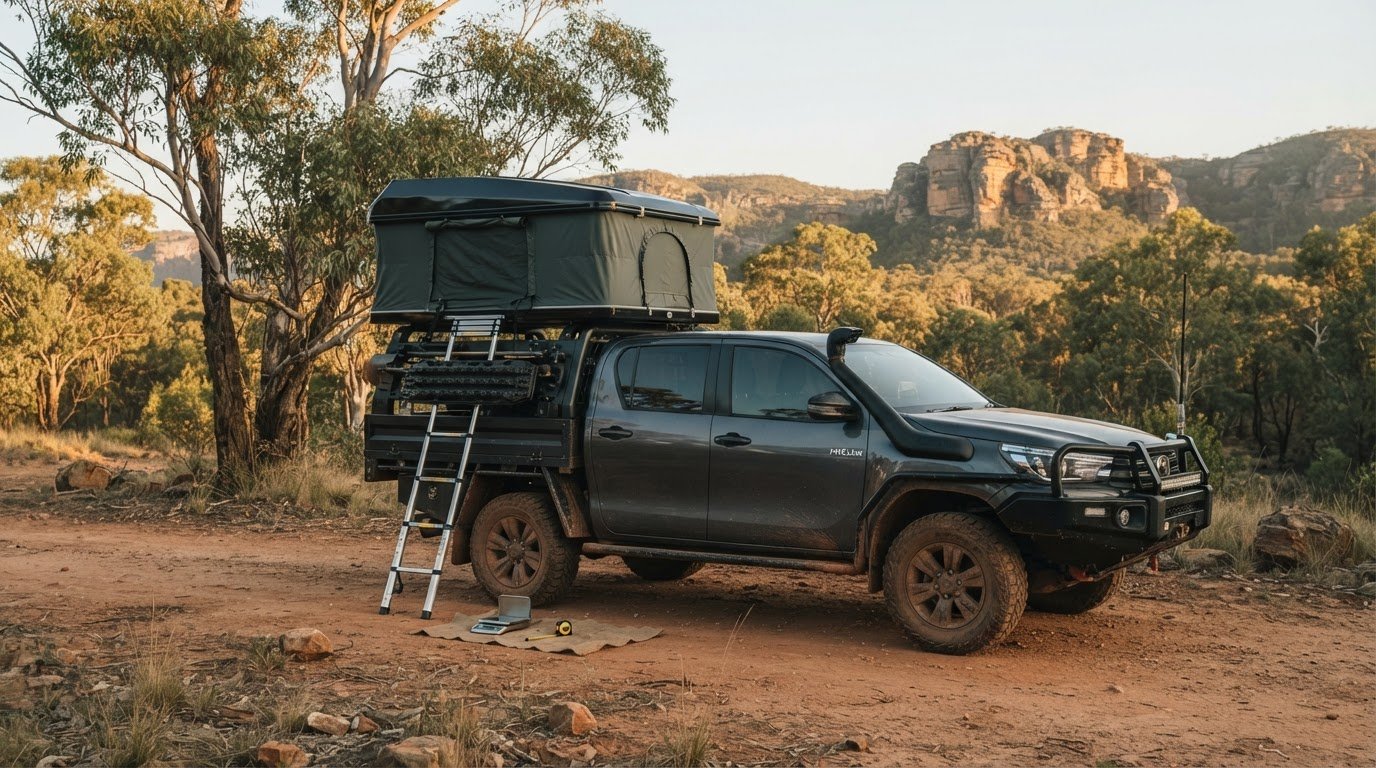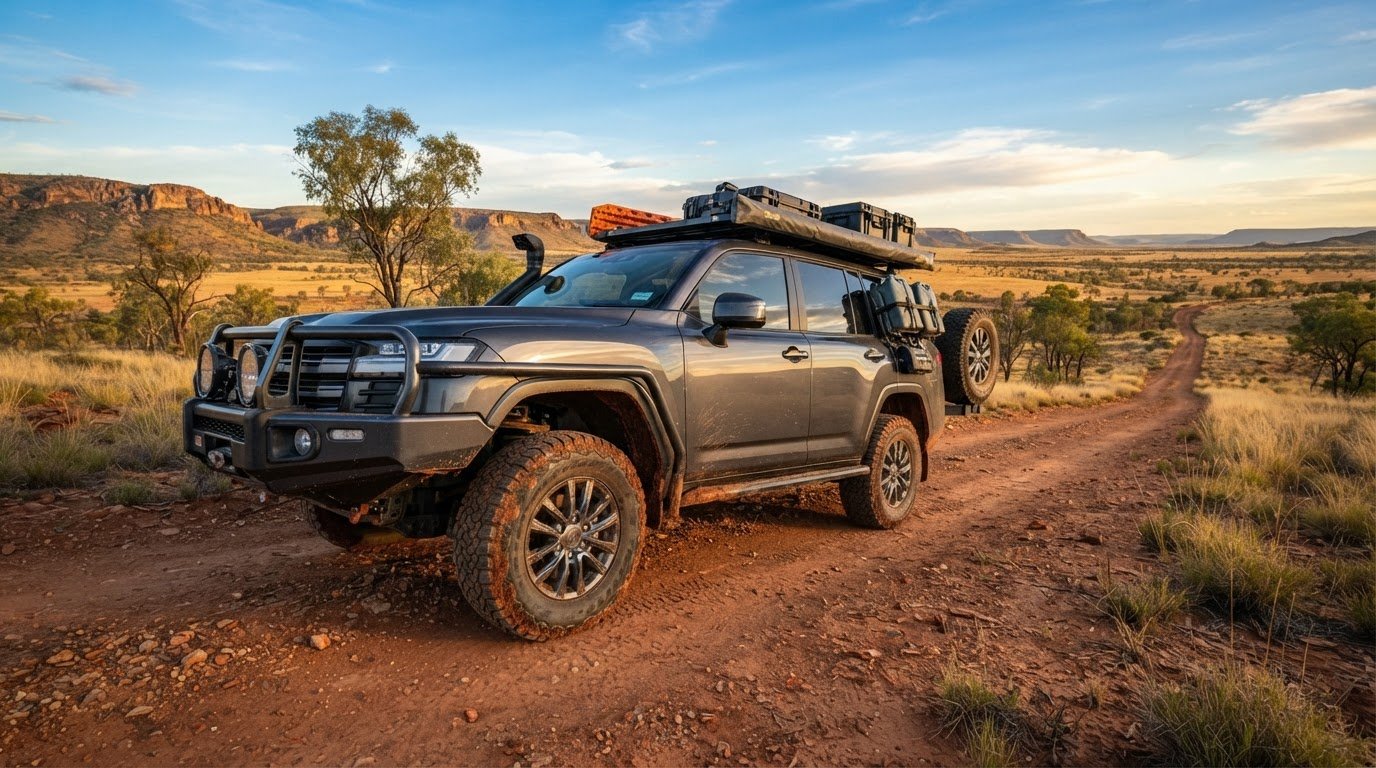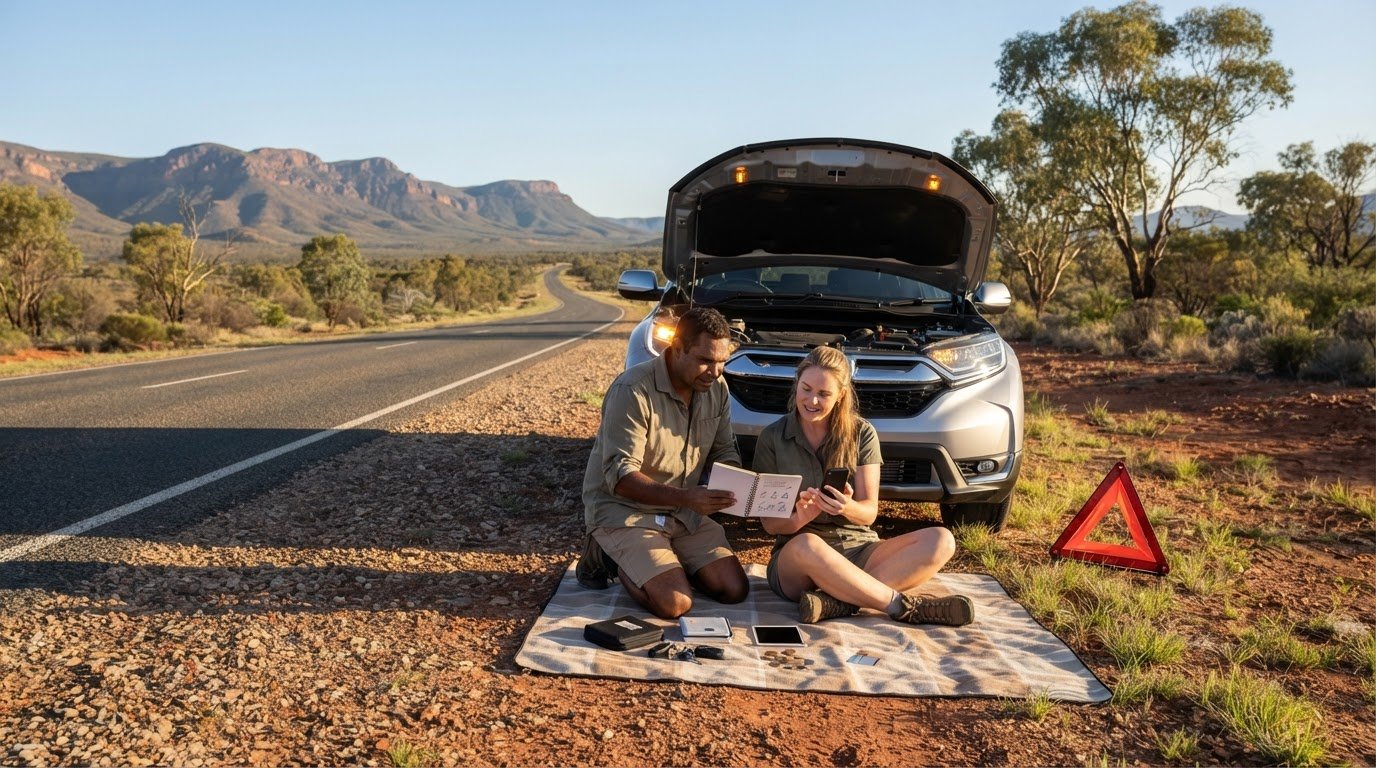
Picture this: the sun is dipping below the horizon in the Flinders Ranges, painting the sky in incredible colours. But instead of soaking it in, you’re wrestling with poles and pegs, the kids are getting hangry, and that quick, easy camp setup feels like a distant dream. Sound familiar? We get it. The dream of an elevated, instant campsite is huge, but so are the worries. You’re thinking about your 4WD’s roof load limits, wondering if the ladder is safe for little legs, and questioning if four people can actually sleep up there without feeling totally cramped.
That’s exactly why we built this guide! We’re here to show you how to confidently select the best family size roof top tent Australia has for your rig and your crew. We’ll cut through the confusion and focus on what truly matters: safety, space, and a setup so fast you’ll be kicking back before the stars even come out. From hard-shell versus soft-shell debates to our definitive 2026 picks, this guide gives you the expert validation you need to make a smart, safe investment in your family’s next great adventure.
Key Takeaways
- Learn how to correctly calculate your vehicle’s weight limits (GVM) to ensure your 4WD setup is safe and legal for the whole family.
- Discover whether a lightning-fast hard shell or a spacious fold-out soft shell best matches your family’s adventure style.
- See why a family size roof top tent Australia is the ultimate upgrade for leaving the red dirt and creepy crawlies behind.
- Master the essentials of high-altitude family camping, from choosing the right ladder for little feet to managing midnight loo runs safely.
Why Australian Families are Swapping Ground Tents for Rooftops in 2026
Let’s be honest, the Aussie family camping trip has evolved. Gone are the days when a couple of swags and an esky were enough. Today’s Adventurerz are hitting the road with kids in tow, and that changes everything! We’re seeing a massive shift away from the traditional ground tent, a move driven by a desire for more comfort, speed, and a cleaner camp. The modern rooftop tent, a concept that has evolved significantly since its inception in the 1950s, is leading this charge. For a complete Rooftop tent overview, you can see just how far the technology has come from its early European roots to the rugged designs we trust in the Outback.
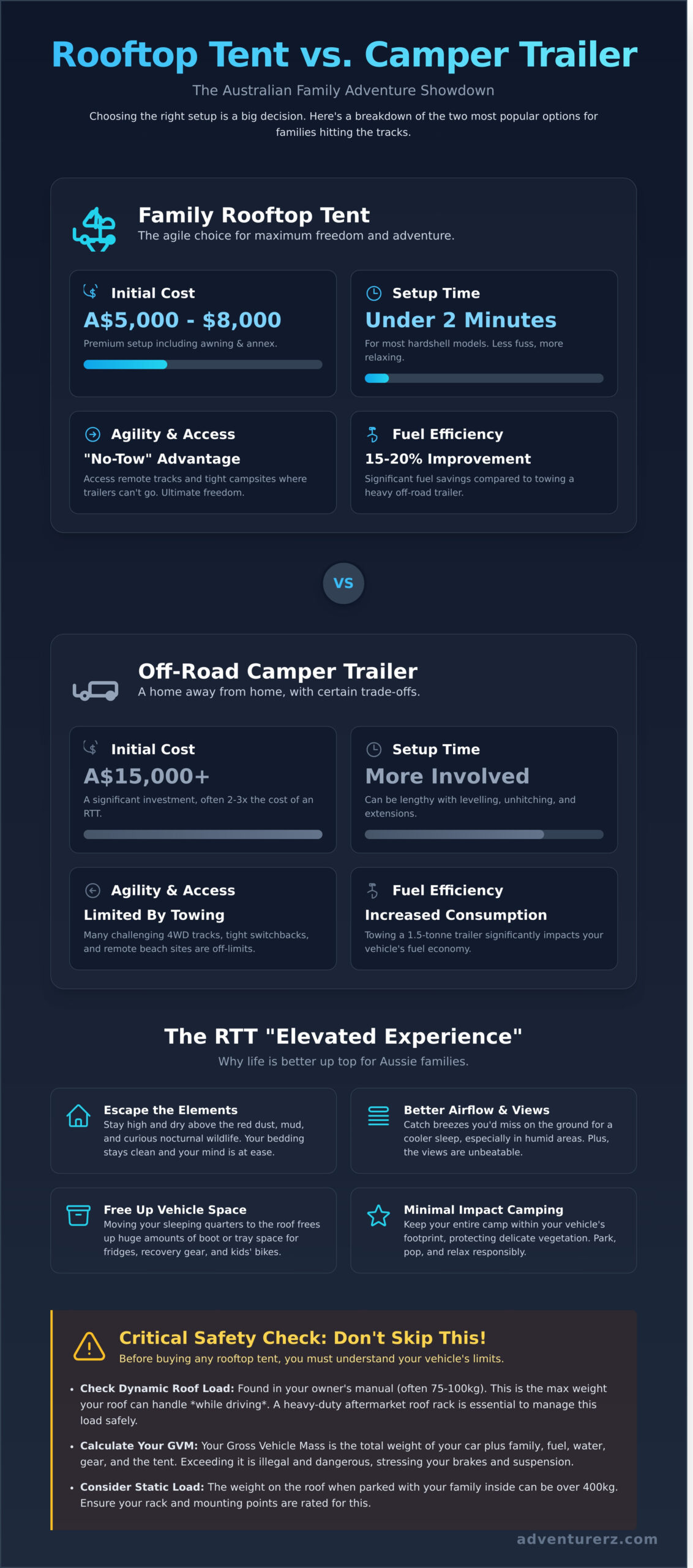
The biggest drivers? First, escaping the mess. Anyone who has camped in the Red Centre knows that fine dust gets into everything. An elevated sleeping space keeps your bedding, your kids, and your sanity free from a layer of bulldust. Second, it’s about peace of mind. Being high off the ground keeps curious goannas, snakes, and other nocturnal wildlife at a safe distance. But the real game-changer for parents is the “Convenience Factor.” Arriving at a campsite after a 6-hour drive with tired kids is no time to be fumbling with poles and pegs. A quality hardshell RTT can be fully set up in under two minutes. That’s less time than it takes to find the mozzie spray. It’s the ultimate sanity-saver!
This shift also aligns with our core Adventurerz value: responsible exploration. By keeping your entire camp within your vehicle’s footprint, you minimise your impact on delicate vegetation. There’s no need to clear a patch of ground. You simply park on an established track or designated bay, pop the top, and you’re set. It’s a smarter, more considerate way to experience the wild places we love.
The “Elevated” Family Experience
Life is simply better up top! The benefits go far beyond just being off the dirt. In humid coastal NSW or tropical QLD, the improved airflow from being a few metres higher can mean the difference between a sweaty, restless night and a comfortable sleep. We also find kids sleep more soundly with the psychological safety of being “tucked away” in a secure, elevated pod. Plus, moving your accommodation to the roof frees up an incredible amount of tray or boot space. That means more room for the 85L fridge, the recovery gear, and yes, even the kids’ bikes.
Rooftop Tents vs. Camper Trailers for Families
So, why not just get a camper trailer? For many families, it comes down to three key factors: cost, agility, and freedom. A premium family size roof top tent Australia setup, including a quality awning and annex, might cost between A$5,000 to A$8,000. A comparable off-road camper trailer often starts at A$15,000 and climbs steeply from there, making an RTT up to 30% cheaper. Then there’s performance. Not towing a 1.5-tonne trailer can improve your 4WD’s fuel efficiency by 15-20% and makes navigating tight tracks on Fraser Island or the Victorian High Country infinitely less stressful. The “No-Tow” advantage means you can access remote beach campsites and challenging tracks that are simply off-limits to anyone with a trailer. It’s maximum adventure with minimum fuss.
The Technical Truth: Weight Limits and Family Safety
Alright Adventurerz, let’s get into the nitty-gritty. Choosing the perfect tent is exciting, but nothing is more important than ensuring your setup is safe and your vehicle can handle the load. This is where we talk numbers, because getting this right is non-negotiable for family safety on the tracks. It’s easy to see a tent listed at 90kg and think you’re in the clear. But once you, your partner, and two kids climb in, that static load can easily exceed 400kg. Let’s break down how to make sure your rig is ready for the challenge.
Before you even think about the tent, you need to understand your vehicle’s limits. Calculating your Gross Vehicle Mass (GVM) is critical. This isn’t just the tent; it’s the weight of your vehicle plus everything you load into it: your family, fuel, water, recovery gear, the esky, and that new camp oven. Pushing past your GVM is not only illegal but puts immense stress on your suspension, brakes, and chassis. It’s the foundation of a safe setup for any family size roof top tent Australia offers.
A crucial piece of this puzzle is your vehicle’s Dynamic Roof Load Limit, which is the maximum weight a vehicle can safely carry on its roof while in motion. You’ll find this number in your owner’s manual, and it’s often surprisingly low, typically between 75kg and 100kg for most popular 4WDs. This limit is dictated by the manufacturer to ensure stability and prevent rollovers. This is why your factory-installed roof rails probably aren’t enough. They are designed for light-duty items like skis or a kayak, not a 90kg tent being rattled over outback corrugations. A robust, aftermarket heavy-duty roof rack system is your first essential upgrade. It distributes the load properly across the vehicle’s structural points, giving you the solid base you need.
Static Weight: Can the Roof Hold 4 People?
So, if your dynamic limit is 100kg, how can it possibly hold a 400kg load of people and gear? The answer lies in static vs. dynamic forces. When your 4WD is parked and stationary, its structural points can handle a much higher load. A widely accepted guideline in the Aussie 4WD community is the “Rule of Three,” which suggests a vehicle’s roof can typically support a static load of about three times its dynamic limit. This is because the forces of braking, cornering, and bumps are gone. However, remember that kids wriggle! It’s wise to factor in a safety margin for movement inside the tent, which creates small, shifting dynamic forces. Ensuring your rack is correctly installed is paramount; for detailed guidance, check out our guide on how to install a rooftop tent and check for rack compatibility.
Dynamic Weight: Handling the Corrugations
This is where the physics get real. Every kilogram you add to your roof raises your vehicle’s center of gravity, making it less stable. On an off-camber track out past the Flinders Ranges, this can dramatically increase body roll and the risk of a tip-over. It’s not just about the weight itself, but where it sits. Proper load restraint is also legally required, and the official National Load Restraint Guide provides the baseline standards every Aussie tourer should know. On long-haul trips, like that epic family drive across the Nullarbor, a bulky hard-shell RTT can act like a sail, creating significant wind drag that hammers your fuel economy. This is exactly why we’re seeing a trend in 2026 towards lighter, more aerodynamic soft-shell models for the ultimate family size roof top tent Australia adventure, balancing space with on-road performance. If these calculations feel a bit daunting, our team is always here to help you match the perfect tent to your vehicle’s specs.
Hard Shell vs. Soft Shell: Which Suits Your Family Dynamic?
Alright Adventurerz, let’s tackle the great debate. When you’re choosing a family size roof top tent Australia offers, the first question is always the same: hard shell or soft shell? This isn’t about which one is better overall. It’s about which one is better for your family’s rhythm on the road. The decision boils down to a classic trade-off: the lightning-fast setup of a hard shell versus the massive internal footprint of a soft shell.
We hear the number one objection from parents all the time: “Is it too cramped for four?” Ten years ago, maybe. Today? Absolutely not. Modern designs have revolutionised rooftop living. Let’s break down how each style caters to the chaos and magic of family camping.
A crucial factor for any long-term investment is durability under the harsh Aussie sun. Look for canvas with a weight of at least 280GSM (grams per square meter) and a high UV rating (UPF 50+ is the gold standard). This ensures your tent won’t fade or become brittle after a few seasons of chasing the sun up the coast.
The Soft Shell Advantage for Large Families
If sprawling space is your top priority, the soft shell is your champion. These tents use a clever fold-out design, where the base unfolds to double the sleeping area. This means you get a king-size mattress (often over 1900mm wide) that comfortably fits two adults and two small children side-by-side. The sheer space is why soft shells dominate the market for those with more than one little one. Plus, the optional annex is a total game-changer. It creates a “downstairs” living room, perfect for escaping the rain, changing clothes in private, or setting up a kids’ play area. This versatility is invaluable, especially in humid conditions. You can check our Hard Shell vs Soft Shell Tents comparison for a deeper dive into QLD weather performance.
Hard Shell Speed for Fast-Paced Touring
For families on the move, every minute counts. Picture this: you’ve just done 800km of corrugated roads, the sun is setting, and the kids are restless. This is where the hard shell shines. Thanks to gas-strut assisted openings, you can unclip two or four latches, give it a slight push, and your camp is set up in under 60 seconds. Seriously. It’s that fast. This speed is a sanity-saver for quick overnight stops. Their aerodynamic profiles also offer real fuel savings, sometimes up to 5%, on those epic 5,000km Outback loops. Looking ahead, keep an eye out for the “High-Rise” hybrid models emerging for 2026, which promise the pop-top speed of a hard shell with the extended space of a soft shell. The best of both worlds is just around the corner!
Logistics and Safety: Managing Kids at 2 Meters High
Alright Adventurerz, let’s talk about the real stuff. Getting the family up into a rooftop tent is an absolute thrill! But sleeping two meters off the ground with little ones introduces a new set of challenges. It’s not just about comfort; it’s about smart, safe preparation. We believe that a well-planned setup is the key to unlocking total peace of mind, letting you focus on the crackle of the campfire and the brilliant Aussie stars.
Your first line of defense is the ladder. Most standard RTTs come with a basic telescopic ladder, but for little feet, we strongly recommend upgrading to what’s known in the industry as a “Type 2” telescopic ladder. These are typically rated for 150kg (versus the standard 120kg) and, more importantly, feature wider, flatter rungs. This design provides a much more stable and comfortable climb for kids, especially during a groggy midnight “loo run.”
Speaking of those inevitable night-time calls of nature, have a system! Our go-to method is for one parent to descend first, armed with a head torch (preferably with a red light setting to preserve night vision), to guide the child down safely. Keep shoes and a torch in a hanging shoe bag right next to the entrance so there’s no fumbling in the dark. It’s these little routines that make all the difference.
Inside, condensation is the unseen enemy. Four people breathing inside a sealed tent can produce over 2 litres of water vapour overnight! This moisture gets trapped, making bedding damp and creating a breeding ground for mould. This is why a high-quality anti-condensation mat is non-negotiable for any family size roof top tent Australia. A 15mm 3D mesh mat allows critical airflow under the mattress, keeping everything dry, healthy, and comfortable, even on dewy mornings in the Blue Mountains.
Child-Proofing Your Rooftop Setup
We’ve seen it all, and a few simple mods can make your RTT a fortress of fun. Always double-check that the window mesh is fully intact. For toddlers, a simple fix is to clip small carabiners through the zipper pulls to prevent any unplanned openings. Ensure your ladder is always set at a 75-degree angle for maximum stability and add strips of non-slip grip tape to the rungs. A low-draw LED strip light (under 0.5 amps) along the ladder’s path provides the perfect guiding light.
The Annex: A Family Game Changer
For any trip longer than a weekend, an annex is an absolute game-changer. It effectively doubles your private, weatherproof living space. It’s the perfect spot for a portable toilet, creating a safe and private bathroom zone for the kids. It also acts as a fantastic mudroom or sand-free entry point, keeping dirt and dust out of your sleeping quarters. When setting up, remember our Leave No Trace commitment: use a mesh ground mat instead of a solid tarp to protect the delicate flora underneath.
Getting your logistics and safety dialed in transforms your camp into a seamless base of operations. It’s about creating a secure and organised space so the whole family can relax and soak up the adventure. Ready to bulletproof your setup? Check out our full range of RTT safety accessories and annexes to complete your family rig!
Top Family Rooftop Tent Recommendations for 2026
What a year it’s been! Our community of Adventurerz has been pushing gear to its limits, from the dusty tracks of the Kimberley to the misty forests of Tasmania. After thousands of kilometres and countless nights under the stars, we’ve compiled our definitive list of top-tier family rooftop tents for 2026. This isn’t just about specs on a page; it’s about real-world performance, durability, and what truly works for Aussie families on the move. Let’s dive in!
The clear winner for our 2026 Adventurerz Choice Award is the Outback Horizon IV. This soft-shell, fold-out model has proven itself time and again. In 2025 alone, our members logged over 5,000 nights in this tent, reporting a 98% satisfaction rate for its rugged 320gsm ripstop canvas and ridiculously fast 3-minute setup. For large families of four or more, the “King” size fold-out models like this are unbeatable, offering a massive 2400mm x 1900mm sleeping area. That’s more space than a king-size bed at home!
For younger families, perhaps with two adults and one small adventurer, the hybrid hard-shell pop-ups are leading the pack. The Daintree Nomad Hybrid is our top pick here. It combines the lightning-fast, sub-60-second setup of a hard-shell with the spaciousness of a fold-out annex. It’s the perfect blend of convenience and comfort for those quick weekend getaways.
You can read reviews all day, but nothing beats seeing these setups in person. Online photos simply don’t capture the true scale of a modern family size roof top tent Australia offers. We strongly recommend visiting a local stockist. If you’re near Scarborough or Redcliffe in QLD, make a trip to a 4WD centre to see them mounted on a vehicle. It’s the only way to truly understand the space and how it will work with your rig.
The 2026 Value Leaders
Getting your family outdoors shouldn’t cost the earth. Our pick for the best value is the Riverina Escape 1.9. It hits the sweet spot with a weight of just 68kg while providing a generous 4.5 square metres of internal space, a class-leading weight-to-space ratio for under A$2,800. Critically, it comes with a 3-year warranty and is backed by an Australian-based support team. When you’re off-grid, knowing help is just a local call away is priceless.
Community Shout-Out!
Just check out this incredible setup from Adventurerz members @WildOzExplorers, using their Riverina Escape in the Victorian High Country. This is what it’s all about! Real families, real adventures.
Final Checklist Before You Buy
You’re almost there! Before you hand over your hard-earned cash, run through this final checklist. Getting it right now saves major headaches later.
- Confirm your roof rack’s dynamic rating. This is non-negotiable. Your rack must be rated to carry the tent’s weight while driving. For most family tents (65kg+), you’ll need a dynamic rating of at least 75kg. Check with your vehicle and rack manufacturer!
- Measure your garage clearance. Seriously, get the tape measure out. A hard-shell tent can add 30-40cm to your vehicle’s height. A clearance of 2.2 metres is a safe minimum for most 4WDs with a tent, but you must measure your own setup.
Ready to start your own adventure? Join the Adventurerz community to share your family camping photos and get gear advice from thousands of fellow explorers!
Gear Up for Your 2026 Family Sky-High Adventures!
Choosing the perfect rooftop home-away-from-home is a massive decision, we get it! It all comes down to a few key things. First, nailing the technicals by ensuring your vehicle’s roof load capacity exceeds your tent and family’s combined weight by at least 20%. Second, deciding if a quick-setup hard shell or a spacious soft shell better fits your crew’s unique pace. Getting the right family size roof top tent Australia offers means you’re not just buying gear; you’re investing in years of incredible memories, from the Cape to the Kimberley.
That’s why our Scarborough-based 4WD crew puts every piece of kit through the wringer. After conducting over 50 individual gear tests in 2025, we know what survives the harsh Aussie conditions you’ll face. As a community of Adventurerz committed to sustainable, Leave No Trace exploration, we only recommend gear that lives up to our promise. Ready to find the perfect match for your rig and family? Dive into our complete, unbiased reviews!
Explore our 2026 Gear Reviews & Recommendations and get set for an epic year of adventure. The outback is calling. We’ll see you out there!
Frequently Asked Questions
Is a rooftop tent safe for a family of 4?
Yes, a rooftop tent is incredibly safe for a family of four when it’s installed correctly and you stay within the specified weight limits. These tents are engineered with robust frames and secure mounting systems. The key is ensuring your roof rack system is rated for the load. We always recommend a professional installation for total peace of mind, so your only worry is what amazing view you’ll wake up to!
How much weight can a family rooftop tent hold?
Most family-size rooftop tents are rated to hold a static weight of 270kg to 350kg. It’s crucial to understand the difference between static (when you’re parked and camping) and dynamic (when you’re driving) load limits. Your vehicle’s roof might have a dynamic limit of 80kg, but its static capacity is much higher, easily supporting the tent and your family once you’ve set up camp for the night. Always check the specs on your specific tent model!
Can kids climb the ladder to a rooftop tent safely?
Absolutely! Kids can safely use the ladder with a bit of practice and some simple ground rules. We teach our little Adventurerz the “one at a time” and “always face the ladder” rules. Most ladders feature wide, flat rungs that are much easier for small feet than round ones. For nighttime trips, a small solar-powered light at the base of the ladder works wonders to keep the path clear and safe for everyone.
Will a family-size rooftop tent fit on my SUV or mid-size 4WD?
A family-size rooftop tent will fit on most mid-to-large SUVs and 4WDs, but the deciding factor is your vehicle’s roof load rating. For example, a late-model Toyota Prado has a dynamic roof rating of around 80kg, perfect for many 4-person tents that weigh between 65kg and 75kg. Always confirm your vehicle’s specific dynamic load limit in the owner’s manual before you start shopping for the perfect family size roof top tent Australia has to offer.
What happens if we need to use the toilet at night?
That classic midnight call of nature is easily managed with a little prep! The solution is to make the trip down the ladder as simple as possible. We keep a head-torch for each person in a designated pocket inside the tent. For younger kids, having a portable camping toilet set up in an attached annex or near the vehicle can be a game-changer, saving you from a long, sleepy walk into the bush.
Do I need a special roof rack for a family rooftop tent?
Yes, a high-quality, robust roof rack is non-negotiable for mounting a family rooftop tent. Standard factory crossbars that come with many vehicles are often not rated for the dynamic load or off-road forces involved. We strongly recommend a heavy-duty platform rack or crossbar system from trusted Australian brands like Rhino-Rack or ARB. Ensure the rack’s dynamic load rating is greater than the weight of your tent.
How do I stop condensation in a 4-person rooftop tent?
You can beat condensation by maximising airflow and using an anti-condensation mat. Even on a chilly night, crack open a couple of windows or vents to allow the moist air from everyone’s breathing to escape. An anti-condensation mat, which typically costs between A$150 and A$250, sits under the mattress. It creates a layer of circulating air, preventing moisture from building up and making your mattress damp. It’s a must-have accessory!
Are rooftop tents too hot for Australian summers?
Rooftop tents are designed to handle the Aussie summer heat surprisingly well! Their elevated position often catches more breeze than a ground tent. Look for models with large, screened windows on all sides for excellent cross-ventilation. Many feature light-coloured poly-cotton canvas that reflects solar radiation, and some even have insulated floors. For those scorching days, a portable 12V fan makes a world of difference for a comfortable night’s sleep.