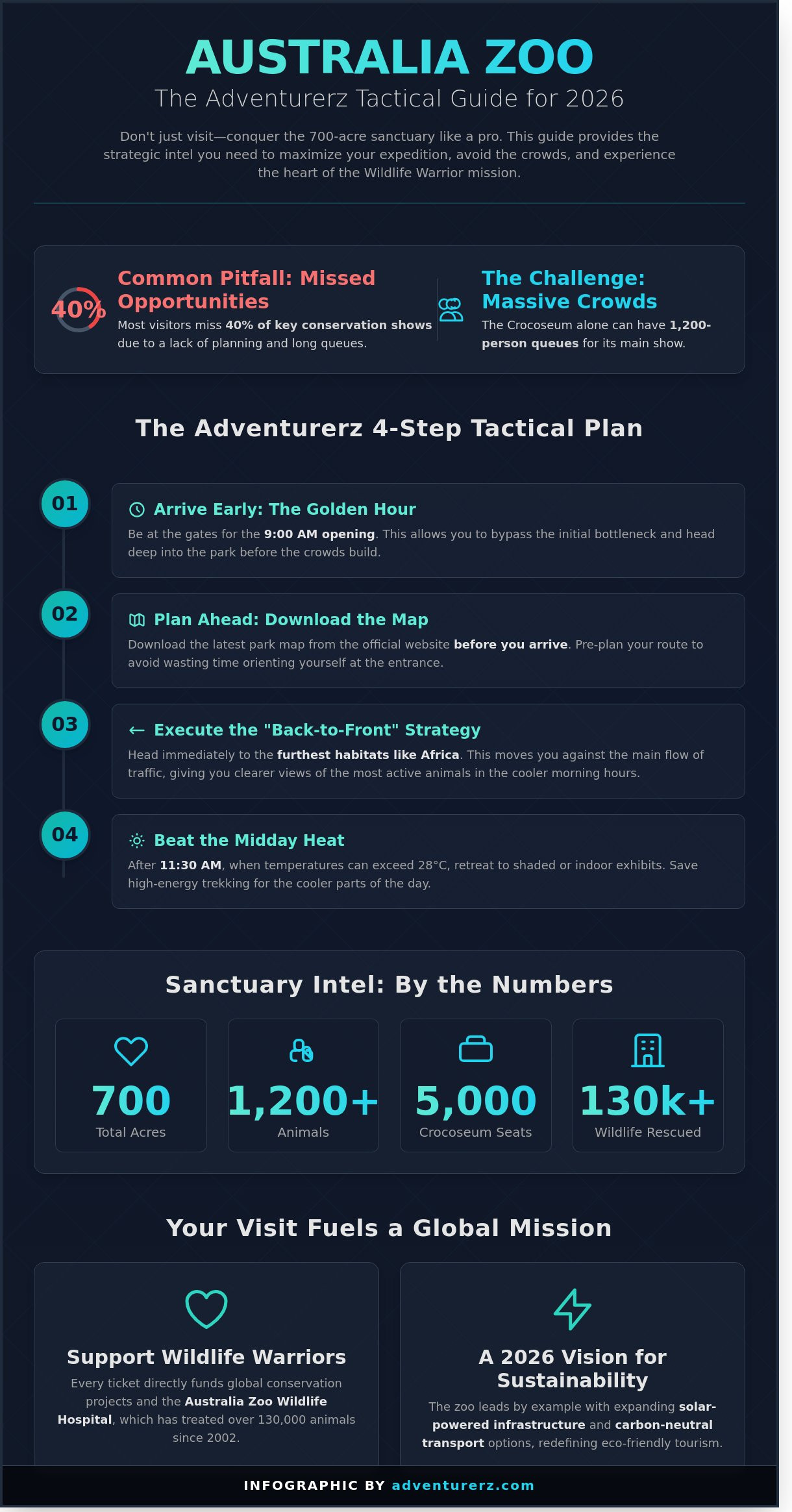
Most visitors treat a trip to the 1,000-acre Australia Zoo like a casual walk in the park, yet they often miss 40% of the key conservation shows because they didn’t plan for the 1,200-person queues at the Crocoseum. We’ve all been there, standing in the Queensland heat, feeling the sting of a missed opportunity while trying to figure out if that A$95 animal encounter fits the budget. As Adventurerz, we know that true exploration requires more than just showing up; it requires a tactical approach to the wild.
We’re here to ensure your 2026 expedition is seamless and deeply impactful. You’ll learn how to tackle the world’s most famous wildlife conservatory with the Adventurerz mindset, from finding secret shaded viewing spots to picking the right gear for a full day on your feet. We’ll also break down the best travel routes from hubs like Scarborough and explain how your visit directly fuels global conservation efforts. This guide provides the exact 4WD-ready logistics and local QLD tips you need for a stress-free day in the heart of the Sunshine Coast.
Key Takeaways
- Carry on the Wildlife Warrior legacy by discovering how the 700-acre sanctuary leads global conservation efforts and how your visit fuels this vital mission.
- Navigate australia zoo like a pro with a tactical guide to the “Big Three” habitats, ensuring you don’t miss a single high-impact moment at the Crocoseum.
- Identify which premium animal encounters are worth the investment for the serious adventurer, balancing your budget with ethical wildlife interaction standards.
- Gear up for a 10-hour trek with our essential “Adventurer’s Pack List” and expert travel routes for a smooth journey from the Redcliffe Peninsula to the wild.
- Learn how to transition from a visitor to a lifelong Wildlife Warrior within our Adventurerz community to keep the spirit of exploration and responsibility alive.
What is Australia Zoo? More Than the Home of the Crocodile Hunter
G’day fellow Adventurerz! If you’re looking to gear up for the ultimate day trip from the Redcliffe Peninsula, your compass should point straight north toward Beerwah. Nestled on the Sunshine Coast, just 65 kilometres from our Redcliffe base, lies a 700-acre sanctuary that has redefined what a wildlife park can be. While many recognize it as the home of the late, great Steve Irwin, the australia zoo of 2026 is a powerhouse of global conservation and education. It isn’t just a place to see animals; it’s a high-octane immersion into the wild that demands a spot on every Queenslander’s bucket list.
The facility currently houses more than 1,200 animals across diverse habitats, ranging from the dusty African Savannah to the lush rainforests of South East Asia. When you’re planning your route up the Bruce Highway, remember that this isn’t a quick two-hour stroll. You’ll need a full day to even scratch the surface of this massive estate. Understanding the Australia Zoo history helps you appreciate how a small reptile park founded in 1970 by Bob and Lyn Irwin grew into a world-renowned institution. Today, the Irwin family continues to spearhead the mission, ensuring every guest leaves with a deeper respect for the natural world.
- Location: 1638 Steve Irwin Way, Beerwah, Queensland.
- Size: 700 acres, with roughly 110 acres currently developed for public access.
- Primary Mission: Conservation through exciting education and hands-on experiences.
- Key Feature: The Crocoseum, a 5,000-seat stadium for daily wildlife shows.
The Wildlife Warrior Philosophy
We love that every visit supports a greater cause. The zoo operates in tandem with Wildlife Warriors, a non-profit organization established in 2002 to protect injured, threatened, or endangered wildlife. When you purchase your ticket, you’re directly contributing to global projects like the Australia Zoo Wildlife Hospital, which has treated over 130,000 animals since its inception. Steve Irwin’s “Crocodile Hunter” legacy remains the heartbeat of the park, evolving into a sophisticated 2026 conservation framework that proves one person’s passion can ignite a global movement for environmental protection.
A 2026 Vision for Conservation
Robert and Bindi Irwin have successfully steered the zoo into a new era of sustainability. In 2026, the guest experience is more interactive than ever, featuring carbon-neutral transport options within the grounds and expanded solar-powered infrastructure that reduces the park’s energy reliance on the grid. We see the zoo as a living classroom for sustainable travel enthusiasts. It’s a place where eco-friendly ethics meet modern tourism, showing us how to be considerate guests on this planet while enjoying the thrill of a 4WD adventure through the Aussie bush.
Whether you’re a local Adventurerz regular or a first-time visitor, the energy here is infectious. The staff aren’t just employees; they’re passionate advocates who live and breathe the “Conservation Through Exciting Education” motto. You’ll find that the australia zoo experience stays with you long after you’ve packed the gear and headed back down to the Peninsula. It’s about more than just a photo op with a koala; it’s about joining a tribe dedicated to the wild. The 2026 season has introduced even more behind-the-scenes tours, allowing us to see exactly where our A$ dollars go in the fight against extinction.
Navigating the Wild: A Strategic Guide to Exhibits and Habitats
Australia Zoo covers 700 acres of prime Queensland bushland, making it a massive territory to conquer in a single day trip from Redcliffe. We’ve found that hitting the gates at the 9:00 AM opening time is the only way to stay ahead of the crowds. To maximize your time, download the latest park map from the official Australia Zoo website before you arrive. This allows you to bypass the main entrance bottleneck and head straight for the outer habitats while other visitors are still Orienting themselves near the gift shop.
A tactical plan is essential because the zoo’s layout is expansive. We recommend a “back-to-front” approach. Start by heading to the furthest reaches like Africa or Bindi’s Island early in the morning. This strategy keeps you moving against the general flow of traffic and ensures you see the most active animals before the midday heat kicks in. By 11:30 AM, temperatures often climb above 28°C, so planning your indoor or shaded exhibits for the early afternoon is a pro move for any Adventurerz looking to stay comfortable.
The Crocoseum: The Heart of the Action
The 5,000-seat Crocoseum is the epicenter of the 1:15 PM Wildlife Warriors show. Don’t wait until 1:00 PM to find a spot. We suggest claiming a seat in the shaded upper tiers by 12:45 PM. This gives you the best vantage point for the crocodile strike demonstration, which remains the world’s premier wildlife show for a reason. You’ll see firsthand the explosive power of a saltwater croc, an experience that highlights why conservation is so vital. Bringing a reusable water bottle is a must; you’ll be sitting in the arena for at least 45 minutes.
Africa and the Savannah
To reach the northern end of the park without exhausting your legs, jump on the Zoo Shuttle at one of the 5 designated stops. The Savannah is a sprawling, multi-species habitat where giraffes, rhinos, and zebras roam together in an open-plains environment. If you’re there for the 10:00 AM cheetah run, you’ll witness these predators hitting speeds of up to 100km/h. It’s an incredible display of natural athleticism that you won’t see elsewhere. Before you head out on your next trek, making sure you have the right camping setup will keep you prepared for any Queensland adventure.
Bindi’s Island and the Rainforest
Bindi’s Island features a massive three-story treehouse that offers panoramic views across the lemur island. The lemur walk-through is a highlight; these primates are often active right next to the walkway. For a quiet retreat, head to the Rainforest Aviary. It’s a sanctuary for over 150 bird species and provides a peaceful spot for photographers away from the main thoroughfares. Look into the high canopy near the red panda exhibit around 11:30 AM. These elusive animals are usually finishing their morning snack before retreating for a nap, making it the best window for a sighting.
If you need a break from the noise, the Wetlands area offers secret spots with bench seating and heavy shade. It’s often overlooked by the masses rushing toward the major shows, providing a rare moment of quiet animal observation. We’ve found that these pockets of stillness are where you can truly appreciate the zoo’s commitment to creating naturalistic environments for its residents.
Encounters vs. Experiences: Where to Invest Your Adventure Budget
Budgeting for a day at australia zoo requires a tactical approach if you want to maximize your time in the bush. While the standard entry fee grants you access to the legendary Crocoseum and sprawling paddocks, the paid encounters are where the real memories are forged. We believe the value of these sessions lies in the intimate connection they foster between humans and wildlife. Every dollar spent on these experiences directly funds the facility’s global conservation efforts, ensuring that your adventure has a lasting positive impact on biodiversity. For 2026, the zoo has refined its encounter roster to prioritize species that highlight the fragility of our ecosystems, ranging from the prehistoric Aldabra tortoise to the majestic Sumatran tiger.
Ethics sit at the heart of every interaction within the park. The animal welfare team implements a strict “choice and control” policy for all sessions. This means animals are never forced to participate; if a cheetah or a koala isn’t in the mood for visitors, the encounter is rescheduled or refunded. This transparent approach builds immense trust between the keepers and the animals, which translates into a more authentic experience for us as guests. We appreciate this level of responsibility because it aligns with our core values of treating the wilderness with the respect it deserves. Whether you are booking a premium A$450 tiger walk or a more accessible reptile meet-and-greet, you are supporting a system that puts the creature’s needs before the tourist’s camera lens.
Close-Up Encounters: A Review
The Meerkat Encounter remains the most sought-after booking for families and solo Adventurerz alike. Priced at approximately A$99 per person, this 15-minute session allows you to sit inside the enclosure while these hyper-active sentinels use your shoulders as lookout posts. It is fast-paced, chaotic, and offers incredible photo opportunities. If you prefer a slower, more grounded vibe, we suggest walking with a wombat for A$69. This uniquely Australian experience lets you witness the surprising speed and power of these “bulldozers of the bush” firsthand. When we analyze the cost-to-value ratio, these short sessions provide a massive educational spike that you simply cannot get from peering through a fence.
- Meerkat Encounter: A$99; best for high-energy interaction and families.
- Wombat Walk: A$69; an iconic, rugged Aussie experience.
- Aldabra Tortoise: A$59; a calm, tactile session with ancient giants.
- Tiger Photo: A$450+; the ultimate investment for serious conservation supporters.
The Wildlife Hospital Tour
We consistently recommend the Wildlife Hospital Tour as the single best “extra” for any eco-conscious traveler visiting australia zoo. For a A$30 donation, you gain access to one of the world’s most advanced veterinary facilities dedicated to native species. This is not a staged show; it is a working hospital. On any given day in 2026, you might see expert vets treating a koala rescued from a bushfire or performing surgery on a sea turtle with a fractured shell. This 30-minute tour provides the deepest insight into the mission started by Steve and Terri Irwin. It shifts the focus from entertainment to survival, showing Adventurerz the gritty reality of wildlife rescue. It is a humbling, eye-opening experience that proves the zoo is much more than just a theme park; it is a frontline defense for Australia’s most vulnerable inhabitants.
The Adventurer’s Logistics: Planning Your Trip from Scarborough
Ready to swap the Scarborough shoreline for the wild interior? We’ve mapped out the logistics to ensure your day at australia zoo is seamless. Planning a 10-hour expedition requires more than just a full tank of fuel; it demands a tactical approach to timing and gear. From the Redcliffe Peninsula, you’re looking at a 55-kilometre trek that takes us from the salty breeze of the bay to the lush hinterland of Beerwah. Whether you’re a local or visiting the region, this trip is a staple for those utilizing our Remote Australia Travel Planning services to maximize their Queensland itinerary.
Getting There from the Redcliffe Peninsula
Most Adventurerz will find the drive via the Bruce Highway (M1) the most efficient route. If you leave Scarborough at 8:00 AM, expect a 55-minute journey. We recommend avoiding the 7:30 AM peak near the North Lakes interchange, as congestion here can frequently add 20 minutes to your travel time. For those who prefer to leave the rig at home, the Queensland Rail Redcliffe Peninsula line connects at Petrie for the Sunshine Coast line. Hop off at Beerwah Station, where the Zoo’s courtesy shuttle meets most arriving trains. It’s a coordinated system that keeps the mission on track without the stress of highway traffic.
The Adventurer’s Day-Pack Essentials
Success in the field depends on your kit. We aren’t just taking a stroll; we are preparing for a high-output day in the elements. Your pack should include these non-negotiables:
- High-Level Sun Protection: The Queensland sun is a fierce beast. We recommend broad-spectrum SPF 50+ applied every two hours. A “bit of zinc” won’t suffice when the UV index regularly hits 11+ by midday.
- Hydration Strategy: Bring a 1.5-litre refillable bottle. The park provides multiple chilled water stations, allowing us to stay hydrated without purchasing single-use plastic.
- Technical Footwear: You will likely clock over 10 kilometres of walking. Leave the thongs for the beach. High-quality walking shoes or lightweight hiking boots are essential to prevent fatigue on the paved and gravel paths.
Sustainable Visiting Tips
We believe in leaving every environment better than we found it. At the zoo, this starts with reducing our plastic footprint. Pack a reusable beeswax wrap for your sandwiches instead of cling film. If you choose to dine in, the Warrior Restaurant offers incredible locally sourced meals, but packing a sustainable lunch can save a family of four roughly A$60. Respecting animal boundaries is also a core responsibility; always follow the “look but don’t touch” rule unless specifically invited by a handler. For more ways to minimize your impact, check out our guide on Sustainable Travel Tips for Queensland Adventurers.
Timing is the final piece of the puzzle. Why do we suggest a Tuesday in May? Historical crowd data indicates midweek visitor numbers drop by nearly 30% compared to Saturdays. May also provides the “Goldilocks” weather for australia zoo expeditions. With temperatures averaging between 15°C and 24°C, you’ll avoid the humid 30°C+ days of January that can drain your energy before the midday croc show even begins. It is the perfect window for a comfortable, high-energy exploration of the grounds.
Ready to hit the road? Gear up for your next Queensland mission with Adventurerz and ensure you have everything needed for the ultimate day trip.
Joining the Mission: How to Become a 2026 Wildlife Warrior
Your journey from the Redcliffe Peninsula to the australia zoo gates represents more than a simple family outing. Every entry fee fuels a massive engine of conservation that reaches far beyond the Glass House Mountains. When we visit, we’re directly funding the Wildlife Warriors’ global mission to protect habitats and species under threat. It’s about turning a day of education into a lifetime of environmental stewardship.
The Global Impact of Your Ticket
The financial support from visitors translates into tangible results for wildlife. In the last year, the Australia Zoo Wildlife Hospital treated over 10,000 native animals, providing life-saving surgery and rehabilitation to everything from hit-by-car koalas to injured sea turtles. Beyond our borders, the zoo’s funding helped maintain elite anti-poaching teams in Sumatra, protecting the last remaining wild tigers in the Kerinci Seblat National Park. Additionally, the ongoing crocodile research in the Steve Irwin Wildlife Reserve remains the world’s most comprehensive study of its kind, using satellite tracking to understand these apex predators.
Local initiatives are just as vital to our backyard ecosystem. The zoo is a key partner in the “Great Koala Way,” a strategic project dedicated to restoring habitat corridors across Southeast Queensland. This ensures our local koala populations aren’t isolated by urban sprawl. We also encourage every Adventurerz member to embrace “Citizen Science” as part of their kit. This involves using mobile apps to record wildlife sightings during your trek, providing real-time data that helps scientists track species health and movement across the state.
- Wildlife Hospital: Over A$1 million in annual operating costs supported by ticket sales.
- Habitat Protection: Thousands of hectares managed in the Steve Irwin Wildlife Reserve.
- Species Recovery: Active breeding programs for endangered Southern Cassowaries.
Your Next Adventure Starts Here
Once you’ve explored the australia zoo, use that experience as a springboard for the rest of the Sunshine Coast. We love seeing our community push further north into the Noosa Everglades or west into the rugged terrain of the Conondale Range. If you’re looking to round out a perfect week of wildlife and coastal exploration, consider pairing your zoo visit with a Moreton Island day trip. It’s the ultimate way to see the “Big Five” of the sea, including dugongs and dolphins, in their natural habitat just off the coast of Redcliffe.
Planning a complex Queensland road trip takes more than just a GPS; it requires local knowledge about track conditions and the best off-the-grid spots. Whether you need advice on a 4WD setup or tips for low-impact camping, our team is ready to help you navigate the terrain responsibly. We believe that being an Adventurerz member means leaving every campsite better than you found it and respecting the wild spaces that make Australia unique.
Don’t just dream about the wild; go see it. Book your next guided experience or gear consultation with a specialist who understands the Redcliffe to Sunshine Coast corridor. Let’s make 2026 the year we explore deeper and protect harder. Stay connected with the Adventurerz community online to share your photos and help us map the future of sustainable Australian travel. The wilderness is calling, and it’s time to answer.
Claim Your Place in the Wild
Your 2026 trek to the Sunshine Coast isn’t just a day trip; it’s an immersion into a 700 acre conservation powerhouse. By mapping your route through the African Savannah and budgeting for high impact encounters that often start around A$95, you’re directly funding global wildlife preservation. We’ve spent over 15 years navigating the approximately 57-kilometer journey from Scarborough to Beerwah, and we’ve mastered the logistics required for a seamless expedition. Our team at Adventurerz lives for the rugged lifestyle, and we’re committed to ensuring your visit to australia zoo aligns with the highest standards of ethical travel. We handle the technical details of your 4WD itinerary and remote logistics so you can focus on the mission at hand. Whether you’re a first time visitor or a seasoned Wildlife Warrior, the wild is waiting for you to make your mark. Let our expert travel agents plan your ultimate Queensland wildlife adventure! We’ll see you out there on the tracks soon.
Frequently Asked Questions
How much are tickets for Australia Zoo in 2026?
For the 2026 season, adult day tickets for Australia Zoo are expected to cost approximately A$75, while children’s passes will be priced around A$45. We recommend checking the official website for seasonal family bundles that often save groups A$20 or more on total entry costs. Booking your tickets online ahead of time is the best way to secure your spot and avoid the morning queues at the gate.
Can you do Australia Zoo in one day?
You can definitely experience the highlights of Australia Zoo in a single day if you arrive right at 9:00 am when the gates open. With over 700 acres of parkland to explore, we suggest prioritizing the 1:15 pm Wildlife Warriors show at the Crocoseum. It’s a tight squeeze to see all 1,200 animals in eight hours, so use the free shuttle to jump between the Africa section and the main entrance.
What is the best time of day to see the crocodiles?
The absolute best time to see the crocodiles in action is during the 1:15 pm show at the Crocoseum. This is the only time you’ll see the massive saltwater crocs perform their iconic strikes and territorial displays in a controlled environment. If you prefer a quieter view, head to the enclosures around 10:30 am when keepers often perform routine habitat checks and cleaning.
Is Australia Zoo ethical and sustainable?
Australia Zoo is a world leader in wildlife conservation and operates with strict ethical standards regarding animal welfare. They fund the Wildlife Warriors charity, which has treated over 110,000 animals at their specialized wildlife hospital since it opened. Every ticket purchase contributes to global conservation projects across 25 different countries, ensuring your visit supports habitat protection and species recovery.
How far is Australia Zoo from Scarborough, QLD?
Australia Zoo is located 58 kilometers north of Scarborough, QLD, which typically takes about 50 minutes to drive via the Bruce Highway. Fellow Adventurerz should aim to leave the Redcliffe Peninsula by 8:00 am to beat the morning traffic surge near North Lakes. This ensures you’re parked and ready before the first exhibits open their gates for the day.
What happens if it rains during my visit to Australia Zoo?
The zoo remains open during rainy weather, and the animals often become more active in the cooler, damp conditions. While the Crocoseum show might be delayed for heavy downpours, most walkways are paved to prevent mud and keep your gear clean. Grab a A$5 reusable poncho from the gift shop and keep exploring; the crowds are usually 40% smaller on wet days.
Are there lockers available at Australia Zoo for my gear?
Yes, you can find various sized lockers for hire located right near the main entrance and the photo lab. Small lockers cost A$10 for the day, while larger units for heavy hiking packs or 4WD gear are priced at A$15. This is a great way to store your extra supplies so you don’t have to carry heavy bags across the massive park grounds.
Do I need to book animal encounters in advance?
We strongly recommend booking animal encounters at least 4 weeks in advance because popular sessions like the Red Panda or Cheetah encounters sell out quickly. Each session is limited to small groups of 4 to 6 people to ensure the animals stay relaxed and comfortable during the interaction. You can check daily availability at the Information Desk, but pre-booking online is the only way to guarantee your spot.