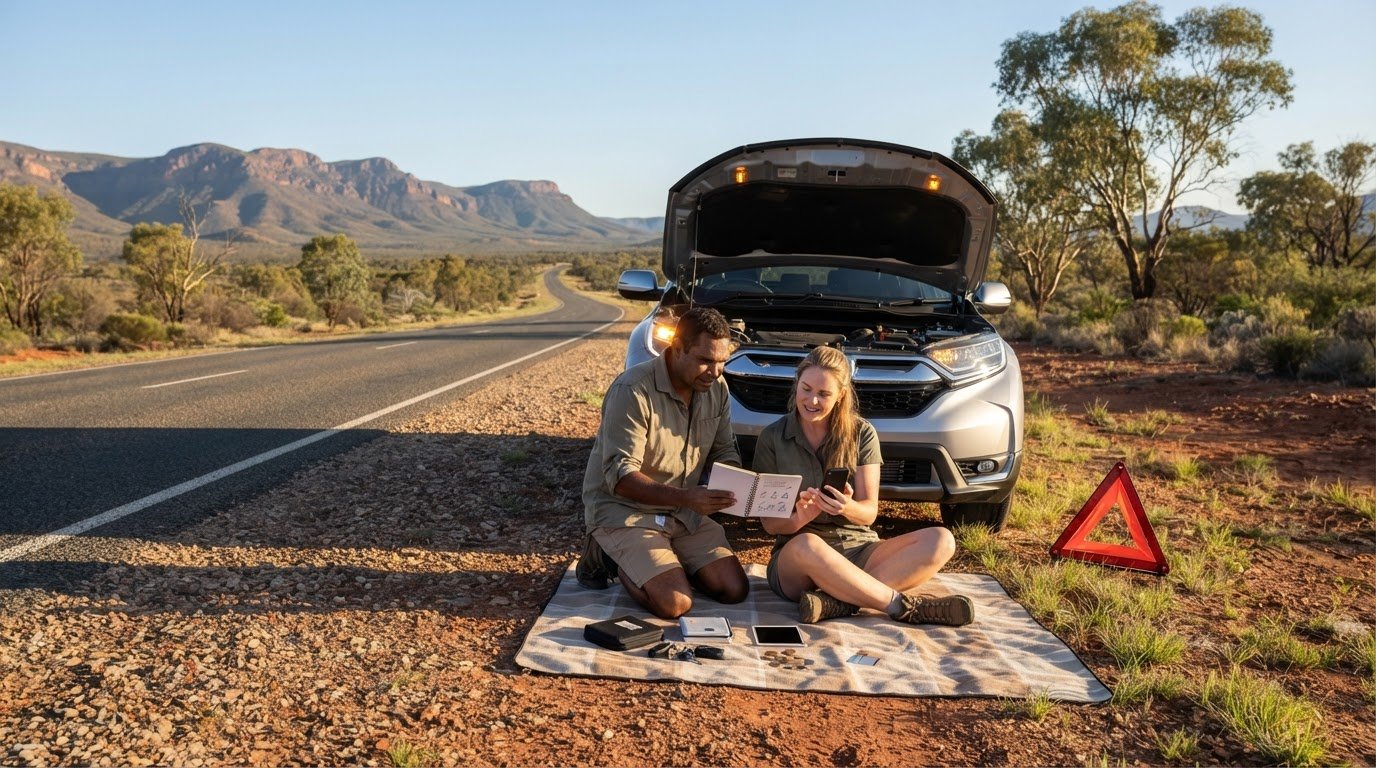
What if the secret to conquering the 14,500 kilometres of the Highway 1 loop isn’t just a bigger fuel tank, but a smarter way to bridge the gap between your smartphone and the red dirt? We all know that staring at a map of the Outback can feel like looking at another planet. It’s easy to feel overwhelmed by the sheer scale of the 7.6 million square kilometres that make up our backyard, especially when you’re trying to choose between a heavy-duty 4WD awning or a lightweight swag for those remote overnight stops. It’s a daunting task to prepare for the 35 degree heat of the Top End while ensuring your kit remains sustainable for the long haul.
We’ve built this ultimate 2026 road trip planner to ensure you don’t just survive the trek, but thrive in it. You’re going to learn how to master the latest digital navigation tools while maintaining the rugged self-sufficiency that defines every true Adventurerz spirit. We’ll show you how to blend high-tech apps with old-school grit to create a journey that’s both safe and eco-friendly. From a foolproof itinerary that covers the best hidden gems to a gear setup that won’t let you down in the middle of the Nullarbor, this guide is your roadmap to a confident, community-led adventure across the greatest country on Earth.
Key Takeaways
- Master the ultimate road trip planner by blending cutting-edge digital tools with the rugged intuition we need to navigate the wild Australian outback!
- Learn to identify your “Anchor Points” and calculate critical fuel and water ranges to ensure your slow travel journey through remote regions is both safe and exhilarating.
- Match your gear setup-from 4WD awnings to swag tents-to your specific terrain while adopting a “Leave No Trace” roadmap to protect our iconic landscapes.
- Build off-the-grid resilience by packing essential safety tech like PLBs and UHF radios, keeping you connected and secure even when you’re miles from civilization.
- Use our “Final 48 Hours” checklist to dial in your tyre pressures and tech updates, so every fellow Adventurerz member can hit the tracks with total confidence!
Beyond the Map: What Makes a Great Road Trip Planner in 2026?
Planning a journey through the heart of Australia in 2026 requires a radical shift in perspective. We’ve moved far beyond the era of rigid, printed itineraries and predictable highway stops. Today, a truly effective road trip planner is a sophisticated blend of digital precision and rugged, old-school intuition. This year marks a definitive rise in “slow travel” across the continent. Adventurerz are no longer rushing to reach a destination. Instead, we are prioritising remote exploration and deep connection with the landscape. This evolution reflects a broader change in how we view travel. To appreciate this shift, it helps to understand the history of the road trip and how it transformed from a necessity of early transport into a symbol of ultimate freedom. For us, planning is about creating space for the unexpected, not just calculating fuel stops.
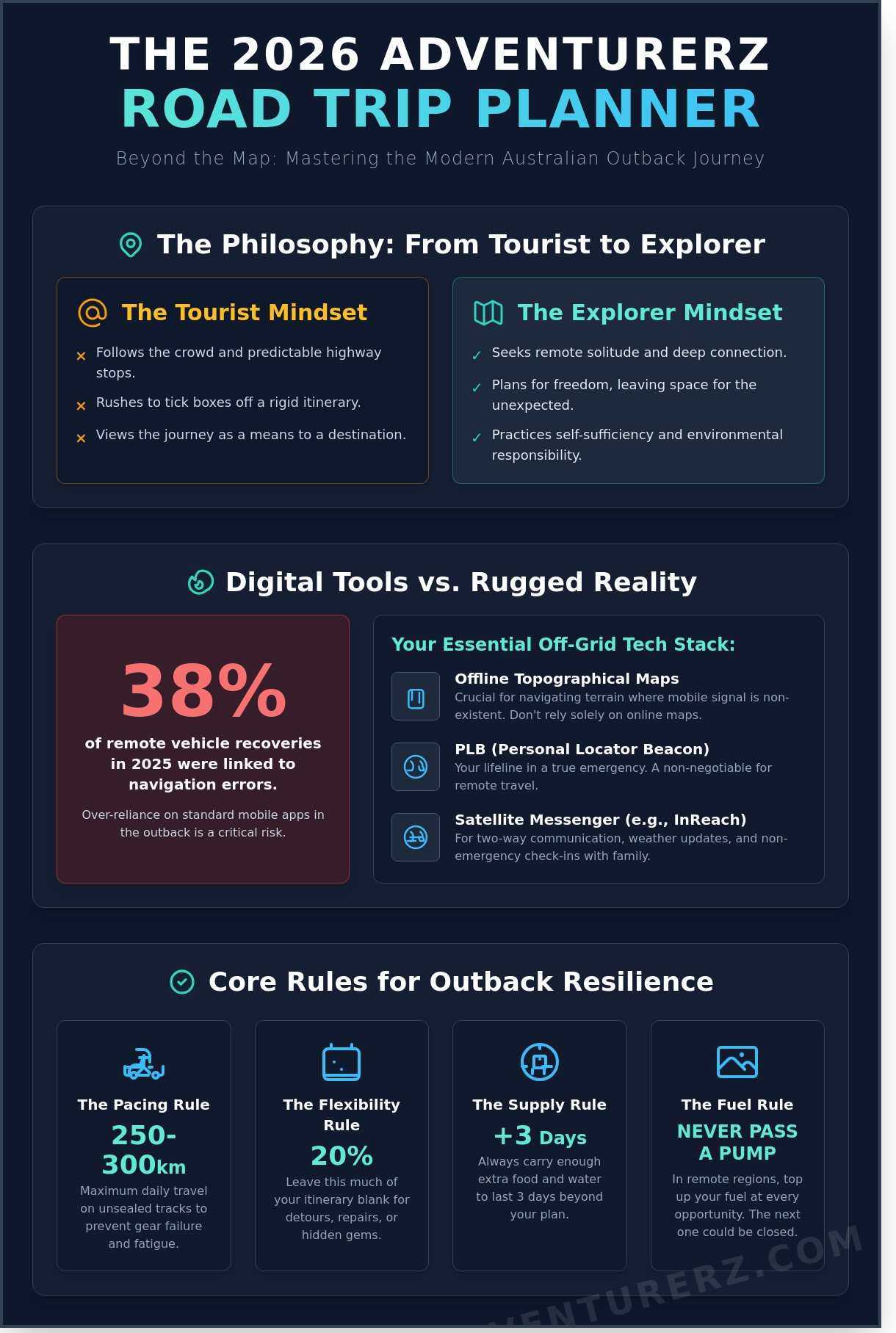
The Adventurerz philosophy focuses on moving from a “tourist” mindset to an “explorer” mindset. Tourists follow the crowd and tick boxes. Explorers respect the traditional owners of the land, pack out every piece of rubbish, and seek the silence of the scrub. In 2026, we plan for freedom. This means your schedule should serve your curiosity, not the other way around. We treat the outback as a living classroom where resilience and environmental responsibility are the core subjects. Whether you’re tackling the Canning Stock Route or a coastal loop, your preparation defines your experience.
Digital Tools vs. Rugged Reality
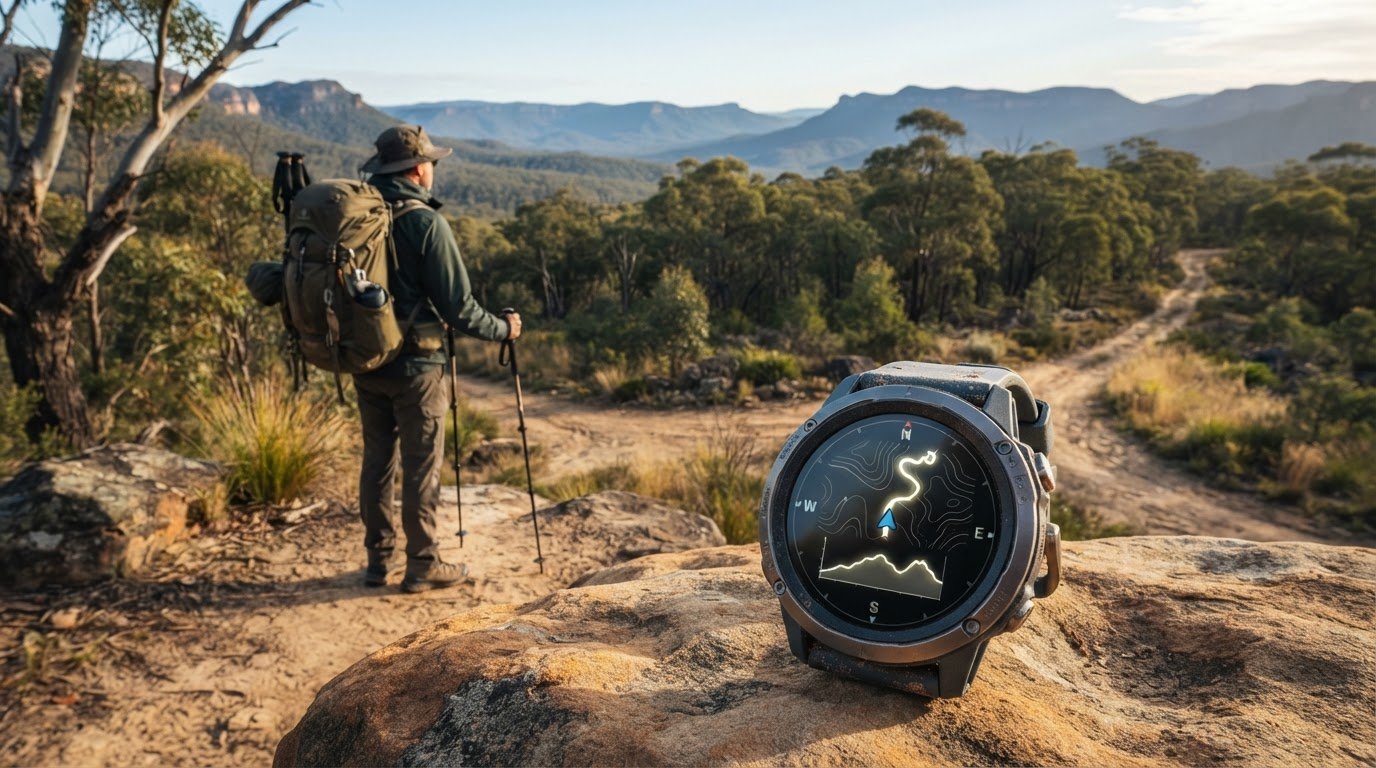
Google Maps is a fantastic tool for finding a coffee shop in Melbourne, but it’s only 50% of the solution when you’re deep in the Red Centre. In 2025, data from regional emergency services showed that 38% of remote vehicle recoveries were linked to navigation errors caused by over-reliance on standard mobile apps. For a successful trek, you must integrate offline topographical maps and dedicated satellite communication. We always carry a PLB (Personal Locator Beacon) or a satellite messenger like a Garmin InReach. Setting realistic targets is equally vital. On unsealed Aussie tracks, we recommend a maximum of 250 to 300 kilometres per day. This accounts for heavy corrugations, livestock on the road, and the inevitable stop to photograph a wedge-tailed eagle. High-speed travel in the outback is a recipe for gear failure and fatigue.
The Adventurerz Community Mindset
We believe that the best journeys are planned as a tribe. Leveraging shared knowledge is what separates a good trip from an epic one. The Adventurerz community relies on collective wisdom to navigate the changing conditions of the bush. Our community forums are the best place to find “unlisted” campsites that don’t appear on mainstream apps. These spots often offer the most pristine environments and the best stargazing. Flexibility is the cornerstone of our approach.
- Leave 20% of your itinerary blank: This allows you to stay an extra night at a hidden waterhole or fix a minor mechanical issue without stress.
- Consult local knowledge: A quick chat with a publican in a remote town can provide real-time updates on track washouts that no satellite can see.
- Plan for self-sufficiency: Adventurerz carry enough water and food for an extra three days beyond their planned return.
Embracing the unplanned detour is where the real magic happens. When you leave room for the unexpected, you stop being a passenger in your own life and start being a true explorer of the wild Australian frontier.
Mapping Your Route: Balancing Distance, Fuel, and Hidden Gems
We don’t just wing it when we’re heading into the red heart of the country. A successful road trip planner starts with identifying your “Anchor Points.” These are the non-negotiable landmarks like Uluru, the Bungle Bungles, or the Tip of Cape York that define your journey. Once these pillars are set, we fill the gaps with logistics and logic. Planning an outback route requires a disciplined approach to distance and a healthy respect for the environment. We look at the map not just as a series of roads, but as a sequence of supply windows and weather windows.
The 300km Rule: Fuel and Safety
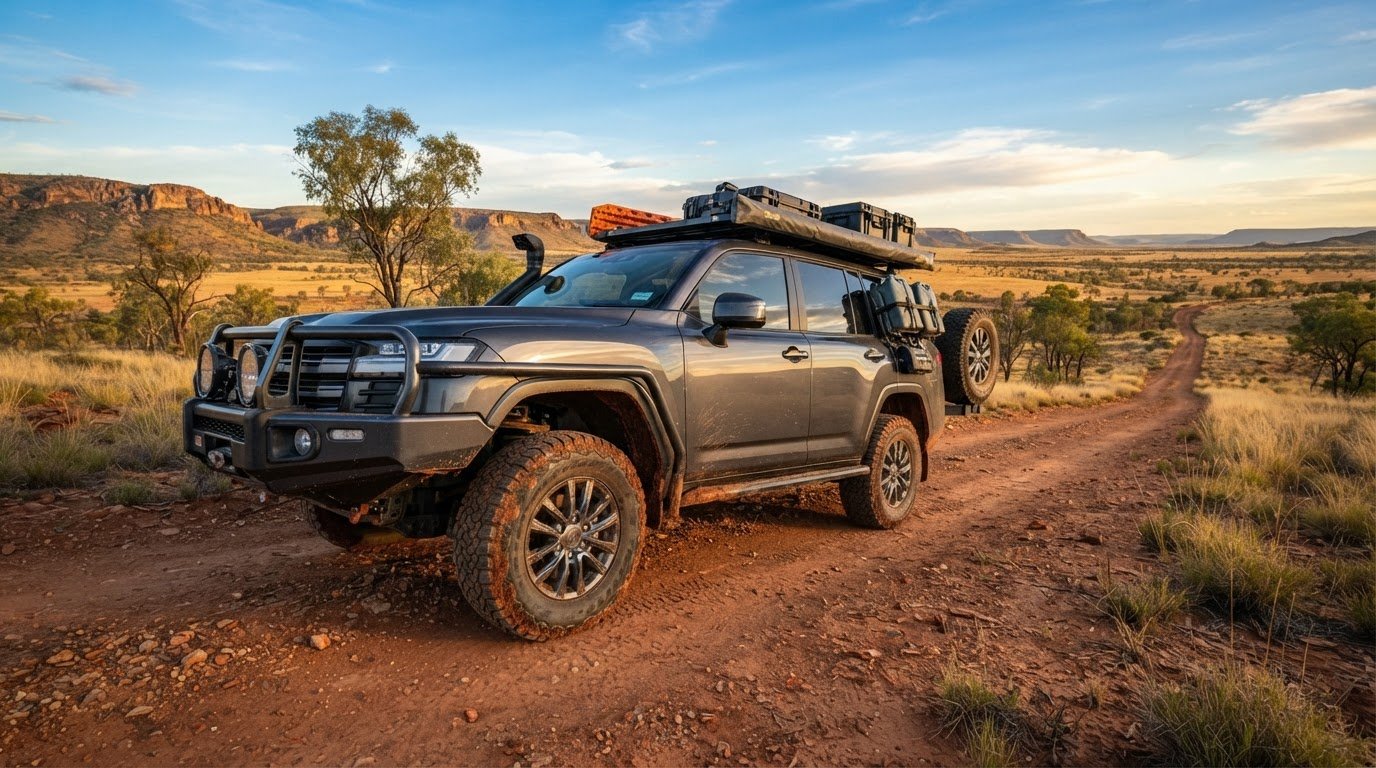
In remote regions like the Kimberley or Western Queensland, we live by a simple mandate: never pass a roadhouse without topping up. Fuel stations can be 250km to 400km apart; a single closed pump or a headwind can turn a routine leg into a recovery situation. Your vehicle’s “real-world” fuel consumption changes the moment you hit the dirt. A loaded 4WD carrying 300kg of gear and a rooftop tent might see consumption jump from 11L/100km to 18L/100km on soft sand or heavy corrugations. We always calculate our range based on these worst-case numbers. Weight distribution is equally vital; keep your heavy water jerry cans and recovery gear low in the vehicle to maintain a stable center of gravity on those rattling corrugated tracks.
Finding the Secret Spots
The best adventures happen between the famous waypoints. We use satellite imagery to scout for potential wild camps near dry creek beds or elevated ridges. While we love the facilities at Australia’s national parks, the true spirit of being Adventurerz is finding that quiet, low-impact site where the only tracks are your own. However, we practice strict “leave no trace” ethics. If we find a pristine “secret” spot, we consider the impact of sharing the exact GPS coordinates on social media. Protecting these fragile ecosystems is a collective responsibility that ensures the bush remains wild for the next generation of travelers.
Your road trip planner must also account for the brutal reality of Australian seasons. In the Top End, 90% of unsealed track closures occur during The Wet, typically between November and April. Attempting a crossing like the Magela Creek during this time isn’t just difficult; it’s often illegal and life-threatening. Conversely, the desert heat in January can reach 48 degrees Celsius, making vehicle breakdowns a critical emergency. Always factor in a “Dry Season” window (May to October) for northern routes to ensure tracks are open and the heat is manageable.
- Step 1: Plot your must-see landmarks first to create a skeleton route.
- Step 2: Mark every fuel stop and verify their current operating hours via community apps.
- Step 3: Layer in community-sourced data for water points and dump points.
- Step 4: Check historical weather data to avoid the peak of the monsoon or summer heat.
- Step 5: Finalize an exit strategy. This means carrying a PLB (Personal Locator Beacon) and having a designated “check-in” person back home who knows your exact itinerary.
Preparation is the difference between a crisis and a story to tell around the campfire. If you’re looking to upgrade your setup before hitting the dirt, check out our latest off-road gear reviews to see what survived our last trek through the Simpson. We’re all in this together, so keep your water tanks full and your tyre pressures right.
Gear-First Planning: How Your Setup Dictates Your Route
Your rig isn’t just a vehicle; it’s your lifeline in the red dirt. When we sit down with a road trip planner, the first question isn’t “where are we going,” it’s “what are we driving?” Your specific vehicle setup determines whether you’re tackling the corrugated tracks of the Oodnadatta or sticking to the sealed coastal highways. Before you map out a single kilometer, ensure your vehicle and driving license meet the Australian government driving regulations to stay safe and legal on remote tracks. In 2024, data suggests that 45% of outback mechanical failures stem from over-packed roof racks and poor weight distribution. We believe in planning around your gear’s limits to ensure the land remains as pristine as we found it.
Matching your campsite choice to your equipment is a non-negotiable step for any successful journey. If you’re hauling a 2.5-tonne off-road caravan, a tight, bushy track in the Daintree might be completely off-limits due to overhanging branches and narrow turn-arounds. Conversely, a lightweight, nimble setup allows you to hit the soft sands of K’gari where tire pressures must drop to 16 psi for safety. We’ve seen too many travelers get stuck because their gear didn’t match the terrain they put on their road trip planner.
Adventure burnout is a real threat to long-term travel; it usually hits on day four if your setup is too clunky. We’ve found that a 15-minute setup time is the “sweet spot” for maintaining high spirits during a three-week trek. If it takes an hour to pack up your kitchen, you’ll start resenting the move to the next camp. Integrate a full gear shakedown 30 days before departure. Check your dual-battery levels, grease your wheel bearings, and ensure your recovery points are easily accessible. A well-maintained rig is the foundation of a responsible journey.
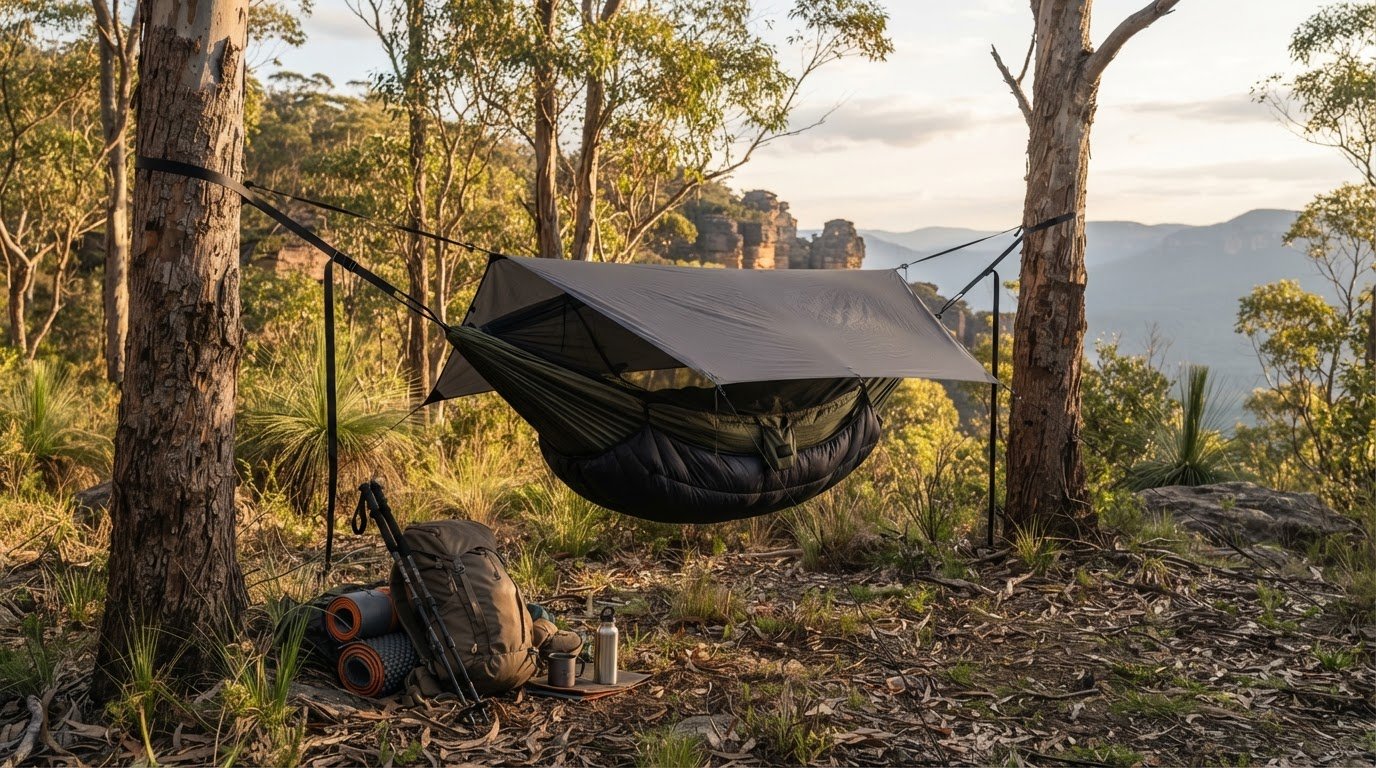
Sleeping Elevated: The Rooftop Advantage
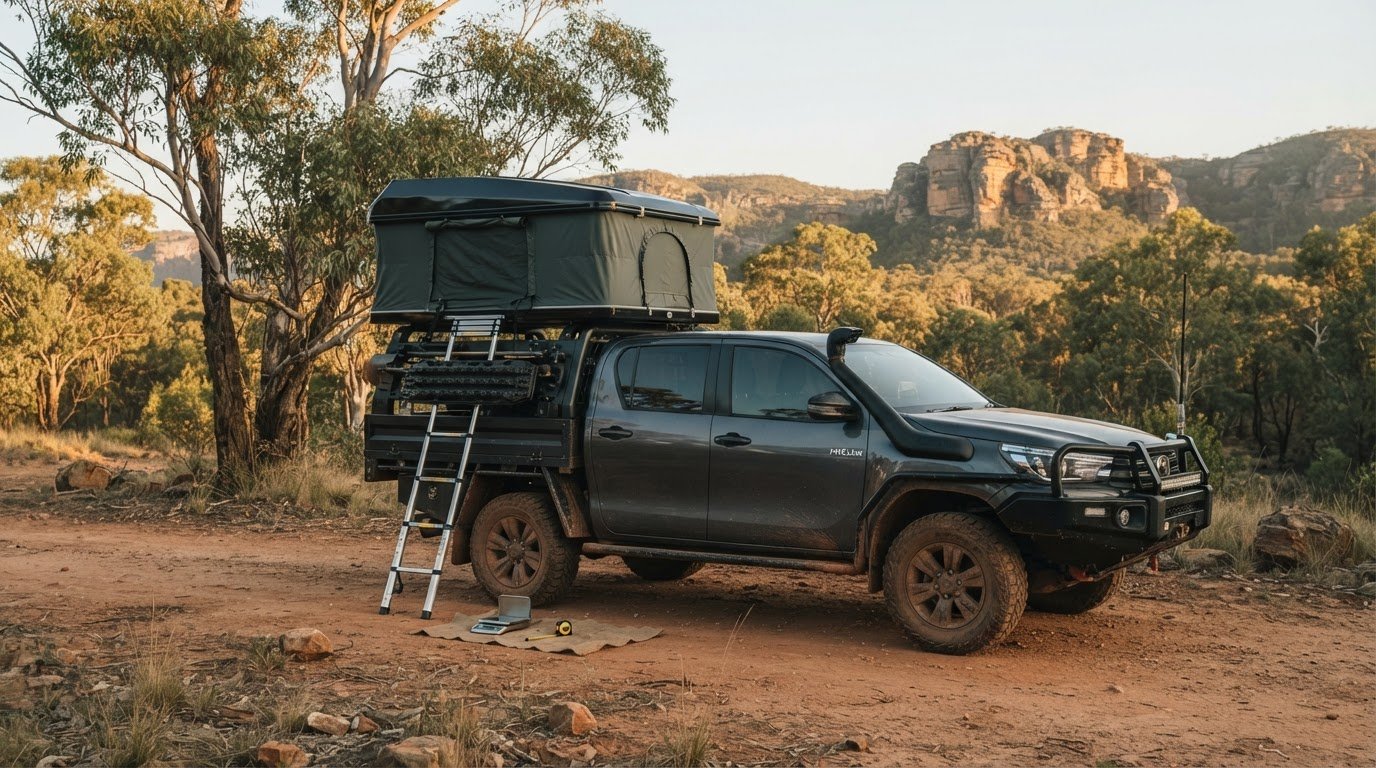
Choosing roof top tents fundamentally shifts how you choose your nightly stops. You aren’t hunting for perfectly flat, rock-free ground anymore; you’re simply looking for a level parking spot. Hardshell models are the champions of fast-paced itineraries, popping up in under 60 seconds. Softshell versions offer more internal space for families but take 8 to 12 minutes to pack away. Being 2 meters off the ground gives Adventurerz a massive advantage for spotting dingoes at dawn or catching an unobstructed sunset over the Simpson Desert horizon.
Creating a Mobile Basecamp
In the Queensland outback, where the UV index frequently hits 11 or higher, quality 4WD awnings are essential for your comfort and safety. They transform the side of your rig into a shaded kitchen or a dry haven during a sudden 4 PM tropical downpour. We recommend organizing your 4WD canopy with clear-top modular bins. This allows for a 3-minute pit stop without digging through your entire recovery kit just to find the kettle. A well-organized basecamp means you spend less time working and more time connecting with the wild, which is exactly why we head off-the-grid.
Off-the-Grid Resilience: Planning for Safety and Sustainability
Planning for the Outback isn’t just about the route; it’s about the footprint we leave behind and the resilience we carry with us. As Adventurerz, we treat the desert as our home, not a playground. Your road trip planner needs to account for every litre of water and every gram of waste. We recommend carrying a minimum of 7 litres of water per person per day for remote tracks like the Canning Stock Route. This ensures absolute resilience if you’re delayed by mechanical issues in 35-degree heat. Managing waste means a strict carry-in, carry-out policy. We use heavy-duty canvas bin bags mounted to our spare tyres to keep smells outside the cabin and prevent wildlife from scavenging at camp.
Respecting Traditional Owners is a core pillar of our journey. Approximately 40% of the Northern Territory is Aboriginal land; always check for transit permits via the Central Land Council at least six weeks before you depart. Zero Impact camping involves staying on existing tracks and using established fire rings to protect fragile topsoil. By minimizing our physical presence, we ensure these ancient landscapes remain pristine for the next generation of explorers.
Sustainable Exploration Tactics
Power management defines your off-grid stay. We find a 200Ah lithium dual-battery system paired with 300W of portable solar blankets keeps the fridge running indefinitely. To minimize plastic, we’ve swapped single-use bottles for 20L BPA-free drums and high-flow pumps. This small change prevents roughly 40 plastic bottles from entering landfills during a 14-day trip. Our “considerate adventurer” checklist includes keeping noise levels low after 8:00 PM and avoiding the use of soaps or detergents within 50 metres of natural water sources.
Safety Protocols for Remote Tracks
Safety is about preparation, not luck. A UHF radio on Channel 40 is vital for truck communication, but a Personal Locator Beacon (PLB) is your ultimate lifeline when you’re 500 kilometres from the nearest town. Before leaving Scarborough or your home base, assign a “Check-in Buddy.” Give them your exact GPS coordinates and a “no-call” time. If you don’t check in by 6:00 PM on your scheduled date, they trigger the emergency plan you’ve outlined in your road trip planner.
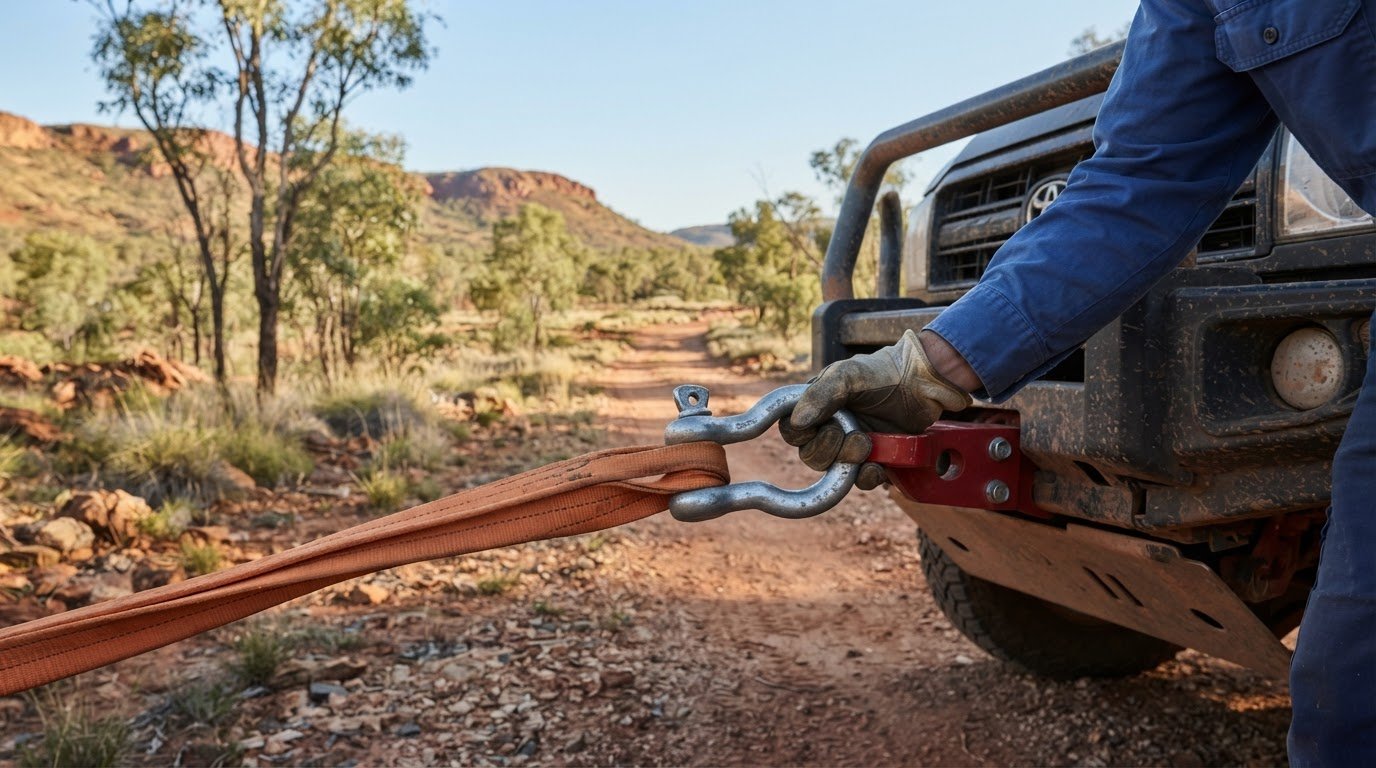
Understanding vehicle limits is crucial for survival. If a sand dune looks too soft or a river crossing exceeds your vehicle’s 700mm wading depth, turn back. Recovery planning involves carrying two sets of traction boards and a rated snatch strap, but the best recovery is the one you avoid by making smart decisions. We always prioritize the mechanical integrity of the rig over the desire to reach a specific landmark. It’s better to miss a destination than to lose a vehicle in the middle of the Simpson Desert.
Ready to gear up for your next remote mission? Check out our essential off-grid recovery kits to stay safe on the tracks.
Executing the Dream: Finalizing Your 2026 Adventure
The final 48 hours before you point your bull bar toward the horizon are the most critical. This is when the theory of your road trip planner meets the gritty reality of the red dust. We start with a rigorous check of tyre pressures; dropping to 18, 22 psi for heavy corrugations can reduce vibration-related vehicle damage by 40% based on 2025 outback recovery statistics. Pack your fridge with cryovac-sealed proteins to ensure 14 days of freshness without the mess of melting ice. Finally, run every software update on your navigation gear while you still have high-speed Wi-Fi. It’s the difference between a smooth exit and a frantic search for signal at the edge of town.
Transitioning from the comfort of home to the driver’s seat often triggers “first-day jitters.” It’s a natural reaction to the vastness ahead. We find that the most effective road trip planner is one that builds in a 20% time buffer for the unexpected. If you hit a closed track or find a hidden swimming hole near Mataranka, you want the freedom to stop without ruining your schedule. Spontaneity is the soul of the outback. While the initial 100 kilometres might feel heavy with the weight of expectation, the rhythm of the road quickly replaces those nerves with a sense of pure, unbridled freedom. Trust your preparation, trust your gear, and let the landscape take the lead.
Documenting your journey is about more than just social media likes; it’s about building a legacy for the Adventurerz community. Keep a physical or digital logbook to record fuel consumption at remote pumps, which can often soar to A$3.50 per litre in places like Warburton. Note the condition of campsites and the performance of your 4WD awning in high winds. These details become the gold standard for those following in your tracks, ensuring our collective knowledge grows with every expedition.
Top Apps and Tools for 2026
Satellite connectivity has changed the game for 2026 explorers. We recommend the latest Starlink Mini for constant data, though monthly subscriptions now average A$175 to A$225 for mobile plans. Use the Bureau of Meteorology (BOM) app to track rain cells within a 200-kilometre radius; outback flash flooding can turn a dry creek bed into a torrent in under 30 minutes. Digital logbooks like Fuelly or dedicated 4WD maps are essential for tracking your A$2,000+ fuel budget and vehicle health in real-time.
Join the Adventurerz Tribe
Once you return, your journey continues by giving back to the 15,000-strong Adventurerz tribe. Share your completed itinerary on our community portal to help refine our “Sustainable Gear” database, where we track the lifespan of eco-friendly swag tents and solar setups. Your real-world data helps us promote responsible exploration that protects the desert for the next generation. Ready to stop dreaming and start driving? Contact our team today to start your journey with our expert planning services and custom-built itineraries.
Claim Your 2026 Australian Horizon
Your 2026 expedition across the Nullarbor or through the Kimberley starts long before you turn the ignition. We’ve explored how your gear setup, like a 12V lithium system or a heavy duty swag, dictates exactly how far into the bush you can go. By prioritizing off-the-grid resilience and sustainable practices, you’re protecting the wilderness for the next generation. Using a robust road trip planner ensures you balance fuel stops with those hidden gems that make a 15,000 kilometer Big Lap legendary.
Our team of Scarborough locals provides expert 4WD and gear reviews for every Adventurerz heading into the wild. These insights are based on 30 years of testing in remote Australian conditions. We believe shared knowledge is the best tool in your recovery kit. By following our community-driven sustainable travel guides, you can reduce your environmental footprint while tackling the 1,400 kilometer Canning Stock Route. We’re here to help you navigate every corrugated road with confidence and gear that won’t let you down.
Join the Adventurerz community and start planning your next epic trip today! The red dirt is calling, and 2026 is the year you finally answer. We’ll see you out there on the tracks!
Frequently Asked Questions
What is the best digital road trip planner for Australian remote areas?
WikiCamps Australia is the gold standard for navigating our vast backyard because it functions entirely offline. We recommend pairing it with Hema Maps for high-detail topographical data on remote tracks. Using a digital road trip planner ensures you can locate over 40,000 campsites and water points even when you lose mobile reception 50 kilometres outside of town.
How much should I budget per day for a 4WD road trip in Australia?
You should budget between A$150 and A$250 per day for a duo traveling in a 4WD. Fuel is your biggest expense, with remote diesel prices often hitting A$2.80 per litre in places like the Kimberley or Central Australia. We suggest allocating A$60 for food and A$30 for national park fees or caravan park powered sites to keep your journey stress-free.
Do I really need a 4WD for a lap of Australia in 2026?
You don’t need a 4WD if you plan to stick strictly to the bitumen on Highway 1, but you’ll miss out on 70 percent of the outback’s hidden gems. Iconic destinations like the Gibb River Road or the Bungle Bungles require high clearance and low-range capabilities. By 2026, more travelers will seek solitude on unsealed tracks, making a 4WD essential for reaching those quiet, untouched Adventurerz spots.
What are the essential safety items for a remote road trip?
A satellite communicator like a Garmin inReach and a comprehensive trauma first aid kit are your most vital lifelines. You also need two spare tyres and a 12-volt air compressor because 80 percent of outback mechanical issues involve tyre pressures or punctures. Never head into the red centre without a PLB, as mobile coverage exists in less than 25 percent of the Australian landmass.
How do I plan for water and fuel in the Australian outback?
Carry a minimum of 7 litres of water per person per day and enough fuel to cover a 600-kilometre range. Use your road trip planner to identify long stretches without services, such as the 488-kilometre gap on the Nullarbor. We always top up our tanks at every single station we pass, even if we’ve only used a quarter of a tank.
Is it safe to wild camp alone in remote Australia?
Wild camping is remarkably safe if you choose spots at least 50 kilometres away from major towns and stay hidden from the main road. Statistics from regional police branches show that remote bush camps have lower crime rates than urban caravan parks. Just make sure you send your GPS coordinates to a mate via satellite text before you lose light for the night.
How can I make my road trip more eco-friendly and sustainable?
Switch to a portable solar setup to power your fridge and carry a chemical-free portable toilet to protect our fragile ecosystems. We can reduce our impact by avoiding single-use plastics and using 20-litre refillable water bladders instead of small bottles. Since 90 percent of outback waste is packaging, prep your meals in reusable containers before you leave to keep our campsites pristine.
What is the best time of year to plan a road trip through Queensland?
The dry season between May and September is the ultimate window for a Queensland adventure. During these months, temperatures hover around a comfortable 25 degrees Celsius, and the humidity stays low. Avoid the November to April monsoon season when 60 percent of unsealed roads in the Far North often close due to flash flooding and extreme heat.