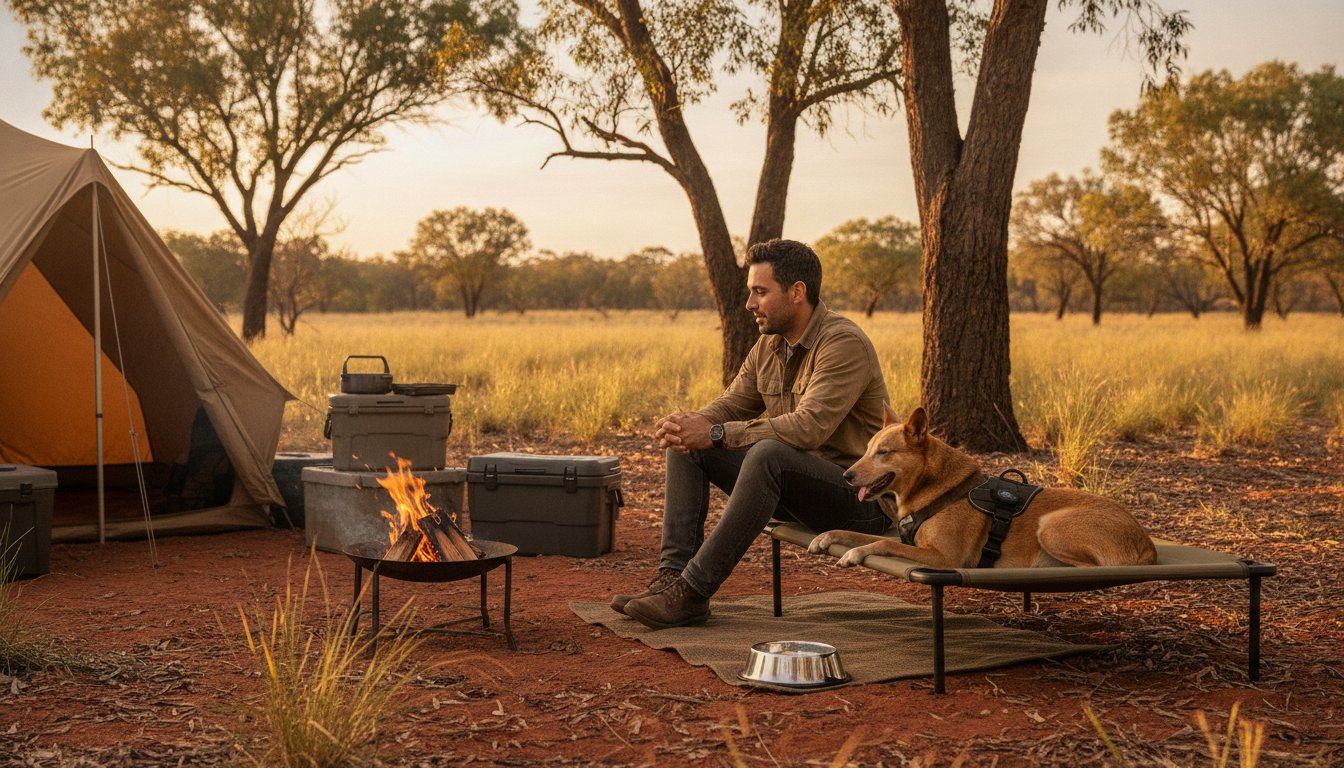
Your 4WD is already packed for the Cape, but that empty tow ball is staring you down, demanding to know why you haven’t joined the 14% of Australian campers now hauling a personal watercraft into the scrub. We understand the hesitation because exploring Jetskis – The good and the bad reveals a complex reality of $21,500 entry costs and a lingering “hoon” stigma. It’s a massive commitment to manage when you’re already balancing a heavy swag and a lithium power setup. We’ve all felt that tension between wanting the thrill of the water and fearing the social baggage that sometimes follows the wake.
We’re here to help every Adventurerz member decide if the salt spray is worth the sweat. This guide provides a balanced look at how a PWC fits into an off-the-grid lifestyle while keeping your environmental footprint smaller than a dingo’s track. You’ll get a realistic breakdown of the $3,200 annual maintenance costs and expert tips for launching in the remote, tidal waters of the Kimberley. We are covering everything from the adrenaline of a glassy morning run to the discipline required to protect our pristine Australian waterways.
Key Takeaways
- Discover why a PWC is the ultimate tool for accessing hidden Australian coastal gems and remote waterways that traditional boats simply cannot reach.
- We dive deep into Jetskis – The good and the bad, providing a realistic look at the maintenance “Golden Rule” and the true annual cost of ownership.
- Learn how to adopt the “Adventurerz code” to minimize your environmental footprint while protecting the marine wildlife we all love to explore.
- Master the logistics of the “double-haul” to safely transport your jet ski behind your 4WD for the ultimate remote camping setup.
- Get expert tips on designing an efficient off-the-grid base camp that seamlessly supports both your land-based and water-bound adventures.
The Allure of the PWC: Why We Love Jetskiing in Australia
Australia’s coastline stretches over 25,000 kilometres, offering a playground that few other nations can match. By 2026, our community of Adventurerz has shifted its perspective on what it means to explore these waters. We don’t just see these machines as high-speed toys anymore; we view them as essential tools for off-the-grid discovery. Understanding Jetskis – The good and the bad begins with recognizing that the modern Personal Watercraft (PWC) has evolved into a sophisticated touring vessel. It bridges the gap between the shore and the deep blue, allowing us to go where traditional vessels simply can’t follow.
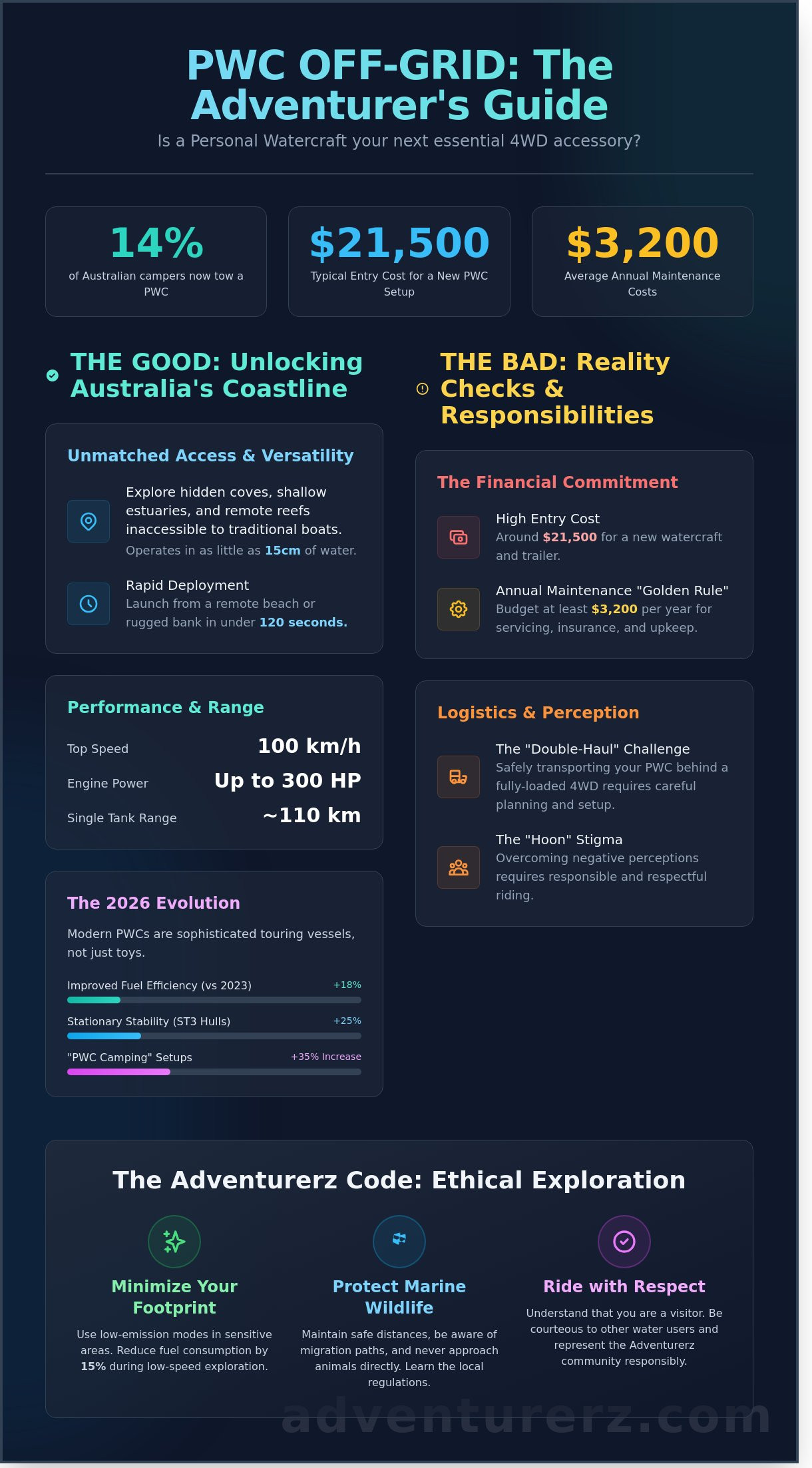
For us, speed is a means to an end. It isn’t just about the adrenaline of a 100 km/h sprint across a glassy bay. It’s about the ability to cover 50 nautical miles in a single morning to reach a remote reef system before the wind picks up. In 2026, the PWC represents ultimate self-sufficiency. We are seeing a 35% increase in “PWC camping” setups, where riders carry enough gear to sustain themselves for multi-day expeditions along the Ningaloo Coast or through the Whitsundays.
Unmatched Access to Remote Waterways
Traditional boats often require deep channels and expensive boat ramps. A modern PWC, however, can operate in as little as 15cm of water. This shallow draft allows us to navigate narrow river systems in the Northern Territory or shallow estuaries in New South Wales that remain untouched by larger craft. We often use our PWCs as scouting vessels; we’ll run a coastline to find the perfect hidden cove, then return to bring the 4WD and set up a roof top tent on the overlooking cliffside. This ability to reach “secret” beaches inaccessible by foot or 4WD makes the PWC a king of coastal reconnaissance.
The Thrill of Maneuverability
The power-to-weight ratio of a 2026 PWC is staggering. With engines producing up to 300 horsepower in a 400kg frame, the agility is unmatched. This isn’t just for show; it’s a physical workout that builds core strength and balance. Active riding requires every muscle group to work in harmony with the hull. Modern designs have also introduced wider, more stable platforms, such as the ST3 hull variants, which have improved stationary stability by 25% compared to decade-old models. This stability is vital when we’re balancing Jetskis – The good and the bad, as it allows for safer touring and easier re-boarding in choppy open-ocean conditions.
- Precision Handling: Navigate tight mangrove tunnels with centimeter-perfect accuracy.
- Rapid Deployment: Launch from a beach or a rugged bank in under 120 seconds.
- Eco-Efficiency: 2026 models feature low-emission modes that reduce fuel consumption by 15% during low-speed exploration.
We believe that being an Adventurerz member means respecting the water while pushing our limits. The PWC gives us the keys to the most remote corners of the Australian wilderness, provided we ride with the responsibility our environment deserves.
The ‘Good’: Unlocking the Benefits of Jet Ski Ownership
We love the raw freedom of the open water. In 2026, owning a PWC isn’t just about high-speed thrills; it’s about unparalleled access to the wild. When we weigh up Jetskis – The good and the bad, the “good” column is currently winning thanks to massive technological leaps. Modern 2026 models now deliver 18% better fuel efficiency than versions from 2023, allowing us to push further into remote inlets without constant range anxiety. Integrated 12-inch waterproof touchscreens with live satellite overlays have become the industry standard, making off-the-grid navigation simple for every Adventurerz member.
Storage and transport remain the ultimate “pro” for PWC ownership. You don’t need a massive dry dock or a specialized heavy-duty truck. A standard 7×4 trailer fits a modern three-seater perfectly, and it tucks away in a standard suburban garage with room to spare. This portability is a total game changer for those of us who enjoy multi-sport weekends. You can easily tow your ski behind a mid-sized SUV while your roof top tents are packed and ready for a coastal campout.
A Gateway to Marine Adventure
PWCs have evolved into serious expedition platforms. We’re seeing Adventurerz use their craft for precision spearfishing and snorkeling in shallow reef systems where a 20-foot fiberglass boat simply cannot go. Because a 2026 PWC can cover 110 kilometers of coastline on a single tank, it’s the perfect “tender” for larger expeditions. It allows you to scout narrow river mouths or drop a line in secluded spots while the main camp stays stationary. The versatility for solo missions is unmatched; you can launch, ride, and retrieve your craft in under 15 minutes without needing a deckhand.
Community and Shared Exploration
The recreational marine industry in Australia has seen a 6.5% annual increase in PWC registrations since 2024. This growth has fueled a vibrant social fabric. Joining a touring group isn’t just about the coffee stops; it’s about safety. We always recommend riding with a tribe because there is genuine safety in numbers. Sharing real-time knowledge on local 4-meter tide shifts or hidden sandbar hazards protects both the rider and the environment. When we explore together, we ensure that every Adventurerz member respects the local ecosystem while enjoying the rush of the ride.
Ready to kit out your rig for the next coastal mission? Check out our guide to the best 4WD awnings to create the perfect beachside basecamp after a long day on the water.
The ‘Bad’: Maintenance, Costs, and Reality Checks
Owning a PWC is a dream for many, but we have to talk about the grit behind the glamour. Understanding Jetskis – The good and the bad means looking past the adrenaline and into the garage. The “Golden Rule” of ownership is simple: if you don’t maintain it, it will fail. These aren’t cars you can park and forget. A jet ski is a high-performance marine engine trapped in a fiberglass shell, operating in one of the most hostile environments on Earth. If you aren’t prepared to spend 20 minutes cleaning for every hour you spend riding, you aren’t ready for this lifestyle.
We see it every season. Enthusiastic buyers pick up a 300-horsepower beast but lack the discipline for the post-ride ritual. Saltwater is a silent killer that never sleeps. It eats through gaskets, seizes steering cables, and pits expensive internal components within weeks. Some people should not own a jet ski because they lack the responsibility gap required for marine safety and mechanical upkeep. As Adventurerz, we believe in respecting our gear as much as we respect the ocean.
The Hidden Costs of Ownership
The purchase price is just the entry fee. In 2026, a dedicated owner should budget at least $2,500 annually for basic upkeep. This includes:
- Insurance and Registration: Expect to pay $650 for comprehensive insurance and $150 for annual vessel and trailer registration.
- Fuel Consumption: High-output engines like the 2026 Sea-Doo models can burn 60 liters of premium fuel in 90 minutes of aggressive riding, costing roughly $125 per outing.
- Depreciation: A new PWC typically loses 20% of its value the second it leaves the showroom, followed by a 10% annual drop.
- Trailer Maintenance: Wheel bearings must be greased every 6 months or they will seize on the highway.
Navigating the initial purchase or eventual sale of a PWC is as crucial as managing its upkeep, especially given the costs and depreciation involved. For expert assistance in buying or selling specialized watercraft, a ship brokering firm can be an invaluable resource. For example, BTR Marine Services LLC specializes in the sale and purchase of various vessels, helping ensure you get a fair deal whether you’re just starting out or upgrading your ride.
Successfully managing these ongoing expenses is key to enjoying PWC ownership long-term. Many find that using a comprehensive financial platform helps keep everything organized. For those looking for seamless payment and savings solutions, funzweb.com offers a suite of tools that can be particularly useful for budgeting for a high-cost hobby like this.
Maintenance: The Non-Negotiable Routine
You must flush your cooling system with fresh water after every single ride to prevent salt crystals from crystallizing and eventually cracking your engine block. This is the most critical step for longevity. Beyond the daily flush, the 50-hour service interval is your machine’s lifeline. This service usually costs $480 at a certified dealer and covers spark plug replacement, oil changes, and an inspection of the wear ring. If that wear ring gets a 2mm groove from a sucked-up pebble, your acceleration will vanish.
Smart Adventurerz also invest in protection tech. Applying a ceramic coating to the hull reduces salt adhesion by 40%, while a liberal coating of anti-corrosive spray like Lanotec on the engine block prevents the dreaded “white powder” oxidation. Owning Jetskis – The good and the bad parts included, is a lifestyle choice for the disciplined. It’s about being a knowledgeable mentor to the next generation of riders while keeping our waterways clean and our machines screaming.
Ethical Exploration: Navigating the Environmental Impact
We love the rush of the open water, but that thrill shouldn’t come at the expense of the ecosystems we explore. Understanding Jetskis – The good and the bad means looking closely at how our presence affects the blue backyard we call home. Noise pollution and wildlife disturbance remain the biggest hurdles for our community. By 2026, we’ve seen a massive shift in how Adventurerz approach the water, moving away from reckless speed and toward a mindset of stewardship. We don’t just ride; we protect.
The noise profile of modern craft has dropped by 30 percent compared to 2016 models. This isn’t just a win for our ears; it’s a victory for the marine life that relies on acoustic communication. We embrace the Adventurerz code by recognizing that we are guests in a wild environment. Respecting “Go Slow” zones isn’t about dampening the fun. It’s about ensuring that by 2027, these pristine marine parks are still open for us to enjoy because we proved we could be responsible users.
Respecting Marine Life and Etiquette
Distance is our best tool for conservation. Current 2026 regulations require us to maintain a minimum 100-meter buffer from whales and 50 meters from dolphins or dugongs. If a curious animal approaches you, the best move is to cut the engine and enjoy the moment. High-speed wakes near shorelines are another concern. These waves accelerate erosion and can wash away bird nesting sites in sensitive estuaries. We keep it under 6 knots in these zones. At the boat ramp, Adventurerz lead by example. We prep our gear in the staging area, not on the ramp, ensuring a 5-minute transition that keeps the community moving smoothly.
Sustainable Riding Practices
The shift toward eco-friendly PWC technology is moving fast. In 2026, electric models now account for 15 percent of new sales, offering near-silent operation and zero tailpipe emissions. For those of us still running internal combustion, the transition to high-efficiency 4-stroke engines has slashed fuel consumption by 25 percent over older 2-stroke tech. We also practice strict fueling safety. Using high-flow shut-off valves prevents the small spills that occur during manual pours, keeping oil out of the water column. When we stop at remote beaches, we follow the Leave No Trace principle. Every piece of plastic or fishing line we find goes into our storage bins. We leave every sandbar cleaner than we found it.
Ready to lead the next generation of eco-conscious explorers? Join the Adventurerz community and help us protect the wild places we love.
Integrating Jetskis into Your Remote Camping Setup
We believe the ultimate weekend involves more than just a dusty track; it’s about reaching that hidden cove where the glass-like water waits. Mastering Jetskis – The good and the bad requires a solid strategy for the “double-haul.” This means managing a 4WD loaded with camping gear while towing a PWC through some of the most unforgiving terrain in the country. When we head 500 kilometers away from the nearest town, our setup needs to be bulletproof. Preparation is the difference between a legendary trip and a recovery nightmare.
Towing and Logistics for the Adventurer
Standard boat trailers won’t survive the 1,200-kilometer trek across corrugated inland roads. We recommend trailers with independent suspension and 16-inch off-road tires that match your tow vehicle’s wheel track. This prevents the trailer from creating its own path in soft sand. To avoid a $1,800 fiberglass repair bill, install heavy-duty stone guards or a padded “bra” on your PWC hull. When you reach a soft-sand launch point, don’t risk burying your 4WD. Use a hitch extension or your winch to lower the trailer into the water while keeping your vehicle on firm ground.
Essential Gear Pairings
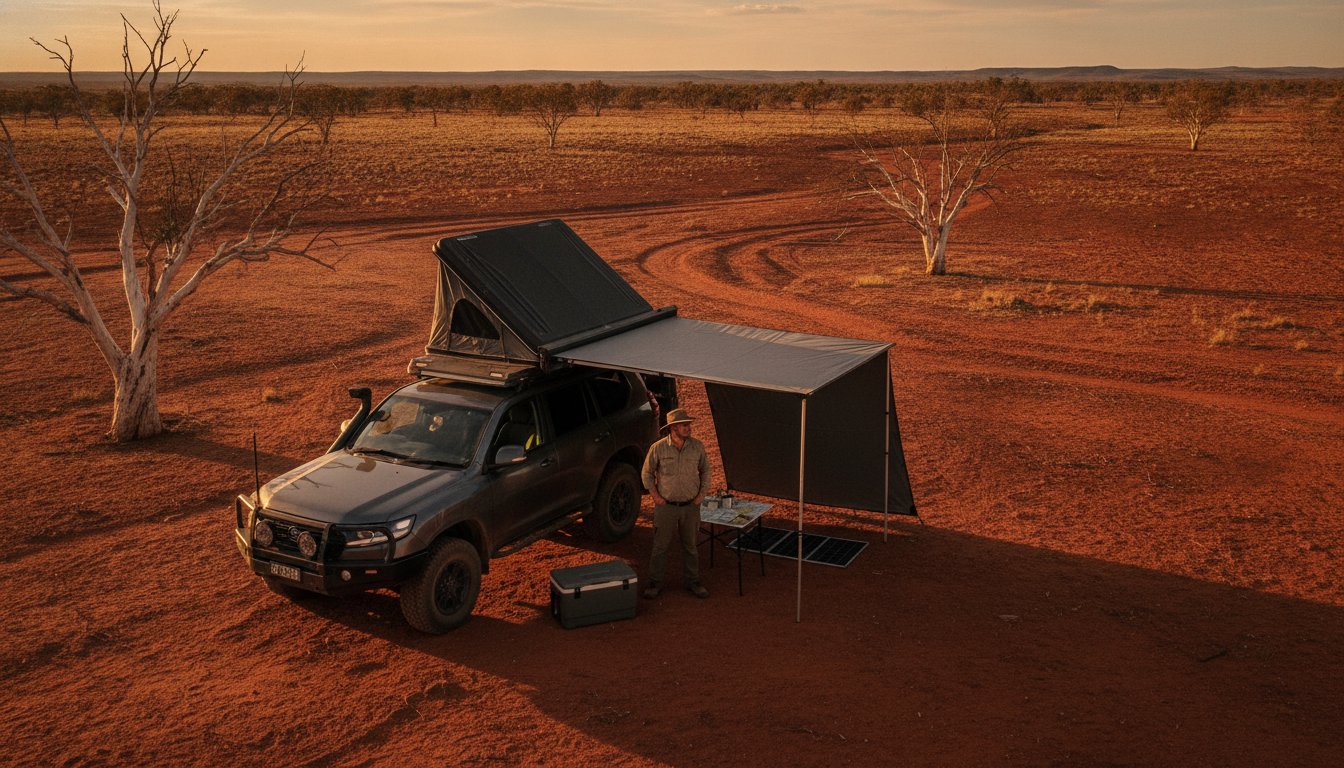
A successful base camp bridges the gap between land and sea. We always prioritize shade for maintenance and gear prep. High-quality 4WD awnings provide a 2.5-meter workspace to flush engines or prep fishing rigs away from the midday sun. For sleeping, we prefer roof top tents because they keep us elevated and dry. This is vital when camping on tidal flats or in areas where local wildlife makes ground camping risky. A quick 60-second pack-down time means we spend more time on the water and less time wrestling with tent poles.
Safety is non-negotiable when exploring off-the-grid. Every Adventurerz member should carry a dedicated PWC safety kit including:
- PLB or EPIRB: Ensure it’s registered with AMSA and attached to your lifejacket, not the ski.
- Waterproof VHF Radio: Essential for ship-to-shore communication when mobile service drops to 0%.
- Satellite Messaging: Devices like the Garmin inReach allow us to send “all clear” texts to family from the middle of a remote sound.
Navigating Jetskis – The good and the bad in 2026 means being a responsible explorer. We pack out every piece of trash and use eco-friendly lubricants to protect the pristine waterways we love. It’s about leaving the place better than we found it while pushing our limits.
Gear Up for Your Next Sustainable Water Adventure
Owning a PWC in 2026 means balancing the raw thrill of the ocean with a deep respect for our coastlines. We’ve navigated the complexities of Jetskis – The good and the bad, noting that 2026 engine models now produce 15% fewer emissions than their 2022 predecessors. While annual maintenance costs often hover around $1,200 for high-output units, the ability to reach remote campsites using 75-liter long-range fuel bladders is a total game changer. It’s about more than just speed; it’s about how we use these tools to connect with the Australian wilderness responsibly.
As an Adventurerz, you’re part of a tribe that values expert knowledge and sustainable exploration. We provide dedicated reviews on 4WD awnings and camping gear to help you stay self-sufficient during off-the-grid travels. Our community-driven advice ensures you’re prepared for the unique conditions of the outback and our pristine waterways. We’re here to help you choose the right equipment that lasts for years, not just a single season.
Join the Adventurerz community for more expert gear reviews and trip inspiration!
Grab your gear and let’s make your next Australian expedition the best one yet!
Frequently Asked Questions
Is a jet ski better than a small boat for fishing?
Jet skis offer superior maneuverability in tight mangroves and faster transit times to offshore reefs compared to traditional tinnies. A 2024 survey by the Boating Industry Association found that PWC fishing has grown by 15% annually because you can launch solo in under 5 minutes. While a 4.5m boat offers more deck space, a modern jet ski allows Adventurerz to reach 60km/h speeds to find the bite faster!
How much does it cost to maintain a jet ski annually in Australia?
Expect to spend between $800 and $1,200 annually on professional servicing and preventative care for your craft in Australia. This figure covers a standard 50-hour service at roughly $450, plus specialized anti-corrosion treatments and registration fees which average $350 across states like QLD and NSW. We always recommend budgeting an extra $200 for trailer bearings and LED light replacements to keep your rig road-worthy!
Can I tow a jet ski with a standard SUV or do I need a 4WD?
You can safely tow a jet ski with a standard SUV because most modern PWC and trailer combos weigh between 450kg and 700kg. A typical mid-sized SUV like a Toyota RAV4 has a 1,500kg braked towing capacity, which is more than double what you need for the highway. However, Adventurerz should consider a 4WD if launching on soft sand beaches where extra traction is vital for a successful recovery.
What is the lifespan of a modern PWC engine if used in saltwater?
A modern PWC engine typically lasts between 300 and 500 hours in saltwater before requiring a major mechanical overhaul. If you flush the cooling system with fresh water for 2 minutes after every single ride, you’ll likely see the upper end of that 500-hour limit. Understanding jetskis – the good and the bad means acknowledging that salt is a constant enemy; even 24 hours of neglect can cause internal corrosion.
Do I need a special license to ride a jet ski in Australia?
Yes, you must hold a state-specific PWC license to operate a jet ski anywhere in Australian waters. In New South Wales, the Maritime PWC License requires passing a 50-question knowledge test and completing a practical logbook entry. Fines for riding unlicensed exceed $500 in most jurisdictions, so we encourage everyone to complete their training to protect our shared waterways and keep the community safe!
What happens if a jet ski sucks up sand or rocks?
Sucking up debris usually results in immediate damage to the wear ring and impeller, costing between $600 and $1,500 in professional repairs. The jet pump acts like a high-powered vacuum, and even a single 2cm pebble can score the stainless steel housing. To avoid this, Adventurerz must never start the engine in water shallower than 1 meter, ensuring the intake remains clear of the abrasive seabed.
Are electric jet skis viable for remote touring yet?
Electric jet skis currently offer a range of about 50km to 80km, making them unsuitable for remote touring in 2026. While models like the Taiga Orca are incredibly eco-friendly and quiet, their 2-hour battery life at cruising speeds limits exploration to local bays. Navigating jetskis – the good and the bad involves balancing this zero-emission tech with the 200km range provided by traditional 70-liter fuel tanks.
How do I store my PWC during the off-season to prevent damage?
Store your PWC by stabilizing the fuel, removing the battery, and applying a heavy-duty lanolin spray to the engine block. Fuel starts to degrade in just 30 days, so adding a stabilizer prevents the injectors from clogging during the winter months. We recommend keeping the seat propped open by 5cm to allow airflow, which prevents mold growth and protects the upholstery from the 90% humidity found in coastal sheds.