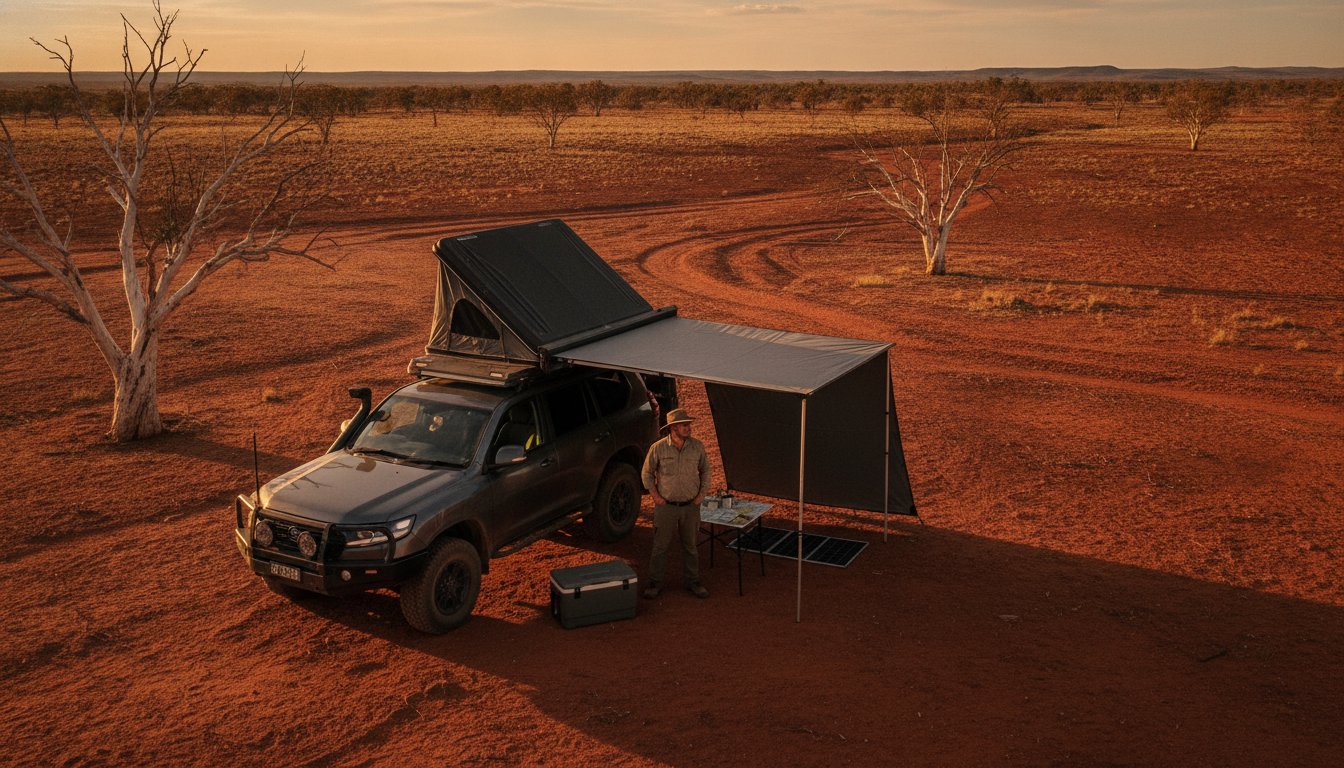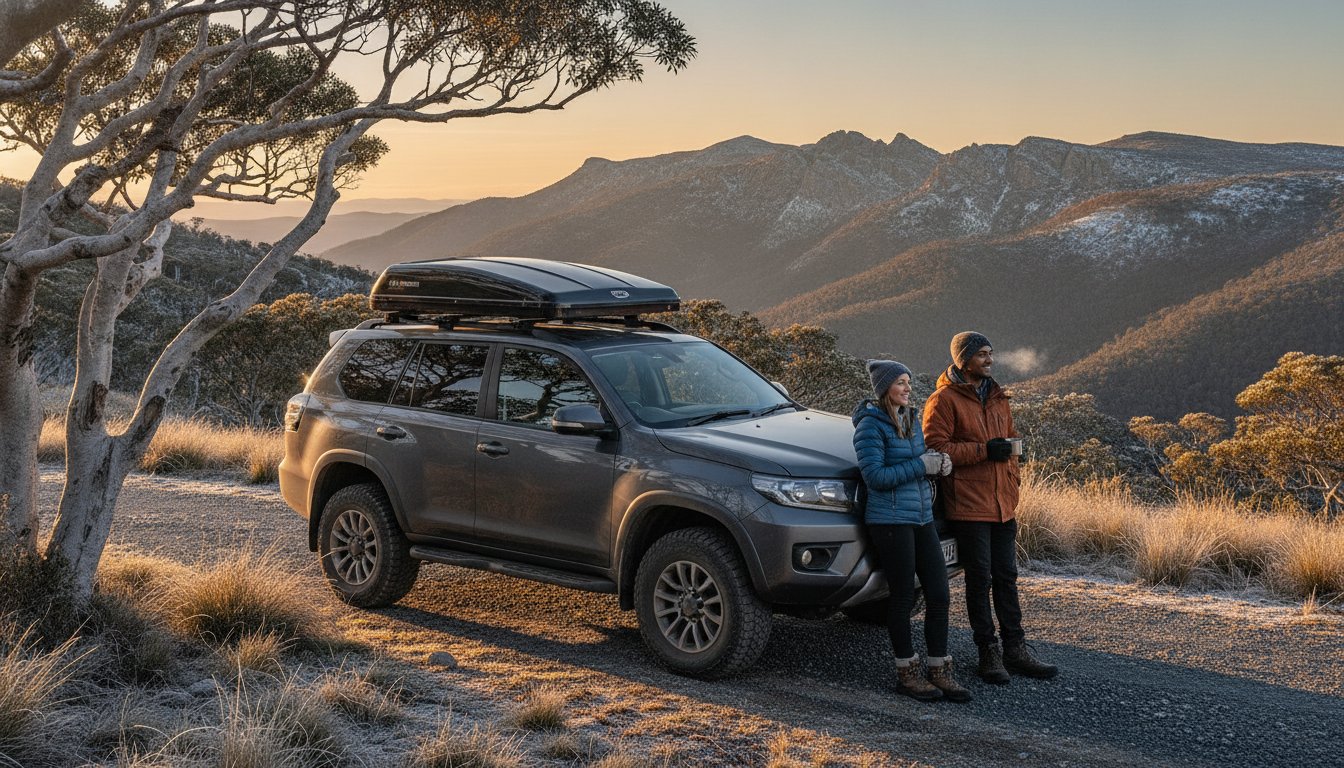
What if the only thing standing between you and a perfect sunset deep in the heart of our vast wilderness was a single blown fuse or a flat lithium battery? For the 85% of us who dream of escaping crowded coastal parks, choosing the right caravan accessories is the difference between a dream trip and an expensive recovery mission! We’ve all felt that knot in the stomach when the corrugations get deep and the nearest town is a 400-kilometre trek away. As fellow Adventurerz, we know that true freedom comes from trusting your setup to handle the harshest conditions our sun-scorched continent can throw at it.
We’re going to show you how to curate a bulletproof kit for 2026 that transforms your van into a completely self-sufficient, eco-conscious exploration machine! You’ll gain the confidence to tackle remote tracks knowing your power, water, and environmental impact are all under control. We’re diving into the rugged tech and sustainable gear, from advanced solar arrays to heavy-duty suspension upgrades, that will make your next outback odyssey your most successful yet.
Key Takeaways
- Build a bulletproof off-grid ecosystem using the latest Lithium (LiFePO4) technology and high-efficiency solar blankets for total power independence in the bush.
- Discover why upgrading to 180 or 270-degree awnings is the ultimate way to maximize your external living space and stay comfortable during long-term outback stays.
- Master remote safety by integrating essential recovery gear and cutting-edge satellite communication tools to keep you connected in the deepest corners of Australia.
- Join our tribe of Adventurerz to identify high-quality, sustainable caravan accessories that withstand harsh local conditions and help you avoid the costly “buy it twice” trap.
- Learn how to curate a 2026-ready setup that balances rugged performance with environmental responsibility for a truly ethical exploration of our wilderness.
Essential Caravan Accessories for the Modern Adventurer
We’ve reached a turning point in how we explore the Australian outback. While the history of caravanning stretches back decades, 2026 marks the year of the truly self-sufficient traveler. We don’t just want to visit the wild; we want to live in it responsibly. This requires a shift toward what we call the Off-Grid Caravan Ecosystem. It’s a precise balance of reliable power, physical protection, and sustainable practices that keeps you out there longer.
Choosing the right caravan accessories is no longer about filling every cupboard with gadgets. We separate the “nice-to-haves” from the “mission-critical” gear. If a piece of equipment doesn’t contribute to your safety or your ability to stay remote, it’s probably just extra weight. Our Adventurerz philosophy is simple: use the most rugged gear available but maintain a gentle footprint on the land we love. We’re building rigs that respect the environment as much as they conquer it.
The Shift Toward Remote Exploration
More Adventurerz are bypassing crowded holiday parks to tackle the red dirt tracks of the Pilbara or the remote beaches of the Bight. Recent data from 2025 shows a 42% increase in off-road caravan registrations across Australia. This move toward isolation demands better preparation. You must prioritize weight distribution when adding new gear. Overloading your drawbar or rear bumper can compromise your safety on corrugated roads. Modern tech, such as smart monitoring systems, now allows us to manage our resources in sensitive environments without leaving a trace of waste behind.
Top Categories for 2026 Caravan Upgrades
Your upgrade path should focus on three core pillars to ensure you’re ready for anything the bush throws at you:
- Power and Energy Management: High-capacity Lithium (LiFePO4) batteries and high-efficiency solar arrays are the heartbeat of the modern rig. In 2026, 200Ah is the new minimum for serious remote stays.
- Water Filtration and Greywater: Integrated filtration systems and compliant greywater tanks are essential for accessing protected National Parks. Many regions now require 100% containment of all waste water.
- External Living: Protection from the harsh Australian sun is vital. High-quality 4WD awnings and weather-resistant flooring expand your living space instantly.
Investing in these caravan accessories ensures your setup is as resilient as the landscapes you’re exploring. We’re here to help you build a rig that doesn’t just survive the journey but thrives in the most remote corners of our sunburnt country. Let’s get you ready for the track!
Powering Your Freedom: Off-Grid Energy and Water Management
We believe that true freedom starts where the bitumen ends. For the modern Adventurerz, cutting the cord from 240V powered sites is the ultimate goal for 2026. Investing in high-performance caravan accessories like Lithium (LiFePO4) battery systems has completely changed how we explore. Unlike old AGM setups, a 200Ah Lithium battery provides roughly 180Ah of usable power while weighing just 22kg. That represents a 50% weight reduction for double the effective capacity, allowing you to run induction cooktops or air conditioners without fear.
Fixed rooftop panels provide consistent trickle charging while you are on the move, but high-efficiency solar blankets are the secret weapon for extended remote stays. These blankets allow you to park your van in the shade while placing the cells in direct sunlight to harvest up to 20A per hour. This flexibility is essential for maintaining battery health during the peak of an Australian summer.
Reliable Energy Systems for the Outback
Calculating your daily Amp-hour (Ah) requirements is the first step toward self-sufficiency. A standard 12V upright fridge consumes between 40 and 60Ah daily, while LED lighting and water pumps typically add another 10Ah to your tally. We recommend a minimum 200Ah lithium bank to ensure three days of autonomy during overcast weather. Because modern Euro 6 engines use smart alternators, a dedicated DC-to-DC charger is essential to force-feed your house batteries while towing. A Smart Shunt serves as the digital heart of your power system by precisely monitoring the flow of current to provide real-time data on your battery’s state of charge.
Water Purity and Conservation
Sourcing water from cattle station bores or remote creeks requires a heavy-duty filtration strategy. A 0.5-micron filter is non-negotiable for Adventurerz who want to remove dangerous parasites like Giardia and Cryptosporidium from their drinking supply. According to data from the Caravan Industry Association of Australia, more National Parks are enforcing “leave no trace” rules, which makes 90L greywater tanks a standard requirement for 2026 builds. Using a travel planner helps you map out these essential refill and dump points before you lose mobile reception.
Finally, responsible waste management is evolving with the rise of composting toilets. These units eliminate the need for toxic blue chemicals and extend your off-grid time by weeks since you aren’t hunting for a dump point every three days. It’s a cleaner, more eco-friendly way to protect the bush we love. If you’re looking to upgrade your setup further, check out our guide on high-quality 4WD awnings to create the perfect shaded outdoor kitchen.
Expanding Your Living Space: Awnings and External Comfort
Your caravan might be your home, but the real living happens outside. We know that creating a functional “outdoor room” is the single most important factor for long-term comfort on the road. While a standard roll-out awning provides basic cover, many Adventurerz are switching to 180 or 270-degree freestanding options. These modern caravan accessories offer up to 21 square meters of shade without the constant struggle of vertical poles. Since a high percentage of Australian skin cancers are linked to UV exposure, having a UPF 50+ rated sanctuary is a health priority, not just a luxury. Before you head out, cross-referencing your setup with a caravan pre-trip checklist ensures your external hardware is secure for the 110km/h highway winds often encountered across the Nullarbor.
Securing your outdoor area against harsh Australian conditions requires more than just a few ropes. We recommend using a mix of traditional guy lines and heavy-duty spring tensioners to absorb sudden gusts. In 2024, data from insurance providers showed that awning damage remains one of the top three most common claims for Aussie caravanners. Investing in high-quality caravan accessories like anti-flap kits can reduce fabric wear by 40% and keep your campsite quiet during breezy nights.
The Best 4WD Awnings for Caravan Integration
Integrating 4WD awnings onto your tow vehicle creates a secondary shaded zone. This is perfect for beach lunches or track-side repairs when the van is left at camp. If you spend 80% of your time on dusty outback tracks, choose a hard-case aluminum awning. These seal better against the fine red dust than traditional PVC bag awnings. When setting up on fragile coastal dunes, we always use 450mm sand anchors. They provide superior grip compared to standard pegs while protecting the topsoil from erosion.
Rooftop Tents: The Perfect Companion for Caravan Basecamps
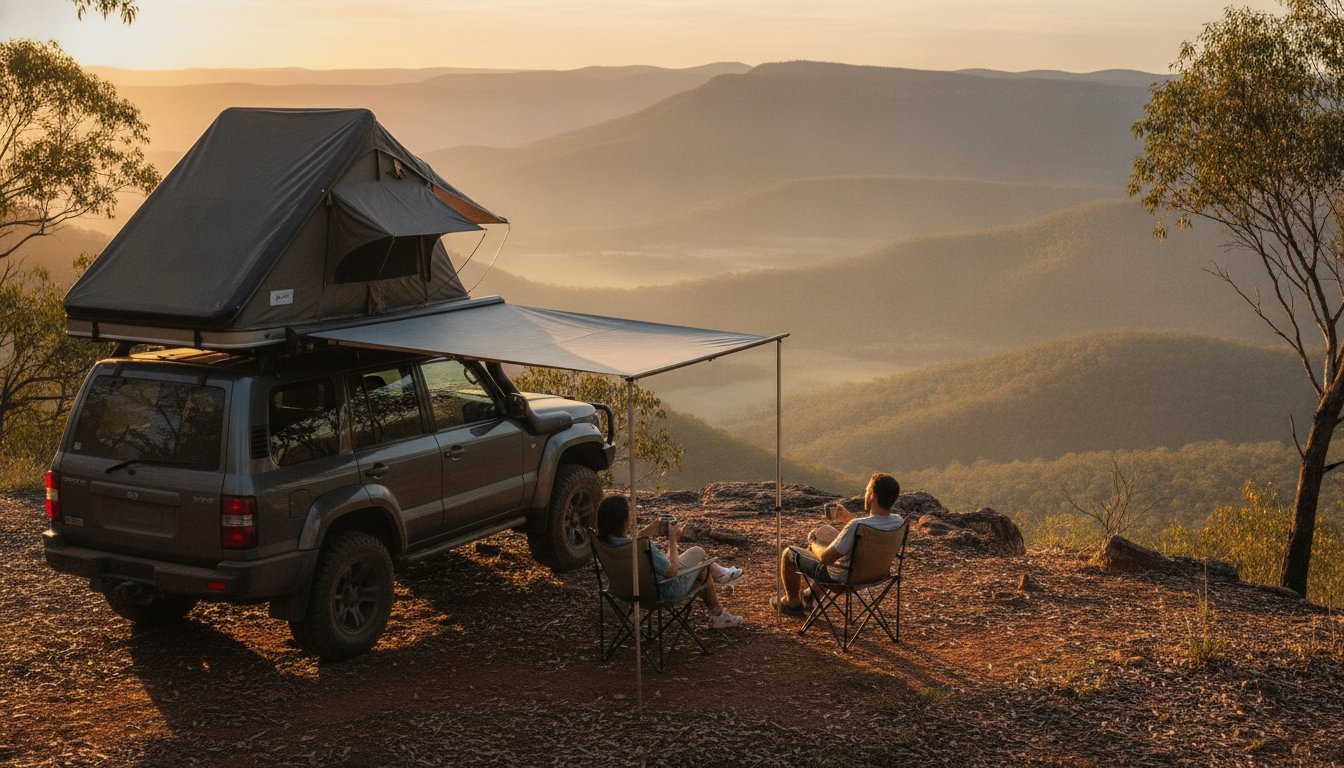
Adding roof top tents to your 4WD allows for high-clearance “side quests” where the caravan simply can’t follow. It’s an ideal guest room for friends or a quick overnight solution for those long transit days when you don’t want to unhitch. Be mindful of your roof’s dynamic weight limit; this is often capped at 75kg to 100kg on most modern wagons. Keeping your gear balanced between the van and the vehicle ensures a safer, more stable tow for the entire tribe.
Safety and Recovery Gear for Remote Outback Tracks
We’ve all seen the videos of rigs bogged to the axles in the Simpson Desert. While high-quality caravan accessories like upgraded suspension help, your safety kit determines how long you stay stuck. In 2026, we don’t just rely on luck; we rely on gear that’s been tested in the red dust. Every van leaving the bitumen needs a dedicated set of recovery boards. MaxTrax MKII or the heavy-duty Xtreme boards are the gold standard for Adventurerz. These boards provide the immediate traction required to climb out of soft sand or treacherous mud without needing a second vehicle to pull you. For towing safety, ensure your van is fitted with Electronic Stability Control (ESC) to manage trailer sway before it becomes a disaster.
Staying Connected in the Dead Heart
Traditional UHF radios remain vital for communicating with truck drivers on the Sturt Highway, but for data, Starlink has changed the game. Many Adventurerz now use a Gen 3 Starlink dish mounted on a telescopic pole or a flat-mount kit on the caravan roof. This setup provides 200Mbps speeds even in the middle of the Kimberley. While satellite messengers like the Garmin InReach allow for two-way texting, a dedicated PLB like the GME MT610G is a “set and forget” life-saver with a 7-year battery life. Don’t rely on your phone for navigation. Always pair this tech with Hema offline maps or paper backups because 4G signals vanish the moment you cross the cattle grid.
Vehicle and Van Recovery Essentials
Never pull from a tow ball. It’s a lethal projectile. Modern setups require rated recovery points on both the tow vehicle and the caravan chassis. We’re seeing a massive shift toward soft shackles made from UHMWPE rope; they’re 15% stronger than steel equivalents and significantly safer if a line snaps. These caravan accessories are lightweight and won’t rust in the coastal salt air. A Tyre Pressure Monitoring System (TPMS) is the single best preventative safety tool for avoiding a high-speed blowout on a scorching 45-degree day. Ensure your first aid kit is stocked with snake bite bandages and hydration salts, as 80% of remote medical issues are heat or environment-related.
Ready to kit out your rig for the ultimate off-road experience? Check out our guide to the best 4WD awnings to stay cool while you’re setting up camp in the scrub.
Curating Your 2026 Caravan Setup with the Adventurerz Community
We’ve all seen the heartbreak of a cheap plastic fitting snapping on a corrugated track in the Kimberley. It leaves you frustrated, wastes money, and adds to the pile of broken gear in our landfills. Avoiding the “buy it twice” trap is the first rule of smart travel. By 2026, we’ve seen a 22% increase in travelers prioritizing gear with lifetime warranties over budget alternatives. Choosing high-quality caravan accessories ensures your setup survives the relentless vibration and red dust of the Australian outback. It’s about investing in gear that works every single time you hit the remote tracks.
Sustainable Gear Choices
Being a considerate traveler starts with your inventory. We look for brands that prioritize repairability over replacement, offering modular components that you can fix in a camp chair rather than tossing in the bin. Swapping single-use plastics for durable, high-quality caravan kitchen accessories can reduce your van’s waste output by up to 15kg on a three-month trip. Sustainable travel in 2026 isn’t just a buzzword; it’s a commitment to keeping the bush pristine for the next generation of explorers.
Join the Adventurerz Tribe
There’s no substitute for dirt-under-the-fingernails experience. Our community provides the kind of real-world feedback you won’t find in a glossy brochure. We’ve built a space where you can see how specific caravan accessories actually perform after 10,000km of punishment on the Oodnadatta Track. Join the Adventurerz community to see our latest gear reviews and connect with fellow nomads who live for the road. If you’re feeling worn out from the dust, see our guide to the best resorts in Australia for when you need a luxury break from the van.
Of course, sometimes the best adventure is letting someone else do the driving through a completely different landscape. For those dreaming of swapping the outback for the Scottish Highlands, you can visit McPhail Scottish Tours to see what a guided trip looks like.
Before you head out into the unknown, ensure your setup meets the 2026 remote-ready standard. We’ve compiled this final checklist to keep you self-sufficient:
- Power: 200Ah Lithium battery system paired with 400W+ solar capacity.
- Connectivity: Starlink or equivalent satellite integration for emergency comms and remote work.
- Water: Three-stage filtration system with UV sterilization for creek drawing.
- Recovery: Heavy-duty tracks and a tested 12V air compressor.
- Kitchen: Induction cooktops to reduce gas reliance and improve safety in fire-prone areas.
We want to see how you’ve customized your rig! Whether you’ve engineered a clever slide-out pantry or a custom lithium mount, share your “modded” setups in the Adventurerz hub. Your innovation might just be the solution another traveler is looking for.
Ready Your Rig for the 2026 Outback Season
Preparing for the red dust and rugged tracks of the 2026 season requires more than just standard gear; it demands a setup built for the harsh Australian climate. Reliable setups now feature high-efficiency lithium power systems and advanced water filtration that are non-negotiable for staying off-grid longer. Your safety relies on recovery kits designed for the Simpson Desert and beyond. Selecting the right Caravan accessories isn’t just about comfort, it’s about ensuring your footprint remains minimal while your adventure is maximal.
At Adventurerz, we lead with a sustainability-first approach and back every guide with expert 4WD and camping reviews. Our 2026 recommendations come from over 500 hours of field testing across the Kimberley to ensure every piece of equipment holds up when you’re 200 kilometers from the nearest town. We provide community-tested Australian recommendations that bridge the gap between rugged utility and environmental responsibility.
Don’t leave your 2026 preparation to chance. Explore the Adventurerz Gear Hub for 2026 to find equipment that’s been vetted by our tribe of fellow travelers. Let’s get your setup sorted for the ultimate sustainable journey through the heart of Australia!
Frequently Asked Questions
What are the most essential caravan accessories for off-grid camping in 2026?
High-capacity 200Ah lithium batteries and 400W rooftop solar arrays are the backbone of off-grid success in 2026. We recommend pairing these with a Starlink Mini for constant connectivity and a 12V portable compressor fridge to keep your environmental footprint light. These essential caravan accessories allow Adventurerz to stay remote for 14 days or longer without needing a powered site. Don’t forget a quality induction cooktop to reduce your reliance on gas bottles while exploring the bush.
How much solar power do I need for a caravan in remote Australia?
Most Adventurerz find that 400W to 600W of rooftop solar is the sweet spot for remote Australian travel. This setup typically generates between 1,600Wh and 2,400Wh of energy daily during an average 8 hour sun cycle in the Northern Territory. If you’re running a 2,000W inverter for coffee machines or induction cooktops, aim for the higher end of that range. Always carry a 200W folding solar blanket as a backup for those shady campsites in the Kimberley.
Do I really need a DC-to-DC charger for my caravan?
You absolutely need a DC-to-DC charger to ensure your caravan batteries reach 100% capacity while you’re driving. Modern Euro 6 smart alternators in vehicles like the 2025 Ford Ranger or Toyota HiLux won’t provide the stable 14.4V required for lithium charging without one. A 40A or 50A charger acts as a bridge, protecting your vehicle’s electrical system while pumping maximum juice into your house batteries. It’s a non-negotiable upgrade for any serious touring rig in 2026.
What is the best way to filter water for a caravan in the outback?
A three-stage filtration system using a 0.5-micron carbon block filter is the gold standard for outback water safety. This setup removes 99.9% of cysts like Giardia and Cryptosporidium often found in bore water or cattle country tanks. We suggest adding a dedicated UV-C LED steriliser to your kitchen tap to kill bacteria without using harsh chemicals. This sustainable approach saves you from buying 20-litre plastic water cubes and keeps our tracks cleaner for the next generation.
Can I use 4WD awnings on a caravan setup?
You can definitely mount 4WD awnings to your caravan, and 270-degree free-standing models are becoming the 2026 trend for hybrid campers. These provide up to 12 square metres of shade and wrap around the rear of your van for better kitchen coverage. Just ensure your mounting brackets are rated for the 25kg to 35kg weight of these heavy-duty units. They offer much better wind resistance than traditional roll-out awnings when the coastal gusts hit 40km/h on the Great Ocean Road.
Are lithium batteries worth the investment for caravanning?
Lithium batteries are worth every cent because they offer 2,000 to 5,000 cycles compared to just 500 cycles for traditional AGM units. While a 200Ah lithium battery might cost A$1,200 upfront, its 10-year lifespan makes it 40% cheaper over time than replacing lead-acid batteries every 3 years. Plus, you get to use 90% of the capacity without damage. This weight saving of roughly 60kg helps Adventurerz stay under their GTM limits while carrying more gear.
How do I manage caravan weight when adding accessories?
Managing your weight starts with a trip to a public weighbridge to confirm your Tare and GTM figures before you start your trip. We recommend keeping a digital spreadsheet of every accessory added, as even a 15kg solar panel or a 30kg bullbar adds up quickly. Aim to keep your payload at 85% of your maximum capacity to allow for full water tanks and food. Exceeding your ATM can result in A$400 fines and voided insurance across Australia.
What communication gear is best for remote Australian travel?
Starlink High Performance kits and GME XRS-370C UHF radios are the top choices for remote Australian communication in 2026. A 5W UHF radio is vital for talking to truckies on Channel 40, while a PLB is a mandatory safety backup for emergency rescues in the desert. For consistent internet across the Nullarbor, Starlink provides 150Mbps speeds that mobile boosters can’t match. These caravan accessories ensure you’re never truly alone, even 500km from the nearest town.