
Imagine you’ve just unrolled your swag at a pristine, remote beach in Northern Queensland after a grueling twelve hour 4WD journey. The water looks like glass, but as you step toward the tide, you spot a cluster of translucent shapes bobbing in the shallows. Most of us have felt that sudden prickle of fear when we encounter a Jelly Fish in the wild, especially when we’re over 200 kilometers from the nearest medical clinic. We love the rugged beauty of our coastlines, but it’s completely natural to worry about painful stings or identifying which of the 2,000 species in our waters are harmless and which ones demand a wide berth.
You don’t have to let uncertainty keep you on the sand. We’re here to help you master the art of identifying and respecting these mysterious creatures while you explore our national parks. In this guide, we’ll show you exactly how to spot common Australian species and what specific gear you need to pack for the ultimate stinger protection. We will also dive into essential first-aid for beach camping and explain why these jellies are a crucial part of the ocean’s health. Let’s get you ready for your next coastal mission with the knowledge to stay safe and responsible!
Key Takeaways
- Uncover the prehistoric secrets of the Jelly Fish and understand their critical role in maintaining the balance of Australia’s vibrant marine ecosystems.
- Gain the confidence to identify different species with our field-guide breakdown, helping you distinguish between harmless drifters and those that require a wide berth.
- Prepare for your next remote beach mission with essential safety tips on protective gear, including the vital role of stinger suits for swimming in the surf.
- Join the Adventurerz movement by learning how to report sightings to help researchers, ensuring our coastlines remain healthy for generations to come.
Understanding the Jelly Fish: Why Every Adventurer Needs to Know Their Jellies
We’ve all been there, standing on a pristine Aussie beach, spotting a translucent blob and wondering if it’s time to pack up the 4WD. But these drifters are so much more than a summer buzzkill. They’re ancient. They’re resilient. They’ve been pulsing through our oceans for over 500 million years. That’s long before the first dinosaur ever walked the earth. As Adventurerz, when we head out to explore our coastlines, we’re stepping into a world where the Jelly Fish is a master of survival.
The Ancient Survivors of the Sea
It’s incredible to think that while empires rose and fell, these simple creatures barely changed. Fossil records from the Cambrian period, roughly 505 million years ago, show that their basic body plan was already perfected. This simple design isn’t a weakness; it’s a peak evolutionary advantage that lets them thrive in every ocean on the planet. The Fascinating Biology of Sea Jellies reveals how they function without a brain, heart, or bones. The mesoglea is the gelatinous middle layer that provides their structural support and gives them that iconic wobbling form. By staying simple, they’ve outlasted almost every other species on the planet.
Why Adventurerz Should Respect the Bloom
When we see thousands of jellies washing up on a Queensland or Victorian beach, we’re witnessing a “bloom.” These massive population explosions occur when specific environmental conditions align. While a bloom might look like a mess to a beachgoer, it’s a buffet for the marine world. Several factors contribute to these events along our coast:
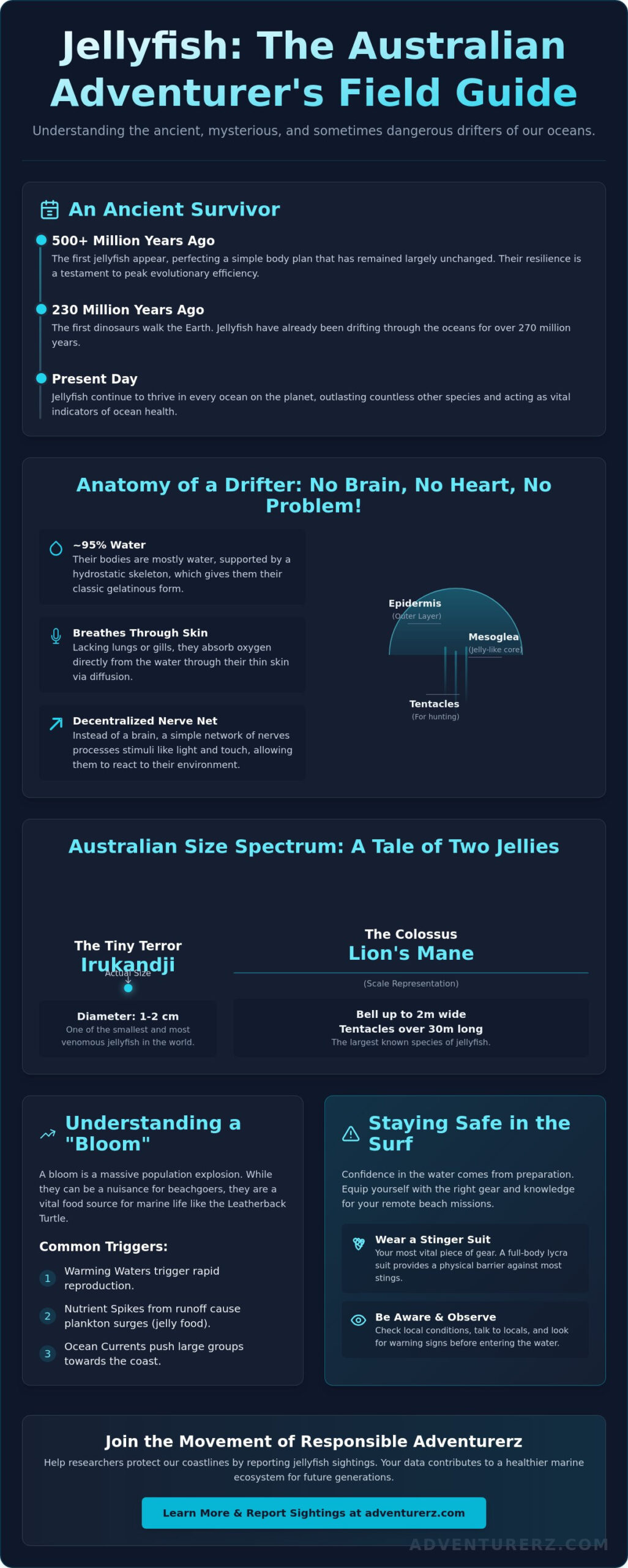
- Warming Waters: Rising sea temperatures often trigger rapid reproduction cycles.
- Nutrient Spikes: Increased runoff can lead to plankton surges, which jellies devour.
- Ocean Currents: Shifting tides and winds push these massive groups toward our shores.
Sea turtles, particularly the Leatherback, rely on these jellies as a primary food source. They can eat their own weight in Jelly Fish every single day. Recent data from 2023 indicates that warming ocean currents are causing these blooms to appear earlier in the season and last longer across our national waters. This shift impacts the entire marine food web, from the smallest fish to the largest predators.
As Adventurerz, we need to shift our mindset from seeing them as a nuisance to seeing them as vital indicators of ocean health. Practicing considerate exploration means leaving them be, even when they’ve washed ashore. They’re a marvel of nature that deserves our respect as much as any reef or rainforest. Let’s keep our curiosity high as we scout the beautiful, complex waters of the Australian coast.
The Fascinating Biology of Sea Jellies: No Brain, No Heart, No Problem!
We often think of complex life as requiring a centralized command centre, but the Jelly Fish proves that nature has other plans. These ancient drifters are roughly 95% water, lacking a brain, heart, or even bones. Instead of a rigid frame, they rely on a hydrostatic skeleton. This is essentially a fluid-filled cavity that supports their body through water pressure. It’s what allows them to pulse through the swell with that rhythmic, hypnotic beauty we see from the shoreline. We find it incredible that a creature so simple has survived for over 500 million years, outlasting the dinosaurs by a long shot.
The diversity among these drifters in Australian waters is truly massive. On one end of the scale, we have the Irukandji, a tiny terror measuring only 1 to 2 centimetres in diameter. On the other end, the Lion’s Mane jellyfish can grow a bell reaching 2 metres across with tentacles trailing 30 metres behind it. Whether they are microscopic or giant, every Jelly Fish is a masterpiece of evolutionary efficiency that thrives in every corner of our oceans.
Anatomy of a Drifter
The body of a jelly consists of three distinct layers: the epidermis, the gastrodermis, and the mesoglea. This mesoglea is the thick, jelly-like substance between the layers that provides buoyancy. Because they lack lungs or a traditional respiratory system, they “breathe” by absorbing oxygen directly through their thin skin via diffusion. They don’t have a brain, but they use a decentralized “nerve net” to process the world. This system allows them to sense light, detect odors, and maintain their orientation in the water column so they stay upright while drifting.
How the Sting Works
The most famous feature of the jelly is its sting, powered by specialized cells called cnidocytes. Inside these cells sit nematocysts, which are essentially biological harpoons. This is one of the fastest mechanical processes in the entire animal kingdom. When a trigger is touched, the nematocyst fires in about 700 nanoseconds, piercing the prey and delivering venom. It’s vital to remember that these stings are predatory or defensive tools, not calculated attacks on humans.
While we explore the coast, staying informed is our best defense. You can find Essential Tips for Adventurerz regarding first aid and safety through official health resources. Understanding these mechanisms helps us respect the ocean’s residents while we stay safe on our travels. If you’re planning your next coastal trek, make sure you’re geared up with the right kit from Adventurerz before you hit the sand.
Identifying Australia’s Most Common Jelly Fish: From Harmless Drifters to Deadly Box Jellies
We love our coastlines, but knowing who we’re sharing the water with is vital for every Adventurerz member. Not everything that floats and stings is a “true jellyfish” or Scyphozoa. Some of the most famous drifters are actually colonies of tiny organisms working together. One massive mistake we see is people thinking every sting gets the same treatment. It doesn’t. Using the wrong remedy can actually make things worse by triggering more venom release. For example, vinegar is essential for some species but can actually cause more pain for others.
The Blue Bottle (Man o’ War): Australia’s Most Common Beach Visitor
The Blue Bottle is the most frequent visitor to our shores, but it’s technically a siphonophore, not a single Jelly Fish. It’s a colony of four different types of polyps working as one unit. You’ll easily spot their bright blue, air-filled sails on the sand after strong onshore winds. Their tentacles can reach up to 10 metres in length, even when they look like small bubbles on the beach. If you’re planning a coastal mission and setting up your roof top tents near the dunes, always check the tide line before you dive in. Those blue bubbles are beautiful, but their sting is sharp and immediate.
Deadly Encounters: Respecting the Box Jellyfish and Irukandji
Northern Australian waters demand a high level of respect and preparation. The Box Jellyfish, belonging to the Cubozoa class, is widely considered the most venomous marine animal on the planet. Unlike most drifters that just follow the current, these jellies have 24 eyes and are active hunters. Then there’s the Irukandji. This tiny killer is often smaller than a fingernail, making it nearly impossible to see in the surf. Irukandji syndrome is terrifying, causing severe muscle cramps, vomiting, and an overwhelming sense of impending doom. We always recommend wearing full-body stinger suits when exploring the tropical north during stinger season.
The Gentle Giants: Spotting Moon Jellies and Blubbers
Not every encounter in the water is a cause for alarm. Moon Jellyfish are common sights and easy to identify by the four horseshoe-shaped gonads visible through their translucent bell. They move with a rhythmic, pulsing motion that is almost hypnotic to watch. You’ll also likely see the Jelly Blubber, especially in estuaries and bays around New South Wales and Queensland. These thick, dome-shaped jellies come in shades of creamy white, brown, or even vivid blue. While they do have a mild sting, they are generally harmless to most Adventurerz. Seeing them in large numbers is a spectacular reminder of the health and diversity of our marine ecosystems.
- Blue Bottle: Treat with hot water (around 45 degrees Celsius) for 20 minutes.
- Box Jellyfish: Use vinegar immediately and seek emergency medical help.
- Moon Jelly: Usually requires no treatment, just a quick rinse with salt water.
We believe that being an expert outdoorsman means being a prepared one. Whether you’re 4WDing along the coast or swimming in a secluded bay, knowing these species keeps the adventure going safely.
Staying Safe in the Surf: Essential Tips for Adventurerz and Remote Explorers
Remote beach camping is the ultimate escape for any explorer, but the Australian coastline demands a high level of respect. We always advocate for a proactive safety plan before you even drop your tire pressure for the sand. This starts with mapping your route using the ultimate adventure travel planner to identify known high-risk zones and local medical facilities. Being self-sufficient in the wild means you’re prepared for any encounter with a Jelly Fish, ensuring your coastal expedition stays memorable for the right reasons.
Planning Your Trip: Avoiding Stinger Season
In Northern Australia, the period known as “stinger season” typically spans from November through to May, although these dates can shift based on water temperature and weather patterns. Before you dive in, we recommend checking the BeachSafe app or local Surf Life Saving reports for recent sightings. If you’re setting up camp on a remote stretch, use your 4WD awnings to create a shaded observation post. This gives you a comfortable, elevated spot to watch the water for blue bottles or warning signs before anyone enters the surf.
First Aid Essentials: What to Do When a Sting Happens
If a member of your crew is stung, you must act quickly. Follow these definitive steps based on current Australian medical advice:
- Step 1: Get out of the water immediately. Stay calm and move slowly. Panic increases your heart rate, which can circulate venom through the body faster.
- Step 2: The Vinegar Rule. For tropical Jelly Fish like the Box Jelly or Irukandji, pour vinegar over the site for at least 30 seconds to neutralize undischarged stinging cells. If you’re stung by a Blue Bottle, do not use vinegar; it can cause more venom to be released.
- Step 3: Manage the pain. For Blue Bottle stings, immersion in hot water (around 45°C) for 20 minutes is most effective. For other species, use ice packs to help manage localized pain and swelling once the vinegar has been applied.
Gear Up for Safety: Stinger Suits and Protective Wear
We don’t head into the waters of the Top End without lycra stinger suits. These lightweight suits provide a vital physical barrier that prevents the Jelly Fish nematocysts from making contact with your skin. In rocky or remote coastal areas, we also suggest wearing reef shoes and gloves to protect against stings and sharp coral. Preparation is the hallmark of true Adventurerz. It’s about being disciplined and having the right gear so you can explore the most remote corners of our country with confidence and safety.
Responsible Exploration: Protecting Our Oceans and the Adventurerz Community
Being an explorer in the Australian wild is a privilege that comes with a clear set of responsibilities. We don’t just visit these places; we protect them. Our commitment to the “leave no trace” ethos ensures that the pristine coastlines we love today remain vibrant for the next generation of Adventurerz. When you encounter a jelly fish, remember that you’re a guest in their liquid world. Observing these drifters safely means keeping a respectful distance of at least two meters while in the water. If you spot a rare species or a massive bloom, contribute to citizen science by reporting it through the Atlas of Living Australia. This data helps marine researchers track shifts in ocean temperatures and species distribution across our 34,000 kilometres of coastline. Your observations provide the ground-truth data that satellites simply can’t capture.
Leave No Trace: Protecting Marine Habitats
It’s tempting to move a jelly fish washed up on the sand, but it’s best to let nature take its course. Burying them can be dangerous for unsuspecting beachgoers who might step on hidden, still-active tentacles. These organisms also serve as vital nutrients for the coastal ecosystem once they break down. We must also be vigilant about plastic waste. Research from the CSIRO indicates that 52 percent of sea turtles globally have ingested plastic, often mistaking floating bags for their favourite prey. To keep our marine sanctuaries healthy, follow this eco-friendly beach camping checklist:
- Carry out every piece of rubbish, including micro-plastics and food scraps.
- Set up your swag tent or camp at least 50 metres away from the high-tide mark to protect dune stability.
- Use only phosphorus-free, biodegradable soaps for washing up to prevent algae blooms.
- Avoid using chemical-heavy sunscreens that contain oxybenzone, which can bleach coral reefs.
Join the Tribe: Sharing Your Coastal Discoveries
The heart of our community is the shared knowledge we pass between one another. We want to see your latest coastal discoveries and hear about your experiences off the beaten track. Head over to the Adventurerz platform to upload your photos and share real-time safety tips about current water conditions. Peer-to-peer insights are often the fastest way to alert the tribe about seasonal blooms or dangerous stinger activity in specific regional pockets. By staying connected, we ensure everyone stays safe while pushing the boundaries of exploration. Australia’s wilderness is a rugged, beautiful frontier that demands our respect and our discipline. Let’s keep exploring, stay curious, and always look out for the land and sea that sustain our adventurous spirit!
Master the Surf and Start Your Next Mission
Australia’s coastline stretches over 34,000 kilometres, offering endless opportunities for the bold. While encountering a Jelly Fish is a common part of the tropical swell, your safety depends on identifying species like the Box Jellyfish and carrying the right protective gear for remote conditions. We believe that being a prepared explorer means understanding these drifters rather than fearing them. By staying informed and respecting the marine ecosystem, we ensure these wild spaces remain pristine for everyone.
At Adventurerz, we’ve built a tribe of over 5,000 Adventurerz who share a passion for the Australian wilderness. We provide expert-led gear reviews specifically for remote environments, ensuring you’re ready for any off-the-grid challenge. Our commitment to sustainable and responsible outdoor exploration means we always leave the beach better than we found it. Don’t let uncertainty keep you on the shore when the ocean is calling. It’s time to gear up and see what the coast has to offer.
Join the Adventurerz community and plan your next coastal escape!
Grab your swag, check the tides, and let’s get out there together.
Frequently Asked Questions
Is it safe to touch a dead jelly fish washed up on the beach?
No, you should never touch a dead jelly fish on the sand because their stinging cells stay active for several days. Even if the creature looks dried out or damaged, the venomous nematocysts can still fire into your skin upon contact. We always tell our fellow Adventurerz to keep a safe distance and keep kids and dogs away from these beach drifters to avoid a painful surprise.
Can jelly fish stings be fatal in Australia?
Yes, certain species like the Australian Box Jellyfish and the tiny Irukandji can be fatal to humans. Data from health records shows there have been 81 recorded deaths from jelly fish stings in Australia since 1883. While most encounters result in minor pain, these specific tropical species require immediate emergency medical intervention and are a serious concern in our northern waters during stinger season.
How do I tell the difference between a Blue Bottle and a Box Jellyfish?
You can spot the difference by looking at their colour and where they sit in the water. A Blue Bottle has a bright blue, air-filled sac that floats on the surface, while a Box Jellyfish is transparent, shaped like a cube, and stays submerged. We usually find Blue Bottles on the east coast beaches during summer, but the dangerous Box species are mostly found in tropical waters north of Gladstone.
What is the best first aid for a Blue Bottle sting?
The most effective first aid for a Blue Bottle sting is immersion in hot water at approximately 45 degrees Celsius for 20 minutes. If you can’t access hot water, using a dry ice pack is the next best way to manage the pain. Unlike the treatment for tropical species, you should never use vinegar on a Blue Bottle sting because it can actually cause more stinging cells to fire.
Do stinger suits really work against all types of jelly fish?
High-quality stinger suits provide an excellent physical barrier that protects against 99 percent of jelly fish encounters. These lightweight garments, often made of nylon or spandex, prevent the stinging tentacles from making direct contact with your skin. Every prepared Adventurerz member heading to North Queensland should pack one of these suits to stay safe while enjoying the beautiful Great Barrier Reef during the warmer months.
What happens if I accidentally swallow a small jelly fish while swimming?
Swallowing a jelly fish is a serious medical emergency because the tentacles can sting your throat and cause it to swell rapidly. This is a rare occurrence, but the venom can lead to an allergic reaction or airway obstruction within minutes. If this happens, seek professional medical help immediately or call 000, as the internal stings are much harder to treat than those on your skin.
Why are there so many jelly fish on the beach after a storm?
Strong onshore winds and heavy swells during storms physically push these drifters toward the coastline in massive numbers. Species like the Blue Bottle have a sail-like crest that acts like a boat, catching the wind and driving them onto the sand. After a big weather event, we often see thousands of them lining the high tide mark across New South Wales and Queensland beaches, creating a blue carpet.
Can you see jelly fish in the water before they sting you?
You can often see Blue Bottles floating on the surface, but many of the most dangerous species are almost entirely transparent and invisible in the water. The Irukandji is only about 2 centimetres in diameter, which makes it nearly impossible to spot with the naked eye while you are swimming. We recommend wearing protective gear and checking local surf life saving reports before you dive into the ocean.