Did you know that nearly 23% of touring vehicles recently tested in Victoria were found to be dangerously overloaded? It’s a staggering figure that highlights the fine line we walk between being prepared and being weighed down. Choosing the best 4wd accessories for touring Australia isn’t about buying every gadget on the shelf. It’s about selecting high-durability gear that works in harmony with your vehicle and the fragile environments we love to explore.
We understand the stress of conflicting reviews and the genuine fear of a mechanical failure 500 kilometers from the nearest town. You want gear that lasts and a setup that won’t compromise your safety or the land. In this 2026 expert guide, we’ll help you navigate the essential upgrades needed for the Outback. We’ll dive into everything from Redarc’s latest DC-DC chargers and legal suspension lifts to the shift toward lightweight synthetic recovery gear. Let’s get your rig ready for the tracks with a focus on self-reliance, durability, and environmental respect.
Key Takeaways
- Master the art of balancing Gross Vehicle Mass (GVM) to ensure your rig stays capable without becoming a safety hazard on remote tracks.
- Identify the mandatory recovery essentials, including winches and high-performance compressors, that allow us to explore solo with total confidence.
- Compare the best 4wd accessories for touring Australia for sleeping and shelter, focusing on how rooftop tents offer safety from local wildlife and rapid setup times.
- Optimize your off-grid power system by switching to Lithium (LiFePO4) batteries and DCDC chargers for maximum efficiency and significant weight savings.
- Adopt a “Leave No Trace” mindset with dedicated waste management gear to protect the rugged environments we are privileged to visit.
Table of Contents
Defining the Ultimate Australian Touring Setup for 2026
Touring is more than just a holiday; it’s a commitment to long-term, self-reliant travel through some of the most remote regions on the planet. We define a true touring rig as a vehicle capable of sustaining its occupants for weeks without external support. The challenge we all face is balancing capability with the dreaded Gross Vehicle Mass (GVM). Weight is your biggest enemy. Every extra kilogram of the best 4wd accessories for touring Australia that we bolt onto our rigs brings us closer to a mechanical failure or a legal headache. Our philosophy at Adventurerz is built on hardy, contemplative, and methodical preparation. We don’t just buy parts; we curate a system that respects the vehicle’s limits and the environments we explore.
The Difference Between Off-Roading and Touring
Technical off-roading is often about the thrill of the obstacle. It’s about rock crawling and mud-running where the goal is to get through a specific track. Touring is different. It’s about endurance. A touring setup must withstand 10,000 kilometers of relentless corrugations that can rattle even the best-built vehicles to pieces. Understanding how various four-wheel drive systems distribute power is the first step in knowing how your vehicle will react under a full touring load. We prioritize modularity in our builds. This allows us to strip back for local trips while remaining ready for the Canning Stock Route. Durability isn’t just a buzzword; it’s the difference between a successful crossing and a very expensive recovery.
Prioritising Your Build: What Comes First?
We see many travelers make the mistake of buying “lifestyle” gear before securing their vehicle’s vitals. A methodical build follows a strict hierarchy of needs to ensure we don’t get stranded. Reliability is our foundation. This means investing in upgraded cooling systems, secondary fuel filtration, and underbody protection. Only once the vehicle is bulletproof do we move to self-sufficiency. This layer includes water storage, off-grid power, and shelter options like roof top tents or robust 4wd awnings. Comfort is the final piece of the puzzle. While it might seem secondary, the right comfort accessories prevent “touring burnout” and keep the spirit of adventure alive during month-long treks. We follow this order to ensure our rigs are safe, capable, and responsible.
- Reliability: Heavy-duty suspension, filtration, and cooling.
- Self-Sufficiency: Reliable power, 50L+ water capacity, and rapid-set shelter.
- Comfort: Ergonomic seating, organized drawer systems, and climate control.
Essential Recovery Gear for Remote Self-Reliance
When we head into the deep Outback, self-reliance isn’t just a goal; it’s our survival strategy. While many guides focus on vehicle extractions involving a second car, true touring often means being the only soul for hundreds of kilometers. This is why the best 4wd accessories for touring Australia must include gear that works when you’re alone. We prioritize tools that allow for controlled, methodical recoveries that don’t put unnecessary stress on our vehicles or the environment.
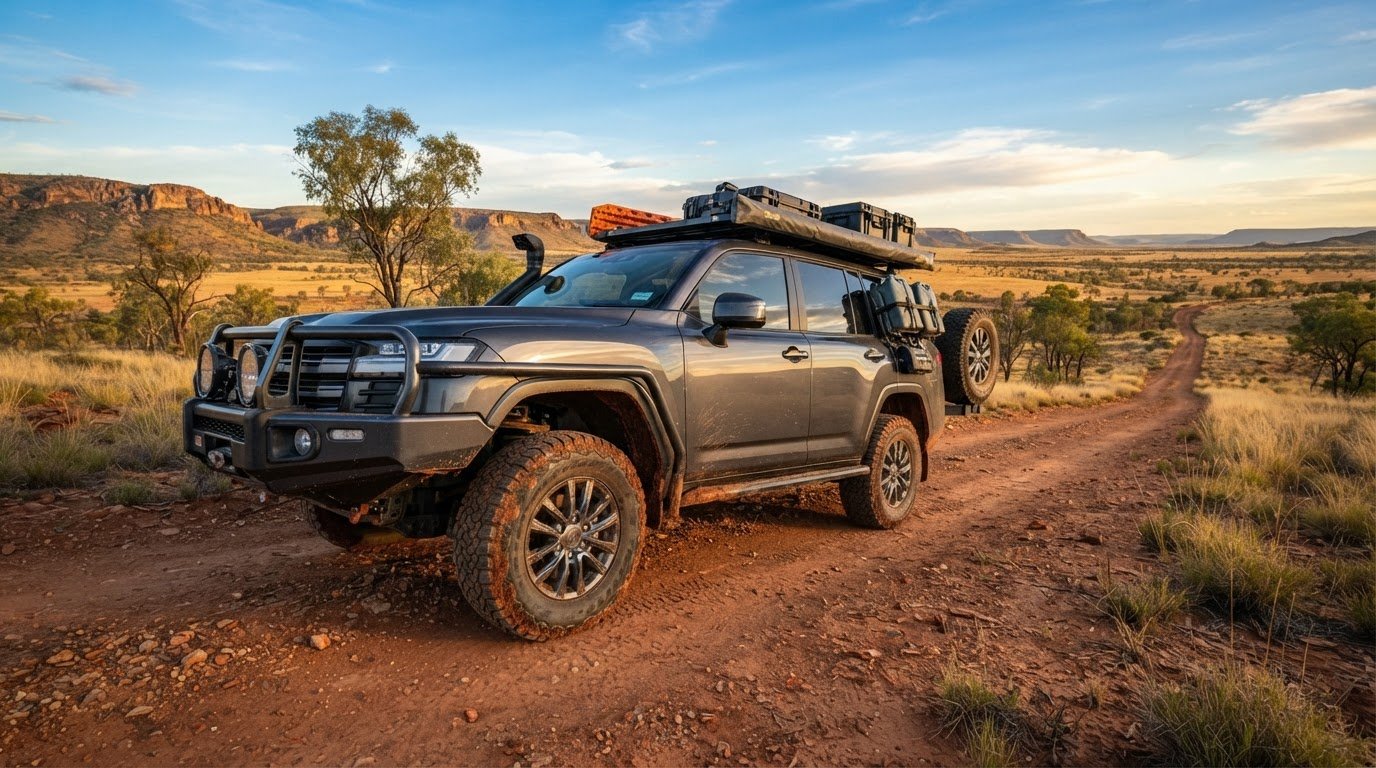
A winch is a mandatory investment for solo remote touring. For a vehicle with a Gross Vehicle Mass (GVM) between 2,500kg and 3,500kg, we recommend a winch rated at least 1.5 times that weight, typically a 9,500lb to 12,000lb unit. This mechanical advantage is useless without rated recovery points. We never rely on factory tie-down loops. These can fail catastrophically under the loads required to pull a bogged rig from deep sand or mud. Traction boards, such as MAXTRAX MKII which retail for approximately $319.99, provide a safer first-response option. They allow us to build a ramp and drive out of trouble without the high-tension risks of a winch or snatch strap.
Tyre Management for Remote Tracks
Corrugations and heat are the twin killers of rubber on the tracks. A high-quality tyre pressure gauge and a heavy-duty compressor are non-negotiable for any serious tourer. We constantly adjust pressures to match the terrain, which protects both our tyres and the track surface. For iconic routes like the Canning Stock Route or the Simpson Desert, carrying dual spares is a standard safety protocol. We also carry a comprehensive tyre repair kit with plenty of plugs to handle the inevitable sharp mulga stake or jagged rock. If you’re looking for more inspiration on how to kit out your rig, check out our latest adventure guides and gear reviews.
Kinetic vs. Static Recovery Tools
Kinetic ropes have largely replaced traditional snatch straps in our kits because they offer a smoother, safer extraction by stretching up to 30% of their length. We’ve seen a massive shift toward synthetic soft shackles in 2026. These are significantly safer than steel D-shackles because they lack the lethal mass if a recovery point fails. For a mid-size 4×4, a motor vehicle recovery strap must have a minimum breaking strength of at least 8,000kg, ensuring it is rated between 2 and 3 times the vehicle’s GVM. This ensures the strap is strong enough to do the job without being so stiff that it damages the vehicle frames.
- Winch: 9,500lb minimum for most touring builds.
- Traction Boards: Essential for solo sand recoveries.
- Soft Shackles: The modern, safer alternative to steel.
- Plug Kits: Your first line of defense against punctures.
Living Systems: Rooftop Tents and Awnings for Every Climate
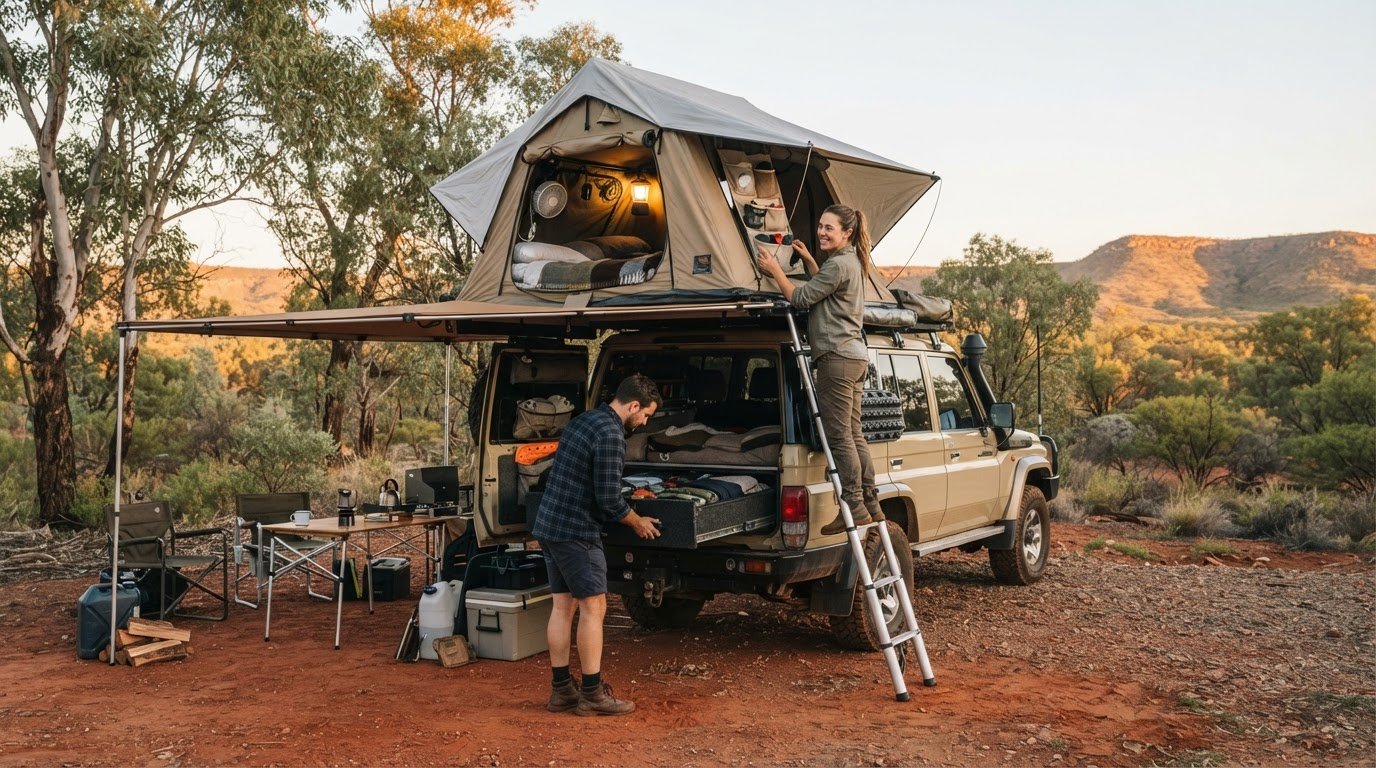
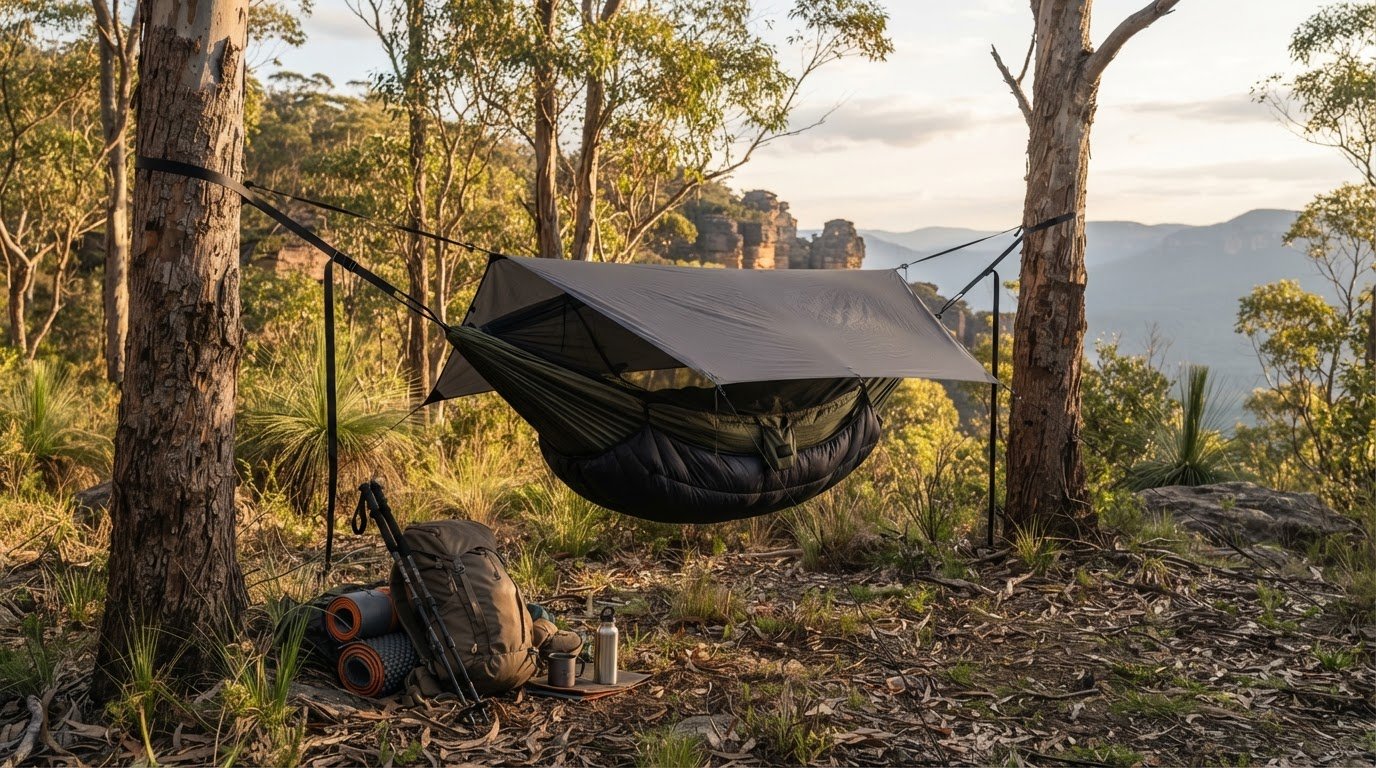
After a long day of negotiating washouts and dust, our camp setup should be a sanctuary, not a chore. We consider roof top tents the gold standard for Australian touring because they offer a rapid setup and keep us safely away from ground-dwelling wildlife like snakes and crocodiles. When we are deep in the Top End, that extra elevation provides peace of mind that a ground tent simply can’t match. However, adding significant weight to the roof changes how our vehicles handle. We must be mindful of the high center of gravity when selecting the best 4wd accessories for touring Australia, as top-heavy rigs are more prone to body roll on off-camber tracks.
Choosing the Right Rooftop Tent for 2026
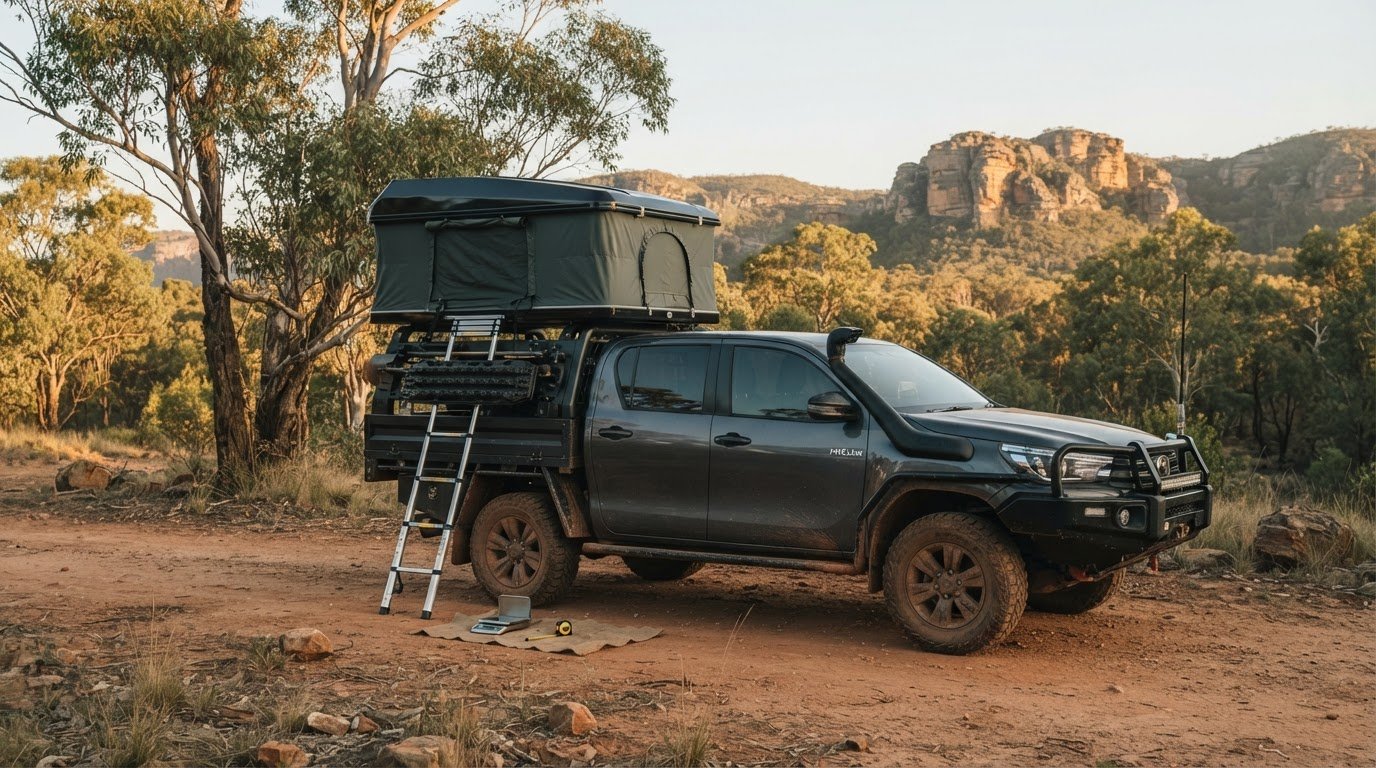
The choice between hard-shell and soft-shell designs often comes down to where we spend most of our time. Hard-shell tents are the favorites for high-speed transit and dusty interior tracks. They are aerodynamic, durable against low-hanging scrub; and can be popped open in under a minute. Conversely, soft-shell tents offer a much larger living footprint, which is a massive win for families or those who need extra space to move. They also tend to offer superior cross-flow ventilation, making them a strong contender for the humid tropics. You can find a deeper dive on Hard Shell vs Soft Shell Tents for QLD Weather to see which suits your specific route.
Awning Configurations: 180 vs. 270 Degrees
UV protection is a health priority under the harsh Australian sun. High-quality 4wd awnings transform the side of our vehicle into a functional base camp. The 270-degree “wrap-around” awning has become the king of the kitchen area, providing seamless shade from the passenger side all the way around to the rear of the vehicle. While these offer incredible coverage, they exert significant torque on roof rack systems. We always ensure our mounting points are up to the task, especially when adding wall kits for protection against coastal winds. A well-shielded camp allows us to stay out longer and enjoy the environment without the constant battle against the elements.
- Hard-shell: Best for speed, fuel economy, and narrow, bush-pushed tracks.
- Soft-shell: Best for ventilation, living space, and budget-conscious builds.
- 270-Degree Awnings: Essential for rear-kitchen setups and maximum shade.
- Safety Tip: Keep heavy recovery gear lower in the vehicle to offset rooftop weight.
Off-Grid Power and Smart Storage Solutions
Reliable power is the heartbeat of a remote touring rig. In 2026, the shift toward Lithium (LiFePO4) batteries has been transformative for our community. A traditional 100Ah lead-acid battery can weigh over 30kg, while a lithium equivalent weighs roughly 12kg and offers double the usable energy. These weight savings are critical when we are trying to stay under our Gross Vehicle Mass. To keep these batteries healthy, we’ve moved away from basic Voltage Sensitive Relays (VSRs) in favor of DCDC chargers. Units like the Redarc BCDC1225D ensure your auxiliary battery hits a true 100% charge even with modern smart alternators. This is vital when selecting the best 4wd accessories for touring Australia because it guarantees your fridge stays cold in the Simpson Desert heat.
Building a Reliable 12V Ecosystem
We believe you can’t manage what you can’t measure. Installing a quality battery monitor is essential for tracking your “State of Charge” with precision. It stops the guesswork and prevents us from damaging expensive gear. While many are tempted by large inverters to run coffee machines, we encourage a methodical approach. Do you really need 240V power, or can you find 12V alternatives for your laptops and gadgets? Every single circuit must be fused at the battery to prevent electrical fires on rough, corrugated roads. If you’re ready to map out your next big trip, start with The Ultimate Adventure Travel Planner.
Storage Strategies for Weight Distribution
Organization is about more than just finding your gear. It’s about vehicle dynamics. We always keep heavy items, such as water tanks and battery banks, mounted low and between the axles to maintain stability. High-quality drawer systems with industrial-grade slides make accessing gear easy, but they must be paired with effective dust sealing. Anyone who has driven the Oodnadatta Track knows that fine bulldust finds every gap. For items that must go on the roof, we use dedicated dust-proof storage boxes. These keep our recovery gear and spare parts clean and ready for action. For more expert advice on building your rig, explore our comprehensive gear reviews and adventure ideas.
- Lithium Batteries: Massive weight reduction and faster charging.
- DCDC Chargers: Mandatory for hitting 100% capacity in modern 4WDs.
- Solar Choice: Combine fixed roof panels with a portable blanket for maximum flexibility.
- Dust Sealing: Use compression latches and quality seals to keep the Outback out of your drawers.
Preparing Your Vehicle for Sustainable Remote Exploration
Our journey through the Australian wilderness is a privilege that comes with a deep responsibility. At Adventurerz, we believe that “Leave No Trace” isn’t just a slogan; it’s a practice that begins during the gear selection phase. When we choose the best 4wd accessories for touring Australia, we look for tools that help us preserve the rugged beauty of the tracks for the next generation of explorers. Sustainable touring means being as disciplined with our waste as we are with our recovery gear. We don’t just pass through these environments; we act as their stewards while we’re there.
Effective waste management is a cornerstone of ethical travel. We always mount a spare tyre rubbish bag, often referred to as a “Dirty Gear Bag,” to the rear of our vehicles. This simple accessory keeps wet gear and rubbish outside the cabin, preventing odors and ensuring we never leave a single scrap behind. We also prioritize high-capacity, built-in water tanks over single-use plastic bottles. This reduces the sheer volume of plastic waste we carry and helps us manage our weight more effectively. By moving toward silent lithium power and induction cooking, we also minimize noise pollution, allowing us to enjoy the natural sounds of the bush without the constant hum of a generator.
Ethical Remote Camping Protocols
Responsible exploration requires us to be mindful of our impact on local ecosystems. We only use biodegradable soaps and carefully manage our greywater in sensitive areas to avoid contaminating local water sources. In many high-traffic remote regions, carrying a portable toilet is now a mandatory requirement. We embrace this as a necessary step to keep our campsites pristine. Beyond environmental impact, we always strive to engage respectfully with local communities and Traditional Owners. This means staying on designated tracks and seeking the correct permits before entering restricted lands. It’s about showing respect for the culture and history that makes these regions so special.
Final Pre-Departure Checklist
Before you point your bull bar toward the horizon, we highly recommend a mechanical shakedown run. Your first night in your new rooftop tent shouldn’t be in the middle of a desert sandstorm. Spend a weekend at a local park to test your 12V system and ensure your storage layout works in practice. Once you’re confident in your rig, you’re ready for the big one. If your long-term trek leaves you craving a bit of pampering after weeks in the dust, you might want to look at the Best Resorts in Australia for a luxury mid-tour break. We’re a community of explorers on a shared path, so don’t forget to share your photos and advice with the rest of us when you return.
- Waste: Use a rear-mounted bag for all rubbish and recyclables.
- Water: Invest in food-grade internal tanks to eliminate plastic bottles.
- Hygiene: Carry a portable toilet and use only earth-friendly cleaning products.
- Testing: Complete at least two short trips to test all new accessories under load.
Ready Your Rig for the Great Australian Escape
We’ve explored the essential systems that transform a standard vehicle into a true remote tourer. From the transformative weight savings of lithium power to the rapid-setup security of modern rooftop tents, your rig is now more than a machine; it’s a lifeline. Selecting the best 4wd accessories for touring Australia isn’t about ticking off a shopping list. It’s about a methodical commitment to durability, safety, and the environmental ethics that protect our shared tracks.
Our community thrives on real-world testing and a shared passion for the rugged path. We focus on 2026 touring standards to ensure you have the most reliable advice for your next desert crossing. Whether you’re planning a week in the High Country or a month on the Canning Stock Route, we’re here to guide you through every modification and shakedown run. Our expert reviews are based on actual remote testing, ensuring your gear won’t let you down when it matters most.
Explore our expert 4WD gear reviews and join the Adventurerz community today!
The horizon is calling, and with the right preparation, there’s no track too remote for us to navigate together. We’ll see you out there on the tracks!
Frequently Asked Questions
What are the top 5 must-have 4WD accessories for an Australian tour?
The core essentials for any remote build include a high-quality tyre pressure gauge and compressor, a reliable 12V dual battery system, a UHF radio, rated recovery points, and a quality fridge. These items form the foundation of a self-reliant setup. While many gadgets exist, these are the best 4wd accessories for touring Australia because they address the most common challenges: tyre management, communication, and food preservation.
Is a rooftop tent better than a traditional swag for remote touring?
Rooftop tents are generally superior for long-term touring because they provide a much faster setup and keep you safely elevated from ground-dwelling wildlife. While a swag is rugged and compact, the comfort of a permanent mattress and the added protection from crocodiles or snakes in the Top End make the rooftop tent our preferred choice. It transforms a quick overnight stop into a comfortable, safe sanctuary.
How much extra weight can I safely add to my 4WD for a long trip?
You can legally add weight up to your vehicle’s Gross Vehicle Mass (GVM), which includes passengers, fuel, and all your gear. We strongly recommend staying at least 10% below this limit to preserve your vehicle’s handling and reduce the risk of mechanical failure. Overloading is a serious issue on corrugated tracks, and staying under your limit ensures your suspension can actually do its job.
Do I really need a dual battery system for a 2-week tour?
Yes, a dual battery system is essential if you want to run a fridge and charge electronics without risking a flat starter battery. For a two-week trek, you need the peace of mind that your food will stay cold and your engine will turn over every morning. We consider a dedicated auxiliary battery a non-negotiable part of a modern touring setup for any trip longer than a weekend.
What is the best way to protect my 4WD from red dust ingress?
The most effective strategy is to use a positive pressure vent or ensure all canopy and door seals are in perfect condition and treated with silicone spray. We also recommend using dust-proof storage boxes for any gear kept in the rear of the vehicle. Keeping the internal air pressure slightly higher than the outside air is the only way to stop fine Outback dust from being sucked into every gap.
Can I tour remote Australia without a winch or recovery boards?
We don’t recommend heading into remote regions without at least one form of self-recovery equipment. While you might not use a winch on every trip, recovery boards are a lightweight and essential insurance policy for sand and mud. Self-reliance is a core value of our community. Relying on the chance of a passing vehicle for help is a risk that can lead to dangerous situations.
How do I choose between a 180-degree and a 270-degree awning?
Choose a 270-degree awning if you have a rear-mounted kitchen, as it provides seamless shade from the passenger side all the way around to the back. A 180-degree awning is typically lighter and faster to deploy, making it a great choice for those who only need side protection. Both styles are excellent best 4wd accessories for touring Australia that help manage UV exposure during long desert hauls.
What are the legal requirements for GVM upgrades in Australia?
GVM upgrades must be certified by an authorized engineer and must comply with specific Australian Design Rules, such as ADR 80/04. Regulations vary significantly between states; for instance, Queensland allows up to 75mm of lift without certification, while other states are stricter. We always check the local transport authority rules to ensure our modifications remain legal and our insurance stays valid for remote travel.