Did you know that 40% of fishers who target crabs in popular waterways head home with empty buckets? It is a staggering figure that highlights just how tricky mastering the craft can be. We know the frustration of losing expensive pots to a ripping current or the headache of decoding complex marine park zoning maps. It is easy to feel overwhelmed when you are just looking for a fresh feed of blue swimmers for the family.
We are here to ensure every Adventurerz member is part of the successful crew by helping you master sand crabbing. Our expert 2026 guide covers the best gear, tidal windows, and ethical practices to keep our fisheries healthy. We will dive into everything from understanding legal size limits to choosing the perfect bait and managing your equipment under the latest regulations. Let’s get your pots ready for a cracking season on the water.
Key Takeaways
- Learn how to choose between heavy-duty pots and dillies to ensure your gear stays secure against the bay’s strong tidal currents.
- Master the latest 2026 regulations for Sand Crabbing in Moreton Bay, including the 11.5cm size limit and the strict “no-take” rule for females.
- Discover the best times to drop your pots by understanding how the “run-in” tide impacts blue swimmer activity in deep channels.
- Understand the most humane methods for preparing your catch and how to manage waste to protect the delicate Moreton Bay Marine Park ecosystem.
- See how to integrate crabbing into your 4WD setup by using awnings to create a shaded, efficient station for cleaning your haul.
Table of Contents
What is Sand Crabbing in Moreton Bay?
Sand Crabbing in Moreton Bay is more than just a weekend hobby; it’s a coastal tradition that brings us closer to the rugged beauty of South East Queensland. When we talk about “sandies,” we’re specifically hunting for the Blue Swimmer Crab (Portunus armatus). These active, aggressive crustaceans are prized for their sweet, delicate meat and the sheer excitement of pulling a full pot over the gunwale. Moreton Bay stands as a premier destination because its vast, shallow sandbanks and nutrient-rich waters provide the perfect breeding ground for these blue-mottled speedsters.
While most of us are after the Blue Swimmer, you might occasionally encounter the sand crab (Ovalipes australiensis), also known as the surf crab, particularly near the ocean-facing bars. For the 2026 season, we’re seeing healthy numbers across the central bay, though success requires a keen understanding of their movements between the deep channels and the shallow seagrass flats. Current monitoring suggests that while mud crab populations are thriving in protected zones, sand crabs remain highly mobile, following the warm currents that pulse through the bay during the peak months.
To better understand the local environment and the species you’ll encounter, watch this helpful video:
Distinguishing sand crabs from mud crabs is your first step toward a legal haul. Mud crabs are heavy-bodied, dark green or brown, and prefer the muddy mangrove estuaries where they can hunker down in deep burrows. Sand crabs are sleeker, lighter, and thrive in the clear, sandy reaches of the bay. They’re built for swimming rather than burrowing, using their paddle-like rear legs to zip through the water column at surprising speeds.
Identifying the Blue Swimmer Crab
The male Blue Swimmer, or “buck,” is a stunner with bright blue highlights on its legs and a mottled carapace. Females, known as “jennies,” are a more subdued brown or green. To stay on the right side of the law, you’ve got to flip the crab over and check the abdominal flap. A male has a narrow, V-shaped flap on its underside, while a female has a much broader, U-shaped flap. Since keeping females is strictly prohibited in Queensland, mastering this quick visual check is essential before the crab even hits your bucket. We always carry a dedicated gauge to ensure every buck meets the 11.5cm minimum size requirement.
Why Moreton Bay is the Perfect Habitat
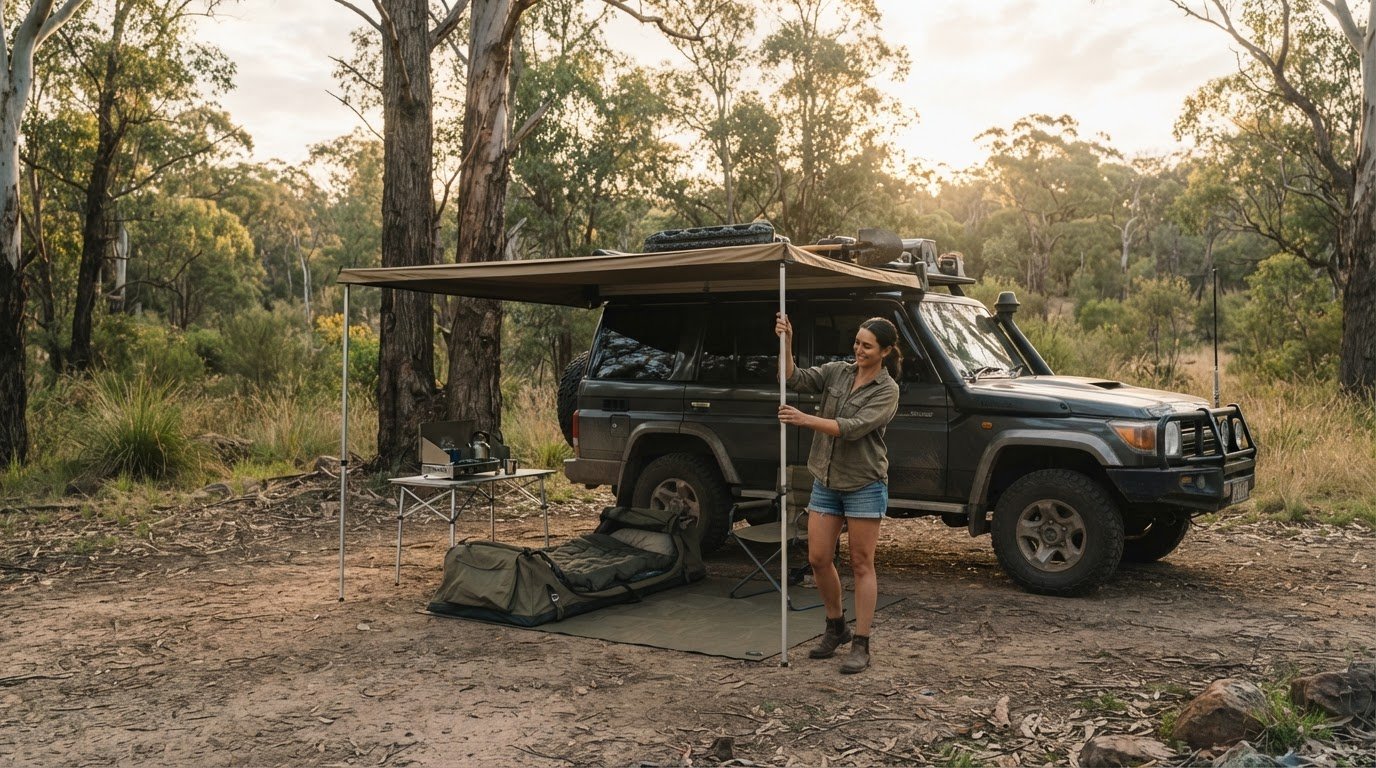
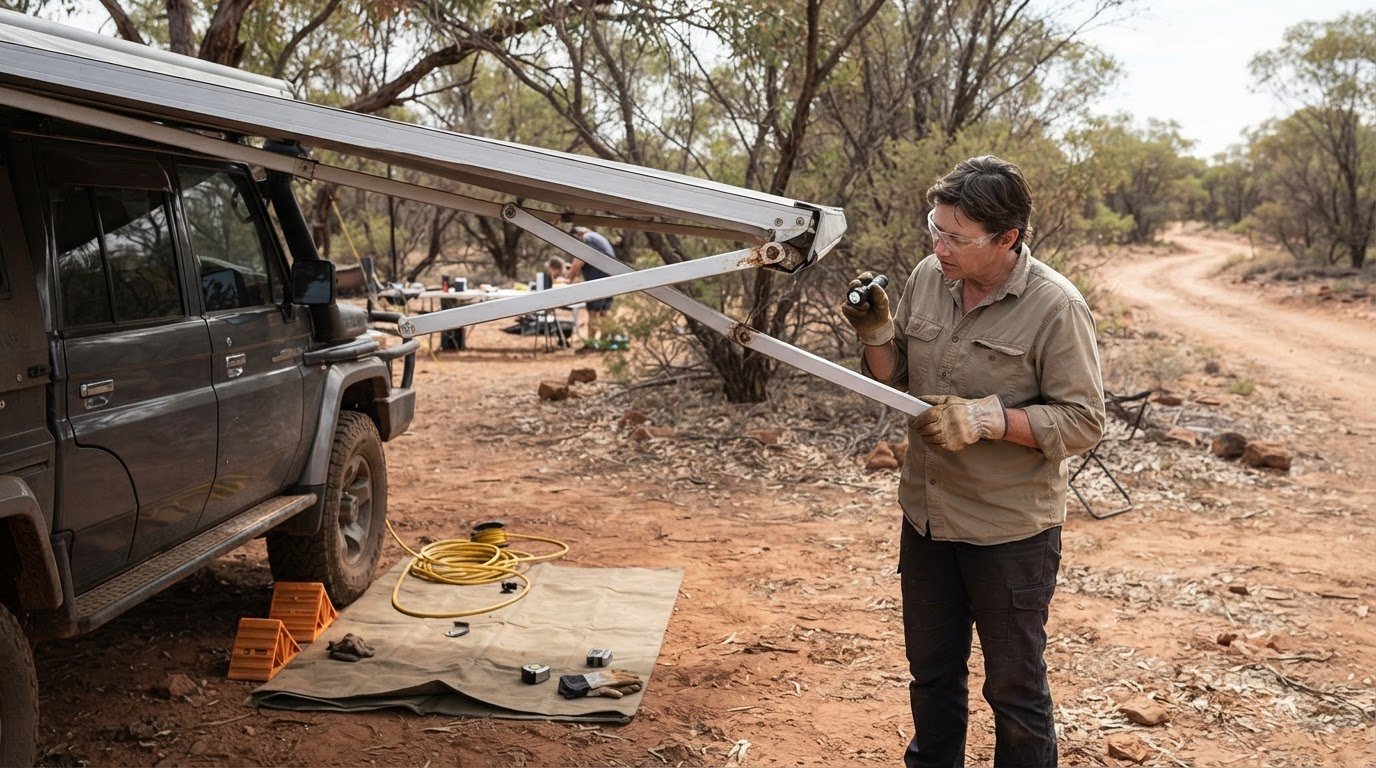
The bay’s secret lies in its massive seagrass meadows. These underwater forests act as nurseries, offering protection and food for juvenile crabs. The unique hydrology of the Moreton Bay Marine Park, where oceanic swells meet river outflows, creates the high-oxygen environment sandies love. Because we value our environment, we always check the latest zoning maps to ensure we aren’t dropping pots in green zones. After a successful day, we love setting up our 4WD awnings back at the campsite to provide shade while we clean our catch, keeping the sun off the meat and our workspace cool while we prep our fresh seafood feast.
Essential Gear for a Successful Crabbing Trip
Getting a result while Sand Crabbing in Moreton Bay depends heavily on your kit. You can’t just throw any old net over the side and expect a bucket full of blue swimmers. We prefer heavy-duty round pots because they sit flat on the sandy floor and won’t roll when the tide starts to rip through the channels. While some old-timers still swear by dillies, they can be harder on the crabs and more prone to tangling. Round pots offer a more reliable entry point for the crabs and are much easier to stack on the boat deck.
Your rope and float setup is your lifeline. We recommend using 6mm leaded rope that sinks, which prevents passing boat props from shredding your gear. A high-visibility float marked with your name and address is a legal requirement in Queensland. Don’t forget a precision gauge. Guessing the 11.5cm mark is a fast way to land a heavy fine. Always double-check the Queensland crabbing regulations before you head out to ensure your gear meets the latest 2026 specifications.
Selecting the Right Crab Pot
If you’re touring in a 4WD, space is usually at a premium. Collapsible rectangular pots are excellent for packing away in your drawers, but they often lack the weight needed to stay put. To stop them from drifting into the shipping channels during a spring tide, we often zip-tie a piece of rebar or a lead weight to the base. If you’re looking for better ways to organize your rig for these trips, check out our guide on the best 4WD accessories for gear storage to keep your wet pots separate from your dry camping gear.
Baiting Strategies That Work
Blue swimmers are scavengers, but they have a refined palate for oily fish. Mullet is our top pick for the 2026 season because it’s tough and holds its scent for hours even in strong currents. Pilchards are great for a quick burst of scent, but they tend to get picked apart by toadfish and bream before the crabs arrive. To maximize your yield, follow these community-tested tips:
- Use bait pouches or cages to keep the bait in the center of the pot.
- Secure the pouch with a heavy-duty clip so it doesn’t slide to the edge where crabs can feed from the outside.
- Fresh bait is always best, but frozen mullet frames are a reliable and cost-effective backup.
Positioning the bait in the exact center of the pot forces the crab to enter fully, increasing your catch rate significantly. Before your next trip, consider how a quality 4WD setup can make sorting through your gear much easier when you’re back at the ramp and prepping your catch.
Rules and Regulations: Navigating the 2026 Legal Landscape
We take our responsibility as stewards of the bay seriously. Staying legal while Sand Crabbing in Moreton Bay ensures our community can enjoy these blue-mottled treasures for generations to come. In Queensland, the rules are clear but strict. Each person is permitted a maximum of four crab pots or dillies at any one time. Every piece of gear must be marked correctly to avoid being classified as “ghost gear.” This means your floats must clearly display the owner’s surname and address. If you’re crabbing from a boat, your pots also need to be marked with your name and address to stay compliant with 2026 standards.
Possession limits are another critical factor. You are allowed a maximum of 20 blue swimmer crabs per person in your possession at any time. This includes what you have in your boat, your car, or even your freezer at home. We always recommend keeping a copy of the current rules on your phone or boat, as fisheries officers are active across the bay and take non-compliance very seriously.
Understanding Size and Gender Restrictions
In Queensland, we only keep the “bucks” (males). Taking a “jenny” (female) is strictly prohibited and carries heavy fines in the 2026 season. This “males only” rule is the engine room of our fishery’s sustainability, allowing females to spawn and replenish stocks. You must ensure every male meets the minimum size limit of 11.5cm. We measure this distance from the notch to notch on the carapace, rather than the tips of the largest spines. If a crab is even a millimetre under, let him go. It is a small price to pay for a healthy, thriving ecosystem.
Zoning and Protected Areas
Moreton Bay is a diverse Marine Park with a complex patchwork of zones. Some areas are “Green Zones” or sanctuary zones where all forms of fishing and crabbing are totally banned. Dropping your pots in these areas isn’t just an expensive mistake; it damages the very nurseries that keep our crab populations high. We use GPS-enabled apps like Qld Fishing 2.0 to track our position against these boundaries in real-time. Before you head out, download the latest zoning maps from the Queensland Government website. Respecting these boundaries is a core part of our “Leave No Trace” ethos and ensures the bay remains a world-class crabbing destination.
Mastering Tides and Locations for Maximum Yield
Success on the water isn’t about luck; it’s about understanding the rhythmic pulse of the ocean. Sand Crabbing in Moreton Bay is a game of chess played against the tide. Blue swimmer crabs are highly mobile hunters that use tidal currents as a conveyor belt to reach their feeding grounds. We’ve found that the “run-in” tide is generally the most productive. As the water level rises, crabs emerge from the deep, cool channels and push onto the shallow sandbanks and seagrass meadows to forage for food. Conversely, the “run-out” tide sees them retreating to the safety of the deep, making it the ideal time to reset your gear.
Identifying the right terrain is just as important as the clock. Look for “drop-offs” where a shallow bank suddenly falls away into a deeper channel. These edges act as natural highways for crabs. By placing your pots along these transitions, you intercept them as they move with the water. Weather also dictates your catch rate. A bit of surface chop can actually help by stirring up nutrients, but heavy rain can push crabs into deeper, saltier water. During the 2026 season, keep an eye on the moon phases. The few days leading up to a full moon often see a spike in activity, though the stronger “spring” currents require extra weight in your pots to prevent them from walking away.
Tidal Timing for the Best Catch
We always aim to have our pots in the water for the last two hours of the incoming tide. This window offers the perfect balance of water depth and manageable current. If you drop your gear when the tide is ripping at its hardest, you risk losing your floats under the surface or having your pots tumble across the seafloor. Use 2026 tide charts to pinpoint these windows. Neap tides, which occur when there’s the least difference between high and low water, are often the easiest to fish because the current is much slower. If you’re looking to upgrade your setup for these conditions, check out our expert gear recommendations to ensure you’re ready for the next big run.
Shore-Based Strategies for Campers
You don’t need a 5-metre plate boat to get amongst the action. Shore-based crabbing is a fantastic way to spend an evening at camp. Many of us use long-handled dip nets to stalk the shallow flats at night with a high-powered headlamp. Look for the glint of their eyes in the clear water. Accessible jetties at Shorncliffe or the banks around Bribie Island are also prime spots for dropping a pot from land. When planning your remote escape, prioritize locations that offer easy access to these tidal flats so you can check your gear without a massive hike. This approach is perfect for those of us who love a low-impact, high-reward adventure right from our doorstep.
The Adventurer’s Setup: Gear Maintenance and Ethical Cleaning
We believe that the adventure doesn’t end when the last pot is pulled. Responsible Sand Crabbing in Moreton Bay requires a commitment to ethical harvesting and meticulous gear care. Once you’ve confirmed your bucks meet the legal requirements we discussed earlier, the focus shifts to preserving the quality of the meat and respecting the environment. The most humane way to prep your catch is by using an ice slurry. Placing crabs in a mix of crushed ice and seawater for at least 20 minutes puts them into a deep sleep; this makes the cleaning process stress-free for the animal and much easier for you.
Managing your waste is where many newcomers trip up. Never dump crab offal or shells at the boat ramp or in shallow swimming areas. It attracts unwanted predators like bull sharks and creates a foul environment for the rest of our community. Instead, wrap your waste and dispose of it in designated bins or take it home for your garden compost. It’s a simple step that anchors our “Leave No Trace” principles and keeps our local ramps clean for everyone.
Cleaning and Cooking Your Catch at Camp
Preserving that sweet, delicate flavor starts with immediate chilling. We always have a dedicated seafood cooler ready to go. When we’re back at the rig, we deploy our shade to create a dedicated prep station. Setting up the perfect camp kitchen under an awning keeps the sun off your catch and provides a breezy, comfortable spot to work. It’s much better than sweating over a hot stove in the direct QLD sun while trying to pick meat from a fresh claw.
Maintaining Your Gear for the Long Haul
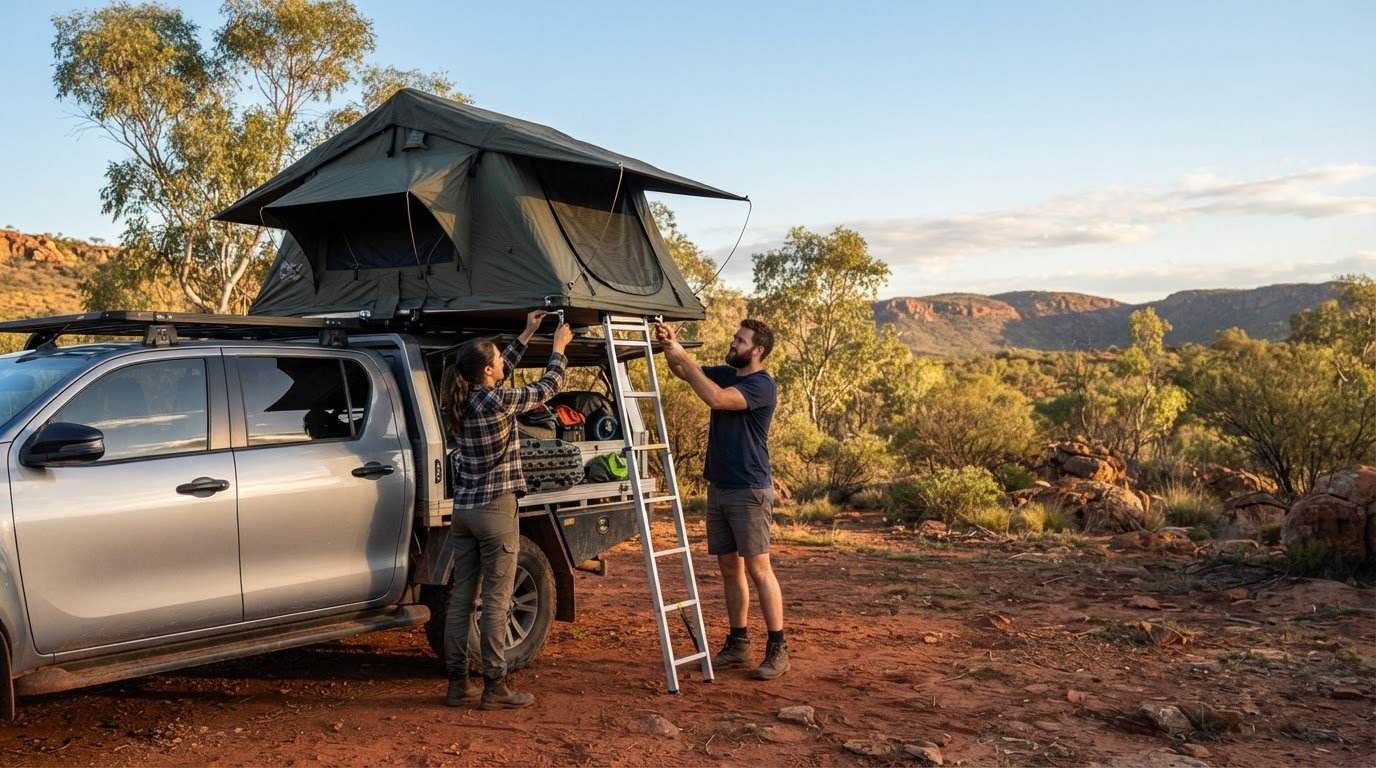
Salt is a silent killer for both your crabbing kit and your vehicle. After every trip, we give our pots, floats, and ropes a thorough rinse with fresh water to prevent salt crystals from weakening the fibers or corroding the metal frames. If you’re touring, storing wet, salty pots inside your car is a recipe for rust and lingering odors. We prefer securing our gear to a roof top tent rack safely where they can air dry as we drive to the next camp. When your nets finally reach the end of their life, don’t just bin them. Look for specialized recycling programs for “ghost nets” to ensure they don’t end up back in the bay’s delicate ecosystem.
Ready for Your Next Bay Adventure?
Mastering Sand Crabbing in Moreton Bay is all about combining local knowledge with the right equipment and a deep respect for our marine environment. We’ve covered the essentials for a successful 2026 season; from identifying legal bucks with a precision gauge to timing your drops with the most productive tidal windows. Remember that success depends on keeping your gear salty and your impact low by sticking to the “males only” rule and managing your waste ethically at camp. Whether you’re stalking the flats with a dip net or dropping heavy-duty pots from the boat, you now have the blueprint for a cracking feed of blue swimmers.
We’re passionate about helping you explore the Australian landscape responsibly. Our team is dedicated to providing expert gear reviews for 4WD enthusiasts and sharing community-first advice for sustainable Australian travel. To stay ahead of the curve with our expert outdoor guides and latest equipment recommendations, Join the Adventurerz community for more expert outdoor guides. We can’t wait to see you out on the water, pulling a full pot and enjoying the best of what the bay has to offer. Good luck and tight lines!
Frequently Asked Questions
Do I need a fishing licence for sand crabbing in Moreton Bay?
No, you don’t need a general recreational fishing licence to enjoy Sand Crabbing in Moreton Bay within tidal waters. Queensland doesn’t require a licence for recreational fishers, but you must strictly adhere to gear restrictions and bag limits. It’s our responsibility to stay updated on current fisheries rules to ensure we’re protecting our local stocks while enjoying the bay.
What is the legal size for a sand crab in Queensland in 2026?
The minimum legal size for a blue swimmer crab in Queensland is 11.5cm. You must measure this distance across the widest part of the carapace from notch to notch, not including the large side spines. We always carry a dedicated plastic crab gauge to ensure our catch is 100% legal before it enters the bucket. Anything under this limit must go back immediately.
Can I catch sand crabs from the beach without a boat?
You can definitely catch sand crabs without a boat by targeting shallow sand flats or public jetties. Many of our community members use long-handled dip nets at night to scoop up crabs in the shallows. Accessible spots like the Shorncliffe Pier or the banks of Bribie Island are perfect for dropping a few pots from land during a high tide.
What is the best month to go crabbing in Moreton Bay?
While sandies are available year-round, the peak season typically runs from September through to April. These warmer months see increased activity as the crabs move into the shallower parts of the bay to feed. We’ve found that the months with an ‘R’ in them are often the most productive, though a warm winter can still yield a decent feed if you find the right channels.
How many crab pots am I allowed to use per person?
You are permitted to use a maximum of four crab pots or dillies per person at any one time. It’s important to remember that this limit is per person, not per boat. If you have three people on board, you can legally have 12 pots in the water. Every pot must be clearly marked with the owner’s name and address on a light-colored float.
Can you keep female sand crabs in QLD?
No, you cannot keep female blue swimmer crabs in Queensland under any circumstances. It is a strict “males only” fishery designed to protect the breeding population. We identify females by their broad, U-shaped abdominal flap on the underside. Even if they aren’t carrying external eggs, they must be released unharmed to ensure the future of Sand Crabbing in Moreton Bay.
What happens if I accidentally set a pot in a Green Zone?
Setting a pot in a Green Zone can result in significant fines and the immediate seizure of your gear by fisheries officers. These sanctuary zones are clearly marked on Marine Park maps and are vital for biodiversity. We recommend using the Qld Fishing 2.0 app to track your live GPS position against these boundaries so you never accidentally drop a pot in a protected area.
What is the best bait for blue swimmer crabs?
Oily fish like mullet frames or pilchards are the most effective baits for attracting blue swimmers. The high oil content creates a strong scent trail that crabs can follow from a long distance. We like to use bait pouches to keep the bait secure and prevent smaller fish from picking it apart before the crabs have a chance to enter the pot.