Could you successfully navigate 1,136 parallel sand dunes while being hundreds of kilometers from the nearest mechanical workshop? It’s a question that keeps even the most seasoned off-roaders up at night when they first consider tackling Munga-Thirri. We understand the weight of that responsibility. We know you’re likely balancing the excitement of the outback with the very real fear of a breakdown in 50-degree heat or miscalculating your fuel range on the French Line. That’s why we’ve crafted this comprehensive Simpson Desert crossing guide to ensure your 2026 expedition is defined by breathtaking sunsets rather than preventable emergencies.
We believe that true adventure requires a blend of rugged self-reliance and deep respect for the fragile desert environment. In this manual, we’ll master the essentials of vehicle preparation and the critical safety gear you need, like high-visibility flags and Channel 10 radio protocols. We’ll also dive into water management strategies and route selection to help you find the perfect balance between challenge and comfort. By the time we’re finished, you’ll have the expert knowledge to cross the desert from west to east with total confidence in your gear and your footprint. Let’s get your rig ready for the red sand.
Key Takeaways
- Understand the non-negotiable seasonal closure dates to ensure your 2026 expedition avoids the dangerous peak summer heat.
- Learn how to balance vehicle weight and mechanical capability to protect both your suspension and the sensitive desert environment.
- Use our expert Simpson Desert crossing guide to choose between the iconic French Line or the gateway dunes of the QAA Line.
- Master the critical survival protocols and water calculations needed to maintain total self-sufficiency in the heart of Munga-Thirri.
- Discover the strategic advantages of convoy travel and how connecting with our community of explorers enhances your remote safety.
Table of Contents
What is a Simpson Desert Crossing? Understanding Munga-Thirri
A crossing of the Simpson Desert is more than just a drive. It is a 400km to 550km off-road expedition through the heart of the world’s largest parallel sand dune system. Known as Munga-Thirri, this landscape contains 1,136 dunes that run north to south, creating a rhythm of ascent and descent that tests every part of your vehicle. We view this journey as a low-range, high-focus commitment. You won’t find corner stores or mobile reception out here. Total self-sufficiency is the baseline for entry. Every drop of fuel and liter of water must be accounted for before you leave the pavement behind.
We are guests on this ancient land. Munga-Thirri holds profound cultural significance for the Wangkangurru Yarluyandi people, the traditional owners who have maintained a connection to this country for millennia. Respecting their heritage and the fragile desert ecology is a core part of our mission. If you are mapping out your 2026 itinerary, you must account for the strict seasonal closure. The park is closed from December 1st to March 15th every year. These dates aren’t negotiable. Extreme summer heat makes recovery impossible and survival unlikely, so we plan our adventures for the cooler months when the desert is at its most welcoming.
The 2026 Permit and Access Requirements
Getting your paperwork sorted is your first step toward the dunes. For the South Australian sections, a 12-month Desert Parks Pass is currently $204.00 and covers your entry and camping fees. You will also need to secure specific Queensland permits if your route takes you into Munga-Thirri-Simpson Desert National Park near Birdsville. Always check the official National Parks websites for last-minute track closures due to rain or flooding. Safety is a community responsibility, and that starts with visibility. All vehicles must be fitted with a high-visibility sand flag that sits 3.5 meters off the ground if bull-bar mounted, or 2 meters above the roof line if rack-mounted.
Why We Cross: The Rite of Passage
Why do we push ourselves and our equipment to the limit? It’s the lure of total isolation and the chance to build genuine resilience. There is nothing quite like the silence of a desert night or the shared triumph of reaching the summit of Big Red as the sun sets. We cross to disconnect from the grind and reconnect with the raw beauty of the Australian heartland. This Simpson Desert crossing guide is designed to help you navigate those challenges while fostering a deep sense of fellowship with your convoy. It’s about the stories told over the UHF on Channel 10 and the pride of a successful, damage-free expedition. Let’s make sure you’re ready for the red sand.
Preparing Your Rig: Essential 4WD Gear and Maintenance
Preparing for a crossing isn’t just about packing a bag. It’s about engineering your vehicle to survive one of the harshest environments on Earth. Any reliable Simpson Desert crossing guide will tell you that preparation starts months before you hit the sand. We focus our pre-trip inspections on three critical areas: cooling systems, suspension, and CV joints. The desert heat will find every weakness in your radiator or hoses. Meanwhile, the relentless corrugations will punish stock shock absorbers. We recommend a heavy duty suspension upgrade to handle the constant cycling of the dunes without fading.
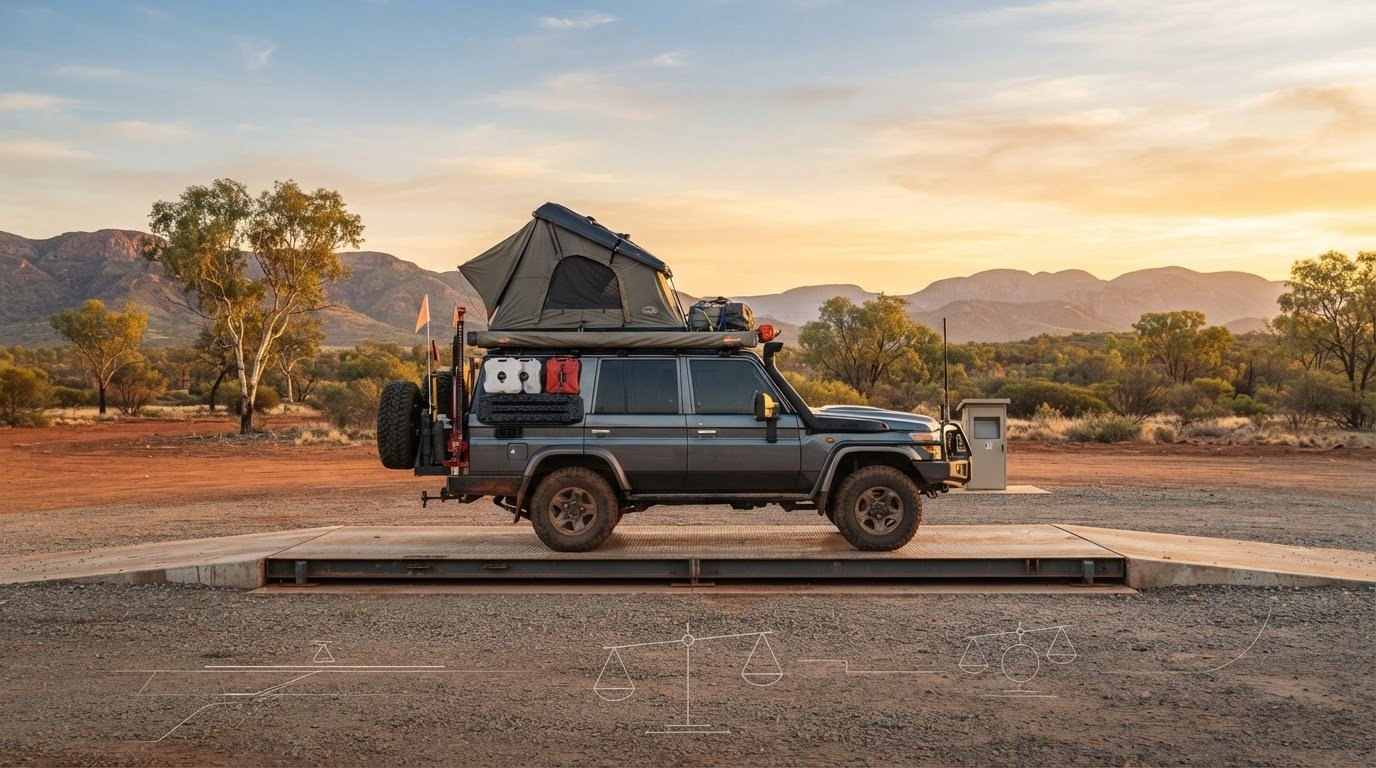
Overloading is the silent killer of desert expeditions. We often see a “Weight vs. Capability” conflict where explorers pack everything but the kitchen sink. A heavy rig sinks deeper into the soft sand, requiring more momentum and higher fuel consumption. We aim for a “light as possible, strong as necessary” philosophy. For your fluids, apply the 10% safety margin rule. If your calculations suggest you need 150 liters of diesel to reach Birdsville, carry 165. For water, the baseline is seven liters per person, per day. You can find more details on current conditions through the Munga-Thirri–Simpson Desert National Park (SA) official site.
Tire pressure is your most powerful tool in the dunes. We generally find that 15 to 20psi is the “sweet spot” for most loaded 4WDs. Lowering your pressure increases your tire’s footprint, allowing you to float over the sand rather than digging into it. Just remember to keep your speed down to prevent heat buildup in the sidewalls.
Campsite Comfort: Roof Top Tents and Awnings
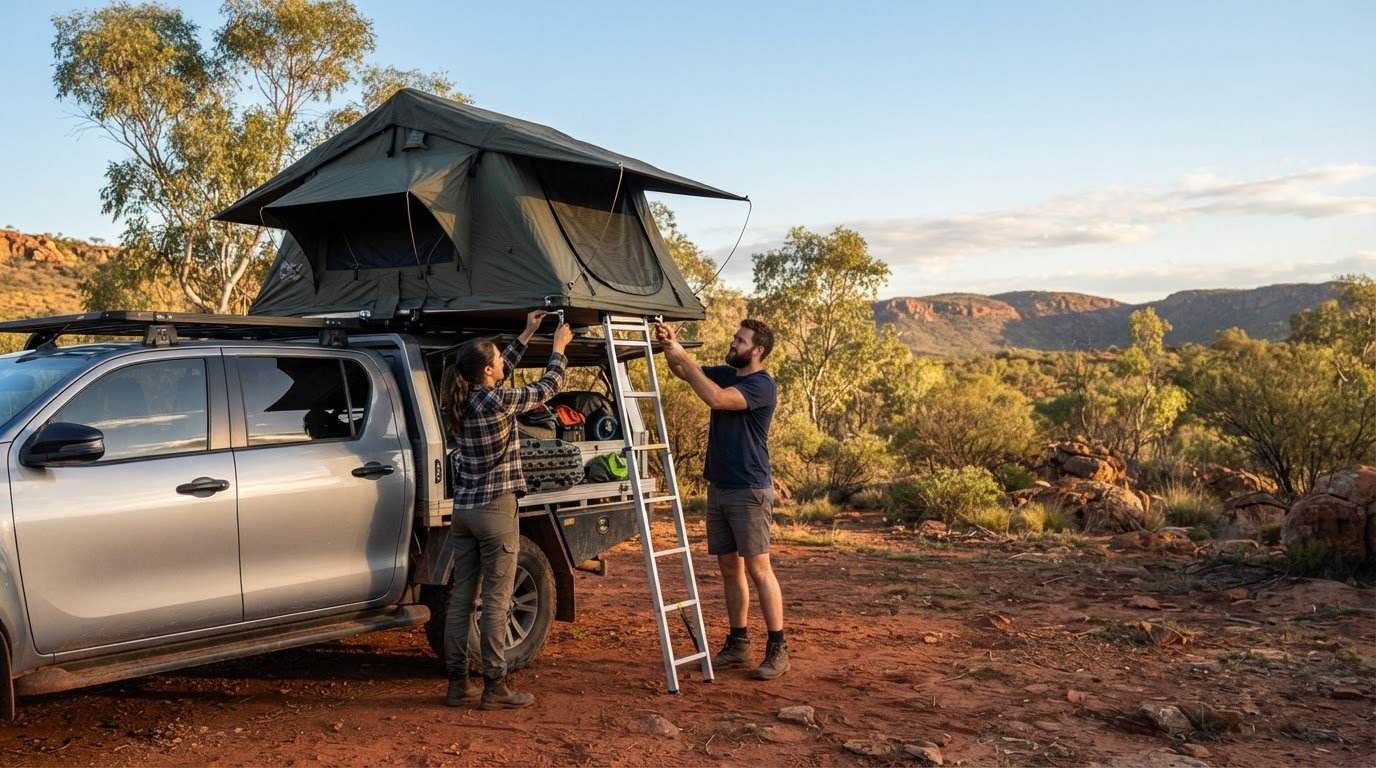
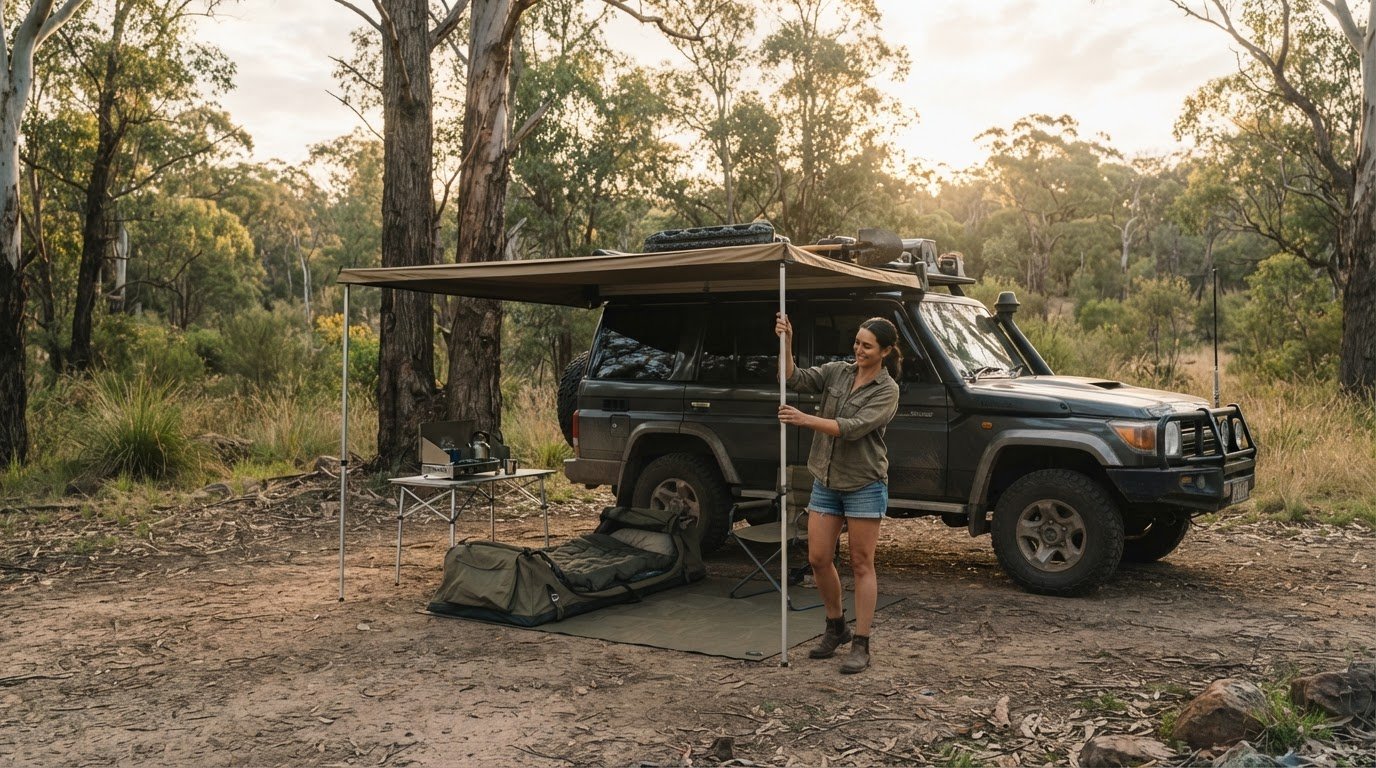
Living in the desert for a week requires a smart camp setup. We consider roof top tents the gold standard for safety in this region. They keep our community members high above the ground, away from inquisitive dingoes or nocturnal snakes. Thermal management is equally important. When the midday sun is high, a high-quality 4WD awning provides the only shade for hundreds of kilometers. We value gear that sets up in under a minute. After ten hours of low-range driving, you’ll appreciate a 30-second tent deployment. If you’re still deciding on your shade setup, we’ve reviewed the most durable options to help you stay cool.
Recovery Gear and Spares
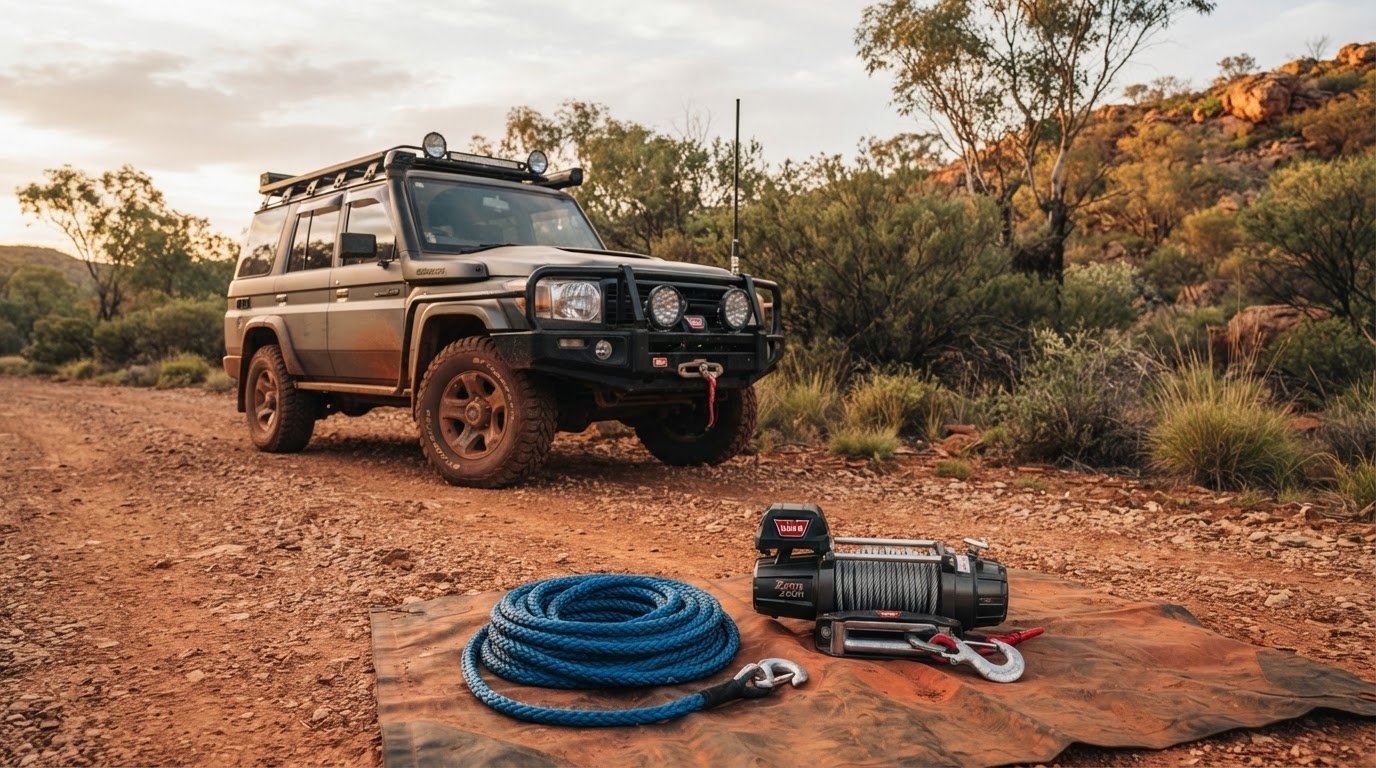
Self-reliance is mandatory. Your kit must include a long-handled shovel, snatch straps, and a set of recovery boards. We also carry a “desert spares” box containing fan belts, radiator hoses, and a comprehensive tool kit. While UHF Channel 10 is great for convoy chatter, 2026 has seen a massive shift toward satellite messengers like Zoleo or InReach. These devices allow us to send “all clear” messages to family even when we’re in the deepest swales of the French Line. Don’t leave home without a way to call for help that doesn’t rely on a cell tower.
Choosing Your Track: French Line, Rig Road, and Beyond
Selecting your path is the most exciting part of any Simpson Desert crossing guide. We know the thrill of looking at a map and seeing those long, red lines stretching across the void. Most of our community members start with the iconic French Line. It is the most direct route, but it’s also the most punished. Thousands of vehicles have scalloped the dune faces and created heavy corrugations that will test every bolt on your rig. If you want the classic experience of cresting dune after dune in a relentless rhythm, this is your track.
For those carrying a bit more weight or seeking a different pace, the Rig Road offers a unique alternative. Built for oil exploration, many of these dunes were clay-capped decades ago. This provides a firmer surface that is often better for heavier vehicles. If you’re looking for solitude, we often point explorers toward the WAA Line or the K1 Line. These tracks see far less traffic than the main “highway” and offer a more intimate connection with the desert’s shifting colors and hardy vegetation. Every crossing eventually leads to the QAA Line, the final gateway to Birdsville and the home of the legendary Big Red dune.
Route Comparison: Difficulty vs. Scenery
| Route Name | Difficulty | Key Feature | Best For |
|---|---|---|---|
| French Line | High | 1,100+ Dunes | First-timers seeking the icon |
| Rig Road | Moderate | Clay-capped dunes | Heavier rigs and trailers |
| WAA Line | Moderate | Scenic diversity | Solitude and photography |
| Madigan Line | Extreme | Remote navigation | Expert-level convoys only |
The Madigan Line is a different beast altogether. It follows the 1939 route of explorer Cecil Madigan and lacks a defined track in many sections. We only recommend this for expert convoys with advanced navigation skills and extra fuel capacity. If you’re entering from the south, the Warburton Track provides a stunning approach near Lake Eyre, though it’s prone to flooding that can change your plans in an instant.
Navigation and Mapping in 2026
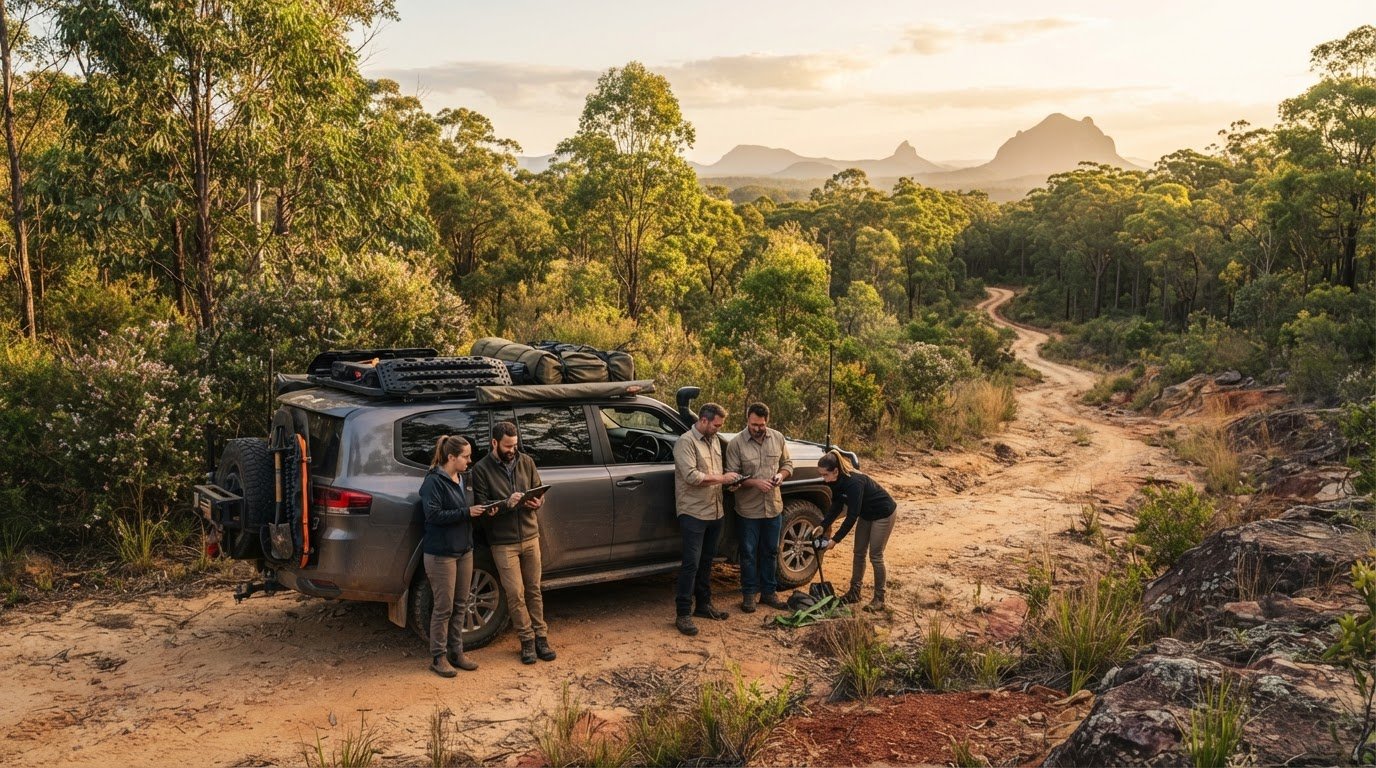
Digital tools have revolutionized how we travel, but they aren’t foolproof. We rely on Hema or Gaia for real-time GPS tracking, but paper backups are non-negotiable for our community. Electronics can fail in the 50-degree heat, and a paper map doesn’t need a battery. We plot our journey around the “Golden Triangle” of fuel stops: Oodnadatta, Mt Dare, and Birdsville. These outposts are our lifelines. GPS alone is insufficient without local track knowledge and an understanding of how recent weather has shifted the dunes. We always check in with local rangers or publicans to get the most current “ground truth” before we lower our tire pressures and head into the sand.
Desert Survival and Leave No Trace Ethics
Survival in Munga-Thirri is a matter of discipline. While we’ve already covered vehicle prep and track selection, your mental checklist is just as vital for a safe expedition. The absolute #1 rule in this Simpson Desert crossing guide is simple: always stay with your vehicle. If you suffer a major mechanical failure or get lost, your rig is your only source of shade, your water storage, and the easiest target for search planes to spot. Never wander off looking for help. We also maintain a strict water protocol. You need a minimum of seven liters per person, per day. For 2026, we also mandate a three-day emergency reserve. If a four-day crossing turns into seven due to unseasonal rain or a snapped axle, that extra 21 liters per person becomes your most precious asset.
Respecting the land means acknowledging the Traditional Custodians. We are traveling through the ancestral home of the Wangkangurru Yarluyandi people. This means staying on designated tracks and never entering restricted or sacred areas. Environmental ethics have evolved quickly. In 2026, “digging a hole” for human waste is no longer an acceptable standard in high-traffic desert zones. We use portable chemical toilets to ensure we leave nothing behind but tire tracks. This commitment to stewardship ensures the desert remains pristine for the next generation of our community.
Emergency Protocols and the RFDS
When things go wrong, a Personal Locator Beacon (PLB) is your final line of defense. We only trigger these in life-threatening situations where self-recovery is impossible. Once activated, the Royal Flying Doctor Service (RFDS) or local search and rescue teams are notified. Remember that a desert medical recovery is a massive logistical operation. We also train for heatstroke prevention and snake bite management. Keeping a high-quality first aid kit within reach of the driver’s seat is a community standard we never ignore.
Sustainable Camping in Munga-Thirri
Our footprint matters. Firewood is a major concern. You must bring your own wood from outside the park boundaries. Scavenging for fallen timber destroys the habitat of small desert mammals and reptiles that rely on that wood for protection. We also follow a strict “Pack it in, Pack it out” philosophy. This includes every scrap of food waste and every piece of plastic. The fragile dune vegetation takes years to recover from a single stray tire, so we never blaze new trails. If you’re looking for more ways to explore responsibly, check out our latest adventure ideas in Australia to plan your next sustainable getaway.
Planning Your Expedition with the Adventurerz Community
We believe that no explorer should have to face the vastness of Munga-Thirri alone. While this Simpson Desert crossing guide provides the technical foundation, the human element is what transforms a difficult trek into a lifelong memory. We’ve seen firsthand how a well-prepared convoy can turn a mechanical setback into a shared triumph. Planning a 2026 expedition requires more than just a list of parts; it requires a network of peers who understand the unique demands of the red sand and the importance of supporting one another in the wild.
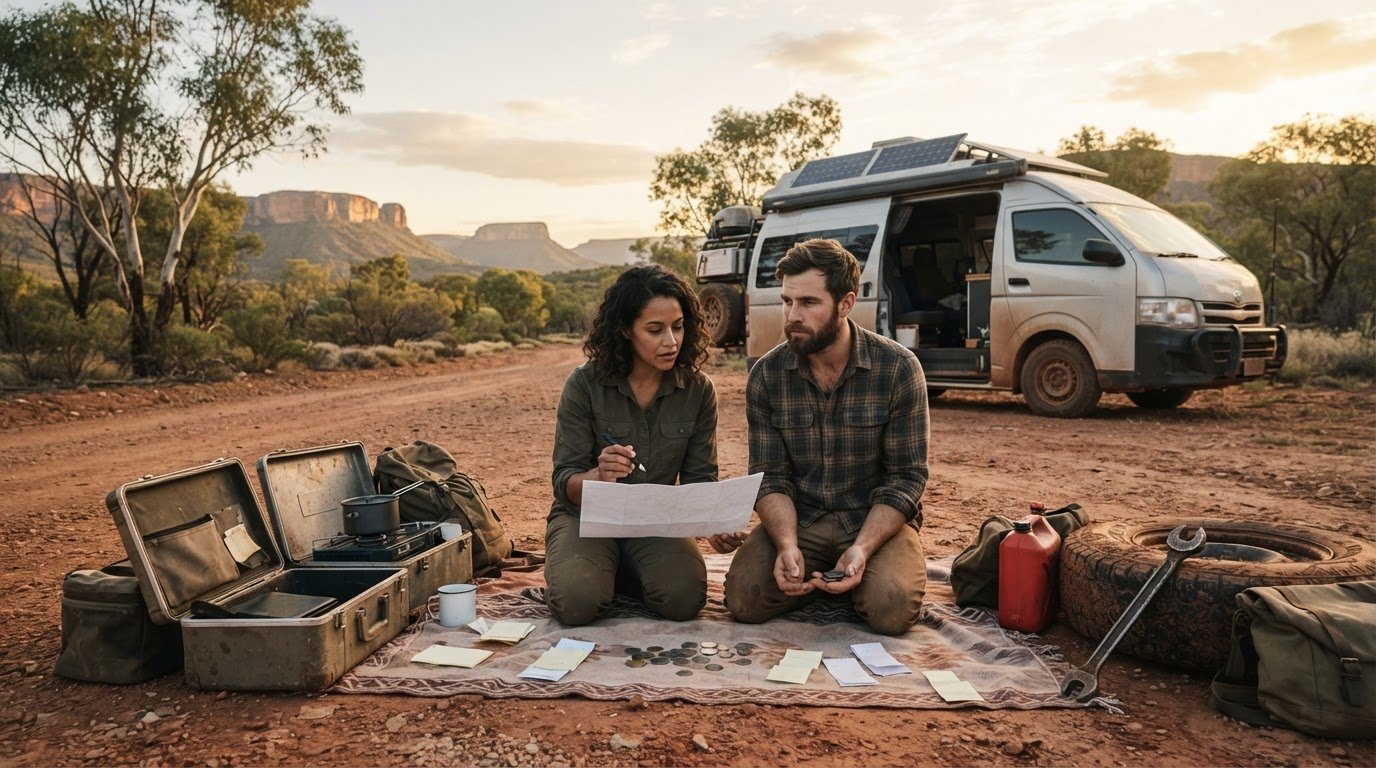
To streamline your preparation, we recommend leveraging The Ultimate Adventure Travel Planner. This tool helps you map out your itinerary with precision, ensuring your fuel stops and campsite locations are optimized for your vehicle’s range. It’s the same system we use to coordinate our own remote escapes. By using a structured approach, you reduce the anxiety of the unknown and leave more room for the joy of exploration. It’s about being methodical in the shed so you can be daring on the dunes.
While some crave the ultimate test of a solo crossing, we strongly advocate for convoy travel. A solo trip carries significant risk in the heart of the desert. If your starter motor fails or you lose a bead on a dune face, having a second vehicle isn’t just a convenience; it’s your primary safety net. You can find reliable travel partners through our community hub. We’ve built this space specifically so you can connect with fellow Adventurerz who share your skill level and your commitment to environmental ethics. Don’t underestimate the power of a shared fire and a second set of eyes on a recovery.
As your departure approaches, follow our 48-hour countdown checklist to ensure nothing is left to chance:
- Perform a final fluid check under the hood, looking for fresh leaks or weeping hoses.
- Calibrate your tire pressure gauge and test your compressor’s high-heat performance.
- Download all offline maps and sync your satellite messenger with your emergency contacts.
- Confirm your convoy’s UHF channel and review the daily lead-vehicle rotation.
- Ensure your PLB is registered and the battery is within its service life.
Joining the Community Hub
Our hub is the pulse of the expedition community. Here, you can access real-time track conditions and honest trip reports from those who just crested Big Red. It’s also the place for peer-to-peer advice on specialized 4WD accessories and gear durability. After days of dust and low-range driving, many of us look forward to a little indulgence. We provide member-only reviews for the best resorts in Australia to help you plan a well-earned post-trip recovery once you leave the sand behind.
Next Steps: From Planning to Pavement
Before you turn the key, ensure your travel insurance includes specific remote area recovery coverage. This is essential for 2026 as recovery costs in the desert continue to rise. Keep a close eye on the 2026 weather forecasts as your window approaches. A single rain event can turn the Simpson into an impassable bog, so stay flexible and ready to pivot. Join the discussion in our hub today and let’s get your 2026 expedition off the drawing board and onto the sand. The desert is calling, and we’re ready to help you answer.
Master the Dunes and Claim Your Adventure
Crossing Munga-Thirri is a transformative experience that demands both technical precision and mental grit. We’ve explored the critical importance of vehicle weight management and the necessity of total self-sufficiency in the world’s largest parallel sand dune system. By choosing the right track and respecting the seasonal closures, you’re setting yourself up for an expedition that is as safe as it is spectacular. This Simpson Desert crossing guide has prepared you for the mechanical challenges, but the true reward lies in the silence of the desert night and the fellowship of your convoy.
We’re here to support every step of your journey with expert 4WD gear recommendations and community-vetted remote travel guides. Our shared commitment to sustainable Australian exploration ensures we leave this ancient landscape exactly as we found it. It’s time to stop dreaming about the red sand and start making it a reality. Start planning your 2026 Simpson expedition with our Adventure Travel Planner and join a community of explorers who value durability and environmental stewardship. The dunes are calling. We’ll see you at the top of Big Red!
Frequently Asked Questions
Do I need a 4WD for a Simpson Desert crossing?
You absolutely need a high-clearance 4WD vehicle with low-range capabilities to tackle Munga-Thirri. Soft sand dunes like Big Red and the relentless corrugations on the French Line would destroy a standard AWD or 2WD vehicle. We recommend a rig with upgraded suspension and cooling systems to handle the stress of the 1,136 dunes. Proper ground clearance is vital to avoid high-centering on the sharp dune crests.
How much fuel do I need to carry for the Simpson Desert?
We suggest calculating your fuel based on a distance of at least 600 kilometers with a 20% safety margin. Sand driving significantly increases consumption; it often doubles your standard highway rates. If your vehicle usually uses 12L/100km, plan for 25 to 30L/100km in the dunes. Always carry enough to reach Birdsville even if you have to backtrack or detour due to unseasonal flooding.
Is it safe to cross the Simpson Desert solo?
We don’t recommend solo crossings due to the extreme isolation and the total lack of recovery services within the park. If you suffer a major mechanical failure or a medical emergency, having a second vehicle in your convoy is your primary safety net. If you must go solo, you’ll need a satellite phone, a PLB, and enough supplies to wait out a rescue that could take several days to arrive.
What is the best time of year to cross the Simpson Desert?
The best window for your expedition is between May and August when temperatures are manageable for both people and machinery. The park is legally closed from December 1st to March 15th every year due to life-threatening summer heat. Even in April or September, the sand can be extremely soft and the flies are often relentless, so we aim for the cooler winter months for maximum comfort.
How many days does it take to cross the Simpson Desert?
A standard crossing typically takes a minimum of four days, though we prefer five or six to truly connect with the outback. This allows for a relaxed pace, plenty of photography, and time to manage any minor mechanical tweaks. Pushing too hard increases the risk of vehicle damage and takes away from the experience of camping under the desert stars. Slowing down is the best way to appreciate the shifting colors of the dunes.
Can I take a trailer or caravan across the Simpson Desert?
You cannot take a standard caravan across the dunes, and we generally discourage trailers on the French Line. While specialized off-road camper trailers can make the trip, they place immense strain on your vehicle’s cooling and transmission systems. If you choose to tow, ensure your trailer has a matching wheel track and that you are an expert at sand recovery. Many of our community members prefer a simpler setup to keep their rig light and agile.
What permits are required for the Simpson Desert in 2026?
You’ll need a South Australian Desert Parks Pass, which currently costs $204.00 for 12 months of access. This pass is mandatory for entry into Munga-Thirri-Simpson Desert National Park and includes all your camping fees. If your route includes the Madigan Line, you’ll also need a separate permit from the Central Land Council to respect traditional land boundaries. Always keep digital and physical copies of your permits ready for ranger inspections.
Is there mobile phone coverage in the Simpson Desert?
There is zero mobile phone coverage once you leave the outskirts of Oodnadatta, Mt Dare, or Birdsville. We rely on UHF Channel 10 for convoy communication and satellite technology for long-distance emergencies. This Simpson Desert crossing guide emphasizes carrying a Zoleo or InReach device so you can stay in touch with loved ones and call for help if your rig hits a snag in the deep swales. Don’t rely on your phone for navigation or safety.