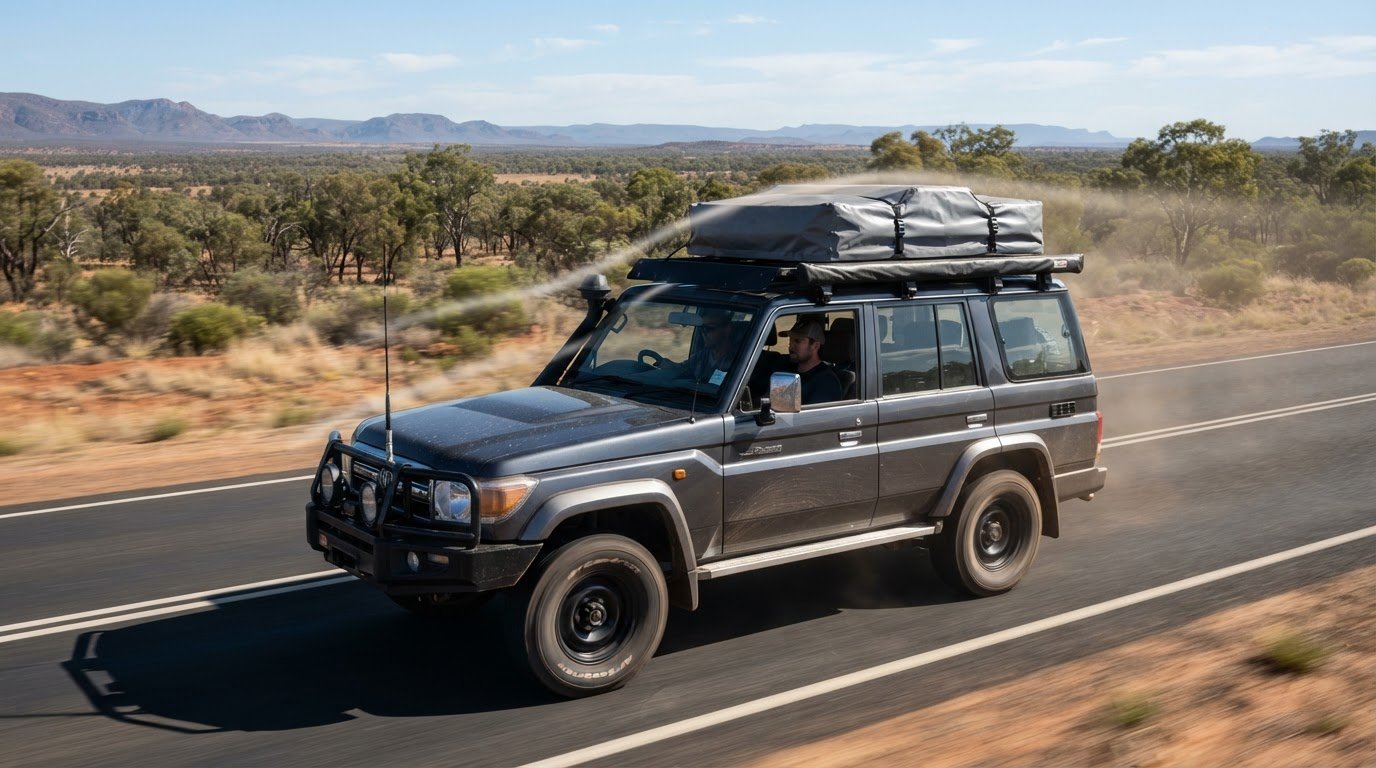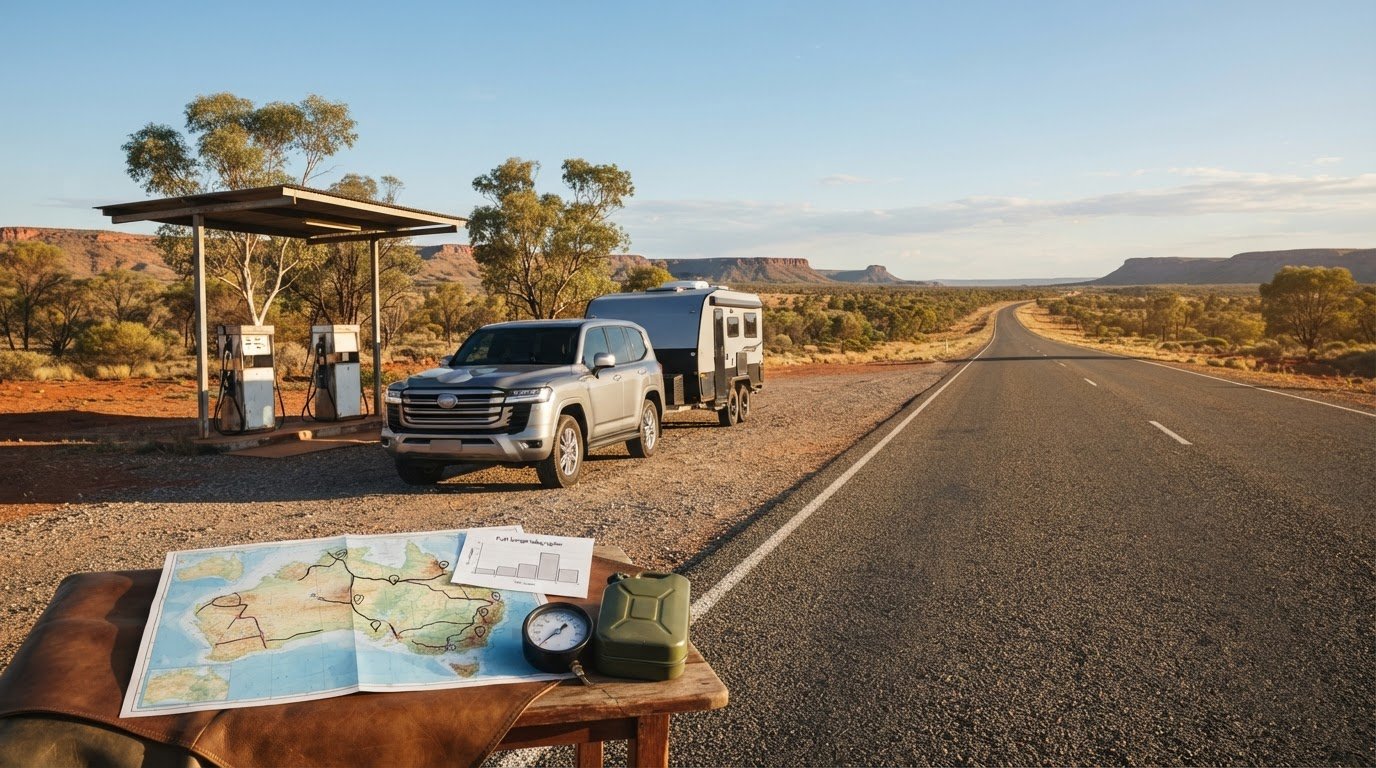
Imagine you’ve finally reached that pristine, remote campsite deep in the bush, only to find your 12V fridge has cut out. Finding the best portable power station for camping Australia requires gear that can handle the relentless 40-degree heat without breaking a sweat! We’ve all felt that sting of gear failure, and we agree that navigating confusing Wh versus Ah ratings is the last thing any fellow Adventurerz wants to do when planning an epic escape into the wild.
You deserve a power source that’s silent, lightweight, and perfectly integrated with your solar panels so you can enjoy the serenity of the outback. We’re going to show you exactly which high-capacity units are durable enough for the rugged Australian landscape and how to integrate them into your modern rooftop tent setup. Our goal is to ensure you stay powered up while maintaining the environmental ethics that keep our tracks beautiful for the next generation.
We’ll break down the top-rated 2026 models from brands like EcoFlow and Bluetti, explain the crucial safety shifts in LiFePO4 technology, and help you size a system that keeps your gear running through the hottest summer nights!
Key Takeaways
- Switch from noisy petrol generators to silent lithium units to enjoy the peace of the bush while meeting strict national park noise regulations.
- Master the technical gear check by understanding how Watt-hours and continuous AC output dictate exactly which appliances your setup can handle.
- Find the best portable power station for camping Australia that fits your GVM limits and provides enough capacity for your specific fridge and lighting needs.
- Optimise your off-grid efficiency by using MPPT solar charging and heat-management strategies designed for the intense Australian summer.
- Access our expert 2026 verdict on the most durable units that offer local support and reliable performance in isolated locations.
Table of Contents
- Beyond the Generator: Why Portable Power Stations are the 2026 Camping Standard
- The Technical Gear Check: Decoding Wh, Ah, and Inverter Ratings
- Sizing Your Setup: From Weekend Swags to Full 4WD Touring
- Maximising Efficiency: Solar Input, Fast Charging, and Heat Protection
- The Adventurerz Verdict: Top-Tier Recommendations for the Aussie Bush
Beyond the Generator: Why Portable Power Stations are the 2026 Camping Standard
The days of hauling heavy, smelly petrol cans into the bush are officially behind us. For our Adventurerz community, finding the best portable power station for camping Australia means embracing a cleaner, quieter future. These units are an all-in-one powerhouse: a high-capacity lithium battery, a pure sine wave inverter, and a smart charge controller packed into a single, rugged box. By 2026, the industry has shifted almost entirely toward LiFePO4 (Lithium Iron Phosphate) chemistry. This isn’t just about weight; it’s about safety and longevity. These batteries now offer over 2,500 cycles to 80% capacity, ensuring your investment lasts for years of remote exploration.
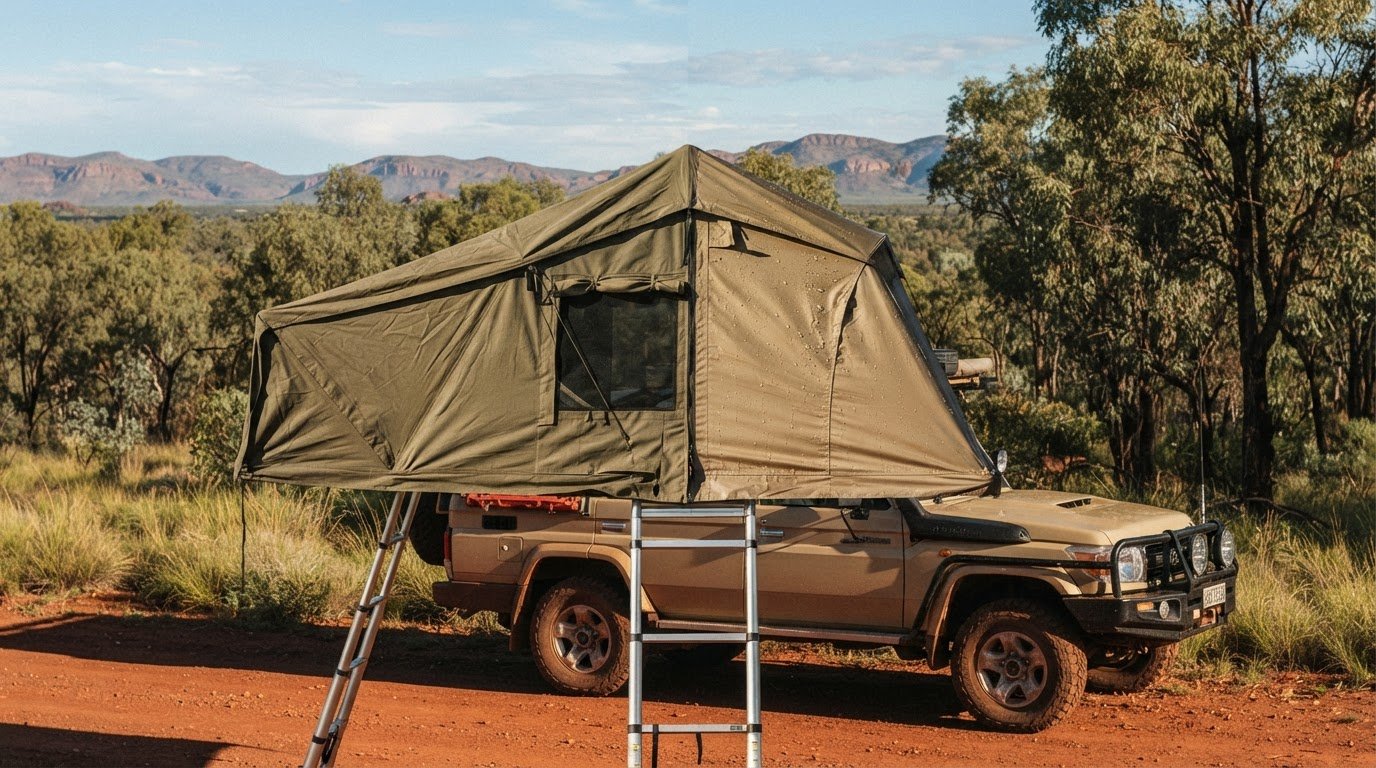
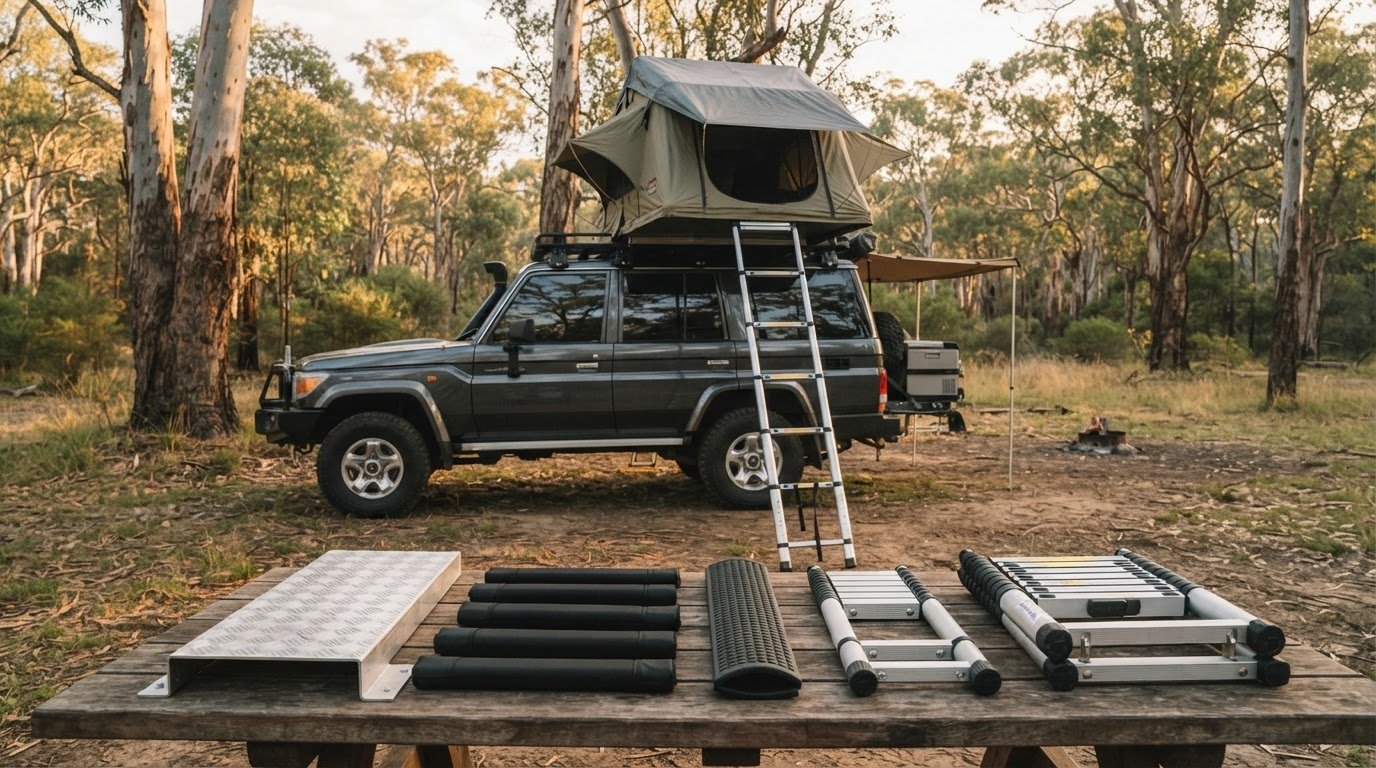
Understanding Solar generator technology helps us see why these units are so revolutionary. They allow us to capture the sun’s energy and store it without the mechanical failure points of traditional engines. This technology is a critical component for any modern roof top tent setup, providing reliable energy for fridges and lights without the need for complex vehicle modifications.
To better understand how these systems perform in the wild, watch this helpful video:
The Death of the Petrol Generator in National Parks
We’ve seen a massive shift in how we share our natural spaces. Many national parks across the country now strictly limit or ban internal combustion generators to preserve the silence of the outback. Where generators are still permitted, strict noise limits and output restrictions are often in place to protect the environment. Petrol units are loud, they emit fumes, and they require carrying flammable fuel. Switching to a portable power station supports our collective “leave no trace” ethos. It allows us to run our gear in total silence, respecting both the local wildlife and our camping neighbours. It’s the ultimate tool for sustainable, community-oriented travel!
Portable Power vs. Traditional 4WD Dual Battery Systems
Don’t let technical jargon stand between you and a perfectly powered campsite. When you’re hunting for the best portable power station for camping Australia, you’ll encounter a lot of numbers that seem designed to confuse. Think of Watt-hours (Wh) as the size of your fuel tank. It tells you the total amount of energy stored inside. While many older systems used Amp-hours (Ah), this can be a trap when comparing different units. A 100Ah battery at 12V has much less energy than a 100Ah battery at 24V. Stick to Wh for an apples-to-apples comparison of total capacity.
The second half of the puzzle is the inverter. This component converts stored DC battery power into the 240V AC power your household plugs need. It’s vital to ensure your unit features a Pure Sine Wave inverter. Modified sine wave units are cheaper but can “dirty” the power, potentially damaging sensitive electronics like laptops, Starlink terminals, or drone chargers. Before you commit, check out our expert gear reviews to see how different brands perform under real-world pressure.
Watt-Hours (Wh) vs. Real-World Run Times
To calculate your run time, we use the “80% rule” for battery health. Even though modern LiFePO4 cells are hardy, consistently draining them to zero isn’t ideal. If you have a 1000Wh unit, treat 800Wh as your usable “safety zone.” A typical 50L camping fridge draws about 15Wh to 30Wh per hour depending on the ambient temperature. In a standard Aussie summer, that 1000Wh station will comfortably run your fridge for about 30 to 40 hours without any solar input. Use this simple formula: (Total Wh x 0.8) / Daily Device Draw = Your off-grid limit.
Inverter Capacity: What Can You Actually Plug In?
The inverter rating, measured in Watts (W), determines which appliances can run simultaneously. Small units around 300W are great for charging phones or running a small fan, but they’ll fail the moment you plug in a coffee machine or a hair dryer. For most Australian 4WD tourers, the “sweet spot” is an inverter between 1000W and 1500W. This allows you to run most kitchen appliances and even small power tools. If you’re planning on using an induction cooktop, you’ll likely need a heavy-duty unit with a 2000W+ continuous output to handle the massive initial draw. Always check the “surge” or “peak” rating too, as items like water pumps need a momentary burst of extra power to start up. This level of planning is what makes a setup the best portable power station for camping Australia for your specific needs.
Sizing Your Setup: From Weekend Swags to Full 4WD Touring
Choosing the right size is about more than just capacity. It’s a strategic decision that directly impacts your vehicle’s Gross Vehicle Mass (GVM). Every kilogram counts when you’re loaded for the bush, and hauling a massive battery you only use 10% of is a waste of precious payload! We generally categorise units into three tiers: Small (under 500Wh), Medium (500-1500Wh), and Large (1500Wh+). While small units are fantastic for minimalist hikers, most of our community finds the best portable power station for camping Australia sits in the medium or large category to combat the energy-sapping Aussie heat.
Your trip duration is the ultimate guide here. An overnight stay requires very little, but as soon as you hit the three-day mark, your power strategy must change. For those of us using modern roof top tents, having a portable power source is a game-changer. It allows you to run integrated internal lighting and 12V fans throughout the night without worrying about draining your vehicle’s starter battery. It’s all about matching the gear to the mission.
The Weekend Warrior: 500Wh to 1000Wh
This range is the absolute sweet spot for a classic 48-hour escape. These units are light enough to move easily but have enough “fuel” to run a 50L fridge, charge your phones, and power your LED camp lights for a full weekend. They are perfect for adventurers who don’t want the hassle or expense of a permanent 12V dual-battery installation. If you’re currently mapping out your next trip, check out our travel planner to help align your power needs with your specific itinerary.
The Remote Tourer: 1500Wh and Beyond
When you’re heading into the truly isolated corners of the country for indefinite periods, you need serious storage. Large units are essential if you’re running a fridge/freezer combo or high-draw kitchen appliances like induction cooktops. Many 2026 models now feature modular expansion batteries, which are brilliant for those who like to set up a base camp for a week at a time. Just remember that these larger capacities require high-wattage solar input to stay topped up. You’ll need at least 200W to 400W of solar panels to ensure you aren’t just delaying the inevitable flat battery. This setup represents the best portable power station for camping Australia for those who value total self-reliance in the wild.
Maximising Efficiency: Solar Input, Fast Charging, and Heat Protection
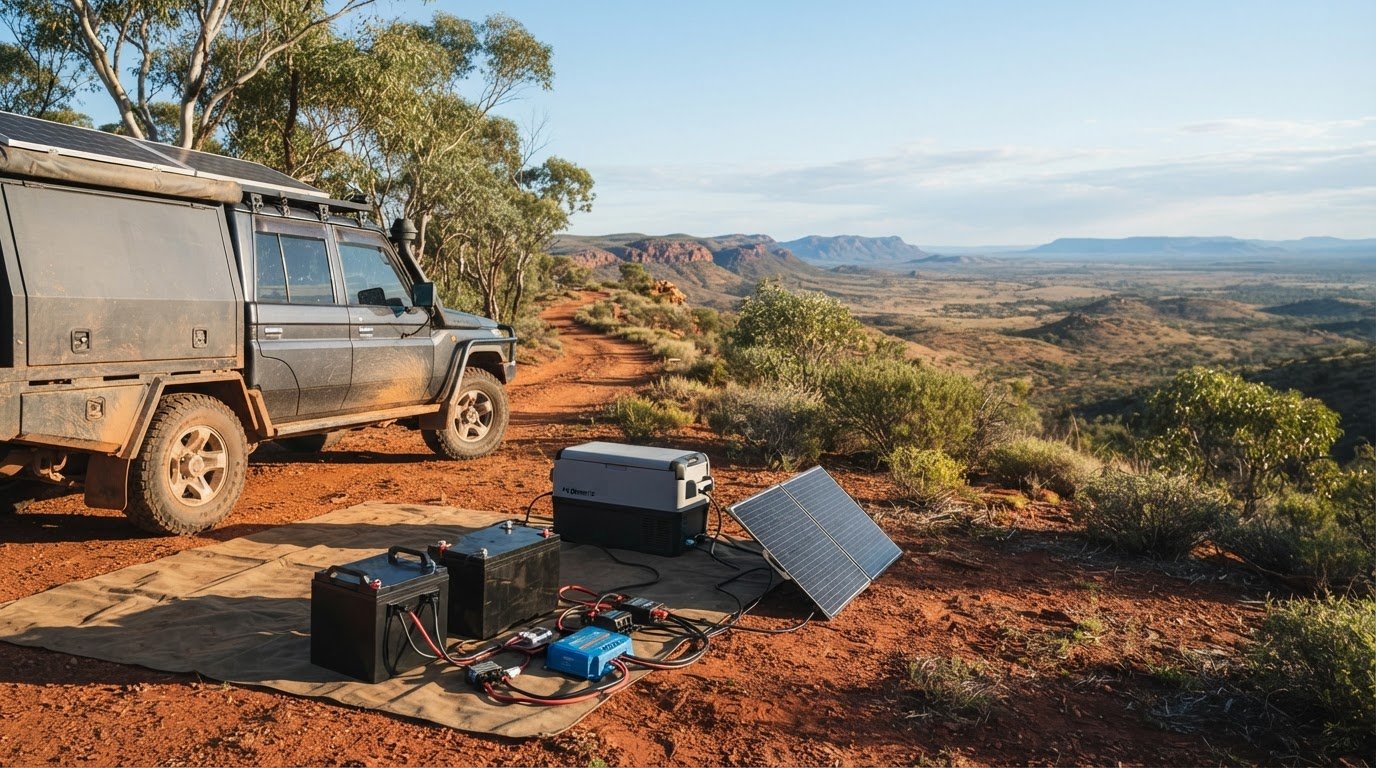
Keeping your gear topped up in the remote outback is a balancing act. To find the best portable power station for camping Australia, you need to understand how to feed it energy efficiently. Most units offer three primary charging paths. First, 240V AC charging is your best friend before you leave home, often topping up a battery in under two hours. Second, 12V DC charging via your vehicle’s cigarette socket or an Anderson plug keeps things ticking while you’re on the move. Finally, solar input is the gold standard for off-grid longevity. Look for units with built-in MPPT (Maximum Power Point Tracking) controllers. This technology acts like a smart gearbox for your solar panels, squeezing every possible watt out of the Australian sun even when conditions aren’t perfect.
Efficiency drops significantly when the mercury rises. The “Aussie Heat” factor is a real challenge for lithium chemistry. When ambient temperatures exceed 35 or 40 degrees, your power station’s internal thermal management system will likely slow down charging speeds to protect the cells. It’s a safety feature, but it can be frustrating if you’re relying on a quick solar top-up. Always position your unit in a shaded, well-ventilated spot to keep those cooling fans running effectively. If you want to see which specific setups we’ve put through the wringer, check out our latest camping equipment recommendations.
The Solar Synergy: Blankets vs. Fixed Panels
Choosing between solar blankets and fixed panels depends on your camping style. Fixed panels are “set and forget,” usually mounted on a roof rack or on top of your 4wd awnings, but they suffer if you park in the shade. Solar blankets are highly portable and allow you to park your vehicle in the shade while placing the blanket in the direct sun. We recommend matching your panel’s “Open Circuit Voltage” (Voc) carefully with your power station’s input limits. To maximise yield, aim your panels directly at the sun and adjust them throughout the day as the angle changes.
Protecting Your Investment in Harsh Conditions
The red dust of the interior is the enemy of electronics. Fine particles can clog cooling fans, leading to overheating and reduced efficiency. Regularly blow out the vents with compressed air and try to keep the unit elevated off the ground. Vibration is another silent killer on corrugated tracks. Secure your power station with heavy-duty straps in your 4WD to prevent internal components from shaking loose. If you’re beach camping, pay close attention to IP-ratings for dust and water resistance, as salt spray is incredibly corrosive. Taking these steps ensures your best portable power station for camping Australia remains a reliable partner for years of remote adventure.
The Adventurerz Verdict: Top-Tier Recommendations for the Aussie Bush
After pushing the latest gear to its limits across the corrugated tracks of the outback, we’ve identified the standout performers for 2026. Finding the best portable power station for camping Australia means looking beyond the glossy marketing and focusing on real-world durability. For our fellow Adventurerz, the EcoFlow Delta 2 remains the gold standard. Its 1024Wh capacity and lightning-fast recharge times make it incredibly hard to beat during a quick lunch stop. More importantly, EcoFlow has established a solid network of Australian service centres, which is vital when you’re investing in high-end tech for remote travel.
If you’re just starting your 4WD journey, the Bluetti EB70 is our top budget-friendly pick. It’s a punchy 716Wh unit that handles the essentials without a massive price tag. For those living the dream full-time out of their vehicle, the Jackery Explorer 1000 Plus offers the expandable capacity needed for long-term off-grid survival. We always prioritise brands that offer local warranties and support. There’s nothing worse than having a technical glitch and finding out your support team is on the other side of the planet when you’re stuck in the middle of nowhere!
Best All-Rounder for 4WD Touring
The best portable power station for camping Australia needs to be more than just a battery; it needs to be smart. The EcoFlow Delta 2 shines here because of its intuitive app connectivity. You can monitor your solar intake and remaining run time from your phone while relaxing in your camp chair. This model uses the LiFePO4 chemistry we’ve recommended for its safety in our extreme temperatures. It strikes the perfect balance between being light enough to carry to a picnic spot and powerful enough to run your 12V fridge indefinitely when paired with a quality solar setup.
Integrating Power into Your Campsite
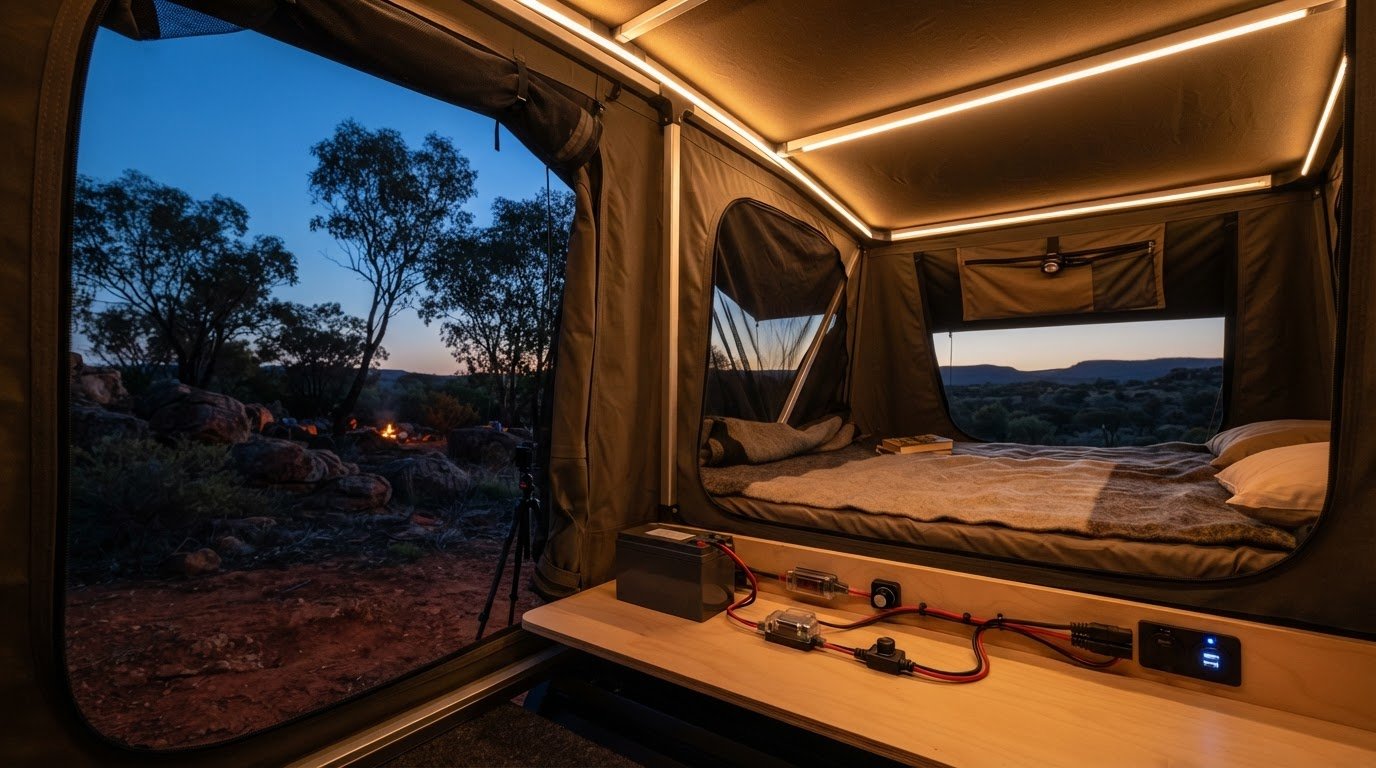
Setting up your site for maximum efficiency requires a bit of planning. We recommend keeping your power station close to your main draw points to minimise voltage drop through long cables. If you’ve got LED strips or fans mounted on your 4wd awnings, use high-quality extension leads and keep them tucked away to prevent tripping hazards. For rooftop tent users, consider a small 12V hub that plugs into your power station, allowing you to run power up to your sleeping quarters for charging devices or running a fan through a sticky summer night. Building a modular system means you can start small and add extra batteries or panels as your adventures grow. It’s about creating a setup that’s as hardy and adaptable as you are!
Power Your Next Outback Escape with Confidence
We’ve explored how the shift to LiFePO4 chemistry and silent operation has made battery power the new standard for the modern adventurer. Finding the best portable power station for camping Australia isn’t just about buying the biggest battery; it’s about matching your gear to the rugged conditions of our unique landscape. Whether you’re a weekend warrior or a full-time tourer, understanding your daily energy budget ensures you never have to choose between a cold drink and a charged phone. We’ve shown you that heat management and dust protection are just as critical as capacity when you’re deep in the bush.
Our team remains dedicated to providing gear recommendations that are expertly tested in Australian conditions and community-vetted for reliability. We focus on sustainable and responsible travel that leaves our tracks pristine for those who follow. Ready to upgrade your setup? Explore our top-rated 4WD gear reviews for your next Aussie adventure and join a community that values durability as much as discovery. We’ll see you out on the tracks!
Frequently Asked Questions
Can a portable power station run a 12V camping fridge?
Yes, you can absolutely run a 12V camping fridge. Most modern 50L fridges draw approximately 1Ah to 2Ah per hour, depending on the ambient temperature. A station with 1000Wh of capacity provides roughly 80Ah of usable energy. This allows for roughly 40 to 60 hours of runtime without any solar input, making it a reliable hub for your off-grid food storage.
How long does it take to charge a power station with solar panels in Australia?
Charging time varies based on your solar panel’s wattage and the local sun intensity. In peak Australian sun, a 200W solar blanket typically delivers between 120W and 160W of actual input. If you are recharging a 1000Wh unit from 20% to 100%, expect it to take about 6 to 8 hours of clear, unobstructed sunlight to reach a full charge.
What is the difference between LiFePO4 and standard Lithium-ion batteries?
LiFePO4 (Lithium Iron Phosphate) is the current 2026 standard for safety and durability. Unlike standard Lithium-ion, LiFePO4 cells handle higher temperatures and offer over 2,500 charge cycles. This makes them the superior choice for the best portable power station for camping Australia, as they won’t degrade as quickly in the outback heat.
Can I jump-start my 4WD using a portable power station?
Most portable power stations cannot jump-start a 4WD. These units are built for steady, long-term power discharge rather than the massive 300A to 600A burst required to turn over a combustion engine. Attempting to jump-start a vehicle through the standard 12V or AC ports can blow internal fuses or damage the sensitive inverter circuitry. Stick to dedicated jump-starters for vehicle emergencies.
Is it safe to keep a portable power station in a hot car?
Leaving a power station in a closed vehicle during summer is not recommended. Internal car temperatures can quickly climb above 60 degrees Celsius, which exceeds the safe storage limits for lithium cells. High heat triggers the Battery Management System to shut the unit down for safety. Repeated exposure to these extremes will significantly reduce the overall lifespan of your expensive camping gear.
What size power station do I need for a 3-day camping trip?
A unit between 1000Wh and 1500Wh is the sweet spot for a 3-day trip. This size provides enough energy to keep a fridge running, power your LED camp lights, and keep all your cameras and phones charged. Choosing the best portable power station for camping Australia in this range ensures you have a safety buffer for those unexpectedly hot days when the fridge works harder.
Can I use a portable power station while it is charging?
Pass-through charging is a standard feature in most premium models, allowing you to use the unit while it charges. This is incredibly useful when you’re at camp and want to run your fridge directly from solar power while simultaneously topping up the internal battery. It ensures your power system remains active and efficient throughout the day without needing to swap cables.
Do portable power stations require maintenance?
Maintenance is simple but critical for longevity in the bush. You should regularly clear red dust from the intake vents using compressed air to prevent the internal fans from clogging. If you are storing the unit between adventures, keep the battery between 50% and 80% charge. Avoid storing it completely flat or at 100% for long periods to preserve the chemical health of the cells.