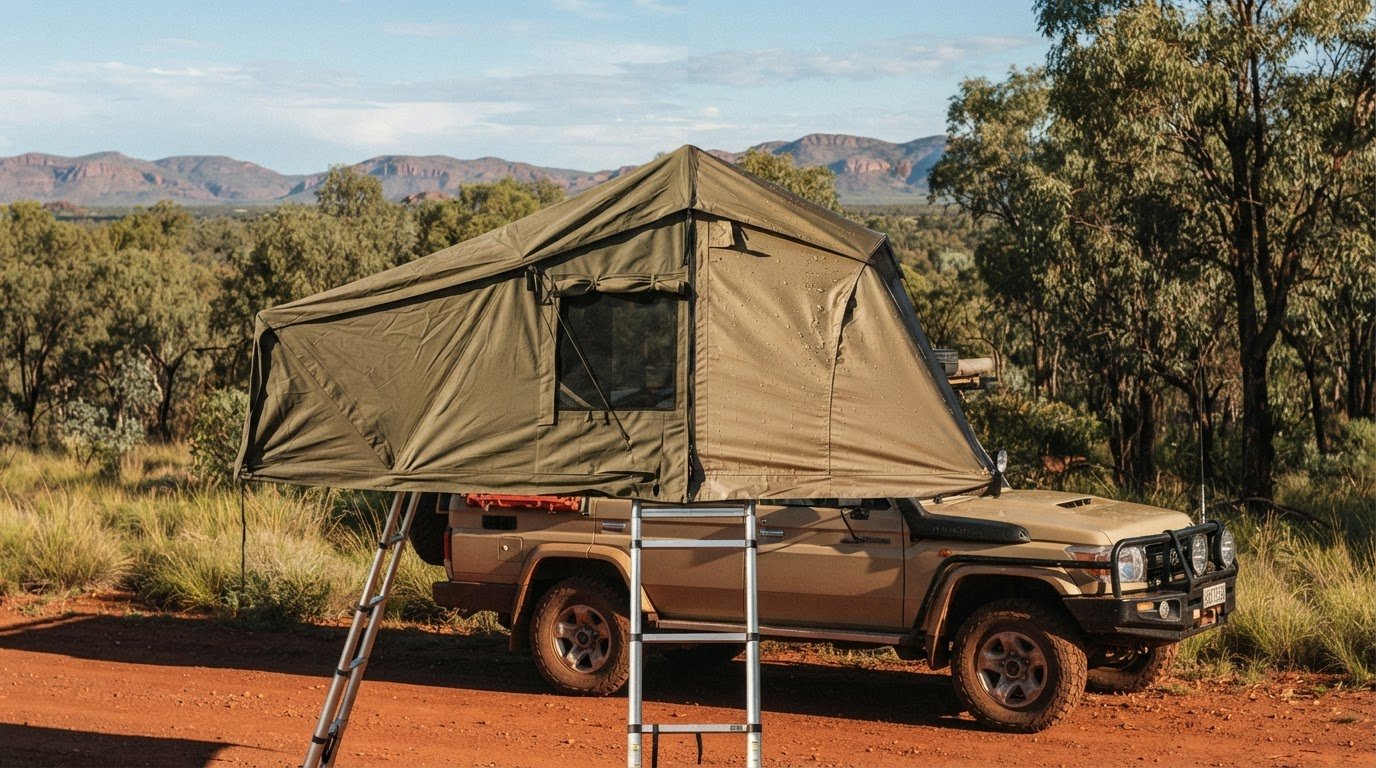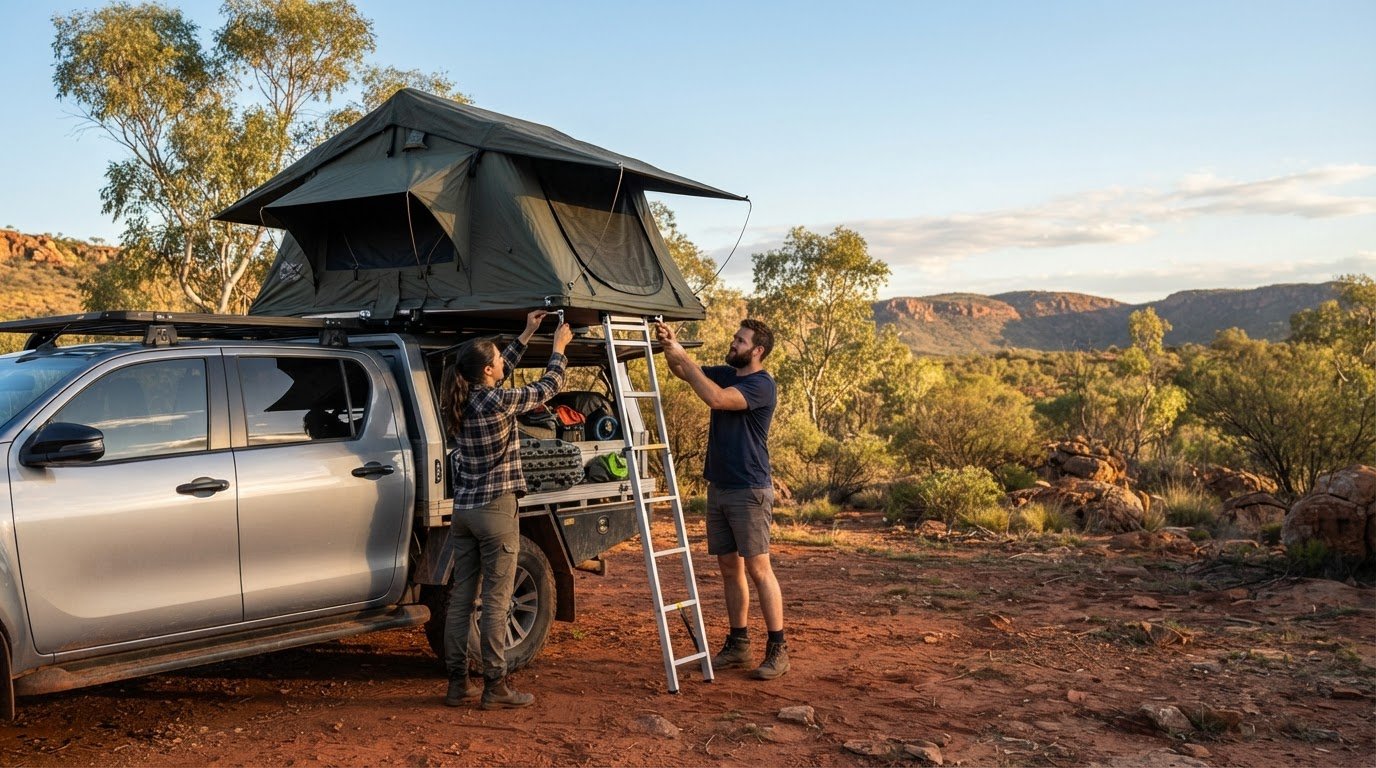
The fabric that feels toughest in the showroom won’t necessarily last longest on your roof. For roof top tent canvas vs poly-cotton durability, the real test is how the fabric’s construction, sun exposure, moisture and care work together across your trips. A heavier material may offer a sturdy, breathable shelter, but it can also take longer to dry and need more attention between camps.
Fabric labels alone don’t tell the whole story. Coatings, stitching, UV exposure and how you pack the tent away all influence wear. The best choice depends on where and how you camp, how often you set up, and whether you can dry the tent fully after wet trips.
This guide compares traditional cotton canvas with poly-cotton blends, explains the durability factors that matter, and looks at how each responds to moisture, sunlight and storage. Use the practical checks to match a fabric to your travel habits and care for your gear between trips.
Key Takeaways
- Judge durability by more than the fabric name. Construction, seams, coatings and overall tent design all matter.
- Compare how sun, moisture, abrasion and repeated setup could affect a tent in the conditions you usually camp in.
- Use the roof top tent canvas vs poly-cotton durability comparison to weigh comfort, care demands and exposure against your camping frequency.
- Follow the manufacturer’s care instructions, pack the tent clean and dry, and inspect it regularly to help reduce avoidable wear.
- Use Adventurerz rooftop tent reviews and recommendations to assess the whole tent and guide your next considered gear choice.
Table of Contents
- Canvas vs Poly-Cotton Rooftop Tent Durability: What Does the Material Label Tell You?
- How Canvas and Poly-Cotton Rooftop Tent Fabrics Wear in Sun, Rain, and Repeated Use
- Canvas vs Poly-Cotton: Which Rooftop Tent Fabric Fits Your Camping Habits?
- How to Extend Rooftop Tent Canvas or Poly-Cotton Life
- Choose a Rooftop Tent for Long-Term Use With Adventurerz Gear Guidance
Canvas vs Poly-Cotton Rooftop Tent Durability: What Does the Material Label Tell You?
A fabric label is a starting point, not a lifespan prediction. To compare roof top tent canvas vs poly-cotton durability, look beyond the fibres at how the material is woven, finished and stitched, and how it’s built into the tent. Two tents described as “canvas” can have different compositions and care needs.
That matters on trips where a rooftop tent may face strong sun, changing weather, dust and repeated packing. Durability includes more than tear resistance: consider weather exposure, abrasion, seam stress and gradual deterioration. Fabric choice is one clue, but it can’t tell you how long the complete tent will remain useful.
For a visual overview of common tent materials, watch this introduction:
What does canvas mean in a rooftop tent?
Canvas generally describes a robust, woven fabric, not one fixed fibre recipe. Traditional canvas can be made from cotton, while canvas-style rooftop tent fabrics may combine cotton with synthetic fibres. Weave, fabric weight, coatings and stitching vary, so the word alone won’t tell you how a particular tent handles moisture or wear. This overview of canvas fabric properties and uses provides background on the material’s broader applications.
Check the product description for fibre composition and any stated coating, then read the care guidance for that exact tent. Those details help explain what the label leaves out. A general fabric overview can’t replace information about the finished tent’s construction or manufacturer instructions.
What is poly-cotton canvas?
Poly-cotton is a blend of cotton and polyester. The proportions can vary, so the name doesn’t guarantee a standard feel or performance. The fibre mix can influence how fabric handles, breathes and responds to moisture, but the result also depends on the weave and finish. Compare the stated composition and care directions for each tent rather than assuming all blends behave alike.
Quotable definition: Fibre composition tells you what a fabric is made from; finished-tent durability reflects how the material, coatings, seams and overall design stand up to use and exposure over time.
As you research, keep these distinctions in view:
- Composition identifies the fibres, but not the full fabric construction.
- Coatings and finishes can affect weather performance and may have their own care requirements.
- Seams and design influence how the material performs as part of a complete rooftop tent.
Use material details to compare models, not as a promise of years in service. Adventurerz’s rooftop tent reviews and recommendations help you assess fabric information alongside the broader tent design and your style of travel.
How Canvas and Poly-Cotton Rooftop Tent Fabrics Wear in Sun, Rain, and Repeated Use
A rooftop tent fabric faces several kinds of wear at once, and each puts pressure on a different part of the shelter. Sun exposure can gradually weaken materials. Rain and trapped moisture can make drying and storage more challenging. Grit and rubbing can abrade fabric, while repeated opening and packing can stress seams and folds. A tent left exposed between trips faces different conditions from one packed away dry after each outing.
For roof top tent canvas vs poly-cotton durability, assess these pressures separately instead of treating “weather resistance” as one measure. Also distinguish comfort from physical resilience. Breathability may make a fabric feel more comfortable inside, but it doesn’t show how well it will resist abrasion, seam stress or long-term UV exposure.
How do sun and weather affect rooftop tent fabric?
Prolonged sunlight can degrade many fabrics, but the rate and effect depend on the material, its finish and its exposure. Don’t assume either canvas or poly-cotton automatically wins. After rain or condensation, ventilation and drying matter: moisture left in a folded tent can contribute to musty odours and fabric deterioration. Follow the tent maker’s directions for any initial seasoning or later reproofing, since treatments and instructions differ.
Think about how your trips expose the shelter:
- Sun: Long periods pitched in direct sunlight add cumulative UV exposure. Use the tent as directed and avoid leaving it open unnecessarily between trips.
- Rain: Allow the fabric to dry thoroughly before packing it away, following the manufacturer’s guidance.
- Dust and grit: Brush away debris before folding. Particles caught in creases can rub against fabric during travel.
How do construction and repeated use affect wear?
Inspect seams, corners, attachment points and folds that flex during setup. These areas can experience tension or rubbing regardless of whether the fabric is cotton or blended. Stitching, reinforcement and panel design affect how loads are distributed, while zips and other hardware have their own wear patterns. Fibre composition alone can’t predict how these components will hold up.
Frequent opening, closing and packing adds mechanical movement. Don’t force a panel or trap fabric in a hinge or closure, and pack the tent as its instructions show. Routine checks during setup and pack-down can help you notice small snags or loose stitching before they become harder to address.
Remember: One material label can’t predict total tent durability. Exposure, construction, care and repeated use all shape how the complete shelter wears. For a broader comparison of designs and features, explore Adventurerz rooftop tent reviews as you weigh fabric details against your camping habits.
Canvas vs Poly-Cotton: Which Rooftop Tent Fabric Fits Your Camping Habits?
The useful question isn’t which fabric wins in every situation. It’s which one suits the way you travel and the care you can realistically give your tent. For roof top tent canvas vs poly-cotton durability, compare the specific model’s fabric details with your expected exposure, trip frequency and drying routine.
Use this table as a starting point, then check the manufacturer’s specifications and care instructions. Fabric names cover a range of constructions, so the same label won’t guarantee identical comfort or upkeep across different tents.
| Factor | Canvas | Poly-cotton |
|---|---|---|
| Composition | May be cotton or a canvas-style fabric with synthetic fibres; check the stated composition. | A cotton-polyester blend; proportions and construction vary between models. |
| Comfort | May appeal if you value the feel and breathability associated with traditional canvas. | May offer a balance of cotton-like comfort and synthetic fibre handling, depending on its construction. |
| Weather exposure | Assess the tent’s own fabric finish, design and care guidance for the conditions you expect. | Check the same details; the blend name alone doesn’t establish weather performance. |
| Care | Plan around the maker’s directions for drying, storage and any maintenance. | Follow the model-specific instructions; don’t assume a blend needs no attention. |
| Use frequency | Consider how repeated trips fit with the maintenance you’re prepared to do. | Weigh the exact fabric and construction against your trip pattern, not just the label. |
When might canvas suit your rooftop tent use?
Canvas may appeal if interior comfort and a traditional fabric feel rank high on your list. It can suit campers who are happy to build drying and routine care into their trip habits, especially after wet conditions. That preference doesn’t mean canvas automatically lasts longer or performs better in your climate. Check the particular tent’s composition, finish and maintenance directions before deciding.
When might poly-cotton suit your rooftop tent use?
A poly-cotton blend may be worth considering if you want a fabric that combines cotton and polyester while still prioritising comfort. It isn’t a maintenance-free shortcut, and its performance depends on the exact blend and tent construction. Compare those details, coating information and care instructions across models rather than assuming every poly-cotton tent handles sun, rain or mildew the same way.
Your travel rhythm can sharpen the choice. If you tour frequently and pack down often, prioritise clear care instructions and a design that suits regular setup. For occasional trips, consider whether you can dry and store the tent properly between outings. If it will remain outdoors for extended periods, pay close attention to the manufacturer’s exposure guidance and consider how much shelter and maintenance your setup allows.
Bottom line: The right material depends on your conditions and care habits, not a universal durability ranking. Match the fabric details to how often and where you camp, then assess the complete tent. Adventurerz rooftop tent reviews and recommendations help you compare material choices alongside other design considerations.
How to Extend Rooftop Tent Canvas or Poly-Cotton Life
Good care is less about applying extra products and more about following the right routine for your tent. Cleaning agents, waterproofing treatments and repair methods can affect fabrics and coatings differently, so use the manufacturer’s instructions as your guide. Careful pack-down also helps limit dirt, trapped moisture and avoidable strain on fabric and seams.
Make this sequence part of your trip routine:
- Check the care instructions. Before cleaning or treating the fabric, review the tent maker’s directions for setup, drying, cleaning, waterproofing and repairs. Don’t assume a product suitable for one canvas or poly-cotton tent is right for another.
- Set up with care. Choose a suitable site and open the tent as instructed. Avoid forcing fabric around frames, closures or hinges, and check that panels aren’t caught or pulled unevenly.
- Remove loose dirt. Before packing, clear away dust, leaves and grit using the method recommended by the manufacturer. Abrasive particles left in folds can rub against the fabric during travel.
- Dry the tent fully. After rain or condensation, air the tent before long-term storage whenever conditions allow. If you need to pack it while damp during a trip, unpack and dry it as soon as practical, following the maker’s guidance.
- Inspect and store it correctly. Check the fabric, seams and closures, then store the tent as its instructions specify. Don’t put damp fabric away for an extended period.
What should you do after a wet camping trip?
Give the shelter enough time and airflow to dry, paying attention to folded sections and areas where moisture may linger. Damp fabric packed away for too long can develop unpleasant odours and create conditions for mildew. If dirt needs removing or the fabric needs reproofing, use only the cleaning and treatment process recommended for that tent. Don’t choose a treatment based on the material label alone.
How can you spot fabric wear before it worsens?
During routine pack-downs, look closely at stitching, seams, corners and areas that rub against the frame or other surfaces. Note loose threads, small tears, visible coating changes or persistent damp patches. If water no longer sheds as expected, consult the tent’s care guidance before applying a treatment. Use manufacturer-approved repairs; improvised glues, cleaners or sealants may affect the fabric or finish.
Keep a simple record of issues you notice, such as where a seam looks stressed or which panel stays damp longest. That makes it easier to monitor changes and follow the right care instructions before your next trip. Consistent maintenance supports roof top tent canvas vs poly-cotton durability, but it can’t replace sound construction or product-specific care.
For practical help comparing tents and their features, explore Adventurerz rooftop tent reviews and recommendations as you plan a care routine that suits your gear and adventures.
Choose a Rooftop Tent for Long-Term Use With Adventurerz Gear Guidance
A long-lasting rooftop tent isn’t defined by a fabric name alone. Compare the material details with construction, expected exposure, care demands and how often you’ll use the tent. The best fit is one you can maintain and that suits your travel, not simply the material that sounds toughest on a label.
What should you compare beyond the fabric?
Start with the manufacturer’s description of the fabric composition and any coatings or finishes. Then look at how the tent is assembled: seams, stitching, reinforcement and the way fabric sits around frames and closures can all matter in regular use. Don’t infer performance from a material label or assume two similarly named fabrics have identical construction.
Before choosing, weigh the tent against your real routine:
- Camping frequency: Frequent touring means more setup, pack-down and opportunities for mechanical wear. Consider whether the care routine feels manageable between trips.
- Exposure between trips: Think about whether the tent will be stored under cover or remain exposed to sun and weather. Use the maker’s care guidance to understand what that means for the specific model.
- Drying space: After wet trips, consider whether you can air the tent fully before long-term storage. A suitable drying routine is part of practical ownership.
- Care instructions: Compare recommended cleaning, waterproofing and repair methods. A tent is a more suitable choice when its upkeep fits your habits and available time.
These factors make roof top tent canvas vs poly-cotton durability a decision about the complete shelter and how you’ll use it, rather than a contest between two labels. If a manufacturer provides a specific fabric specification or care direction, use it for that model instead of applying assumptions from another tent.
How can gear research support responsible adventures?
Thoughtful research helps you choose equipment that suits the trips you actually take. A tent with features you value but care demands you can’t meet may be a poor match over time. Compare construction and maintenance alongside fabric to make a considered choice and reduce avoidable wear. Cleaning, drying, inspecting and following appropriate repair guidance can also help you make responsible use of your outdoor gear.
Adventurerz publishes rooftop tent reviews and recommendations to support your research, giving you another way to compare models and weigh their features. Use these guides to build a shortlist, then read each tent’s product-specific information closely. The aim is informed decision-making, not choosing on material name alone.
Ready to continue your comparison? Explore Adventurerz’s rooftop tent reviews and recommendations to research options alongside the factors that matter for your adventures.
Make Your Next Rooftop Tent Choice With Confidence
Picture the trips ahead, not just the tent on your shortlist. How often will you travel? Where will the tent spend time between outings? What care routine can you stick with when you get home? Those answers make roof top tent canvas vs poly-cotton durability a practical decision, rather than a search for one fabric that suits every adventure.
Thoughtful gear choices can support more responsible exploration, especially when you select equipment for the journeys you actually take and care for it along the way. Before deciding, compare the details that matter to your plans and consider how each option fits your setup, storage and maintenance habits.
Adventurerz brings practical gear guidance together with a commitment to exploring responsibly, and publishes rooftop tent reviews and recommendations to help you continue your research. Explore our rooftop tent reviews and recommendations to take your next step toward an informed choice. Here’s to well-planned trips and memorable miles outdoors!
Frequently Asked Questions
Is poly-cotton more durable than canvas in a rooftop tent?
Not necessarily. Durability depends on the specific tent, not the poly-cotton label alone. For roof top tent canvas vs poly-cotton durability, compare each model’s stated fibre blend, weave, coatings and seam construction, then consider how you’ll use it. If two options seem similar, check their care instructions too. A fabric that suits your travel and maintenance routine may be a better long-term fit than one with a more appealing label.
Can rooftop tent canvas become waterproof after its first rain?
Some canvas products are designed to be weathered or seasoned, but there’s no universal first-rain process for rooftop tents. Before your first trip, follow the model’s instructions rather than deliberately soaking the fabric or applying a treatment based on general advice. After rain, check the interior and inspect seams for signs of water entry. If you find a leak, dry the tent and use the manufacturer’s guidance to identify the next step.
What happens if you pack a rooftop tent away while it is wet?
Trapped moisture can lead to mildew, unpleasant odours and fabric deterioration, especially if the tent stays packed for an extended period. If weather forces a damp pack-down, reopen the tent and dry it as soon as conditions allow. Check areas folded against one another, since they may dry more slowly. Follow the maker’s cleaning and drying instructions if the fabric develops an odour or visible marks.
Do all poly-cotton rooftop tents use the same fabric blend?
No. Poly-cotton identifies a combination of cotton and polyester, but products can differ in fibre proportions, weave, coating and finish. For a useful comparison, record the stated details for each model rather than treating “poly-cotton” as a complete specification. If a product description gives only the broad label, don’t infer the exact blend or performance from another tent’s information. Use the manufacturer’s care directions for the model you’re considering.
Can you repair a small tear in rooftop tent canvas or poly-cotton?
A small tear may be repairable, but the right approach depends on its location and the fabric’s finish. A patch suitable for an uncoated panel may not be appropriate near a seam or treated area. Before sticking or stitching anything, check the manufacturer’s approved repair guidance. If the damage sits at a load-bearing seam, spreads under light tension or affects weather protection, avoid relying on a quick improvised fix.
How can you tell if rooftop tent fabric has mildew or permanent damage?
A persistent musty odour, visible spots, weakened fabric or fraying stitching can signal a problem, but a mark alone doesn’t confirm permanent damage. First, dry and clean the affected area according to the tent’s instructions, then inspect it in good light. Note whether the material feels different or the mark returns. If the fabric remains weakened or its water-shedding changes, follow the manufacturer’s assessment or repair guidance before your next trip.
Does a rooftop tent’s fabric determine how long the whole tent lasts?
No. Fabric is only one part of a rooftop tent, and its condition can differ from that of the frame, closures or other components. During inspections, note which part shows wear first and whether the issue changes between trips. That record can help you address a developing problem before it affects setup or use. For a realistic view of long-term suitability, assess the whole tent and how it fits your travel routine.