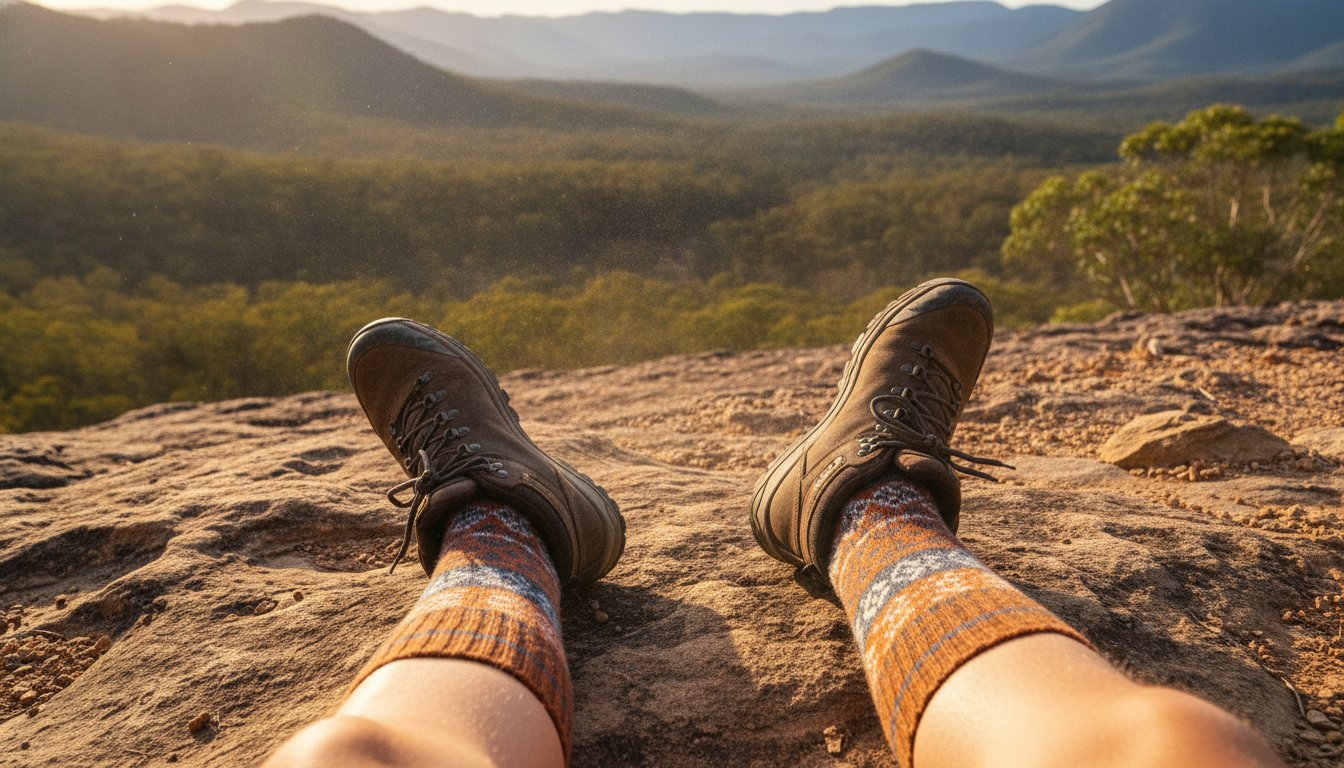
What if your premium $300 boots are only as effective as the $40 layer of fabric sitting against your skin? We’ve all experienced that moment halfway through a stunning Australian trek when a hot spot transforms into a painful blister. Suddenly, every step becomes an exercise in endurance rather than enjoyment. It’s a common frustration for our community of explorers; you invest in the right footwear, yet your socks lose shape after three washes or leave your feet damp and prone to fungal issues. Finding the best hiking socks isn’t just about basic comfort; it’s about choosing a technical tool that protects your body and respects the environments we love to roam.
We understand that the choice between merino wool and synthetic blends can feel overwhelming when you’re staring at a gear wall. In this guide, we promise to simplify the science of moisture management and durability so you can hike blister-free for years. We’ll explore the latest 2026 standards for ethical, mulesing-free wool and review the top-tier gear designed to survive our continent’s unique terrain. From high-impact cushioning to sustainable manufacturing, here’s everything you need to know to keep your feet ready for the next adventure.
Key Takeaways
- Discover how technical blends of ethical merino wool and durable synthetics create a high-performance barrier against moisture and odors for our community of explorers.
- Learn how to match the best hiking socks to diverse Australian landscapes, ensuring your feet stay cool in the desert and warm in alpine conditions.
- Master the “Two-Sock System” and professional sizing tips to eliminate friction, helping you stay self-reliant and blister-free on the trail.
- Protect your gear and our environment by using eco-friendly care methods that keep your technical layers performing through years of rugged travel.
Table of Contents
- Why the Best Hiking Socks Are Your Most Important Gear Investment
- Material Science: Why Merino Wool and Synthetic Blends Rule the Trail
- Matching Your Socks to the Australian Terrain and Climate
- The Blister Prevention Blueprint: Fit, Cushioning, and Layering
- Essential Gear Care: Making Your Hiking Socks Last for Years
Why the Best Hiking Socks Are Your Most Important Gear Investment
We often obsess over the latest boots or lightweight packs, but the humble sock is actually the frontline of your footwear system. Think of a technical hiking sock as a sophisticated, friction-reducing barrier rather than just a piece of clothing. It’s the only thing standing between your skin and the abrasive interior of your boots during an eight-hour day on the trail. When we treat our socks as technical equipment, we significantly increase our comfort and safety in remote areas.
Let’s look at the “Blister Math.” You might spend thousands on flights, permits, and high-end gear for a bucket-list trek, only to have the entire experience derailed by a single $2 blister. It’s a frustrating reality for many explorers. Choosing the best hiking socks is a small investment that protects your larger investment in the trip itself. A quality pair ensures that your feet remain functional and pain-free, allowing you to focus on the landscape rather than your next step.
Our diverse landscape demands incredible versatility from our gear. You need equipment that keeps your feet cool and dry while trekking through the heat of the Outback, yet provides essential insulation when you’re navigating the Snowy Mountains. Cotton is the ultimate enemy in these environments. It’s hydrophilic, meaning it absorbs and holds onto moisture, leading to soggy feet and rapid heat loss. Technical fibres are hydrophobic, pushing water away to maintain a stable temperature. Understanding the science of sock materials helps us make ethical choices that favor durability and performance over disposable, low-quality alternatives.
The Anatomy of a High-Performance Hiking Sock
Modern engineering has transformed how we protect our feet. High-quality socks aren’t just tubes of fabric; they’re mapped to the foot’s movement. Key features include:
- Reinforced heel and toe boxes: These areas face the most impact and friction. Extra padding here extends the life of your gear and protects your foot’s most vulnerable points.
- Arch bands: Elasticated zones around the midfoot keep the sock from bunching or slipping. This prevents the fabric folds that often lead to hot spots.
- Seamless toe closures: Standard socks have bulky seams that rub against your toes. Technical versions use flat-knit closures to eliminate this specific friction point entirely.
Moisture Management and Foot Health
When your feet stay wet for hours, the skin softens and prunes. This process, known as maceration, makes you highly susceptible to painful tears and fungal infections. Moisture-wicking is the capillary action that moves sweat from skin to the outer sock layer. This movement is vital during high-exertion climbs where heat buildup is inevitable. By choosing the best hiking socks with high breathability, you ensure your skin remains tough and healthy, regardless of the humidity or intensity of the trail.
Material Science: Why Merino Wool and Synthetic Blends Rule the Trail
We’ve established that socks are technical gear; now, let’s dive into what they’re actually made of. The best hiking socks rely on a carefully engineered balance of natural and synthetic fibres to protect our feet. Merino wool is often celebrated as the king of the trail because it manages temperatures brilliantly and naturally resists the trekker’s stench even after days in the wild. It’s a miracle fibre that keeps you warm when it’s damp and cool when the Australian sun is at its peak. However, wool alone can’t survive the rugged scrub we often find ourselves in.
This is where synthetic fibres like nylon, polyester, and elastane step in to provide the muscle. Nylon offers the structural strength needed to prevent holes in high-friction areas like the heel and toe. Polyester speeds up drying times by moving moisture away from the skin, while elastane ensures the sock snaps back to its original shape every morning. A 100% merino sock would sag and wear through within a few treks. By creating a hybrid blend, manufacturers give us the soft feel of wool with the durability required for serious, remote exploration.
Merino Wool vs. Synthetic Blends
Comparing these materials isn’t about finding a single winner but about matching your gear to the environment. When searching for the best hiking socks for high-humidity coastal hikes, we often lean toward higher synthetic percentages because they shed moisture faster and don’t hold onto water. In drier, alpine zones, the thermal properties of merino take priority. One critical factor we look for is rebound. This is the ability of the fibres to maintain their loft and cushioning under the weight of your pack. Without it, your padding flattens out, leaving you vulnerable to impact and fatigue.
Sustainable Fibre Innovations in 2026
As we move through 2026, the outdoor industry is shifting toward even more responsible manufacturing practices. We’re seeing a rise in bio-based synthetics and yarns made from recycled ocean plastics that perform just as well as virgin materials. Ethical sourcing is non-negotiable for our community. We look for mulesing-free merino certifications to ensure the welfare of the sheep providing our wool. Choosing high-quality, long-lasting gear is one of the most effective ways to reduce our environmental footprint and ensure we’re exploring responsibly. If you’re currently preparing for a trip, check out the ultimate adventure travel planner to help map out your technical equipment needs and ensure your next journey is both comfortable and conscious.
Matching Your Socks to the Australian Terrain and Climate
Australia isn’t a monolith. The gear we choose for a dry trek through the red center differs wildly from what we need in the humid tropics or the frozen peaks of our southern ranges. Selecting the best hiking socks requires an honest assessment of the specific environment you’re entering. If you’re heading into the desert, focus on ultra-lightweight liners paired with high-breathability mesh panels. These designs prioritize airflow and heat release, ensuring your feet don’t overheat when the sand starts to bake.
Conversely, our alpine and southern winter hikes demand mid-to-heavyweight merino. These thicker loops of wool trap air to provide essential insulation against the biting cold. In coastal or tropical regions, humidity is your primary adversary. We look for hydrophobic synthetics that won’t stay soggy after a creek crossing or a sudden downpour. For those of us who enjoy rugged bushbashing through thick scrub, high-crew heights are non-negotiable. They provide a physical barrier against abrasive branches, stinging nettles, and the occasional leech.
Weight and Cushioning Levels
Understanding cushioning levels helps you match your socks to your pack weight and pace. We generally categorize them into three tiers:
- Ultra-lightweight: These are best for trail running or fast-packing in extreme heat. They offer minimal bulk and maximum breathability.
- Light/Medium Cushioning: This is the versatile “sweet spot” for most Australian day hikes. It provides enough padding to protect your soles without causing excessive sweat.
- Heavy Cushioning: Necessary for multi-day expeditions with heavy packs. The extra loft absorbs the impact of stiff-soled mountaineering boots and reduces foot fatigue over long distances.
Height Matters: From No-Show to Over-the-Calf
The height of your sock determines how much protection you have from the elements and debris. It’s a functional choice that impacts your comfort throughout the day.
Quarter and micro-crew heights work best with low-cut hiking shoes, keeping trail grit and small stones from entering your footwear. Crew height remains the industry standard for boot protection. It sits high enough to prevent the boot collar from rubbing against your leg and offers a decent defense against ticks in long grass. For specialized use, knee-high socks are invaluable in cold weather or when navigating snake-prone areas alongside a sturdy pair of gaiters. Choosing the best hiking socks for your specific height needs ensures you stay protected from the ground up.
The Blister Prevention Blueprint: Fit, Cushioning, and Layering
We’ve all been there; you buy the best hiking socks available, but they still feel off mid-trail. The most common error we see in the community is choosing a size based purely on street shoe scales. Technical socks are sized by actual foot measurements, and because our feet swell significantly under the weight of a pack and the afternoon sun, we need to account for that extra volume. If you don’t leave room for this expansion, you’ll end up with constricted circulation and increased friction. A precise fit ensures the heel cup stays where it belongs and the fabric doesn’t bunch under your toes during steep descents.
Your footwear system is only as strong as its weakest link. Ensuring your roof top tents basecamp comfort starts with dry, healthy feet. If you arrive at camp with macerated skin or painful hot spots, your recovery time increases, and your ability to enjoy the sunset is compromised. We view these technical layers as the vital interface between your body and your boots, protecting your skin from the mechanical stress of every step.
The Art of Layering Socks
The Two-Sock System is a classic strategy for a reason. By wearing a thin silk or synthetic liner under a heavier wool outer, you move the friction point. Instead of the boot rubbing against your skin, the two layers of fabric rub against each other. This setup is excellent for preventing a hot spot before it transforms into a full-blown blister. We recommend this for anyone breaking in new leather boots or tackling high-mileage treks. To ensure your system works, follow this compatibility test at home:
- Put on your chosen sock and liner combination.
- Slide your foot into your unlaced boot and push your toes firmly to the front.
- Ensure you can fit one finger behind your heel without it feeling crushed; if it’s too tight, you need a thinner sock or a larger boot.
Addressing Common Fit Issues
Heel slip and toe bunching are clear signs of a mismatch. If your heel lifts even slightly, you’re inviting the friction that causes blisters. We often look for the best hiking socks with targeted compression zones. These elasticated areas don’t just keep the sock in place; they assist in managing the minor swelling that occurs on multi-day treks. By supporting the arch and stabilizing the midfoot, these designs help reduce the cumulative fatigue that sets in during those final kilometers. Just be careful not to over-compress. In cold climates, a sock that’s too tight can limit warm blood flow to your extremities. Explore our latest outdoor gear recommendations to find the perfect technical match for your next adventure.
Essential Gear Care: Making Your Hiking Socks Last for Years
We believe that true adventure is built on a foundation of self-reliance and environmental respect. When we choose to invest in the best hiking socks, we’re making a commitment to quality that should last for hundreds of kilometers. However, technical gear requires technical care. The longevity of your equipment isn’t just about the initial purchase; it’s about how we maintain those fibres after a grueling trek through the scrub. Proper maintenance keeps your gear out of the landfill and ensures it continues to perform when you’re miles from the nearest trailhead.
The “Golden Rule” of merino care is simple: never use fabric softener. While it might make your towels feel fluffy, it’s a disaster for technical wool. Softeners leave a waxy coating on the individual fibres, which effectively kills the moisture-wicking capillary action we rely on to stay dry. It also traps odors and reduces breathability. We always recommend using a mild, wool-specific detergent or a simple pH-neutral soap to keep the natural properties of the wool intact. If your socks start to feel stiff, a gentle wash is usually all they need to restore their natural softness.
Laundering for Longevity
We always wash our best hiking socks inside-out. This isn’t just a habit; it’s a strategy to remove the dead skin cells and sweat salts that accumulate against the skin. If left inside the sock, these particles act like sandpaper, grinding away at the delicate fibres during every step. Regarding drying, air-drying is our non-negotiable standard. High heat from tumble dryers makes synthetic components like elastane brittle, causing the sock to lose its “rebound” and sag. You’ll know it’s time to replace a pair when the cushioning has permanently flattened or the “loft” no longer returns after a wash, as this signals the internal structure has finally collapsed.
Trail Hygiene for Remote Exploration
Maintaining hygiene in the wild is vital for both your feet and the environment. We follow the “Three-Pair Rotation” on long expeditions: one pair on our feet, one pair drying on the outside of our pack, and one clean, dry pair reserved strictly for sleeping. This ensures your skin has time to recover every night. When washing gear on the trail, never rinse directly in a stream or lake. Even “biodegradable” soaps can devastate local aquatic ecosystems. Instead, carry water at least 50 meters away from the source to perform your rinse. For those traveling by vehicle, setting up a proper gear-drying station under one of the best 4wd awnings provides a shaded, breezy spot to dry your kit without exposing it to the damaging UV rays of the direct midday sun. If you find a small hole, don’t toss the pair; a simple darning technique can extend the life of your gear by years, keeping your footprint small and your kit reliable.
Gear Up for Responsible Exploration
We’ve journeyed through the technical details that separate basic hosiery from high-performance equipment. Selecting the best hiking socks is a critical step toward self-reliance on the trail; it’s about matching material science to our unique Australian environments. Whether you’re navigating the humidity of the tropics or the dry heat of the desert, your footwear system depends on moisture-wicking layers that prevent blisters before they start. By prioritizing ethical merino wool and durable synthetic blends, you ensure your gear lasts for years of rugged travel. We’re committed to helping our community make informed, sustainable choices that respect the wild places we love to visit.
Our mission is to provide you with the specialized expertise needed to tackle any terrain with confidence and care. Ready to refine the rest of your kit? Explore our expert reviews on the latest hiking equipment and outdoor gear to see our ad-free, community-supported testing in action. We focus exclusively on the unique challenges of the Australian landscape to bring you reliable, expert advice on durable exploration. See you out on the track!
Frequently Asked Questions
How often should I replace my hiking socks?
You should replace your hiking socks as soon as the internal cushioning, or loft, fails to bounce back after a wash. For high-quality technical gear, this typically happens after 500 to 1,000 kilometers of trail use. Once the fibres flatten permanently, they no longer provide the impact protection or moisture-wicking properties required for remote travel. Keep an eye out for thinning areas in the heel or toe, which signal that the structural integrity is compromised.
Are merino wool socks too hot for Australian summers?
Ethical merino wool is actually one of the coolest materials for our harsh summers because it’s naturally thermoregulating. The key is choosing an ultra-lightweight version with mesh ventilation panels. These designs move sweat away from your skin faster than cotton or thick synthetics, preventing that swampy feeling. By managing moisture effectively, the best hiking socks keep your feet significantly drier and more comfortable during high-temperature treks across the Outback or coastal trails.
What is the difference between a liner sock and a regular hiking sock?
A liner sock is a thin, skin-tight layer designed to sit underneath a thicker outer sock. Its primary job is to move friction away from your skin and onto the fabric-to-fabric interface. Regular hiking socks are thicker and provide the essential cushioning and insulation needed for trail comfort. While a regular sock is a standalone technical tool, a liner is a specialized accessory used specifically to prevent blisters during long expeditions or when breaking in new boots.
Can I wear two pairs of socks to prevent blisters?
We often recommend the “Two-Sock System” to our community as a proven method for preventing blisters. This involves wearing a thin synthetic liner under a midweight wool sock. The two layers rub against each other rather than your skin, effectively neutralizing friction. Don’t just wear two pairs of thick socks; this creates excessive bulk, restricts blood flow, and causes your feet to overheat, which actually increases your risk of skin damage and painful hot spots.
How do I stop my hiking socks from sliding down into my boots?
Sliding usually happens because the sock is too large or the elastic has failed. Ensure you’re buying technical socks with dedicated arch bands and Y-stitch heels that lock the fabric in place. If your socks are old, the elastane may have become brittle from high-heat drying, causing them to lose their grip. Choosing a crew-height sock also provides more surface area for the elastic to hold onto your calf, preventing the fabric from bunching near your ankles.
Is it worth buying expensive hiking socks for short day walks?
Investing in the best hiking socks is absolutely worth it, even for short day walks. Technical socks offer superior moisture management and seamless construction that cheaper department store alternatives lack. A single $40 pair of high-quality socks can last for years of weekend adventures, whereas cheap cotton versions often lose their shape and cause hot spots within a few washes. High-quality gear is a sustainable choice that protects your feet and reduces long-term equipment waste.
How should I wash merino wool socks to make them last?
To maximize the life of your wool gear, always wash them inside out in cool or lukewarm water. This allows the water to flush out the sweat salts and dead skin cells that accumulate inside the knit. Avoid fabric softeners at all costs, as they coat the fibres and destroy their ability to wick moisture. We always recommend air-drying your kit in a shaded spot to prevent the elastic components from becoming brittle and snapping under the harsh Australian sun.
What is the best sock height for hiking in the bush?
Crew height is the gold standard for navigating the Australian bush. This height sits several centimeters above the ankle, providing a vital barrier between your skin and abrasive scrub, leeches, or ticks. While quarter-height socks work well for well-maintained paths, they don’t offer enough protection when you’re moving through thick undergrowth or long grass. For specialized alpine environments or snake-prone areas, we occasionally use over-the-calf socks paired with a sturdy set of gaiters for maximum protection.