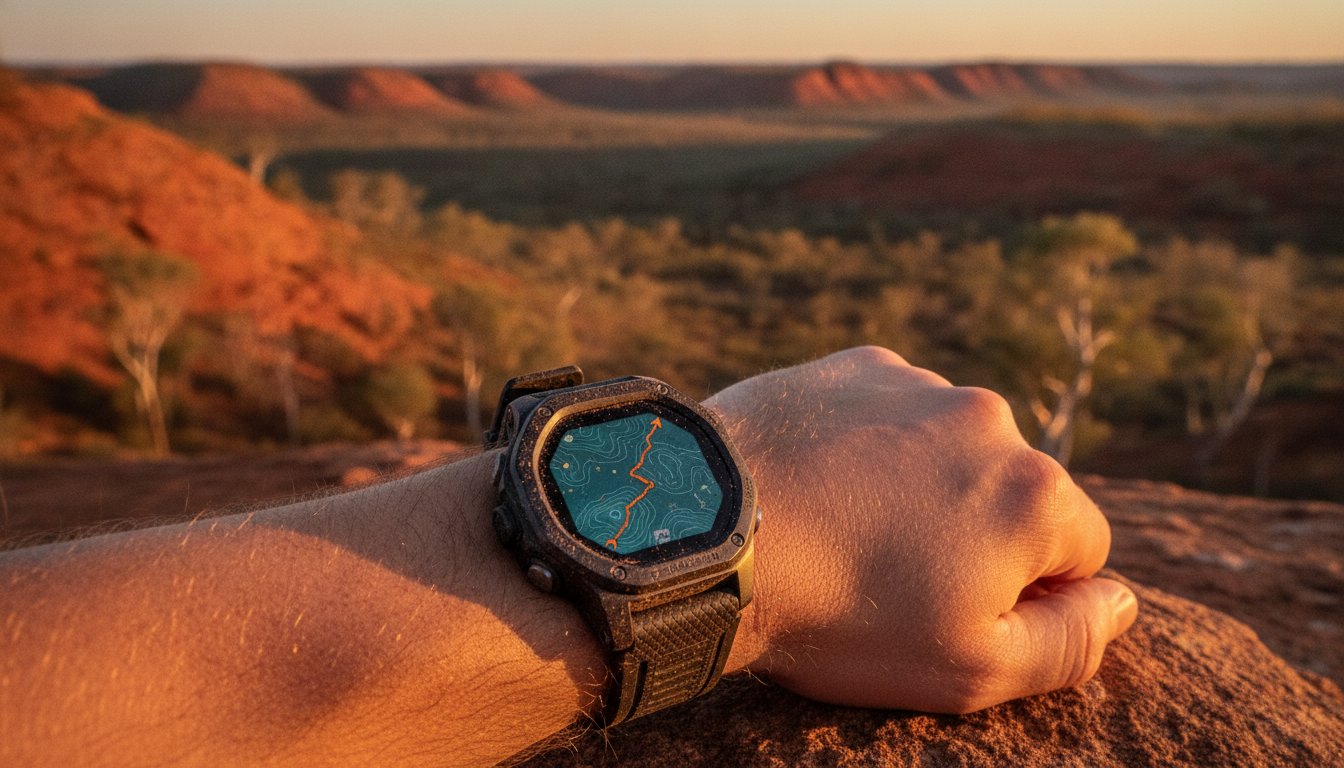
If your smartphone screen shatters or the battery cooks in the midday heat, is your backup plan actually tough enough to lead you back to camp? We’ve all felt that spike of adrenaline when a device glitches in the deep bush. We know that relying on a fragile phone in the remote corners of Australia is a gamble, so finding a reliable 4g gps sturdy outdoor watch is essential for your safety. You need gear that’s as hardy as the red dirt we tread on.
We’re here to help you discover how the latest 4G-enabled rugged watches provide a vital safety tether and a navigation powerhouse for our most demanding environments. By choosing a device with specific Band 28 support, you ensure the best possible long-range connectivity across regional areas. We’ll walk you through the top-tier options for 2026 that meet the MIL-STD-810H durability standard and offer the battery life needed for multi-day treks. We’ve vetted the best tools to give you total peace of mind on your next mission. Let’s ensure you stay connected and on track without the weight of device anxiety, fellow Adventurerz.
Key Takeaways
- Learn why the “Safety Trinity” makes a 4g gps sturdy outdoor watch a non-negotiable tool for solo adventurers facing the unpredictable Australian outback.
- Understand why 700MHz (Band 28) compatibility is the secret to maintaining a connection in remote regions where standard devices often fail.
- Discover how to decode MIL-STD-810H ratings and why Sapphire crystal is your best defense against the abrasive sands and rocky terrain of our desert tracks.
- Master our selection framework to balance high-drain 4G features with the long-lasting battery life required for multi-day bush missions.
- Embrace a “buy once, buy right” philosophy by choosing durable, updateable gear that reduces electronic waste while keeping your navigation data precise.
Table of Contents
The Safety Trinity: Why 4G, GPS, and Sturdiness are Non-Negotiable in 2026
We believe that true freedom in the Australian bush comes from being prepared for the worst while expecting the best. In 2026, the baseline for safety has shifted. We’ve moved beyond simple digital compasses into what we call the Safety Trinity: the convergence of autonomous connectivity, precise positioning, and mechanical resilience. This trio ensures that even if your 4WD is bogged or your primary comms fail, you aren’t truly alone. A 4g gps sturdy outdoor watch isn’t just a gadget; it’s the core of this survival system.
The psychological boost of having a safety net strapped to your wrist is immense. In a high-stress situation, like losing a trail as the sun dips below the horizon, fumbling with a locked smartphone is the last thing you want. You need a device that’s already active, accessible, and ready to transmit. Self-reliance is the name of the game here. We aren’t just tracking steps; we’re managing risks. This mindset transforms a piece of tech into a vital survival tool for any remote mission.
The Role of Standalone 4G in Remote Safety
With modern eSIM technology, your watch doesn’t need to be tethered to a phone to work. It can initiate emergency calls and send location pings directly to the network. This is a game-changer for solo hikers who might drop their phone down a ravine or experience a total device failure. While standard GPS relies solely on satellites, 4G-assisted location (A-GPS) uses cellular data to download satellite orbital information, meaning you get a position lock in seconds rather than minutes. A 4G GPS watch serves as the primary safety tether for modern adventurers.
Defining “Sturdy” for the Australian Environment
Out here, “waterproof” is just the starting line. We’ve all seen fine Australian bulldust find its way into the tightest seals, grinding down delicate internals. A truly rugged device needs to be dust-tight and built to survive the relentless vibratory stress of corrugated tracks. We also have to consider our extreme UV index, which can turn cheap plastics brittle in a single season. When you invest in a 4g gps sturdy outdoor watch, you’re buying a tool designed to handle high-UV exposure and mechanical stress.
Choosing hardware that meets MIL-STD-810H standards is critical because it ensures the watch has survived tests for thermal shock, humidity, and sand ingress. We are moving away from consumer-grade toys and looking for mission-critical hardware that won’t quit when the mercury hits 45 degrees. It’s about choosing gear that respects the environment by lasting for years, not months. This durability is the backbone of our community’s commitment to responsible and safe exploration.
Decoding Durability: MIL-STD-810H and Beyond
We know that the Australian outback doesn’t just test our resolve; it’s a brutal proving ground for every piece of gear we carry. When we look for a 4g gps sturdy outdoor watch, we aren’t just checking boxes on a marketing sheet. We’re looking for survival-grade hardware. The MIL-STD-810H standard is our starting point. It covers everything from shock resistance to salt fog exposure, but for us, the thermal and sand tests are the most critical. A 4g gps sturdy outdoor watch must maintain its structural integrity when the track turns from gravel to deep, abrasive silt.
High temperatures are a silent killer for electronics. In the red centre, where ambient temperatures often soar past 40°C, a standard smartwatch might enter a thermal shutdown just when you need it most. We prioritize watches with advanced thermal management that can handle prolonged exposure to the sun without losing GPS lock or 4G connectivity. Similarly, we prefer tactile buttons over touchscreens. When your hands are sweaty, covered in mud, or tucked into gloves during a cold desert night, a physical click is far more reliable than a finicky screen.
Materials Matter: Titanium, Polymer, and Sapphire
We often debate the merits of casing materials within our community. Grade 5 Titanium is a favorite for long-distance trekking because it offers an incredible strength-to-weight ratio. It feels almost weightless on the wrist but can withstand significant abuse. However, don’t overlook fiber-reinforced polymers. These materials are often superior for impact absorption; they flex slightly under a heavy blow where metal might dent or crack. If you’re looking for more gear that survives the elements, check out our latest roof top tents recommendations to round out your remote setup.
The lens is the watch’s most vulnerable point. While Gorilla Glass is tough, Sapphire crystal is the gold standard for rocky terrain. It sits at a 9 on the Mohs scale, making it nearly impossible to scratch unless you’re rubbing it against a diamond. For those of us scrambling over sharp sandstone or granite, that scratch resistance is non-negotiable. It keeps your maps legible even after years of hard use.
Dust and Water Protection: IP69K and 10ATM
Water resistance is one thing, but dust is the real enemy in the outback. We look for the IP69K rating. This standard ensures the device is protected against high-pressure water jets and, more importantly, total dust ingress. Australian bulldust requires a higher sealing standard than typical European or US trails because its particles are fine enough to bypass standard gaskets. We also recommend 10ATM pressure resistance. While you might not be diving to 100 meters, this rating provides the structural integrity needed to survive high-velocity impacts with water or sudden pressure changes during a river crossing.
Connectivity in the Bush: 4G Bands and Australian Coverage
We’ve all stood on a ridge, arm raised, hoping for a single bar of signal as the sun sets. In the vast Australian landscape, 4G isn’t just about convenience; it’s a lifeline. However, not all cellular tech is created equal. For a 4g gps sturdy outdoor watch to be effective out here, it must support the specific low-frequency bands used by Australian carriers. Without the right hardware, that expensive wearable becomes a very sturdy paperweight the moment you cross the Great Dividing Range.
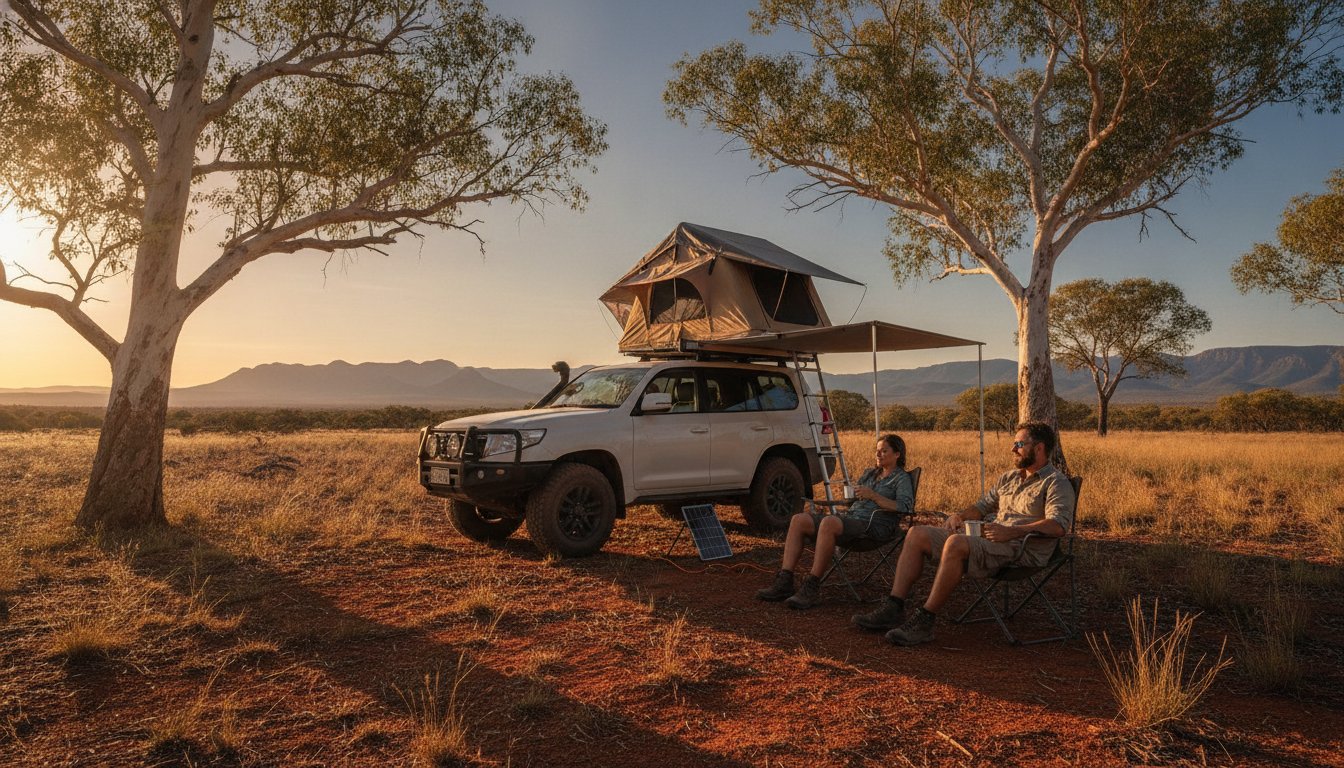
We need to be realistic about coverage. Even the best watch won’t find a signal in the deepest pockets of the Kimberley or the heart of the Simpson Desert. This is why we treat 4G as a safety enhancement rather than a replacement for a dedicated satellite messenger or PLB. When you’re setting up camp under your 4wd awning, the watch provides a convenient way to check in with family or receive weather alerts, but it relies on terrestrial towers that have finite reach. GPS caching helps fill the gaps, allowing your maps to remain functional even when the 4G signal vanishes.
Understanding LTE Band Compatibility
The most critical frequency for remote Australia is the 700MHz band, known as Band 28. This low-frequency signal travels further and penetrates obstacles better than the high-frequency bands used in cities. We always warn our community against buying “International Versions” of watches from overseas retailers. These often lack Band 28 support, leaving you stranded with zero connectivity in regional areas where Telstra, Optus, or Vodafone coverage would otherwise be available. By 2026, VoLTE (Voice over LTE) has also become mandatory for emergency calls, ensuring your voice is heard clearly over the digital network.
GPS, GLONASS, and Galileo: Multi-Band GNSS
Reliable positioning requires more than just one satellite network. We look for watches that utilize Multi-Band GNSS, specifically supporting L1 and L5 frequencies. This dual-frequency approach is essential when you’re navigating through deep sandstone canyons or under dense rainforest canopies where signal “multipath” errors occur. By tracking GPS, GLONASS, and Galileo simultaneously, your watch maintains a precise lock even in challenging terrain. A major perk of having a 4g gps sturdy outdoor watch is the improved “Time To First Fix” (TTFF). The 4G connection allows the watch to download satellite almanac data instantly, meaning you get a location lock in seconds instead of waiting minutes for the watch to find satellites on its own.
The 2026 Selection Framework: Choosing Your Navigation Partner
Selecting the right 4g gps sturdy outdoor watch requires a methodical look at your specific mission profile. We don’t all need the same bells and whistles. If you’re a long-distance trekker, every gram counts and battery longevity is your primary concern. For those of us living out of our vehicles, we might prioritize 4G connectivity to check weather updates while we’re tucked into our roof top tents. Remote professionals need that 4G tether to be rock-solid for essential comms. We evaluate gear based on these distinct needs to ensure you aren’t carrying tech that doesn’t serve your purpose, fellow Adventurerz.
4G is a power-hungry beast. There’s a direct trade-off between keeping your safety tether active and how many days you can stay off-grid. Solar charging has improved significantly by 2026, but we view it as a supplementary power source rather than a primary one. It’s fantastic for extending a trip by a day or two, but it won’t replace a solid charging routine. We always recommend pairing your watch with a rugged power bank for those extended missions into the unknown.
Battery Management Strategies for Multi-Day Adventures
We’ve learned that the best way to survive a long trek is to manage your polling rates. You don’t need your 4G radio searching for a tower every thirty seconds if you’re in a known dead zone. We recommend setting your 4G to ‘manual’ or ‘low-frequency’ mode to preserve juice. Always-on displays are beautiful, but they’re a luxury that can slash your survival-time battery life in half. Switch to gesture-based wake settings when you’re deep in the bush. If you need a quick top-up, look for watches that support fast-charging via USB-C to minimize your downtime at camp.
Software and Offline Maps
Offline capability is non-negotiable for us. We never rely on a live data stream for navigation when we’re hundreds of kilometers from the nearest town. A 4g gps sturdy outdoor watch is only as good as the software running on it, so your device must have enough local storage for high-resolution TOPO maps that include contour lines and water sources. We love syncing our detailed routes from a digital travel planner directly to our wrists to keep us on track. This creates a seamless flow from the planning phase to the actual exploration. Whether you prefer a proprietary system or a third-party app ecosystem, ensure the interface is intuitive enough to use when you’re exhausted.
Ready to level up your remote setup? Explore our latest community-vetted gear reviews to find the perfect tools for your next Australian mission.
Beyond the Specs: Living with a Rugged 4G Watch
Living with a 4g gps sturdy outdoor watch goes beyond the initial unboxing. It’s about a long-term commitment to maintenance and a deep respect for the environments we traverse. We view these devices as companions on a shared path toward responsible exploration. To keep your watch performing at its peak, you must prioritize regular firmware updates. These aren’t just minor technical tweaks; they often include critical patches for GPS accuracy and battery optimization that keep your navigation precise when you’re deep in the bush.
We also need to consider the footprint we leave behind. Choosing a 4g gps sturdy outdoor watch that’s built to last for years is a conscious choice to reduce electronic waste. Our community values gear that doesn’t end up in a landfill after a single season. When your wearable eventually reaches its limit, please look into sustainable disposal options for lithium-ion batteries. It’s part of our duty to protect the wild spaces we love to explore, ensuring they remain pristine for the next generation of Adventurerz.
Maintenance and Longevity
Cleaning your device is the simplest way to ensure its longevity. After exposure to salt water or that fine, pervasive bulldust, give your watch a thorough rinse in fresh water. This prevents mineral buildup from compromising the gaskets or tactile buttons. We also recommend considering your strap choice carefully. While silicone is excellent for moisture resistance, a high-quality nylon strap often provides better long-term comfort and won’t become brittle under the relentless Australian sun. Small choices like these extend the life of your hardware and keep you ready for the track.
The Adventurerz Verdict
We’ve seen how these watches have evolved into genuine lifelines. They represent the future of remote exploration by merging autonomous connectivity with rugged resilience. Before you head out on your next mission, run through a final checklist. Check your 4WD awning for secure mounting, verify your watch battery is at 100%, and confirm your offline maps are current. We’re all in this together, so join the Adventurerz community to share your real-world performance data. Your feedback helps us act as a peer and guide for others, ensuring we all explore responsibly while staying safely connected. Let’s keep the spirit of adventure alive with gear we can truly trust.
Ready for Your Next Remote Mission?
Your journey into the heart of Australia deserves gear that won’t quit when the track gets tough. We’ve explored how a 4g gps sturdy outdoor watch serves as a vital safety tether by combining standalone connectivity with military-grade resilience. Remember that Band 28 is the essential key to unlocking coverage in regional areas where standard devices often fail. By choosing high-quality, long-lasting equipment, you’re making a choice for self-reliance and protecting our wild spaces from unnecessary electronic waste.
We’re here to help you navigate these gear choices with confidence. Whether you’re planning a solo trek or a group 4WD expedition, having the right tool on your wrist changes the way you interact with the bush. Join the Adventurerz community for more expert gear reviews and connect with fellow enthusiasts who value responsible exploration. We provide expert-led reviews tailored specifically for our unique Australian landscape. Let’s head out there and explore this beautiful country with the respect and preparation it deserves. See you on the track!
Frequently Asked Questions
Do I need a separate SIM card for a 4G GPS watch in Australia?
Yes, you typically need an eSIM profile linked to an active Australian mobile plan. Most major carriers offer wearable add-ons that allow your 4g gps sturdy outdoor watch to share your primary phone number and data pool. This setup is what enables the watch to function independently of your smartphone. Check with your provider to ensure your specific plan supports multi-SIM or wearable twinning before heading into the bush.
Can a 4G watch replace a PLB (Personal Locator Beacon) or satellite messenger?
No, a 4G watch should never replace a dedicated Personal Locator Beacon (PLB) or satellite messenger. While the watch provides a fantastic safety tether within mobile coverage areas, it relies on terrestrial towers. Large portions of the Australian interior have zero cellular signal. A PLB is a non-negotiable survival tool because it communicates directly with global satellite networks, ensuring help can find you even in the most isolated desert regions.
How long does the battery typically last when using 4G and GPS simultaneously?
Simultaneous use of 4G and GPS is the most significant drain on your device’s power. Depending on the model and settings, you can expect between 12 and 42 hours of continuous tracking and connectivity. To extend this, we recommend adjusting your tracking intervals and turning off non-essential notifications. Always carry a rugged power bank for multi-day treks to ensure your navigation tool doesn’t go dark when you need it most.
Which Australian mobile network has the best coverage for 4G watches in remote areas?
Telstra currently holds the largest regional and remote 4G footprint across the Australian continent. Optus follows as a strong second, with both providers investing heavily in expanding their reach. While coverage varies, Telstra’s network is generally considered the gold standard for those of us pushing into the deep bush. We always suggest checking the specific coverage maps for your planned route to ensure you stay within range of a terrestrial tower.
Is a 4G watch worth it if I always carry my smartphone?
Absolutely. A dedicated 4g gps sturdy outdoor watch offers a level of resilience that most smartphones simply can’t match. Phones are prone to overheating in the sun, battery failure in the cold, or screen damage from a simple drop on rocky ground. Having your navigation and emergency comms strapped securely to your wrist means you’re always ready to act, fellow Adventurerz. It’s about building a redundant safety system where your watch serves as the primary tool.
What is the most durable screen material for rock scrambling and 4WDing?
Sapphire crystal is the undisputed champion for durability in harsh environments. It’s significantly harder than standard mineral glass or even chemically strengthened alternatives like Gorilla Glass. On the Mohs scale of mineral hardness, sapphire sits at a nine, just below diamond. This makes it incredibly resistant to the scratches and gouges that occur during rock scrambling or while working around heavy 4WD equipment. It ensures your maps remain perfectly legible throughout years of hard use.
Will my 4G watch work if I travel overseas after my Australian trip?
Your watch will likely work for GPS tracking anywhere in the world, but 4G connectivity depends on local LTE band compatibility. While many modern wearables support global roaming bands, some regional versions are optimized for specific countries. We suggest checking the manufacturer’s specifications for international roaming capabilities if you plan to take your adventures beyond our shores. Always remember that emergency SOS features may vary significantly depending on local network infrastructure and emergency service regulations.
Can I use offline maps on a 4G watch without a cellular signal?
Yes, provided you have downloaded the map data to the device’s internal storage before leaving home. Modern outdoor watches feature generous storage specifically for high-resolution topographic maps. Once these maps are saved locally, the GPS hardware functions independently of any cellular signal. This allows you to navigate with confidence through deep canyons or remote valleys where 4G signal can’t penetrate, keeping you on the right path regardless of your connectivity status.