Have you ever tried to manage a trail injury only to have your “one-size-fits-all” medical glove snap before it even clears your knuckles? For those of us blessed with a larger frame, searching for the best first aid kit for tall people often reveals a frustrating truth: standard safety gear feels like it was designed for a primary school classroom rather than a rugged Australian expedition. It’s a common struggle for those of us who need equipment that matches our physical scale.
We know the frustration of trying to wrap a standard crepe bandage around a muscular calf only to find it doesn’t even make two full rotations. It’s more than just an annoyance; it’s a genuine safety gap when your tools lack the leverage for large hands or your bandages simply can’t cover the wound. As Adventurerz, we believe our gear should work for us, not against us. We’re here to help you bridge that gap by building a safety system that respects your scale and your setup.
This guide explores how to source XL components, choose ergonomic tools that won’t slip, and mount your kit so it’s reachable from your rooftop tent or 4WD awning when every second counts. Let’s get your safety setup as ready for the bush as your rig is.
Key Takeaways
- Understand why standard medical components often fail larger adventurers and how “safety scaling” ensures your gear matches your physical frame.
- Identify the specific upsized essentials, like XXL nitrile gloves and 2.5m+ bandages, needed for reliable first aid in the Australian bush.
- Learn how to select the best first aid kit for tall people by focusing on tool ergonomics and full-sized trauma shears that provide better leverage.
- Discover how to integrate your safety system with your 4WD rig, using your reach to store kits in high-clearance areas like rooftop tents.
- Ensure your remote travel setup is truly prepared by swapping out flimsy standard items for durable, large-scale alternatives that won’t fail when it matters most.
Table of Contents
Why “Standard” First Aid Kits Fail Tall Adventurers
Most of us have been there. We buy a “comprehensive” kit, throw it in the back of the 4WD, and assume we’re covered. But for the taller members of our community, a standard off-the-shelf kit is often a collection of miniature tools that won’t perform when the pressure is on. This is where the concept of “Safety Scaling” becomes vital. It isn’t enough to just have the right items; those items must be physically compatible with your body. Finding the best first aid kit for tall people means looking past the checklist and evaluating the actual dimensions of the gear.
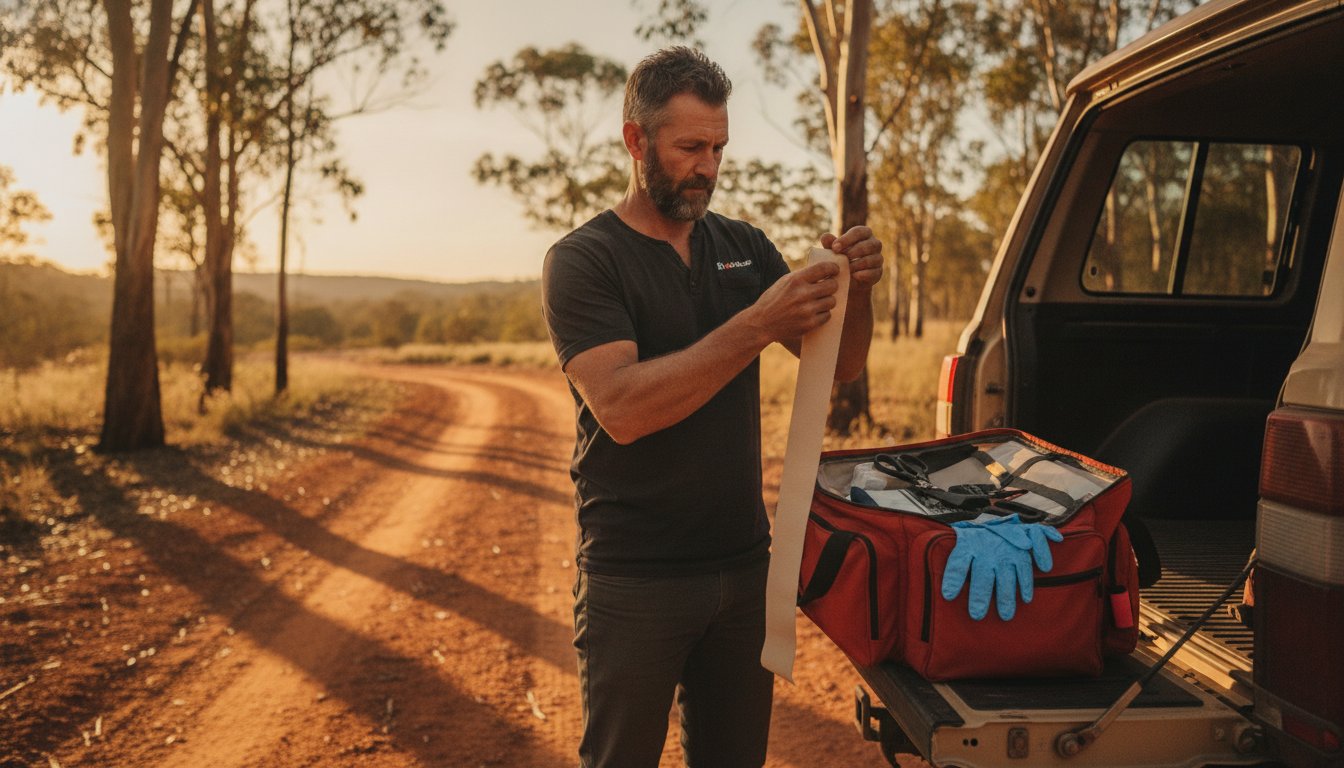
The “Glove Gap” is perhaps the most immediate failure point. Most kits ship with “Large” nitrile gloves, which are frequently too small for anyone over six feet with broad hands. If you’re trying to pull on a glove during a high-stress medical event and it rips across the palm, you’ve lost your primary barrier against biohazards. Similarly, limb circumference is a major hurdle. A standard 1.5m crepe bandage might work for a child’s arm, but it’s woefully insufficient for a tall adventurer’s leg. When you need to apply a pressure immobilisation bandage for a snake bite, that extra length isn’t a luxury; it’s a requirement.
Ergonomic leverage is another area where “standard” falls short. Trying to use micro-tweezers or tiny 10cm scissors with large fingers is a recipe for frustration. When you’re in the bush, you need tools that offer enough surface area for a firm grip. If your fingers can’t even fit through the loops of the shears, you can’t apply the force needed to cut through heavy clothing or seatbelts.
The Risk of Inadequate Component Size
When medical components are too small, the risks multiply. A ripped glove isn’t just a nuisance; it’s an immediate exposure risk in a remote environment where help is hours away. Short bandages are equally dangerous. If a bandage can’t make enough revolutions around a limb, you won’t achieve the necessary compression to stabilize a fracture or slow venom travel. Beyond the physical, there’s a heavy psychological toll. Fumbling with micro-tools while your hands are shaking from adrenaline creates a sense of helplessness that can compromise your decision-making during a crisis.
Defining the “Tall-Friendly” Kit Standard
A 2026-spec safety system for the larger explorer prioritizes usability over “compactness.” While ultralight hikers love tiny kits, we know that “compact” is often the enemy of “accessible” for large fingers. We look for kits that offer modularity, allowing us to swap out standard items for XL and XXL versions. The best first aid kit for tall people should feature full-sized 19cm trauma shears and heavy-duty bandages that exceed 2.5m in length. This ensures that when we reach for our gear, it actually fits our frame and provides the leverage we need to act decisively in the rugged Australian landscape.
The Anatomy of a Large-Scale First Aid System
Building a safety system that matches your physical presence requires a shift in how we view gear organization. It isn’t just about finding a bigger bag; it’s about the internal architecture of the kit. The best first aid kit for tall people prioritizes accessibility and component scaling to ensure that when an emergency happens, your gear doesn’t become a second obstacle. We need to move away from the “crammed” philosophy of standard kits and embrace a layout that respects larger hands and longer limbs.
Organization is key. Standard kits often use tiny, elasticated loops that require surgical precision just to extract a single bandage. For those of us with larger fingers, this leads to fumbling and wasted time. We recommend high-visibility modular pouches that use clear windows and oversized pull-tabs. This allows you to identify and grab the right module without fighting the bag itself. If you’re refining your remote travel setup, considering how your safety gear integrates with your roof top tents or vehicle storage is a smart move for any serious explorer.
Stabilizing a long femur or tibia requires more than a standard-issue splint. For tall adventurers, a standard 36-inch SAM splint is the bare minimum; however, carrying two or opting for extra-long variants is often necessary to achieve true immobilization. When a limb is longer, the leverage exerted on a fracture is greater, meaning your stabilization gear needs to be robust enough to handle that extra force without flexing.
Medical Components That Must Be Scaled
When we talk about scaling, we start with bandages. A 2.5m+ heavy-duty compression bandage is essential for providing enough revolutions around a large thigh or calf. Standard adhesive dressings also fall short. We prefer “island dressings” or large-format adhesive pads that can cover a significant graze without needing four separate band-aids. Don’t forget the triangular bandage either. A standard size often leaves a tall person’s arm dangling at an awkward angle; look for oversized versions that can comfortably reach around a broad chest and a long neck to create a supportive sling.
Hardware and Tools for Large Hands
Precision matters, but so does grip. We always swap out flimsy first aid scissors for full-sized 19cm trauma shears. These provide the handle room for three or four fingers, giving you the leverage to cut through denim or canvas. Tweezers should also be upgraded. Pointed-tip slant tweezers with a wider body offer better control for large-handed precision. Finally, ensure your CPR mask is a high-quality version with a flexible seal. A rigid, small mask won’t provide an airtight fit on a larger facial structure, which can compromise the effectiveness of rescue breaths during a crisis.
Top Rated First Aid Categories for Tall Explorers
Selecting the best first aid kit for tall people involves matching your specific adventure type with a system that accommodates your physical scale. Whether we are navigating remote desert tracks or exploring the diverse Australian coastline, our medical gear must be as specialized as our vehicles. We don’t just need supplies; we need a category of kit that allows for the upsized components we’ve identified as essential for larger frames.
Modular remote area kits are often the gold standard for our community. These systems use a “bag-within-a-bag” approach, which is perfect for tall adventurers who need to swap out standard items for XXL alternatives. Waterproof expedition kits also rank highly, especially for those of us who enjoy beach camping or frequent river crossings. A rugged, waterproof outer shell protects your larger trauma components from the harsh elements, ensuring they are pristine when you actually need them.
Best for 4WD and Remote Travel
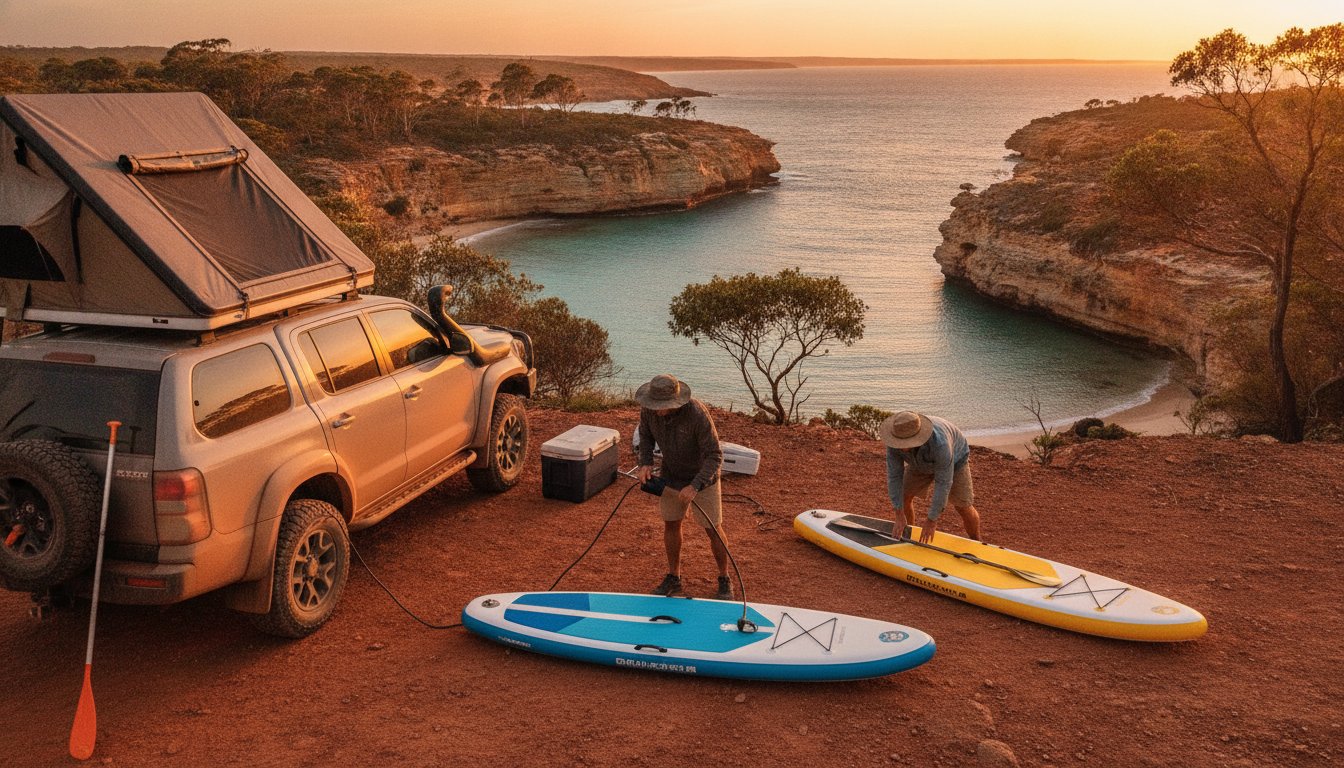
For vehicle-based exploration, we prioritize heavy-duty trauma kits that integrate seamlessly with our rigs. These kits should offer enough internal volume to house full-sized tools without becoming a disorganized mess. We often recommend kits with external mounting capabilities. Attaching your kit to the side of your vehicle near your 4WD awnings ensures that your medical gear is accessible at eye level, saving you from bending over or digging through a cramped boot. We find that hard-case kits are superior for vehicle storage because they protect the contents from being crushed and maintain their shape, making them easier for large hands to open quickly.
Best for Hiking and Backpacking
When we head out on foot, the challenge is balancing weight with the need for scaled medical gear. An ultralight kit doesn’t have to be a “small” kit. We focus on stripping away redundant small items while keeping the high-impact, large-scale essentials like full-sized shears and extra-long compression bandages. Access is also a factor for tall hikers. We look for pouches that can be mounted high on the shoulder straps of a backpack, keeping them within easy reach of a longer arm span. For those of us with larger boots and feet, we always add a roll of high-tensile medical tape. Standard blister pads are often too small for the surface area of a size 13 foot, so a custom-cut piece of heavy-duty tape provides much better protection on long treks.
Customizing Your Kit: The “Big & Tall” Add-ons
Buying a pre-packed kit is just the first step in our preparation process. To truly secure the best first aid kit for tall people, we must treat the standard contents as a baseline rather than a finished product. Most kits are packed for the average user; however, our community needs gear that accounts for longer limbs and larger hands. This means taking an active role in “Safety Scaling” your equipment to ensure every component performs when the pressure is on. It’s about self-reliance and ensuring our gear is as hardy as the tracks we travel.
Thermal blankets are a frequently overlooked failure point in standard setups. A basic emergency foil blanket often measures around 210cm, which seems adequate until you try to tuck it under the feet and over the shoulders of a tall explorer. In the cold Australian desert nights, exposed extremities lead to rapid heat loss. We always add full-sized, heavy-duty thermal blankets or “double” versions to our kits to ensure complete coverage from head to toe. Similarly, we replace standard splints with 36-inch SAM splints. These provide the necessary length to stabilize a long tibia or femur, offering far better leverage and support than the 18-inch versions found in most compact kits.
The Tall Adventurer’s “Must-Swap” Checklist
Auditing your kit doesn’t have to be a chore. Follow these steps to ensure your gear is ready for action:
- The Glove Test: Open your kit and try on the gloves. If they pinch, restrict movement, or tear at the wrist, replace them with XXL nitrile versions immediately.
- The Bandage Measure: Check your crepe bandages. If they’re under 2m, they’re likely too short for a tall person’s leg; swap them for 2.5m or 3m heavy-duty versions.
- The Tool Grip: Attempt to use the shears with your gloves on. If you can’t fit your fingers through the loops comfortably, it’s time for an upgrade.
Specialized medical suppliers across Australia offer these upsized components, often found through professional paramedic or veterinary supply stores that stock larger-format trauma gear. Safety Scaling in 2026 is the proactive calibration of medical supplies to match the user’s physical dimensions, ensuring that gear size never dictates the quality of care.
Ergonomic Tool Upgrades
Precision is everything during an emergency. We recommend replacing plastic tweezers with stainless steel surgical-grade versions. They provide the grip strength and durability needed for extracting splinters or debris from larger surface areas. We also suggest adding a high-lumen headlamp to your kit. When you’re managing a wound on a large limb, you need both hands free and a powerful beam to see what you’re doing. Finally, upgrade to a high-quality, one-handed tourniquet. Ensure the strap length is sufficient for larger thigh circumferences, as standard straps can sometimes be too short for effective tensioning on muscular or long limbs.
Once your kit is scaled to your size, make sure it’s stored where you can reach it quickly. Check out our recommendations for the best 4wd awnings to see how to create a protected, accessible medical station on the side of your rig.
Integrating Your Kit with Your Outdoor Setup
Once we’ve scaled our medical gear to fit our frames, the final step is ensuring that kit is exactly where we need it during a crisis. We have a physical advantage with our reach, and it’s time to use that to optimize our rig’s layout. The best first aid kit for tall people isn’t just about the upsized components inside; it’s about how quickly you can get your hands on those tools when every second counts. We don’t want to be digging through a cramped footwell or a buried storage box when an emergency strikes in the middle of the scrub.
High-mount accessibility is a game changer for vehicle-based camping. While standard advice often suggests keeping kits in the glovebox, we prefer utilizing high-clearance areas like the internal frames of roof top tents. This keeps the kit away from the dust and floor-level clutter while remaining at eye level for us. However, we must always follow the “Reach Rule.” This means while we utilize our height for storage, the kit must still be accessible to the shortest member of our party. A safety system that only one person can reach is a single point of failure that we can’t afford in remote areas.
External rig mounting is another excellent strategy for the modern explorer. Attaching a trauma kit to the side of your 4WD near the awning area means you don’t have to climb inside the vehicle to find supplies. This is vital for managing injuries sustained while cooking or setting up camp. Regular maintenance is the backbone of the remote travel mindset. We recommend auditing your setup before every major Australian adventure to check for expired items and ensure your XXL nitrile gloves haven’t degraded in the outback heat.
Rooftop Tent and Awning Integration
We love mounting kits on the internal frame of hard-shell tents using heavy-duty hook-and-loop straps. It ensures that if an emergency happens at 2 AM, you aren’t scrambling down a ladder in the dark to find a bandage. For the vehicle itself, MOLLE panels on the back of the front seats provide ergonomic access from the rear doors. This keeps your upsized tools organized and prevents them from shifting during heavy corrugated track drives. Strategic placement ensures your gear is ready for nighttime emergencies without sacrificing precious living space.
The Community Mindset
At Adventurerz, we believe that self-reliance is the ultimate form of respect for the rugged environments we explore. By choosing durable, scaled gear, we minimize our impact and ensure we stay prepared for the unexpected. We encourage you to share your scaled safety knowledge with our community! Whether it’s a new mounting hack or a source for oversized supplies, your insights help us all travel more safely. Let’s keep our spirits high and our safety standards higher as we head out on our next shared path of responsible exploration.
Gear Up for Your Next Remote Expedition
True preparedness in the Australian bush requires a shift in perspective. It’s about respecting the scale of the challenge and the physical scale of our own bodies. We’ve seen how upsized essentials like XXL nitrile gloves and extended 2.5m bandages provide the reliability you need when things get rugged. By scaling your medical supplies and integrating them into high-access areas of your vehicle, you ensure your safety system is as hardy as your 4WD setup. Finding the best first aid kit for tall people isn’t just a matter of comfort; it’s a critical step in professional-grade remote travel.
Our community of Adventurerz values durability and self-reliance above all else. If you’re ready to take the next step in your preparation, Explore our expert 4WD and Camping Gear Recommendations for community-vetted reviews and guides focused on responsible adventure across Australia. We’ve spent years testing gear in the harshest conditions so you can explore with absolute confidence. Stay safe, keep your gear dialed, and we’ll see you out on the shared path of discovery!
Frequently Asked Questions
Do first aid kits come in different sizes for different body types?
Most commercial kits don’t offer body-type variations, which is why finding the best first aid kit for tall people usually involves individual component upgrades. Manufacturers typically design gear for an average adult profile. This often leaves larger individuals with tools and supplies that are physically too small to be effective. We recommend choosing modular systems that allow you to swap out default items for upsized alternatives that match your physical frame.
What size gloves should I look for in a first aid kit if I have large hands?
You should prioritize XL or XXL nitrile gloves to ensure a proper fit without the risk of tearing during use. Standard kits frequently include Large gloves, but these are often too tight for broad hands and long fingers. A ripped glove during an emergency compromises your safety and the sterile environment of the wound. We suggest carrying at least three pairs of XXL gloves to account for backups.
Why are standard bandages often too short for tall people?
Standard crepe bandages usually measure around 1.5m, which is designed for average limb circumferences. For a tall person with longer legs or larger muscles, this length doesn’t provide enough revolutions to create adequate compression. In scenarios like snake bites or sprains, you need the extra length of a 2.5m or 3m bandage to ensure the injury is fully stabilized and immobilized according to Australian safety standards.
Can I customize a standard first aid kit for my height?
Yes, you can and should customize a standard kit by auditing the components against your physical needs. We suggest starting with a high-quality base kit and replacing the failure points like small gloves, short bandages, and micro-tools. This approach ensures you have a professional-grade setup without having to source every single item from scratch. It is the most efficient way to build the best first aid kit for tall people.
Where is the best place to store a first aid kit in a 4WD with a rooftop tent?
The best storage location is at eye level where it’s accessible from both the ground and your sleeping area. We often mount our kits on the internal frame of our rooftop tents or on a MOLLE panel behind the front seats. This keeps the kit away from floor-level dust while ensuring it’s within reach during a nighttime emergency. Always ensure the kit is visible and known to all party members.
Are there specific first aid tools better suited for large hands?
Look for 19cm trauma shears and surgical-grade stainless steel tweezers with a wider body for better grip. Standard first aid scissors are often too small for large fingers to loop through comfortably, which reduces your cutting leverage. Upsized tools provide the surface area needed for a firm grip, allowing you to act with precision and force when cutting through heavy clothing or managing intricate wound care tasks.
What is the “Snake Bite” protocol requirement for tall people in Australia?
The Australian snake bite protocol requires firm pressure and immobilization, which is harder to achieve on long limbs with short bandages. You must use heavy-duty compression bandages that are at least 2.5m long to ensure you can wrap the entire limb from the extremities upward. For tall adventurers, carrying multiple long-form bandages is essential to provide enough coverage and pressure to slow the travel of venom effectively across a larger surface area.
Is it better to buy a pre-made kit or build one from scratch?
We recommend buying a high-quality, modular pre-made kit as a foundation and then customizing the specific components that fail the scale test. Building from scratch is possible but often results in missing small, essential items like antiseptic swabs or eye wash. By starting with a reputable base, you get a durable bag and a comprehensive checklist, which you then enhance with the XL gear needed for your larger frame.