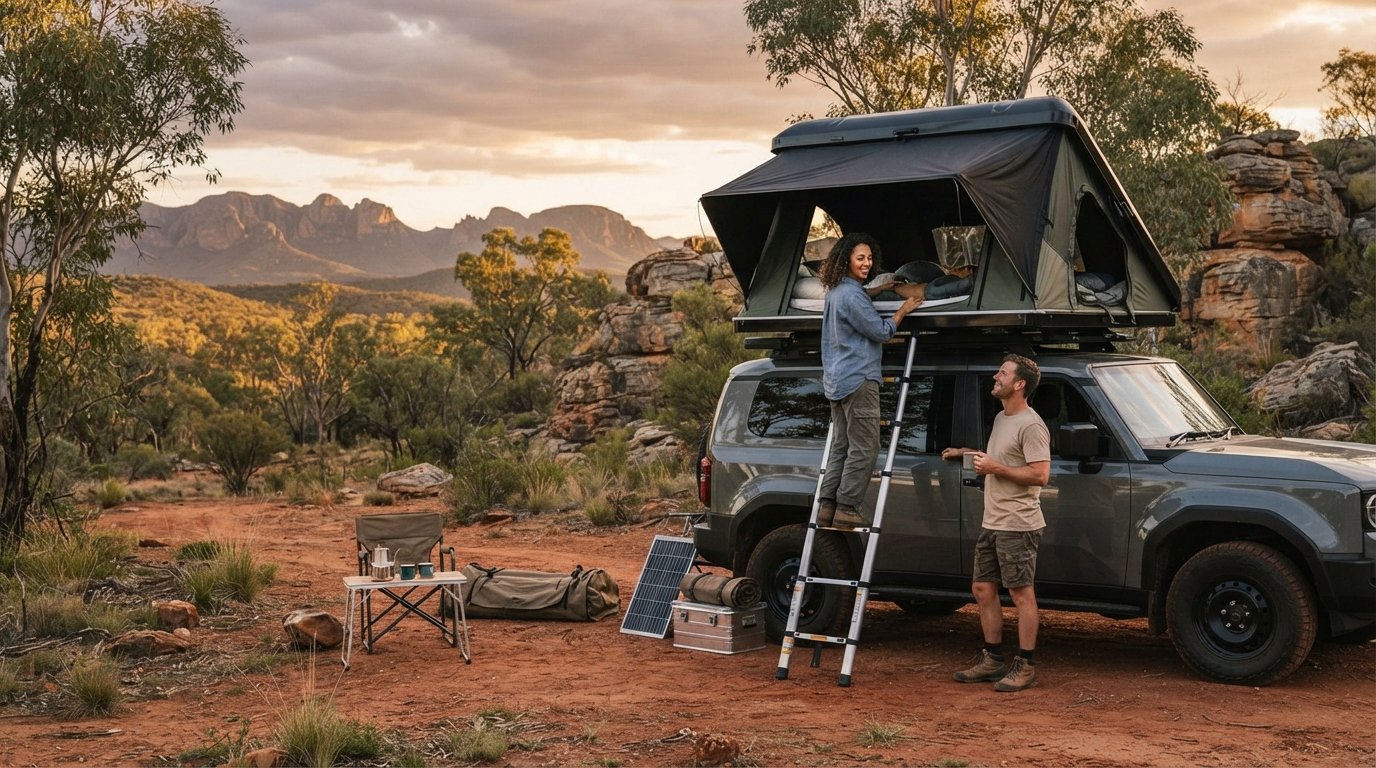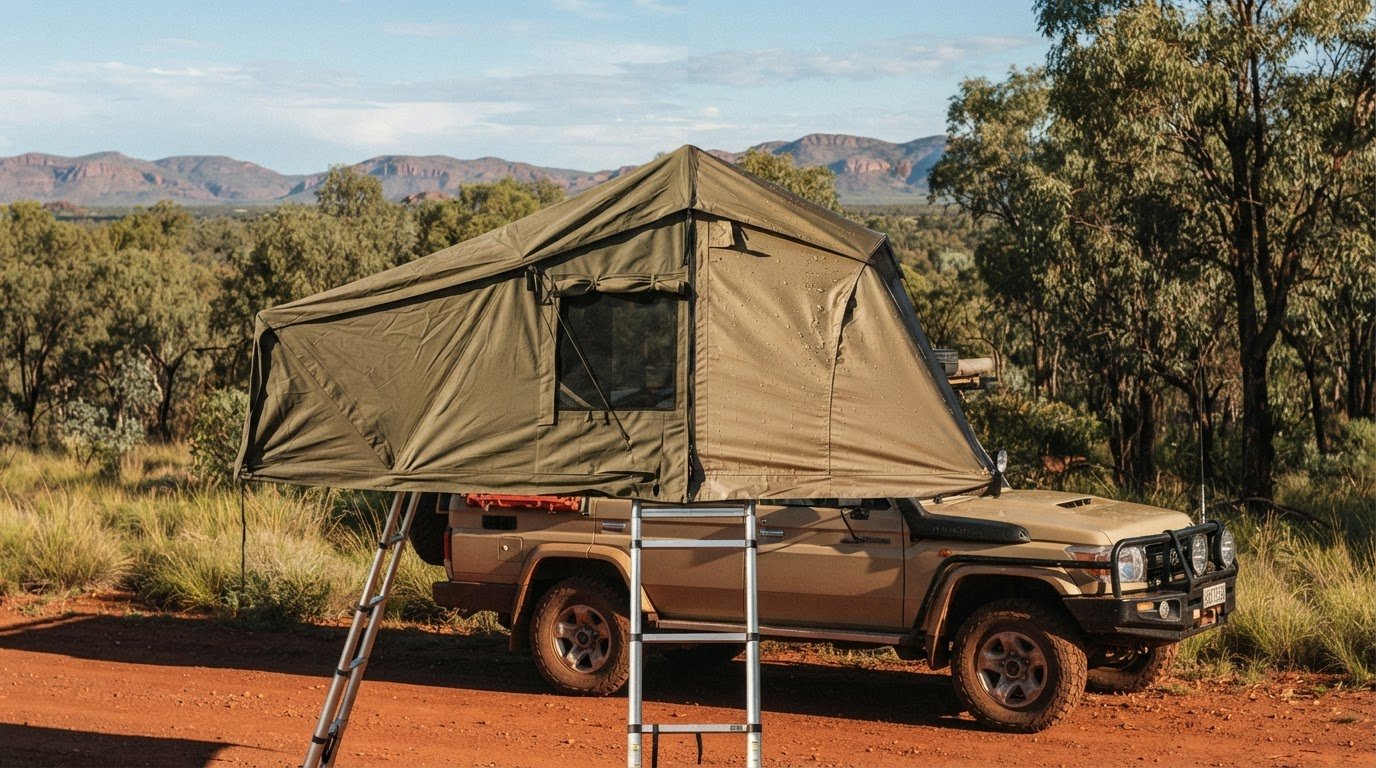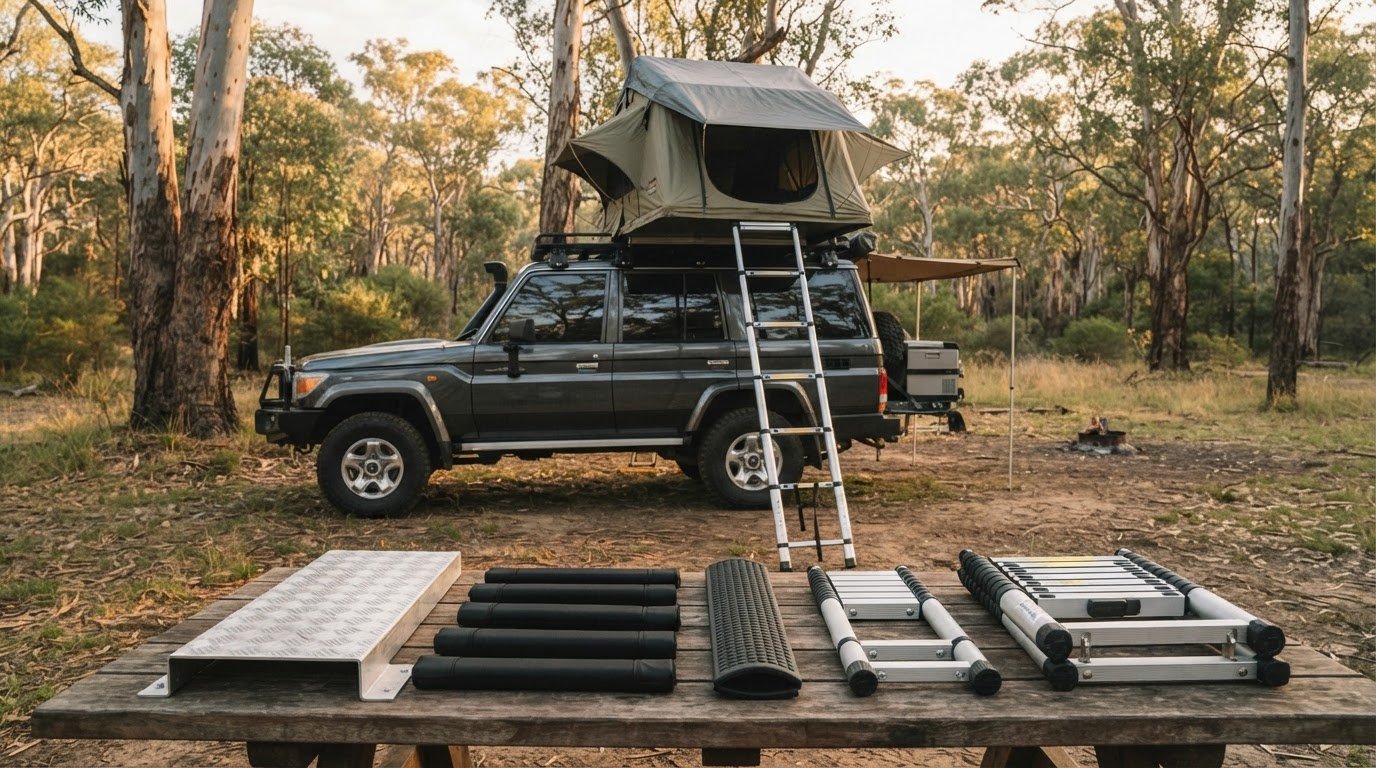
A hardshell rooftop tent’s biggest everyday advantage is speed: it typically opens in 30-60 seconds, while a soft-shell setup takes 5-15 minutes. In this long-term ownership review of a hardshell RTT, we’ll weigh that convenience against the trade-offs that matter after the first trip. The tent itself may open quickly, but setting up camp still takes longer.
A quick pack-down is a real advantage when you’re moving between camps, especially after a long day on the road. But fast setup alone doesn’t make a tent right for your vehicle, travel style or sleeping needs. Shell weight, roof-load limits, weather exposure and interior space all shape the experience over time.
We’ll compare hard-shell and soft-shell rooftop tents for setup, vehicle fit, weather protection, sleeping comfort and long-term value in Australian conditions. You’ll get a practical way to judge whether a hardshell’s speed and protection suit your trips, or whether a soft-shell tent’s extra room makes more sense.
Key Takeaways
- Compare quick camp transitions with the full pack-down routine to see whether a hardshell suits how often you move.
- Match tent and rack weight to your vehicle’s roof-load ratings, and account for how extra roof weight affects handling.
- Assess shell materials, fabric, seals and ventilation against the weather and conditions you expect to encounter across Australia.
- Think through sleeping space, mattress comfort and who’s sharing the tent before choosing a compact design.
- Judge long-term value by your camping frequency, upkeep and resale expectations, not just the initial purchase.
Table of Contents
Hard-shell rooftop tent setup and pack-down
For long-term ownership, a hard-shell RTT generally saves time at camp, while a soft-shell tent can offer more room. Hard-shell models typically open in 30-60 seconds; soft-shell setup can take 5-15 minutes. Across either style, a practical full rooftop tent camp setup still takes 15-30 minutes.
Fast setup matters when you move camp often, but it doesn’t remove every step. Park on suitable ground, release the travel latches, open the shell and extend the ladder. Check that the tent is stable before climbing in. To pack down, clear loose gear, fold the fabric inside the shell, close the latches and secure everything before driving.
See a real-world example in this long-term review:
Hard shells open on hinges and gas struts, either like a clamshell or by lifting vertically. Internal storage can keep bedding ready between trips and reduce packing at camp. Check that the ladder reaches the ground securely and stays stable on the terrain. A rooftop tent can be difficult to use at an uneven campsite, so choose a level parking spot before opening it.
Soft-shell tents often take longer to deploy because their canvas unfolds over the vehicle’s side. Soft-shell deployment is also described as taking 3-5 minutes, while broader setup estimates reach 5-15 minutes. The difference reflects whether the count includes unfolding, ladder placement, bedding and accessories. Many soft-shell models offer an annex for extra sleeping space, storage or a changing room.
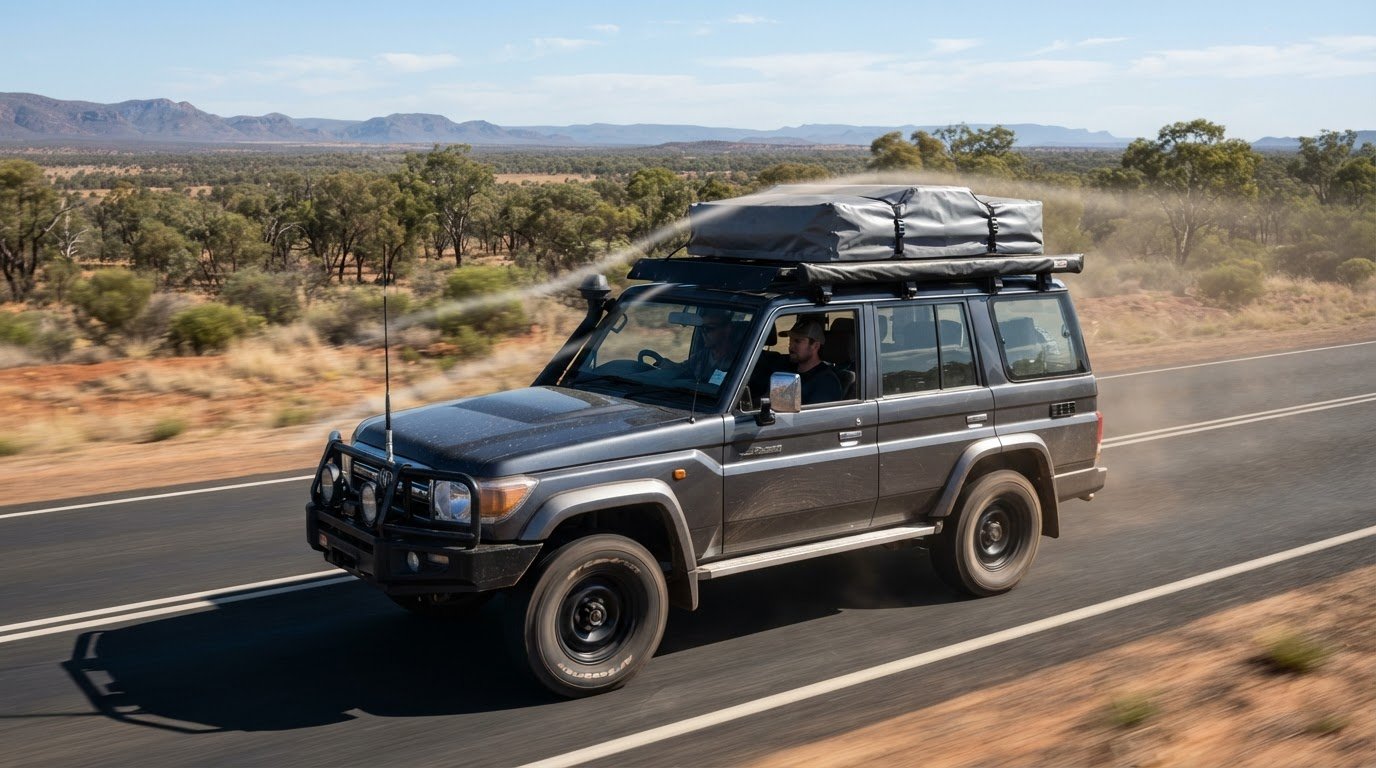
Factor in the whole setup when planning costs: tent, compatible roof rack, mounting hardware and any optional annex or solar equipment. Some models include accessories; others require separate purchases. A trailer offers another mounting platform, but its roof or bars must support the brackets. A low-profile shell can also flap and create drag less than a bulky soft cover while driving.
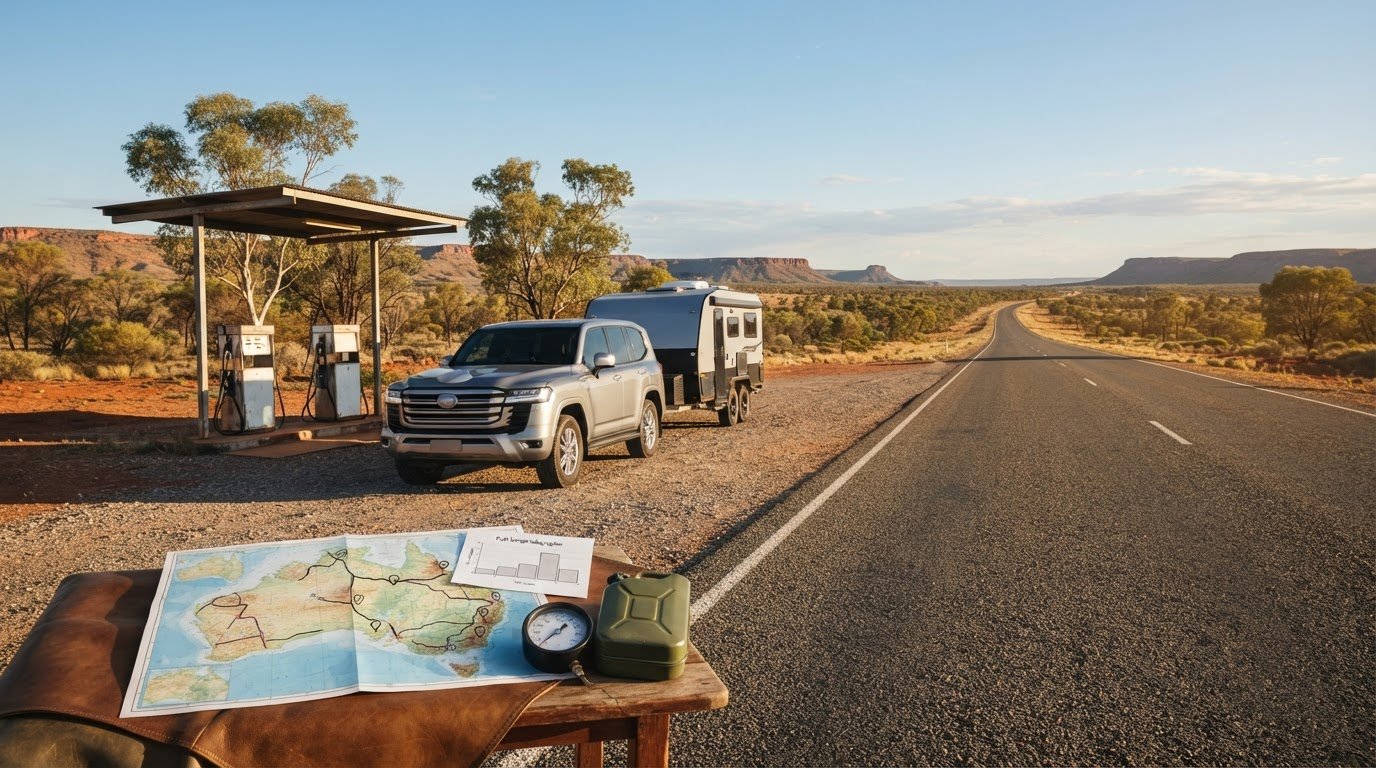
For Australian ownership, consider vehicle height, secure mounting, roof-load ratings, insurance terms and campsite access. These practical factors shape where and how a rooftop tent can be used. A rooftop tent mounted on a 4WD roof must be packed away before driving elsewhere, which can mean leaving a campsite to explore.
Warranty and repair routes generally involve the seller or manufacturer; paid repairs and spare-parts access depend on the tent’s design. Keep purchase records and identify replacement parts before relying on a tent for remote travel. For a broader comparison of setup styles and features, explore these rooftop tent reviews.
| Option | Opening or setup | Space and extras | Pack-down consideration |
|---|---|---|---|
| Hard-shell RTT | 30-60 seconds to open | Compact; may store bedding | Close shell and secure latches |
| Soft-shell RTT | 3-5 minutes to deploy; broader setup estimates reach 5-15 minutes | Often offers an annex | Fold canvas and secure cover |
Choose a hard shell if you move camp often and want a quick pack-down. Choose a soft shell if extra annex space matters more.
Hard-shell tent weight, roof loads and vehicle compatibility
Hard-shell RTT fit depends on more than the tent’s footprint. Before buying, compare the tent and rack weight with your vehicle’s dynamic and static roof-load ratings.
Tent Weight and Roof-Load Limits
Typical hard-shell tents weigh 45-95 kilograms, while soft-shell tents typically weigh 40-65 kilograms. Roof racks add another 15-25 kilograms, so the combined load can use much of a vehicle’s dynamic roof capacity before you add other gear. For most Australian 4WDs, that dynamic rating is 75-100 kilograms. Hard shells can also raise the vehicle’s centre of gravity, affecting handling.
Dynamic capacity applies while driving; static capacity matters when the vehicle is parked and occupied. Check the ratings for both the vehicle and rack, then include the tent, mounting hardware and attached gear in your calculations. Keep the load within the tent roof’s capacity too. Excess weight on a hard-shell lid can prevent its gas struts from opening it.
Roof-Rack and Vehicle Compatibility
Compatibility depends on the rack’s load rating and mounting points, as well as the tent’s footprint. Measure the roof and compare it with the tent base to avoid excessive overhang. The rack must support the tent and distribute its load as intended. A suitable vehicle roof rating alone doesn’t mean the rack is compatible.
Before mounting, confirm the vehicle and rack ratings, then check that the brackets fit the rack system. Reassess the full load before driving, particularly if you add equipment later. A trailer can avoid vehicle roof-load limits, but its roof or bars still need to support the tent’s mounting brackets.
Purchase costs vary by tent type and supporting hardware. Treat these as separate parts of the setup: the tent price doesn’t necessarily include the rack or mounting hardware.
Build your comparison around the complete load and setup:
- Read the ratings: Find dynamic and static limits for both the vehicle and roof rack.
- Add the weights: Include the tent, rack, mounting hardware and attached equipment.
- Measure the roof: Compare its usable area with the tent base and mounting positions.
- Check the lid: Keep anything carried on top within its capacity, so the gas struts can open it.
That calculation can rule out a tent before buying, even if its shell looks compact. A lighter soft-shell may leave more dynamic capacity for other gear; a hard shell may suit your priorities if the vehicle and rack can carry it within their ratings. Compare rooftop tent reviews alongside your vehicle’s load figures, then choose a setup that fits both your camping plans and mounting limits.
Hard-shell tent durability and weather protection
Long-term weather protection depends on the shell, tent fabric and upkeep of the seals. Australian conditions vary widely, so match these features to the places and seasons where you camp.
Hard shells provide a tougher outer barrier than fabric and PVC covers, but they don’t make a tent immune to Australian rain, wind, heat, dust or UV exposure. When the tent is open, its fabric, stitching, zips, mesh and weather sealing also affect protection and comfort.
Clean and dry the tent, then inspect its shell, fabric, zips and seals. A quality hard-shell tent can last 5-10 years or longer with proper cleaning, drying and inspection, though fabric and mechanism wear can require replacement or significant refurbishment after 5-8 years.
Fabric and Insulation
The shell protects the tent when it’s closed; canvas, stitching, zips and mesh face the weather when it’s open. Hard shells may use aluminium, ABS, fibreglass or composite materials, each with different responses to heat, impact and long-term wear. If you camp in cooler climates, consider insulation, since the shell alone doesn’t determine sleeping warmth.
Weather Sealing and Waterproofing
Waterproofing depends on more than the hard shell: seams, zips and seals help protect the fabric enclosure during use. For tropical trips, consider ventilation and waterproofing together. A rigid shell offers a tougher outer barrier than a soft cover, but it isn’t theft-proof and doesn’t remove the need to inspect weather seals.
Dust protection also depends on the closures and seals around the packed tent. Inspect them during routine care, especially after rough handling or travel through dusty conditions. Re-sealing helps maintain the fabric’s weather protection, while damaged zips or stitching can still affect performance.
Condensation and Weather Protection
Condensation forms when moisture inside the tent meets cooler surfaces, and poor ventilation can leave the sleeping space sticky and stale by morning. Open vents to encourage airflow where conditions allow, then dry the interior and mattress after a damp night. In humid, tropical conditions, ventilation deserves attention alongside waterproofing.
Use this simple inspection after trips:
- Dry the fabric and interior before closing the tent for storage.
- Inspect seams, zips, mesh and seals for wear or damage.
- Check the shell for impact damage, then confirm latches close securely.
These steps support durability, but they can’t prevent every repair. A hard shell may better resist exposure while packed than a soft cover, yet long-term performance still depends on the fabric and mechanisms used at camp. Make cleaning, drying and inspection regular parts of ownership, rather than waiting for visible damage.
Sleeping space, headroom and mattress comfort
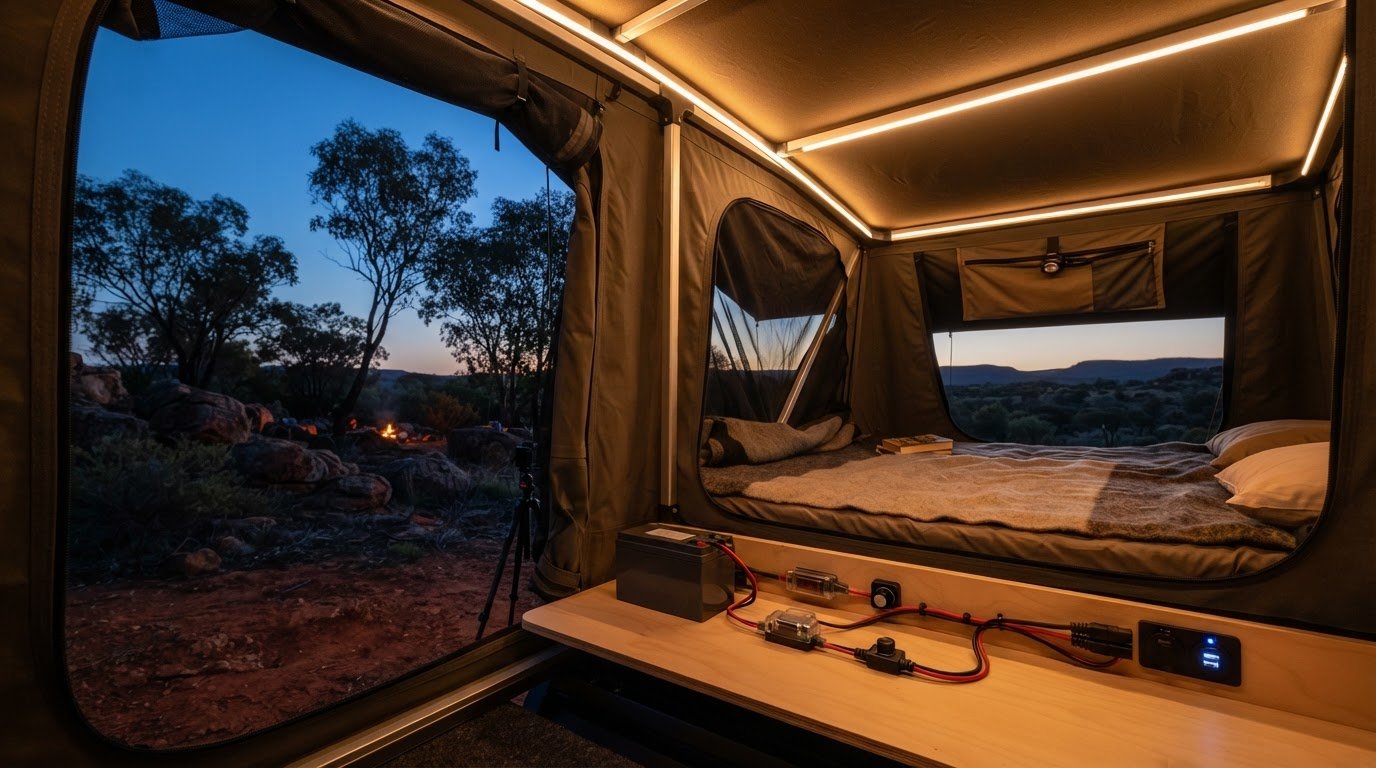
A compact hard-shell tent can make camp easier to manage, but its sleeping area may feel tight compared with a larger fold-out soft shell. Compare usable width, headroom and mattress size before deciding whether your regular crew will sleep comfortably.
Hard-shell rooftop tents are generally suited to 1-3 people, although the count alone doesn’t show how much room each sleeper gets. The guide describes common widths as 1.4 metres and 1.8 metres. Measure the space you need for shoulders, bedding and overnight essentials, then compare it with the tent’s internal dimensions.
A 1.4-metre layout may suit a couple who pack light, while a wider 1.8-metre option gives occupants more shoulder room. Those examples are starting points, not a substitute for checking the actual floor plan. Curved shell walls and sloping fabric can reduce usable space near the edges, even when the sleeping surface looks broad.
Many quality hard-shell models include a memory-foam mattress measuring 60-80 millimetres thick. Mattress thickness matters, but comfort also depends on how the foam supports your body and whether it suits your sleeping position. A mattress that feels comfortable during a short test may feel different after repeated nights, so note pressure points and whether bedding shifts on the surface.
Headroom varies with the opening design and fabric shape. A raised roof may give you room to sit up, while a lower profile can limit changing inside. Check the open tent’s height and the space around your head and shoulders, not just its closed dimensions. Internal storage can keep bedding in place between trips, but it also takes up space inside the shell.
Ladder placement affects how you enter and leave the sleeping area. Before choosing a model, consider where the ladder will meet the ground and whether it blocks a door, awning or access to your vehicle. At camp, position it securely, climb facing it and keep the entry clear of bags and footwear.
A soft-shell tent often offers more sleeping room than a compact hard shell, particularly in larger fold-out designs. That space can suit families or travellers who want room to spread out. A hard-shell interior may better suit a smaller sleeping group and a compact packed shape. Choose based on who will sleep in the tent and how much room each person needs, not just the maximum capacity.
Comfort also changes with how you manage bedding and moisture. Air the mattress after damp trips, dry it fully before closing the tent, and inspect its cover for wear. RTT owners may need to replace mattresses and covers every 3-5 years. Those checks help keep the sleeping surface comfortable across repeated camping seasons.
Before buying, compare the mattress dimensions, usable headroom and ladder access with your usual sleeping setup. Consider the size of your pillows and bedding, and how accessories might take up interior room. The right fit lets everyone sleep comfortably without turning each night into a gear-rearranging exercise.
Value for money over long-term use
A hardshell’s value depends on how often you camp, how long it lasts and what you recover at resale. Compare total ownership costs, not just the tent’s purchase price.
Resale Value and Depreciation
Resale value can offset ownership costs, but rooftop tents typically lose 40-60% of their value within three years. Condition, age, fabric wear and functioning hardware all affect what a used tent may be worth. Keep the shell clean, dry the canvas, and maintain the gas struts. Keep purchase records and note repairs, so future buyers can assess the tent’s history.
The calculation depends on your use and resale figures, so treat it as an example rather than a universal outcome. Add your own purchase, maintenance and resale figures to estimate your likely cost per night.
Longevity and Long-Term Value
Long-term value also depends on how well the tent performs through repeated trips. Regularly inspect the fabric, fasteners, mounting points and gas struts. A repair that keeps a sound shell tent in service can affect its value differently from replacing a worn mattress or cover.
Compare upkeep costs with how often you camp. More nights spread the ownership cost across more use; fewer nights mean each trip carries a larger share.
For a practical comparison, include the roof rack, tent, accessories, maintenance and eventual resale value. Divide the net cost by your expected camping nights. If your trips involve frequent moves, a quick-opening shell may save time at camp. If you stay at one site, consider whether another camping setup better suits your routine.
Camping 15 or more nights per year is a useful threshold for considering a rooftop tent. Owners camping more than 15-20 nights annually may find camper trailers offer better long-term investment value. Trailer ownership brings its own upkeep, so compare the full costs and practicalities rather than assuming either option is automatically cheaper.
Travel, storage and mounting also shape the decision: a rooftop tent stays with the vehicle, while a trailer can remain at camp. If you regularly leave camp to explore, consider whether packing the tent will change your plans. Choose the setup that fits your trips and that you’ll use enough to earn its place.
Use rooftop tent reviews and recommendations to compare models against your camping frequency, vehicle setup and long-term value priorities.
Adventurerz: Roof top tents reviews and recommendations
Adventurerz offers rooftop tent reviews and recommendations to help you compare options against your vehicle, camping style and priorities. Use these comparisons when weighing shell design, sleeping space, setup demands or long-term upkeep, and want to make a more informed choice for Australian trips.
Our guides also cover 4WD awnings, camping equipment and hiking equipment, helping you think through the wider setup for time outdoors. Use the information to plan thoughtfully, choose gear that suits your travel needs and explore responsibly.
Visit adventurerz.com to explore the reviews and recommendations.
Plan Your Next Setup With Confidence
A long-term ownership review of a hardshell RTT is a starting point, not a substitute for matching gear to the trips you actually take. Before choosing, picture your next camps: who’s coming, how often you’ll move and what you want to leave packed between journeys. That planning can help turn a list of features into a setup for your kind of Australian adventure.
Adventurerz offers rooftop tent reviews and recommendations, alongside reviews of 4WD awnings and camping equipment. Use those perspectives to consider how each part of your setup works together, from shelter choices to the gear you carry. The aim is a practical, well-considered choice that fits your travel priorities and encourages responsible time outdoors.
Ready to explore your options? Contact Adventurerz for tent advice, and take your next step towards more rewarding camps.
Frequently Asked Questions
Setup and Takedown Time and Ease of Use: How easy is it, really?
Hard-shell RTTs are quick to open, but the whole camp routine takes longer than opening the tent alone. Expect 30-60 seconds for a typical hard-shell opening, compared with 5-15 minutes for a soft-shell setup. For easier repeated use, practise the latch and closing sequence at home, then keep bedding and loose items organised so pack-down doesn’t become a gear shuffle.
Who Are They For?
Hard-shell tents suit campers who move between sites regularly and value a compact packed profile. They also suit travellers who want to store bedding inside between trips. A soft-shell tent may be a better fit if you stay put and want more sleeping room or an annex for storage. Consider your usual travel rhythm, campsite routine and sleeping group before choosing a style.
How does a hard-shell RTT hold up after several years of Australian use?
A long-term ownership review of a hardshell RTT should consider both the shell and its working parts. A quality model can last 5-10 years or longer with proper cleaning, drying and inspection. Australian dust, UV exposure and changing weather make regular care practical: dry the tent before storage and inspect fabric, seals, stitching and mechanisms. Fabric or mechanism wear may call for replacement or refurbishment after 5-8 years.
What are the common long-term failures with hard-shell rooftop tents?
Pay close attention to wear around the canvas, stitching, zips, mesh, seals, hinges and gas struts. These parts face repeated opening, closing and exposure, while excess weight on the shell can stop the struts from opening the tent. After trips, clear dirt from moving parts, dry damp fabric and inspect closures. Addressing sticking latches or worn seams early can help prevent a small issue becoming a larger repair.
How much do hard-shell rooftop tents weigh, and what vehicle roof-load limits apply in Australia?
Typical hard-shell tents weigh 45-95 kilograms, while roof racks often add 15-25 kilograms. Dynamic roof-load ratings for most Australian 4WDs are 75-100 kilograms. Compare the combined tent and rack load with both the vehicle and rack ratings before driving, and consider the separate static rating when camped. Include mounting hardware and attached gear in your calculations, not just the tent’s listed weight.
How comfortable and practical are hard-shell RTTs for couples, families and extended trips?
Hard-shell RTTs are generally suited to one to three people, but comfort depends on interior width, mattress support and how much bedding you bring. A couple may find a compact layout practical; families may need the extra room offered by some fold-out soft-shell designs. For extended trips, consider where clothing and personal gear will go, since stored accessories can reduce usable sleeping space inside a closed shell.
What are the warranty, repair and spare-parts options for rooftop tents in Australia?
Warranty and repair enquiries generally go through the seller or manufacturer. Paid repairs and spare-parts availability depend on the tent’s design, so keep purchase records and check that replacement parts are available before remote trips.