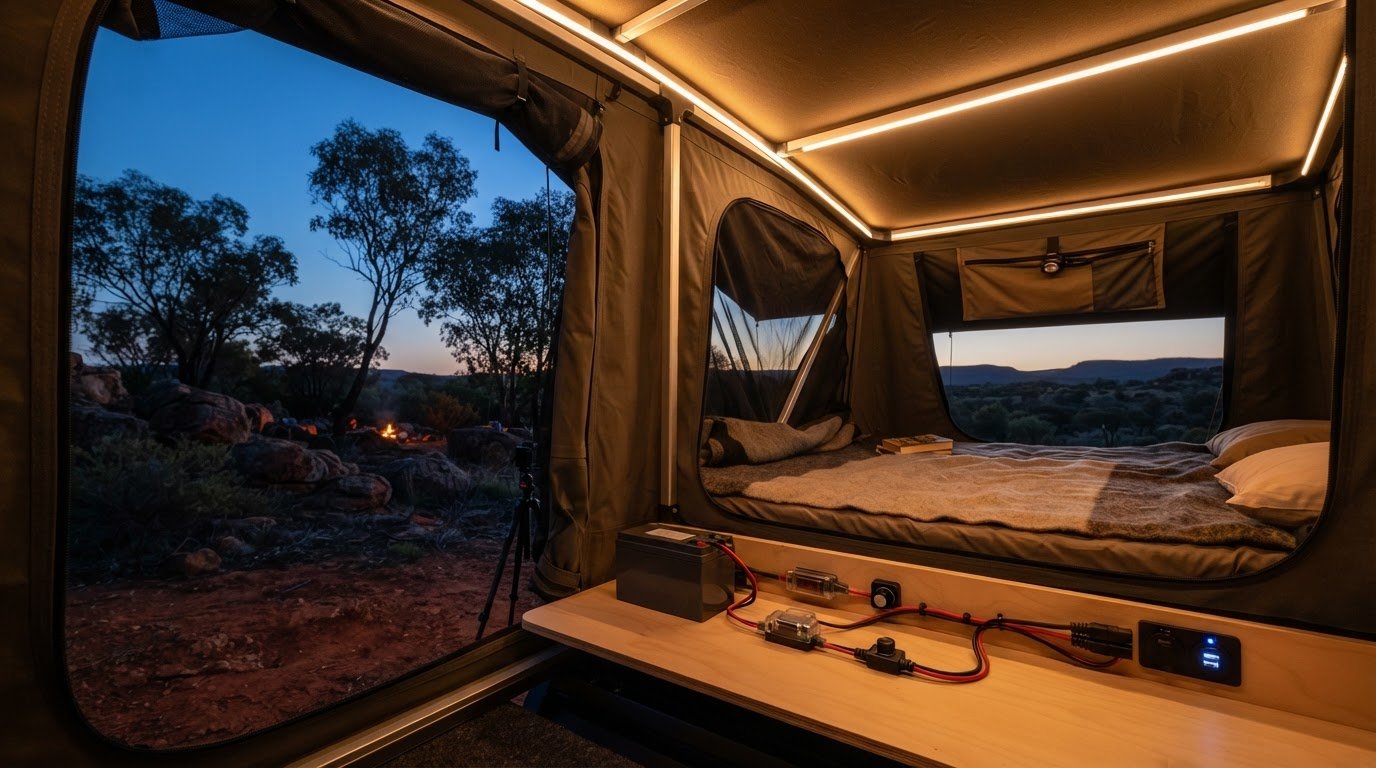
A thicker mattress isn’t always the better rooftop tent upgrade. The best roof top tent mattress replacement options provide at least 2.5 inches of cushioning, while a thinner topper can help your tent fold closed when packed. Fit matters just as much: the replacement needs to suit your tent’s sleeping area.
If the factory foam feels flat or uncomfortable, look beyond thickness alone. Foam, memory foam and other topper materials feel different, and temperature and damp conditions can change how they perform. A replacement that is too bulky can also make packing up difficult.
We’ll break down how mattress type affects comfort, how to measure your tent’s sleeping space, and what to consider when comparing 1400mm-wide options. You’ll come away with a practical way to weigh fit, feel, insulation and pack-down space before choosing a replacement for your Australian adventures.
Key Takeaways
- Match the replacement to your tent’s usable sleeping area and shape, not just its advertised sleeper count.
- Compare foam and topper materials for how they feel in changing temperatures and how much cushioning they add.
- Assess a 1400mm-wide mattress against the tent’s full footprint, including its shape and available pack-down space.
- Balance added comfort with a profile that lets the tent close without excess bulk.
- Consider cold-weather insulation and moisture when choosing between mattress materials and extra sleeping layers.
Table of Contents
1. What is the Best Rooftop Tent Mattress Replacement?
The best replacement fits your tent’s usable sleeping area, suits your preferred feel, and lets the tent close. For a two-person hard-shell tent, the approximate sleeping area is 50 inches wide by 84 inches long. Treat that as a starting point, then measure your own mattress and tent before choosing.
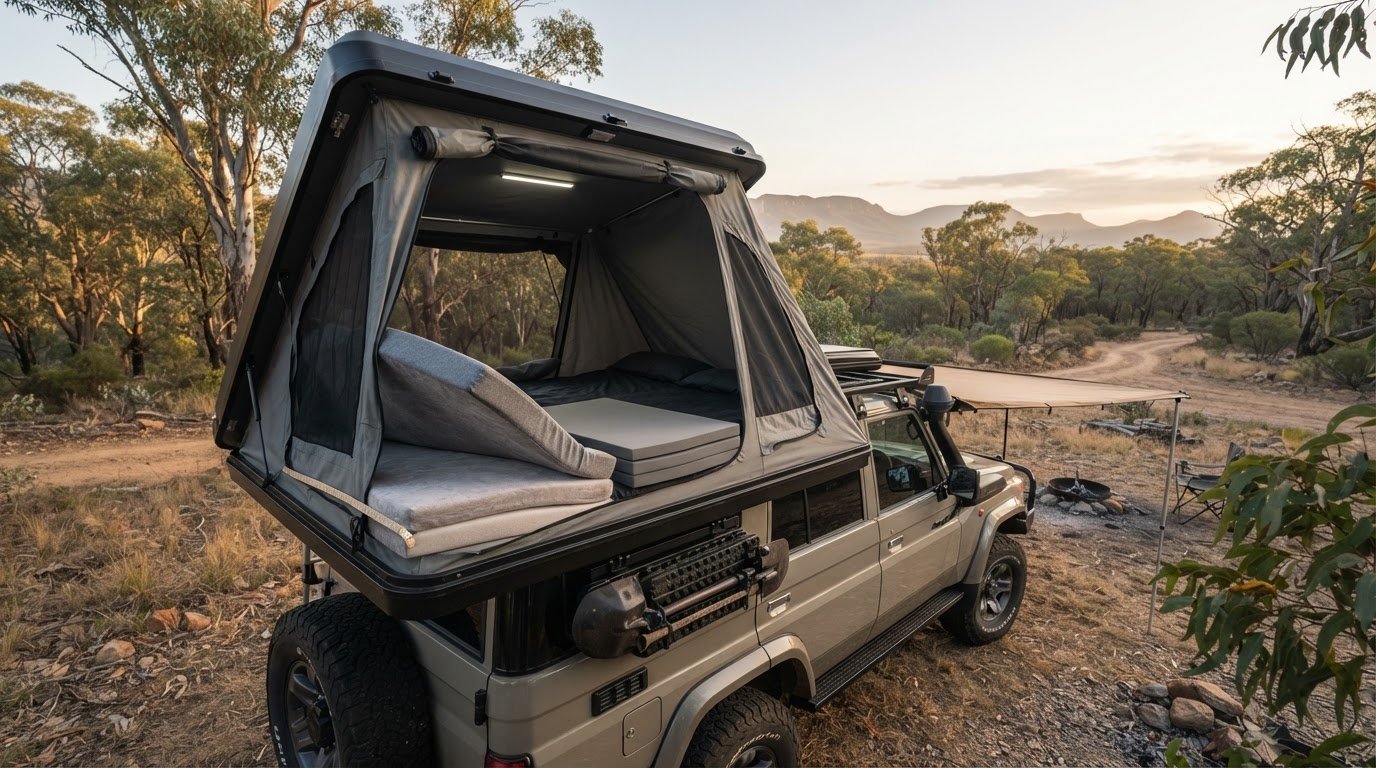
Choose a mattress for your sleeper count, but don’t rely on that label alone. Tent shapes and layouts vary, so a mattress designed for two people may not match your existing footprint. Match the replacement to the sleeping surface, including its corners and tapered sections. If it extends beyond the platform, it can interfere with closing the shell.
Thickness matters too. Aim for at least 2.5 inches to create a barrier between you and the tent floor. If the replacement makes the packed tent difficult to close, consider a thinner topper rather than adding a bulky mattress. Measure the space available for bedding when packed, not only the open sleeping area.
What are the weight and pack-down size differences between replacement mattress options? They depend on the material, dimensions and thickness, so compare those details with the tent’s available storage space. A thinner topper can leave more room for folding, while a thicker mattress takes up more space when packed.
Your sleep style and camping frequency can help narrow the choice. Side sleepers may prefer more cushioning at pressure points, while back sleepers might find a firmer surface comfortable. If you camp often, consider whether the mattress retains its shape and suits the conditions you encounter. Closed-cell foam cannot be punctured and is more durable than inflatable or air mattresses. Foam sleeping pads can get wet in rain and take longer to dry.
For cold-weather camping, layer deliberately. Air mattresses can lose heat in cold conditions, leaving sleepers feeling increasingly chilly. In extremely cold temperatures, place sleeping mats beneath the rooftop tent mattress to add insulation from the floor. A sleeping bag works as part of this setup, but the mattress and underlayers also affect comfort.
What are the prices of rooftop tent mattress replacements in Australia? Prices vary with material, dimensions, thickness and custom-cut requirements, so there isn’t one price that suits every tent. Those same details determine how the replacement fits and packs away.
Which Australian retailers sell custom-cut rooftop tent mattresses? Look for Australian foam retailers that offer custom cutting. Provide the tent’s measured sleeping footprint and required thickness so the mattress can be cut to match its shape.
2. Does Rooftop Mattress Type Matter?
Yes. Mattress material changes how pressure feels, how the surface responds to temperature, and how much comfort a topper adds. Most rooftop tents come with a foam mattress 2 to 3 inches thick. That factory layer gives you a useful baseline: assess where your hips and shoulders press, then decide whether you need a softer surface or firmer support.
Thickness alone doesn’t tell the whole story. A foam mattress can feel supportive at first, then compress with use. Closed-cell foam loses about 15 to 20 percent of its rebound in its first year of use. If your mattress feels less responsive, check whether the foam has flattened under your usual sleeping position before replacing the entire setup.
What are the best replacement mattress materials for rooftop tents: foam, memory foam or latex? Choose foam for a straightforward mattress surface, or compare memory foam and latex as toppers over the existing mattress. Let your preferred pressure relief and the tent’s temperature range guide your choice.
Memory foam responds strongly to temperature changes. It can become hard in cold conditions and exceptionally soft in hot conditions, changing how it feels across Australian trips. Consider where and when you camp: a surface that feels comfortable on a mild night may feel quite different during a cold inland stop or a hot summer camp.
A topper can change the feel without replacing the whole mattress. Memory foam, latex and other materials can sit on top of the existing foam mattress. Can a standard mattress topper improve comfort in a rooftop tent? Yes, if its dimensions and thickness fit the sleeping area and still let the tent close when packed. A bulky household topper can take up valuable pack-down space.
Compare materials by matching each one to the problem you want to solve:
- Existing foam: Keep it if it still suits your sleep style and hasn’t become uncomfortable.
- Memory foam topper: Consider it for a different surface feel, while accounting for temperature changes.
- Latex or another topper: Compare its feel and profile with your tent’s available space.
- Inflatable or air mattress: Weigh the adjustable feel against puncture risk and heat loss in cold conditions.
Test your choice at home before a remote trip. Lie in your usual sleeping position, note pressure points, and check that bedding stays within the tent’s footprint. Then pack the tent to see whether the added layer affects closure. For more context on how tent layouts shape your sleeping setup, explore rooftop tent reviews.
3. Mattress sizing for popular rooftop tents
Start with the tent’s sleeping footprint, not a mattress label. Approximate sleeping areas vary by tent style and capacity: a three-person hard-shell tent measures about 56 inches wide by 84 inches long. A four-person soft-shell tent is about 72 inches wide by 84 inches long, while a king-size tent is about 76 inches wide by 84 inches long. Use these dimensions as guides, then measure your own tent.
Stock mattresses are shaped and sized for their tent’s interior, so a replacement based only on sleeper count can leave gaps or overhang. Regular home mattresses are often too bulky for rooftop tents and may make closing difficult. Even a familiar standard size can be the wrong fit: standard queen dimensions are 60 by 80, and full dimensions are 54 by 75. Compare those figures with the tent’s actual sleeping area before buying.
Measure the existing mattress while it lies flat, then compare its width and length with the platform. Note angled corners, curves and any taper toward the foot end. A rectangular replacement can interfere with the tent shell if the original mattress has a tapered shape. Use the old mattress as a template, or make a full-size outline before ordering a custom cut.
Thickness and construction also affect fit. The Dune 4WD Nomad 140cm Clamshell Rooftop Tent has a 70 mm mattress made from 30 mm of foam over 40 mm of EPE. The Dune 4WD Nomad 130cm Compact 2.0 Rooftop Tent uses the same 70 mm construction, with 30 mm of foam over 40 mm of EPE. These examples show why checking a tent’s supplied mattress can help you compare replacement profiles.
Rooftop tent mattress options include foam mattresses, custom-cut foam and toppers for existing foam. A custom-sized mattress can match the tent footprint and have a thickness that allows it to fold when packed. Before choosing, compare its shape and thickness with both the open sleeping area and the space available inside the closed tent.
Checking the fit can support comfort and help manage moisture. A mattress that bunches at the edges may obstruct bedding and reduce usable sleeping space. In damp conditions, an anti-condensation mat can help reduce moisture and condensation inside the tent. Match the mattress dimensions to the platform, and avoid layers that prevent the tent from packing away as designed.
For a reliable sizing check, record the mattress width at its widest point, its full length and its thickness. Compare these measurements with the tent’s interior and packed clearance. This is more useful than choosing by “queen,” “king” or sleeper count alone, because rooftop tent shapes and closures vary.
4. Compatibility with 1400mm-wide mattresses
A 1400mm-wide mattress is a starting measurement, not proof of rooftop tent compatibility. The tent’s usable sleeping surface may be narrower, tapered, or shaped around the shell. Compare the mattress width with the platform at several points, especially near the corners. A match at the widest point can still leave overhang elsewhere.
Measure your current mattress flat, then record its widest width, length, and thickness. Check the tent platform at the head, centre, and foot, because the outline may change along its length. Note rounded corners or angled ends. For example, a rectangular 1400mm mattress may not sit neatly on a platform with a tapered foot section.
Do rooftop tent brands sell replacement mattresses, and are they compatible across brands? A mattress made for a specific tent is sized for that tent. Compatibility across brands depends on matching the actual footprint and profile. Compare dimensions, shape, thickness and clearance for the shell to close, rather than relying on the brand name alone.
Model names need careful reading too. The Dune 4WD Nomad 140cm Premium Hard Top Rooftop Tent includes “140cm” in its name, but that label alone doesn’t establish the mattress’s usable width. Measure the tent’s sleeping area and supplied mattress directly. Treat a model designation as an identification clue, not a measurement for replacement fit.
Before choosing a 1400mm option, check these four points against your tent:
- Width: Compare the mattress measurement with the platform across its full length.
- Length: Check both ends for tapered corners or obstructions.
- Thickness: Include added toppers when assessing the packed profile.
- Closure: Pack the tent with bedding in place and confirm the shell closes normally.
The final closure test matters because rooftop tent mattresses are often custom-sized and made to fold when packed. A mattress can fit the open platform yet take up too much space when the tent is closed. Keep the existing mattress as a template, marking its outline and thickness before comparing replacement measurements.
For a custom-cut replacement, share the measured footprint rather than requesting a generic 1400mm cut. Include the tent model, the widest and narrowest points, and the required thickness. Those details help match the replacement to the actual sleeping area, whether the tent is a hard-shell or soft-shell design.
5. Replacing a roof top tent mattress
Replace the mattress when its feel no longer suits your sleep or its shape no longer fits. Open the tent and lay the existing mattress flat. Record its length, widest and narrowest widths, and thickness. Check the platform outline too: a tapered end or rounded corner can make a rectangular replacement awkward.
Use this sequence before choosing a replacement:
- Remove bedding and inspect the old mattress for compressed areas, tears, and damp patches.
- Measure the mattress and platform separately, noting corners and any taper.
- Choose the material and thickness based on the sleep surface you want.
- Compare the replacement dimensions with the tent’s packed clearance.
- Test the fit with the tent open, then close it with the usual bedding inside.
Testing the tent open and closed is essential. A replacement may fit the platform yet prevent the shell from closing when packed. Rooftop tent mattresses are often custom-sized to match the tent and made at a thickness that allows folding. Keep your old mattress as a template, but compare its shape with the platform before copying it.
Choose a material that suits your usual trips. Closed-cell foam cannot be punctured and is more durable than inflatable or air mattresses. Foam pads can get wet in rain and take longer to dry, so air out damp bedding before packing it away. In cold conditions, air mattresses can lose heat, making sleepers feel increasingly chilly.
Make the smallest change that solves the comfort problem. If the mattress still fits but feels too firm, a topper can change the surface feel. If the foam has compressed or its shape no longer suits the tent, replacing the mattress may be more practical. Keep added layers thin enough to preserve space for closing the tent.
For cold-weather trips, consider the mattress, sleeping mat and sleeping bag as one system. In extremely cold temperatures, a sleeping mat beneath the mattress adds insulation from the floor. After a damp night, lift the layers and air them out before closing the tent. This helps prevent moisture from lingering between the mattress and platform.
Before heading into remote Australian country, trial the replacement at home. Check for gaps around the edges, pressure points in your usual sleeping position, and resistance as the tent closes. Adjust the setup before travelling, rather than discovering a poor fit at camp. Explore rooftop tent reviews to compare tent layouts alongside your replacement plan.
Adventurerz: Roof top tents reviews and recommendations
Adventurerz offers roof top tent reviews and recommendations to help you compare tent layouts, sleeping areas, and features that affect mattress fit. Use these insights when deciding whether your current tent suits a replacement mattress or whether a different setup better matches your travel style. Adventurerz also covers camping equipment, 4wd awnings, and hiking equipment, helping you consider how each part of your kit supports time outdoors. For Australian trips, practical gear choices can make packing and camp setup more considered, from the rooftop tent to the equipment you carry along.
Visit adventurerz.com to explore roof top tent reviews and recommendations for your next setup.
Make Your Next Camp Setup Count
Your sleep setup is part of a wider camp system, not an isolated upgrade. When planning Australian trips, consider the expected conditions, the gear you already carry, and how each choice affects packing and comfort. Make a note after each trip about what worked. It can guide your next adjustment and help you avoid replacing gear that still serves you well.
Adventurerz brings together roof top tent reviews and recommendations, plus reviews and recommendations for 4wd awnings and camping equipment. Explore these resources as you shape a setup that suits your travel style and supports more considered time outdoors. The right roof top tent mattress replacement options are the ones that fit your tent and your way of sleeping, not simply the most elaborate upgrade.
Visit Adventurerz to explore outdoor gear reviews and recommendations, and get ready for your next night under the stars.
Frequently Asked Questions
Does Rooftop Mattress Type Matter?
Yes. Material affects how the surface feels and responds to temperature changes. Memory foam can feel hard in cold conditions and exceptionally soft in hot weather, while closed-cell foam cannot be punctured. Air mattresses can lose heat in cold conditions. Compare materials with your usual sleeping position and camping climates, rather than choosing by softness alone. For mixed-weather trips, test your setup before relying on it overnight.
What is the Best Rooftop Tent Mattress Replacement?
The best roof top tent mattress replacement options start with a shape and thickness suited to your tent and packing routine. A replacement mattress should provide at least 2.5 inches of cushioning, but a thinner topper may better suit a tent with limited closing clearance. If the existing mattress feels worn, compare a full replacement with a topper that changes the surface feel. Try your chosen setup with bedding before a trip.
What mattress sizes and thicknesses fit popular rooftop tents in Australia?
Approximate sleeping areas include 56 inches wide by 84 inches long for a three-person hard-shell tent, and 72 by 84 inches for a four-person soft-shell tent. A king-size tent is about 76 by 84 inches. Standard queen dimensions are 60 by 80, while full dimensions are 54 by 75. Some tent mattresses use 70 mm construction, such as 30 mm foam over 40 mm EPE.
How do I measure a rooftop tent mattress for a replacement?
Measure the existing mattress flat, then compare it with the tent platform. Record its length, thickness and width at the head, centre and foot so you don’t miss a taper. If the corners are rounded, trace the outline on paper and mark which end faces the head. Compare the template with the replacement, then test the fit with bedding in place and the tent closed.
How do I choose mattress firmness and thickness for rooftop tent use?
Choose firmness by testing your usual sleeping position and noticing where your hips or shoulders press against the surface. A side sleeper may prefer more cushioning at those points, while another sleeper may prefer a firmer feel. Aim for at least 2.5 inches of mattress thickness, then consider whether that profile leaves enough room for the tent to close. Test added layers together, not separately.
What are the weight and pack-down size differences between replacement mattress options?
Weight and pack-down size depend on the mattress material, dimensions and thickness. Compare them with your tent’s available storage space. A thinner topper leaves more room for folding, while a thicker mattress takes up more space.