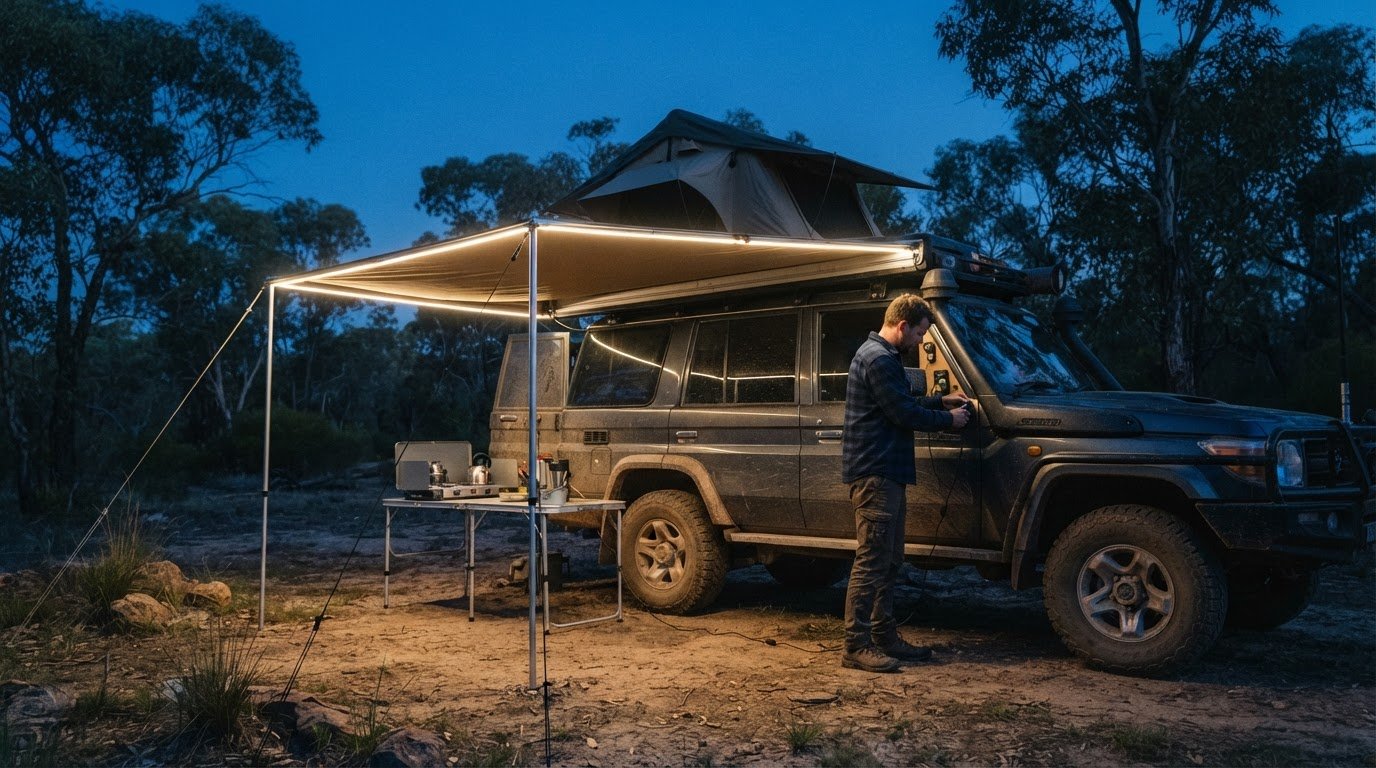
A fixed solar panel isn’t automatically the better choice for off-grid power. Choosing a solar blanket vs fixed solar panel for off-grid power comes down to how you camp: a blanket is portable and can be moved into sunlight, while a fixed panel charges during the day without daily setup. In favourable sunlight, both can produce similar amounts of electricity, so the better fit depends on where you park and what you need to power.
Weigh portability against durability and convenience, especially when planning remote trips around Australia. Compare efficiency, battery capacity and your daily energy needs, then match the setup to your camping style. Flexible blankets and fixed roof panels each have trade-offs: a portable option makes sense when you need to move panels into sunlight, while a permanently mounted array suits travellers who prefer charging without daily setup.
Key Takeaways
- Size solar around your daily energy use: add up what your fridge, lights and devices consume before choosing an array.
- A 1,200Wh daily load, four peak-sun hours and a 0.75 system factor point to an estimated 400W of solar.
- Allow for the battery and solar regulator as well as the panels; charging potential depends on the whole system.
- Choose a setup that suits your routine, from light weekend trips to longer stays with heavier power needs.
- Protect portable blankets from wind, vehicles and foot traffic, and position them where they can capture sunlight.
Table of Contents
What’s better; solar panels or solar blankets?
Solar blankets trade some durability for portability, while rigid panels suit a more permanent setup. Blankets can be moved into sunlight; fixed panels charge without daily setup.
Blankets can overheat if covered or used contrary to their instructions. Shade reduces output, and an unsecured blanket can be exposed to wind, traffic or theft.
Solar Blankets
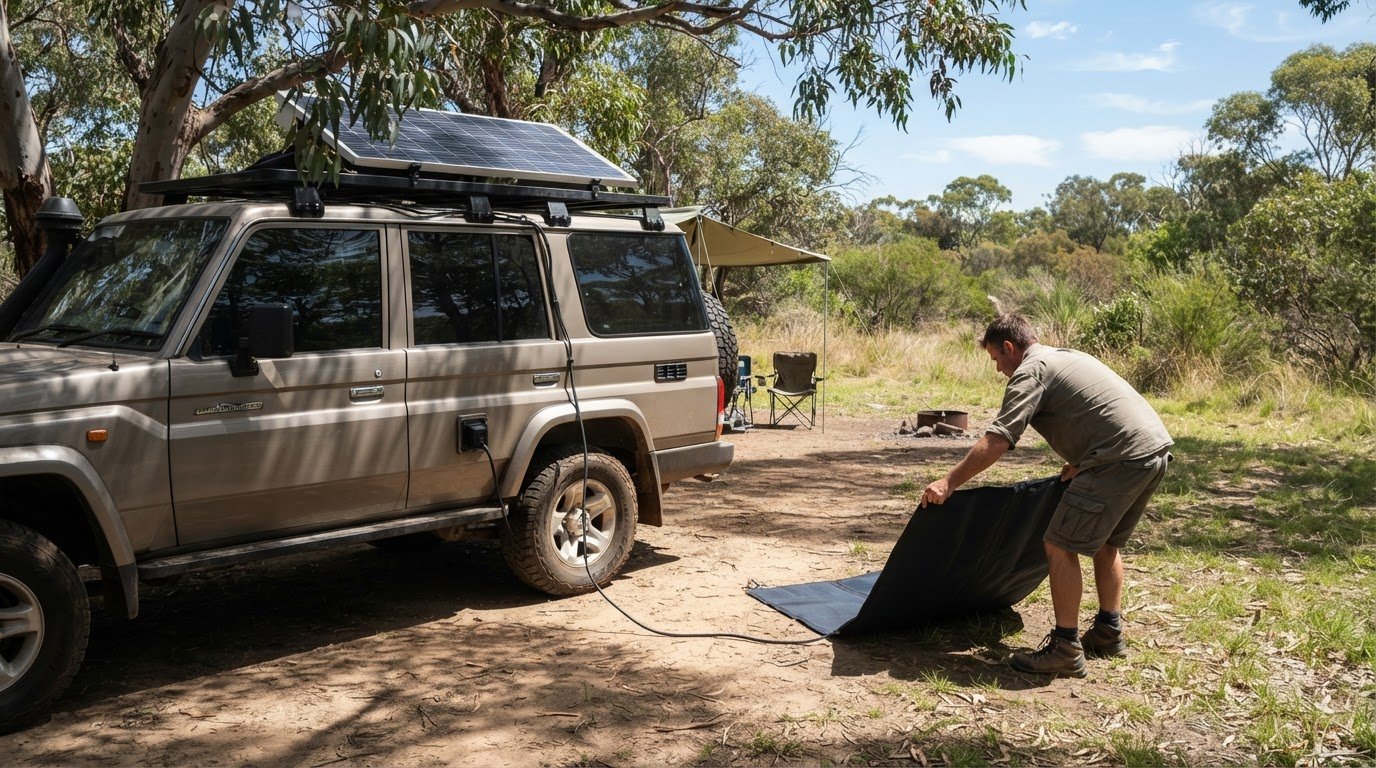
A solar blanket uses flexible cells and packs into a compact bag, making it easier to carry from a vehicle to a sunny clearing. In favourable conditions, blankets can produce roughly the same electricity as folding panels, so portability doesn’t automatically mean lower output. Flexibility comes with a trade-off: blankets are less durable than rigid panels and need careful handling. Lay one flat, secure it against wind, and keep vehicles, pets and foot traffic clear.
Rigid Solar Panels
Rigid panels have a solid frame and suit either a fixed roof installation or a portable setup positioned on the ground. A roof-mounted panel can charge during the day without daily setup, and is harder to pick up and walk away with than a blanket. However, it’s less easy to reposition when the vehicle is parked in shade. If a portable panel sits several metres from the battery, cable length and conductor size matter because longer cables increase voltage drop.
Solar Blanket Risks
Shade from a tree, awning or vehicle reduces a blanket’s output, so reposition it as the sun moves. Don’t cover it or leave it folded while generating; follow its operating instructions to manage heat. Wind can shift or damage an unsecured blanket, while ground placement leaves it exposed to tyres, paws and foot traffic. Its portability also makes theft easier than with a secured roof panel. Pack it away when unattended or when conditions make its position unsafe.
Whichever format you choose, match the solar array, charge controller and battery. Check that the controller’s input limits suit the panel’s voltage and current, and that its battery settings match the battery type and system voltage. An MPPT regulator is described as the most efficient option for a 4WD solar setup. For example, a 400W array charging a battery near 14.4V could produce about 27.8A under favourable conditions.
| Option | Portability | Setup | Security | Key trade-off |
|---|---|---|---|---|
| Solar blanket | High | Unfold and position | Easy to move | Needs careful handling |
| Fixed roof panel | Low | Installed once | More secure | Stays with the vehicle |
| Portable rigid panel | Moderate | Position when parked | Must be secured | Needs suitable cable length |
Choose a blanket for flexible positioning, or a fixed panel for charging with less effort and a more secure installation.
Solar panel durability, efficiency and portability
Rated wattage is a useful starting point, but sunlight, panel type and positioning affect energy yield. In Australia, consider handling requirements alongside output and mounting needs.
Durability and Efficiency Differences
Monocrystalline panels produce more power from the same surface area than less efficient panel types, so they can save space. A 200W blanket or panel can usually produce around 50-70 amp-hours per day in good sunlight. That’s a guide to daily output, not a guaranteed result: shade and conditions affect generation. Monocrystalline panels can last 25 years or more with proper maintenance, while flexible blankets need protection from creasing and rough handling.
Rated wattage alone doesn’t show how much power reaches your battery. Compare panels with the same rating, then consider usable surface area, placement and conditions at camp. A blanket’s flexible cells make it easier to pack, but don’t fold or crease it unless its instructions allow this. Rigid panels have a sturdier form, though they still need sensible transport and installation.
Portability and Setup Effort
A portable blanket or panel needs to be unpacked, positioned towards direct sunlight and secured before charging. Reposition it if the vehicle, tent or caravan casts shade; a blanket can sit in a sunny area away from camp. A fixed panel avoids repeated setup, but can’t be moved independently when the vehicle is parked under trees. Choose based on whether flexible positioning or less daily handling matters more to you.
With a portable setup, plan the cable route before positioning the panel. A panel several metres from its battery needs appropriately sized cable, because longer cables increase voltage drop unless conductor size increases. Keep leads clear of tyres, walking routes and places where they could snag. Secure the panel against wind, and keep it away from vehicles, pets and foot traffic. These steps help protect your equipment and campsite.
For Australian systems, follow the equipment manufacturers’ installation and operating instructions. Have the wiring, battery, controller and mounting assessed against applicable Australian electrical and product standards by a qualified professional. Applicable standards depend on the equipment and installation, so portability isn’t a reason to improvise electrical connections.
To compare wattage fairly, start with the panel’s rated output: blankets and folding panels can produce more or less the same electricity, while monocrystalline technology can deliver more power from a given area. For example, a 200W panel or blanket may produce around 50-70Ah per day in good sunlight. Setup time and durability differ more: portable gear needs positioning and careful handling, while a mounted panel stays in place and charges without daily setup. In either case, keep the panel in direct sunlight and the battery connection properly planned.
Battery capacity and daily energy consumption
A solar array replenishes stored energy; it doesn’t replace a battery. Size the battery for overnight use and cloudy periods, then size the solar array around daily consumption and available sunlight. A blanket’s portability can help you find sun, but the battery still needs enough usable capacity for your camp’s loads.
Start with each appliance’s daily energy use: multiply its wattage by the hours it runs. Add the results in watt-hours (Wh) to estimate the day’s total. Planning ranges for camping loads include:
- A 12V compressor fridge: 300-800Wh per day.
- LED lighting: 40-120Wh per day.
- Phones and cameras: 40-150Wh per day.
- A laptop or drone: 100-300Wh per day.
- Fans and water pumps: 80-300Wh per day.
These ranges show why camps using the same panel can have different charging needs. A fridge that runs regularly and frequent laptop charging draw more energy than occasional phone charging. Add the loads you’ll actually use, and account for how many hours each runs rather than treating every appliance as an all-day draw.
A typical 4WD touring setup uses approximately 40-70 amp-hours (Ah) per day. That measure helps describe current drawn from a 12V system, while Wh helps compare energy use across appliances. Keep units consistent when estimating your consumption: don’t add Ah figures directly to Wh figures. A 12-volt fridge is listed at approximately 1-3 amps per hour in a typical touring setup; LED camp lights use about 0.5 amps, and phone charging about 1 amp.
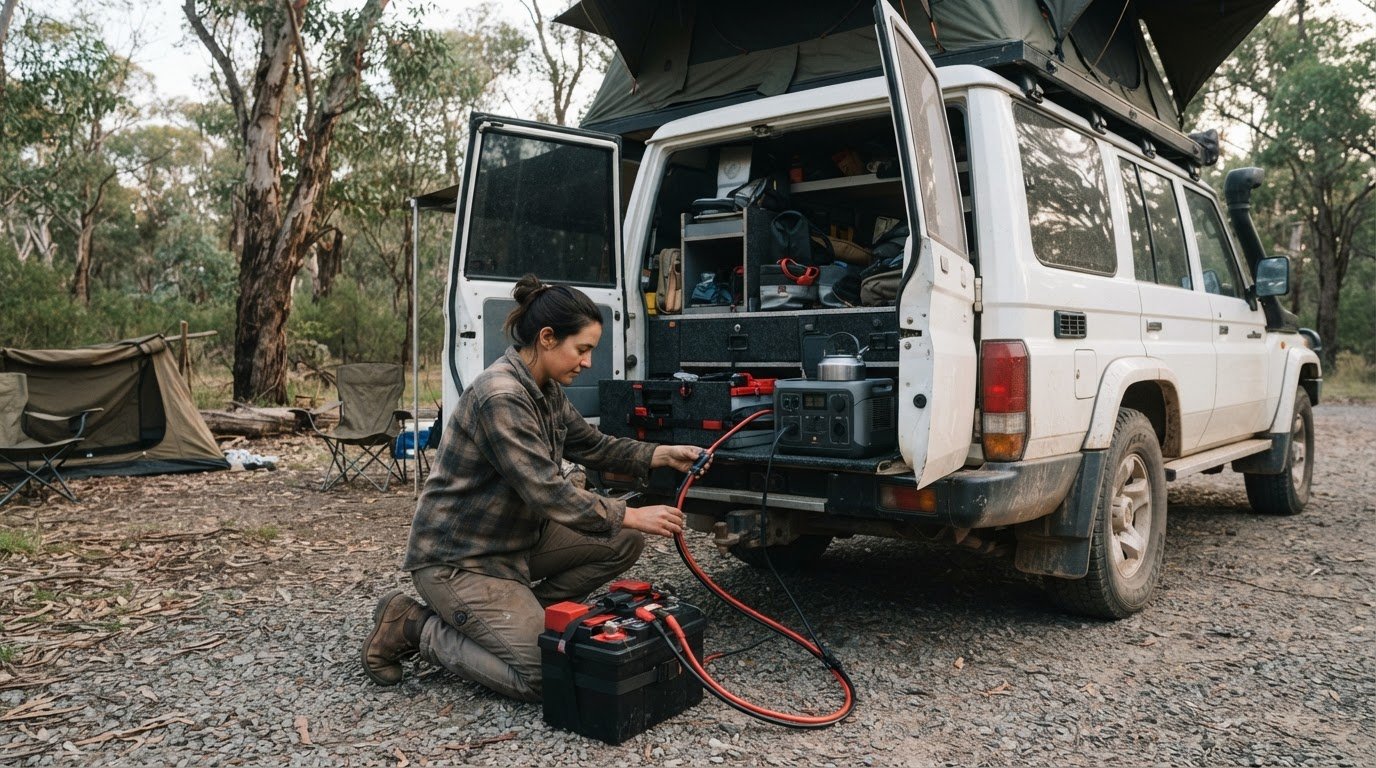
In an auxiliary or dual-battery system, the auxiliary battery stores energy for camping loads, separate from the vehicle’s starting battery in the system design. Check that the battery, solar regulator and charging sources are compatible. The battery’s capacity and charging limits affect how much solar energy it can accept, so a larger blanket alone won’t solve a storage bottleneck.
Off-grid charging needs a balance between daily use, storage and generation. A camping array around 200W can suit light weekend loads when sunlight is favourable and another charging source is available. If consumption rises, or shade reduces solar input, stored energy can run down faster than the array replenishes it. Track fridge, lighting and device use across a normal day, then plan for the highest-use days you expect, not just the lightest weekend.
Before setting out, map each load to its battery supply and charging path. This simple inventory helps show whether a portable blanket’s flexible placement or a fixed panel’s routine charging better suits your camp’s energy pattern.
Solar choices for different camping styles
Your camping routine determines whether fixed roof capacity or portable flexibility works best. Match the array to daily loads, available mounting area and the time you spend parked.
Fixed Panels for Off-Grid Camping
Fixed panels suit caravans and vehicles that stay set up between camps. Caravan installations commonly range from 50W to 200W, providing a baseline that can be expanded when roof space and system components allow. A fixed array charges without daily placement, which suits longer stationary stays. Its main limitation is location: the panel moves with the vehicle, so a shaded parking spot can restrict sunlight.
Flexible Panels for Camping Vehicles
Flexible panels can suit curved vehicle surfaces where a rigid frame is awkward to mount. Their low-profile design may appeal to travellers who want a permanent installation without a bulky panel frame. Still consider roof area, wiring and controller limits. Choose flexible gear only when the mounting surface and installation method suit the panel instructions and vehicle setup.
Camping and 4WD Touring Applications
For light weekend camping, an array around 200W can suit modest loads when sunlight is favourable and another charging source is available. A fridge, lighting, pumps and regular device charging point towards a common planning range of 300W to 400W. Higher daily use or longer stationary stays may call for 500W to 600W, provided suitable area, wiring and controller capacity are available. Arrays of 800W and above need careful assessment of current, string voltage and roof loading.
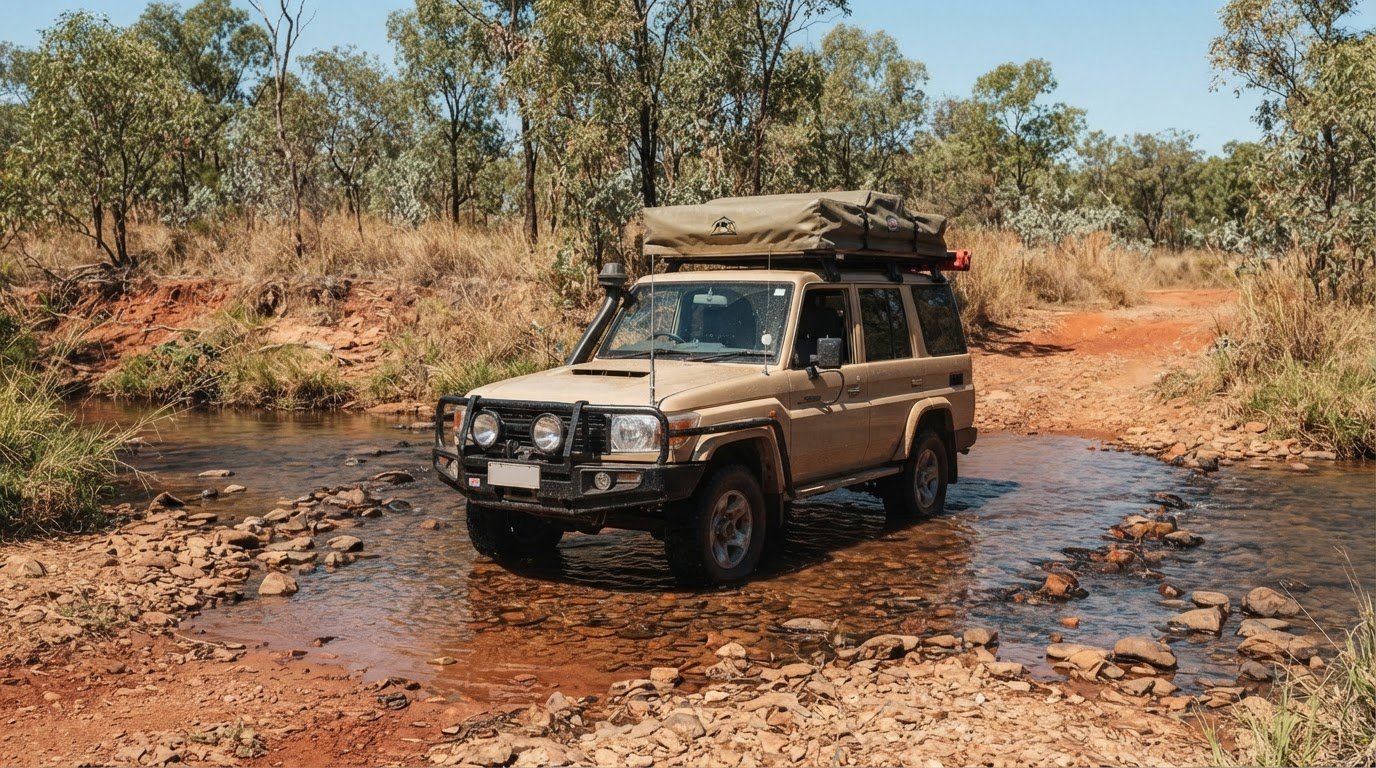
For touring, consider how often you move camp and whether the vehicle sits in shade. A portable blanket can be placed in a sunny clearing while the 4WD stays parked under trees. A fixed panel avoids repeated setup during travel breaks but can’t be repositioned away from the vehicle. Compare that routine with the charging needs of your fridge and accessories.
Buying Checklist, Cost and Output Conditions
Treat that as one market example, not a price for every blanket or panel; capacity, construction and included components affect cost. Weather, season and location also shape output: cloud, shade and changing sunlight reduce available energy, while a clear, well-positioned panel can capture more.
- Match array wattage to daily loads and battery storage.
- Measure available roof or ground space before choosing a format.
- Check controller limits, wiring and battery compatibility as one system.
- Allow for shade and changing sunlight at your usual campsites.
Use the checklist to compare complete setups, not panel wattage alone. A 300W to 400W array may suit regular touring loads, while a compact weekend setup can need less.
Solar blankets versus fixed roof panels
The practical difference is how each option fits camp life. A fixed roof panel generates power while you travel or stay parked, without daily setup; a blanket can be placed wherever sunlight reaches it. The better match depends on whether you value flexible access to sun or an installed system that’s ready to charge.
At a shaded campsite, a roof panel can be at a disadvantage because it stays above the vehicle. A blanket can be moved into a sunny clearing while the vehicle, tent or caravan remains in shade. That flexibility is useful if you camp under trees, but it also means carrying, laying out and packing away the gear. Even when parked facing the sun, a vehicle windscreen may receive direct sunlight for only an hour or two.
Fixed panels suit travellers who move camp often or prefer not to handle an array each day. Once installed, they can charge during the day without daily setup. They also remain attached to the vehicle, making them harder to remove casually than a portable blanket. Their position is a trade-off: a shaded vehicle means a shaded roof array, and changing the panel’s angle or location is less easy.
Blankets can produce electricity comparable to folding panels, but their portability brings extra care. Secure them against wind, keep them clear of vehicles and foot traffic, and follow product instructions for folding and storage. Rain can create practical problems: some users report wet blankets gaining 5-10kg and taking time to dry. Another user reported a 200W blanket stopped working after a week when a shower of rain occurred. These are individual reports, not a prediction for every blanket, but they show why drying and storage belong in your camp routine.
For longer stays in one place, a fixed array can provide a regular charging routine without repeated unpacking. For short stops, or camps where the vehicle needs to stay in shade, a blanket can be positioned separately and angled towards the sun. Either way, match the array to battery needs and plan cable length and placement for the site. Portable panels several metres from the battery need appropriately sized conductors to limit voltage drop.
Choose a fixed roof panel if convenience, secure installation and regular charging matter most. Choose a blanket if campsites vary, you can position it safely in direct sun, and you’re prepared to pack it away in wet or windy conditions. Some travellers combine both approaches, using a fixed array for everyday charging and portable solar when parking conditions limit roof sunlight.
Plan your next off-grid setup around your campsite routine and energy needs with practical Australian camping guidance.
Adventurerz
Adventurerz helps Australian campers make informed gear choices through camping equipment reviews and recommendations. After weighing portable solar against a fixed setup, use these insights to consider how the rest of your kit fits your travel style, storage needs and time off-grid.
When planning a remote trip, recommendations on roof top tents, 4WD awnings and hiking equipment can help you consider the rest of your setup alongside your power system. Adventurerz also shares information on camping and adventure in Australia, helping you prepare for trips with practical, considered choices.
For guidance as you plan your next Australian camping setup, contact Adventurerz.
Choose a setup that fits your next trip
Before your next Australian trip, picture a typical day at camp: where you’ll park, how often you’ll move, and which appliances need power after sunset. That routine can make the decision clearer than choosing equipment by wattage alone. Ultimately, choosing between a solar blanket and a fixed solar panel for off-grid power is about how you want to manage charging as conditions and campsites change.
Think beyond the panel, too. A well-planned system should suit your battery, available mounting space and travel habits, while remaining practical to handle and pack away. Keep these priorities in mind as you plan your gear, and choose a setup that supports self-reliant travel while helping you minimise your impact on the places you visit.
For a next step, contact Adventurerz about your solar setup and continue planning with confidence. Here’s to better-prepared camps and more time enjoying the track!
Frequently Asked Questions
How durable are they?
Rigid panels generally handle regular installation and transport better than flexible blankets, which need more careful handling. A monocrystalline panel can last 25 years or more with proper maintenance. For a blanket, avoid creasing or standing on it unless its instructions allow this, and secure it against wind. Keep portable panels clear of tyres, pets and foot traffic, then dry and pack them according to their product instructions.
How much solar do you need for a 4WD setup?
Size a 4WD array to the gear you run and the time you spend away from other charging sources. A typical touring setup uses approximately 40-70Ah per day, while travellers with larger fridges, inverters or extra accessories may choose 300W or more. Treat those figures as starting points: regular fridge use, shade and low sunlight affect how much energy the array can replenish.
Portable or fixed panels?
Choose portable solar if you need to position panels away from a shaded vehicle or want to move your setup between trips. Fixed panels make more sense if you prefer an installed array that charges without being unpacked each day. For example, portable positioning can help when a touring vehicle often stops beneath trees; a vehicle parked in open sun can make better use of its roof-mounted array.
Which option is better for different applications?
A blanket suits campsites where the vehicle must stay in shade, provided there’s a safe sunny place to lay it. A fixed panel fits a caravan or 4WD that regularly parks in sunlight and needs a simple charging routine. For a short stop, unfolding portable solar may take more effort than it’s worth; for a longer camp with a shaded vehicle, moving the array can help capture more direct sunlight.
Which performs better?
Neither format always performs better: panel technology, rated capacity, sunlight and shade all affect generation. In favourable conditions, solar blankets can produce roughly the same electricity as folding panels. Monocrystalline panels can produce more power from the same surface area than less efficient panel types. Compare panels with equivalent rated capacities, and consider where each can sit during the day, not just its form factor.
How do portable solar blankets compare with fixed solar panels for off-grid power?
Portable blankets offer flexible positioning, while fixed panels charge without daily setup. A blanket is useful when camp is shaded but a nearby sunny area is available. Fixed panels are convenient when the vehicle or caravan stays in open sun. A blanket needs to be secured and packed away after use; a fixed panel stays with the vehicle, so its position can’t be changed independently.
What battery capacity and charge controller are needed for a solar blanket or fixed panel setup?
Choose battery capacity from the energy your appliances use between charging opportunities, then match the regulator to the array and battery. Check that the controller’s voltage and current limits suit the panel, and that its settings suit the battery type and system voltage. An MPPT regulator is described as the most efficient option for a 4WD solar setup. Battery charging limits also affect how much incoming solar energy it can accept.
How do I size an off-grid solar system for a caravan, camping setup or remote home?
Start by listing each appliance’s wattage and daily running hours, then multiply them to estimate daily energy consumption in watt-hours. Add the loads, account for available sunlight and system losses, and choose battery storage based on the energy needed between charging periods. A remote home may have different usage patterns from a weekend caravan, so base the estimate on its actual appliances and daily routine.