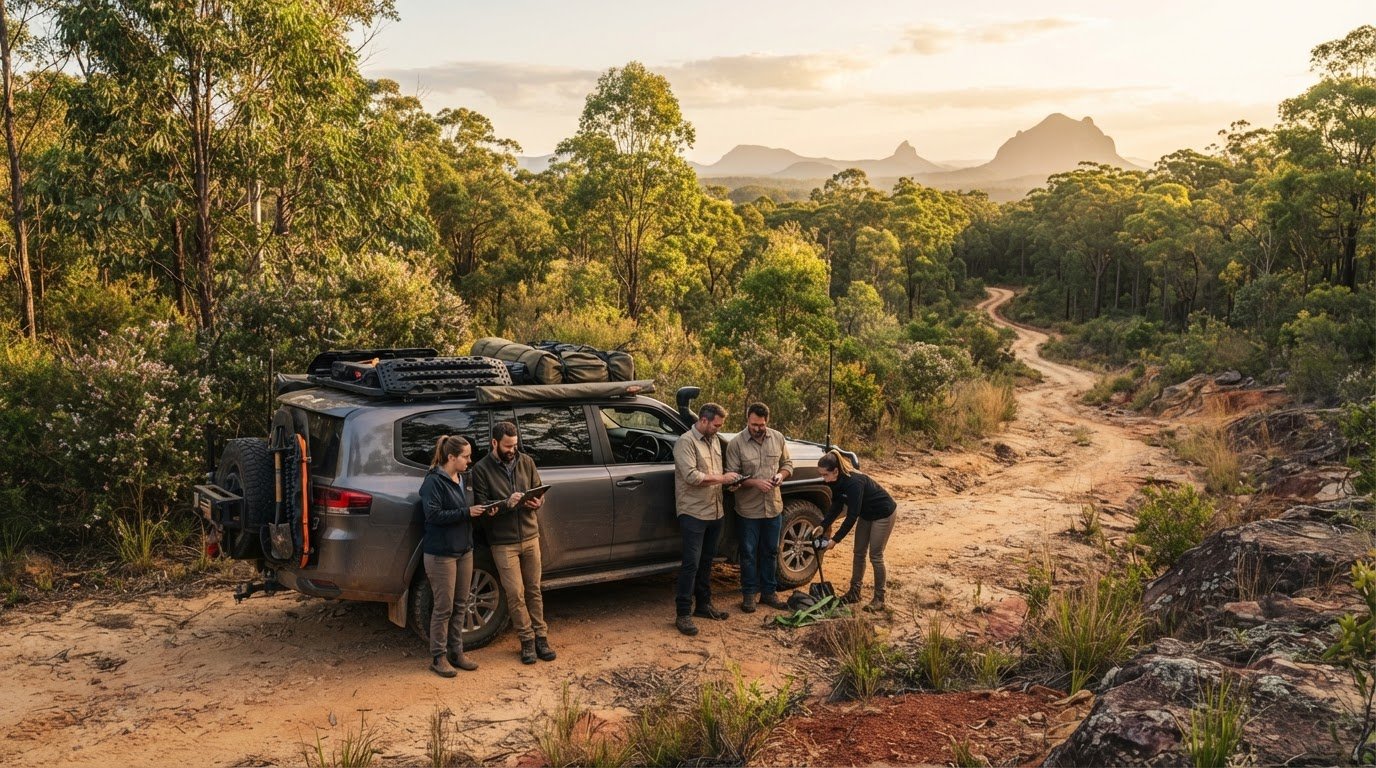
The closest track isn’t always the right one for your crew or 4WD. The best 4wd tracks near brisbane vary from sandy beach runs to forest trails and steep, rocky routes, so scenery alone won’t tell you whether a trip is a good fit. We know the appeal of heading out for a big day on the tracks; matching the route to your vehicle, experience and current conditions is what helps make it a safer one.
This guide compares nearby options, including Bribie Island, the Glass House Mountains, Mount Mee, Cooloola and Mulgumpin, by terrain, access and the kind of driving they call for. You’ll find what to check before setting off, from legal access, permits and closures to weather and, where relevant, tide conditions. Track conditions can change, and difficulty ratings are based on dry conditions, so check current official advice before you commit.
We’ll also cover practical preparation, including route planning, vehicle checks and recovery gear, plus ways to travel responsibly and protect the places we’re lucky to explore. Whether you’re building confidence or looking for a tougher challenge, you can choose a trip that suits your group and tread lightly along the way.
Key Takeaways
- Compare the best 4wd tracks near brisbane by terrain and trip style, then shortlist a route that suits your group.
- Judge difficulty by the full picture: track surface, current conditions, vehicle capability and driver experience.
- Use a pre-trip checklist to organise access checks, navigation, vehicle preparation, recovery gear and communications.
- Build flexibility into your plans and follow Leave No Trace principles to help protect the places you explore.
Table of Contents
- Best 4WD tracks near Brisbane: what makes each trip different?
- How to judge 4WD track difficulty before setting out
- Compare Brisbane-area 4WD destinations by terrain and trip style
- Prepare for Brisbane 4WD tracks with a practical pre-trip checklist
- Choose your next 4WD track near Brisbane and plan a responsible escape
Best 4WD tracks near Brisbane: what makes each trip different?
A weekend escape can mean airing down for sand, winding through forest or tackling a managed 4WD course, all within reach of Brisbane. But a familiar destination name doesn’t guarantee a particular track is open, legal to drive or suitable for your vehicle today. Access, closures and track conditions can change, so treat every option as a starting point for planning, not a promise of a clear run.
The best 4wd tracks near brisbane depend on what kind of drive you want and what your crew can handle. Bribie Island offers a beach-driving experience, while the Glass House Mountains area includes forest tracks with a broad range of difficulty. Purpose-managed 4WD parks provide a different setting, with designated recreational tracks. Check each location’s current access information before setting out.
For a visual taste of a forest-based 4WD and camping trip, watch this video from Frenzy Adventures:
Which kinds of 4WD trips can you find near Brisbane?
Think in terms of terrain and trip style, rather than assuming every park has recreational tracks. Beach, forest and purpose-managed settings each call for different preparation. Facilities, access rules and permitted routes also differ. Public conservation areas may have roads for management or access without offering open 4WD trails, so confirm that recreational driving is permitted on your intended route.
- Bribie Island: Beach driving makes this a coastal option, with sand and changing beach conditions shaping the experience. A vehicle access permit is required for the Bribie Island Recreation Area. Check current access notices and tide information before planning a beach run.
- Glass House Mountains: Tracks in Beerburrum West State Forest range from easier routes to very difficult challenges, including Big Red and Little Red. That spread can suit different experience levels, but the harder tracks call for capable vehicles and confident driving. Confirm which routes are open and suitable on the day.
- Managed 4WD parks: These can offer designated off-road tracks in a purpose-managed setting, but difficulty and facilities vary. Review the park’s route information and entry requirements; don’t assume a track is suitable just because it’s inside a 4WD park.
How to use this shortlist responsibly
Use these destinations as options to investigate, then verify legal access, closures, conditions and any permits close to departure through the relevant land manager. A track rating or old trip report can’t guarantee what you’ll encounter now, particularly after weather changes. Difficulty systems describe routes under dry conditions, so reassess your plan if the ground is wet or conditions deteriorate. For perspective, the remote outback journey described in the Birdsville Track Wikipedia illustrates how different a 4WD experience can be from a nearby coastal or forest outing.
We acknowledge the Traditional Custodians of the lands and waters around these destinations, and their continuing connections to Country. As visitors, we can travel only where permitted, stay on formed tracks, avoid disturbing wildlife and take all rubbish with us. A flexible plan helps us enjoy the drive while respecting the places and communities that make these escapes special.
How to judge 4WD track difficulty before setting out
A track’s difficulty isn’t a fixed label. It’s the combined effect of terrain, current conditions, vehicle capability and the driver’s experience. A route that feels manageable on a dry day can become a different proposition after rain, while a capable 4WD won’t compensate for unfamiliarity with steep descents or soft sand.
A track is suitable only when its terrain and current conditions match both your vehicle’s capability and your group’s driving experience. Use this as your filter when comparing the best 4wd tracks near brisbane, rather than choosing by a rating or an old trip report alone.
What should you check about the terrain and your vehicle?
Start with the obstacles you’re likely to encounter, then compare them with your vehicle’s clearance, tyres and drivetrain. Check the track manager’s guidance for vehicle restrictions and route-specific conditions before departure; requirements can differ between tracks, even in the same area.
- Sand: Soft or churned sand can demand careful momentum and tyre-pressure decisions. On a beach route, also consider access points and tide conditions.
- Mud: Ruts and slippery surfaces can reduce traction and hide the firmness or depth of the ground. A route that was straightforward when dry may be harder to control after rain.
- Steep sections: Climbs and descents call for controlled driving and sound judgement. If you’re unsure you can manage a section safely, don’t let pressure from other drivers push you into it.
- Uneven surfaces: Rocks, washouts and cross-axles can challenge ground clearance and vehicle control. Read current route information and be ready to turn around if the track exceeds your capability.
Vehicle capability matters, but it isn’t a substitute for skill. A 4WD with suitable clearance and low-range gearing can still be the wrong choice if the driver isn’t confident with the terrain or the group lacks a sensible plan. Travel with people who support a cautious call, including turning back.
Why do weather and recent conditions change a track?
Conditions shift. Rain can soften tracks, create slippery clay or leave water across a route; flooding may affect access. Coastal conditions bring another variable: tides can alter the available beach-driving window. Even without a major weather event, traffic and surface changes can reshape ruts or expose obstacles.
Track ratings are useful context, not a live forecast. Queensland’s national 4WD track classification system uses four levels, from Easy to Very Difficult, and ratings are based on dry conditions. An old trip report captures someone else’s experience at a particular time, not a guarantee of what you’ll find now.
Before leaving, check current official alerts and the relevant land manager’s track notices. Reassess if conditions have changed, and be prepared to choose another route or postpone the trip. That’s good judgement, not a failed adventure. Keep the environment in mind too: avoid creating new tracks around obstacles, and don’t drive through areas that are closed or vulnerable to damage.
Compare Brisbane-area 4WD destinations by terrain and trip style
Choosing between beach, forest and managed tracks starts with the kind of drive you want, then narrows to what your vehicle and experience can handle. The comparison below is a planning shortlist, not a live access report. Confirm permitted routes, closures, conditions and any entry requirements with the relevant land manager or venue before departure.
| Destination | Terrain | Trip style | Experience considerations | Access checks |
|---|---|---|---|---|
| Bribie Island Recreation Area | Beach sand and coastal driving. | A beach-focused outing shaped by tide timing and changing sand conditions. | Drivers need to be comfortable assessing sand and adapting their approach as conditions change. Beach driving still requires care and sound judgement. | A vehicle access permit is required. Check current Queensland Parks and Wildlife Service access information, beach conditions and tide guidance. Driving on dunes is prohibited. |
| Glass House Mountains area, including Beerburrum West State Forest | Forest tracks, with routes ranging from easier trails to challenging, uneven terrain. | A forest outing with options to investigate for different driving appetites. | Big Red and Little Red are known as challenging tracks that call for a highly capable vehicle and significant driver skill. Choose only a route that matches your ability. | Check current state forest notices and confirm which tracks are open and permitted for recreational driving. Don’t assume every road in a public forest is a 4WD track. |
| Managed 4WD parks | Varies by venue and designated route. | A purpose-managed setting for a planned off-road session. | Available routes can suit different levels of experience, but a venue setting doesn’t make every obstacle appropriate for every driver or vehicle. | Check the operator’s current access arrangements, entry requirements, open routes and any restrictions before travelling. |
Are beach tracks or inland tracks a better fit?
Beach driving puts tides and shifting sand at the centre of your plan. Inland routes trade that coastal timing for surfaces that can change with weather, including mud, ruts and uneven ground. Neither setting is automatically easier: match the route to your tyres, clearance, drivetrain and confidence, and verify where driving is permitted. On Bribie Island, use current official advice to plan beach access and timing rather than relying on a past visit.
When does a managed 4WD park suit your trip?
A managed park is different from a public road or conservation area: it’s a venue with designated recreational routes and its own access arrangements. That can make it easier to focus a day around off-road driving, but conditions and route availability still need checking with the operator. Review the route options against your group’s experience, and be ready to skip obstacles that exceed your capability.
For the best 4wd tracks near brisbane, let terrain and access shape the shortlist, not a destination’s reputation alone. Wherever we drive, staying on permitted routes and avoiding damaged or vulnerable ground helps protect the places we’ve come to enjoy.
Prepare for Brisbane 4WD tracks with a practical pre-trip checklist
A solid plan gives the whole crew a clearer picture of the route, the risks and the gear you’ll need. Use this sequence for the best 4wd tracks near brisbane, then adjust it to the terrain and length of your trip.
- Confirm access. Check the relevant land manager or venue for permitted routes, closures, vehicle restrictions and permit requirements. Don’t assume a familiar track or access point is open.
- Check conditions. Review official alerts, weather and destination-specific notices. For beach driving, check tide information and current beach access advice; inland tracks can also change after rain.
- Plan navigation. Carry route information suited to your destination and have a backup if your usual navigation method isn’t available. Mark decision points, exits and a turnaround option before you leave.
- Prepare the vehicle and recovery plan. Check that your 4WD is in good working order and that your tyres suit the route. Take recovery equipment and communications appropriate to the terrain, remoteness and available coverage, and know how to use what you carry.
- Brief your companions. Share the route, expected return plan and agreed turnaround criteria with everyone travelling. Tell someone who isn’t coming along where you’re going and when you plan to return.
What should you check on the day of departure?
Recheck closures, permits, weather, tides and local track notices before setting off. Conditions or access may have changed since you planned the trip. If the route is closed, the weather has shifted or the group’s capability no longer matches the conditions, choose another permitted option or postpone. A flexible plan is part of good preparation.
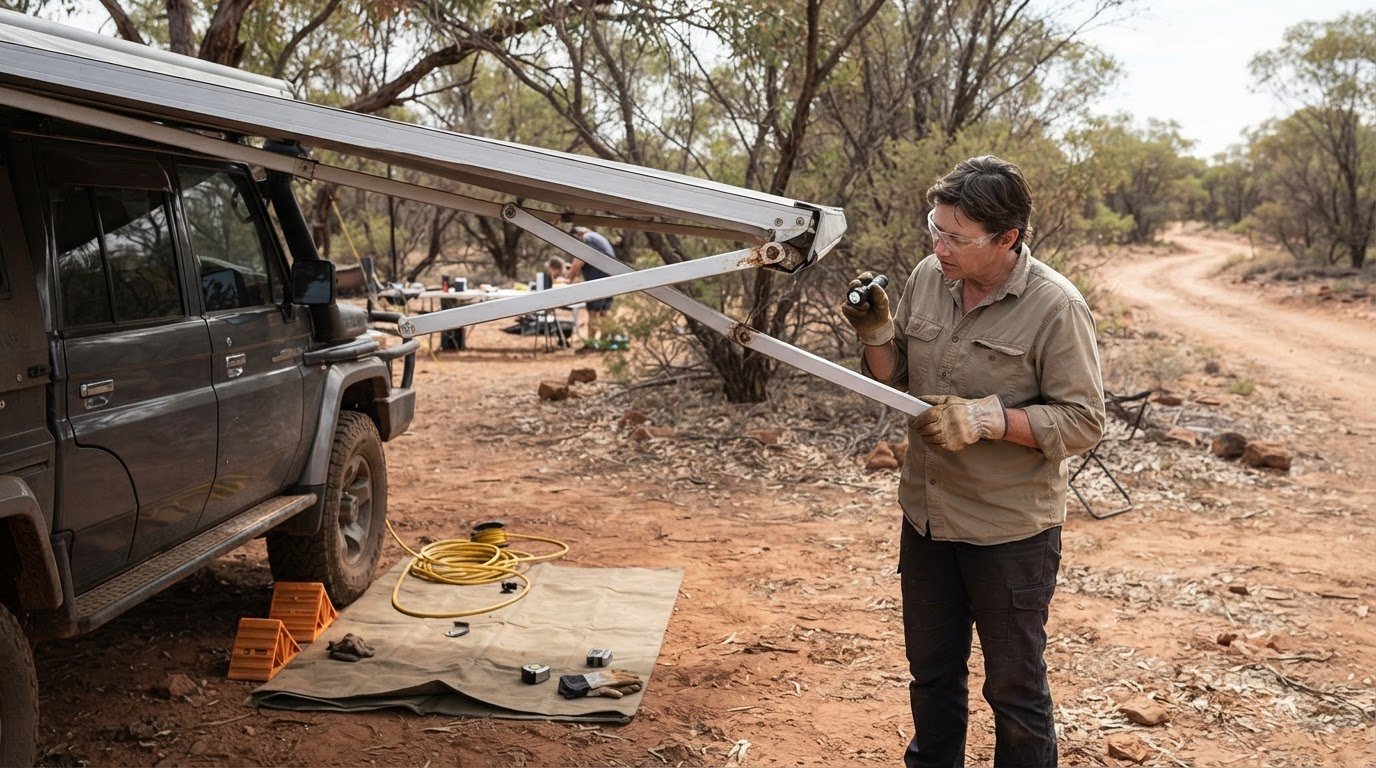
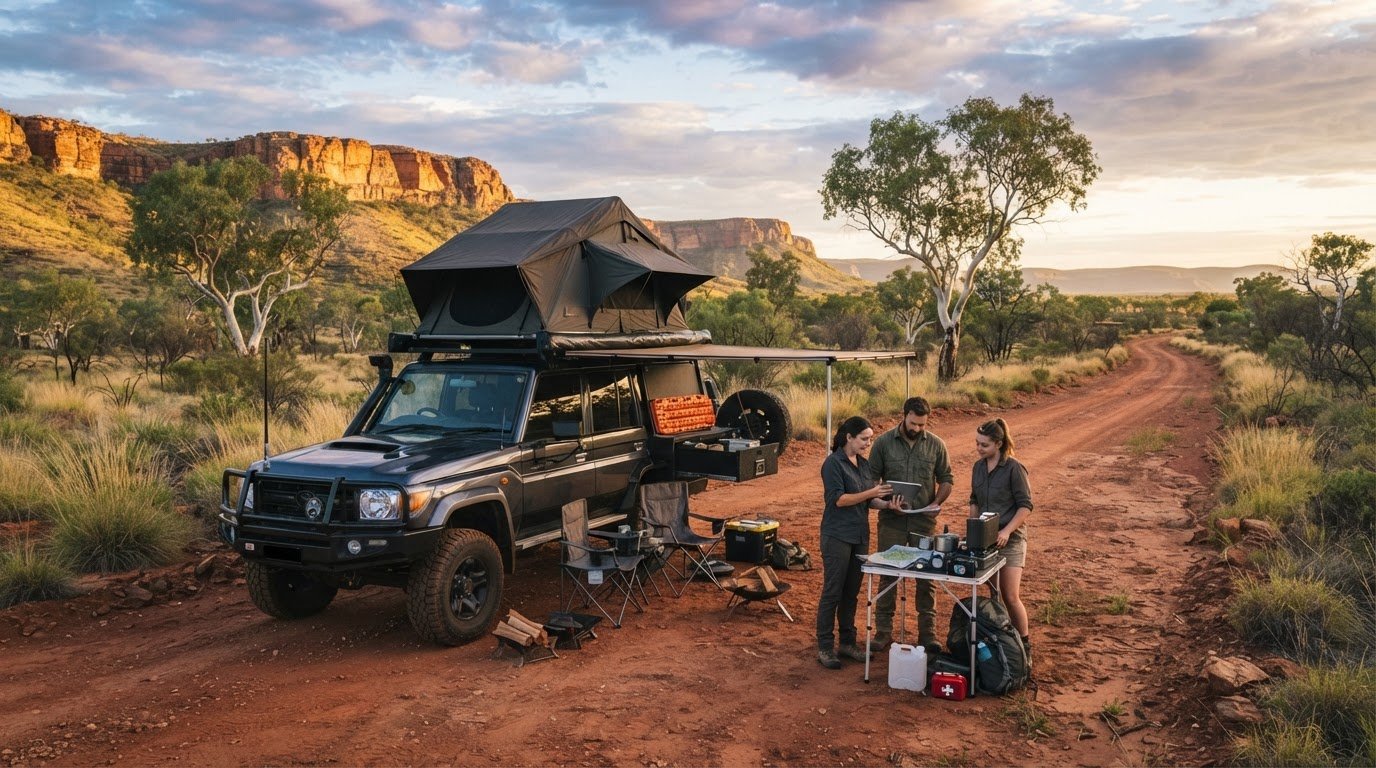
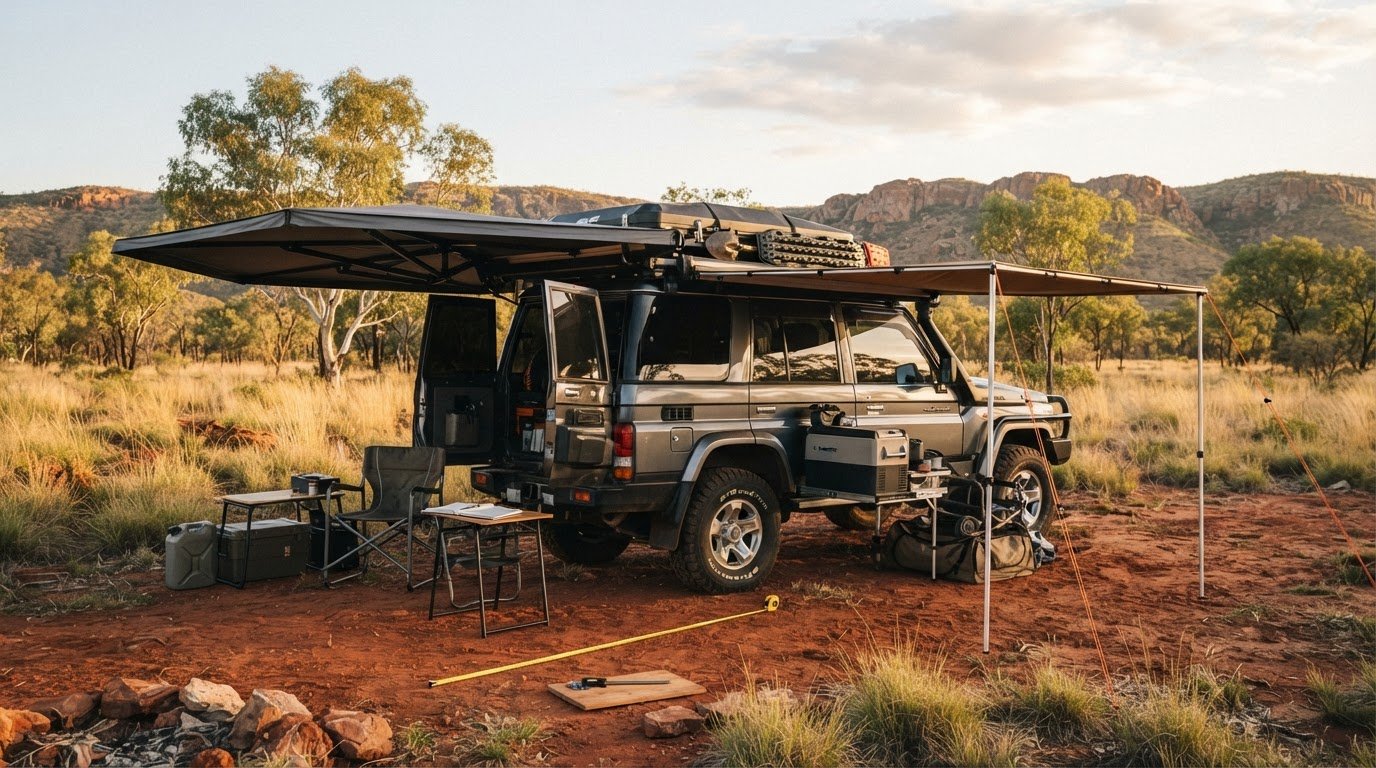
For an overnight trip, think through camp setup as well as the drive. Consider how shade and shelter fit your destination, and use these 4WD awning guides to inform your planning. If you’ll sleep in your vehicle setup, review this rooftop tent advice as part of your broader camp plan.
How can you reduce risk and environmental impact?
Keep your tyres on permitted tracks and avoid driving around obstacles in a way that damages vegetation, dunes or waterways. Stay clear of closed areas, pack out rubbish and keep noise and disturbance to a minimum around wildlife and other visitors. These small choices help protect the places we share.
Be ready to turn back. If an obstacle, surface or weather change exceeds your group’s skills or vehicle capability, don’t push on just to complete the route. Before your next outing, explore more Australian 4WD trip-planning guides to help shape a responsible plan.
Choose your next 4WD track near Brisbane and plan a responsible escape
There’s no single route that suits every crew. Pick a destination by weighing four things together: terrain, current access, driver experience and vehicle capability. A capable 4WD won’t make a difficult track the right choice if the driver or passengers aren’t comfortable with it, and a familiar route may no longer be accessible under today’s conditions.
Use the earlier comparisons to narrow down your options, then choose one destination to investigate properly. For newer drivers, look for suitable terrain and clear access information, and make conservative decisions about obstacles. Experienced groups can seek a greater challenge, but should still match it to their vehicle and avoid taking risks just to prove a point. With mixed experience levels, choose a route with sensible alternatives and places where the group can turn back safely.
Which route is right for your group?
Talk through the plan before you leave: what kind of terrain everyone is comfortable with, what the vehicle can reasonably handle and what would prompt a change of route. Give every driver a voice in that decision. The best 4wd tracks near brisbane are the ones your group can explore responsibly, not necessarily the most demanding ones on a map.
How to keep your plan flexible
Track information is time-sensitive. Confirm access, closures and conditions with the relevant land manager or venue shortly before departure, then keep an alternative in mind in case weather or access changes. If conditions no longer suit your group, choose the backup plan or postpone. Turning around is a sound decision, not a failure to finish the trip.
Once you’re back, share a thoughtful account with the outdoor community. Focus on useful, time-specific details and responsible travel choices, rather than treating one trip report as a guarantee that the route will stay open or unchanged. Respect closures, stick to permitted tracks and avoid sharing information in a way that encourages damage to sensitive places.
Before departure, confirm the route is open and permitted, check current conditions, match the terrain to your vehicle and experience, tell someone your plan, and be ready to turn back.
With a verified destination and room to adapt, we can make a weekend escape rewarding for the whole crew and gentler on the places we visit. Ready to map out another responsible trip? Plan your next outdoor adventure with care for Country and the communities who call it home.
Make your next Brisbane 4WD escape count
Your next trip doesn’t need to be the toughest route or the furthest drive. Choose an outing that leaves room to learn, enjoy the landscape and make good decisions together. A thoughtful approach to the best 4wd tracks near brisbane starts before the engine does: stay curious, remain flexible and treat every track as a place to visit with care.
As you plan, keep the impact of your choices in view. Stick to permitted routes, respect closures and leave the environment as you found it. Sharing useful, responsible trip experiences can also help fellow adventurers make better-informed plans of their own.
For fresh ideas and practical guidance for Australian adventures, explore Adventurerz’s outdoor guides and gear reviews. They’re here to help you plan with confidence while keeping responsible exploration part of the journey. Plan your next outdoor adventure with Adventurerz, and head out ready to enjoy the experience and care for the places you explore.
Frequently Asked Questions
What are the best 4WD tracks near Brisbane for beginners?
For newer drivers, start by investigating easier routes in Beerburrum West State Forest, within the Glass House Mountains area, or beginner-suitable tracks at a managed 4WD park. Don’t treat “easy” as a guarantee: route conditions can change, and difficulty descriptions are based on dry conditions. Pick a route with clear access information, avoid committing to obstacles beyond your comfort level, and go with companions who support turning back.
Do I need a permit to drive on Bribie Island?
Yes. A vehicle access permit is required to drive in the Bribie Island Recreation Area. Arrange the permit before your trip through the official Queensland Parks and Wildlife Service information, and check the conditions attached to your planned access. Beach driving is subject to road rules, including keeping left, obeying speed limits and wearing seatbelts. Dune driving is prohibited, so stay on permitted driving areas.
Can I drive a 4WD on every track near Brisbane?
No. A 4WD doesn’t grant access to every road, trail or conservation area. Some routes are closed, restricted to particular users, or intended for land management rather than recreational driving. For example, confirm that a forest road is open for public 4WD use instead of assuming it’s a recreational track. Follow signs and closures, and don’t create a new line around an obstacle or blocked section.
Are Brisbane-area 4WD tracks safe after heavy rain?
Not necessarily. Heavy rain can leave mud slick, deepen ruts, wash out sections or cause flooding, making a route harder or inaccessible. A track that was passable on a previous visit may no longer be safe for your vehicle or group. Check official alerts and land-manager notices after rainfall, and postpone or choose another route if conditions are uncertain. Never enter floodwater or drive around a closure.
What should I bring on a 4WD trip near Brisbane?
Bring navigation suited to the route, a charged phone, drinking water, food, sun protection and clothing for changing weather. Pack recovery equipment appropriate to the terrain, and make sure someone in the group knows how to use it. For a remote route, plan communications around likely coverage and tell someone outside the trip your itinerary and return plan. Add camping gear only if you’re staying overnight.
Can I take a 4WD onto a beach near Brisbane?
Yes, where beach driving is permitted and access is open. Bribie Island is one option, but you’ll need a vehicle access permit for its recreation area and must follow local signs and conditions. Check tide information before departure; Queensland guidance recommends driving at low tide or within two hours either side. Keep left, obey speed limits, wear seatbelts and never drive on dunes.
How do I find out whether a 4WD track is open?
Check the current notices from the authority managing that specific place, such as Queensland Parks and Wildlife Service for a recreation area or the relevant state forest authority for forest tracks. For a managed 4WD park, use the operator’s latest access and route information. Check again close to departure, since weather, maintenance or other conditions can change access after you first make plans.