The most effective way to ruin a pristine night under the stars is the lingering fear of an uninvited guest slithering into your sleeping bag. We’ve all been there, lying awake in the dark and jumping at every rustle in the dry leaves. It’s tough to embrace the rugged beauty of the Australian outback when you’re worried about venomous locals or eight-legged hitchhikers. Finding the best camping setup to avoid snakes and spiders is more than just a gear choice; it’s about gaining the confidence to explore remote areas without a second thought. We believe every explorer deserves a restful night, free from the anxiety of ground-level encounters.
In this 2026 expert guide, we’ll show you exactly how to build a critter-proof campsite that keeps you safe and your sleep undisturbed. We’ll dive into why elevation and seal integrity are your two non-negotiable pillars for safety. From the latest rooftop tent configurations to specialized no-see-um mesh and strategic site selection, we’ve got you covered. You’ll learn which equipment provides the best protection and how to store your gear to avoid attracting rodents that bring snakes along for the ride. Let’s get your camp ready for a secure, responsible adventure into the wild.
Key Takeaways
- Understand why snakes and spiders seek out our campsites for warmth or shade so we can anticipate their movements and stay one step ahead.
- Master the “Golden Rule of Zippers” and proper footprint placement to create the best camping setup to avoid snakes and spiders when sleeping at ground level.
- Discover why elevating our sleep with a rooftop tent provides a massive vertical advantage against non-climbing reptiles and eliminates ground-level heat signatures.
- Implement simple gear management rules like using amber lighting and hanging our footwear to ensure no opportunistic hunters hitch a ride in our boots.
- Follow our Adventurerz arrival protocol and “Seal Check” routine to secure our perimeter and enjoy a worry-free night in the remote Australian bush.
Table of Contents
- Understanding Critter Behavior: Why Snakes and Spiders Enter Campsites
- Ground-Level Defense: Optimizing Traditional Tent Setups
- Elevating the Experience: Why Rooftop Tents are the Ultimate Deterrent
- Advanced Deterrents and Gear Management Strategies
- The Adventurerz Critter-Proof Checklist: Your Arrival Protocol
Understanding Critter Behavior: Why Snakes and Spiders Enter Campsites
To build the best camping setup to avoid snakes and spiders, we first need to step into their world. These critters aren’t stalking us; they’re simply navigating their environment based on biological needs like temperature control and food. Snakes are ectothermic, which means they can’t regulate their own body temperature. When the desert sun beats down, our tents provide the perfect cooling shade. When the temperature drops at night, the residual heat from a campfire or a 4WD engine becomes an irresistible thermal beacon. By understanding these patterns, we can shift from reactive fear to proactive preparation.
Spiders operate on a different but equally predictable logic. Most are opportunistic hunters seeking out “micro-climes” that offer protection from wind and predators. The deep folds of a canvas awning or the dark, humid interior of a hiking boot left on the ground are prime real estate for an arachnid. We also have to consider the “Food Chain Effect.” If our campsite is messy with food scraps, we’ll attract rodents. In the wild, where there are mice, snakes will follow. Realizing that Understanding Venomous Wildlife is about recognizing these accidental intersections helps us design a smarter perimeter.
The Attraction Factors: Heat, Shade, and Shelter
Think about the space directly under a ground tent. It’s dark, dry, and slightly compressed, making it a luxury hotel for species like the Tiger Snake. Similarly, our 4WDs are massive heat sinks. On cold nights, a reptile might curl up near the transmission or under the wheel arches to soak up engine warmth. We also need to be mindful of moisture. A leaking water jerry can or greywater dumped near the sleeping area creates a hydration station that attracts thirsty spiders and the insects they prey upon.
Seasonal Risks: When Activity Peaks
Our setup rigor should change with the calendar. During spring and summer, snakes are highly active as they search for mates and food. This is when we must be most disciplined with our gear. In winter, many reptiles enter “brumation,” a state of dormancy. While they move less, they often hide under logs or rocks. If we’re gathering firewood, we’re literally reaching into their winter homes. Night-time hunters, including various prowling spiders, become active once the sun sets, making it vital to have our roof top tents or sealed ground units ready before dusk.
Ground-Level Defense: Optimizing Traditional Tent Setups
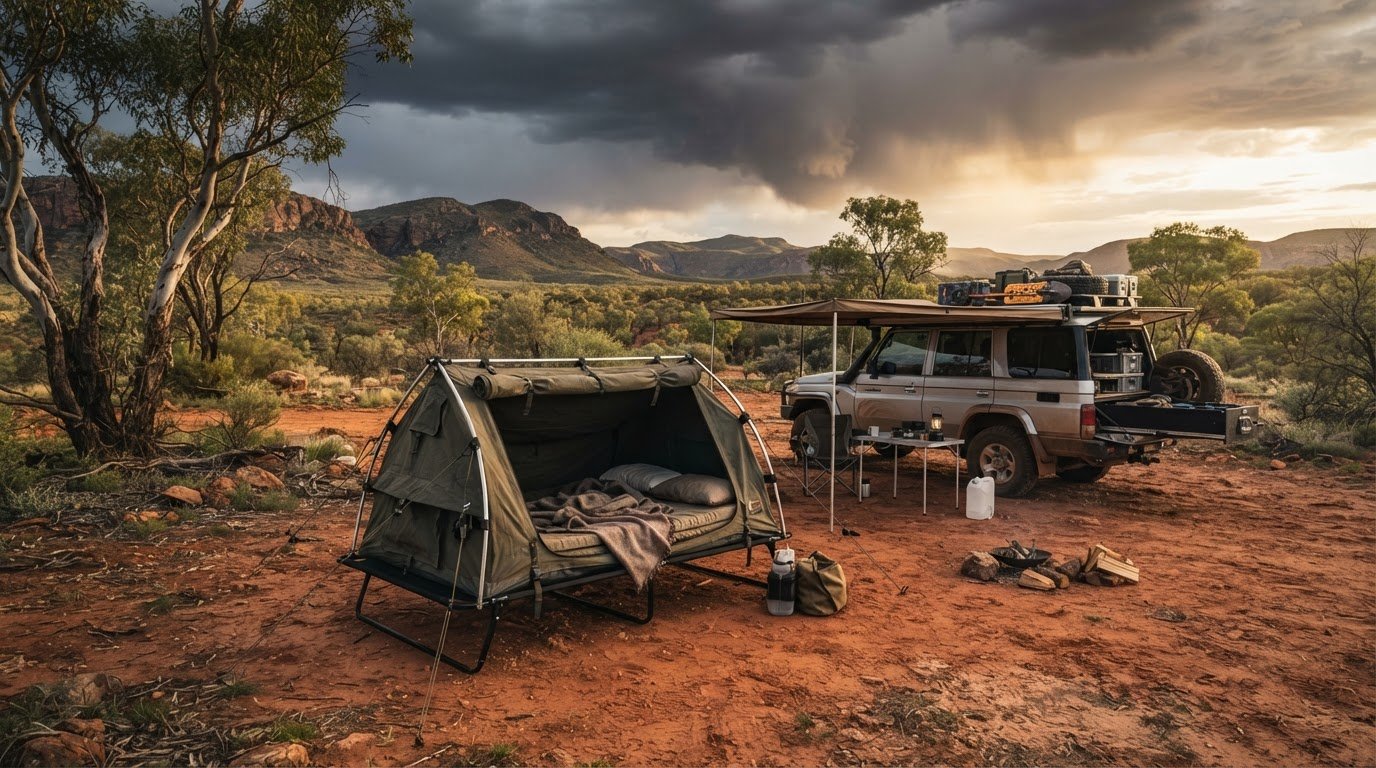
We love the feeling of sleeping close to the earth, but it requires a disciplined approach to keep the local residents out of our beds. To achieve the best camping setup to avoid snakes and spiders, we must focus on the integrity of our tent’s seal. The most common point of failure is the “Golden Rule of Zippers.” We often see campers leave the two zipper sliders meeting at the bottom corner of the door. This creates a tiny, triangular gap that is essentially a welcome mat for a curious Brown Snake or a wandering spider. Always pull your zippers to the top or the side, well away from the ground, to eliminate this entry point.
We also need to talk about our footprints. If your groundsheet is larger than your tent floor, you’re creating a ledge that collects water and provides a perfect, humid hiding spot for critters right against your mesh. Fold your groundsheet so it’s slightly smaller than the tent floor. This prevents pooling and eliminates those dark “micro-climes” that spiders love. We should also be wary of the vestibule. This “porch” area is often the most dangerous part of a ground setup. We tend to leave boots, camp chairs, and bags here, assuming they’re safe. In reality, an unsealed vestibule is just a sheltered habitat. Following Expert Advice on Avoiding Snakes means keeping our gear organized and, ideally, inside the sealed inner tent.
Regular maintenance is our final line of defense. We should inspect our mesh panels for micro-tears during every pack-down. A hole the size of a matchhead is plenty of room for a Redback to squeeze through. If you’re looking to upgrade your perimeter and keep more gear off the ground, take a look at our best 4wd awnings reviews for better sheltered storage options.
Zipper Discipline and Entry Protocols
We practice a “Knee-High” entry protocol. Never drag your feet or your gear across the door frame. Step high and clear to avoid bringing ground-crawlers inside with you. Before we climb into our sleeping bags, we always perform a 10-second visual sweep of the corners and under our mats. It’s a simple habit that ensures our shared path remains a safe and restful one.
Site Selection Secrets
Where we pitch is just as vital as how we pitch. We stay away from “critter highways” like long grass, dense rock piles, or fallen timber. Hard-packed ground or sandy clearings are our best friends because they offer maximum visibility. We can see exactly what’s moving around our perimeter. While a riverside camp sounds idyllic, keep in mind that water sources significantly increase the local spider population. Choose high, dry ground whenever possible to minimize these encounters.
Elevating the Experience: Why Rooftop Tents are the Ultimate Deterrent
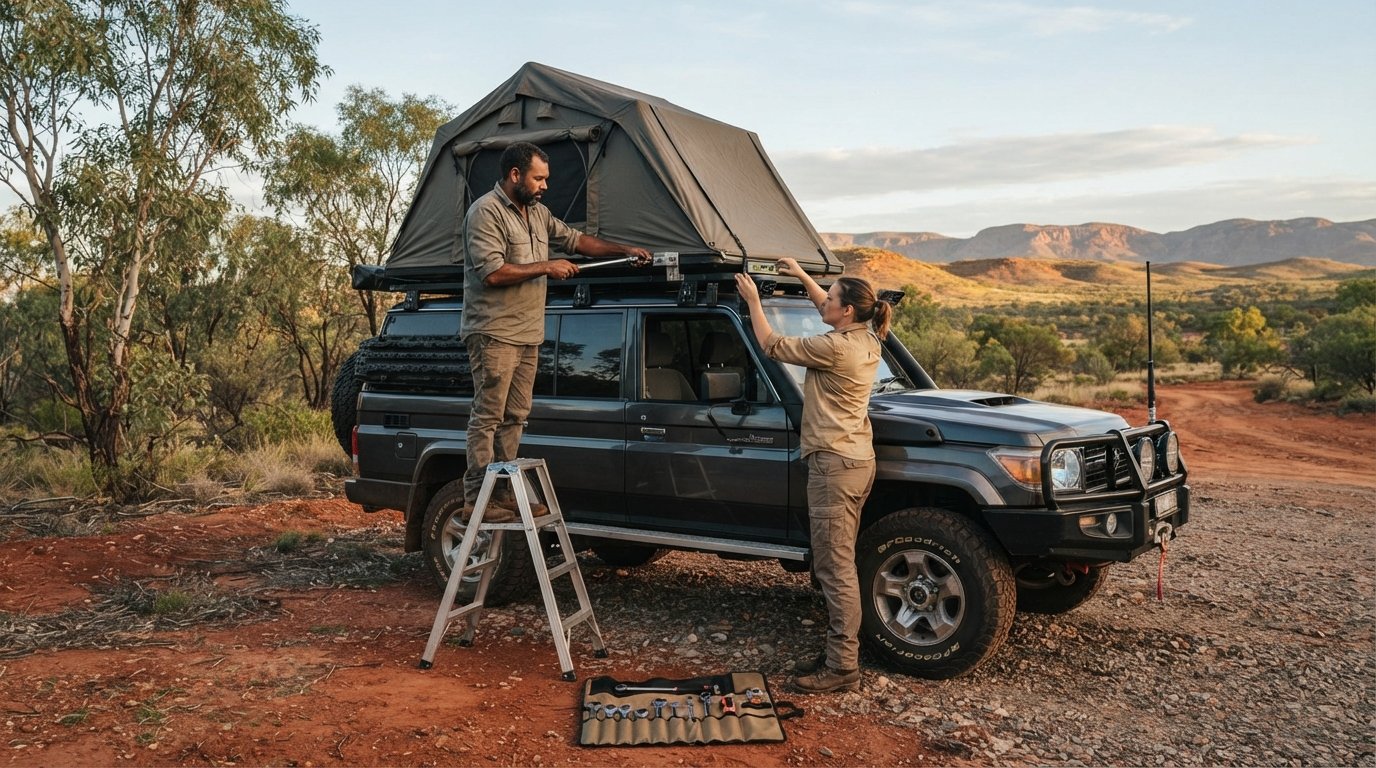
If we’re serious about creating the best camping setup to avoid snakes and spiders, we need to look up. While ground tents offer a classic experience, rooftop tents (RTTs) provide what we call the “Vertical Advantage.” Most of Australia’s notorious venomous snakes, like the Eastern Brown or the Inland Taipan, are primarily terrestrial hunters. They spend their lives on the ground. By moving our sleeping quarters two meters into the air, we create an immediate physical barrier that these reptiles simply aren’t designed to overcome. It’s not just about height; it’s about breaking the line of sight and scent that leads a curious visitor to your door.
Another technical benefit of the RTT is the elimination of the “thermal beacon.” As we discussed earlier, snakes are attracted to the residual heat trapped under a ground tent. A rooftop tent is separated from the earth by a layer of air, meaning we don’t create that warm patch on the ground that acts like a magnet on a chilly desert night. Regarding spiders, hardshell RTT models offer superior seal integrity. Unlike soft canvas that can have complex folds and velcro gaps, a hardshell unit often seals with a robust automotive-grade rubber gasket. This makes it incredibly difficult for opportunistic arachnids to find a way inside while the tent is closed or in transit.
Ground Tents vs. Rooftop Tents
The difference in entry points is the most significant factor for our peace of mind. In a ground tent, your main zipper is often just inches away from where a snake might be passing by. With an RTT, your entry point is at the top of a ladder. This height also keeps our bedding and pillows completely isolated from ground-dwelling spiders that might hitch a ride on our clothes. For those of us ready to make the switch, you can check out our comprehensive guide to roof top tents for more details on the best models for Australian conditions.
Ladder Safety and Critter Access
We often get asked if snakes can climb ladders. While it’s true that some pythons are excellent climbers, most of the venomous species we’re concerned about won’t attempt a vertical ascent on smooth aluminium or steel rungs. The lack of grip on these surfaces makes the ladder a very poor “bridge” for a reptile. To maximize safety, we recommend using smooth-surface ladder rungs and keeping the area around the base of the ladder clear of debris. The ladder is your only connection to the ground. By monitoring this single point of access, we can maintain a much higher level of security than we ever could at ground level.
Advanced Deterrents and Gear Management Strategies
Creating the best camping setup to avoid snakes and spiders requires us to think about the invisible signals we send to the local wildlife. Lighting is one of our most powerful, yet overlooked, tools. Standard white LED lights act as a beacon for moths, beetles, and other insects. In the wild, where there’s an abundance of prey, spiders will quickly follow to set up their webs. We recommend switching to amber or red light settings on your headlamps and camp lanterns. These wavelengths are far less attractive to bugs, effectively breaking the food chain before it reaches your annex. It’s a simple adjustment that keeps the hunters away from your living space.
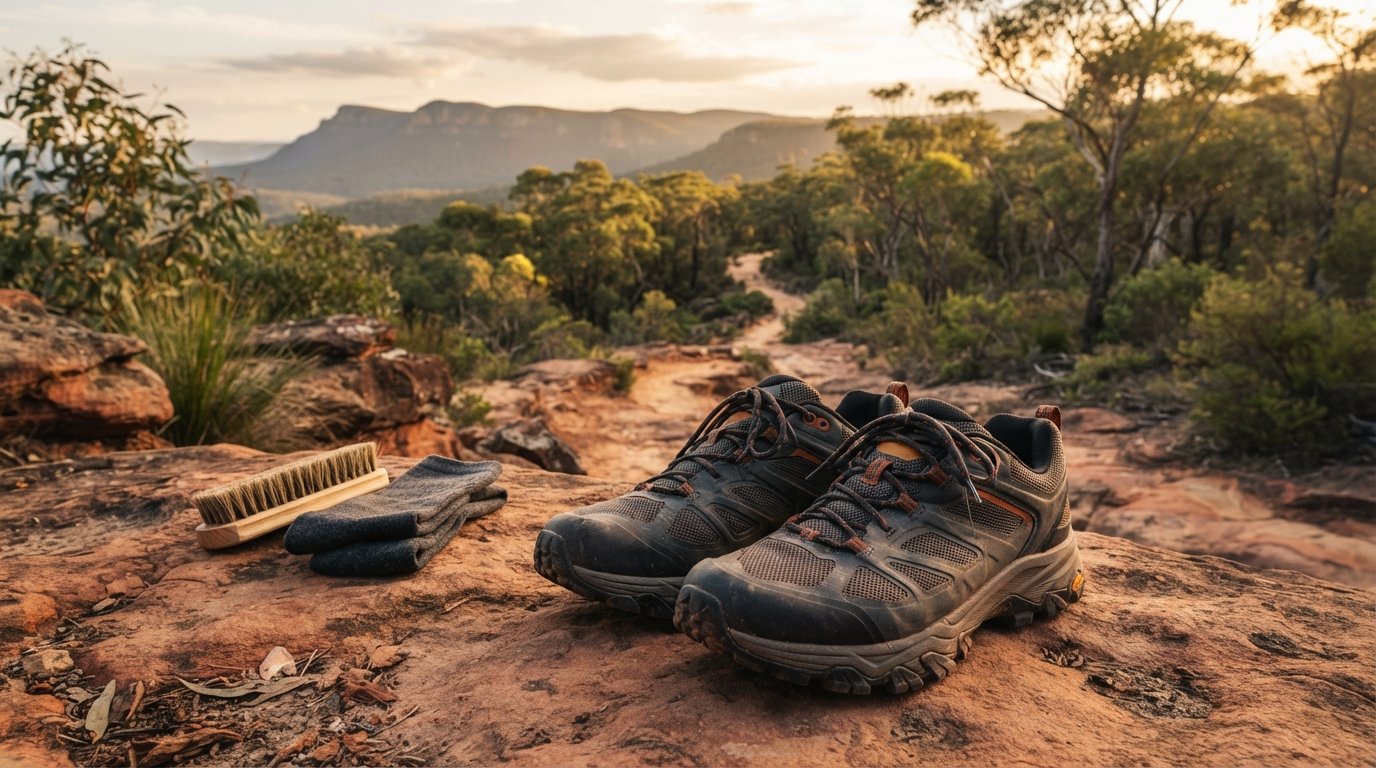
We also live by the “Boot Rule.” In the Australian bush, leaving your footwear on the ground overnight is an open invitation for a huntsman or a funnel-web to find a cozy new home. We never leave boots exposed. Instead, we hang them from our roof top tent ladders or place them inside sealed gear bags. If you must leave them outside, use a “Boot Pouch” or simply turn them upside down on sticks. Regarding chemical deterrents, the 2026 market offers several EPA-registered granules and plant-based essential oil sprays. While these can help define a perimeter, we view them as a secondary layer. They don’t replace the need for good camp hygiene and smart gear storage.
Managing Your 4WD and Awning Space
Our vehicles are full of nooks and crannies that spiders love, especially the hinges and folds of a 4WD awning. To eliminate these “micro-climes,” we often integrate mesh rooms or solid walls into our setup. This creates a “sterile zone” around the vehicle entry point, giving us a place to transition from the dusty trail to our sleeping quarters without bringing guests along. If you’re looking to upgrade your shade, discover the best 4×4 awnings to enhance your camp setup and see which models offer the tightest seals.
Storage Solutions for Remote Travel
Open bags are a liability in remote camps. We’ve swapped out our canvas duffels for heavy-duty, sealed plastic bins for all our food and clothing. These bins are impossible for snakes to enter and offer no purchase for spiders. We also practice a mandatory “Shake Test” for any piece of gear, including camp chairs and towels, that has been left outside for more than a few minutes. For our sensitive electronics and medical kits, we use specialized “spider-proof” dry bags with roll-top closures to ensure nothing crawls inside while we’re distracted by the view. Ready to refine your kit? Check out our latest camping equipment reviews for gear that stands up to the outback.
The Adventurerz Critter-Proof Checklist: Your Arrival Protocol
Building the best camping setup to avoid snakes and spiders isn’t just about the gear we buy. It’s about the habits we form every time we shift into park. We’ve seen how elevation and seal integrity keep us safe, but a lapse in discipline during the excitement of arrival can leave a door open for an unwanted guest. Our team follows a strict arrival protocol to ensure our campsite remains a sanctuary. We start with a thorough sweep of the area within a 5-meter radius of our vehicle. We’re looking for active burrows, dense leaf litter, or rock crevices that might house a local resident. If the spot looks too busy with potential habitats, we simply move along. Respecting their space is the first step toward a peaceful night. The best camping setup to avoid snakes and spiders is only as effective as the routine we maintain.
- Arrival Sweep: Inspect the ground for tracks or holes before you even deploy your awning.
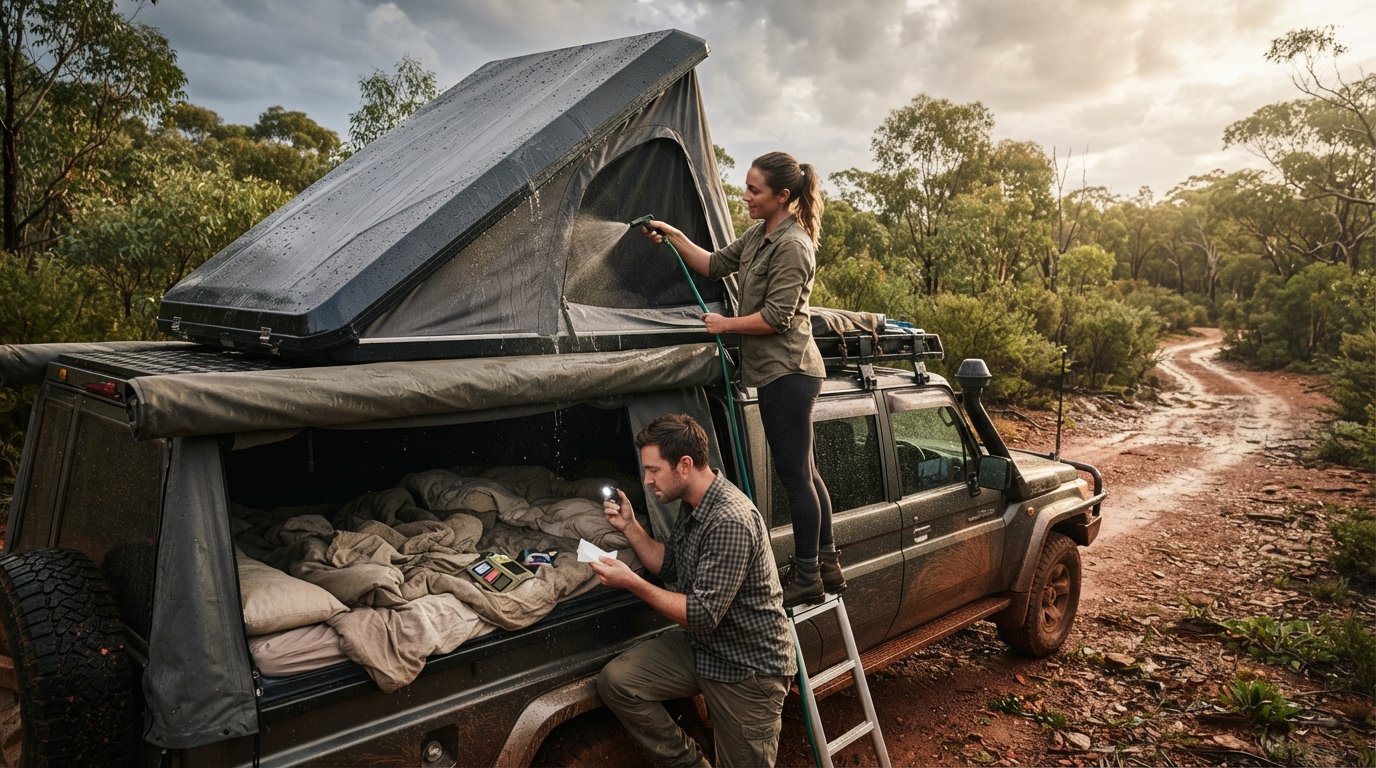
- The “Seal Check”: Before the sun dips below the horizon, we inspect every zipper. Ensure your mesh panels are taut and that “zipper junction” we mentioned earlier is positioned at the top of the door.
- Lighting Setup: Position your main camp lanterns at least 3 to 5 meters away from your tent entry. This draws the bugs away from your living space, taking the spiders with them.
- Night-time Lockdown: Conduct a final “boots up” check. Ensure no clothing is draped over chairs and all food bins are clipped shut.
The 5-Minute Evening Walkaround
Just before dusk, we perform a final lap of the perimeter. We check for “bridges.” This is any piece of gear, like a stray towel or a recovery track, that’s touching both the ground and our vehicle or tent. These act as easy ramps for spiders. We also verify that our ladder is clear and our rooftop tent base is fully secured. It’s about maintaining that vertical advantage we’ve worked so hard to establish. A quick sweep now saves a lot of stress once the stars come out.
Emergency Protocols
Preparation means knowing what to do if a visitor does manage to slip through. If you find a snake or spider inside, stay calm. Don’t use your hands. Use a long-handled tool, like a camp shovel or a broom, to gently herd them out. We always keep a high-quality compression bandage and a first aid kit in an elevated, easy-to-reach spot inside our sleeping area. Safety is about being methodical, not fearful. If you’re ready to test your new skills in the wild, plan your next remote escape with our 2026 travel planner and explore with total confidence.
Mastering Your Critter-Proof Perimeter
We’ve explored how understanding local biology and maintaining strict gear discipline can transform our outback experience. By embracing the vertical advantage of a rooftop tent or mastering the “Golden Rule of Zippers” on the ground, we effectively remove the welcome mat for uninvited guests. Securing the best camping setup to avoid snakes and spiders is a journey of shared knowledge and methodical preparation. It’s about combining height, seal integrity, and smart lighting to create a safe zone that respects the environment while protecting our sleep.
Our community relies on expert advice from remote travel specialists and community-vetted gear recommendations to navigate these rugged environments responsibly. We’re committed to sustainable and safe outdoor practices that allow us to visit isolated locations without leaving a trace or taking home a hitchhiker. You have the tools and the protocols now; all that’s left is to pack the rig and head out. Explore our expert gear reviews to build your perfect camping setup. We’ll see you out there, safe and sound under the stars!
Frequently Asked Questions
Can snakes climb into a rooftop tent?
Most venomous Australian snakes are terrestrial and cannot climb the smooth, vertical surfaces of a rooftop tent ladder. While some pythons are arboreal and skilled climbers, they rarely seek out tents. By keeping your ladder clear of vegetation and ensuring your tent is zipped tight, you create a nearly impenetrable barrier. This vertical separation is a key component of the best camping setup to avoid snakes and spiders.
What is the best spider repellent for camping gear?
Natural essential oils like peppermint or tea tree are excellent for deterring spiders without using harsh chemicals. For more serious protection, we recommend treating your gear with permethrin, which is an insect repellent that bonds to fabric. It’s highly effective for keeping spiders away from your tent mesh and awnings. Always apply these treatments in well-ventilated areas and follow the manufacturer’s instructions to protect both yourself and the environment.
Is it safer to sleep in a car or a tent for snakes?
Sleeping in a car is generally safer because it provides a fully sealed, hard-sided barrier against wildlife. However, a properly zipped tent with a bathtub floor is also extremely secure. The main risk with cars is the heat they retain, which can actually attract reptiles to the undercarriage. If you choose a tent, just ensure your zipper discipline is perfect to maintain that critter-proof seal all night long.
Do campfires keep snakes and spiders away?
No, campfires do not reliably repel snakes or spiders; in fact, they can sometimes attract them. Snakes are drawn to the residual warmth of the fire pit once the flames die down. Similarly, the light from your fire attracts insects, which in turn brings hungry spiders into your camp perimeter. We always suggest extinguishing your fire completely and clearing the area of heat before you head to bed.
What should I do if a spider gets in my sleeping bag?
Stay calm and avoid making sudden movements that might provoke a defensive bite. Gently exit the bag and use a tool, like a camp shoe or a stick, to encourage the spider to move out. Most spiders are not aggressive and will leave if given a clear path. Once it’s out, give your bag a thorough shake and check for any other visitors before you climb back in.
Are there specific tent colors that attract fewer bugs and spiders?
Lighter, neutral colors like sand, khaki, or light grey tend to attract fewer insects than bright yellows or whites. Since spiders follow their prey, choosing a tent color that doesn’t act as a beacon for bugs will naturally keep the arachnid population down. We’ve found that these earthy tones also blend better with the Australian landscape, supporting our goal of low-impact, responsible exploration in remote regions.
How do I keep snakes out of my camper trailer?
Keeping snakes out of a camper trailer requires a focus on sealing every possible entry point. Use fine mesh on all vents and ensure your door seals are in top condition with no gaps. We also recommend keeping your stabilizer legs on smooth pads to make climbing difficult. Implementing these steps helps create the best camping setup to avoid snakes and spiders while you’re enjoying the comfort of a trailer.
Is “cowboy camping” safe in Australia?
Cowboy camping, or sleeping directly under the stars without a tent, carries a higher risk in Australia due to our active ground-dwelling wildlife. We don’t recommend it unless you’re using a fully sealed mesh bivy or a raised stretcher. While it’s a beautiful way to connect with nature, the lack of a physical barrier makes you vulnerable to curious snakes and wandering spiders during the night.