You’re three days into a remote trek when the sky opens up, and suddenly that budget shade starts sagging under the weight of a standard Aussie downpour. We’ve all felt that frustration of watching gear fail exactly when we need it most. Finding the best material for a 4wd awning is about more than just staying dry. It’s about choosing equipment that stands up to the brutal UV rays and high winds of the bush without ending up in a landfill after one season.
As Responsible Explorers, we know that true value comes from gear that respects the environment by lasting a decade, not just a weekend. You want a waterproof sanctuary that won’t turn brittle or fade before your next big trip. This 2026 durability guide will show you exactly which fabrics survive the elements and which ones fall apart. We are diving into the technical specs of 320gsm ripstop poly-cotton canvas, comparing high-denier polyesters, and explaining why a UPF 50+ rating is essential for your next investment.
Key Takeaways
- Learn why high GSM (Grams per Square Metre) is the secret to an awning that won’t sag or flap during a storm.
- Discover the best material for a 4wd awning by comparing the breathability of poly-cotton canvas with the lightweight convenience of modern polyester.
- Understand how ripstop weaves and high denier ratings stop small snags from turning into gear-ending tears on the trail.
- Decode Hydrostatic Head ratings so you can pick a truly waterproof shelter that handles heavy rain without leaking.
- Get expert advice on matching fabric types to your specific environment, whether you’re battling salt spray on the coast or scrub in the bush.
Table of Contents
Why Awning Material is the Backbone of Your Remote Setup
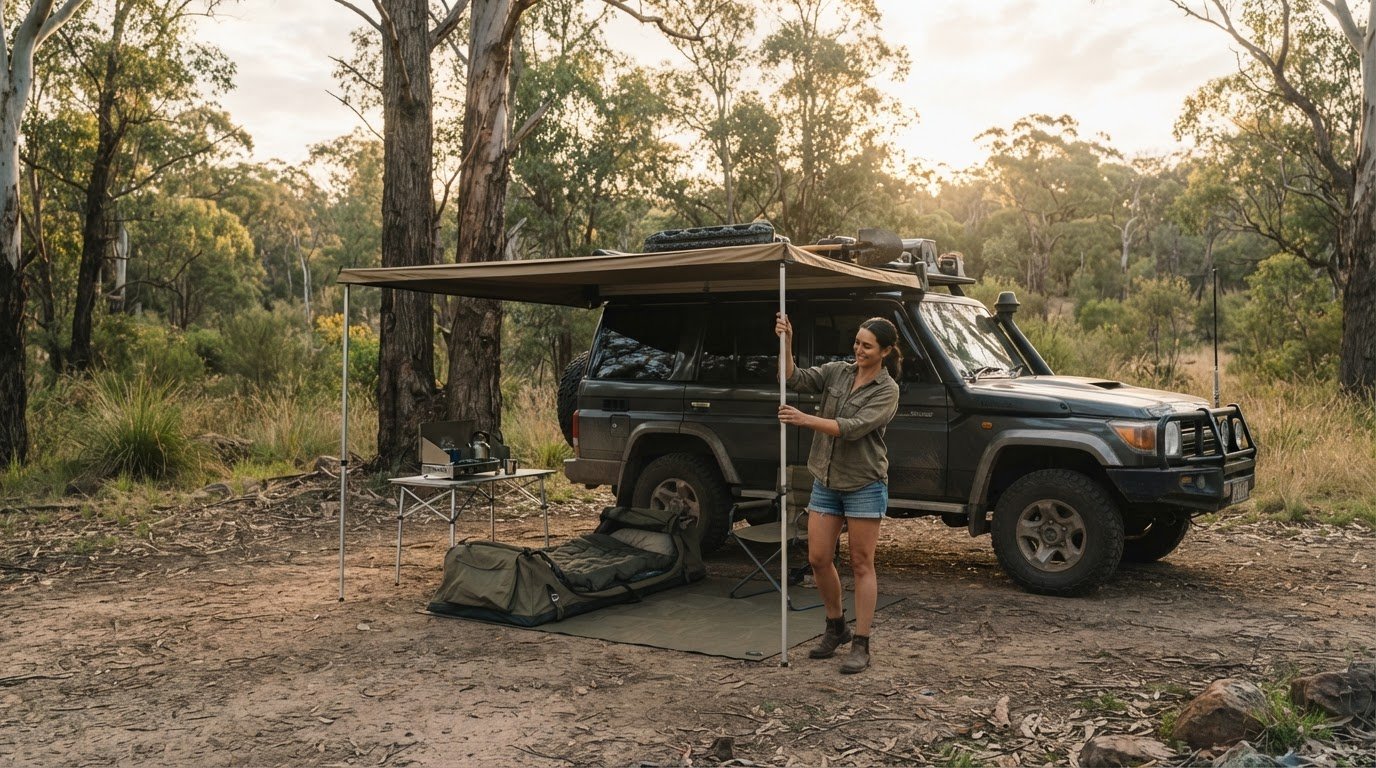
When we hit the tracks, our vehicle transforms into a mobile base camp. Our awning is the literal backbone of this setup. It’s the primary living space where we cook, share stories, and take cover from the midday heat. Choosing the best material for a 4wd awning isn’t a decision to take lightly because the Australian sun is unforgiving. It degrades low-quality polymers significantly faster than in other parts of the world. We need gear that doesn’t just look good in the driveway; we need it to survive the relentless UV of the Red Centre and the high-salt humidity of the coast.
While “lightweight” is a popular marketing term, we prioritize durability for long-term remote travel. A light awning is often just a thin awning. This is where GSM, or Grams per Square Metre, becomes your most important metric. It tells you exactly how much material is actually packed into every square inch of your shelter. Without a high GSM rating, your awning will likely flap, sag, and eventually fail during a standard afternoon storm.
Understanding the GSM Rating
The density of the weave directly impacts how well your awning resists tearing and sagging. You’ll find a massive variety of awning materials available today. Budget-friendly models typically use 200GSM fabrics. These are prone to stretching and eventually leaking under heavy rain. On the other end, premium touring gear often clocks in at 320GSM or higher. We’ve found that 280GSM is the sweet spot for most 4WDers, providing enough heft to stay taut without adding excessive weight to your roof rack. For a deeper look at which brands hit these marks, see our breakdown of the best 4wd awnings currently on the market.
The Environmental Cost of “Disposable” Gear
Choosing cheap, flimsy polyester contributes to a throwaway culture that hurts the places we love to explore. These awnings often end up in landfills after a single season because they can’t be effectively repaired. We believe in investing in gear that lasts a lifetime. High-quality poly-cotton canvas is much easier to maintain. If you get a small puncture from a low-hanging branch, you can easily apply a patch or use a needle and thread. This self-reliance is a core part of being a responsible explorer. We always recommend the buy once, cry once philosophy. It’s better to pay more upfront for gear that stays on your rig for a decade than to replace a cheap one every year.
Poly-Cotton Canvas vs. Polyester: Decoding the Fabrics
Choosing between poly-cotton canvas and polyester is the most common crossroads for explorers. We need to look beyond the price tag to see how these fabrics handle the heat. The best material for a 4wd awning depends on your travel style, but for most of us, poly-cotton canvas is the gold standard. The presence of cotton isn’t just for show. It acts as a natural thermal regulator, allowing heat to escape rather than trapping it under the canopy. This makes a massive difference when you’re seeking shade in 40-degree weather.
On the other hand, 100% polyester awnings are often much louder in the wind. That constant crackle and snap can be exhausting during a long night at camp. While polyester is lighter, it lacks the dampening effect that heavy canvas provides. We also have to consider our vehicle’s roof load limit. Every kilogram counts when you’re already carrying recovery gear and fuel. If you’re driving a smaller rig or a soft-roader, a high-grade polyester might be the only way to stay within your legal weight limits without sacrificing shelter.
The Case for Poly-Cotton Canvas
Heavy-duty canvas is famous for its longevity. One of the most effective features of this material is how it seasons. When you first get it wet, the cotton fibers swell and close any tiny gaps in the weave. This process makes the fabric more waterproof over time. Because of its density, canvas also offers superior UV resistance. This construction is similar to what the Skin Cancer Foundation describes in their research on Sun Protective Clothing, where tighter weaves provide better protection. Many of the best 4wd awnings we recommend feature a 300GSM poly-cotton blend for this exact reason.
When to Choose High-Grade Polyester
Polyester isn’t always the budget choice; sometimes it’s the strategic one. It dries much faster than canvas, which is a lifesaver if you have to pack up in the rain and don’t want to deal with mold later. For the best material for a 4wd awning in the synthetic category, look for Ripstop technology. This is a cross-hatch pattern of reinforced threads that prevents small snags from turning into long tears. It offers a great balance of strength and weight reduction for those watching their GVM. If you are still deciding on your setup, our detailed reviews of the best 4wd awnings can help you narrow down the right fabric for your rig.
The Science of Ripstop Weaves and Denier Ratings
We’ve spent years testing gear in the scrub, and we know that a single tear can ruin a remote trip. It’s not just about the weight of the fabric, but how those threads are actually put together. Finding the best material for a 4wd awning requires looking closely at the grid pattern. If you don’t understand the science behind the weave, you’re essentially guessing about your gear’s survival when the wind picks up.
While GSM measures the weight of the material, Denier and weave type measure its structural integrity. We want gear that can handle a stray branch or a sudden gust without shredding. For those searching for the best material for a 4wd awning, understanding these technical ratings is the only way to avoid buying gear that fails on its first outing.
How Ripstop Actually Works
Ripstop isn’t a fabric type itself; it’s a specific technique where reinforced threads are woven into a cross-hatch pattern. This creates an interlocking grid that acts as a safety net. If a sharp twig or a rogue gust starts a puncture, the tear is physically blocked by the next thick thread in the grid. This “stop” mechanism prevents a small hole from becoming a catastrophic failure. For our community members who frequent the coast, this is non-negotiable. Constant sand-blasting from high winds can act like sandpaper on smooth fabrics, but ripstop maintains its structural integrity under pressure.
Denier vs. Weight: Finding the Balance
Denier (D) measures the thickness of the individual threads used in the weave. A 600D thread is significantly heavier and stronger than a 300D thread, providing much higher puncture resistance. We recommend a minimum of 600D for any side-mounted awning to prevent stretching over time. For the larger, freestanding setups, 1000D is the gold standard for 270-degree awnings because of the incredible stress placed on the fabric surface.
There is a balance to find here. While a 1500D material is incredibly tough, it also increases the bulk and weight on your roof rack. This affects how the awning drapes and how easily it packs away into its travel bag. We always prioritize gear that follows industry standards for fabric durability to ensure we’re getting real-world strength without unnecessary weight. A denser weave also means less noise. A high-denier fabric stays taut and quiet in the breeze, which means you can actually sleep through a blowy night at camp. If you want to see how different brands stack up, our review of the best 4wd awnings breaks down the denier counts of the top models currently available.
Performance Coatings: UV Protection and Waterproofing
Once you’ve settled on the right fabric weight and weave, the next level of durability comes down to the invisible shields applied to the surface. The best material for a 4wd awning is only as good as its coating. We often see people confuse “water-resistant” with “waterproof,” but in the middle of a midnight storm, that distinction becomes very clear. Truly waterproof gear relies on its Hydrostatic Head (HH) rating. This number tells us how many millimeters of water pressure the fabric can withstand before a single drop pushes through. While 1500mm is a standard entry point, we always look for 3000mm for serious remote touring where help is a long way away.
Most modern awnings utilize Polyurethane (PU) coatings to achieve these ratings. They are incredibly effective at keeping you dry, but they aren’t invincible. If you pack your awning away while it’s still damp, you risk delamination. This is where the coating starts to peel away from the fabric, leaving it vulnerable to leaks. We also prioritize materials that feature a silver lining on the underside. This specialized coating reflects heat and provides a massive boost to UV blocking, keeping your living space significantly cooler during a scorching Aussie summer.
Maintaining these protective layers is key to longevity. For those who want to learn more about advanced protective coatings for other applications, visit Jackman Liquid Rubber to see how professional liquid rubber solutions are applied to roofs and other surfaces.
The Importance of UV Stability
We know that the Australian sun is the absolute #1 killer of outdoor gear. It’s far more intense than what you’ll find in Europe or North America. Without high-grade UV stabilizers, fabrics become “crispy” and lose their flexibility. Once the material becomes brittle, it will tear under even moderate wind pressure. This is why we look for UV-treated fabrics that maintain their structural integrity over years of exposure. It’s a standard we also demand when reviewing roof top tents, as both pieces of gear face the same relentless solar radiation on the tracks.
Taped Seams and Water Ingress
Even the best material for a 4wd awning will fail if the seams aren’t protected. Every time a needle passes through the fabric, it creates a potential leak point. Premium manufacturers solve this by using heat-sealed or taped seams. This involves bonding a waterproof tape over the internal stitching to ensure water ingress is impossible. Don’t confuse this factory-bonded protection with simple “water repellent” sprays. While sprays are great for maintenance, they can’t seal a physical hole. You should regularly check your internal seams for any signs of the tape lifting. If you want to invest in a setup that has already proven its worth in the wet, dive into our guide on the best 4wd awnings to see which models stood up to our rigorous weather testing.
Matching Material to Your Travel Style and Maintenance
We don’t all travel the same way, so the best material for a 4wd awning depends entirely on where you plan to pitch your camp. A setup that thrives on the wind-swept dunes of Fraser Island might not be the same one you want for pushing through tight, overgrown tracks in the Victorian High Country. We believe in choosing gear that matches your specific mission. This ensures your equipment lasts a lifetime, reducing the environmental footprint we leave behind as a community. When we respect our gear, we respect the land by keeping “disposable” equipment out of our beautiful national parks.
Repairability is a massive part of our philosophy. High-quality canvas and heavy-duty ripstop aren’t just about strength; they are about longevity. If you snag a premium awning on a branch, you can fix it. If a cheap, thin fabric shreds in the wind, it usually ends up in a skip bin. By choosing robust materials, we are making a commitment to responsible exploration and self-reliance.
Material Selection by Environment
Coastal explorers face a unique set of challenges. Salt air and relentless UV can strip the life out of poor-quality fabrics in months. For the beach, we recommend a 300GSM+ poly-cotton canvas with a high UPF rating. The weight helps the awning stay stable in coastal gusts, while the cotton blend breathes better in high humidity. Conversely, if you’re heading into alpine regions, you need a material that remains flexible in the cold. Avoid PVC-heavy materials that can become brittle and crack when the temperature drops. For the scrub, a high-denier ripstop (600D or higher) is essential to prevent punctures from low-hanging branches.
Pro-Tips for Long-Term Maintenance
The golden rule of awning care is simple: never pack it away wet. If you have to pack up in a downpour, make sure you deploy the awning again as soon as you get home to let it dry completely. Moisture trapped in the folds is the primary cause of mould and rot, which can destroy even the best material for a 4wd awning. When it comes to cleaning, stay away from harsh household detergents that can strip away factory UV coatings and waterproof treatments. Use a soft brush and specialized canvas cleaners or plain water to maintain the fabric’s integrity. For more advice on getting your rig ready for the tracks, refer to our travel planner for comprehensive prep checklists. Taking ten minutes to dry and clean your gear after a trip ensures it will be ready for the next decade of adventure.
Ready to Build Your Ultimate Remote Base Camp?
Choosing the best material for a 4wd awning is the first step toward a setup that respects both your budget and the environment. We’ve explored how 280GSM+ poly-cotton canvas balances thermal regulation with durability, and why 1000D ripstop weaves are essential for high-wind stability. Remember that your choice of performance coatings, specifically UV-stable treatments and heat-sealed seams, is what truly separates a lifelong investment from a single-season shelter.
Since 2018, we’ve provided expert gear reviews based on equipment we’ve personally community-tested in the harshest Aussie conditions. We focus on sustainable and durable gear because we want our community to spend more time on the tracks and less time replacing broken equipment. Don’t settle for gear that fails when the going gets tough. Check out our expert reviews of the best 4WD awnings for 2026 to find the perfect match for your next adventure. We’ll see you out there on the tracks!
Frequently Asked Questions
What is the best GSM for a 4WD awning?
The best GSM for a 4WD awning generally falls between 280GSM and 320GSM for a balance of strength and weight. We’ve found that 280GSM provides enough density to prevent sagging in the rain without overloading your roof rack. Premium touring models often push to 320GSM or higher to ensure maximum tear resistance in extreme winds.
Is canvas better than polyester for an awning?
Canvas is typically better for long-term remote touring because it regulates heat more effectively and lasts longer under intense UV exposure. Polyester is a great alternative for smaller vehicles where keeping weight low is the priority. While canvas requires more maintenance to prevent mould, its ability to “season” and become more waterproof over time makes it our top choice for the bush.
What does “Ripstop” mean in awning fabrics?
Ripstop refers to a specific weaving technique where thicker, reinforced threads are integrated into the fabric at regular intervals. This creates a visible grid pattern that physically stops a small puncture from spreading into a larger tear. It’s an essential feature for the best material for a 4wd awning, especially when you’re driving through tight tracks with overhanging branches.
How do I know if my 4WD awning is truly waterproof?
You can confirm your awning’s waterproof capability by checking for a Hydrostatic Head rating of at least 1500mm and verifying that all internal seams are heat-taped. If you see water beading on the surface, the water-repellent coating is working. However, the internal tape is what prevents drips from entering through the stitch holes during a sustained downpour.
Does the colour of the awning material affect the heat underneath?
Yes, the colour of your awning material impacts the temperature, with darker colours absorbing more solar radiation than lighter shades. While a tan or light grey awning will generally feel cooler, the internal coating is often more important. We recommend looking for materials with a silver-coated underside, as this reflects heat regardless of the fabric’s external colour.
How long should a high-quality awning material last?
A high-quality awning made from premium poly-cotton canvas should last between 5 and 10 years with proper care. The lifespan depends heavily on how often it’s exposed to the sun and whether it’s stored dry. Investing in the best material for a 4wd awning ensures you aren’t replacing your gear every two seasons, which is better for your wallet and the environment.
Can I repair a tear in my 4WD awning myself?
You can absolutely repair most tears in canvas or heavy-duty polyester using a needle, heavy-weight thread, or specialized adhesive patches. For canvas, a simple “bush fix” with a patch kit will often restore the awning’s structural integrity. This ability to self-rely and fix gear on the tracks is a core skill for any responsible explorer.
What is a Hydrostatic Head rating?
A Hydrostatic Head (HH) rating is a technical measurement that indicates how much water pressure a fabric can handle before it starts to leak. A rating of 3000mm means the fabric can support a three-metre column of water without moisture pushing through the weave. For remote Australian travel, we suggest aiming for a minimum rating of 1500mm to 2000mm.