Did you know that nearly one in four 4x4s pulled over for roadside inspections last year failed their weighbridge test? With a 23% failure rate in Victoria alone, it’s clear that many of us are unknowingly pushing our rigs past their legal limits while building the ultimate touring 4×4 setup. We all dream of that perfect remote rig, but the anxiety of a 12V failure or a GVM fine can cast a shadow over our shared adventures. We understand that tension because we’re right there with you, staring at a mountain of gear and wondering if our suspension can truly handle the load.
This guide is our collective roadmap for mastering vehicle preparation in 2026. We’ll help you create a setup that’s as gentle on the environment as it is capable on the tracks. You’ll gain the confidence to venture into the most remote corners of Australia with a rig that balances off-road performance with sustainable camp comfort. We’re breaking down the latest ADR 80/04 regulations, the shift toward lightweight LiFePO4 power systems, and the modular accessories that keep you self-sufficient without sacrificing reliability. Let’s get your Terra-Trekker rig ready for the long haul.
Key Takeaways
- Navigate the latest 2026 GVM regulations and suspension requirements to keep your rig legal, safe, and ready for the toughest Australian tracks.
- Master off-grid self-sufficiency by calculating your daily power draw and switching to high-performance lithium battery systems.
- Compare hardshell and softshell rooftop tents to find the perfect balance between setup speed and durability for your mobile basecamp.
- Learn why building the ultimate touring 4×4 setup means prioritizing aerodynamics and weight management to save fuel and minimize your environmental footprint.
- Discover how to tailor your build to your specific travel goals, ensuring your rig is a perfect match for the way you explore the wild.
Table of Contents
- The Philosophy of the Ultimate 4×4 Touring Setup in 2026
- Strengthening the Foundation: Protection, Suspension, and GVM
- Mastering Self-Sufficiency: 12V Power and Off-Grid Systems
- Designing Your Mobile Basecamp: Rooftop Tents and Awnings
- Responsible Exploration: Weight, Efficiency, and Sustainable Touring
The Philosophy of the Ultimate 4×4 Touring Setup in 2026
We often see rigs loaded to the hilt with every possible gadget, but a true touring setup is about more than just a massive list of accessories. At its heart, a touring vehicle is a machine modified for long-distance, self-sufficient travel across varied and often unforgiving terrain. It’s your home, your transport, and your lifeline when you’re hundreds of kilometers from the nearest town. Building the ultimate touring 4×4 setup requires us to think beyond the showroom floor and focus on how we actually interact with the landscape. We aren’t just building a car; we’re crafting a vessel for responsible exploration.
There is no “one size fits all” here. Your ultimate build is deeply subjective. A solo traveler aiming to cross the Simpson Desert has vastly different requirements than a family of four heading up the coast for three months. Understanding four-wheel drive systems and how they perform under load is the baseline, but the magic happens when we tailor the vehicle to our specific travel goals. We use what we call the Golden Triangle to guide our decisions: Reliability, Capability, and Comfort. If you lean too far into one, the others often suffer. Before you bolt on a single part, we recommend using our travel planner to map out your 2026 escapes. This clarity ensures every dollar spent serves a purpose and respects the environment we love to visit.
Capability vs. Comfort: Finding the Balance
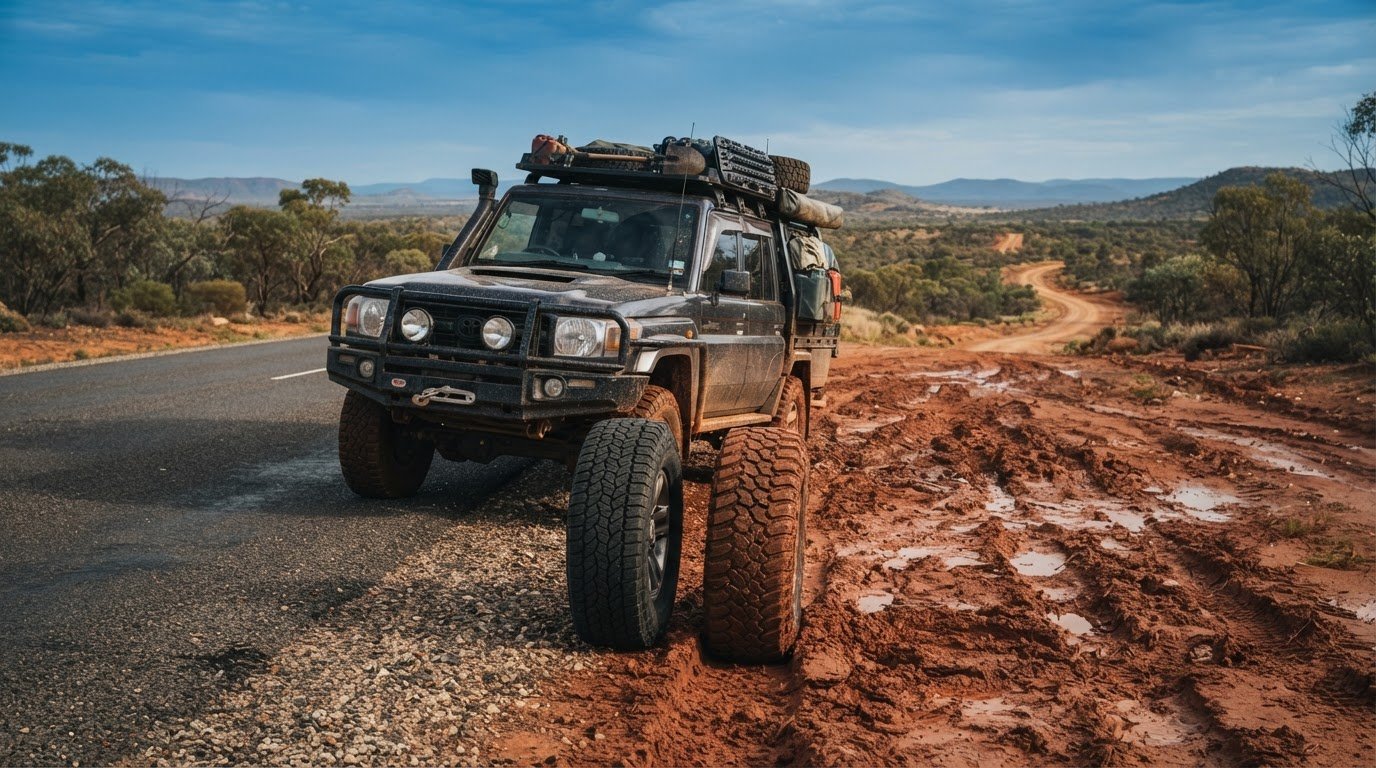
It’s tempting to build a rig that can crawl over boulders, but over-modifying for extreme tracks can actually ruin the touring experience. A massive lift and aggressive mud tires might look the part, but they’ll increase fuel consumption and cabin noise on those long highway stretches. We prioritize modifications that keep us moving. We want a setup that handles the corrugations of the Oodnadatta Track without shaking our teeth loose. Assess your needs based on the actual remote Australian tracks you intend to tackle. If 90% of your travel is on dirt roads and beaches, you don’t need a competition-spec rock crawler that compromises your on-road safety and comfort.
The Importance of a Stage-Based Build
Don’t fall into the trap of buying everything at once. We’ve seen many Adventurerz regret “all-in” purchases before their first shakedown trip. A stage-based approach allows you to test your gear in the wild and see what actually works for your lifestyle. The most common regret? Spending thousands on heavy steel rear bars or complex drawer systems that eat up precious payload. Start with the essentials: recovery gear, basic 12V power, and a reliable way to sleep. Set a realistic timeline for your 2026 build; it’s a marathon, not a sprint. Building the ultimate touring 4×4 setup is an evolving process that grows with your experience and your respect for the bush.
Strengthening the Foundation: Protection, Suspension, and GVM
We’ve all seen the flashing lights on the side of the highway during holiday periods. In Victoria alone, police weighbridge operations recently showed a failure rate of approximately 23% for overloaded vehicles. This isn’t just a legal headache; it’s a safety risk that can compromise your vehicle’s structural integrity and braking performance. When building the ultimate touring 4×4 setup, we must treat the chassis and suspension as the foundation of our entire remote home. If the foundation is weak, the rest of the build will eventually falter under the weight of our gear and the relentless corrugations of the outback.
Under-vehicle protection (UVP) is perhaps the most underrated modification for any serious tourer. While a shiny bull bar gets all the attention, a set of high-quality bash plates protects your radiator, sump, and transmission from stray rocks or stumps. We consider this “mechanical insurance” for the path less traveled. It ensures that a momentary lapse in line selection doesn’t result in a terminal fluid leak in the middle of the desert.
Bull Bars and Rated Recovery Points
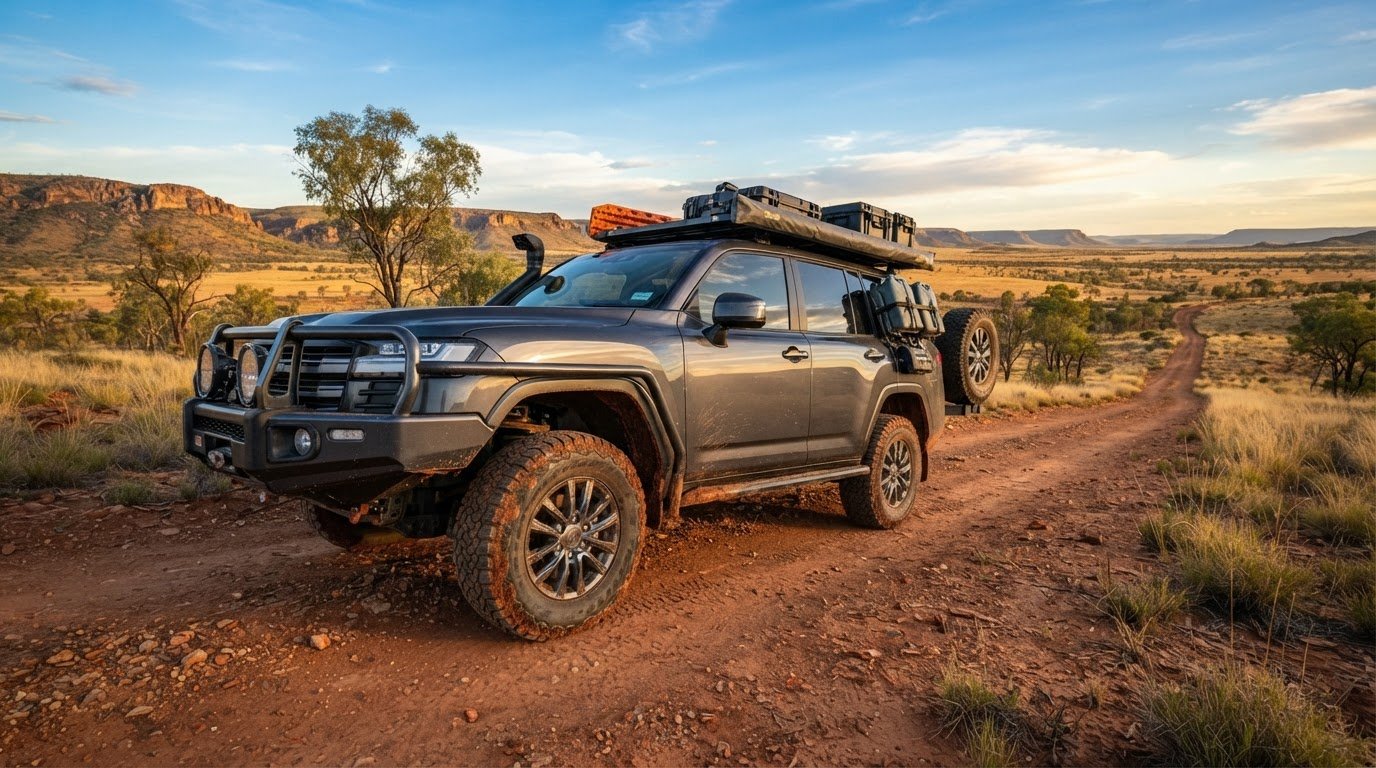
A quality bull bar is non-negotiable for remote Australian travel, primarily for animal strike protection at dawn or dusk. We often debate the merits of steel versus aluminum. Steel offers maximum strength and is easier to repair in remote areas, while aluminum helps manage your front-axle weight. Regardless of the material, your bar must house rated recovery points. We’ve moved beyond using factory tie-down points for snatch recoveries; rated points are essential for our collective safety. A winch serves as the ultimate insurance policy for the solo traveler, allowing us to self-recover and continue our mission of responsible exploration without relying on a passing stranger.
GVM Upgrades and Suspension Tuning
As of November 1, 2025, changes to Australian Design Rule (ADR) 80/04 have shifted the landscape for Gross Vehicle Mass (GVM) upgrades. If you’re building the ultimate touring 4×4 setup on a new platform like the LandCruiser 70 Series, you must now complete your GVM certification after the vehicle’s first registration. This makes it even more critical to plan your weights early. A legal GVM upgrade isn’t just about a 2-inch lift; it’s about increasing the load-carrying capacity with specifically valved shocks and heavier-duty springs designed for constant touring loads. We look for suspension kits that offer a balance of control on the blacktop and compliance on the dirt. For more ideas on how to gear up your rig without breaking the bank, check out our latest adventure ideas in Australia.
Mastering Self-Sufficiency: 12V Power and Off-Grid Systems
True freedom in the bush is measured by how long we can stay away from a power plug. When building the ultimate touring 4×4 setup in 2026, the heart of our self-sufficiency is the Lithium Iron Phosphate (LiFePO4) battery. Unlike old-school AGM batteries, lithium allows us to use nearly 100% of its capacity without damage. It also weighs roughly a third of its lead-acid predecessors. This weight saving is a massive win for our GVM budget, which we established as a critical foundation in our previous section. By choosing lithium, we’re not just buying power; we’re buying time and efficiency.
Before we buy a single battery, we must calculate our daily power draw. We add up the amps pulled by our fridge, LED camp lights, and device chargers. In 2026, many of us are also powering Starlink systems for remote connectivity, which can draw significant power over 24 hours. We aim for a system that can sustain our needs for at least two days without any solar input. For solar integration, we prefer a hybrid approach. Fixed panels on the roof provide “set and forget” charging while we’re on the move, but portable blankets allow us to park our rig in the shade while keeping the panels in the sun to soak up those rays.
Modern 12V Power Management
Our DC-DC charger is the unsung hero of the system. It ensures our auxiliary battery receives the correct voltage from the alternator, regardless of how “smart” our vehicle’s charging system is. We recommend monitoring your system via Bluetooth apps or smart screens. Knowing your exact state of charge prevents the heartbreak of a warm fridge or a dead starter battery. While inverters are popular, we suggest questioning if you really need 240V power. If you can charge your laptop via USB-C, you might save significant weight and complexity by skipping a heavy inverter.
Water Security and Management
Water is our most precious resource on the track. We prefer chassis-mounted tanks to keep the center of gravity low, though canopy-mounted storage is often easier to access for gravity-fed taps. We use 12V water pumps and high-quality filtration systems to ensure we can safely drink from unknown creek sources or remote bore water. We live by the one-sentence rule for water: Always carry 20% more than your planned trip duration requires. This buffer is our safety net for unexpected delays or scorching outback temperatures. For those still planning their shelter, our reviews of roof top tents offer great insights into integrating your sleep system with your power and water needs.
Designing Your Mobile Basecamp: Rooftop Tents and Awnings
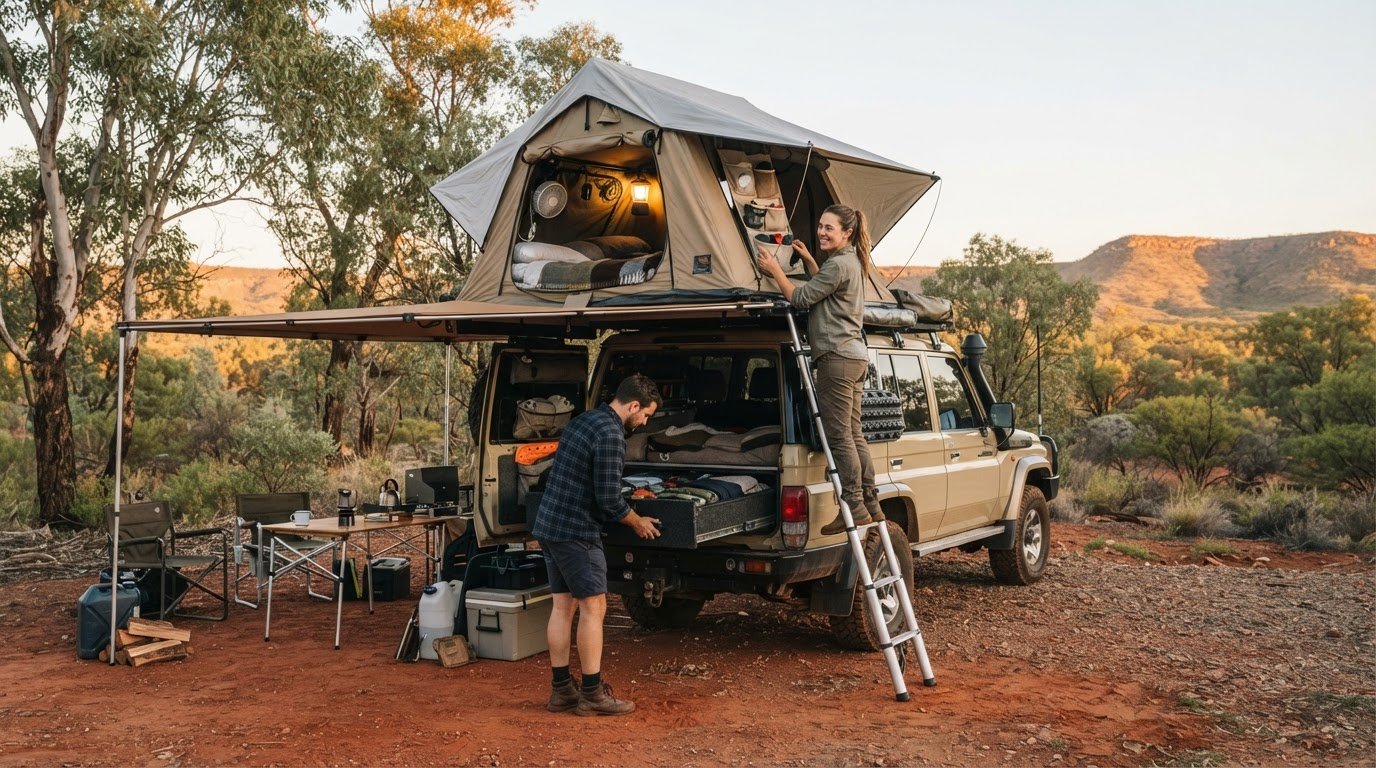
After we’ve secured our vehicle’s foundation and sorted our off-grid power, we turn our attention to the living quarters. The goal when building the ultimate touring 4×4 setup is to create a space that transitions from “road mode” to “camp mode” in minutes. Touring fatigue is a real threat on multi-week expeditions; if your setup is a chore to pack away, you’ll find yourself skipping those beautiful sunrise starts. We prioritize gear that maximizes our time spent exploring and minimizes the time spent wrestling with canvas.
Rooftop Tents: The Ultimate Touring Bed
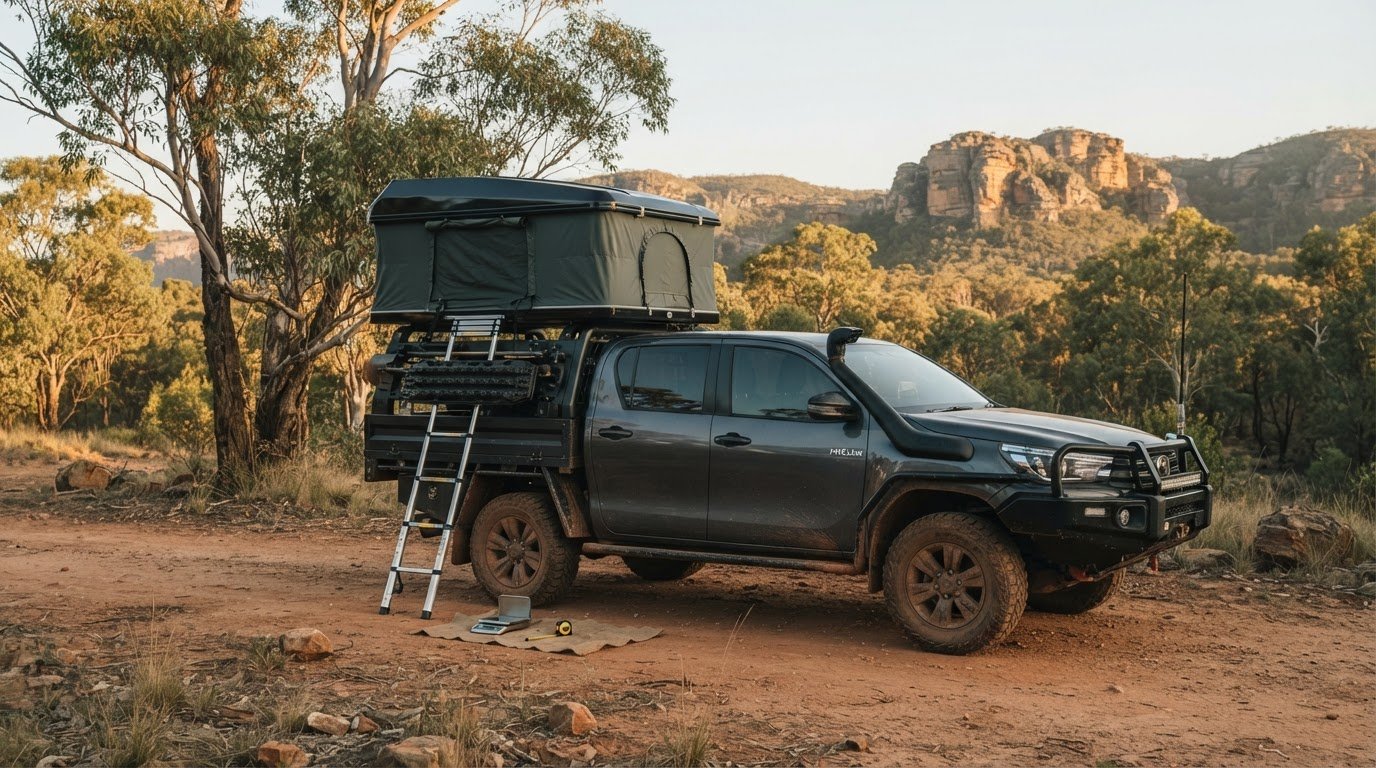
For many Australian tourers, roof top tents have become the gold standard for remote travel. They keep us off the hot ground, away from curious crocodiles in the north, and provide superior airflow during those humid tropical nights. In 2026, the trend has shifted heavily toward hardshell designs. While softshell tents offer a larger footprint, hardshells can often be deployed in under 60 seconds. This speed is vital when we arrive at camp late or need to beat an incoming storm. We must stay mindful of weight, though. A premium hardshell tent can weigh between 70kg and 100kg, which sits high on the roof and affects our center of gravity. We always balance this by keeping our heavy water and recovery gear mounted lower in the chassis.
Awnings and Camp Comfort
Protection from the harsh Australian sun is a safety requirement, not just a luxury. When selecting the best 4wd awnings for our rig, we look for maximum coverage with minimal setup fuss. A 270-degree awning is our preferred choice because it wraps around the side and rear of the vehicle, sheltering both our kitchen area and our access to the canopy. In high-wind outback conditions, we prefer freestanding models with integrated arms that can handle a breeze, though we always carry poles and guy ropes for when the weather truly turns. Integrating LED lighting into the awning arms creates a complete all-weather living space that feels like a true home on the range.
Organization is the final piece of the basecamp puzzle. We often debate between heavy drawer systems and lightweight plastic tubs. While drawers offer unmatched accessibility, they can eat up 60kg to 90kg of our precious payload. Many Adventurerz are now moving toward modular tub systems paired with a lightweight aluminum canopy to keep weights down. For a deeper look at the gear we trust, check out our comprehensive roof top tent reviews and recommendations to find the perfect fit for your 2026 build.
Responsible Exploration: Weight, Efficiency, and Sustainable Touring
Efficiency isn’t just about saving a few dollars at the diesel pump; it’s about extending our reach into the most remote parts of the continent. When building the ultimate touring 4×4 setup, we must confront the reality of aerodynamics. Those rooftop tents and awnings we discussed in our previous section create significant wind resistance. On long desert stretches, a bulky roof load can increase fuel consumption by 10% to 15%, which drastically reduces your range between remote fuel stops. We aim for a low-profile build whenever possible, tucking gear behind the cab to keep the air flowing smoothly.
Our tyre choice also plays a massive role in this balance. While aggressive mud-terrains look fantastic, they’re often overkill for the majority of touring. They’re heavier, noisier, and increase rolling resistance. We find that a high-quality All-Terrain (AT) tyre provides the best compromise, offering enough grip for the tracks while maintaining on-road efficiency and longevity. Maintenance is the final, often overlooked, step. A truly ultimate setup is one that’s meticulously maintained, ensuring that a simple bearing failure or a clogged fuel filter doesn’t turn our dream trip into a recovery nightmare.
Managing Your Payload for Safety and Range
There’s a hidden cost to “accessorizing” every square inch of our vehicles. Every extra kilo we add reduces our fuel range and puts more stress on the engine and drivetrain. We’re careful with our tool kits and spares; we carry what we need to fix common trail failures without doubling the vehicle’s weight. It’s about being methodical rather than just being prepared for every impossible scenario. GVM represents the legal and physical limit of your vehicle’s safety and structural integrity. Understanding this limit is what separates a responsible Adventurerz member from an overloaded hazard on the highway.
Sustainable Practices for Remote Travel
Responsible exploration means leaving the bush exactly as we found it. We integrate “Leave No Trace” principles into our builds by including dedicated rubbish storage, like rear-wheel bin bags, to pack out everything we pack in. By relying on solar power and reusable water systems, we minimize our reliance on single-use plastics and noisy, polluting generators. Our track etiquette is just as important as our equipment; we stay on existing trails to prevent erosion and preserve the landscape for the next generation of travelers. The ultimate setup is the one that gets you home safely while leaving the bush as you found it.
Your Remote Journey Starts Here
Building the ultimate touring 4×4 setup is a journey of precision and purpose. We’ve explored how a solid foundation of GVM compliance and suspension tuning keeps us safe on corrugated tracks, while modern LiFePO4 systems grant us the freedom of true off-grid self-sufficiency. By prioritizing lightweight, modular gear and aerodynamic efficiency, we ensure our rigs are ready for the long haul without compromising the very environments we travel to see. It’s about creating a vehicle that is as hardy as the Australian outback itself while remaining mindful of our collective footprint; a philosophy of excellence that CWS Marketing (Client Winning Strategies) also brings to businesses looking to grow their presence in the adventure market.
Ready to take the next step in your vehicle preparation? We invite you to join the Adventurerz community to share your build and get expert advice! Our fellowship offers access to expert-led gear reviews and community-vetted recommendations, all with a dedicated focus on sustainable remote travel. Whether you’re fine-tuning your 12V system or selecting your first rooftop tent, we’re here to guide you on this path of responsible exploration. The red dirt is waiting; let’s get your rig ready for the horizon!
Frequently Asked Questions
How much does it cost to build a touring 4×4 setup in 2026?
Costs vary significantly based on your vehicle platform and travel goals. A basic setup might include a few thousand dollars for recovery gear and a fridge; however, a full canopy build with lithium power and a GVM upgrade often reaches five figures. We suggest focusing on essential protection and mechanical reliability first. This ensures your budget serves your safety before you add luxury camp accessories.
Is a GVM upgrade mandatory for all touring builds?
A GVM upgrade is not legally mandatory unless your vehicle’s total weight exceeds the manufacturer’s limit. Given that 23% of vehicles failed recent weighbridge tests in Victoria, most tourers find they are closer to the limit than they realize. If you’re building the ultimate touring 4×4 setup with a bull bar, winch, and full camping gear, an upgrade is a vital safety and insurance move.
Which is better for touring: a rooftop tent or a high-quality swag?
Rooftop tents are generally better for multi-week touring due to their rapid setup times and improved airflow. They keep you off the ground and away from pests, which is a major comfort win in remote areas. Swags are fantastic for solo travelers or those prioritizing a lower center of gravity and better fuel economy. Your choice depends on whether you value camp convenience or vehicle handling more.
Do I really need a dual battery system for a weekend trip?
You don’t strictly need a dual battery system if you use a high-quality portable power station or have an exceptionally efficient fridge. For most of us, though, a dedicated auxiliary battery provides the peace of mind that we won’t be stranded with a dead engine. It allows us to run camp lights and charge devices overnight without stressing about the next morning’s start.
How do I choose between a 180-degree and a 270-degree awning?
Choose a 270-degree awning if you need shade over both the side and the rear of your vehicle, which is ideal for canopy-based kitchens. A 180-degree awning is lighter and often easier to deploy, making it a great choice for wagons where you only need side coverage. Consider your vehicle’s payload and how you typically set up camp before committing to the extra weight of a wrap-around model.
What are the most common mistakes beginners make when building a tourer?
The biggest mistake is buying every possible accessory before taking a shakedown trip. Beginners often overload their vehicles with heavy steel bars and drawers, only to find they’ve exceeded their legal weight limits before they’ve even packed the fridge. We recommend a stage-based approach to building the ultimate touring 4×4 setup, testing your gear in the wild to see what you actually use and what is just dead weight.
Can I build a capable touring rig on a budget?
Yes, you can build a very capable rig by focusing on the core pillars of reliability, capability, and comfort. Prioritize quality recovery gear, basic 12V power, and a reliable sleep system over expensive aesthetic modifications. Many of our favorite adventures happen in simpler vehicles that focus on mechanical health and essential self-sufficiency rather than having the latest high-end canopy or electrical management system.
How does adding a bull bar and winch affect my vehicle handling?
Adding a heavy bull bar and winch puts significant weight over the front axle, which can cause the front end to dive during braking and negatively impact steering. You’ll likely need to upgrade your front springs to a heavier rate to compensate for this constant load. It’s vital to choose a suspension kit that matches your specific front-end weight to maintain safety and comfort on the road.