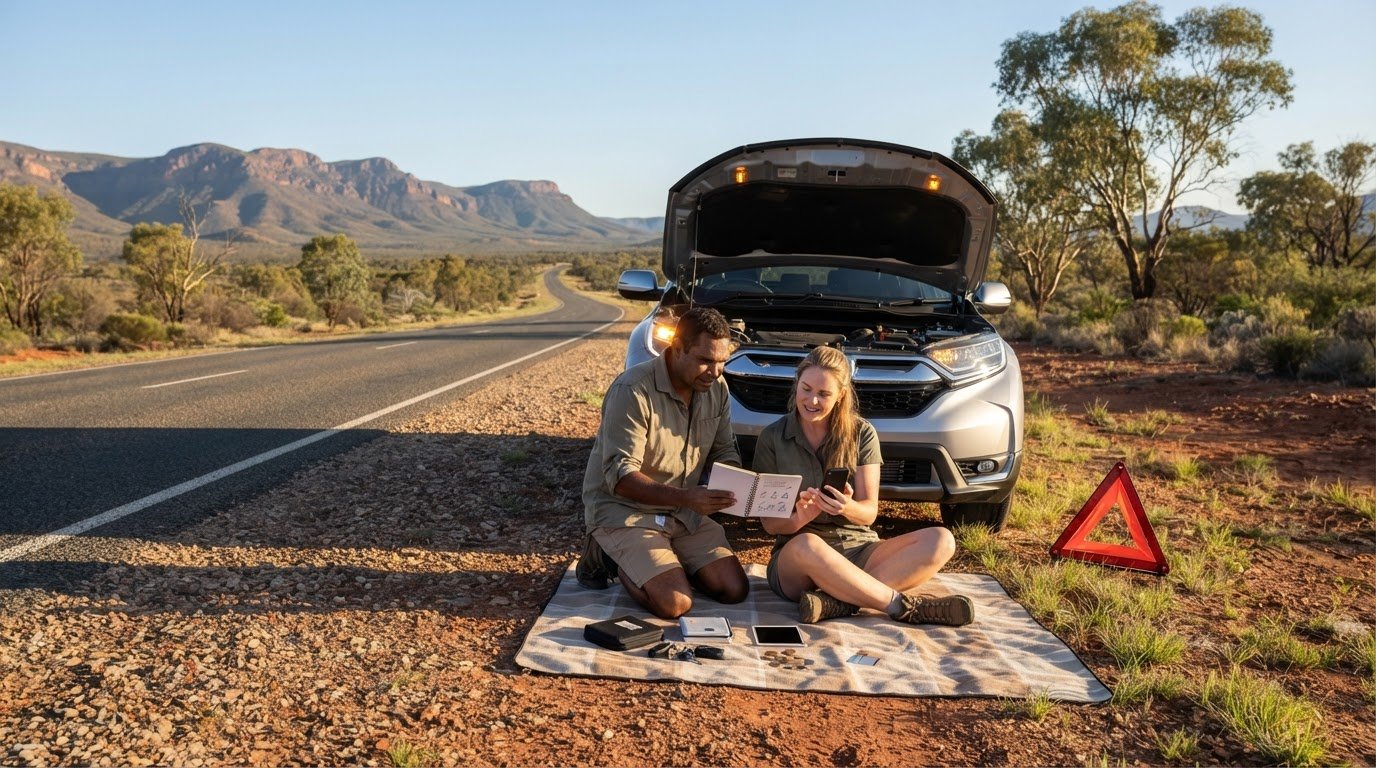
Your dog doesn’t care about the specs of your 4WD awning, but they definitely know that when the gear comes out, an epic journey is about to begin. With 40 percent of Australian households now sharing their lives with a canine companion, it’s no surprise that we want them by our sides in the great outdoors. We agree that the bond forged over a campfire is unbeatable, yet many of us still feel a pang of anxiety when planning for camping with dogs. Whether it’s the fear of a 100 dollar fine in a restricted zone or the threat of a paralysis tick in the coastal scrub, the hurdles can feel high.
We’re here to turn that uncertainty into total trail confidence for every member of our Adventurerz community. This ultimate 2026 guide promises to clear the air on the shifting rules between State Forests and National Parks while arming you with a rugged gear checklist built for our unique climate. We’ll explore the best off-the-grid zones where your dog can safely roam and provide the expert safety protocols you need to protect them from local wildlife. Get ready to pack the swag and hit the tracks with your best mate, knowing you’ve got the knowledge to explore responsibly and sustainably.
Key Takeaways
- Master the legal landscape by understanding the strict differences between National Parks and dog-friendly State Forests to keep your journey stress-free.
- Upgrade your setup with rugged, easy-to-clean gear specifically chosen to handle the grit of the outback, ensuring every Adventurerz duo stays comfortable.
- Follow our 5-step preparation process to ensure your companion is physically and mentally ready for the rigours of remote, off-the-grid travel.
- Protect our native wildlife by applying specialized ‘Leave No Trace’ principles that minimize the impact of your dog’s scent and waste on the environment.
- Access our community-driven framework for finding the highest-quality spots for camping with dogs across every corner of the country.
The Golden Rules of Camping with Dogs in Australia (2026)
Camping with dogs is more than just packing a leash and a portable bowl; it’s a delicate balance between legal access and responsible animal management. For us, dog-friendly camping means we respect the land as much as we love our pets. As Adventurerz, we believe in a simple philosophy: we explore to protect, not just to see. This means understanding that our presence, and that of our four-legged mates, has a direct impact on the fragile Australian ecosystem. By following the rules for camping, we ensure these wild spaces remain open for the community and safe for the creatures that live there.
The rules aren’t there to ruin your fun. They exist to maintain an ecological balance that’s under constant pressure. Domestic dogs carry scents and bacteria that can terrify or infect native species. Even the most well-behaved kelpie can inadvertently disrupt the breeding cycles of ground-nesting birds or stress out a resident colony of koalas. We take this responsibility seriously because we want our grandkids to see the same wild Australia we see today.
National Parks vs. State Forests: A National Framework
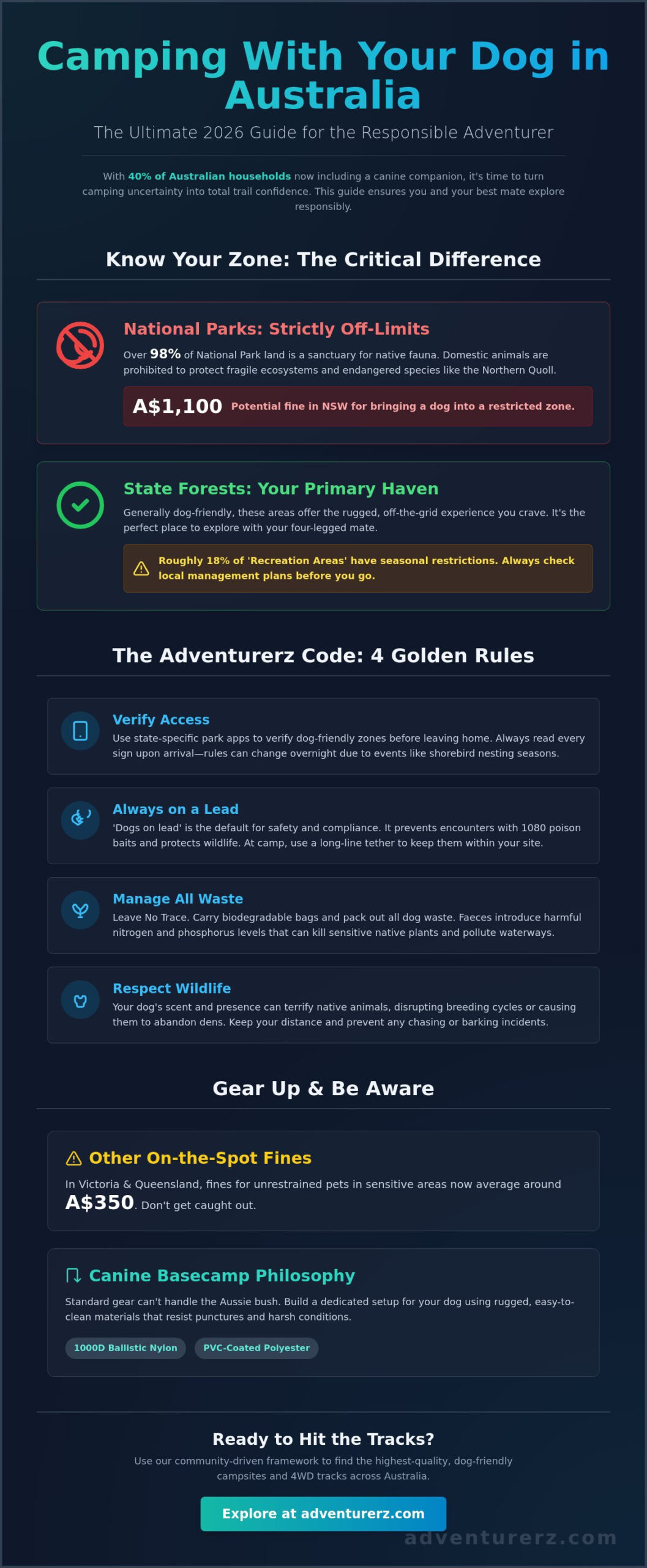
In 2026, the distinction between National Parks and State Forests remains the most critical piece of knowledge for any dog-owning explorer. National Parks across all eight states and territories are strictly off-limits to domestic animals. Over 98% of Australia’s National Park land is designated as a sanctuary for native fauna. Bringing a dog into these areas is a fast way to face heavy penalties and damage the reputation of the camping community. These parks are the last strongholds for endangered species like the Northern Quoll, where even the scent of a predator can cause local populations to abandon their dens.
State Forests are our primary haven. These areas offer the rugged, off-the-grid experience we crave while allowing dogs to join the journey. While State Forests are generally dog-friendly, ‘Recreation Areas’ and ‘Conservation Parks’ often act as grey areas. In 2026, roughly 18% of these specific zones have implemented seasonal restrictions to protect migratory wildlife. Always check the specific management plan for the region before you roll out your swag or set up your best 4wd awnings for the afternoon.
Understanding Local Regulations and Signage
Ignoring a “No Dogs” sign is a costly mistake. As of early 2026, fines for bringing a dog into restricted National Park zones in New South Wales have increased to A$1,100. In Victoria and Queensland, on-the-spot fines for unrestrained pets in sensitive areas now average around A$350. Local councils also manage beach access and hinterland tracks with strict bylaws. Many coastal councils now use digital signage that updates in real-time to reflect shorebird nesting seasons, which can change access rules overnight.
‘Dogs on lead’ is the default setting for every responsible Adventurerz member. This isn’t just about park rules; it’s about safety. Remote tracks often contain 1080 poison baits used for fox control, which are lethal to domestic dogs. Keeping your mate on a lead prevents them from wandering into danger or chasing a kangaroo into thick scrub. Use these simple steps to stay compliant:
- Check the App: Use state-specific park apps to verify dog-friendly zones before you leave home.
- Read Every Sign: Don’t assume a track is dog-friendly just because you saw another dog earlier.
- Waste Management: Carry biodegradable bags and pack out every bit of waste. Dog faeces introduce nitrogen and phosphorus levels that can kill sensitive native plants.
- Stay Restrained: Even at the campsite, use a long-line tether to keep your dog within your site boundaries.
Essential Gear for the Canine Adventurerz Lifestyle
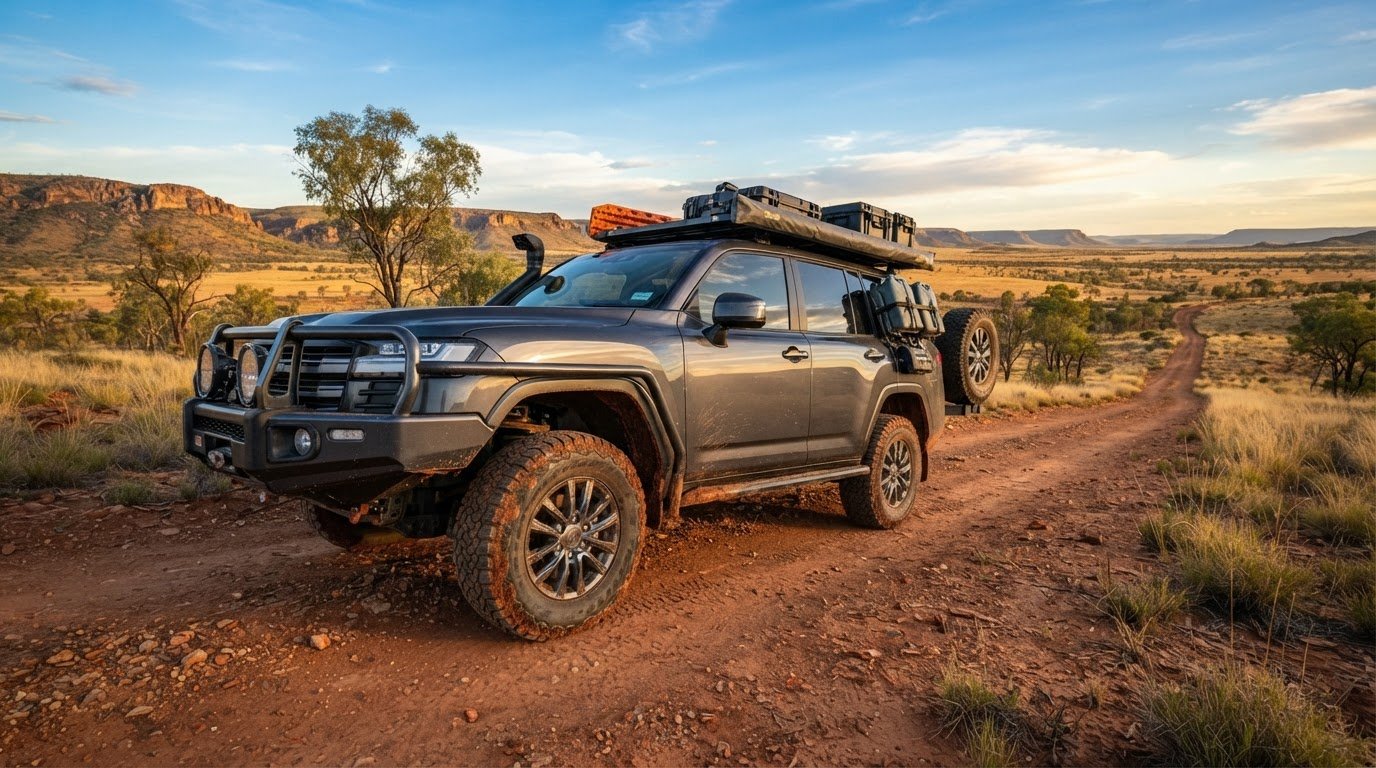
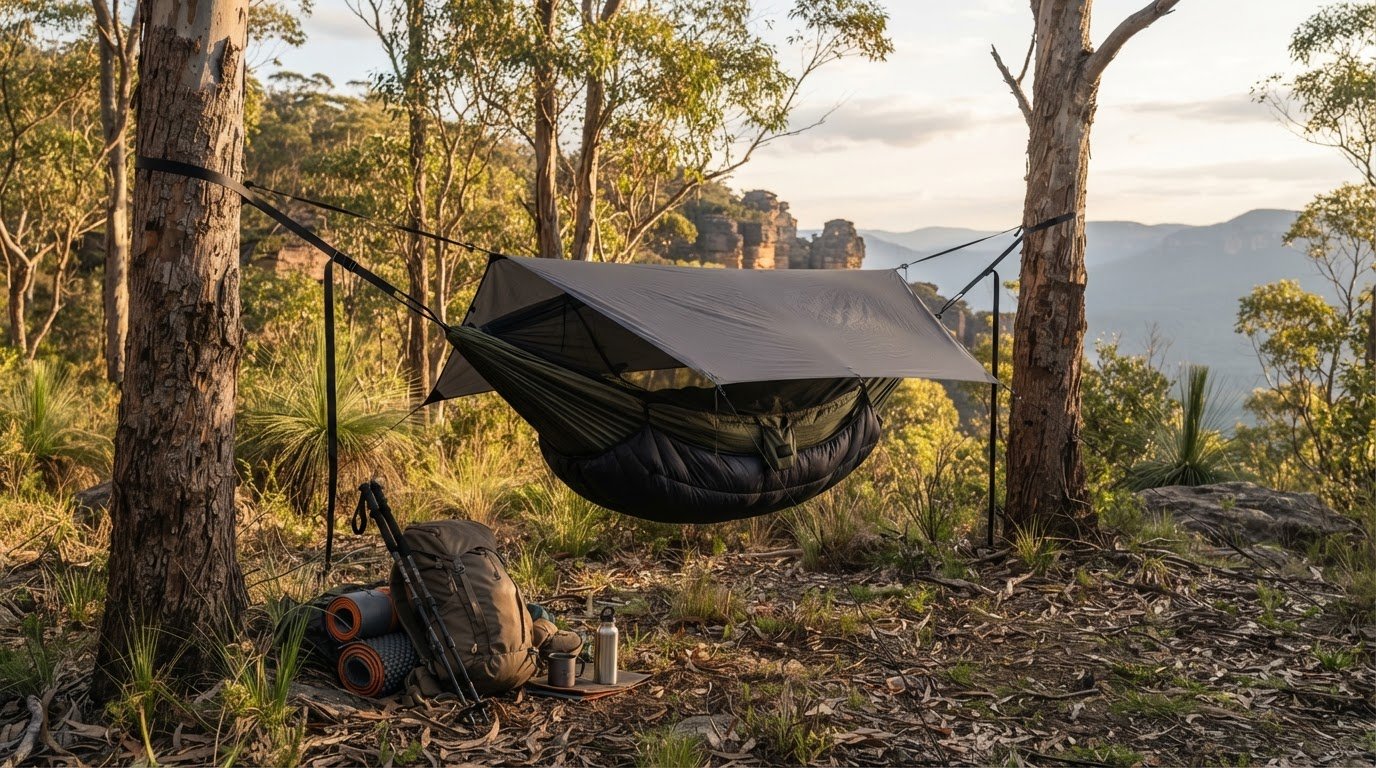
Moving beyond a basic foam mat is the first step for any serious trip into the bush. We know that Australian conditions are brutal on gear. Red dust from the Simpson Desert or thick mud in the Otways can ruin standard fabrics in a single afternoon. We choose materials like 1000D ballistic nylon or PVC-coated polyester because they wipe clean and resist claw punctures during heavy use. Transitioning to a rugged, dog-optimised setup means building a ‘Canine Basecamp’ directly into your 4WD. This creates a dedicated space where your mate feels secure, hydrated, and cool even when the mercury hits 40 degrees. Successful camping with dogs requires a gear strategy that prioritises durability over aesthetics.
Roof Top Tents and Dogs: Can it be Done?
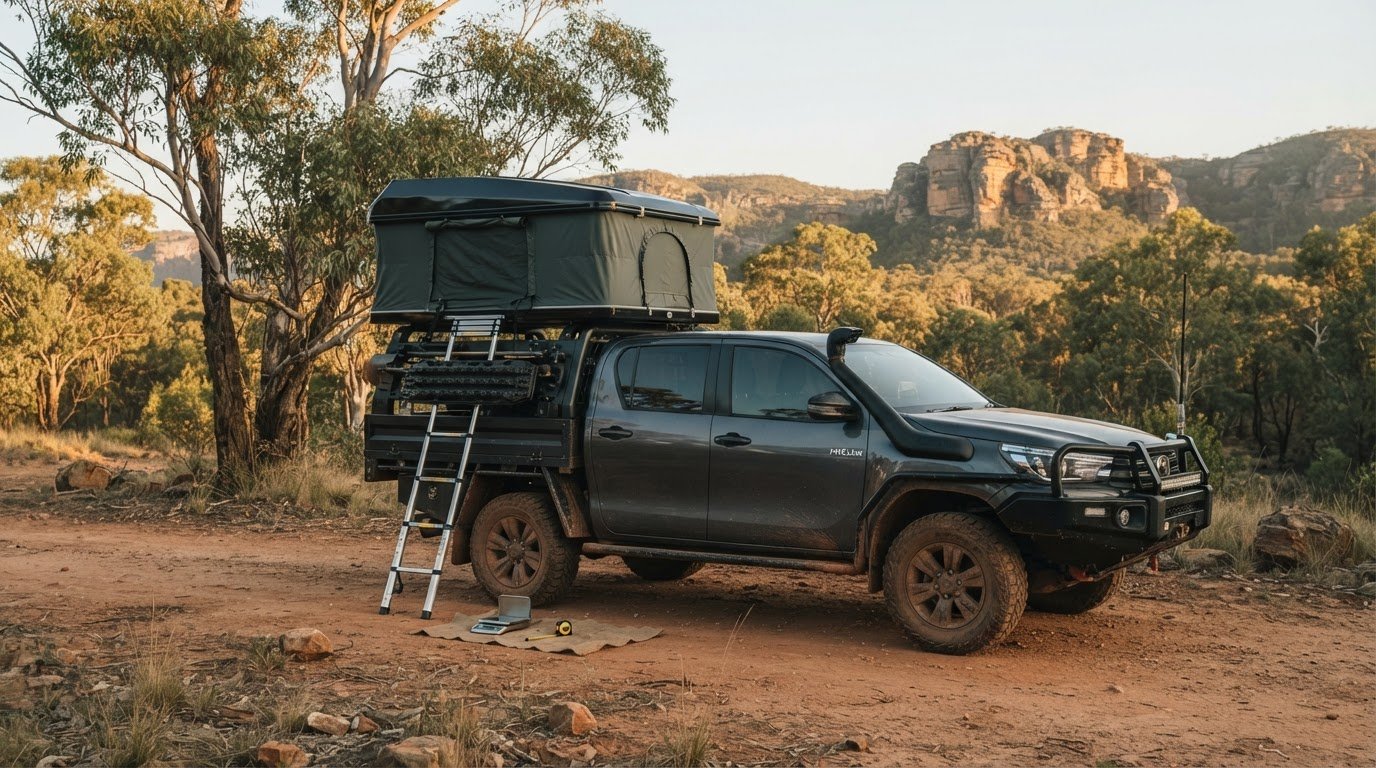
The most common question we hear in the community is how to get a 35kg Labrador into a tent two metres off the ground. For smaller breeds, a simple harness lift works perfectly. For larger dogs, telescopic ramps with high-traction surfaces are the gold standard. Hardshell tents are superior for dog owners because the 60-second setup time allows us to focus on settling our pets quickly. If you’re planning your next elevation, explore our guide to the best roof-top tents to find a model that suits your dog’s size and your vehicle’s GVM.
4WD Awnings: Creating a Canine Safe Zone
In the outback, shade isn’t just a luxury; it’s a safety requirement. A high-quality awning provides essential UV protection that prevents heatstroke during peak sun hours. We recommend adding awning walls to create an enclosed, escape-proof zone. This is particularly useful when staying at dog-friendly campsites where lead regulations are strict. To maximize your footprint, check out our top-rated 4WD awnings that offer 270-degree coverage for the ultimate basecamp vibe.
Specialised Canine Bush Gear
Success when camping with dogs relies on the small details that keep the tail wagging. Pack 10-metre long-line tethers to give your dog freedom while staying compliant with local park rules. We also recommend these essentials for remote tracks:
- LED collars: These are essential for tracking your mate in pitch-black bushland after the sun drops.
- Dog boots: These are critical for protecting paws when sand temperatures exceed 50 degrees on coastal dunes.
- Collapsible silicone bowls: They’re lightweight and easy to clip onto a backpack for mid-hike hydration.
- Dedicated first aid: Your kit must include saline flush for dusty eyes and cohesive bandages that don’t stick to fur.
Every Adventurerz knows that preparation beats perspiration in the wild. If you’re unsure about your current kit, upgrading your shade solution is the best place to start for ensuring your dog’s safety this summer.
Pre-Trip Preparation: Health, Safety, and Training
We know the feeling of packing the rig while your dog watches every move with wagging anticipation. Successful camping with dogs isn’t just about throwing a bed in the back; it’s about building a foundation of safety that allows for true freedom. Remote Australian environments are unforgiving. To ensure we all come home with wagging tails, we follow a strict five-step preparation process: physical conditioning, parasite protection, hydration planning, skill drills, and a gear shake-down. Self-sufficiency is our mantra. If you’re 400km from the nearest vet, your preparation is your dog’s only lifeline. We must respect the physical demands of the bush; a domestic pet used to backyard naps might struggle with 10km daily treks in soft sand or rocky terrain.
The Australian Bush Health Checklist
The 2026 standard for parasite protection has shifted toward year-round vigilance. Paralysis ticks are expanding their range into traditionally “safe” areas due to warmer winter cycles. We recommend isoxazoline-based chewables, which veterinary data shows provide 99% efficacy against local tick species. Hydration is equally critical. In 30°C heat, a 20kg dog requires approximately 2.5 to 3 litres of water daily just for maintenance. If you’re hiking, double that. We always ensure our dogs have access to shade under durable 4WD awnings during peak UV hours. Finally, remember that microchips are useless without a scanner. Use a high-visibility collar with a physical ID tag and consider a satellite-linked GPS tracker for true off-the-grid redundancy.
Training for the Trail: Essential Skills
Your dog’s recall must be 100% reliable before you hit the track. In the wild, a split-second decision can prevent a dangerous encounter with a Brown Snake or a fall from a sandstone cliff. Practice “emergency stops” where your dog drops to a sit from a distance. Noise etiquette is another hallmark of the Adventurerz community. A dog that barks at every rustle in the scrub won’t be welcome in shared campsites. Spend time desensitising your mate to the specific sounds of travel. Start the 4WD and let them feel the vibration of the diesel engine while rewarding them with treats. This builds a positive association with long road trips and reduces anxiety when the terrain gets bumpy. We want our dogs to be calm, confident explorers who respect the silence of the wilderness as much as we do.
The Ethical Camper: Protecting Wildlife and Community
We aren’t just visitors in the Australian bush; we’re guests in a complex, fragile ecosystem. When camping with dogs, our impact goes beyond our own footprints. Native animals like quolls, wallabies, and ground-nesting birds are highly sensitive to the scent of domestic predators. Even a well-behaved pup can disrupt natural breeding or feeding cycles simply by being present. As Adventurerz, we take the lead in showing that responsible ownership and wild exploration go hand in hand. We act as stewards, ensuring that the tracks we love remain pristine for the next generation of explorers.
Leave No Trace for Paws: Waste Management
The “Pack it in, Pack it out” rule is non-negotiable. Many people assume burying dog waste is acceptable, but it’s actually a significant environmental hazard. Domestic canine waste contains high levels of nitrogen and phosphorus, along with pathogens like hookworm or Giardia that aren’t native to the Australian soil. These can linger for over 12 months, potentially infecting local fauna or contaminating waterways.
For short trips, biodegradable bags are a minimum requirement. However, for long-haul 4WD adventures, we recommend a specialised waste container. A “poop tube” made from sealed PVC pipe is a popular DIY choice among the community to keep odors contained until you reach a municipal bin. Don’t forget food management. Spilled kibble or discarded scraps attract feral pigs and foxes. These pests then stay in the area, preying on native species long after we’ve packed up our swag.
Respecting Wildlife and Shared Spaces
Safety is a two-way street in the wilderness. Every dog owner must be aware of 1080 baits. This poison, also known as sodium fluoroacetate, is used across millions of hectares of Australian State Forests and National Parks to control invasive species. It’s lethal to domestic dogs, and there is no known antidote. Always check local alerts from agencies like NSW National Parks or Parks Victoria before you unclip the leash.
- Water Sources: Never let your dog swim in or drink from small rock pools or billabongs. These are often the only water sources for local wildlife, and the scent of a dog can scare animals away for days.
- Site Boundaries: Manage your camp etiquette by keeping your dog within your designated site. Not every fellow traveler is a dog person, and some may have reactive dogs of their own.
- Noise Control: Excessive barking disrupts the peace of the bush and can distress nearby animals.
Maintaining a respectful distance ensures camping with dogs remains a privilege we all get to enjoy. We want every person we meet on the trail to see Adventurerz as the most considerate group in the outback. It’s about building a community of trust and shared responsibility.
Finding the Perfect Dog-Friendly Campsite
Securing a spot where your four-legged mate is welcome requires more than a quick search in 2026. We’ve seen a 15% increase in dog-friendly bookings over the last 12 months, pushing many Adventurerz toward private lands to avoid the crowds. You can use our 2026 travel planner to map your dog-friendly route and ensure you aren’t hitting dead ends. The current trend is moving rapidly toward private farm-stays. These properties often offer fenced paddocks or private creek access, giving your dog room to roam without the stress of nearby traffic or strict leash laws found in traditional parks.
When you’re camping with dogs, high-quality spots are defined by safety and space. We look for campsites that provide a natural buffer from other campers to reduce barking triggers. Private stays on platforms like Hipcamp have become the standard for those seeking a quiet, off-the-grid experience where the pup is treated as a guest rather than a nuisance.
State Forests and Recreation Areas
State forests are the holy grail for Adventurerz because they offer a level of freedom you won’t find in National Parks. While National Parks remain strictly off-limits to pets to protect native wildlife, most state forests allow dogs under control. We recommend looking for regional showgrounds and designated free camps in towns like Mudgee or Beechworth. These spots often provide basic amenities for a small donation or a low fee, usually around A$10 to A$20 per night. Always check for seasonal closures. In 2025, over 45 state forest sites were closed temporarily due to logging or fire risk; always verify the current status on the Forestry Corporation website before you deflate the tyres.
Digital Tools for the Modern Adventurerz
Technology makes camping with dogs safer and more accessible than ever. Apps like WikiCamps and Camps Australia Wide are essential for filtering sites that specifically allow pets. We use satellite imagery within these apps to scout for heavy tree cover and proximity to water. In the Australian summer, a site without shade is a danger to your dog’s health.
- WikiCamps: Use the “Dog Friendly” filter and cross-reference with recent user photos.
- Satellite View: Check for physical barriers like cliffs or fast-flowing rivers near the site.
- Community Forums: Check Facebook groups for “boots-on-the-ground” reports.
Community feedback is vital for tracking safety concerns that official maps might miss. In early 2026, user reports have been the fastest way to identify 1080 baiting programs or high paralysis tick activity in regions like the NSW North Coast. These reviews often mention if a site has been recently baited, which is critical information for any pet owner. Stay alert, stay informed, and keep your best friend safe on the tracks.
Hit the Track with Your Best Mate
Exploring the Australian wilderness is better with a four-legged mate by your side. We know that successful camping with dogs in 2026 relies on more than just a sturdy leash. It’s about having the right gear, like 4WD awnings that stand up to UV levels reaching 11 plus during summer months, and respecting the regulations within the 1,000 plus national parks across our states. By following the golden rules of ethical exploration, we protect our unique ecosystems and ensure these tracks stay open for every traveler. We’ve built our recommendations using expert gear reviews from real Australian campers who’ve tested every swag and portable bowl in the harshest conditions. Our commitment to sustainable travel means we provide community-driven advice for remote travel that keeps you safe and our wildlife protected. Don’t leave your best friend behind when the outback calls. It’s time to prep your kit and join the Adventurerz who value the bush as much as the journey. We’ll see you out there under the stars!
Join the Adventurerz community and gear up for your next dog-friendly escape!
Frequently Asked Questions
Are dogs allowed in Australian National Parks in 2026?
No, dogs are generally prohibited in the vast majority of Australian National Parks to protect native wildlife and delicate ecosystems. While over 95% of these parks remain off-limits, some states like Victoria and South Australia have designated specific zones or transit corridors where leashed pets are permitted. Always check the official Parks Australia website or your state’s park management app before heading out to avoid on-the-spot fines that often exceed A$300 in 2026.
What should I do if my dog gets a tick while camping in the bush?
Use a specialized tick removal tool or fine-tip tweezers to grasp the tick as close to your dog’s skin as possible. Pull upward with steady, even pressure without twisting the body, as this prevents the head from breaking off under the skin. After removal, clean the bite site with antiseptic and monitor your dog for 48 hours for signs of paralysis, such as wobbly back legs or a change in bark. If symptoms appear, contact a vet immediately.
How do I keep my dog cool while camping in a roof-top tent?
Maximize airflow by opening all mesh windows and using a 12V portable fan to circulate air within the tent space. We recommend placing a pressure-activated cooling mat on the mattress and ensuring your 4WD awning provides a deep shaded footprint for the ladder and entry area. If the ambient temperature climbs above 30 degrees Celsius, it’s safer to move your dog to a ground-based shade setup where they can benefit from the cooler earth and better breeze.
Is it safe to let my dog off-lead in a State Forest?
Yes, many State Forests across Australia allow dogs off-lead, provided they stay under strict voice control at all times. Safety depends entirely on your dog’s recall and the presence of 1080 baiting programs in the specific region. While most State Forests are multi-use areas, you must ensure your dog doesn’t disturb native animals or other Adventurerz. Keep a lead handy for when you encounter horses, mountain bikers, or heavy machinery on forest tracks.
What is 1080 baiting and how does it affect my dog?
1080 is a lethal poison used by land managers to control invasive species like foxes, wild dogs, and feral pigs. It is extremely toxic to domestic dogs, and there is no known antidote once the symptoms of poisoning begin. Because these baits are designed to be highly attractive to scavengers, even a small amount can be fatal within 2 to 20 hours. Always look for official warning signs and keep your dog muzzled or on a short lead in these zones.
Can I bring my dog on a 4WD beach camping trip?
Yes, many iconic coastal spots like Goolwa in SA or the North Shore in QLD are perfect for camping with dogs, but you must verify local council bylaws first. Ensure your 4WD is packed with a long tie-out stake for the sand and plenty of fresh water to rinse off salt and grit after every swim. Salt crust can cause severe skin irritation, so a quick 5-minute rinse at the end of the day keeps your buddy comfortable in the swag.
How much extra water should I pack for my dog when camping?
Pack at least 70ml of water per kilogram of your dog’s body weight for every 24 hours you spend in the bush. For a 30kg dog, this means carrying 2.1 litres daily, plus an extra 1 litre for rinsing paws or cooling down during peak heat. We always carry a dedicated 20-litre water jerry can just for our pets to ensure we never dip into our own drinking supplies during remote off-the-grid trips.
What are the best dog-friendly camping apps for Australia?
WikiCamps remains the gold standard for Adventurerz, featuring a robust “dog friendly” filter and over 40,000 user-verified sites across the country. AnyCamp is another excellent tool that provides clear icons for pet-friendly locations and real-time updates on site conditions. These apps allow you to see recent photos and reviews from 2025 and 2026, which helps you avoid crowded spots or areas with known hazards like recent baiting programs or seasonal closures.