Did you know that transporting an unrestrained dog across Australia can lead to substantial penalties? It is a sobering reminder that our mates deserve the same level of protection as we do when we are hitting the challenging off-road tracks. We believe our dogs aren’t just pets; they are essential members of our exploration crew. Finding the best dog car seat for 4wding is about more than just comfort. It is about ensuring every member of the pack reaches the remote campsite safely and legally.
We all know that nothing beats waking up in a rooftop tent to the sound of the bush with your dog by your side. Yet, we also understand the genuine anxiety that comes with navigating 1080 baiting zones or wondering if your 4WD setup can actually handle all that extra gear. This guide will show you how to master the art of exploring the Australian wilderness while staying safe, legal, and environmentally responsible. We will cover the top pet-friendly remote spots, secure equipment setups, and the “Leave No Trace” ethics that keep our bush pristine for the next generation of Adventurerz.
Key Takeaways
- Navigate the complex web of Australian park regulations to find the most epic pet-friendly remote spots without the legal headache.
- Secure your four-legged co-pilot with the best dog car seat for 4wding, ensuring safety on rugged terrain and compliance with strict state laws.
- Elevate your camp setup using specialized gear like rooftop tents to provide superior insulation and safety for your animals in the wild.
- Protect your pack from hidden bush dangers, including 1080 baiting zones and snake encounters, with our essential safety protocols.
- Embrace the “Leave No Trace” mindset to ensure our community of Adventurerz can continue exploring the bush with our pets for years to come.
Table of Contents
Why Camping with Pets is the Ultimate Bonding Experience
We’ve noticed a massive surge in the number of four-legged co-pilots hitting the tracks lately. The Australian adventure community is evolving. It’s no longer about leaving the dog at a kennel; it’s about sharing the red dust and the coastal breeze. This shift from solo trekking to pet-inclusive travel strengthens the bond between us and our animals in ways a backyard game of fetch never could. To make this work on technical tracks, you’ll need the best dog car seat for 4wding to ensure your mate stays secure while you’re navigating washouts and steep inclines. A secure seat prevents them from sliding around during off-camber sections, which keeps their anxiety low and your focus on the track.
Exploring remote landscapes offers incredible psychological benefits. For us, it’s a digital detox. For our dogs, it’s a sensory explosion. This shared experience moves us from survival mode where we are just trying to manage a pet, into thrive mode where the dog is an active part of the journey. Understanding animal welfare laws in Australia is a great starting point for any responsible owner. These regulations highlight our duty of care when venturing into harsh environments, ensuring our pets are protected from extreme heat and dehydration.
To help you choose the right setup for your vehicle, check out this breakdown of the top safety options available this year:
Assessing Your Pet’s Adventure Readiness
Not every dog is a natural born explorer. We need to assess their temperament before committing to a week in the High Country. Does your dog handle long drives and loud mechanical noises well? A nervous pet might struggle with the bounce of a 4WD. Physical conditioning is also vital. Don’t take a couch potato on a ten kilometre ridge hike without preparation. Start with local trails and gradually increase the difficulty. Finally, your training must be rock solid. A reliable recall and a “stay” command are your most important safety tools. They can be the difference between a curious sniff and a dangerous encounter with local wildlife.
The Adventurerz Community Perspective
We believe that sharing our pet adventures inspires others to travel more sustainably. When we show how easy it is to manage waste and protect native habitats, we set a high standard for the whole community. While we often talk about suspension and tyres, choosing the best dog car seat for 4wding is just as critical for a successful remote expedition. High-quality gear is the backbone of this success. Whether it’s using roof top tents to keep your pup away from snakes at night or investing in a heavy-duty harness, the right equipment reduces stress for everyone. The Adventurerz mentor sees every trip as a chance to lead by example, proving that we can explore the wildest corners of Australia without compromising on safety or environmental integrity.
Navigating Regulations: Where Can You Camp with Pets in Australia?
Planning a cross-country trek with your dog can feel like a legal minefield. Rules change the moment you cross a state border, and what works in a Victorian State Forest might land you a heavy fine in a South Australian National Park. In 2026, the demand for pet-friendly travel is at an all-time high, but so is the scrutiny on environmental impact. National Parks remain largely off-limits to protect our vulnerable native species from scent disruption and predation. The NSW pets in parks policy is a great resource to understand these boundaries, as it clearly outlines why dogs are restricted to protect biodiversity. Securing your pup in the best dog car seat for 4wding is the first step before you even leave the driveway, ensuring you can transit through these sensitive areas legally as long as they stay inside the vehicle.
Finding the “secret” spots requires a mix of digital tools and community intel. Apps like WikiCamps and the Adventurerz community forums are goldmines for discovering remote stations and conservation parks that welcome pets. While many State Forests allow dogs, some now require small booking fees ranging from A$10 to A$25 per night to manage peak season crowds. Always check for seasonal closures or baiting alerts before you lock in your itinerary. Being a responsible mentor to the bush means knowing the rules before you arrive.
Decoding State Park Rules
State Forests are the real winners for 4WD enthusiasts. Unlike National Parks, most State Forests allow dogs under control, giving you access to thousands of kilometres of rugged tracks and remote river camps. Private cattle stations and council-run campgrounds are also stepping up, often providing fenced areas or wash stations for a fee of around A$30 to A$50 per night. These spots offer a great balance of freedom and basic facilities. Using the best dog car seat for 4wding during the long transit between these camps ensures your mate is rested and ready for the trail once you reach the “dogs allowed” zone.
Pre-Trip Legal Checklist
Don’t let a ranger’s inspection ruin your trip. Ensure your dog’s council registration and C5 vaccination records are stored digitally on your phone for easy access. Many private campgrounds now require proof of up-to-date flea and tick prevention before entry. In remote areas, a standard collar isn’t enough; we recommend GPS collars for extra peace of mind. Leash laws are strictly enforced in shared recreation zones to prevent conflict with wildlife or other campers. If you’re looking to upgrade your basecamp for better pet management, check out our reviews on roof top tents to keep your pack safe and elevated.
Remember that your dog’s presence is a privilege in these wild spaces. By following the local guidelines and keeping our pets restrained when required, we ensure that these tracks stay open for all Adventurerz in the future.
Essential Gear for Pet-Friendly 4WD Camping
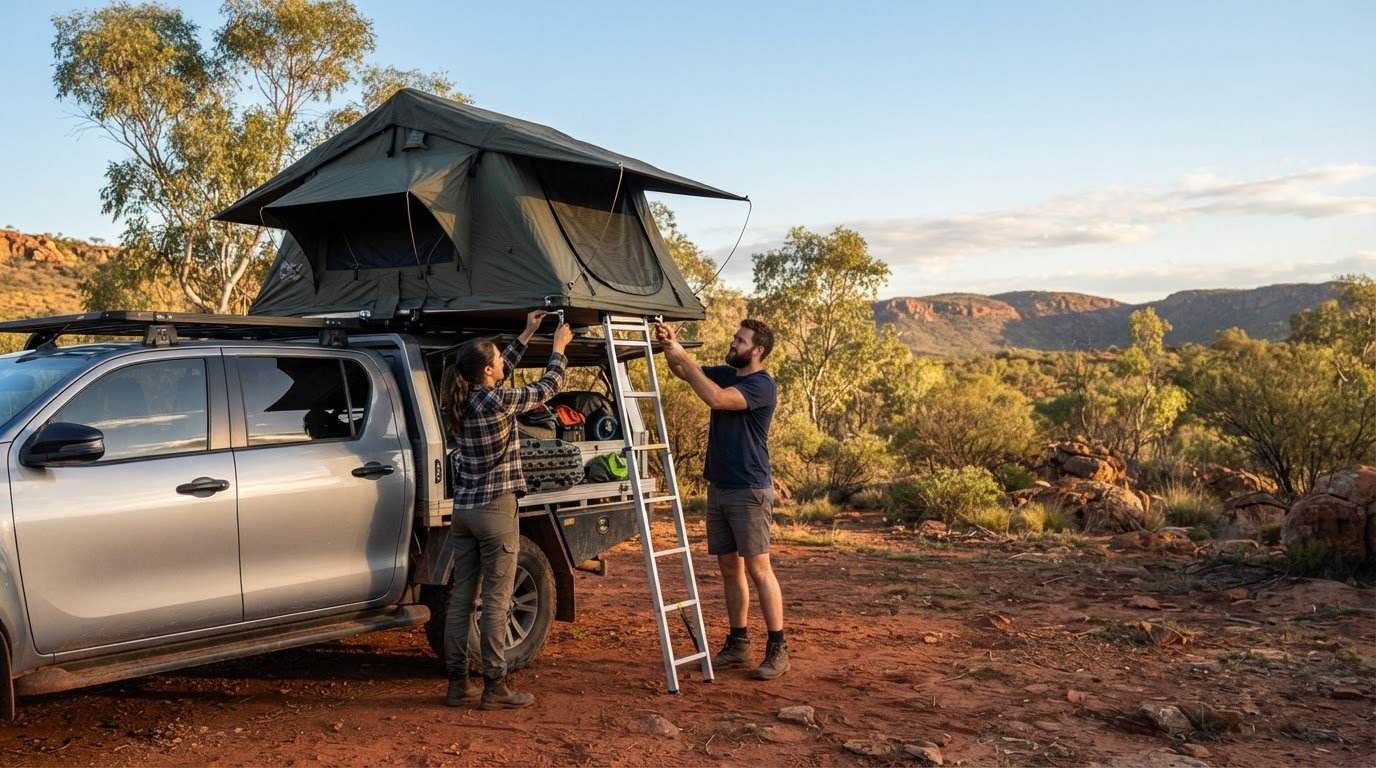
Standard ground tents often fall short when we are deep in the Australian bush. Between the threat of snakes, damp riverbank soil, and the cramped floor space, a basic setup can quickly turn a dream trip into a logistical nightmare. We’ve found that moving your camp off the ground is a game changer. Utilizing roof top tents provides an immediate safety barrier from ground dwelling pests and offers superior insulation against the cold desert nights. This elevation doesn’t just protect us; it gives our pets a secure, elevated den where they can truly relax after a day on the tracks.
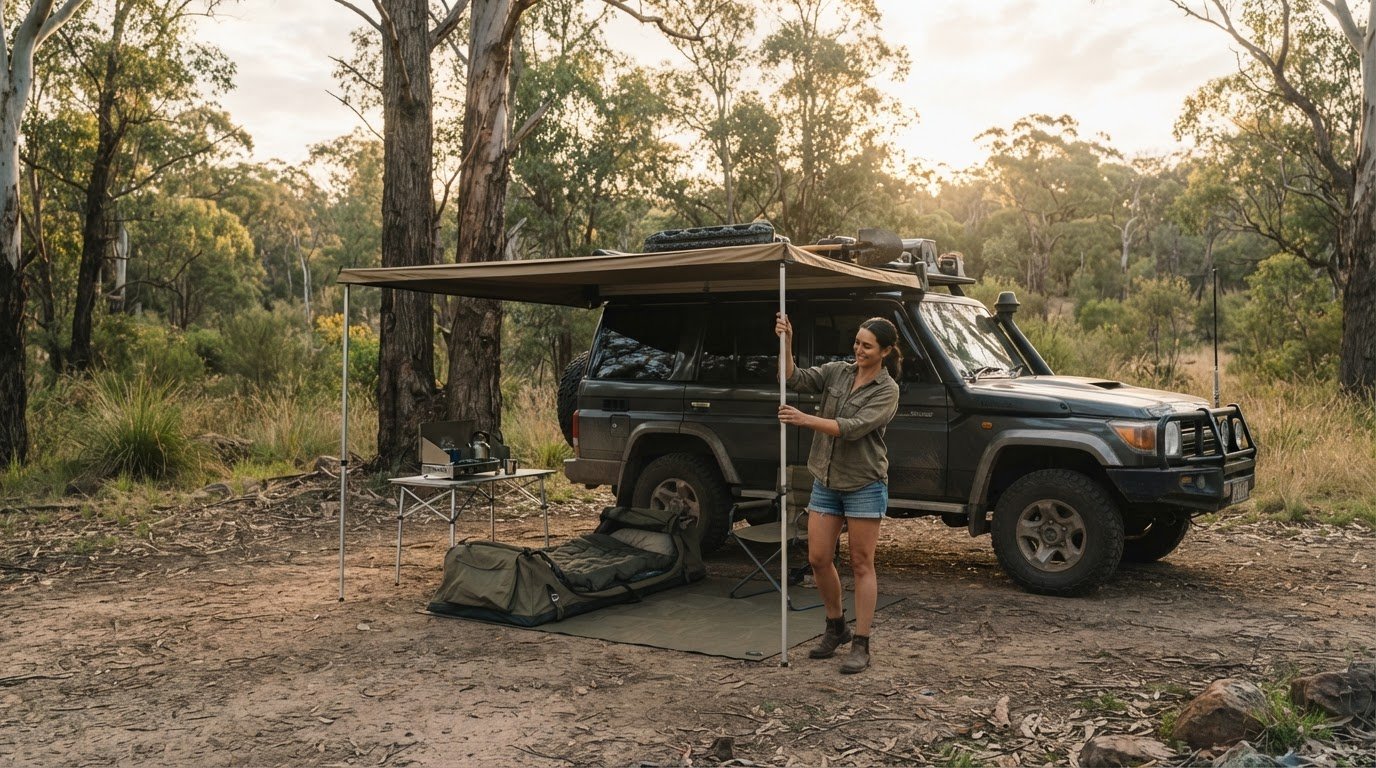
Preparation extends beyond the sleeping quarters. We need to think about the “Pet Zone” at basecamp. By integrating high-quality 4WD awnings, we create a climate-controlled perimeter that protects our mates from the harsh midday sun. Modern tech also plays a huge role in 2026. Portable 12V power stations now allow us to run dedicated pet cooling fans and keep GPS collars charged, ensuring our animals stay comfortable even when the mercury hits thirty-five degrees in the shade.
The Best Dog Car Seat for 4wding
Stability is everything when you are tackling corrugated washboards or steep rocky inclines. When searching for the best dog car seat for 4wding, look for heavy-duty materials that can withstand mud, sand, and claws. A bucket-style seat is excellent for smaller dogs as it provides high sides for security, while larger breeds often benefit from a reinforced platform bed that levels out the back seat. Don’t rely on a simple seatbelt clip. We recommend a multi-point tethering system that connects directly to the vehicle’s ISOFIX points or heavy-duty tie-down loops. This aligns with RSPCA advice on restraining dogs in cars, which emphasizes that a proper restraint prevents your pet from becoming a projectile in the event of a sudden stop or impact.
The Rooftop Tent Setup for Pets
Getting a dog into a rooftop tent requires a bit of strategy. For smaller dogs, a simple “lift and tuck” works well, but for larger breeds, we often use collapsible ramps or specialized dog carrying harnesses. Inside the tent, we always lay down a durable, rubberised mat to protect the tent floor from sharp claws. This also adds an extra layer of thermal protection. Proper ventilation is critical; keep the mesh windows open to allow airflow, but ensure they are securely zipped to prevent any midnight wanderings. It’s about creating a familiar, cozy environment that mirrors their bed at home.
Shade and Shelter: Maximizing Your Awning
Your awning is the heart of your pet-friendly campsite. We use 4WD awnings with side walls to create a windbreak and a sense of enclosure. This helps keep anxious dogs calm by limiting their visual field of passing wildlife. Ground cover is equally important. A breathable mesh mat prevents your dog from laying directly on hot sand or sharp bindi-eyes. As the sun goes down, we swap to integrated LED lighting or clip-on beacon lights for their collars. This keeps them visible to everyone in the camp, ensuring no one accidentally trips over a sleeping co-pilot during the midnight trek to the fridge.
Safety and Stewardship: Protecting Your Pet and the Bush
The Australian bush is as unforgiving as it is beautiful. While we love the freedom of the tracks, we have to acknowledge that our pets are entering a landscape filled with natural hazards. Safety begins long before you unclip the lead at camp. It starts with a secure transit. Using the best dog car seat for 4wding ensures your dog arrives at the trailhead without injury from cabin shifts during technical climbs. Once you’ve arrived, the focus shifts to the immediate environment. Snake encounters and paralysis ticks are reality in the scrub, especially during the warmer months of 2026. We always recommend a pre-trip vet consultation to ensure your mate’s preventative treatments are up to date and effective for the specific region you are visiting.
Perhaps the most hidden danger in our remote areas is 1080 baiting. This lethal toxin is used extensively across State Forests and private stations to control invasive predators like foxes and wild dogs. For a domestic dog, even a tiny amount is fatal, and there is no known antidote. We never let our dogs off-lead in areas marked with baiting signs. It is a non-negotiable rule for the Adventurerz community. Beyond toxins, we have a duty to protect native wildlife. A dog’s scent alone can cause nesting birds to abandon their eggs or stress out small mammals like bandicoots. Keeping your pet under strict control isn’t just about their safety; it’s about our role as stewards of the land.
Remote Area Medical Kits for Pets
A human first aid kit won’t cover everything your dog might need. Your canine-specific kit should include saline for eye flushes, self-adhesive bandages that won’t stick to fur, and a sturdy pair of tweezers for removing ticks or bindi-eyes. Hydration is another critical factor. We carry at least two litres of extra water per day specifically for our dogs, using portable filtration systems if we need to top up from creek beds. If an emergency happens out of range, your best bet is a satellite communicator to contact a vet or locate the nearest regional clinic. Preparation is what separates a minor hiccup from a trip-ending disaster.
Environmental Accountability
Managing pet waste is a vital part of the “Leave No Trace” ethos. In many Australian soils, particularly in arid or alpine regions, dog waste does not break down quickly. It introduces foreign bacteria and nutrients that can devastate local flora and fauna. We don’t just bury it; we bag it and carry it out, just like any other rubbish. If you’re ready to plot your next route through these sensitive areas, check out our Ultimate Adventure Travel Planner to find the safest tracks for your pack. By maintaining these high standards, we ensure that the tracks we love remain open for every pet-owning adventurer who follows in our dust.
The Future of Pet-Friendly Adventure: 2026 and Beyond
We’ve come a long way from simply throwing a blanket in the back of the ute and hoping for the best. By 2026, the intersection of technology and outdoor exploration has made the bush more accessible for our four-legged mates than ever before. We are seeing satellite-linked health monitors that track a dog’s hydration levels in real-time and advanced impact-absorbing materials in safety equipment. Even the best dog car seat for 4wding now incorporates reinforced frames designed specifically to handle the multi-axis vibrations of heavy off-road use. This evolution in gear isn’t just about comfort; it’s about expanding our shared horizons while keeping our best friends as safe as any other passenger in the vehicle.
Adventurerz is at the forefront of this movement, advocating for a future where responsible pet ownership leads to more open gates. We are working with regional councils to demonstrate that an educated, ethical community can visit sensitive areas without leaving a trace. Our collective goal is to prove that pet-friendly travel and environmental stewardship go hand in hand. By sticking to the protocols we’ve discussed, from managing waste to respecting baiting zones, we protect the privilege of remote exploration for every member of the pack.
Sharing Your Journey
Capturing the spirit of your trip through photography is a great way to inspire others, but we always put the environment first. When you’re snapping that golden hour shot of your dog by the 4WD, ensure they aren’t disturbing local flora or nesting sites. We love seeing your trail stories on the Adventurerz forums. Your real-world experiences are the backbone of our community knowledge. Direct feedback from our community members ensures that our gear recommendations are based on real-world durability in the harshest Australian conditions rather than just manufacturer claims. Your insights help the next person choose the right setup for their specific breed and vehicle.
Next Steps for the Aspiring Explorer
If you’re new to this, don’t rush into a three-week trek across the Simpson Desert. Start with a “shakedown” weekend at a local state forest. This allows you to test how your dog settles into their best dog car seat for 4wding and how they react to the sounds of a campsite at night. It’s the perfect time to refine your routine before heading into truly remote territory. As your confidence grows, you can look at upgrading your setup with pro-grade accessories like high-clearance mounting kits for your roof top tents or integrated water storage solutions. Ready to start your next chapter? Join the community and explore our latest gear recommendations to ensure your pack is prepared for whatever the track throws your way.
Before you turn the key, run through this final readiness check:
- Is your pet’s first aid kit fully stocked with canine-specific bandages?
- Have you downloaded the latest 1080 baiting maps for your specific route?
- Is your dog’s GPS collar fully charged and synced to your satellite communicator?
- Do you have enough waste bags to carry out everything you carry in?
- Is your mate secured in a restraint that meets Australian safety standards?
Ready for the Red Dust? Start Your Pack’s Journey Today
The tracks are calling, and there is no reason to leave your best mate behind. We have explored how a mentor mindset transforms a simple camping trip into a responsible expedition. From navigating complex state regulations to securing your dog in the best dog car seat for 4wding, every step we take ensures our pets and the Australian bush remain protected. Remember that true adventure is built on preparation. Whether you are upgrading your rooftop tent setup or packing a canine-specific medical kit, your dedication to safety preserves the future of pet-friendly travel.
Our mission is to empower you with community-vetted gear reviews and expert 4WD advice that prioritizes sustainable exploration. We believe that by sharing our knowledge, we can keep these remote corners of Australia open for everyone. It is time to turn those plans into reality and hit the dirt with confidence. Check out our latest rooftop tent advice and help us lead the way in ethical bush travel.
Join the Adventurerz community and find your next pet-friendly escape!
We will see you and your co-pilot out on the trails. Happy exploring!
Frequently Asked Questions
Can I take my dog to any National Park in Australia in 2026?
No, dogs are generally prohibited in most Australian National Parks to protect native wildlife and sensitive ecosystems. You can transit through many parks on gazetted roads as long as your pet remains inside the vehicle, but you cannot set up camp or walk them on trails. We always check state-specific parks and wildlife websites for rare exceptions or designated dog-friendly regional parks before we head out.
What is 1080 baiting and why is it dangerous for my dog while camping?
1080 is a lethal toxin used in meat baits to control invasive predators like foxes and wild dogs across many Australian State Forests and private stations. It is incredibly dangerous for domestic dogs because there is no known antidote, and even a tiny amount can be fatal within hours. We never let our dogs off-lead in areas marked with baiting signs to ensure they don’t scavenge anything off the forest floor.
How do I get my large dog into a rooftop tent?
We recommend using specialized telescoping ramps or heavy-duty carrying harnesses designed for large breeds to get them into rooftop tents safely. Some of our community members use a two-person “lift and tuck” method, though this requires a calm dog and a steady footing. Securing your mate in the best dog car seat for 4wding during the drive ensures they arrive at camp relaxed and ready for the lift into their elevated den.
What are the best pet-friendly camping alternatives to National Parks?
State Forests, Conservation Parks, and private cattle stations are the top choices for remote pet-friendly camping in Australia. These areas offer thousands of kilometres of 4WD tracks and riverfront spots where dogs are welcome. Major caravan park networks like BIG4 and Discovery Parks have also expanded their pet-friendly offerings, often providing fenced exercise areas and wash stations for a fee of around A$30 to A$50 per night.
Is it safe to leave my dog alone at the campsite while I go for a hike?
We never leave our dogs unattended at a remote campsite. The risks from snake bites, heatstroke, or accidental bait ingestion are far too high when you aren’t there to intervene. Most pet-friendly caravan parks also have strict rules against leaving animals unsupervised. If a hike doesn’t allow dogs, we either skip it or ensure one member of the crew stays behind to keep the pack safe and hydrated.
What should I do if my dog gets a snake bite in a remote area?
Keep your dog as still as possible to slow the spread of venom and seek immediate veterinary attention. Do not wash the wound or try to suck out the venom; instead, apply a firm pressure immobilization bandage if you have one in your kit. We use satellite communicators to alert the nearest regional vet while we are in transit, as early notification can be the difference between life and death in the scrub.
How much extra water should I carry for my pet during a summer camping trip?
Carry at least two to three litres of dedicated water per day for your dog during the Australian summer. This volume accounts for both drinking and active cooling if the mercury climbs into the high thirties. We always pack extra filtration tablets or portable pumps so we can safely top up from creek beds if our primary supply runs low during a long desert crossing.
Are there specific leash requirements for dogs in Australian State Forests?
Most State Forests require dogs to be under “effective control,” which almost always means being on a lead within campgrounds and high-use recreation areas. Even in the deepest parts of the bush, we keep our dogs tethered to prevent them from disturbing nesting birds or wandering into 1080 baiting zones. Using the best dog car seat for 4wding during the long transit between forests keeps your dog settled so they are less likely to be over-excited and bolt when you unclip the lead at camp.