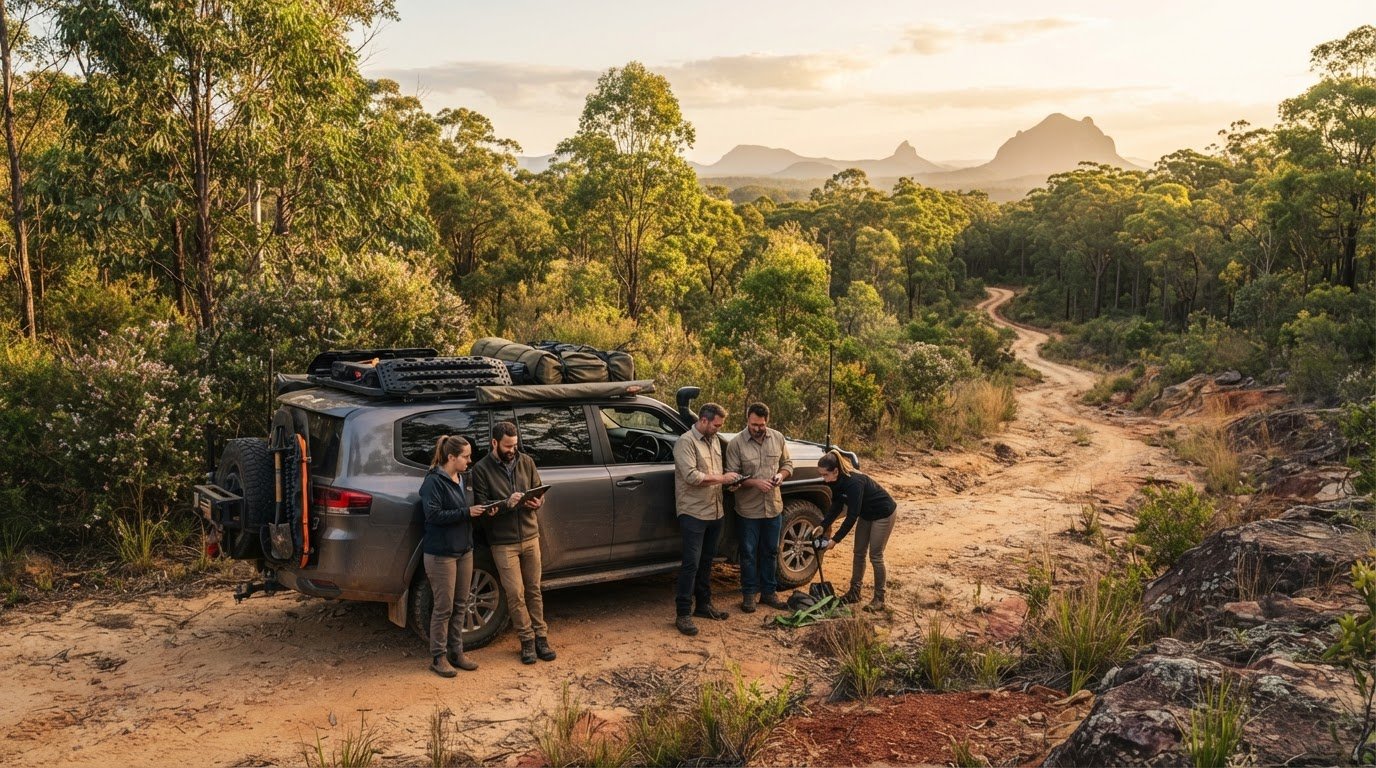
What if the secret to the ultimate Aussie road trip isn’t about finding the most remote track, but about knowing exactly where your four-legged best mate is actually welcome? We’ve all felt that sinking feeling when a “No Dogs” sign appears at a boundary after hours of dusty driving. It’s a common frustration for our Adventurerz crew, but finding dog friendly 4WD tracks Australia wide doesn’t have to be a guessing game of avoiding fines or 1080 poison baits.
We believe that responsible exploration and pet ownership go hand in hand. This guide promises to equip you with the specialized knowledge needed to navigate various land types with confidence. You’ll discover how to distinguish between restrictive National Parks and more pet-friendly State Forests while keeping your dog safe and comfortable in the rugged outback environment.
We’re diving into the updated 2026 regulations, from interstate entry requirements to the latest permit systems for coastal beach driving. We’ll also provide a comprehensive checklist for dog-safe gear, highlighting why a roof top tent is your pup’s best “safe zone” from ground-level hazards. Let’s get your rig packed and your co-pilot ready for the tracks.
Key Takeaways
- Learn how to distinguish between restrictive National Parks and accessible State Forests to find the most rewarding dog friendly 4WD tracks Australia has to offer.
- Discover why elevating your pet in a roof top tent is a game-changer for avoiding snakes and ground-dwelling pests during remote campouts.
- Master the safety protocols for identifying 1080 poison baiting zones and managing wildlife encounters to keep your companion protected in the bush.
- Access our 2026 travel planner to coordinate legally compliant routes and ensure your adventure aligns with current biosecurity and permit requirements.
Table of Contents
- Why Finding Dog-Friendly 4WD Tracks in Australia is a Balancing Act
- Rigging Your Rig: Essential Gear for 4WDing with Dogs
- Navigating Land Types: Where You Can Legally Drive with a Dog
- Paws on the Ground: Safety Protocols for Remote Australian Tracks
- Planning Your 2026 Dog-Friendly Adventure with Adventurerz
Why Finding Dog-Friendly 4WD Tracks in Australia is a Balancing Act
For many of us, our dogs aren’t just pets; they’re essential members of the recovery crew. By 2026, hitting the tracks with a canine co-pilot has become a defining lifestyle for the Australian off-road community. However, finding dog friendly 4WD tracks Australia wide requires more than just a sense of adventure. It demands a deep understanding of the delicate balance between our desire for exploration and the critical need for environmental conservation.
We often face a patchwork of regulations that can feel like a maze. This friction usually stems from the management of Australia’s protected areas, where preserving native biodiversity is the top priority. Beyond legal boundaries, we must also consider the invisible threat of 1080 poison baits. These are frequently used in remote regions to control feral predators but are lethal to our domestic mates, making pre-trip research a non-negotiable safety step.
To see how this balancing act plays out in a real-world setting, watch this helpful video:
The Legal Landscape: National Parks vs. The Rest
National Parks are almost always a no-go zone for pets. These areas focus on protecting fragile ecosystems and native wildlife from the scent, noise, and predatory instincts of domestic animals. If you’re caught bringing a dog into a restricted zone, you could face heavy fines. In some states, these penalties can range from $345 to over $860 depending on the severity of the breach. State Forests are the real heroes when searching for dog friendly 4WD tracks Australia offers. They provide the recreational freedom we crave, provided we keep our dogs under control and respect the local rules. Using digital mapping tools to overlay land tenure is the best way to identify these pet-legal corridors before you air down.
Sustainability and the Pet-Owner’s Responsibility
Being a responsible adventurer means more than just avoiding a fine. Our impact on native fauna can be significant if we aren’t vigilant. A barking dog or one off-lead can stress local wildlife or disrupt sensitive nesting sites. We advocate for a strict ‘Leave No Trace’ philosophy for all pet owners. This includes managing all waste and ensuring our pets don’t accidentally introduce invasive seeds into pristine areas. When we prove we can explore responsibly, we help ensure that these tracks remain open for the entire community to enjoy for years to come. It’s about keeping the privilege of remote travel alive through accountability.
Rigging Your Rig: Essential Gear for 4WDing with Dogs
Preparing your vehicle for dog friendly 4WD tracks Australia wide requires a fundamental shift in how we think about our setup. For those looking to find a new or pre-owned vehicle to start their next build, CarSeek offers a diverse inventory to help you find the right base for your adventures. We aren’t just packing for ourselves anymore; we’re designing a mobile sanctuary that needs to handle the harsh reality of the bush. A successful trip depends on how well we integrate our best mate’s needs into our existing 4WD layout, focusing on safety, temperature control, and secure rest areas. It’s about more than just a bed in the back. It’s about ensuring every piece of gear serves a dual purpose for the whole crew.
When organizing your storage, keep dog-specific recovery gear and first aid kits in a dedicated, easy-to-reach drawer. You’ll want saline for flushing eyes after dusty tracks, tick removers, and vet-wrap for paw injuries. If you’re looking to upgrade your setup for the next season, you can find our latest gear reviews and adventure ideas in Australia to help you plan your build.
Roof Top Tents: Keeping Paws off the Ground
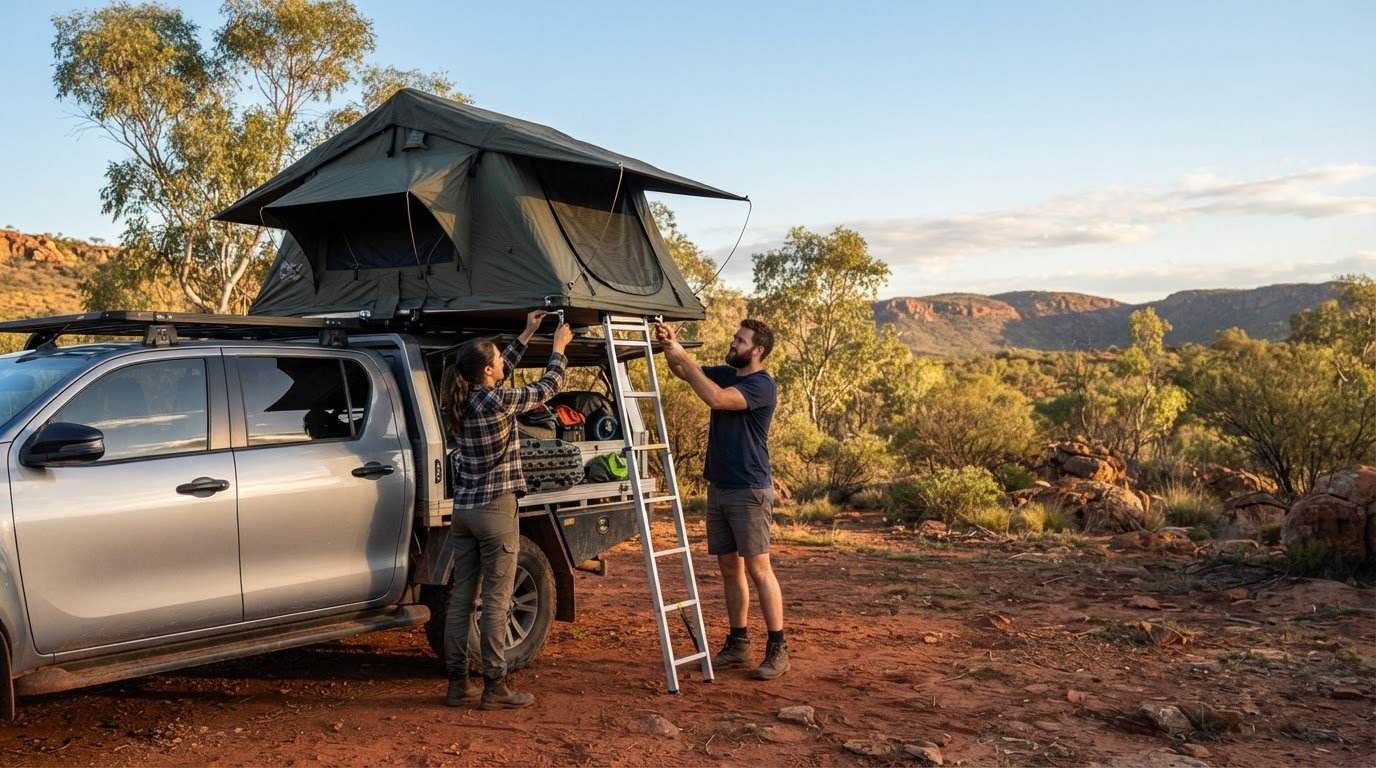
In the Australian outback, elevation is a dog’s best friend. High-quality roof top tents provide a critical sanctuary from ground-level hazards like snakes, spiders, and curious dingoes that might wander into camp at night. We’ve found that keeping your dog off the ground significantly reduces their stress levels and yours. When choosing a tent, look for models that offer pet-friendly ladder extensions or specialized ramp options to make entry and exit safe for older dogs. Ventilation is equally vital. Sleeping with a large dog in a confined space can lead to rapid condensation and heat buildup, so ensure your tent features large mesh windows and internal fans to keep the air moving throughout the night.
The Importance of 4WD Awnings for Thermoregulation
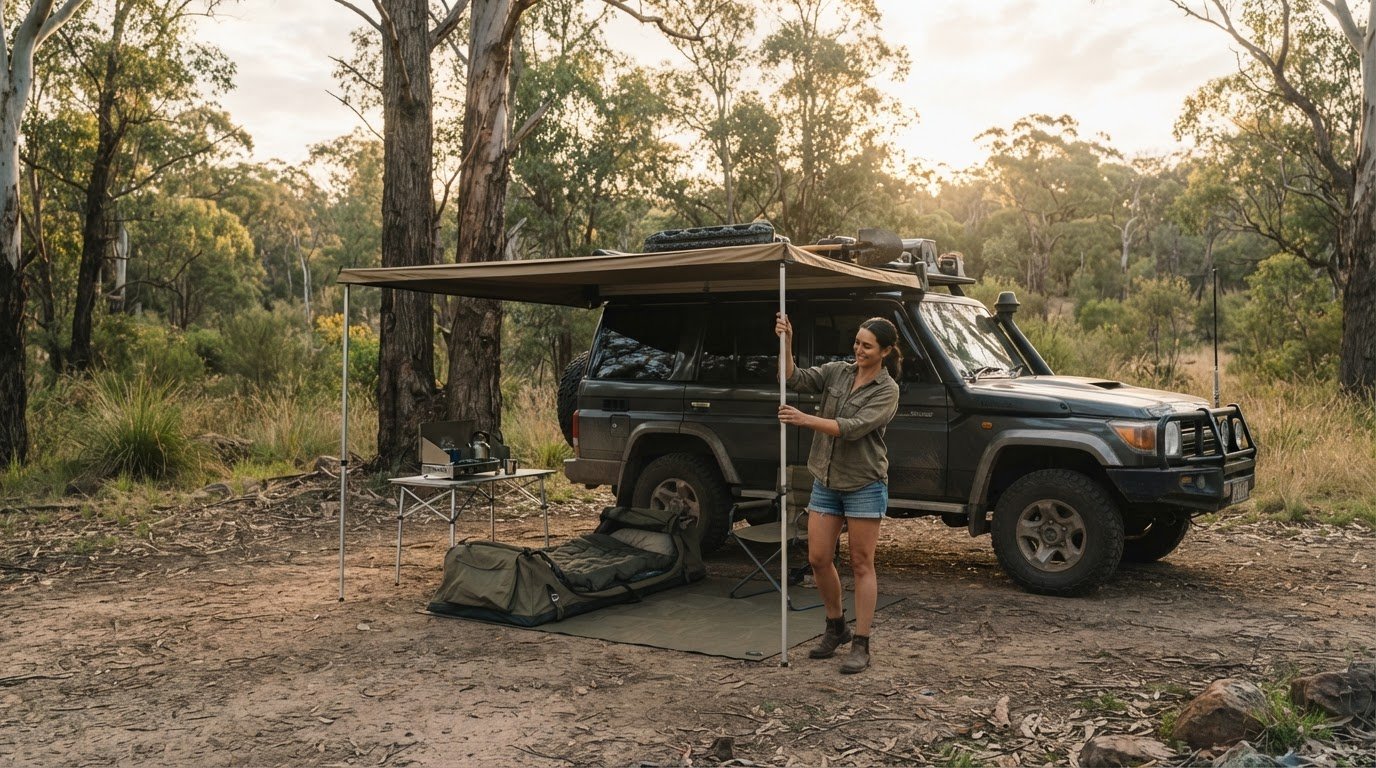
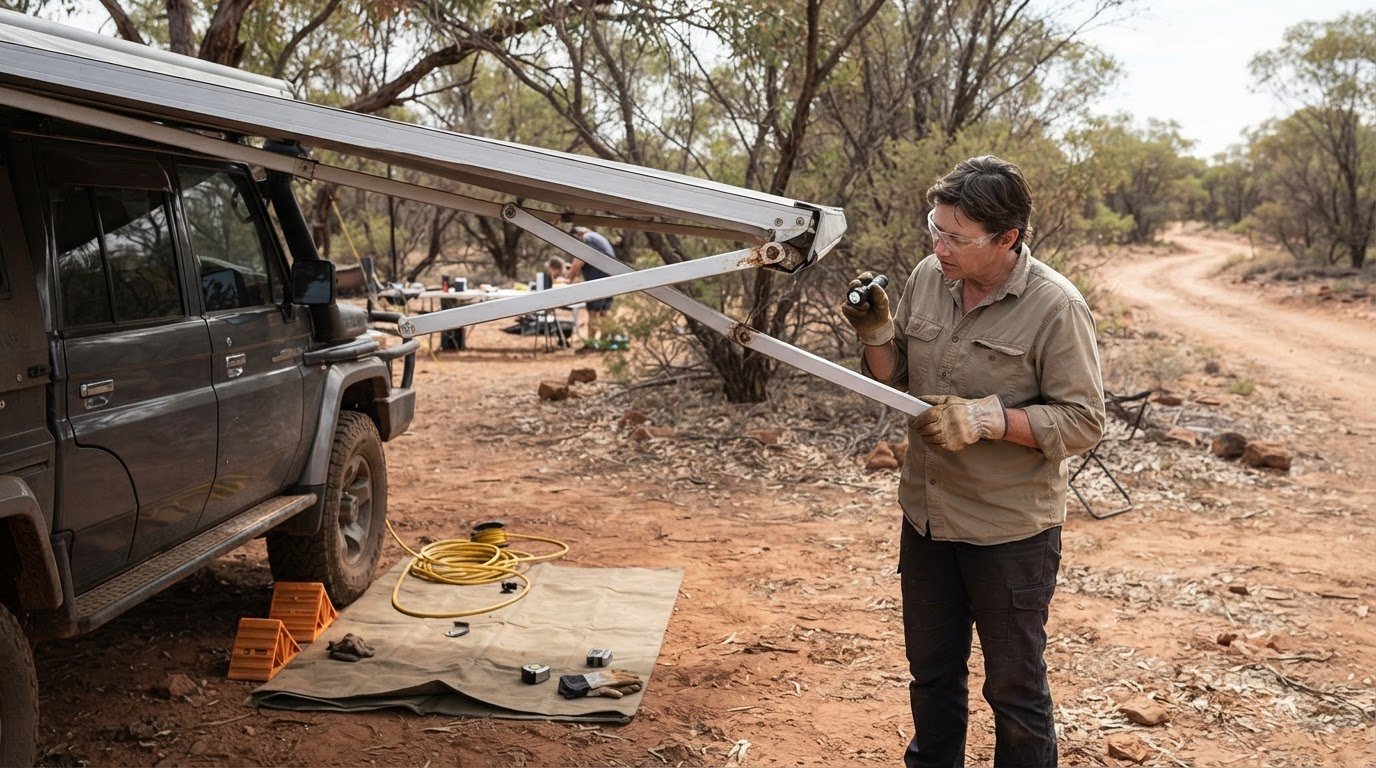
Managing heat stress is the biggest challenge when navigating remote tracks. We use 4WD awnings to create a consistent, 24/7 shade zone that follows the vehicle. A 270-degree awning provides the maximum possible sun protection for large breeds by wrapping around the vehicle to cast a massive, consistent shadow. This setup is a game-changer for mid-day breaks when the sun is at its peak. Adding zip-on awning walls can also help contain your dog at camp, giving them a defined “room” where they can relax without being constantly tethered. This keeps them cool, calm, and ready for the next leg of the journey while protecting them from the relentless Australian sun.
Navigating Land Types: Where You Can Legally Drive with a Dog
Identifying the right patch of dirt is the difference between a relaxing weekend and an expensive encounter with a ranger. While we’ve established that National Parks are usually off-limits, the rest of the continent offers plenty of opportunities for dog friendly 4WD tracks Australia wide. We just need to know where to look. Beyond the obvious, we’ve found that Crown Land and historic Stock Routes often provide the most secluded and pet-legal corridors for those willing to do the map work. These hidden gems often lack the crowds found in more popular regions, giving you and your mate the space to explore without constant interruptions.
For those who prefer a more structured environment, private 4WD parks are a fantastic “pay-to-play” solution. These parks are typically pet-friendly and offer a range of track difficulties in a contained area. They’re a great place to test your gear and your dog’s comfort levels before heading into more remote territory. It’s a reliable way to guarantee a legal spot while supporting local landowners who value the off-road community and their canine companions.
State Forests: The 4WD Dog-Owner’s Sanctuary
State Forests are our primary playground. Unlike their more restrictive cousins, these areas generally welcome dogs, though most require them to be on a leash at all times to protect both your pet and the local environment. Because these are working forests, the tracks are often more technical and less maintained than those in National Parks, providing the rugged challenge we love. We always recommend downloading official state-based forestry maps before you lose reception. It’s the only way to ensure you’re staying on legal dog friendly 4WD tracks Australia offers while avoiding areas currently closed for logging or active pest management programs.
Coastal Access and Dog-Friendly Beaches
Beach driving with a pup is a quintessential Aussie experience, but it’s where the rules get most complex. Local council regulations change frequently to manage high visitation. As of July 2026, many popular coastal regions have updated their laws, covering over 1600km of pathways with strict on-leash requirements. The stakes are high; fines for having a dog in a prohibited coastal area can reach $345, while an off-leash violation in an on-leash zone can cost you $863.
Many popular coastal tracks now operate on a user-pays system. You’ll find that permit fees vary significantly across the country. Daily passes often sit around $50, while annual permits for the most sought-after beach runs can cost upwards of $166. Always check the specific council or regional authority website for the latest fee structures and seasonal closures before you hit the sand.
- Check Seasonal Restrictions: Some beaches that allow dogs in winter become “no-go” zones during peak summer or bird nesting seasons.
- Monitor Sand Temperature: If the sand is too hot for your feet, it’s definitely too hot for their paws.
- Hydration is Key: Soft sand driving is hard work for dogs. Ensure they have constant access to fresh water to prevent heat stress.
When you’re navigating these coastal tracks, remember that your dog’s safety is as important as your tyre pressures. Keep them secured inside the vehicle while moving to prevent injuries from sudden shifts or bumps on the dunes.
Paws on the Ground: Safety Protocols for Remote Australian Tracks
Safety is the silent partner in every successful expedition. While we often focus on tyre pressures and recovery points, the biological risks on dog friendly 4WD tracks Australia offers are just as critical. Our crew knows that a remote adventure can turn sideways quickly if we aren’t prepared for the unique hazards of the bush. From toxic baits to aggressive wildlife, staying one step ahead is the only way to ensure your best mate returns home as happy as they left. It’s about building a layer of protection around your pet before you even hit the dirt.
The 1080 Bait Emergency Protocol
Sodium fluoroacetate, commonly known as 1080, is a tasteless and odourless metabolic poison used for feral pest control that is extremely lethal to domestic dogs and has no known antidote. These baits are frequently dropped in State Forests and remote grazing lands to manage wild dog and fox populations. You can usually identify active baiting programs by looking for bright yellow or red warning signs on entry gates and track heads. However, signs can be weathered or missing; always assume any agricultural or managed forest area could be active. If you suspect your dog has ingested a bait, the situation is a dire emergency. Symptoms typically include frantic running, howling, and violent seizures. Your immediate action must be to induce vomiting if the ingestion was recent and then race to the nearest vet. Every minute is vital in these high-stakes scenarios.
Wildlife and Track Etiquette
Navigating dog friendly 4WD tracks Australia wide requires a high level of situational awareness to manage interactions with the local environment. Snakes are a major concern, especially during the warmer months when browns and tigers are active. We recommend professional snake avoidance training and keeping your dog on a short lead when walking through long grass or near waterholes. It’s also our duty to prevent our pets from chasing kangaroos or disturbing ground-nesting birds. This isn’t just about wildlife protection; it’s about preventing your dog from getting lost or injured in a pursuit. When you encounter other 4WDers, always keep your dog secured until you’ve confirmed their pets are friendly. A calm camp is a happy camp for everyone on the trail.
Hydration is another pillar of safety. Dogs can’t regulate their temperature as efficiently as we can, especially in the dry heat of the outback. We carry at least five litres of dedicated water per day for our dogs and use collapsible bowls for frequent stops. Your dog first aid kit should be a permanent fixture in your rig, stocked with pressure bandages for snake bites, saline for eye flushes, and tick removers. For more expert advice on preparing your vehicle for the bush, check out our roof top tent recommendations to see how elevation keeps your pup safe from ground-dwellers. Ready to start mapping your next escape? Visit Adventurerz to access our full suite of remote travel guides and gear reviews.
Planning Your 2026 Dog-Friendly Adventure with Adventurerz
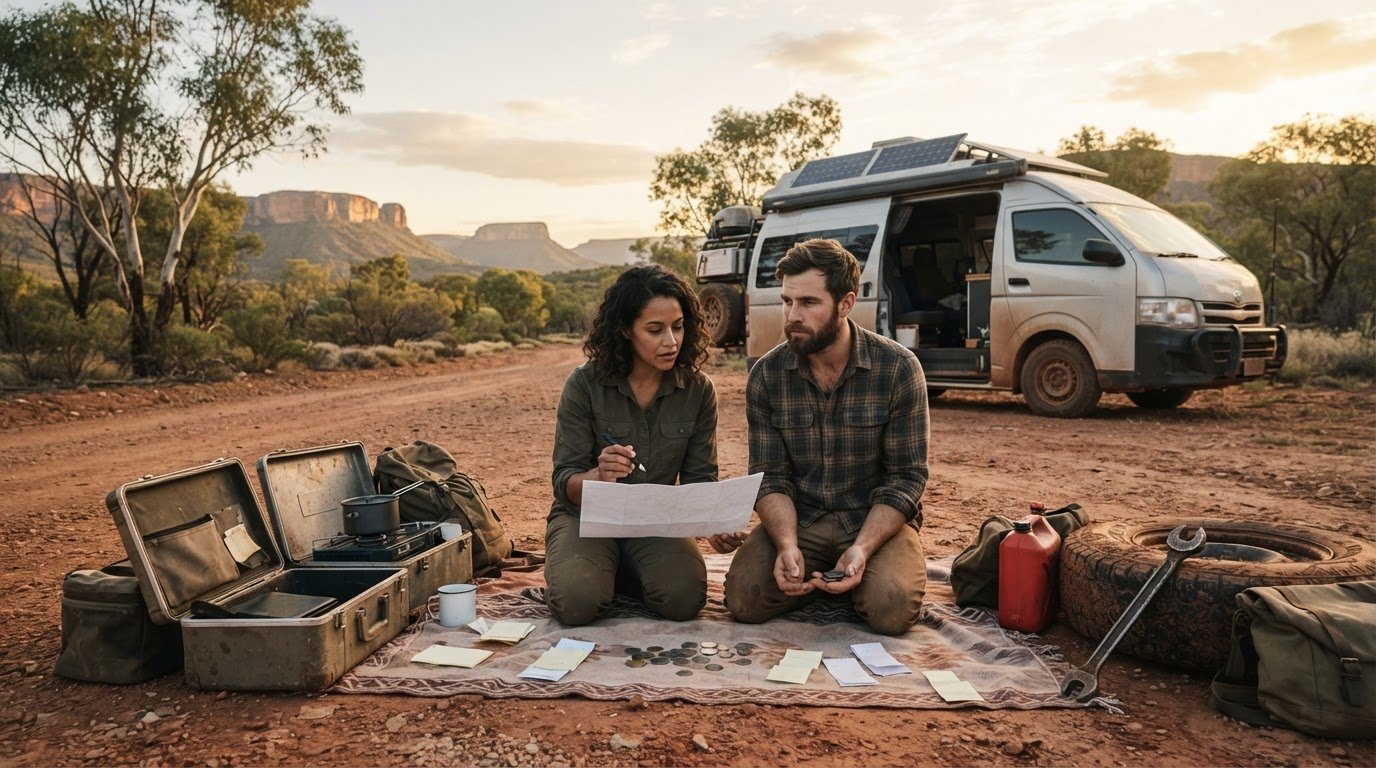
We recommend using our travel planner to visualize pet-legal corridors across the country. This tool is essential for integrating dog-friendly fuel stops and rest areas into long-haul outback itineraries. It’s not just about where you’re going; it’s about the safety of the stops in between. We always balance our driving time with frequent “paws-on-the-ground” breaks every two to three hours. This keeps our dogs alert and prevents the restlessness that can lead to unsafe behaviour in the cab. Remember to check for updated 2026 biosecurity requirements, especially when crossing state borders like the entry into Tasmania, where proof of hydatid tapeworm treatment is mandatory.
The Adventurerz Community Ethics
Our Adventurerz crew thrives on shared knowledge, but we must share our finds with a focus on conservation. When you document your trip on social media or in forums, ensure you aren’t accidentally encouraging illegal access to sensitive areas. We prioritize the longevity of these tracks by being transparent about local rules and the necessity of permits. Joining our collective means you’re committing to a standard of exploration that respects both the land and the community. We’re all mentors on this shared path, and our actions today determine which tracks remain open for our dogs tomorrow. Let’s lead by example by leaving every campsite better than we found it.
Before you set off on your next mission, run through this final readiness checklist to ensure your rig and your mate are truly prepared:
- Vehicle Readiness: Is your mechanical service up to date and are your 4wd awnings secured for high-speed corrugated tracks?
- Pet Health: Are all 2026 vaccinations current, and have you packed enough flea, tick, and worm prevention for the duration of the trip?
- Gear Integration: Have you tested your roof top tents entry system with your dog to ensure they’re comfortable with the elevation?
- Digital Prep: Are all your digital mapping layers and coastal driving permits downloaded for offline use?
If you’ve ticked these boxes, you’re ready to hit the dirt. We’ll see you out there on the tracks, exploring this incredible backyard with our best mates by our side.
Gear Up for Your Next Paws-on-the-Ground Expedition
Exploring the wild heart of our country with your best mate is the ultimate reward for any off-road enthusiast. We’ve shown that finding dog friendly 4WD tracks Australia wide is entirely possible when you master the balance of land tenure and specialized gear. By prioritising State Forests over restricted National Parks and rigging your vehicle with protective equipment like roof top tents and high-coverage awnings, you create a safe, sustainable environment for your pup to thrive in the rugged outback.
Our collective commitment to responsible exploration ensures these tracks remain accessible for years to come. We rely on community-tested remote travel guides and expertly reviewed gear to keep our missions safe and environmentally sound. It’s about being prepared for invisible threats like 1080 baits while celebrating the pure freedom of the trail. Are you ready to map your 2026 escape with total confidence?
Plan your next dog-friendly 4WD mission with our Ultimate Travel Planner and join a community dedicated to sustainable Australian adventure. We’ll see you out there on the tracks!
Frequently Asked Questions
Are dogs allowed on all 4WD tracks in Australia?
No, dogs are not permitted on every track. Most National Parks strictly prohibit domestic animals to protect native biodiversity and sensitive ecosystems. Instead, focus your search on State Forests and Crown Land where regulations are typically more liberal. These areas provide the majority of dog friendly 4WD tracks Australia has to offer, provided your pet remains under control. Always verify the specific land tenure before airing down to avoid heavy fines.
What is a 1080 bait and why is it dangerous for my dog?
1080 is a metabolic poison called sodium fluoroacetate used to control feral predators like foxes and wild dogs. It is extremely dangerous because it is tasteless, odourless, and has no known antidote. Ingestion is almost always fatal for domestic dogs. These baits are frequently used in remote areas and State Forests. We recommend keeping your dog on a lead and muzzle-training them if you are exploring areas with active baiting programs.
Can I take my dog into an Australian National Park if they stay in the car?
Generally, you cannot bring a dog into a National Park even if they remain inside your vehicle. Most states have strict no-pets policies that apply to the entire park boundary, including all roads and car parks. This rule exists to prevent domestic scents and sounds from stressing native wildlife. Exceptions are rare and usually limited to specific transit corridors, so it is safer to plan your route entirely around pet-legal land types.
How do I keep my dog cool while 4WDing in the outback?
Keeping your mate cool requires a multi-layered approach to thermoregulation. We recommend using 4WD awnings to create a permanent shade zone whenever you stop. Ensure your vehicle has excellent ventilation and never leave a dog in a stationary car. Carry at least five litres of dedicated water per dog daily. Using cooling mats and scheduling your hardest driving for the cooler early morning hours will significantly reduce the risk of heat stress.
What are the best types of 4WD tracks for beginners with dogs?
Beginner-friendly options often include private 4WD parks or well-traversed State Forest fire trails. Private parks are excellent because they offer a controlled environment with clear signage and recovery assistance if needed. They are almost always pet-friendly, allowing you to test your gear and your dog’s comfort levels. Look for tracks with firm bases and minimal technical obstacles to ensure a positive first experience for your four-legged co-pilot without excessive cabin bounce.
Do I need a special permit to take my dog into a State Forest?
Most State Forests do not require a specific permit for dogs, but you must follow standard recreational rules like using a leash in designated camping areas. However, coastal tracks and beaches are different. Many popular beach driving zones require vehicle permits and have specific local council bylaws regarding dog access. For example, as of 2026, some coastal regions have implemented strict on-leash pathways and prohibited zones that carry significant fines for non-compliance.
What should I include in a 4WD dog first aid kit?
Your remote first aid kit must be tailored for canine-specific emergencies. Include pressure immobilisation bandages for snake bites, saline solution for flushing dust from eyes, and specialized tick removal tools. We also suggest packing vet-wrap for paw injuries, antiseptic wipes, and antihistamines after consulting your vet. Having these supplies easily accessible in a dedicated drawer ensures you can act quickly if your dog encounters a hazard on remote dog friendly 4WD tracks Australia wide.
Is a roof top tent better than a ground tent for camping with dogs?
We believe a roof top tent is superior for remote camping because it provides essential elevation. Keeping your dog off the ground protects them from snakes, spiders, and dingoes that may enter your campsite at night. It also offers better ventilation and keeps your bedding free from the dust and dampness of the bush floor. When paired with a pet-safe ladder or ramp, an RTT becomes a secure sanctuary for the whole crew.