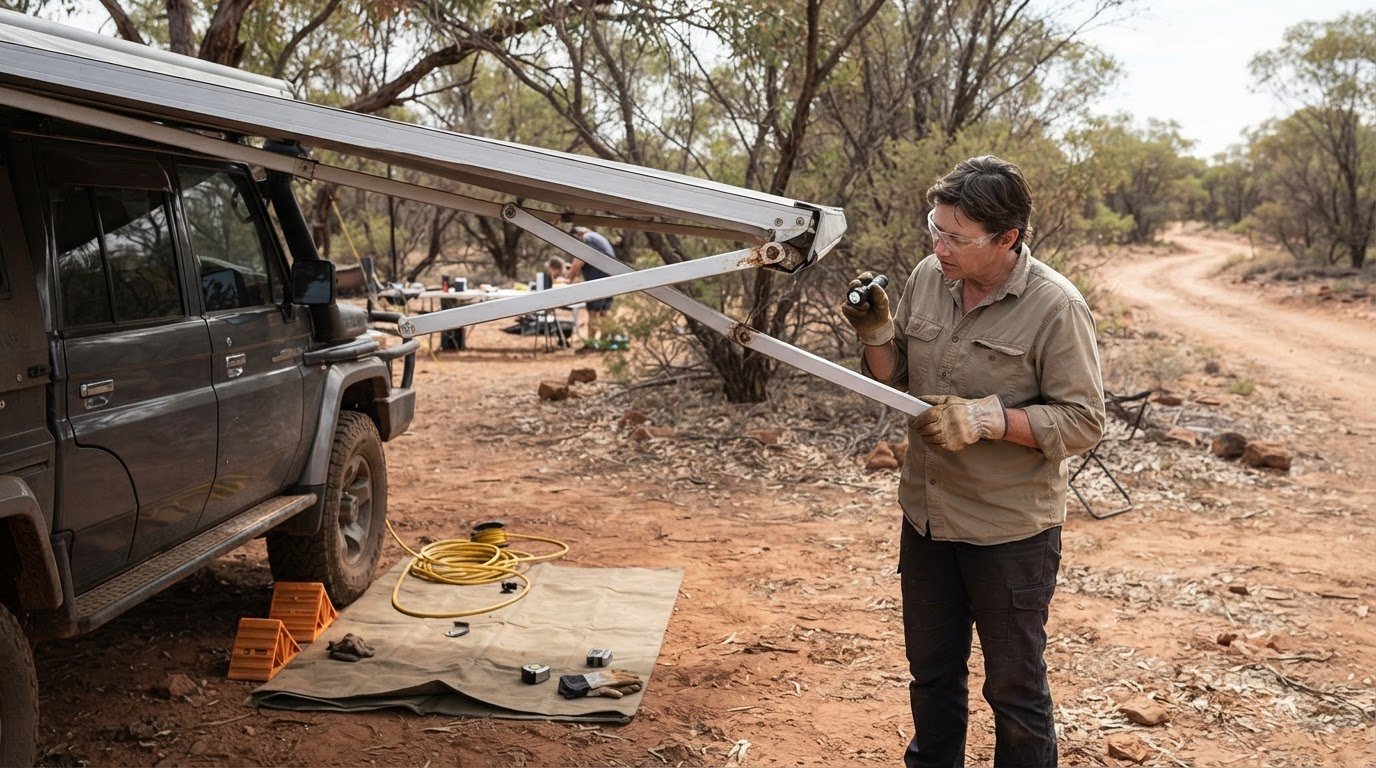
When installing roof top tent on ute, the tent’s weight is only one part of the load to consider. The vehicle, rack or canopy, mounting points, hardware and tent all need to work together. It’s natural to have questions about load ratings or how to lift and secure a bulky tent, especially when a mistake could affect safety on the road.
A methodical approach makes the job easier to manage. This guide covers compatibility checks, the difference between dynamic and static load ratings, and a careful installation sequence. You’ll also find checks to complete before your first drive.
We’ll work through the key decisions in order, from choosing a mounting surface to tightening and rechecking the hardware. Adventurerz shares practical gear guidance and ideas for responsible Australian outdoor travel, so you can prepare well and tread lightly at camp.
Key Takeaways
- Safe installing roof top tent on ute starts with checking compatibility across the tent, mounting hardware, rack or canopy, and vehicle.
- Know which load rating applies while driving and which applies when parked. They serve different purposes and aren’t interchangeable.
- Compare cab racks, tub platforms and canopy mounts using their documentation and fitment requirements. Don’t assume one option suits every ute.
- Follow the tent and mounting-system manuals, use the supplied hardware and work through the installation carefully.
- Before setting off, check the tent’s attachments, clearances, closures and loose items. Follow the manufacturers’ guidance for ongoing care.
Table of Contents
- Before installing a rooftop tent on a ute, check these fitment basics
- Understand ute rooftop tent load ratings before you install
- Choose the right ute mounting surface: rack, canopy, or tub platform
- How to install a rooftop tent on a ute, step by step
- Final checks before driving, and where Adventurerz can help next
Before installing a rooftop tent on a ute, check these fitment basics
Before lifting anything overhead, check whether your ute, rack and tent are a suitable match. A safe installation depends on the complete setup: the vehicle, mounting surface, rack or platform, hardware and tent must all be compatible. Start with these checks instead of relying on how sturdy a component looks.
Use the vehicle and equipment manufacturers’ instructions for fitment requirements and limits. A rack that looks sturdy, or a tent that appears to line up, isn’t proof that the combination is suitable. General information about roof rack types can help explain mounting options, but the documentation for your specific equipment determines what fits your setup.
What information should you gather before mounting a tent?
First, note how your ute is configured. A tray, canopy, hard lid and cab roof are different mounting surfaces, and an added rack or platform is another part of the fitment picture.
- Record the ute’s make, model and configuration, including whether it has a tray, canopy, hard lid, rack or platform.
- Find the tent and mounting-system manuals. Check the mounting requirements, compatible crossbar arrangements, hardware instructions and load limits.
- List existing accessories on or near the mounting area. They add weight and may take up space needed for the tent or its clamps.
- Compare the crossbar layout and available mounting space with the tent’s base and mounting points before planning a lift.
Keep the manuals and your notes together. If you later add an accessory or replace the rack, repeat the checks rather than assuming the original fit still applies. For help comparing tent styles and features, our rooftop tent reviews are a useful starting point.
Can every rooftop tent fit every ute?
No. Tent bases and mounting hardware use particular attachment points, while racks and platforms have their own crossbar positions and permitted fixing methods. If the arrangements don’t align, the tent may not attach as its manufacturer intends. Don’t force a mismatch with improvised brackets or altered hardware.
A setup that seems generally compatible isn’t necessarily a confirmed fit for your exact ute, mounting surface and equipment combination. Model variations and accessories can change the available space or mounting arrangement. Compare the documentation for the specific tent, rack or platform, and vehicle before lifting or attaching the tent. If the manuals don’t clearly support the combination, resolve that uncertainty before installation. A careful fitment check helps you prepare for a safer trip.
Understand ute rooftop tent load ratings before you install
Load ratings can feel confusing when the vehicle, rack and tent each have their own limits. For installing roof top tent on ute safely, separate the rating for travel from the rating for a stationary camp, then trace how the load passes through the mounting setup. Use the exact vehicle, rack, canopy and tent manuals for their stated limits. One component’s rating doesn’t apply to the rest.
Static versus dynamic load: what changes?
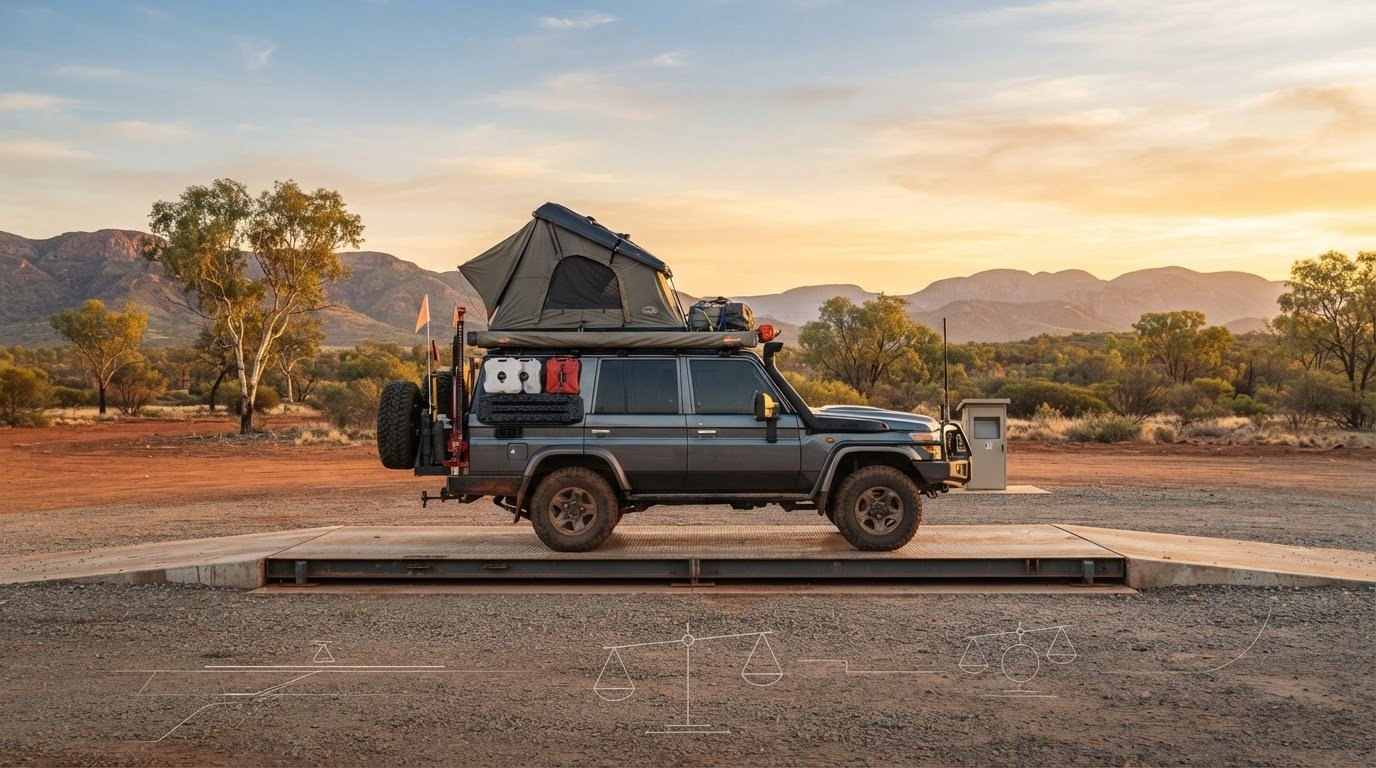
Dynamic load is the maximum load specified for the roof or mounting system while the vehicle is moving. It’s the rating to follow for driving, and the manufacturer’s wording and conditions matter. Static load applies while the vehicle is stationary, such as when the tent is set up at camp. It doesn’t replace or increase the permitted travel load.
A higher parked-load rating isn’t permission to exceed the dynamic limit on the drive to camp. Ratings and test conditions vary between equipment, so don’t rely on a generic figure or an example from another vehicle. Check the exact manuals for the values that apply to your setup, including any separate guidance for road conditions or use.
Which parts of the ute setup contribute to the load?
Trace the load from the tent down: the tent and its mounting hardware sit on the rack, platform or canopy, which transfers the load to the vehicle. Each part can have a different limit. Other accessories attached to the mounting structure also contribute, while the rack’s own weight uses part of the vehicle’s available roof-load allowance. A canopy’s rating is separate from the vehicle’s roof rating, so check both where relevant.
- Vehicle: Find the manufacturer’s roof-load limit for travel and any conditions attached to it.
- Rack or platform: Check its on-road rating, mounting-foot limits and any lower limit for unsealed-road use.
- Canopy or hard lid: Confirm its stated capacity and whether the documentation specifies a particular support arrangement.
- Tent, hardware and accessories: Include the tent, mounting components and other items carried on the structure when reviewing the applicable limits.
The lowest applicable limit governs the setup. Don’t add component ratings together or assume that a strong rack makes a lower-rated canopy suitable. Check the complete load path, because the weakest applicable component sets the limit for the whole mounting arrangement. If a manual doesn’t explain how its rating applies to your configuration, pause before loading the tent rather than estimating a safe capacity.
As you compare tent options, Adventurerz’s rooftop tent reviews and recommendations can help you research equipment alongside the practical checks in this guide.
Choose the right ute mounting surface: rack, canopy, or tub platform
The right mounting position depends on your ute’s configuration, the tent’s mounting requirements and how you use the vehicle. A cab roof rack, a rack over the tub, and a canopy or hard-lid platform can each be suitable when the complete setup is designed and documented for the intended fitment. None is a universal winner. Consider access to the tub, clearance around other gear and the manufacturers’ instructions before choosing a location.
Use this comparison to organise your checks, not as confirmation that a particular arrangement will fit. A platform’s appearance or general suitability for the vehicle doesn’t establish tent compatibility.
| Mounting position | Documentation to check | Practical fitment considerations |
|---|---|---|
| Roof rack over the cab | Vehicle roof-load instructions, rack and crossbar documentation, tent mounting requirements | Check the tent’s fixing points against the crossbars, and consider access to the cab and clearance around other roof accessories. |
| Tub-mounted rack | Rack fitment and load instructions, tent requirements, and relevant vehicle or tub guidance | Consider how the rack sits over the tub, whether it affects access or other equipment, and whether the mounting positions align. |
| Canopy or hard-lid platform | Canopy or lid capacity and mounting instructions, platform documentation, tent requirements | Look for a mounting system intended for the surface and check the permitted attachment points, support arrangement and available space. |
Roof rack or tub-mounted setup: what should you compare?
A cab-mounted rack keeps the tent above the cabin, while a tub-mounted rack places it over the tray or tub. The position can affect how you reach the tub, arrange cargo and use nearby accessories. Compare the rack’s stated vehicle compatibility, fixing method and load documentation with the tent’s mounting instructions. Don’t assume that a rack suited to one ute configuration also suits another.
Canopy and hard-lid platforms: check the system as a whole
A flat top isn’t automatically a tent-ready mounting surface. Look for dedicated mounting provisions and follow the canopy or lid maker’s instructions for the required support and attachment points. Utemaster’s platform-specific information illustrates why the platform itself matters, but its details aren’t a universal specification for other brands or setups. Match the exact platform documentation to the tent before installation.
For installing roof top tent on ute, settle the mounting position only after the relevant manuals support the fitment. Adventurerz’s rooftop tent reviews and recommendations can help you research tent options while planning a considered setup for Australian trips.
How to install a rooftop tent on a ute, step by step
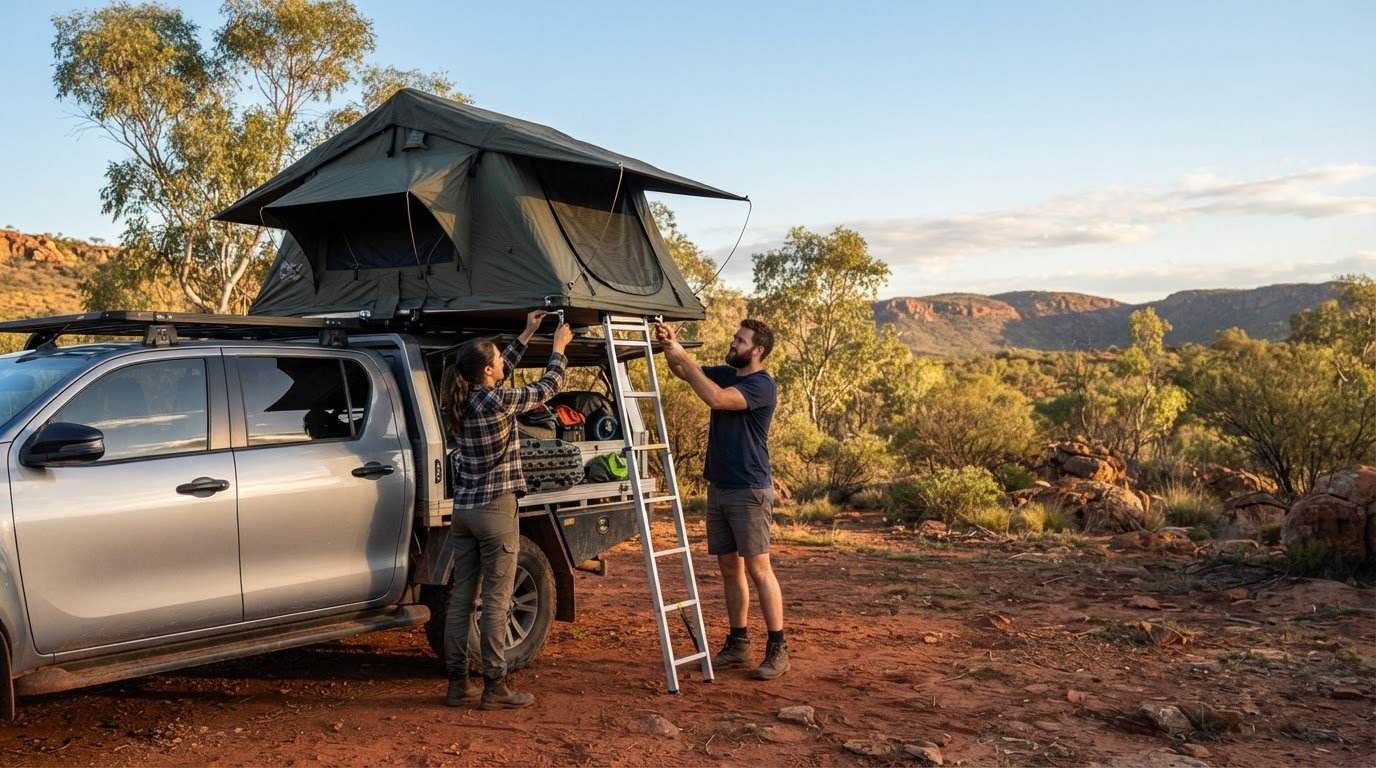
Once you’ve checked the tent, mounting surface and load limits, work through the installation without rushing. The tent and mounting-system manuals are the authority for the supplied hardware, attachment sequence and tightening requirements. Don’t substitute hardware, invent a fastening pattern or guess a torque value. If the tent is bulky or heavy, arrange a second person or suitable lifting help before you begin.
Prepare the ute, tent, and mounting hardware
Set up on firm, level ground, park securely and make the mounting area accessible. Keep the manuals close and lay out the supplied hardware so you can compare it with the parts list and instructions. Before lifting, confirm the tent’s intended orientation and that its mounting points align with the platform’s permitted fixing positions.
- Prepare the work area. Clear the space around the ute and platform. Make sure you can work without reaching awkwardly over obstacles, and plan how the tent will be lifted into position. Don’t attempt to manage a heavy or cumbersome tent alone.
- Position the tent. With help as needed, lift and place the tent onto the mounting surface. Follow any handling guidance in its manual. Align the base with the planned mounting points, then check orientation and clearance before attaching anything.
- Fit the supplied hardware. Use only the hardware specified for the tent and mounting system. Start each attachment as directed in the manuals. Don’t force a fixing that doesn’t align or appear to seat correctly. Stop and recheck the fitment if something seems out of place.
- Tighten as instructed. Follow the manufacturer’s tightening sequence and requirements for each fastener. Don’t guess a torque setting or use a fastening pattern from another tent or rack. Use the method specified for your equipment.
- Inspect the installation. Check that the tent sits as intended, the attachment points are secure according to the manuals, and the hardware is correctly positioned. Look for movement, misalignment or anything that could interfere with access or closure. Resolve concerns before driving.
Position, secure, and inspect the tent
Pause after the final tightening step. Compare the installed arrangement with the diagrams and instructions, and confirm each fixing point has been fitted as specified. Check that the tent closes fully and that its cover or latches aren’t obstructed by the rack, canopy or nearby accessories. If the instructions call for a recheck, complete it before travelling.
A steady, manual-led process makes installing roof top tent on ute more manageable and gives you a clear reference for later checks. For more guidance as you research tent styles and features, explore Adventurerz rooftop tent reviews before planning your next Australian camp.
Final checks before driving, and where Adventurerz can help next
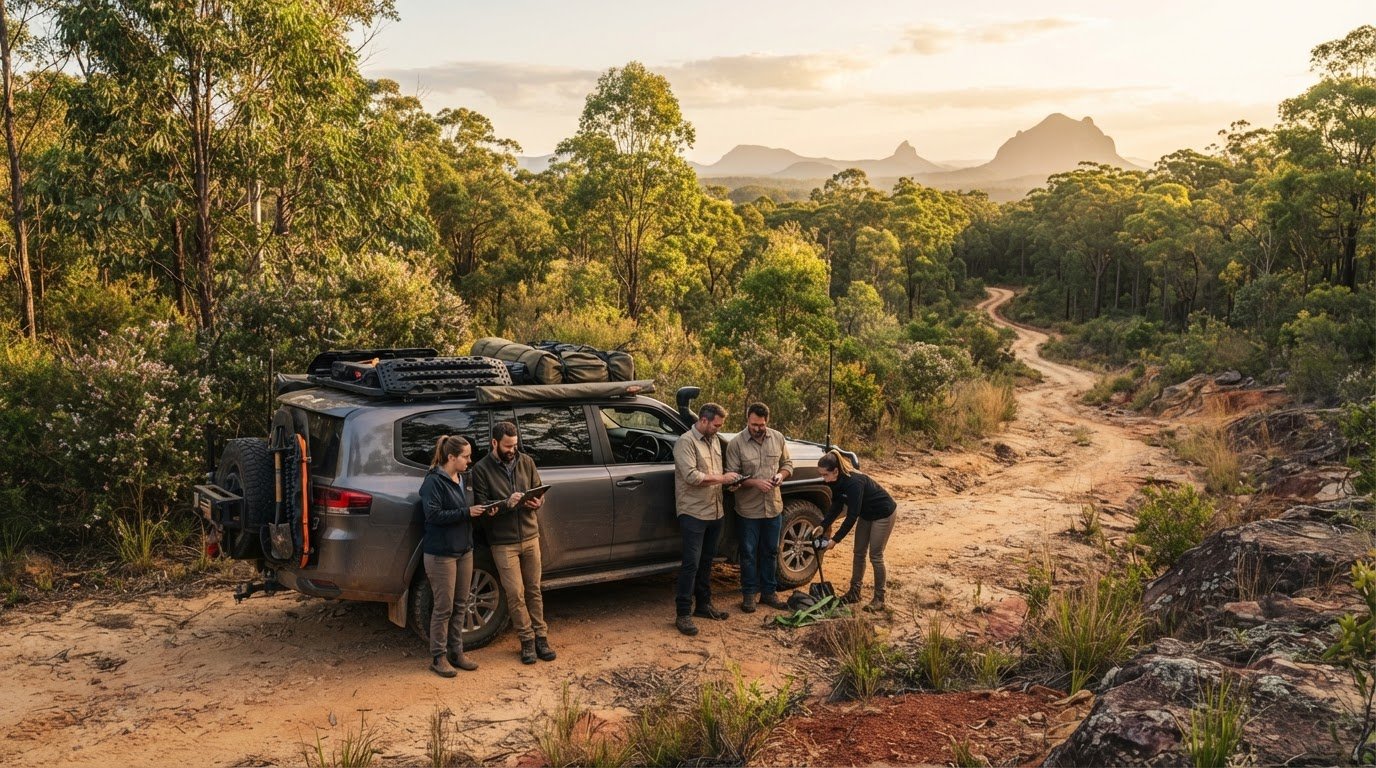
Installation isn’t finished when the last fastener is tightened. Before the first drive, walk around the vehicle and compare the finished setup with the tent, rack and vehicle instructions. Check for loose items, blocked latches and clearance issues before heading out.
What should you check before the first drive?
Use this checklist alongside the manufacturers’ guidance. If anything looks or feels different from the documented fitment, stop and resolve it before travelling rather than making a quick adjustment by guesswork.
- Attachment: Confirm the tent and every mounting point are secured as specified in the manuals.
- Clearance: Check that the tent doesn’t obstruct vehicle lights, number plates, doors or other equipment. Remember the vehicle’s increased height around low structures and branches.
- Travel closure: Make sure the tent is fully closed and restrained for travel according to its instructions. Check that covers, straps and latches are sitting as intended.
- Loose items: Secure or remove anything on the tent or mounting structure that could shift or come free while driving.
A pre-drive inspection is part of a safe setup, not an optional last-minute check. For installing roof top tent on ute, build this pause into your departure routine, especially after opening or packing the tent, adjusting equipment or travelling on rough roads. Follow the manufacturers’ guidance on how often to inspect the mountings and what to check after use. One schedule doesn’t apply to every setup.
Use gear research to plan a responsible camping setup
Consider the whole camping configuration, not just the tent. Think about how tent type, access, storage and the rest of your gear fit your ute and your planned trips. Comparing what you need before settling on a setup can help you avoid carrying equipment you won’t use and make it easier to camp thoughtfully.
For a starting point on tent styles and features, explore Adventurerz’s rooftop tent guide. Before heading out, check and respect the rules at your chosen campsite. Stick to established areas, avoid damaging vegetation or other natural features, take your rubbish with you and leave the site as you found it. These habits help care for Australian camps and the places that make each journey worthwhile.
Ready to plan the rest of your setup? Explore Adventurerz gear guides and outdoor advice for practical ideas to support responsible trips across Australia.
Make your next trip part of the plan
A well-prepared ute is only the beginning. Before choosing a destination, think about the kind of trips you want to take and what you’ll genuinely need on the road. A setup for a quiet weekend away may differ from one for longer travel, so let your itinerary guide your gear choices rather than packing for every possibility.
That thoughtful approach starts with installing roof top tent on ute with care, then continues in the way we travel. Choose established campsites, respect local conditions and pack out what you bring in. These habits help us enjoy Australia’s outdoors while caring for the places that make each journey worthwhile.
Adventurerz shares rooftop tent reviews and recommendations, along with outdoor guidance centred on responsible exploration. Use those ideas to shape a setup that fits your plans and supports more mindful adventures. Explore Adventurerz outdoor gear guides, then get out there and make your next trip a good one!
Frequently Asked Questions
Can I install a rooftop tent on any ute?
No, a rooftop tent won’t suit every ute configuration. Compatibility depends on the specific vehicle, mounting surface, rack or platform, tent and attachment hardware. A setup that works on one ute may not work on another, even if the vehicles look similar. Before buying or lifting a tent, compare the exact model and equipment instructions. If the documentation doesn’t support the combination, don’t assume an adaptor or workaround makes it suitable.
Do I need a special roof rack for a rooftop tent on a ute?
Not necessarily, but the rack must be designed and documented for the tent’s mounting method and the vehicle’s setup. Check whether the tent’s mounting brackets can attach to the rack’s crossbars at the positions the rack permits. A standard-looking rack isn’t automatically suitable. Use the rack and tent manuals to establish compatibility, and don’t drill, modify or replace parts unless the relevant manufacturer’s instructions allow it.
Can a rooftop tent be mounted directly to a ute canopy?
Only if the canopy and its mounting system are specified for that kind of load and attachment. A flat canopy roof alone doesn’t demonstrate that it can support a tent. Some setups use a platform or dedicated mounting provisions; the exact arrangement depends on the canopy documentation. Check whether the canopy instructions require particular supports or fixing points, and don’t treat another canopy’s fitment details as approval for yours.
Can I install a rooftop tent on my own?
It depends on the tent’s size, weight, handling instructions and the safe lifting method available. A bulky tent can be difficult to control above shoulder height, so arrange another person or suitable lifting help rather than risking a drop or injury. If you’re preparing for installing roof top tent on ute, read the handling instructions first and plan where each person will stand. Stop if you can’t lift and position it safely.
Can I drive off-road with a rooftop tent fitted?
Only if the vehicle, rack or platform and tent manufacturers permit the setup for the road conditions you plan to travel. Some rack systems specify a lower load limit for unsealed roads, so check the exact instructions rather than relying on the on-road rating. Rough, corrugated surfaces call for care behind the wheel. Adjust your speed and driving to conditions, and inspect the mounting system as directed after travel.
Does a rooftop tent need to be removed when it is not in use?
Not always. Whether you leave it fitted depends on the equipment instructions, your storage conditions and how the added height and roof load affect everyday driving or parking. A fitted tent may limit access to some low-clearance areas, so account for the vehicle’s full height on every trip. Follow the tent maker’s after-use and storage guidance, and remove the tent if the instructions or your planned use call for it.