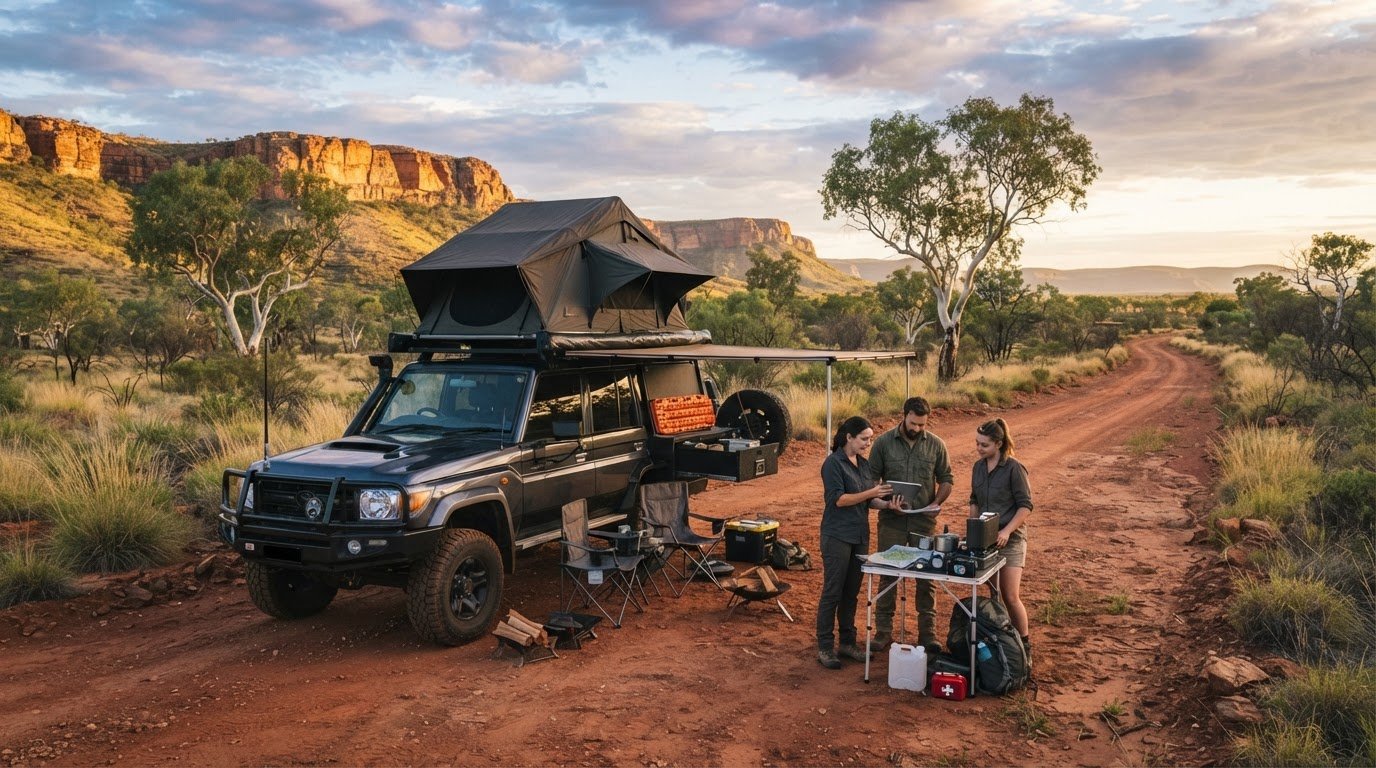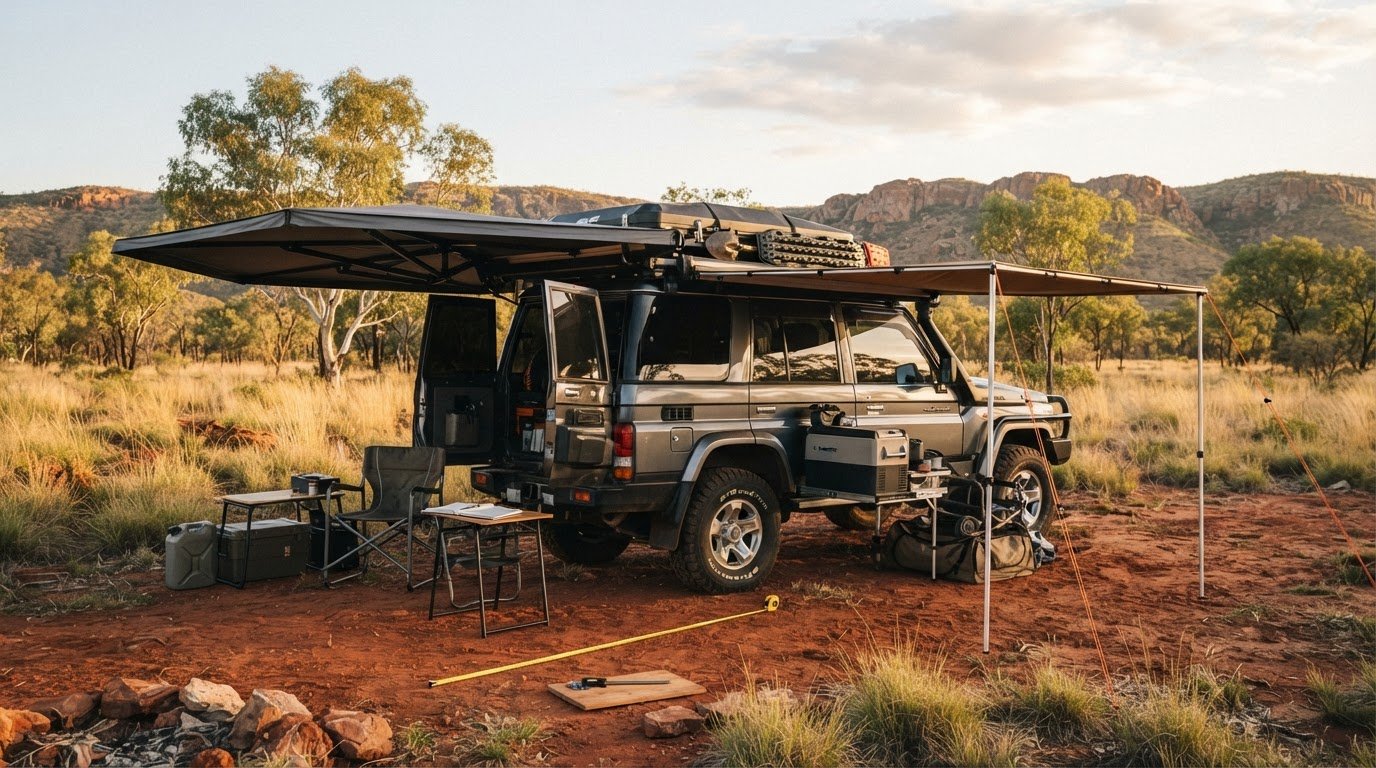
What if the best solo camp setup isn’t the biggest one, but the one you can adjust without a struggle? Integrating an awning with a swag setup for solo travellers can create a sheltered living area beside a simple sleeping space, but the layout matters. Place things poorly and you may block access, expose your swag to the weather or carry more gear than the conditions call for.
It’s reasonable to want shade for cooking and a dry place to keep gear while keeping camp simple enough to manage alone. Plan around access, weather and the space your vehicle and swag need, then practise a repeatable setup and pack-down routine before heading out.
In this guide, we’ll walk through a practical layout for your vehicle, awning and swag, along with ways to adapt it when conditions change. We’ll also look at when an awning earns its place and when a simpler shelter may suit you better. With considered gear choices and low-impact habits, solo camping can be more comfortable while still respecting the places we explore.
Key Takeaways
- Assess the ground, drainage, overhead clearance and usable space before settling on a vehicle position.
- See how vehicle orientation can shape awning coverage, access and where your swag fits.
- Compare integrating an awning with a swag setup for solo travellers against using a swag alone or a simple tarp.
- Follow a flexible setup and pack-down sequence that accounts for site conditions and your equipment’s instructions.
- Use a practical checklist to match your shelter choice to your trip, campsite facilities and preferred covered space.
Table of Contents
- Integrating an Awning with a Swag: What the Setup Solves for Solo Travellers
- Plan the Vehicle, Awning and Swag Layout Before Setting Up
- Awning and Swag Together or Separately? Compare the Solo-Camping Options
- How to Set Up and Pack Down an Awning-and-Swag Camp Solo
- Build a Swag-and-Awning Setup That Fits Your Solo Trips
Integrating an Awning with a Swag: What the Setup Solves for Solo Travellers
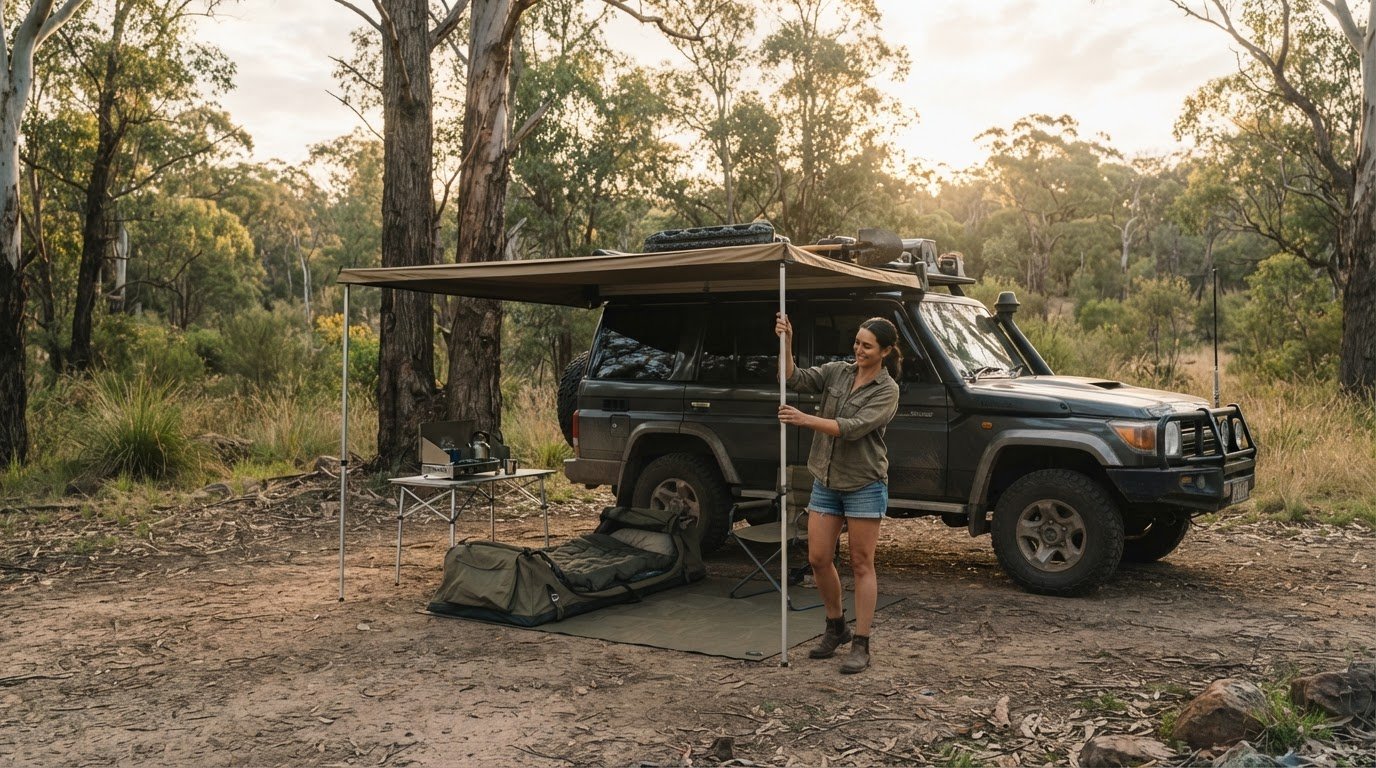
How can you create shade at camp without making setup harder to manage alone? Pairing a vehicle-mounted awning with a ground-based swag separates your sheltered living space from your sleeping space. The swag provides your sleeping shelter; the awning extends covered space beside the vehicle for camp tasks. The combination can be handy, provided it suits your vehicle, campsite and gear.
An awning-and-swag setup is a vehicle-mounted cover beside a ground-level sleeping shelter, not a rooftop tent. A rooftop tent places the sleeping area on the vehicle, while a swag stays on the ground. Awning designs and operation vary, so follow the supplied instructions and manufacturer guidance for mounting and clearances. A general overview of an awning can help explain the different forms this shelter can take.
For a visual example of a solo swag camp, watch My SOLO Swag Camping Setup In 2024:
What an awning adds beside a swag
An awning creates shade and a sheltered transition zone between the vehicle and the open campsite. That space can make it easier to prepare food, sort equipment or sit out of direct sun, while keeping bedding and sleeping gear in the swag. Treat it as extra cover, not a guarantee against wind or rain. The shelter it provides depends on the conditions and how it is set up.
Keep the swag as your purpose-built sleeping shelter. An awning doesn’t replace it, and the covered area shouldn’t become a cluttered extension of the sleeping space. Think through how the two will work together before pitching: the awning may be a convenient place for essentials, but the swag still needs a suitable position and enough room to use it as intended. Explore different 4WD awning options with your vehicle and camping needs in mind.
Why solo travellers need a deliberate camp layout
When you’re camping alone, every trip between shelter, vehicle and gear is yours to make. A clear route reduces back-and-forth movement, especially when you’re carrying cooking equipment or responding to changing weather. Keep frequently used essentials within easy reach under the awning, while leaving doors, storage and the swag entrance unobstructed.
Prioritise a layout you can adjust without rebuilding the whole camp. For example, place the swag beside the covered area while leaving enough room to get in and out comfortably. Don’t force the arrangement if the ground, vehicle position or conditions make it awkward. Integrating an awning with a swag setup for solo travellers works best when the layout supports easy movement, a separate sleeping space and adaptable shelter. Start with the site and equipment instructions, then bring only what makes camp more practical.
Plan the Vehicle, Awning and Swag Layout Before Setting Up
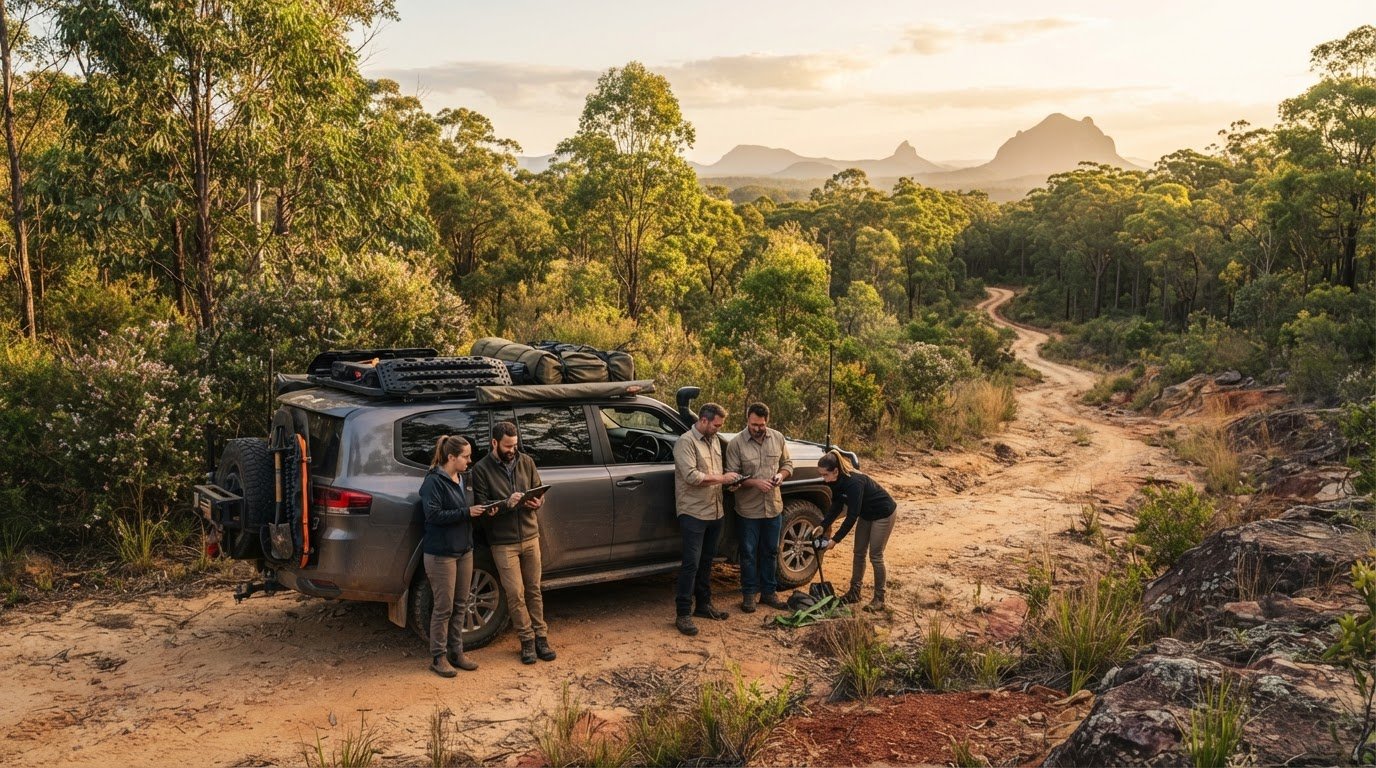
Before unloading, pause and assess the site as a whole. Check the ground’s slope and firmness, look for signs of water flow, and note overhead branches that could affect the vehicle or awning. Find enough clear space for the awning to open and the swag to sit without crowding your walking route. A little planning can prevent awkward repositioning once your gear is out.
Choose a permitted camping area and use an established, durable surface where possible. Avoid flattening vegetation or shifting natural features to make a preferred layout fit. Site rules and conditions vary across Australia, so check the relevant land manager’s requirements before settling in. The right arrangement depends on the space available, the ground beneath you and the conditions you encounter.
Choose a site and vehicle orientation
Think about where the awning will extend, where shade falls, and whether you can still reach the vehicle’s doors and storage. Depending on the site, turning the vehicle may improve access or shelter, but there’s no universally correct direction. Check the ground and surrounding space first, then choose an orientation that leaves room for the swag and a clear path between camp areas.
Consider the whole routine, not just the view from the driver’s seat. Can you reach the gear you need without stepping over guy lines or crossing the swag entrance? Will opening a door interfere with the awning or your sleeping space? Leave room to move safely, and adjust the plan if the site’s slope, vegetation or restrictions make your preferred layout impractical.
Check awning and swag compatibility
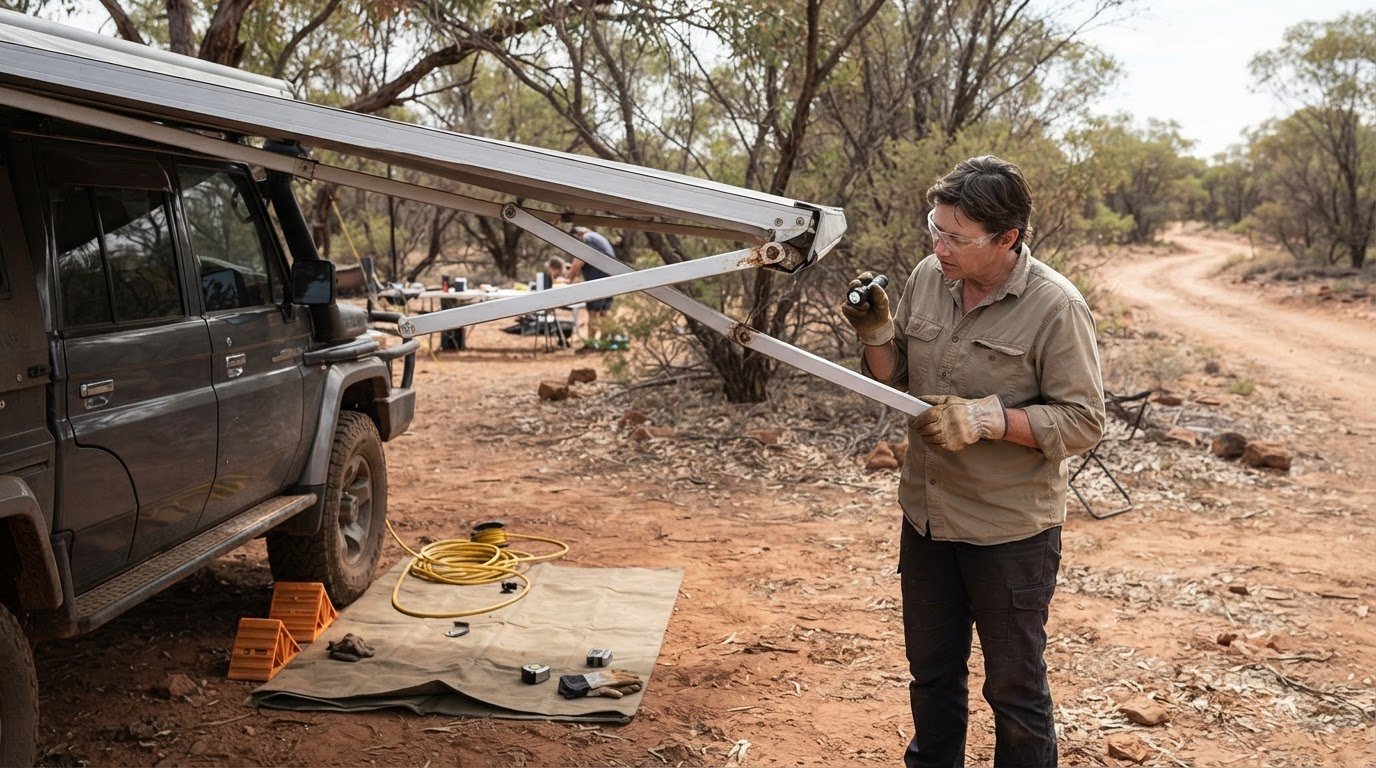
Before relying on the arrangement, compare the vehicle’s mounting setup with the awning manufacturer’s instructions. Then consider the awning fully opened: does the remaining ground space fit the swag while preserving access to doors and storage? Follow the manufacturers’ guidance for mounting, operation and clearances rather than assuming different equipment will work together. Our 4WD awning guide can help you think through awning options for your vehicle and camping needs.
A quick check before unloading helps keep the layout workable:
- Is camping permitted here, and is the surface durable and stable?
- Is the ground clear of obvious drainage channels, low spots and overhead hazards?
- Can the awning open as directed without contacting nearby obstacles?
- Will the swag fit clear of the vehicle’s doors, walking routes and the awning’s operating area?
- Can you reach essential gear without blocking access or disturbing the surrounding site?
If any answer is no, reconsider the vehicle position or choose another suitable spot. Integrating an awning with a swag setup for solo travellers starts with a layout that fits the place, not one imposed on it. Test the plan before unpacking, and stay ready to adapt as conditions require.
Awning and Swag Together or Separately? Compare the Solo-Camping Options
More shelter isn’t automatically a better camp. An awning adds another item to deploy and pack away, so its value depends on whether you’ll use the covered space and whether the site suits it. A solo stop focused on sleeping may call for less gear; a longer stay with more time around camp may make extra cover worthwhile.
Use this comparison as a starting point, not a performance guarantee. Shelter, flexibility and ease of solo handling vary with equipment design, site conditions and your needs.
| Option | Shade and covered space | Vehicle dependence | Flexibility and solo handling |
|---|---|---|---|
| Swag with awning | Can provide a covered area beside the sleeping shelter, depending on the awning and conditions. | Awning is mounted to the vehicle. | Useful when you’ll use the extra space, but means managing and packing both shelters. |
| Swag alone | No separate awning cover. | Sleeping shelter doesn’t rely on an awning mounted to the vehicle. | A simpler choice when you want a sleeping setup without extra shelter to deploy. |
| Swag with tarp | Can add flexible cover, depending on where and how it can be pitched. | May be less tied to vehicle position, depending on how it’s rigged. | Offers a different approach, but still requires suitable space and setup. |
When the combined setup earns its place
Pair the two when the vehicle-side cover has a job beyond looking inviting: perhaps you plan to cook, organise equipment or sit under it during daylight hours. The arrangement makes sense when you expect to spend time outside the swag and want a distinct covered area beside your sleeping space.
Balance that use against the extra handling. If you’ll arrive late, leave early or move camp often, deploying and stowing both pieces of gear may feel like unnecessary work. Integrating an awning with a swag setup for solo travellers is most useful when you’ll regularly use the covered area and can manage setup in the conditions you expect.
When a simpler shelter arrangement may suit better
If shade isn’t a priority and your trip mainly calls for a place to sleep, a swag alone may be the more straightforward choice. A tarp offers another way to create cover, but its usefulness depends on the site, available rigging points and conditions. Neither option suits every campsite, so think about what you’ll actually do there.
A ground-based swag keeps sleeping separate from the vehicle, unlike a rooftop tent, which places the sleeping system on the vehicle. Our rooftop tent guide explores that contrasting arrangement. Choose the combined setup when you’ll use its covered living space; choose a simpler option when carrying and managing that extra shelter won’t earn its place.
How to Set Up and Pack Down an Awning-and-Swag Camp Solo
A repeatable routine makes solo camp easier to manage, but treat any sequence as a guide, not a substitute for the instructions supplied with your gear. The manufacturers’ instructions and the conditions at your campsite take priority over any generic setup sequence. If the ground, weather or available space doesn’t suit the arrangement, adapt the plan or leave equipment stowed.
A practical solo setup sequence
Work through camp in stages. Keep bags and loose gear together until the main shelters are in place, so you don’t block access or create obstacles while setting up.
- Inspect the site. Confirm camping is permitted and look over the ground, drainage, overhead clearance and available room. Choose a durable surface and avoid disturbing vegetation.
- Position the vehicle. Consider awning coverage, access to vehicle doors and a clear area for the swag. Leave an unobstructed route between the vehicle, covered space and sleeping shelter.
- Deploy the awning. Follow its manufacturer’s operating instructions, including directions for supports or securing the structure. Don’t improvise beyond its stated guidance.
- Place the swag. Set it where you can enter and exit comfortably, clear of door swings, walking routes and the awning’s operating area. Follow the swag manufacturer’s clearance and placement guidance.
- Organise essentials. Keep frequently used items accessible without crowding the route or shelter entrances. Once the layout works, unpack the rest.
This order gives you a chance to check the awning’s footprint before settling the swag into its final position. If there isn’t enough clear space, reposition only if the site and equipment instructions allow it. Integrating an awning with a swag setup for solo travellers works best as a flexible routine, not a rigid recipe.
Adapt the routine to changing conditions
Keep reassessing the setup. A shift in wind, rain or ground conditions can change whether your layout remains suitable. Don’t use or leave gear deployed beyond its stated operating guidance. If conditions make the setup unsuitable, follow the equipment instructions and choose a safer arrangement rather than trying to force the original plan to work.
Pack down with the same care you used to set up. Put personal gear away first, then stow the swag and awning as directed. Check whether fabric is dry or damp, and handle it according to the manufacturer’s care guidance. Collect all rubbish, check the site for small items and leave the campsite as undisturbed as possible. Avoid moving natural features or widening the cleared area just to make pack-down quicker.
A consistent routine helps you spot what needs attention before you leave, from a forgotten item to gear that needs care after a damp night. For more help weighing up shelter choices for your vehicle and camp routine, explore our awning and camping guides.
Build a Swag-and-Awning Setup That Fits Your Solo Trips
The right setup depends on the trips you actually take, not the amount of shelter you can fit on your vehicle. A short stop with little time spent at camp may call for a different arrangement from a longer stay where you’ll use covered space during the day. Consider campsite facilities, how often you’ll move the vehicle and what you want to do under the awning before adding gear to your routine.
Think through the full trip, too. If a campsite has facilities you plan to use, you may need less camp infrastructure than at a site where you’ll rely on your own arrangements. Either way, check that camping is permitted and follow the land manager’s requirements. Keep your plan adaptable: conditions and site layouts can change, and a shelter setup should fit the place rather than disturb it.
Turn your trip needs into a gear checklist
Use this short list to turn your plans into questions to answer before packing. Match your choices to each item’s intended use and manufacturer guidance, especially for vehicle mounting, operation and clearances. That way, your decisions reflect how you’ll travel rather than assumptions about a particular model or feature.
- Sleeping shelter: Does your swag suit the way you sleep and the conditions you expect?
- Shade needs: Will you spend enough time outside the sleeping shelter to make covered space useful?
- Vehicle arrangement: Can the awning be mounted and operated as directed while leaving room for the swag and access to the vehicle?
- Trip rhythm: Will you stay put, or pack down and move camp regularly?
- Site constraints: Is there permitted, durable ground with enough space for the layout you have in mind?
- Low-impact habits: Can you keep gear within your camp area, avoid damaging vegetation and carry out all rubbish?
If the covered area won’t serve a clear purpose, carrying and setting up an awning may add effort without helping your trip. If you expect to use it regularly, weigh the space it provides against the work of managing it solo. Integrating an awning with a swag setup for solo travellers should make camp more practical without making it harder to adapt or leave the site responsibly.
Keep exploring gear guidance with Adventurerz
Adventurerz publishes reviews and guides on 4WD awnings and outdoor equipment to help you weigh up options for your own travel. Our 4WD awning guide is a useful next read as you compare awning considerations with your vehicle, trip plans and preferred camp layout. Adventurerz also shares practical equipment advice and inspiration for exploring Australia’s outdoors responsibly.
Take your checklist into your next planning session, then choose a setup that suits your solo routine and the places you visit. Explore the 4WD awning guide to compare shelter options and plan your next outdoor adventure.
Make Your Next Solo Camp a Confident One
Before your next trip, picture how you’ll use camp from arrival through pack-down. Which gear needs to be close at hand? What would make the space easier to manage? A short practice run at home can help you spot awkward steps and build a routine that feels natural before you’re setting up on unfamiliar ground.
There’s no single perfect arrangement. The aim of integrating an awning with a swag setup for solo travellers is to make your journey more comfortable without adding complexity you won’t use. Let the site guide your choices, follow your equipment’s instructions, and keep your camp considerate of the surrounding environment. Small, thoughtful decisions help us explore with confidence and leave places ready for the next traveller.
As you refine your setup, Adventurerz’s Australian adventure perspective and outdoor gear guides can support your research, including reviews of awnings and rooftop tents. Explore Adventurerz’s outdoor gear guides and plan a solo camp that suits your needs. Happy travels, and tread lightly out there!
Frequently Asked Questions
Can I use an awning with a swag without a vehicle?
A vehicle-mounted awning needs a compatible vehicle mounting arrangement, so it isn’t designed to provide cover independently. If you’re camping without a vehicle, choose a shelter designed to stand on its own and follow its setup instructions. Some awning designs may offer different support options, but don’t assume a vehicle awning can be safely adapted with improvised supports. The swag can still be used separately as your ground-based sleeping shelter.
Is an awning-and-swag setup suitable in wet weather?
It may suit some wet-weather trips, but suitability depends on the equipment’s design, instructions and campsite conditions. An awning shouldn’t be treated as a guarantee of dry shelter, especially if wind drives rain beneath its coverage. Check weather information before travelling, follow the manufacturer’s operating guidance, and be prepared to change plans if conditions exceed what your gear is intended to handle.
How can I keep my swag dry when camping under an awning?
Place the swag where it’s within useful cover but not in the path of water running off the awning or collecting on the ground. Avoid low spots where water may pool, and follow the swag manufacturer’s placement and clearance advice. Rain can blow in from the sides, so don’t rely on the awning alone to keep bedding dry. Pack and care for damp fabric as its instructions direct.
Can one person safely set up an awning and swag?
A solo setup may be manageable if the equipment’s instructions allow one-person operation and you can deploy it without straining or rushing. Practise the routine in calm conditions before relying on it at camp. Keep loose gear out of the way, and stop if wind or uneven ground makes handling difficult. Never force a support, fitting or fabric beyond the operating guidance supplied by its manufacturer.
What should I check before pairing a swag with a 4WD awning?
Check that the vehicle’s mounting arrangement matches the awning manufacturer’s instructions, then consider the awning’s full operating area. Confirm there’s space for the swag without interfering with doors, storage access or the awning itself. Review both manufacturers’ guidance for mounting, operation and clearances. A setup that fits in an open campsite may not suit a confined site, so assess the available space before unloading.
Is a swag and awning better than a rooftop tent for solo travel?
Neither option is automatically better; it depends on how you want to sleep and use your vehicle. A swag keeps sleeping space on the ground, while a rooftop tent places it on the vehicle. Consider your preferred access, the campsite surface, how often you’ll move the vehicle and how you’ll manage the equipment alone. Integrating an awning with a swag setup for solo travellers makes sense when a separate, ground-level sleeping space suits your trip.