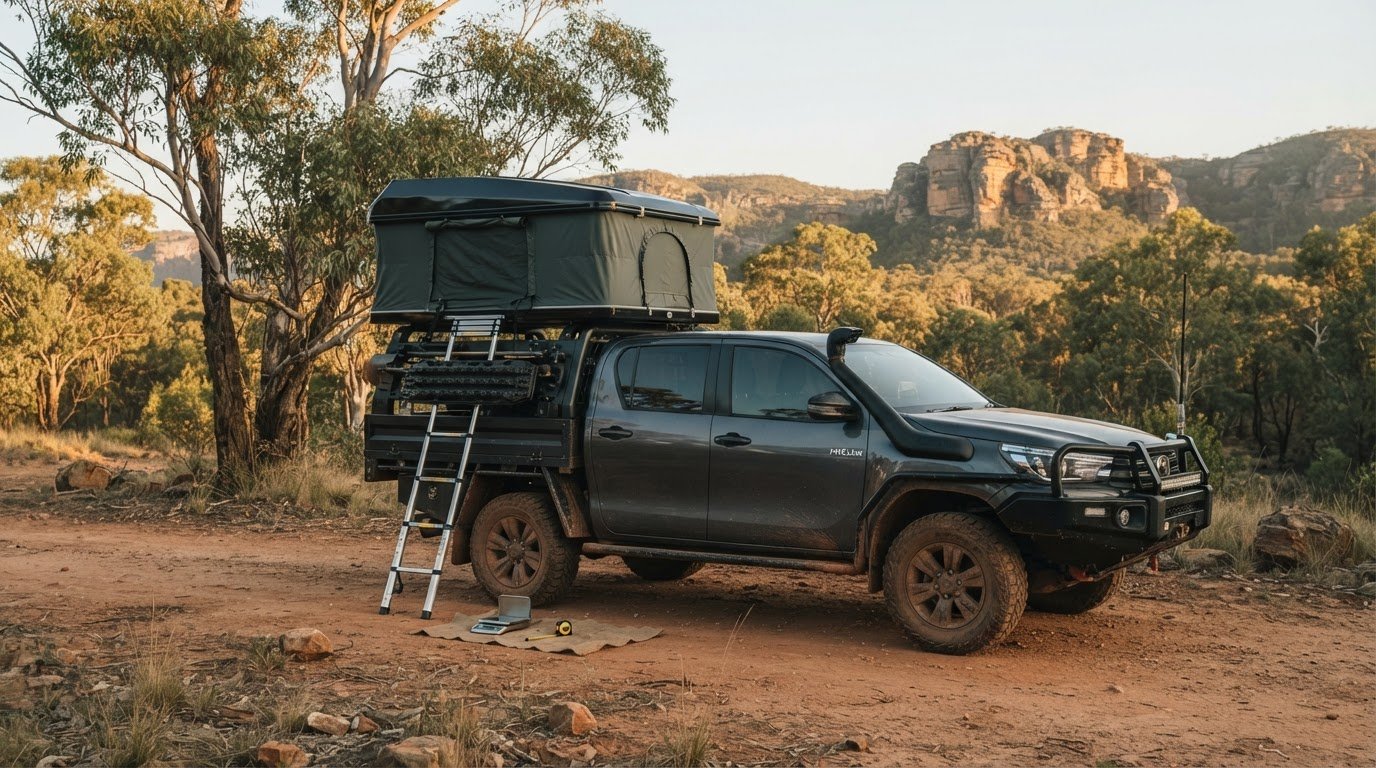
What if the safest way to carry 140 litres of diesel across the Canning Stock Route isn’t on your roof or hanging off your rear bar, but tucked neatly between your chassis rails? We’ve all felt that familiar knot of anxiety watching the fuel needle dip while the next remote pump is still hundreds of kilometres away. Relying on jerry cans often means back-breaking labor and dangerous weight shifts that can compromise your vehicle’s stability. When we evaluate the long range fuel tank pros and cons, it becomes clear that this upgrade is about more than just volume; it’s a strategic move to lower your centre of gravity and keep your build within legal GVM limits.
Our community knows that responsible exploration requires a balance between self-reliance and vehicle safety. In 2026, with high-quality replacement tanks for models like the Ford Ranger Raptor costing around $2,600, the investment is significant but potentially transformative for your touring setup. We’ll guide you through the trade-offs between rugged steel and lightweight polymer, explain the critical VSB 14 certification requirements, and help you decide if a long-range tank is the right choice for your next Australian odyssey. Let’s dive into the technical details and environmental considerations of building a truly capable remote rig together.
Key Takeaways
- Master the “point of no return” by understanding how high-capacity reservoirs allow us to conquer Australia’s most isolated tracks with total confidence.
- Evaluate the long range fuel tank pros and cons to balance your need for extra range with the strict legal requirements of your vehicle’s GVM.
- Improve your rig’s handling and safety by shifting heavy fuel loads from high-mounted jerry cans to a low-slung, secure chassis position.
- Decide between the legendary impact resistance of traditional steel and the weight-saving benefits of modern polymer tanks for your 2026 build.
- Align your fuel capacity with responsible touring ethics to minimize environmental impact while maximizing your remote exploration potential.
Table of Contents
What is a Long Range Fuel Tank and How Does it Work?
A long range fuel tank is a heavy-duty reservoir that transforms our vehicles from weekend cruisers into serious expedition rigs. Whether we’re planning to cross the Simpson Desert or track the coastline of the Kimberley, these tanks replace or supplement the factory unit to provide massive fuel storage. The goal is simple: we want to push our “point of no return” further into the wilderness. By carrying more fuel in a single, secure location, we gain the freedom to bypass expensive remote fuel stops or tackle tracks where pumps simply don’t exist.
Engineering these tanks involves more than just making a bigger box. High-quality designs incorporate internal baffles. These are internal walls that prevent fuel from sloshing violently during cornering or steep climbs. This keeps our vehicle’s weight distribution predictable and prevents the fuel pump from sucking air when the tank is low. Understanding fuel tank design and construction helps us appreciate how these units manage fuel pickup and sender units. While we aim for accuracy, we often find that the factory fuel gauge might “hang” on full for longer before dropping. This happens because the sensor now measures a much deeper volume than the original computer expects.
Replacement Tanks vs. Auxiliary Tanks
Replacement tanks are the most common choice for our community. We swap the small factory shell for a much larger one that utilizes the existing mounting points and plumbing. It’s a clean, integrated solution. Auxiliary tanks, however, add a second independent reservoir. These require extra pumps to transfer fuel into the main tank. While they offer even more capacity, they increase complexity in our fuel management systems. We have to decide if that extra plumbing is worth the potential failure points when we’re hundreds of kilometres from help.
The ‘Jerry Can’ Alternative
Most of us start our journey with a few jerry cans strapped to the roof. It’s a classic image, but it’s rarely the best way to travel. Carrying 60kg of fuel on the roof significantly raises our centre of gravity. This makes the vehicle prone to rolling on off-camber tracks. If a rollover does occur, those cans are often the first things to rupture, creating a massive fire risk. Moving that weight down to the chassis is a key part of weighing the long range fuel tank pros and cons. Plus, filling one single tank at the bow beats wrestling with five heavy cans in the dust any day. It’s about safety, convenience, and protecting the environments we love.
The Pros: Why Serious Adventurers Opt for Long Range Tanks
Choosing to upgrade is a massive step toward total independence on the track. When we weigh the long range fuel tank pros and cons, the most immediate benefit is the sheer distance we can cover between refills. We aren’t just talking about a little extra; we’re talking about doubling our effective range. This allows us to hit the most isolated corners of Australia, like the Anne Beadell Highway, without that constant, nagging worry about where the next diesel pump might be. It transforms our travel from a series of stressful fuel-stop sprints into a relaxed, fluid journey through the landscape.
There’s also a significant financial win that many travelers overlook. Remote stations often charge a massive premium because of their high transport costs and low turnover. By filling up at major regional hubs, we can skip these “bush prices” entirely. Over a long expedition, this fuel price arbitrage can save us hundreds of dollars. Those savings effectively pay back a portion of the tank’s cost over time. Plus, we get the peace of mind knowing we’re using fresh fuel from high-volume stations rather than potentially contaminated dregs from a dusty, low-use tank in the middle of nowhere.
Security and Self-Reliance in the Remote Outback
Having a 1000km range provides a psychological safety net that’s hard to quantify until you’re out there. If we hit an unexpected track closure or get bogged and need to run the engine for hours during a complex recovery, we have the buffer to handle it. Extra fuel acts as a critical safety margin for detours. It means we don’t have to say “no” to a beautiful side-track just because we’re worried about our remaining litres. This self-reliance is the core of the adventurous spirit we cultivate in our community. Before you head out, checking our guides on adventure ideas in Australia can help you map out exactly how much range you’ll need for your next escape.
Optimising Your Roof Rack Space
Moving our fuel load from the roof to the chassis is perhaps the smartest safety move we can make. We’ve seen how Plastic versus steel tanks explained by experts highlight the safety benefits of secure, low-slung storage. By clearing 80kg or more from the roof, we create a much more stable platform for roof top tents. This reduction in top-heavy weight improves our vehicle’s handling on corrugated roads and off-camber sections. It also frees up vital capacity to mount larger 4wd awnings without exceeding our roof load limits. We get a cleaner, more streamlined setup that’s easier to manage and far safer in an emergency.
The Cons: Weight, Cost, and Engineering Trade-offs
While we love the freedom of an extended range, we must be realistic about the baggage that comes with it. Balancing the long range fuel tank pros and cons requires a hard look at your vehicle’s Gross Vehicle Mass (GVM). Every extra litre of diesel adds weight that stays with you, even on the shortest trips. Beyond the physical mass, there’s the financial hurdle. You’re looking at a significant upfront cost for the unit itself, with some models in 2026 priced between $2,345 and $3,095. When you add professional installation labor, which typically averages around $450, it becomes a major investment that demands careful planning to ensure it doesn’t compromise your rig’s performance.
Adding this much weight low in the chassis also puts immense pressure on your factory suspension. Most stock springs aren’t designed to carry an extra 200kg permanently. You’ll likely find your rear end sagging, which ruins your ride quality and reduces your effective ground clearance. This “belly-hanging” effect can be a real liability on technical rock steps or deep ruts where the tank might strike the ground. To do it right, we usually need to budget for a heavy-duty suspension upgrade alongside the tank to keep the vehicle level and capable on the tracks.
The Weight Penalty and GVM Legality
Calculating your “wet weight” is non-negotiable for a legal and safe build. Since 1L of diesel weighs approximately 0.85kg, a full 180L tank adds 153kg of fuel alone. Once you add the weight of the heavy-duty steel or polymer shell, you’ve eaten up nearly 200kg of your payload. This becomes critical when you also mount heavy gear like roof top tents and pack for a family of four. We always recommend visiting a weighbridge after installation. In Australia, these tanks are considered a major modification under VSB 14, and staying within your legal GVM is essential for both insurance and safety on the road.
Maintenance and Mechanical Complexity
Complexity is the enemy of reliability in the bush. If you opt for an auxiliary system, you’re adding another fuel pump and transfer lines that could fail. Even replacement tanks can be difficult to clean or repair if you manage to puncture them in a remote area. A larger tank often complicates access to other under-body components like the driveshaft or exhaust system during routine maintenance. We have to be methodical in our approach, ensuring that our quest for range doesn’t make our vehicles harder to service when things go wrong.
Steel vs. Polymer: Choosing the Right Material for 2026
Once we’ve committed to the upgrade, we face the ultimate choice: what should our tank be made of? This decision is a massive part of the long range fuel tank pros and cons debate. In 2026, we’re seeing a huge shift toward high-tech polymers, but traditional steel still holds a vital place for certain types of travel. It’s not just about durability; it’s about how the material reacts when you’re dragging your vehicle’s belly over a jagged rock in the Victorian High Country or enduring the relentless vibrations of the corrugated Gibb River Road.
Material choice also impacts your fuel system’s long-term health. Steel tanks can be prone to internal condensation, which leads to rust if the tank isn’t kept full. Polymer is naturally insulated and immune to corrosion, making it a “fit and forget” solution for many. We also have to consider the weight of the shell itself. Choosing a plastic unit over a metal one can save us up to 20kg. That’s a significant amount of weight we can reallocate to other essential gear without pushing our vehicle closer to its legal limit.
When to Choose Polymer (Poly) Tanks
Modern polymer tanks are made from cross-linked polyethylene, a material with incredible “memory.” If you take a hard hit on a trail, the plastic flexes and often pops back into its original shape. Steel simply dents and stays dented, which can reduce your fuel capacity over time. These tanks are also easier for manufacturers to mold into complex shapes, allowing them to tuck into every available centimetre of your modern 4WD’s chassis. High-quality Australian-made poly tanks are UV stable and designed for a 20-year lifespan, making them a brilliant long-term investment for our community. For more expert tips on setting up your rig, check out our latest information on 4wding.
When to Stick with Steel
Steel remains the king of absolute puncture resistance in high-impact, rocky environments. If your adventures involve constant rock crawling or pushing through heavy timber where stakes are a threat, aluminised steel offers a hard barrier that poly can’t match. We also appreciate that steel tanks often feature magnetic drain plugs. These are fantastic for capturing tiny metallic particles before they can reach your fuel filters or expensive injectors. Most importantly, steel offers superior field repairability. Any mechanic in a remote outback town with a welder can likely patch a steel tank to get you home. Repairing a fuel-soaked polymer tank in the middle of a desert is a much more difficult task that few would want to tackle.
Building a Responsible and Capable 4WD Rig
Building a truly capable touring rig is about more than just bolting on every available accessory. We have to be strategic. Every modification we make should serve a specific purpose on the tracks we plan to conquer. When we look at the long range fuel tank pros and cons, the ultimate goal is to create a vehicle that is self-reliant without being a liability. Your fuel capacity should align perfectly with the goals you’ve mapped out in your travel planner. If your 2026 adventures involve the Simpson Desert or the Canning Stock Route, that extra volume isn’t just a luxury; it’s a fundamental safety requirement.
Our community values the pristine Australian wilderness, and our gear choices reflect that. A high-capacity tank is actually a tool for environmental ethics. By carrying all our fuel in a single, professionally engineered reservoir, we drastically reduce the risk of spills and ground contamination that come with manual fuel transfers from jerry cans. We also minimize our “human footprint” by reducing the number of logistically heavy fuel stops we require in sensitive remote communities. Choosing Australian-made tanks also helps us support local manufacturing while reducing the carbon emissions associated with international shipping.
Integrating Fuel Security with Sustainable Exploration
We believe in leaving the land exactly as we found it. Safe fueling practices are a huge part of that mission. When we use high-capacity tanks, we can often skip refueling in ecologically sensitive areas altogether. This keeps our impact low and our focus on the landscape. Supporting local industry by choosing tanks built for our unique conditions ensures our gear is hardy enough to handle the corrugations without developing leaks. It’s a methodical way to ensure our passion for exploration doesn’t come at the cost of the environments we love.
Next Steps for Your Adventure Build
As we finalize our builds, we must look at the big picture. Balancing your fuel needs with heavy items like roof top tents is essential for maintaining optimal aerodynamics and vehicle stability. If you’ve decided the range is worth the weight, we strongly recommend looking into a professional GVM upgrade at the same time. This ensures your rig remains legal and safe even when the tank is full to the brim. Before you commit, use this final checklist with your installer:
- Does this tank comply with VSB 14 major modification standards?
- How will the new tank shape affect my vehicle’s departure angle?
- Will my spare tyre need to be relocated to a rear bar?
- Is the fuel sender unit compatible with my factory trip computer?
We invite you to join the community and share your own experiences with these upgrades. Whether you’re a seasoned desert traveler or just starting your first build, your insights help us all travel further and more responsibly. Let’s get out there and explore our backyard with the confidence that only a well-planned rig can provide. For those looking to take that adventurous spirit overseas, The Real South Africa Travel and Tourism offers curated holiday packages across the incredible terrain of South Africa.
Ready to Expand Your Horizon?
Deciding to install a high-capacity reservoir is a pivotal moment in any 4WD build. We’ve explored how shifting weight from the roof to the chassis improves stability, while also acknowledging the serious payload considerations that come with carrying nearly 200kg of extra fuel. Analyzing the long range fuel tank pros and cons reveals that the “right” choice depends entirely on your specific travel goals and vehicle capacity. Whether you lean toward the resilience of steel or the lightweight flexibility of polymer, your decision should always prioritize vehicle legality and environmental protection.
Our community of remote travel veterans is here to support your journey with expert gear reviews and a shared commitment to sustainable exploration. We believe that with the right preparation, no track in Australia is truly out of reach. Start planning your next remote escape with our expert 2026 Adventure Travel Planner and join a fellowship of enthusiasts dedicated to responsible adventure. The red dust is calling; let’s make sure your rig is ready to answer. We’ll see you out on the tracks!
Frequently Asked Questions
Will a long-range fuel tank void my new vehicle warranty?
A long-range tank won’t void your entire vehicle warranty, but it will affect coverage for related fuel system components. Under Australian Consumer Law, a manufacturer cannot legally cancel your whole warranty because of a modification. However, if the aftermarket tank causes a failure in your fuel pump or injectors, the manufacturer won’t cover those specific repairs. We always recommend talking to your dealer to understand their stance on major modifications before you start your build.
Do I need to upgrade my suspension if I install a 180L tank?
Yes, we strongly recommend a heavy-duty suspension upgrade to manage the significant permanent weight increase. A full 180L tank adds roughly 153kg of diesel plus the weight of the tank shell itself. Most factory springs are designed for comfort with light loads and will sag under this pressure. Upgrading your suspension ensures your vehicle stays level and handles safely, which is a vital part of balancing the long range fuel tank pros and cons for your rig.
How much does a long-range fuel tank installation typically cost in Australia?
Professional labor for a tank installation in Australia typically costs around $450. This is in addition to the price of the tank itself, which in 2026 generally ranges from $2,345 to $3,095 for most popular 4WD models. Total costs for the unit and professional fitting usually sit between $2,800 and $3,600. Remember that some vehicles may also require extra certifications to comply with state regulations, which can add to the final tally.
Can I install a long-range fuel tank myself or do I need a pro?
We believe professional installation is the only responsible choice for this particular upgrade. Handling flammable fuel and complex high-pressure systems requires specialized tools and safety protocols that most home garages lack. Furthermore, these tanks are considered “major modifications” in Australia. A professional installer ensures the work meets VSB 14 standards and provides the certification paperwork you need to keep your insurance and registration valid for remote travel.
What happens to my fuel gauge accuracy after installing a larger tank?
Your fuel gauge will stay on “Full” for a much longer period before it begins to drop. This happens because the new tank is deeper and wider, so the float in the sender unit remains at the top for a larger volume of fuel. While the gauge will still show “Empty” accurately when you’re low, your trip computer’s “Distance to Empty” calculation will likely be incorrect unless a specialist can recalibrate your vehicle’s electronics.
Are polymer fuel tanks actually as strong as steel ones?
Modern polymer tanks are incredibly resilient and often handle impacts better than traditional steel. While steel is more resistant to sharp punctures, it dents permanently when it hits a rock. High-density polyethylene (HDPE) has “memory,” which allows the material to flex and pop back into its original shape after a strike. This makes polymer an excellent choice for the relentless vibrations and impacts we encounter on corrugated Australian tracks.
Does a long-range tank affect my vehicle’s departure angle?
Most high-quality replacement tanks are engineered to sit within the same footprint as the factory unit to preserve your departure angle. Manufacturers work hard to tuck the extra volume into the chassis rails rather than letting it hang low. However, some massive auxiliary tanks or specific 180L+ replacement units might sit slightly lower than stock. It’s crucial to check the specific design for your vehicle model to ensure you don’t lose ground clearance on technical tracks.
Is it better to have one large replacement tank or a main plus an auxiliary?
We generally favor a single large replacement tank because it offers a simpler, more reliable fuel management system. Auxiliary setups require extra transfer pumps, hoses, and wiring, which create more potential failure points when you’re deep in the outback. A replacement tank uses your existing factory plumbing, making it a “fit and forget” solution. This simplicity is a major factor when weighing the long range fuel tank pros and cons for a dependable touring rig.